Personal Internet History
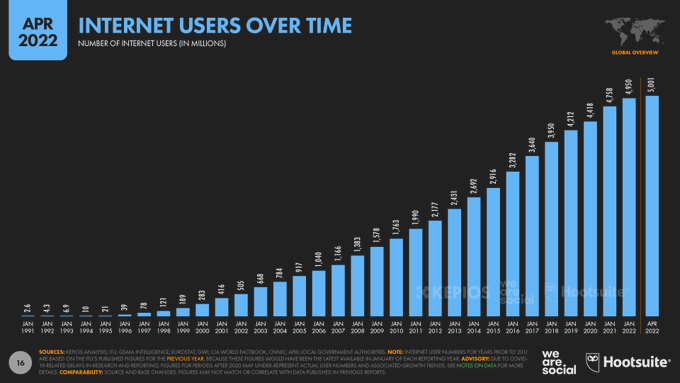
The above graphic, which comes from here, has been doing the rounds on social media and has been eliciting quite a few responses from people of my age or older, about when they started using the internet, so I couldn’t resist a comment or two.
My first experiences of anything like the modern internet was using the computers at the (now defunct) British Gas On Line Inspection Centre (OLIC) in Cramlington, Northumberland. I wrote about this here. That would have been in 1981, in between leaving school and starting University (which I did in 1982). I also went back to OLIC work in the summer holidays while still an undergraduate.
At OLIC did quite a lot of coding (on projects related to pattern recognition), most of which was on VAX computers (and also the odd PDP 11/45). Incidentally, when I later started as a research student in 1985 I was delighted to discover that the STARLINK system in use at Sussex and throughout the UK was also VAX-based because I was already fluent in the command language (DCL) as well as the database software DATATRIEVE. Another reason I am grateful for the experience I gained at OLIC is that, working in that environment, I had to learn to make my code (which, incidentally, was all in Fortran-77) conform to various very strict standards which is no doubt why I am a bit of a stickler when it comes to scripts written in my Computational Physics lab!
Anyway, the Vax computers in use in OLIC and in STARLINK were connected by a thing called DECnet. This allowed users to send emails to other machines. The format of email addresses was much simpler than in use today, being of the form “host::username“. One could send files that way too; the alternative, via, FTP was terribly unreliable. DECnet provided a fast method of communication, but did require the receiving system to be accessible when you tried to send and would fail if this were not the case. Later email protocols would keep trying to send messages if at first they did not succeed.
While working at OLIC, where the powers that be were paranoid about industrial espionage, sending things this way essentially required the sender to log into the receiver’s machine, which terrified the systems people and it was soon blocked. STARLINK allowed this, however, as did the U.S. Space Physics Analysis Network (US-SPAN), the European Space Physics Analysis Network (E-SPAN), and by 1989 there were 17,000 nodes worldwide.
Sending emails outside DECnet was a rigmarole, involving including SMTP% followed by the external address. Messages inevitably had lengthy headers indicating the circuitous taken to reach the destination and often took some time to reach their destination. I was regularly using email in 1985, and if that counts as internet usage, then I started way to the left of the start of the graphic.
I didn’t use the world wide web until later. I’m not sure when, but it must have been around 1991 or so. The arXiv in roughly the form it exists now started in 1993, but it had precursors in the form of an email distribution list and, later, FTP access. Initially, it was based at Los Alamos National Laboratory (LANL) with a mirror site in SISSA (Trieste) that was used by those of us in Europe. In the beginning, arXiv was quite a small-scale thing and it wasn’t that easy to upload full papers including figures. In fact the SISSA system was run from a single IBM 386 PC (called “Babbage”).
The astrophysics section of arXiv (astro-ph) started in April 1992. Although astrophysicists generally were quick to latch on to this new method of distributing preprints, it took me a little time to get onto arXiv: my first papers did not appear there until February 1993; my first publication was in 1986 so there are quite a few of my early papers that aren’t on arXiv at all. In 1993 I was working at Queen Mary & Westfield College (as it was then called). I was working a lot with collaborators based in Italy at the time and they decided to start posting our joint papers on arXiv. Without that impetus it would have taken me much longer to get to grips with it.
 In the Dark
April 10, 2023 at 4:58 pm
1990 would be too early for the web – the first web page was 1991, and there wasn’t much to look at until 1992. The web version of xxx.lanl.gov didn’t appear until 1993, I think. There are a few versions of this list around (this one is from July 1993) and shows the known websites at the time: http://jmason.org/WWW-servers.txt – I have done some digging to try to get information on when various Irish websites appeared, as I was an undergrad at the time, and it seems tricky enough to piece together: https://www.maths.tcd.ie/~dwmalone/early-web.html
April 10, 2023 at 5:23 pm
I seem to remember there was an FTP site for arXiv before the web page as such arrived.
April 10, 2023 at 8:42 pm
Yes – xxx.lanl.gov seems to have been accessible by ftp in 1992 and probably earlier (for example, see https://groups.google.com/g/sci.math/c/gdJG1Ep-KTk/m/Yfws0eIzTckJ from 1992). According to the wikipedia page for arXiv, the mail and ftp service started in 1991, Gopher in 1992 and web in 1993.
IMHO, your SMTP% e-mail use definitely counts as Internet, at least via a gateway. At that point, I think SMTP would have only been in use on the Internet, with other networks using other mail protocols.
April 11, 2023 at 10:50 am
Lots of early web pages were very simple with very few graphics, often just interfaces to ftp for downloads.