Season Finale at the National Concert Hall
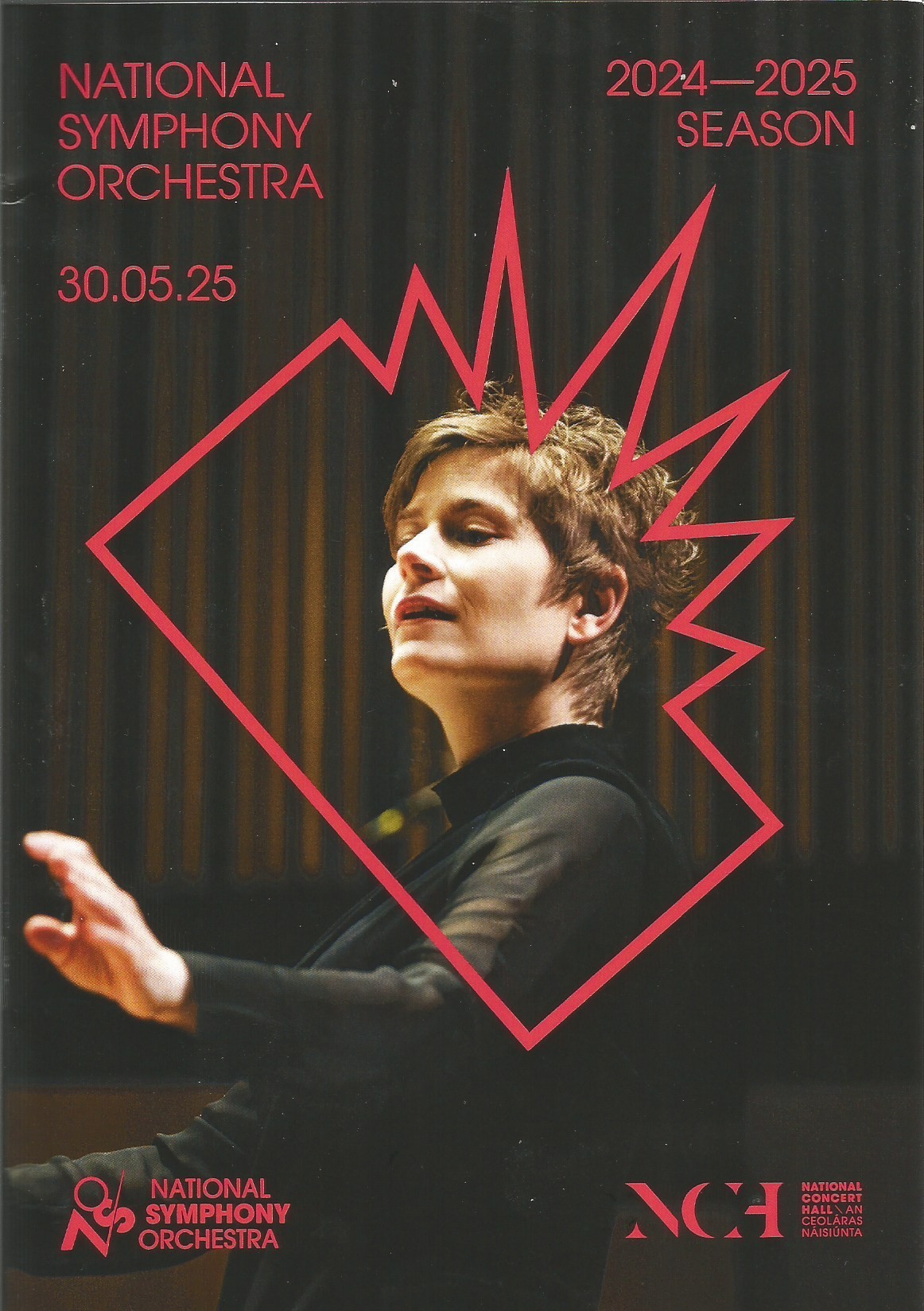
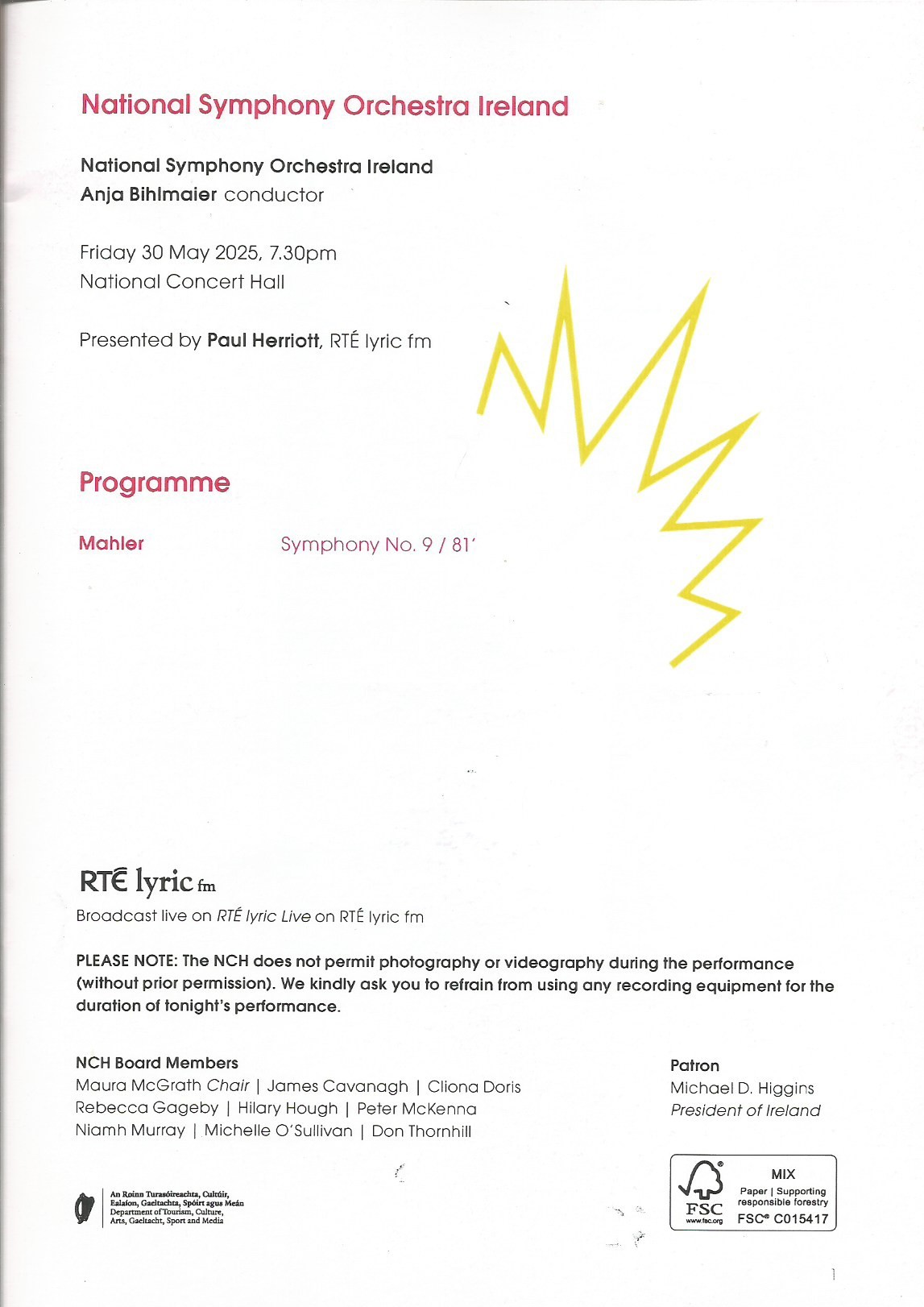
It was very nice to be able to put the marking of examinations behind me and travel into Dublin last night for the final concert of the season at the National Concert Hall in Dublin. It seems the former NSO is now to be called the NSOI, the National Symphony Orchestra Ireland, no doubt for some sort of corporate branding reason. Anyway, last night they were under the direction of guest conductor Anja Bihlmaier for a performance of the Symphony No. 9 by Gustav Mahler.
Looking back through my previous posts about Mahler I see that I haven’t previously written anything about his 9th Symphony. I am pretty sure that last night was the first time I’ve heard it live, although I have it on CD. Mahler wrote it between 1908 and 1909, immediately after finishing Das Lied von der Erde which is a symphony in all but name and which should really be his 9th. He was a very superstitious man, however, and he was worried about the Curse of the 9th, so it wasn’t given a number. After the acual 9th Symphony he went on to compose another, his 10th (though really the 11th), though he didn’t quite finish it before his death in 1911. I hope this clarifies the situation.
The 9th Symphony is a substantial piece last about 80 minutes in performance. That’s far from his longest, but it does justify it being performed on its own. The structure is unusual, with two very long slow movements either side of a pair of shorter movements, a scherzo and a rondo. The former is constructed from dance-like segments, and much of it is in 3/4 time; it reminded me a little of Ravel’s La Valse, which starts out like a standard waltz but disintegrates into a nightmarish parody of that form. The rondo described as “Rondo-Burleske” is very fragmented, grotesque and at times raucous, and also very modern-sounding. It has been described as “ferocious outburst of fiendish laughter at the futility of everything”. I think the final adagio movement is the best, and it brought out the best of the NSOI. The long sweeping passages played by only the strings, with the cellos and double-basses providing deep foundations to Mahler’s sumptuously textured harmonies. Absolutely gorgeous.
The Symphony ends very quietly indeed. Anja Bihlmaier kept her baton in hand for quite a long time before putting it down and letting the applause start. A little silence at the end of a piece of music is a very good thing: it allows the members of the audience a brief moment to reflect on what they have heard. It irks me when people starting clapping and shouting before the sound has even died away.
Anyway, when it was over, the applause was tumultuous. I’ve already mentioned the string sections, but ll the members of the NSOI contributed with outstanding contributions from the woodwinds and brass too.
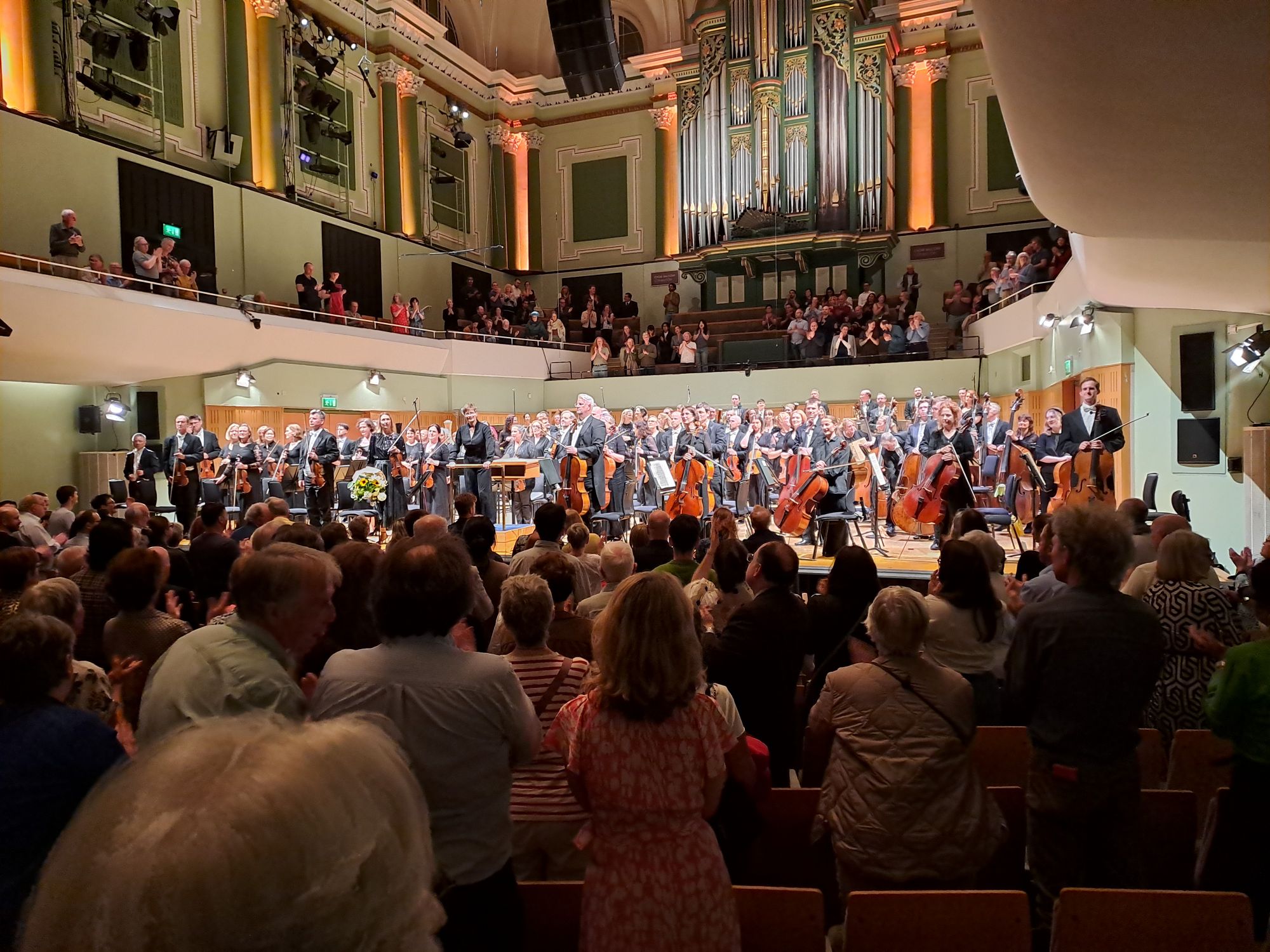
There being only one item on the menu there was no wine break, but not having an interval meant that I had time to have a drink at the end before heading back to Pearse station to get the train back to Maynooth. In the old days the NCH used to treat the audience to a free prosecco after the season finale, but not any more. I had to buy my own.
Well, this season may be over, but the booklet for next season is already out. I had a look through it on the train home. I plan to resume my Friday-night concert-going at the NCH in September, but there will be more music before then.
 In the Dark
Leave a comment