The Lindisfarne Gospels
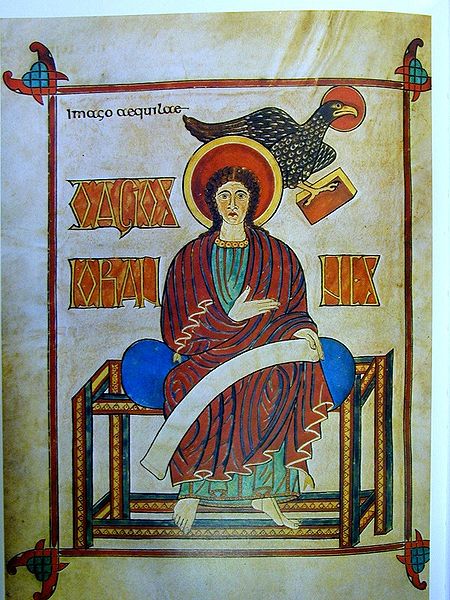 One of the interesting things going on in Durham during the week of this conference is an exhibition relating to the Lindisfarne Gospels. This extraordinary book was written around 715AD, just after the death of St Cuthbert. For those of you not familiar with Lindisfarne, or “Holy Island” as it is often called, it’s a small island off the Northumbrian coast, connected to the mainland by a causeway which is covered by the tide twice a day.
Although the Lindisfarne Gospels are about 1300 years old, the colours remain extremely vivid. It’s a remarkable thing to look at the pages on view in the exhibition to see the marks made by a human hand all that time ago; it’s difficult not to wonder about the life of the person who devoted what must have been a huge amount of time compiling this exquisite work.
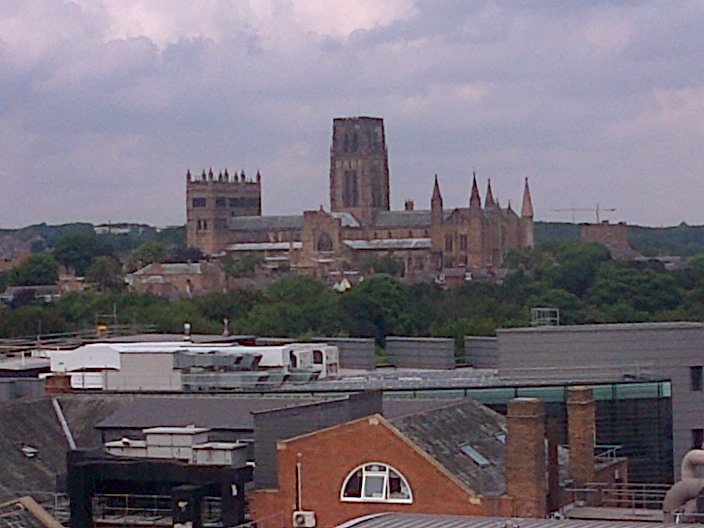
Incidentally, St Cuthbert’s remains now lie in a tomb inside Durham’s magnificent cathedral, of which we have a fine view from the balcony of the Calman Learning Centre during the coffee breaks:
 In the Dark
July 25, 2013 at 11:06 am
Some of the earliest Welsh (Brythonic Celtic) poetry, written by Taliesin, relates to Lindisfarne, which was known as “holy island” in the poems (ynys bur).
July 25, 2013 at 11:14 am
[…] One of the interesting things going on in Durham during the week of this conference is an exhibition relating to the Lindisfarne Gospels. This extraordinary book was written around 715AD, just afte… […]
July 25, 2013 at 2:33 pm
This explains why they weren’t in the British Library, whose wonderful Treasures Gallery (where they normally live) I visited on Monday, at a loose end before my train because of England’s 4-day victory in the Lords Test Match vs Australia.
July 25, 2013 at 9:47 pm
I saw them before, some years ago. I may be going senile but I seem to remember they were in the V&A for some reason.
July 26, 2013 at 12:17 pm
That could be checked fairly easily. Of course the present British Library building is only about 15 years old. (And when they were building it, posters along the site wall mentioned, among other things, Einstein getting a Nobel Prize for relativity…)
As a work of art the Lindisfarne gospels are magnificent. From the religious viewpoint, though, Bibles are to be read, not gawped at, and these things say something about the Christianity of their time.
July 26, 2013 at 6:39 pm
I believe that’s a myth Philip. If you are illiterate then you can learn far more, much more quickly, by listening to someone tell Bible stories than from a few pictures. Imagine trying to turn the Bible into a cartoon picture book with no speech bubbles allowed. The illustrations in mediaeval gospel manuscripts fall hugely far short of that.
July 26, 2013 at 8:59 pm
also – after the amount of effort put into its production – i can’t see them handing the lindisfarne gospels around to a congregation of peasents to look at.
more likely they’d have to make do with the wall paintings…