Who is a proper physicist?
There is a rather provocative paper on the arXiv by Jeroen van Dongen with the title String theory, Einstein, and the identity of physics: Theory assessment in absence of the empirical. I thought I’d share it here because it sort of follows on from yesterday’s post.
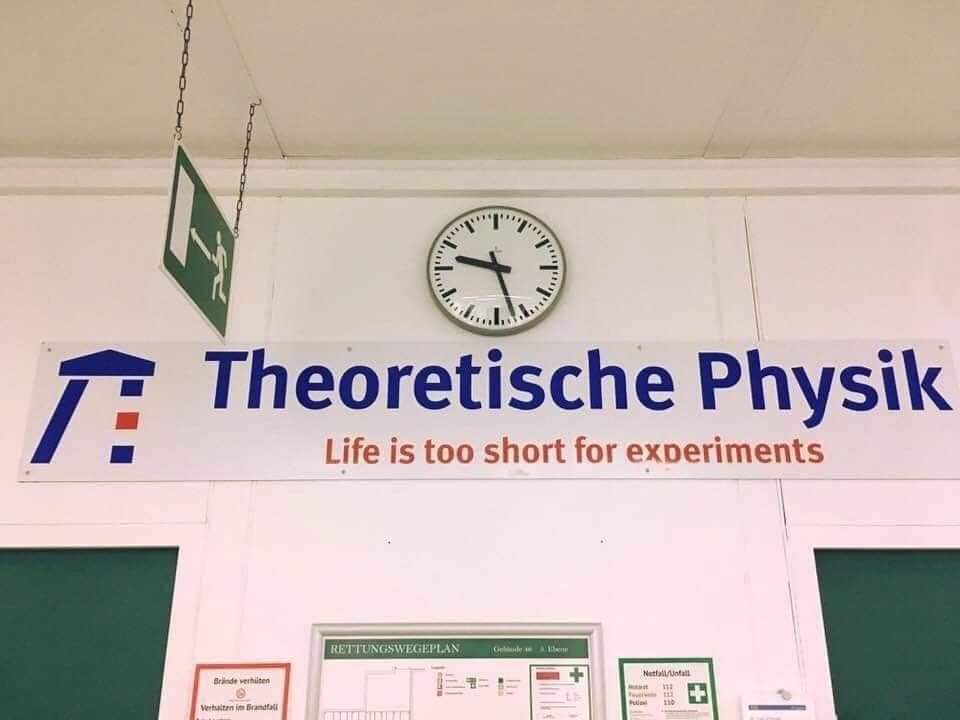
The abstract is:
String theorists are certain that they are practicing physicists. Yet, some of their recent critics deny this. This paper argues that this conflict is really about who holds authority in making rational judgment in theoretical physics. At bottom, the conflict centers on the question: who is a proper physicist? To illustrate and understand the differing opinions about proper practice and identity, we discuss different appreciations of epistemic virtues and explanation among string theorists and their critics, and how these have been sourced in accounts of Einstein’s biography. Just as Einstein is claimed by both sides, historiography offers examples of both successful and unsuccessful non-empirical science. History of science also teaches that times of conflict are often times of innovation, in which novel scholarly identities may come into being. At the same time, since the contributions of Thomas Kuhn historians have developed a critical attitude towards formal attempts and methodological recipes for epistemic demarcation and justification of scientific practice. These are now, however, being considered in the debate on non-empirical physics.
You can find a PDF of the full paper here.
As always, proper comments are welcome through the box below.
P. S. The answer to the question posed in the title is of course that a proper physicist is a physicist who’s at rest in the laboratory frame.
Follow @telescoper In the Dark
June 1, 2021 at 5:24 pm
What really drives this debate/dispute is the battle for a finite amount of funding.
June 3, 2021 at 2:57 pm
…and an infinite amount of ego…why did solid state physics get splintered up into electrical engineering, material sci., appl phys. etc?. These are merely labels … it’s all physics.
June 1, 2021 at 7:36 pm
First, what is physics?
If physics is about describing nature, then there are two ways to do it.
Type one, via discovery: the interplay between hypothesis and experiments.
Type two, via invention: invent a fictitious universe (with FU laws). Then, comparing the FU laws with Nature. By all means, those FU laws have zero association with any experiments.
Nature is framed (anchored) with only a few constants (such as Alpha, CC, Planck CMB data, etc.). Anyone who can DERIVE those constants is the final physicist.
Of course, the type one physics researchers are physicists, most of them become losers in the past 40 years.
June 2, 2021 at 11:39 am
Jerome is a v good scholar but I have to say I found that article a very long read with little that was new. And why do these guys always frame their arguments in terms of Thomas Kuhn, as if everything Kuhn uttered was gospel truth?
June 2, 2021 at 2:52 pm
Agreed that it is long-winded. And Kuhn was a fine historian of science but a lousy philosopher of it. Like Popper, Kuhn rejected inductive logic which, when done correctly, IS probabilistic reasoning understood the Bayesian way. That left Kuhn with no way to deny that paradigms change in physics as arbitrarily as fashions in clothing. Yet every physicist knows why relativistic mechanics superseded Galilean mechanics: it predicts more accurately in experiments that inevitably contain some noise (and therefore have to be analysed probabilistically).
June 2, 2021 at 10:47 pm
He’s not postmodern – that’s Feyerabend. Kuhn’s folly derives from one specific error.