Euclid DR1-Foundation
As it was foretold, today saw the first main data release – termed DR1-Foundation – from the European Space Agency’s Euclid Mission. I’ve taken the liberty of including the official press release below, but first I thought I’d do a quick summary of what this represents. The data products from the Euclid survey are divided into three levels of data processing function:
- LE1 – the “raw” data frames, prior to calibration, generated at the Science Operations Centre from the time-ordered data and telemetry received from the spacecraft
- LE2 – the calibrated and corrected data for the two instruments (VIS and NISP) – images, spectra, catalogues of point sources, etc
- LE3 – the high-level data products (galaxy catalogues, cosmic shear maps, etc) designed for cosmological analysis
Today’s release comprises LE1 and LE2 only for just less than 2000 square degrees. This is called DR1-Foundation. The LE3 data will be added next year to make the full DR1. Since LE3 is required for the cosmological analysis that is the prime motivation for the Euclid mission, it follows that there will be no official cosmology results from Euclid DR1 until mid-2027 at the earliest. Other results based on “Foundation” data may of course emerge before then.
Although there are no cosmology results accompanying DR1-Foundation, it still represents a rich treasury, including images of and other data from over a billion objects, all of which is now publicly available.
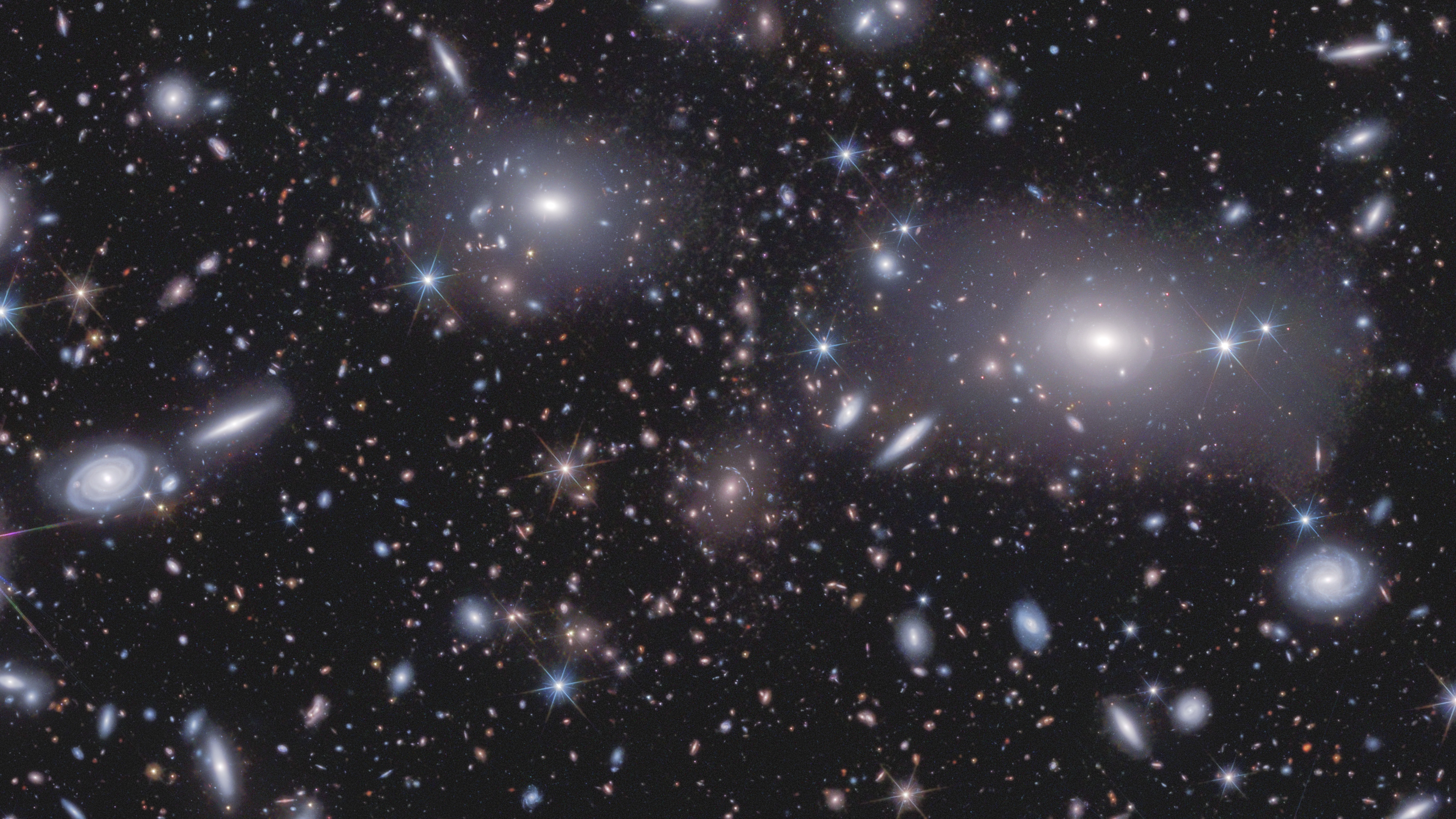
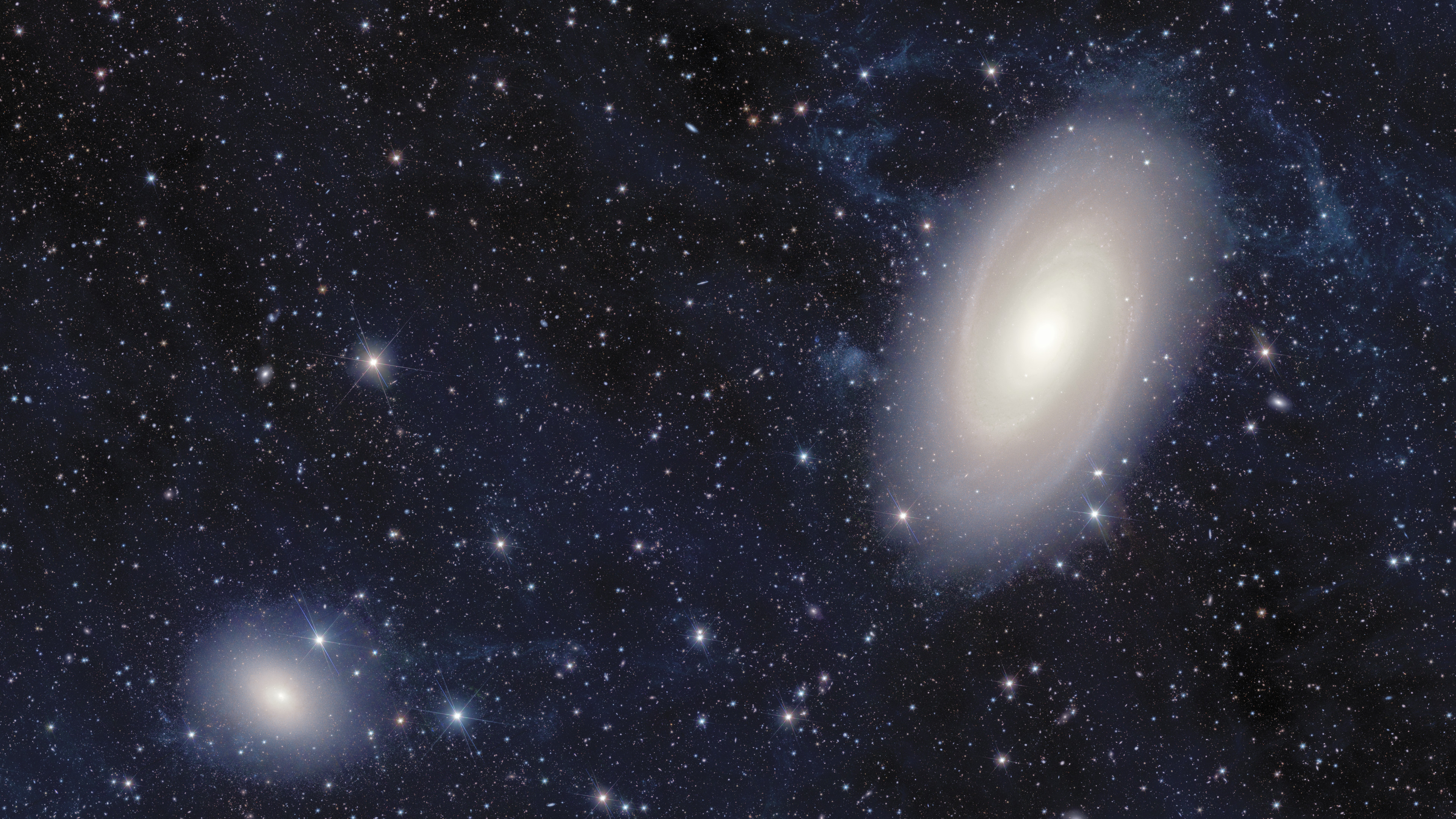
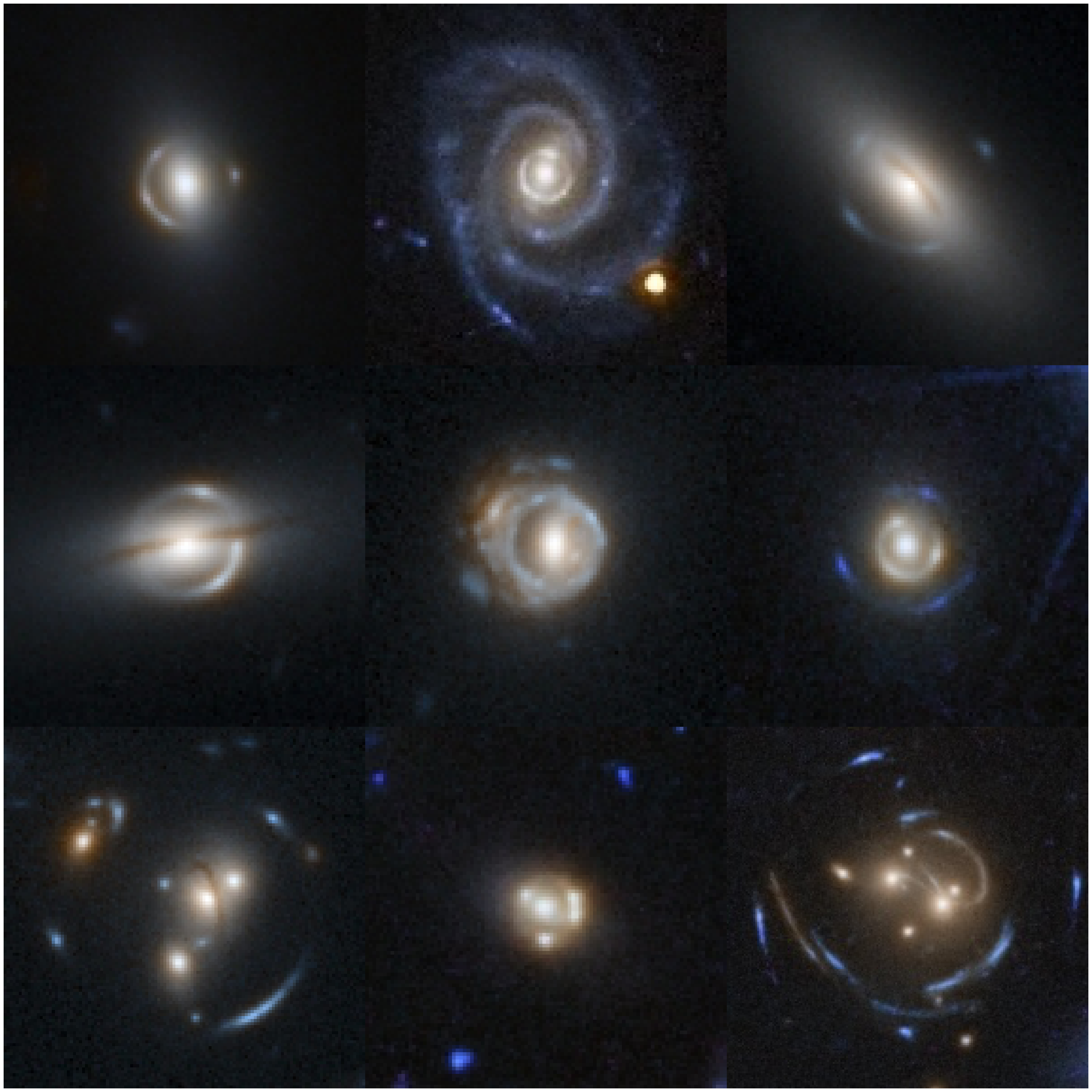
Here is a gallery of selected images to whet your appetite:
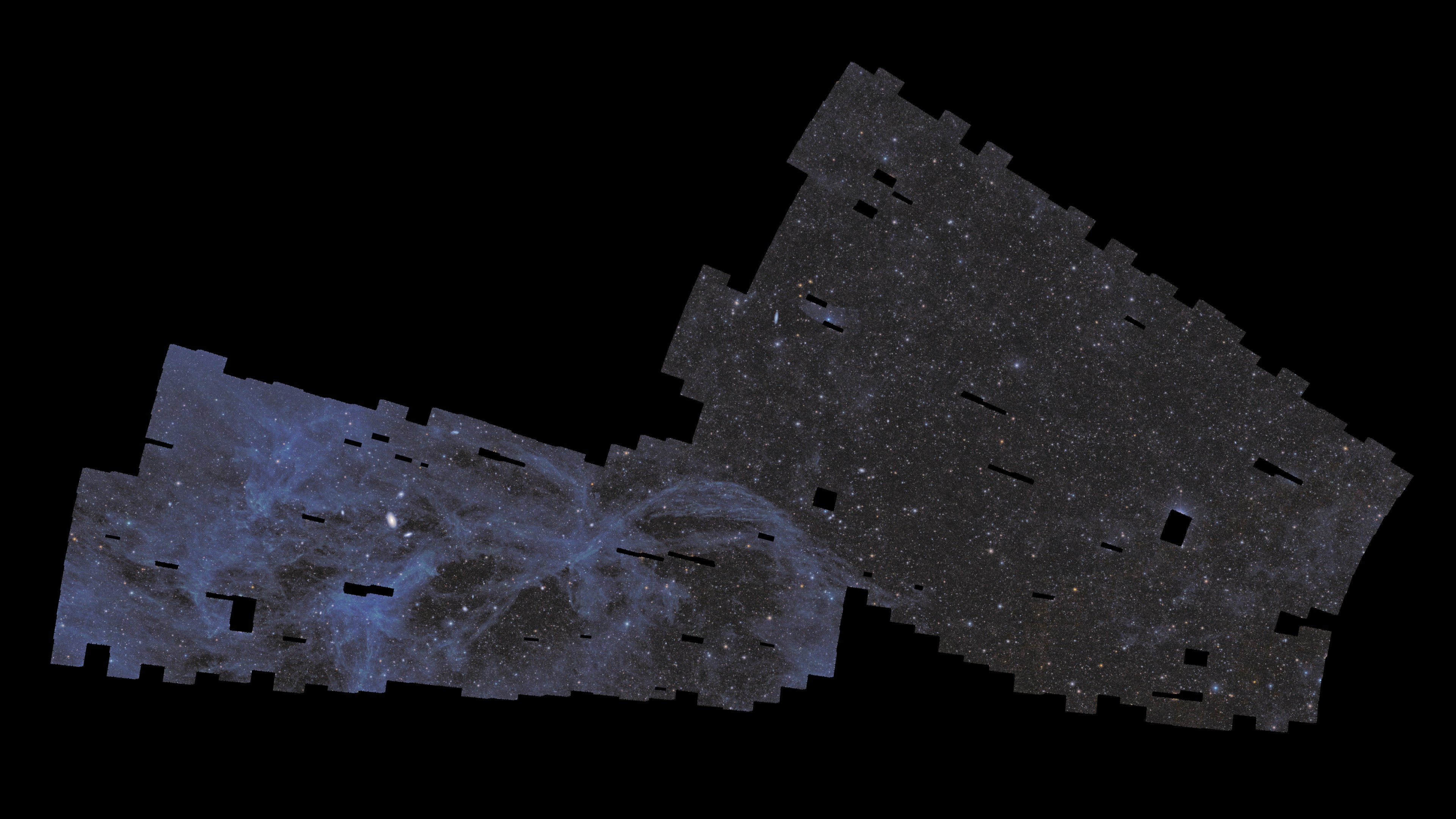
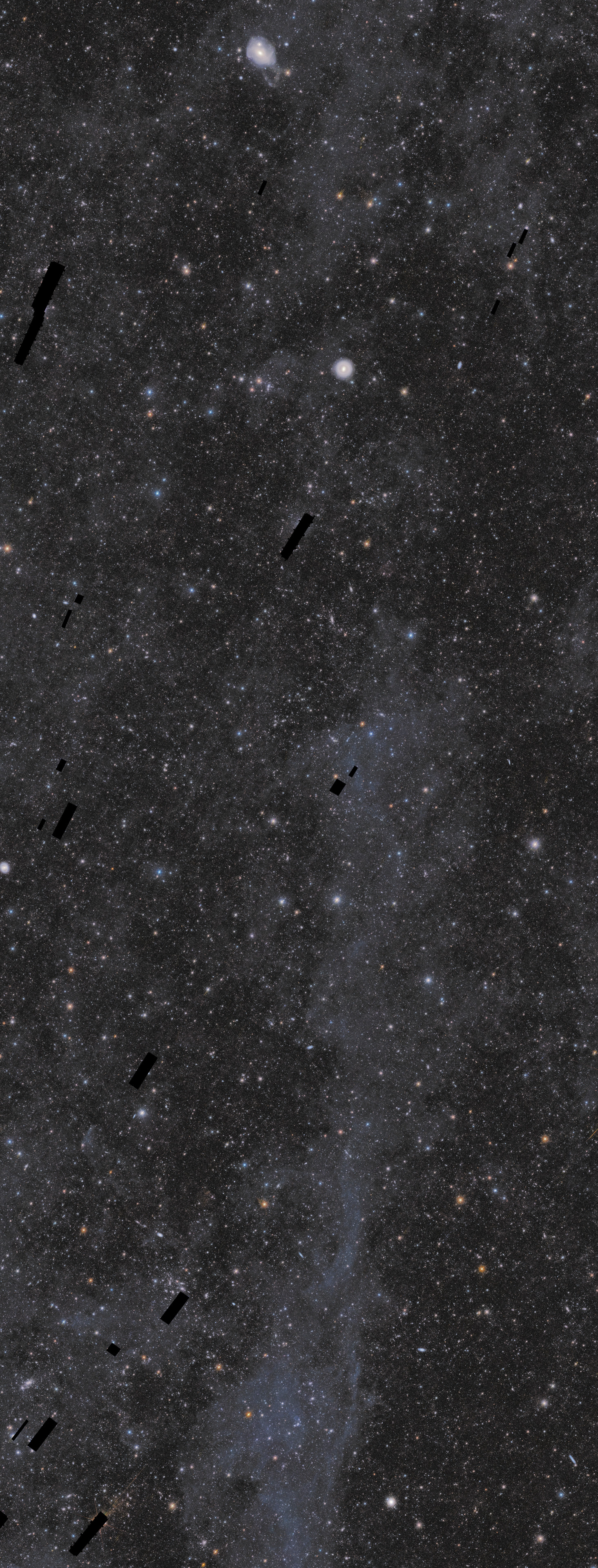
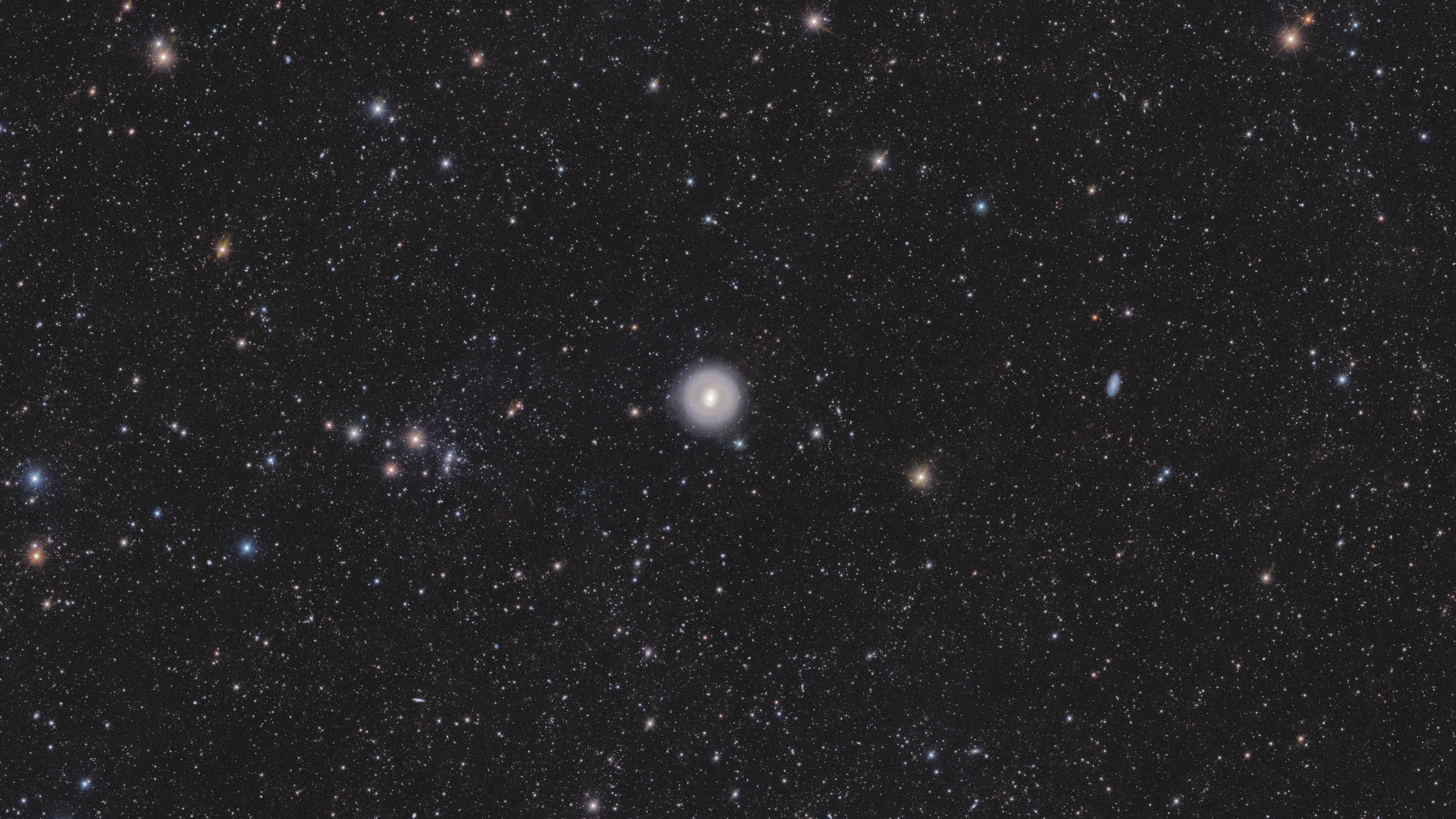
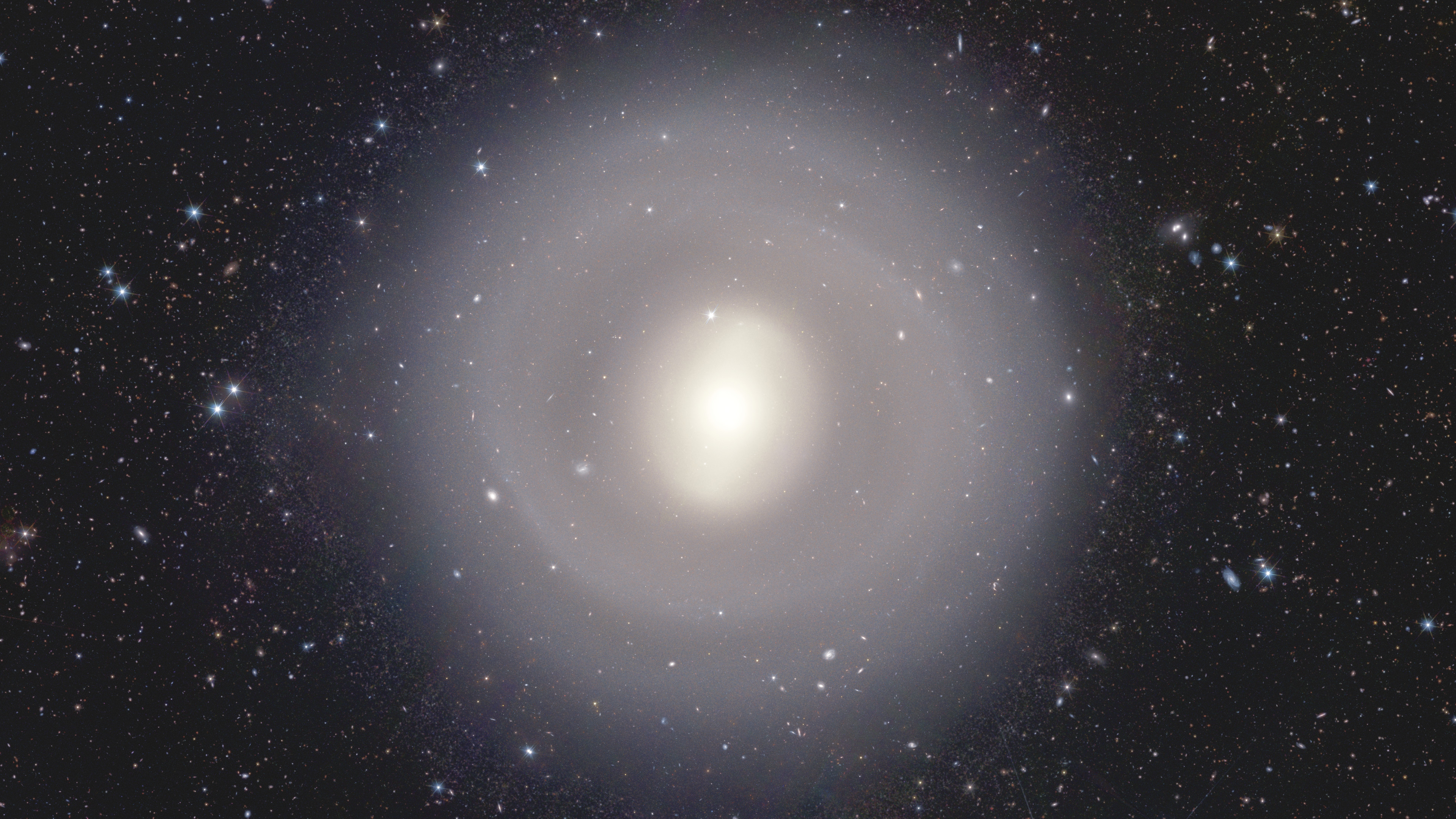
Here is a bonus graphic showing the function of the grism spectrograph, turning each galaxy image (left) into a spectrum (right). You can drag the vertical bar to compare the two images.
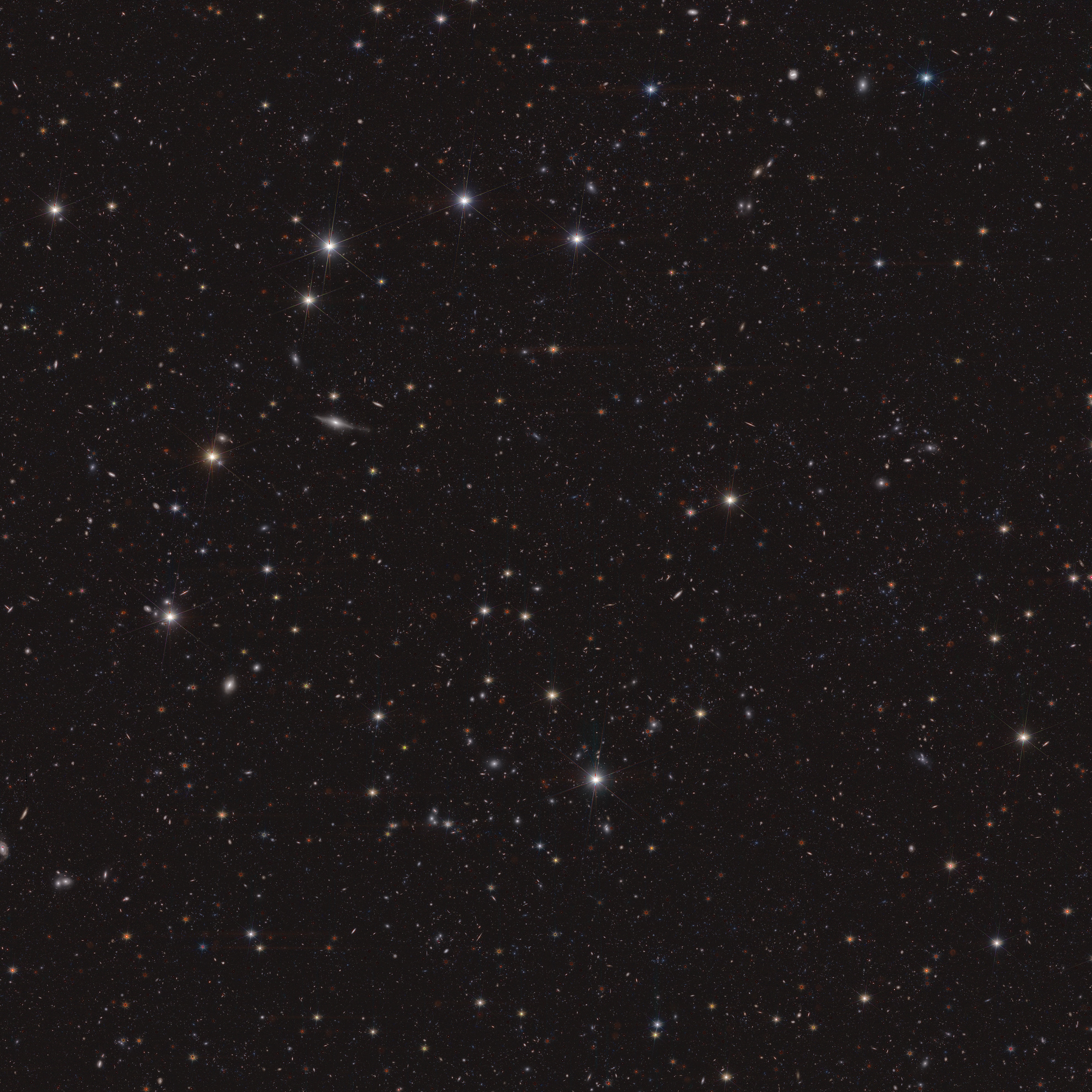
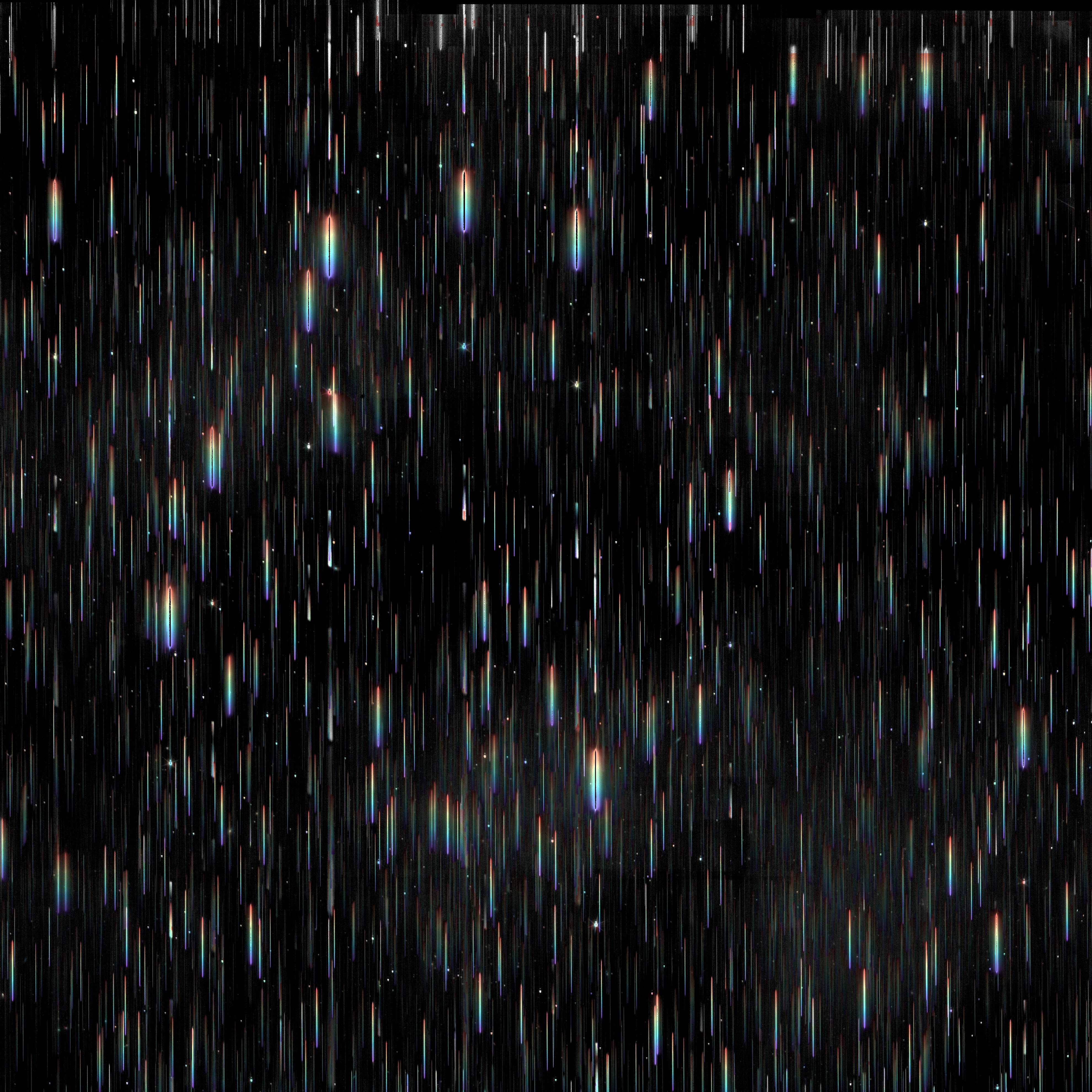
Now here is the official press release:
Press Release Text
The European Space Agency’s Euclid mission has released its first major batch of data. With this release, which captures the light of more than a billion objects and covers an area of sky as big as 9500 full Moons, ESA’s dark Universe detective lays the foundation for its largest-ever 3D map of the cosmos.
The new data release, named DR1-Foundation, comprises around 13 months of observations, and marks the first major release of mission data since the space telescope’s launch in mid-2023. For the first time, it gives scientists the puzzle pieces they need to begin constructing a detailed 3D map of the cosmos – crucial to solve the many mysteries of the dark Universe (including dark energy, dark matter, and the cosmic web [1]).
The data are accompanied by spectra and images, including large sky mosaics. “These are far more than beautiful pictures; today marks a scientific milestone in our study of the cosmos,” says ESA’s Director of Science, Prof. Carole Mundell. “This major Euclid data release represents the largest space-based survey of its kind, laying the foundation of future discovery in a new regime for astronomy and demonstrating the excellence of European technology, science and international collaboration.”
Brand new science and discovery
Today’s release is the first to demonstrate Euclid’s abilities as a sky surveyor. Its breadth, panoramic mosaics, and wide sky coverage in visible and near-infrared light support a wide range of new science. DR1-Foundation reveals unprecedented numbers of cosmic objects, and includes:
- Over 900 million galaxies
- Around 15 000 strong gravitational lensing candidates [2]
- Over 60 million quasar candidates, the brilliant cores of distant galaxies [3]
- The spectra from more than 160 million sources [4]
- Euclid Wide Survey results from 1900 deg² of sky – a total of 1.7 million GB of data
“This is a change in scale from Euclid’s previous releases, which included a few days of observations over around 60 deg² of sky,” says Valeria Pettorino, ESA’s Euclid project scientist. “We’re now releasing more than a year of data covering a significantly larger area. This unlocks ground-breaking science.”
A machine for discovering rare objects
In space, above Earth’s image-blurring and light-dimming atmosphere, Euclid can complete deep and wide surveys of the sky in a way that ground-based telescopes cannot. As a result, this data release delivers vastly more cosmic objects than any preceding survey, pushing the boundaries of detection for rare and distant objects. These include strong gravitational lenses and galaxy clusters [5]; more information on each can be found in the background section below.
The strong gravitational lenses sought by Euclid are extremely rare, and form when the light travelling to us from distant galaxies is significantly distorted by a foreground galaxy. This release contains the largest strong lens catalogue ever – bigger than all previous catalogues combined.
“Strong lensing provides unique insight into the dark Universe, allowing us to ‘weigh’ individual galaxies, including their invisible dark matter, and explore how the Universe is expanding,” says Natalie Lines of the University of Portsmouth, UK, and member of Euclid Consortium. “Over 10 years ago, we forecast that Euclid would revolutionise the field of strong lens discovery. That day is finally here.”
Galaxy clusters reveal how matter is formed and organised across the Universe. “Euclid doesn’t just look far back in time – it does so across huge areas of sky,” adds Euclid Consortium member Barbara Sartoris of JL Lagrange laboratory, Nice, France. “This gives us an unprecedented view of large samples of ancient galaxy clusters that were previously out of reach. We will explore these in the coming months to learn how these giants grew, and decipher what they reveal about the dark Universe.”
Just the beginning
With this release, Euclid begins to reveal the dark cosmos. Scientists can mine the dataset to determine the distances to individual galaxies and place them into the 3D structure of the Universe, connecting them to the vast, invisible mesh of the cosmic web. This distance-measuring and mapping is something Euclid does via spectroscopy – by splitting the light from galaxies into ‘rainbows’ that tell us about their distance (and for especially bright ones, their origin and composition too [5]).
While enormous, the dataset only covers about 14% of the total sky area Euclid will survey. The full Data Release 1, to come in mid-2027, will build on today’s release and add more crucial parts to the cosmic puzzle, including observations of weak lensing to complement the strong ones, and calculations of how galaxies and galaxy clusters fit into the cosmic web.
“DR1-Foundation includes raw data, calibrated images, catalogues, and spectra over a huge sky area, with enough statistics to uncover even rare objects,” adds Valeria. “It will be used to map the large-scale structure of the Universe in unprecedented detail. So much discovery is yet to come.”
Additional quotes
- “The release was made possible by the skill, dedication, and commitment of the teams involved in the Euclid Data Space project,” says Bruno Altieri, ESA Archive Scientist at ESAC. “The Euclid Data Space platform helps users access, visualise and process Euclid data. Storing and sharing such large catalogues, with more than a billion objects, was no mean feat – but the team rose to the challenge.”
Background
[1] The cosmic web
Galaxies cling to dense knots in the ‘cosmic web’, a mesh of filaments stretching out through the cosmos. These filaments can extend for many millions of light-years – with one light-year being the distance light travels in a year – but are mostly invisible, as they are made predominantly of dark matter. To map this web and reveal the secrets of how and where matter forms throughout the Universe, we need the meticulous detective work of telescopes like Euclid.
[2] Strong lensing
Strong gravitational lensing is one of the few ways we can measure the mass of galaxies. The combined mass of different components in galaxies – stars, dark matter, supermassive black holes – distorts distant light as it travels across the Universe to us. Strong lenses allow us to study these individual components, uncover the nature of the dark matter haloes that galaxies sit within, and explore the expansion of the Universe. They also act as natural magnifying glasses, revealing galaxies from billions of years ago that would otherwise be too faint to study.
For decades, strong lenses have remained valuable but elusive. They are rare, with only one galaxy in several thousand acting as a lens. Many are too small to be seen through the blurry atmosphere of Earth, and previous space telescopes were unable to cover the wide area needed to find large numbers of them.
This new release of Euclid data finally provides the quality and quantity of imaging needed to identify strong lenses at scale: around 15 000 systems in a haystack of more than a billion stars and galaxies. This was only possible thanks to a combination of machine learning and the help of thousands of citizen scientists who volunteered to help scour Euclid imaging via the ‘Space Warps’ project, hosted on Zooniverse).
Crucially, these lenses were all found by the same telescope and in the same way. This allows scientists to study strong lenses as a population of thousands rather than a collection of rare individuals – something impossible until now, almost fifty years after the first strong lens was discovered.
This data treasure trove also contains even rarer lens configurations that used to be one-off discoveries, such as compound lenses, where multiple background galaxies at different distances are lensed by the same foreground galaxy, and more unusual lenses, such as the dense centres of spiral galaxies.
Alongside strong lensing, Euclid is exploring the more visually subtle version of the effect: weak lensing (more information here).
[3] Quasars
Quasars are a brief but standout phase in the life of massive galaxies. In this phase, lots of material swirls inwards to fall into the black hole lurking at a galaxy’s centre, throwing off intensely bright light as it does so. Euclid is completing a ‘census’ of quasars over cosmic history, using these objects to understand the very first generation of galaxies to exist. The telescope has discovered truly ancient quasars dating back to when the Universe was just 5% of its current age. This new dataset adds over 60 million more candidates to the tally.
[4] Spectroscopy
Euclid uses a technique known as spectroscopy to measure the light from galaxies and stars. In simplified terms, Euclid splits this light into rainbows by directing the light into a camera that works like a prism. The gases within a galaxy produce different markers at specific points in this rainbow. By studying these markers and their position in the spectra, scientists can explore which materials are present in the galaxy, and also measure its distance.
Specifically, Euclid hunts for the light coming from star-forming clouds of hydrogen gas in distant galaxies (light known as hydrogen-alpha). DR1-Foundation provides the ‘rainbows’ of light, or spectra, for 160 million sources. Euclid scientists will hunt for hydrogen-alpha within these spectra to measure the distances to galaxies and map the 3D structure of the cosmic web – the main goal of Euclid spectroscopy.
More information on spectroscopy can be found here.
[5] Galaxy clusters
Galaxy clusters are the largest cosmic structures held together by gravity. Euclid’s investigations into such clusters include how massive they are, how many galaxies they contain, and their distance. Additionally, Euclid reveals difficult-to-spot collapsing ‘protoclusters’: the progenitors to today’s galaxy clusters, visible as we look ‘back in time’. Rather than relying on indirect methods to measure their distance, Euclid provides direct measures of redshift (a cosmic measure of distance that reveals a protocluster’s age) – a real advantage over previous protocluster searches.
This data release also includes key information on the faint, diffuse starlight that encircles the brightest galaxy within a cluster, known as intracluster light (a result of gas stripped away from surrounding galaxies over time as they interact and merge). This light acts as a fossil record for how the cluster came to be, and can trace hidden tendrils of dark matter. However, it’s very faint, making it difficult to detect – but Euclid’s sensitive eyes have spotted intracluster light in hundreds of clusters out to immense distances.
Euclid’s images include breathtaking views of the Horologium supercluster and members of the Messier 81 galaxy group (including Messier 81 itself, NGC 3077, NGC 1291, Holmberg IX, and Abell 3128).
Notes and further information
An overview of Euclid’s DR1, and information on how to access the data released in DR1-Foundation, can be found here: cosmos.esa.int/web/euclid/data-release-dr1
Data can be explored, visualised and analysed on Euclid Data Space (euclid.dataspace.esa.int). All of Euclid’s data and associated images – not just those included in this news release – can be explored in full colour on ESASky (sky.esa.int).
More in-depth stories about DR1-Foundation can be found on the Euclid Consortium website: euclid-ec.org
About Euclid
Euclid is in the process of imaging billions of galaxies across the Universe, and measuring distances for millions of them. It’s investigating dark energy, dark matter, and tracing the last 10 billion years of cosmic history.
The mission launched in July 2023 and started its routine science observations on 14 February 2024. In November 2023 and May 2024, the world got its first glimpses of the quality of Euclid’s images, and in October 2024 the first piece of its great map of the Universe was released. Euclid followed up with a preliminary batch of survey data in March 2025 and June 2026. This new release comprises the mission’s first substantial release of data in the form of DR1-Foundation – a release including around 1.7 million GB of data that will set the scene for future investigation into the large-scale structure of the Universe. The full DR1 release will be completed in mid-2027, with the subsequent part of DR1 also bringing data on galaxy clusters and weak lensing.
Euclid is a European mission, built and operated by ESA, with contributions from its Member States and NASA. The Euclid Consortium – consisting of more than 2000 scientists from 300 institutes in 15 European countries, the USA, Canada and Japan – is responsible for providing the scientific instruments and scientific data analysis. ESA selected Thales Alenia Space as prime contractor for the construction of the satellite and its service module, with Airbus Defence and Space chosen to develop the payload module, including the telescope. NASA provided the detectors of the Near-Infrared Spectrometer and Photometer, NISP. Euclid is a medium-class mission in ESA’s Cosmic Vision Plan.
For more of the mission’s discoveries and data releases see: esa.int/Science_Exploration/Space_Science/Euclid
You can also watch a video of the webinar announcing the release here.


Leave a Reply