MAUVE Postponed
I was hoping to do a post this evening about the satellite MAUVE which was due to be launched at 18.18 GMT from Vandenberg Space Force Base in California on a SpaceX Falcon-9 Transporter-15. Unfortunately the launched was scrubbed with about 15 minutes to go. In fact it was originally scheduled for 11th November but was postponed then. It’s now supposed to be launched on Friday 28th November. Let’s hope it’s third time lucky!
MAUVE is a small satellite, which is to be launched with a number of others; the name stands for “Mission to Analyze the UltraViolet universE” and the heart of it is a 60cm ultraviolet telescope.
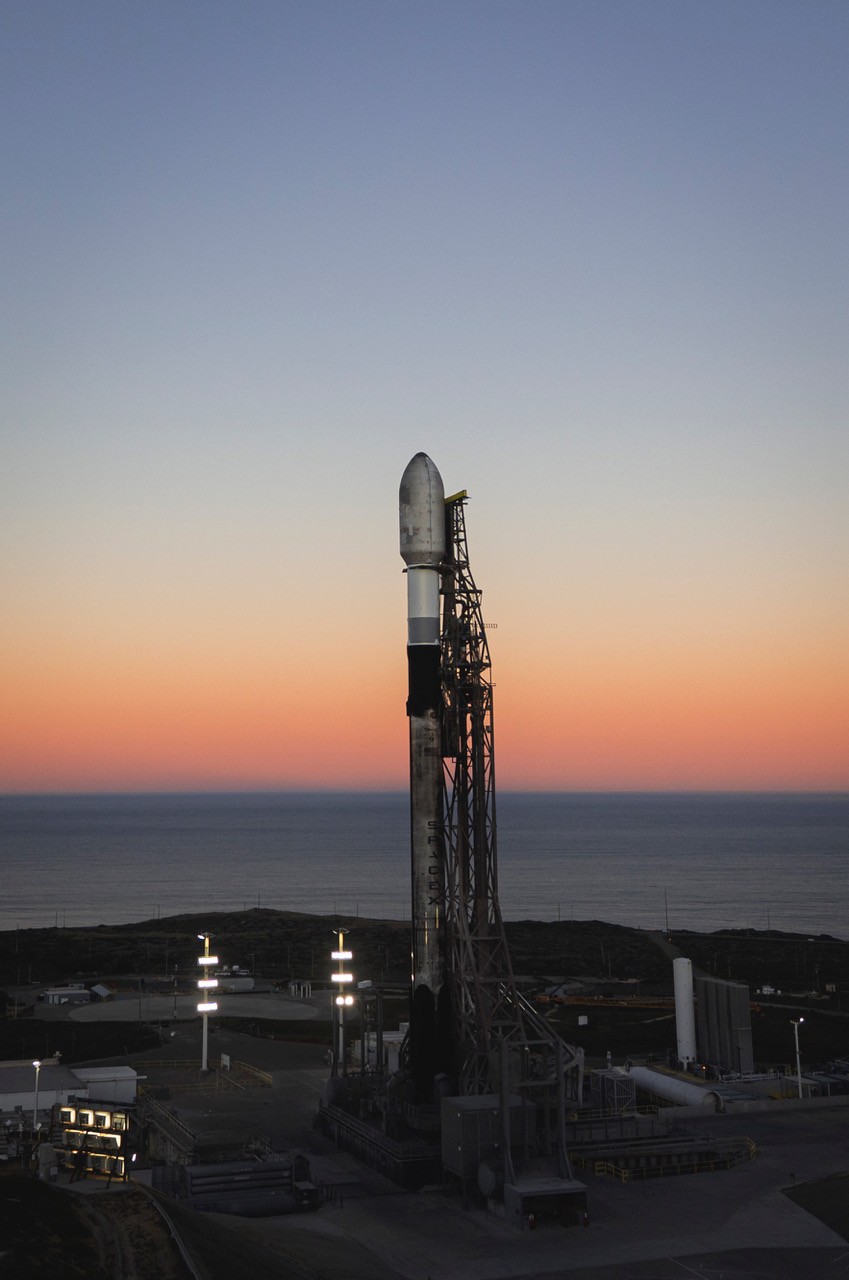
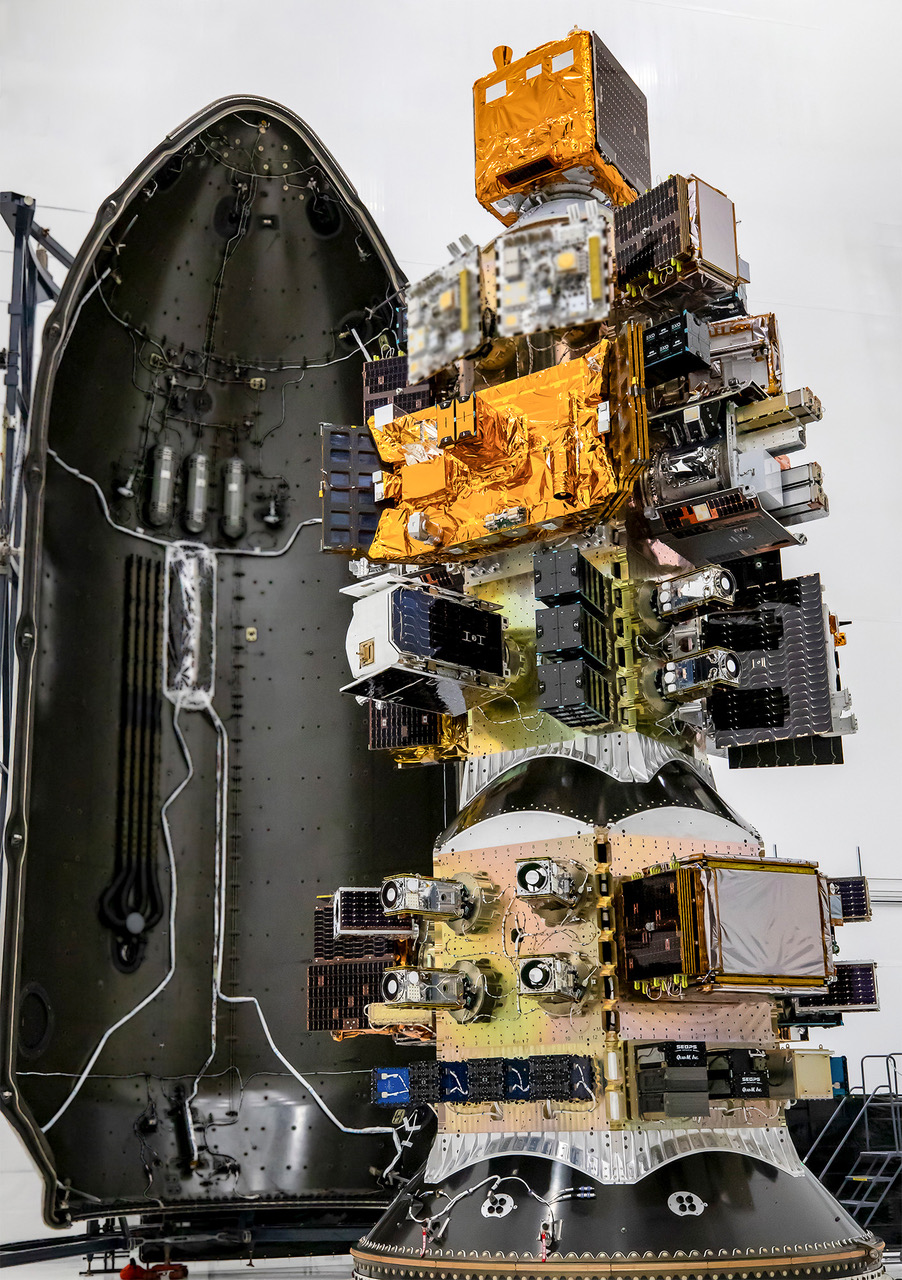

I’m not personally involved in MAUVE but the Department of Physics at Maynooth University is, through my colleague Dr Emma Whelan (who sent the above pictures) and her group. You can read more about the science – related to star and planet formation – it will do in a nice piece by Emma on RTÉ Brainstorm.
There’s a more technical description of MAUVE on the arXiv here. The abstract reads:
We present the mission concept “Mission to Analyze the UltraViolet universE” (MAUVE), a wide-field spectrometer and imager conceived during the inaugural NASA Astrophysics Mission Design School. MAUVE responds to the 2023 Announcement of Opportunity for Probe-class missions, with a budget cap of $1 billion, and would hypothetically launch in 2031. However, the formulation of MAUVE was an educational exercise and the mission is not being developed further. The Principal Investigator-led science of MAUVE aligns with the priorities outlined in the 2020 Astrophysics Decadal Survey, enabling new characterizations of exoplanet atmospheres, the early-time light curves of some of the universe’s most explosive transients, and the poorly-understood extragalactic background light. Because the Principal Investigator science occupies 30% of the observing time available during the mission’s 5 yr lifespan, we provide an observing plan that would allow for 70% of the observing time to be used for General Observer programs, with community-solicited proposals. The onboard detector (THISTLE) claims significant heritage from the Space Telescope Imaging Spectrograph on Hubble, but extends its wavelength range down to the extreme UV. We note that MAUVE would be the first satellite in decades with the ability to access this regime of the electromagnetic spectrum. MAUVE has a field of view of 900″ x 900″ a photometric sensitivity extending to mUV ≤ 24 , and a resolving power of R ~ 1000. This paper provides full science and mission traceability matrices for this concept, and also outlines cost and scheduling timelines aimed at enabling a within-budget mission and an on-time launch.
Anyway, I hope to be able to give an update on Friday evening about the successful launch of MAUVE. Fingers crossed!
 In the Dark
November 27, 2025 at 11:20 am
If I read it correctly, observing time on it is awarded via a subscription model – i.e. you presumably pay a certain amount each year which gives you x% of the available time? I assume the subscription fee was then paid by Research Ireland? That would be great news as it would then appear that the funding agency is willing to support truly blue-sky fundamental research?
November 27, 2025 at 11:58 am
Yes, Emma’s involvement is funded by Research Ireland. I think the sugar-coating for the application was to base it around developing Machine Learning techniques for MAUVE, which presses the right buttons for the panels.
November 28, 2025 at 7:25 pm
[…] a false start a couple of days ago, the satellite MAUVE was launched at (10.44 Pacific Time (18.44 GMT) today from Vandenberg Space […]
November 28, 2025 at 7:51 pm
[…] soeben auch Mauve. Auch Videoclips vom Start und der Stufenlandung sowie Artikel von gestern und vorgestern. [20:45 […]