Bacewicz, Tchaikovsky and Rachmaninov at the National Concert Hall
Unfortunately I had to miss the opening concert of the 2026/7 season by National Symphony Orchestra Ireland at the National Concert Hall, especially since it was Mahler’s epic Resurrection Symphony. That was three weeks ago and last night was the first time I managed to make it to a concert at the National Concert Hall this season.
Earlier this week I was thinking that, although I’ve been walking to and from the NCH on Fridays quite frequently since I moved to Ireland almost 9 years ago, I’ve managed to avoid getting rained on to a significant extent. Yesterday evening my luck ran out and it was bucketing down. Fortunately I took an umbrella and wore an raincoat so I wasn’t too drenched when I arrived. The cloakroom at the NCH is free, by the way.
Having arrived and divested myself of coat and brolly, I commenced the usual ritual of buying a programme and noticed the format had changed. The new style is much shorter (and cheaper, at just €2) and has QR codes linking to much of the material that would previously have been in the programme. If you’re interested you can follow the links above. I like having a printed copy primarily as a souvenir, and the new format serves that purpose well.
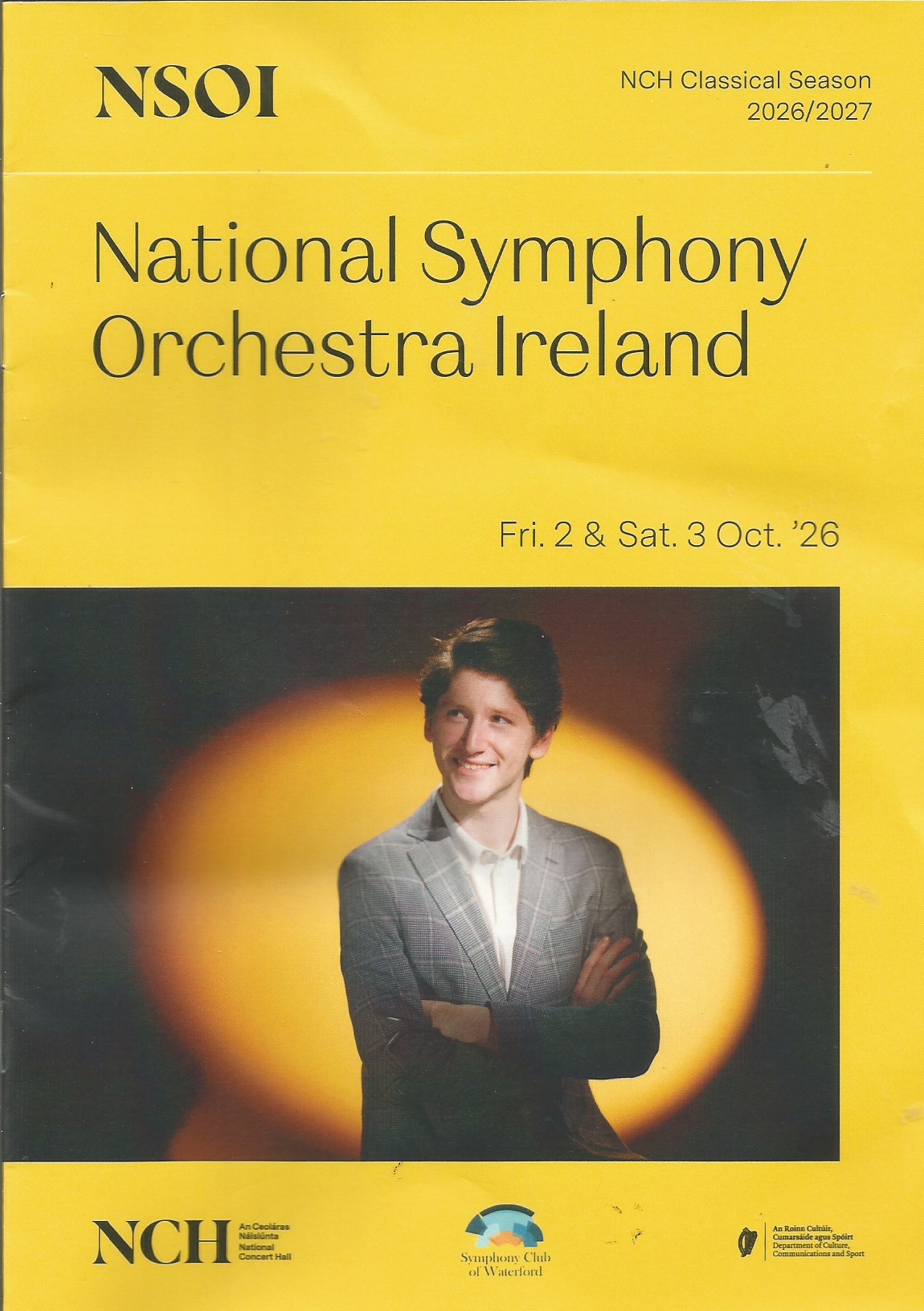
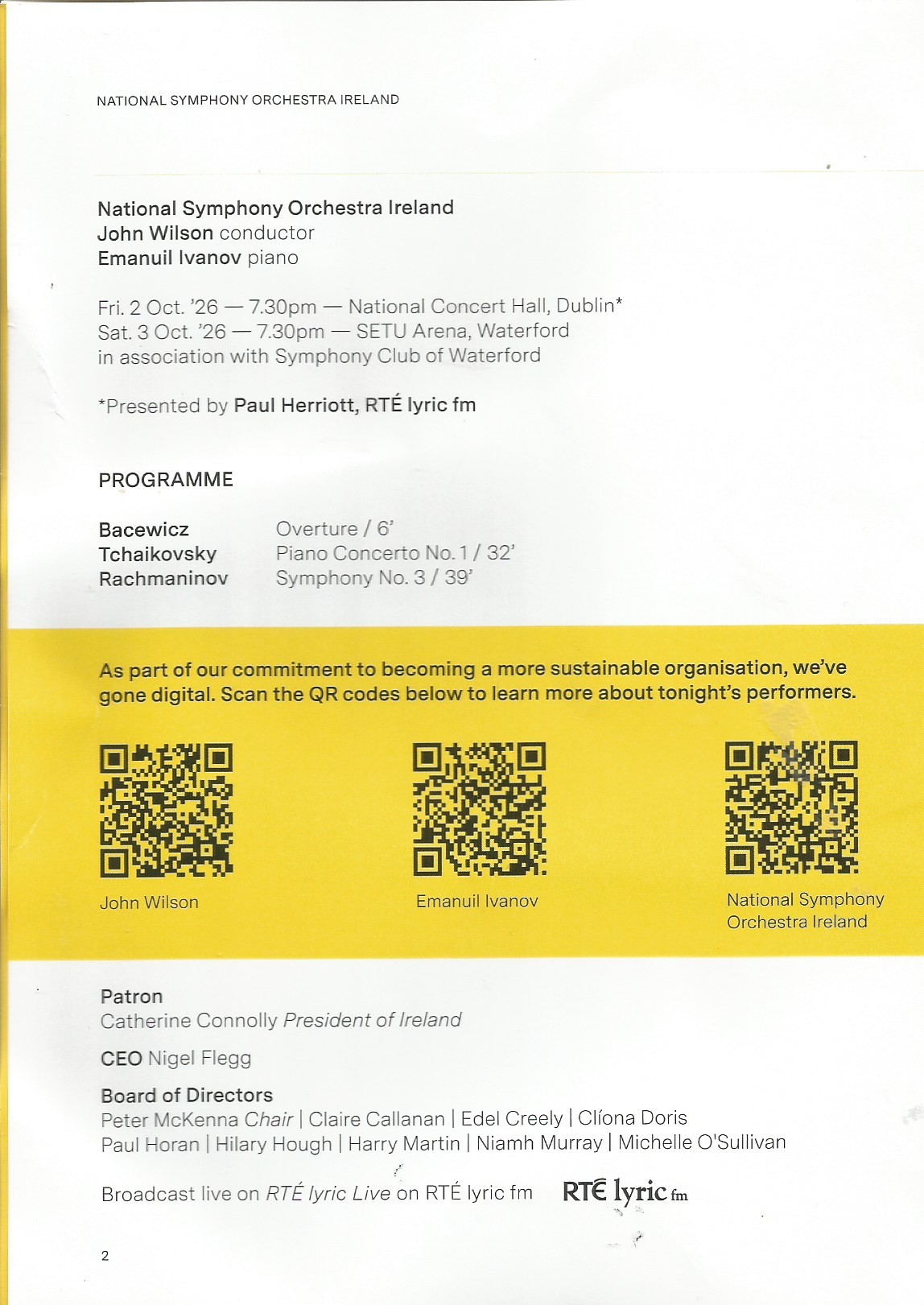
The National Orchestra of Ireland was conducted last night by John Wilson. The first item on the menu last night was a short piece by Polish composer Grażyna Bacewicz called, simply, Overture. This was composed in the depths of the Second World War, but not officially premiered until 1945. Given the time of its composition it is surprisingly optimistic in tone, with its defiant “V for Victory” motif and evocations of pre-war peace.
Next up was one of the most familiar concert pieces of the entire classical repertoire, the Piano Concerto No. 1 by Pyotr Ilyich Tchaikovsky. Certainly the spectacular opening, with its fanfare-like introduction followed by a dramatic string theme supported by huge chords from the piano, must be one of the best-known introductions to a classical work. It’s curious though that the theme that gives it such an imposing start is not heard anywhere else in the concerto, though what follows is hugely absorbing and entertaining, if a bit theatrical for some tastes. It’s not too theatrical for me, I hasten to add. I love it.
The soloist for the performance was Bulgarian-born Emanuil Ivanov who hit a wrong note early on but thereafter played very well. I thought he really only caught fire in the last movement with its tumultuous climax. The Dublin audience is always generous with its applause and treated the soloist and orchestra to a standing ovation af the end of the performance.
After the wine break we returned to a piece that I’ve never heard in a live concert before, the Symphony No. 3 in A minor by Sergei Rachmaninov. This was written about 30 years after his more famous Second Symphony and is quite different, though still romantic, style. It is in three movements, beginning slowly (Lento) with a statement of a simple theme, but then speeds up (Allegro moderato, then Allegro) as the theme reappears in different guises. The second movement does much the same thing, initially with violin and flute to the fore before the rest of the orchestra joins in, including some of Rachmaninov’s trademark romantic string passages. The final movement starts and ends Allegro Vivace, with several changes of gear in between, but although it was exciting in patches I found it a bit long-winded. My summary would be that I’m glad to have had the opportunity to hear Rachmaninov’s Symphony No. 3, but I don’t think it’s as compelling as his Symphony No. 2.
I usually choose my seat for these concerts to make it easy to get to the bar for the interval, but there was a bonus yesterday. Because of the rain earlier in the evening many more people than usual had checked in coats and umbrellas. When the concert was over I was very quick to get to the cloakroom to extract my things while an enormous queue was growing. It wasn’t raining on the way home.


Leave a Reply