Archive for August, 2009

The Axle of Elvis

Posted in Cosmic Anomalies, The Universe and Stuff with tags , , , , , , on August 6, 2009 by telescoper

An interesting paper on the arXiv yesterday gave me a prod to expand a little on one of the cosmic anomalies I’ve blogged about before.

Before explaining what this is all about, let me just briefly introduce a bit of lingo. The pattern of variations fluctuations in the temperature of the cosmic microwave background (CMB) across the sky, such as is revealed by the Wilkinson Microwave Anisotropy Probe (WMAP), is usually presented in terms of the behaviour of its spherical harmonic components. The temperature as a function of position is represented as a superposition of spherical harmonic modes labelled by two numbers, the degree l and the order m. The degree basically sets the characteristic angular scale of the mode (large  scales have low l, and small scales have high l). For example the dipole mode has l=1 and it corresponds to variation across the sky on a scale of 180 degrees; the quadrupole (l=2) has a scale of 90 degrees, and so on. For a fixed l the order m runs from -l to +l and each order represents a particular pattern with that given scale.

The spherical harmonic coefficients that tell you how much of each mode is present in the signal are generally  complex numbers having real and imaginary parts or, equivalently, an amplitude and a phase.  The exception to this are the modes with m=0, the zonal modes, which have no azimuthal variation: they vary only with latitude, not longitude. These have no imaginary part so don’t really have a phase. For the other modes, the phase controls the variation with azimuthal angle around the axis of the chosen coordinate system, which in the case of the CMB is usually taken to be the Galactic one.

In the simplest versions of cosmic inflation, each of the spherical harmonic modes should be statistically independent and randomly distributed in both amplitude and phase. What this really means is that the harmonic modes are in a state of maximum statistical disorder or entropy. This property also guarantees that the temperature fluctuations over the sky should be described by  a Gaussian distribution.

That was perhaps a bit technical but the key idea is that if you decompose the overall pattern of fluctuations into its spherical harmonic components the individual mode patterns should look completely different. The quadrupole and octopole, for example, shouldn’t line up in any particular way.

Evidence that this wasn’t the case started to emerge when WMAP released its first set of data in 2003 with indications of an alignment between the modes of low degree. In their  analysis, Kate Land and Joao Magueijo dubbed this feature The Axis of Evil; the name has stuck.They concluded that there was a statistically significant alignment (at 99.9% confidence) between the multipoles of low degree (l=2 and 3), meaning that the measured alignment is only expected to arise by chance in one in a thousand simulated skies. More recently, further investigation of this effect using subsequent releases of data from the WMAP experiment and a more detailed treatment of the analysis (including its stability with respect to Galactic cuts) suggested that the result is not quite as robust as had originally been claimed. .

Here are the low-l modes of the WMAP data so you see what we’re talking about. The top row of the picture contains the modes for l=2 (quadrupole) and l=3 (octopole) and the bottom shows l=4 and l=5.


The two small red blobs mark the two ends of the preferred axis of each mode. The orientation of this axis is consistent across all the modes shown but the statistical significance is much stronger for the ones with lower l.

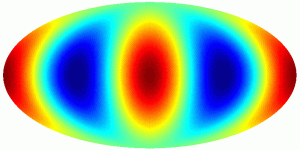
It’s probably worth mentioning a couple of neglected aspects of this phenomenon. One is that the observed quadrupole and octopole appear not only to be aligned with each other but also appear to be dominated by sectoral orders, i.e those with m=l. These are the modes which are, in a sense, opposite to the zonal modes in that they vary only with longitude and not with latitude. Here’s what the sectoral mode of the quadrupole looks like:
map22

Changing the phase of this mode would result in the pattern moving to the left or right, i.e. changing its origin, but wouldn’t change the orientation. Which brings me to the other remarkable thing, namely that the two lowest modes also have  correlated phases. The blue patch to the right of Galactic centre is in the same place for both these modes. You can see the same feature in the full-resolution map (which involves modes up to l~700 or so):

I don’t know whether there is really anything anomalous about the low degree multipoles, but I hope this is a question that Planck (with its extra sensitivity, better frequency coverage and different experimental strategy) will hopefully shed some light on. It could be some sort of artifact of the measurement process or it could be an indication of something beyond the standard cosmology. It could also just be a fluke. Or even the result of an over-active imagination, like seeing Elvis in your local Tesco.

On its own I don’t think this is going to overthrow the standard model of cosmology. Introducing extra parameters to a model in order to explain a result with a likelihood that is only marginally low in a simpler model does not make sense, at least not to a proper Bayesian who knows about model selection…

However, it is worth mentioning that the Axis of Evil isn’t the only cosmic anomaly to have been reported. If an explanation is found with relatively few parameters that can account for all of these curiosities in one fell swoop then it would stand a good chance of convincing us all that there is more to the Universe than we thought. And that would be fun.
Go Galaxy!

Posted in Uncategorized with tags on August 5, 2009 by telescoper

This morning I was looking through my copy of the popular monthly periodical British Naturism (which I buy for the Spot-the-Ball competition).

In the magazine I found an advertisement with the slogan

If you can’t go naked, go Galaxy!

The immediate thing that sprang to mind was that I didn’t think I’d ever seen Galaxy used as an adjective before. However, this is advertising so the usual rules of grammar don’t apply. The next question was whether it might have something to do with astronomy. It doesn’t.

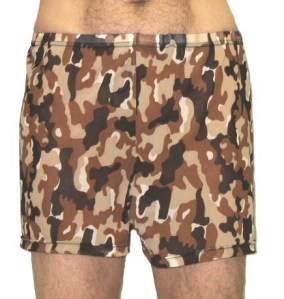
Galaxy is the strangest range of clothing you’ve ever seen. Essentially it contains bathing costumes that are almost transparent, enabling the Sun’s rays to pass through the material. At the same time a kind of disruptive pattern camouflage (available in a choice of designs) printed on the meshlike material makes the items appear opaque to prying eyes. Here’s an example

shortnn

This combination allows the wearer to acquire a suntan in his or her private places but the swirling patterns confuse the observer’s eye to the extent that he/she doesn’t realise that the wearer’s personal credentials are actually in full view. Perhaps this is an example of Moiré is less?

Having been swimming au naturel on many occasions, I would say the best part of it is the freedom you feel in having your private parts unconstrained. The downside is the exposure of sensitive areas to the harsh rays of the Sun. It seems to me that in this sense the Galaxy range offers the worst possible combination of being hindered as well as burnt. Still, they do offer an option to those people who are too shy to go nude on a beach and who want to get an all over tan without using one of those horrendous ultra-violet tanning machines that look like a fluorescent coffin or slapping  orange dye all over themselves.

I’m not sure how effective these things are at concealing the relevant appendages, so maybe I’ll buy a pair and see. Perhaps I could run an undergraduate project to investigate their optical properties?

Singh Along

Posted in Science Politics with tags , , , on August 4, 2009 by telescoper

One of the nice things about the blog interface at  WordPress  is the way it flags up posts from other blogs that might be related to those on your own site. A good example is an item at a site which is quite new to me called Cubik’s Rube. This particular one alerted me to an update about the Simon Singh libel action which I’ve blogged about before, in a post that generated a great deal of debate and discussion.

If you recall, Singh is being sued for libel by the British Chiropractic Association (BCA)  for damages after he labelled some of their treatments bogus in an article written in The Guardian. The newspaper settled and withdrew the piece from its website but Singh decided to fight the action. At a pre-trial hearing the judge ruled that his use of the word bogus would be interpreted as meaning that the therapies being offered by the BCA were not only worthless, but that the BCA  knew they were worthless. To win his case Singh would have to prove both these claims were true. Simon Singh claimed he never intended that meaning and vowed to appeal. That was the situation in June 2009, at the time of my previous post.

Things moved on a bit while I was away last week. In an order sealed on 30 July 2009 the Court of Appeal has refused Singh leave to appeal, thus piling the pressure even further on him to settle the action and restricting his options even further. For a clearer explanation of the legal issues involved than I could ever manage, see the article by famous legal blogger Jack of Kent.

One side issue is worth mentioning, however, which is that it is apparently unclear from a legal point of view whether the BCA has standing to sue for defamation at all since it is a corporation without shareholders. It seems strange that such a basic issue would be unresolved. Surely there must be relevant precedents?

Meanwhile the BCA has issued a conciliatory statement, implying that it would prefer for the case to be settled out of court. This seems a bit surprising given that they would appear to hold all the cards, but the answer probably lies in the appalling public relations gaffe it has made over its presentation of alleged evidence for its therapies.

Challenged (largely by bloggers) to present evidence for the effectiveness of its therapies for certain paediatric conditions (such as asthma, infantile colic and even bed-wetting), the BCA produced a report containing a “plethora” of evidence, dated 17th June 2009. This dossier – cobbled together from 19 research papers, most of which don’t really support their case at all – turns out to have been the epitome of dodginess and over the last few weeks it has been comprehensively dissected, discredited, debunked and demolished all over the blogosphere. A recent editorial in the British Medical Journal described its own refutation of the BCA’s claims to be “complete”.

I doubt if the BCA wants to see its credibility further undermined by having its so-called evidence savaged again in open court, which probably explains why they might prefer to settle than carry on the case. Nothing said in court can be subject to the libel laws.

But it’s an amazing blunder by the BCA to have presented such a shaky collection of evidence in the first place. All it has achieved is to make them look like fools.

Anyway, it’s now a peculiar situation. It still looks like Singh can’t win the case unless he can prove the BCA are dishonest rather than merely inept. And the BCA stands to fall even lower in public esteem if it goes to trial. If Singh can afford it he could fight on regardless and hope that if he loses the damages will be bearable. Morally, though, he will have won.

But the really impressive thing to me is the way that expert bloggers have forced the BCA into a corner. I think this is probably a sign of the way science is changing through use of the internet’s ability to communicate complex things so rapidly.

Return of the Clerihews!

Posted in Poetry, The Universe and Stuff with tags , , on August 2, 2009 by telescoper

As a result of an after-dinner discussion at the meeting I attended last week, I’ve decided to put a revised cosmological clerihew collection back online. I’ve removed or edited those that caused the greatest offence, and added a few new ones.

Bernard Carr
Has gone a bit far:
His Anthropic Principle
Makes theories invincible

Sean Carroll
Has me over a barrel
Because the only plausible rhyme
Plugs his new book on Time

The mind of John Barrow
Is not very narrow:
He’s more open than me
To a variable c

Stephen Hawking
Lets a machine do the talking
But even  he can’t vocalize in-
side a black hole horizon.

Joe Silk
Is one of that ilk
Who writes far more articles
Than there are elementary particles

Matt Griffin
Has healthy salad for tiffin
But he’d probably expire
If something went wrong with SPIRE.

Peter Ade
Would never be afraid
To enter his name
In the citation game

Andy Lawrence
Would shed tears in torrents
If they finally got rid
Of the Astrogrid

Steve Maddox
Never eats haddocks
But he’s quite a dab hand
In the optical band

Ofer Lahav
Is awfully suave
But must be getting nervy
About the cancellation of funding for the Dark Energy Survey

Joao Magueijo
Was on the Today Show
Talking some shite
About travelling faster than light

Keith Mason
Said to Lord Drayson
“Can we have some more money?”
He replied “Don’t try to be funny…”

Andrei Linde
Felt rather windy
A peculiar sensation:
The result of internal inflation?

To rhyme Carlos Frenck
I’ve drawn a complete blenk
But I found in the lexicon
A good one for Mexican

When Andrew Jaffe
Plots a new graph he
Thinks fits his theory he’ll
Tell everyone at Imperial

Paul Steinhardt
Said “Lust not after beauty in thine heart”
But why he did so
I really don’t know

Feel free to offer your own through the comments box, after consulting the rules, although I remind you I don’t accept anonymous comments, even if they’re funny.

The End of All Songs

Posted in Music with tags , , on August 1, 2009 by telescoper

I’ve been searching around on Youtube for quite a while trying to decide which is my favourite version of my favourite song. This is Im Abendrot, a poem by Joseph von Eichendorff, as it was set to music by Richard Strauss and published as the last of his Four Last Songs. Strauss wrote the music for this in 1948, just a year before he died.

The poem had a special meaning for Strauss and I think that comes across in the achingly beautiful music he composed for it. The verse is

Wir sind durch Not und Freude
gegangen Hand in Hand;
vom Wandern ruhen wir
nun überm stillen Land.

Rings sich die Täler neigen,
es dunkelt schon die Luft,
zwei Lerchen nur noch steigen
nachträumend in den Duft.

Tritt her und laß sie schwirren,
bald ist es Schlafenszeit,
daß wir uns nicht verirren
In dieser Einsamkeit.

O weiter, stiller Friede!
So tief im Abendrot.
Wie sind wir wandermüde–
Ist dies etwa der Tod?

Although it is basically about death, I find this piece immensely uplifting and joyful.  The setting of the last verse in particular reaches parts of me that other music doesn’t reach. The voice floats freely as if suspended in mid-air over the first line (O weiter, stiller Friede!) while the orchestra gently swells beneath it, heightening the suspense. The voice then soars up and away like a majestic bird over the second line of text (So tief im Abendrot) while the orchestra gathers again. The exquisite countermelody rises up to meet the vocal line and they fly together for a while before the words come to and end and it all eventually subsides into a quiet but wonderful sense of fulfilment and peace.

Music just doesn’t get much better than this.

This is the best version I could find on Youtube, by the relatively unknown Gundula Janowitz recorded in 1973 with the Berlin Philharmonic. I’m not saying it’s the best version that’s ever been done – this piece has been recorded by virtually every soprano worthy of the name and everyone will have their favourite- but this is up among the very best.

A Mountain of Truth

Posted in Bad Statistics, The Universe and Stuff with tags , , , , on August 1, 2009 by telescoper

I spent the last week at a conference in a beautiful setting amidst the hills overlooking the small town of Ascona by Lake Maggiore in the canton of Ticino, the Italian-speaking part of Switzerland. To be more precise we were located in a conference centre called the Centro Stefano Franscini on  Monte Verità. The meeting was COSMOSTATS which aimed

… to bring together world-class leading figures in cosmology and particle physics, as well as renowned statisticians, in order to exchange knowledge and experience in dealing with large and complex data sets, and to meet the challenge of upcoming large cosmological surveys.

Although I didn’t know much about the location beforehand it turns out to have an extremely interesting history, going back about a hundred years. The first people to settle there, around the end of the 19th Century,  were anarchists who had sought refuge there during times of political upheaval. The Locarno region had long been a popular place for people with “alternative” lifestyles. Monte Verità (“The Mountain of Truth”) was eventually bought by Henri Oedenkoven, the son of a rich industrialist, and he  set up a sort of commune there at  which the residents practised vegetarianism, naturism, free love  and other forms of behaviour that were intended as a reaction against the scientific and technological progress of the time.  From about 1904 onward the centre became a sanatorium where the discipline of psychoanalysis flourished and it later attracted many artists. In 1927,   Baron Eduard Von dey Heydt took the place over. He was a great connoisseur of Oriental philosophy and art collector and he established  a large collection at Monte Verità, much of which is still there because when the Baron died in 1956 he left Monte Verità to the local Canton.

Given the bizarre collection of anarchists, naturists, theosophists (and even vegetarians) that used to live in Monte Verità, it is by no means out of keeping with the tradition that it should eventually play host to a conference of cosmologists and statisticians.

The  conference itself was interesting, and I was lucky enough to get to chair a session with three particularly interesting talks in it. In general, though, these dialogues between statisticians and physicists don’t seem to be as productive as one might have hoped. I’ve been to a few now, and although there’s a lot of enjoyable polemic they don’t work too well at changing anyone’s opinion or providing new insights.

We may now have mountains of new data in cosmology in particle physics but that hasn’t always translated into a corresponding mountain of truth. Intervening between our theories and observations lies the vexed question of how best to analyse the data and what the results actually mean. As always, lurking in the background, was the long-running conflict between adherents of the Bayesian and frequentist interpretations of probability. It appears that cosmologists -at least those represented at this meeting – tend to be Bayesian while particle physicists are almost exclusively frequentist. I’ll refrain from commenting on what this might mean. However, I was perplexed by various comments made during the conference about the issue of coverage. which is discussed rather nicely in some detail here. To me the question of of whether a Bayesian method has good frequentist coverage properties  is completely irrelevant. Bayesian methods ask different questions (actually, ones to which scientists want to know the answer) so it is not surprising that they give different answers. Measuring a Bayesian method according to  a frequentist criterion is completely pointless whichever camp you belong to.

The irrelevance of coverage was one thing that the previous residents knew better than some of the conference guests:

mvtanz3

I’d like to thank  Uros Seljak, Roberto Trotta and Martin Kunz for organizing the meeting in such a  picturesque and intriguing place.