Seeing Professor Mike Barlow‘s contribution to the written evidence submitted to the House of Common’s inquiry into particle physics and astronomy reminded me that he bears a striking resemblance to another noted man of letters…
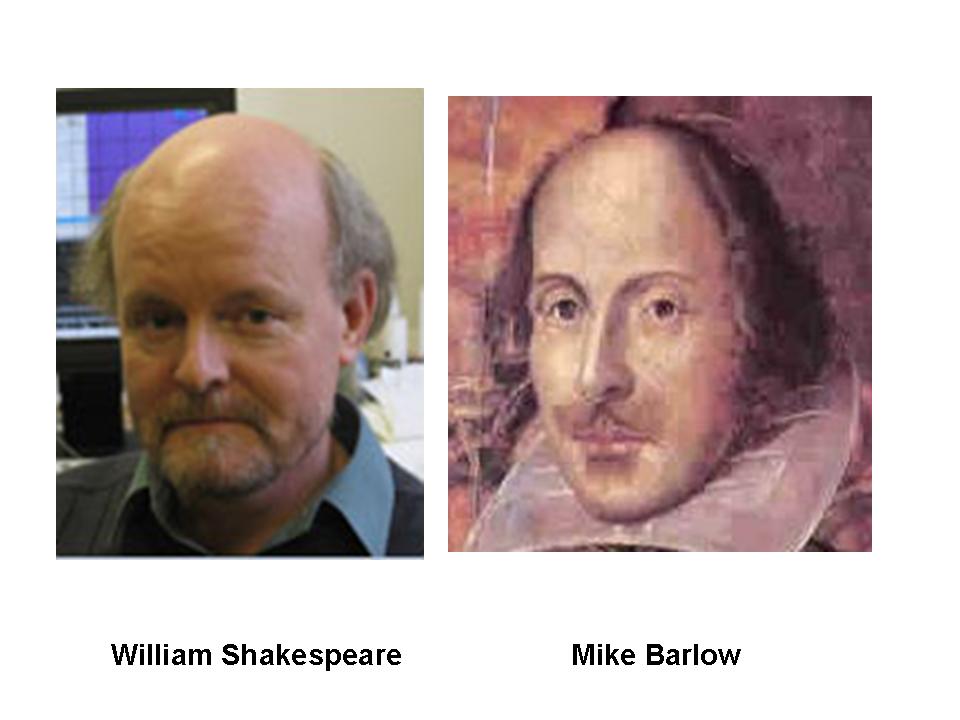

Seeing Professor Mike Barlow‘s contribution to the written evidence submitted to the House of Common’s inquiry into particle physics and astronomy reminded me that he bears a striking resemblance to another noted man of letters…
Here’s an interesting analysis of the implications of the “Yes” vote in last week’s Referendum, written by an expert on constitutional matters relating to devolution. It’s useful reading for those of you unsure exactly what the vote was about and what the result means!
Last week I posted a short item about the looming Kafka-esque nightmare that is the Research Excellence Framework. A few people commented to me in private that although they hate the REF and accept that it’s ridiculously expensive and time-consuming, they didn’t see any alternative. I’ve been thinking about it and thought I’d make a suggestion. Feel free to shoot it down in flames through the box at the end, but I’ll begin with a short introduction.
Those of you old enough to remember will know that before 1992 (when the old `polytechnics’ were given the go-ahead to call themselves `universities’) the University Funding Council – the forerunner of HEFCE – allocated research funding to universities by a simple formula related to the number of undergraduate students. When the number of universities suddenly increased this was no longer sustainable, so the funding agency began a series of Research Assessment Exercises to assign research funds (now called QR funding) based on the outcome. This prevented research money going to departments that weren’t active in research, most (but not all) of which were in the ex-Polys. Over the years the apparatus of research assessment has become larger, more burdensome, and incomprehensibly obsessed with “research concentration”. Like most bureaucracies it has lost sight of its original purpose and has now become something that exists purely for its own sake.
It’s especially indefensible at this time of deep cuts to university budgets that we are being forced to waste an increasingly large fraction of our decreasing budgets on staff-time that accomplishes nothing useful except pandering to the bean counters.
My proposal is to abandon the latest manifestation of research assessment mania, i.e. the REF, and return to a simple formula, much like the pre-1992 system, except that QR funding should be based on research student rather than undergraduate numbers.
There’s an obvious risk of game-playing, and this idea would only stand a chance of working at all if the formula involved the number of successfully completed research degrees over a given period .
I can also see an argument that four-year undergraduate students (e.g. MPhys or MSci students) also be included in the formula, as most of these involve a project that requires a strong research environment.
Among the advantages of this scheme are that it’s simple, easy to administer, would not spread QR funding in non-research departments, and would not waste hundreds of millions of pounds on bureaucracy that would be better spent on research. It would also maintain the current “dual support” system for research.
I’m sure you’ll point out disadvantages through the comments box!
I’m aware that I still haven’t posted a follow-up to my introductory article about Bayesian Evidence, so I apologize to those of you out there that thought this was going to be it! In fact I’m just a bit too easy with other writing tasks at the moment to tackle that, but will get around to it as soon as I can. Yesterday’s post was about a kind of Evidence too.
Today I thought I’d post about yet another form of Evidence, i.e. the number of the same name by the great Thelonious Monk. Here it’s played by the Jaki Byard quartet of the 1960s, starring the wondrous Roland Kirk (in pre-Rahsaan days) who plays tenor saxophone on this track. It’s a typically eccentric composition by Monk, with characteristically fractured melodic lines and stop-start rhythms, but integrating over the parameter space defined by the chord changes, I think the best explanatory model for it is that it’s a “variation” on the jazz standard Just You, Just Me, although “variation” in this case doesn’t really describe the drastic nature of the overhaul. Anyway, Roland Kirk certainly doesn’t get lost in Monk’s labyrinth – his playing on this track is simply phenomenal. Listen to the staggering speed and originality of his improvisation during the first couple of minutes and I’m sure you’ll be wondering, as I did, where and how he managed to breathe!
Just a quick post this lovely Saturday morning, in order to give an update on the House of Commons Science & Technology Committee’s inquiry into the state of Astronomy and Particle Physics in the United Kingdom. In case you weren’t aware, this inquiry was launched in January 2011. The inquiry invited written submissions in response to the following:
Well the written evidence is now all in, and it can be viewed online here (in quite a hefty PDF document).It’s all prefaced by an anodyne ramble by “the government”, which was presumably actually written by members of the STFC executive, but it makes interesting reading; some of the individual submissions don’t pull any punches, that’s for sure. I was quite surprised to see this blog get a mention too! The disappointing thing is that many of them take a rather narrow view, but I suppose that’s a result of the rather specific nature of the questions.
The Chief Executive of STFC was himself called to give “oral evidence” to the Committee in January. You can find a transcript of the whole session here, but I couldn’t resist the following snippet as an example of the inspirational power of Prof. Mason’s rhetoric:
Again, I am pretty comfortable that we are in a reasonable position going forward. You can never say never because unexpected things happen. Things might break which are major, but, by and large, as best we can plan it, we are in a reasonably good shape.
Now wonder rumours are circulating that he’s about to be moved sideways until he steps down next year. But who will take over? Be afraid. Be very afraid.
You can see a recording of the whole session here, but I wouldn’t recommend viewing it if you’re looking for reassurance about the future of astronomy in the UK.
Anyways, the next stage of the inquiry will be on Wednesday 9th March. Professor Roger Davies and Dame Jocelyn Bell Burnell will be going into bat for astronomy. I’ll post a report if I get time to watch their contributions.
Come to think of it, it’s quite surprising that Chris Noth doesn’t look even more like Chris North. I think one of the following has no right to look like the other. Geddit?
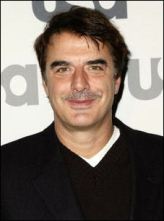
Chris North

Chris Noth
I’m impressed by the fact that Wayne Rooney clearly has a relative working at Manchester United University:

Wayne Rooney
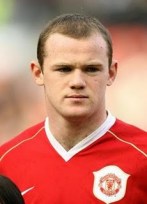
Eamonn Kerins
So there we have it. Yesterday’s votes are all counted and we have the results. Here’s a quick Friday afternoon round-up before I go to the Pub.
The biggest issue of the day involved Referendum on extending the law-making powers of the Welsh Assembly, in which the “yes” vote won by 517,132 votes to 297,380. This means that the Welsh Assembly will henceforth be able to make laws directly concerning those matters already devolved to it (including Health and Education). Contrary to popular myth, it does not broaden the Assembly’s power to cover new policy areas neither does it allow the Assembly to raise taxes. What it does is eliminate a bureaucratic bottleneck that previously required the Welsh Assembly to ask Parliament in Westminster every time it wanted to enact a law.
I think the “Yes” vote is a good thing, and the majority (63.5%) is healthy enough that there should be no griping about the outcome. In fact all but one region – Monmouthshire – voted in favour of the new powers, and Monmouthshire voted “no” by a mere 320 votes…
The only really disappointing thing was that the turnout was dismally low – only about 35%. Those that didn’t vote, however, have even less justification for complaining about the outcome.
On a smaller scale, the by-election for my local Council ward resulted in a gain for Labour from Plaid Cymru:
Steve Garrett (Plaid Cymru): 1,099
Iona Gordon (Labour): 1,700
Gwilym Owen (Liberal Democrat): 187
James Roach (Conservative) 369
Yvan Maurel (Green party): 277
Turnout was about 40%.
Pontcanna has been a Plaid Cymru (Welsh nationalist party) stronghold for quite a while, so I was moderately surprised at the result. I was personally quite pleased that Plaid Cymru lost this seat because of their support for the over-development of Bute Park, but I’ve no idea whether that issue contributed significantly to the result. I voted for the Green Party, incidentally, and was glad at least to see them beat the Liberal Democrats into 5th place. The new Labour councillor Iona Gordon is however a prominent campaigner on environmental issues and I wish her well.
The other major electoral result in the UK was a Parliamentary by-election in Barnsley, which saw the Liberal Democrats ending in a humiliating sixth place and losing their deposit. The only real question in my mind is why anyone would find that surprising given their track-record as part of the coalition government?
In a couple of months we’ll be voting again, this time for the Welsh Assembly. A great deal will depend on the eventual composition of the Senedd, especially for Welsh universities…
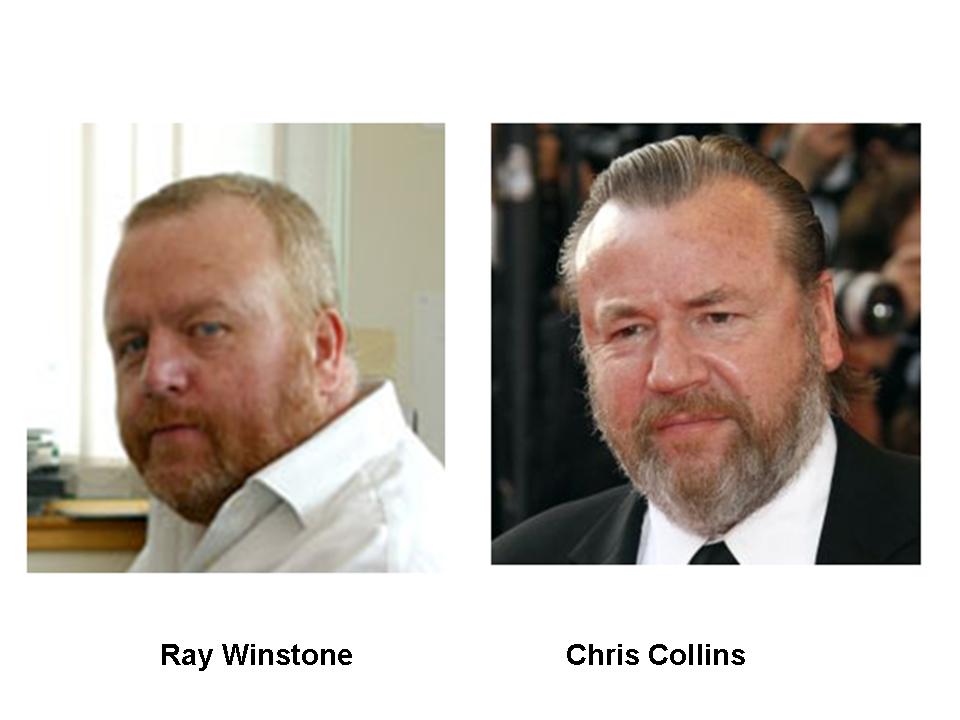
Have you noticed the remarkable resemblance between astronomer Chris Collins from Liverpool John Moores University and “tough guy” actor Ray Winstone? I wonder if, by any chance, they might be related?
I’ve finally found a few minutes before dinner to post a quick review of last night’s St David’s Day concert at St David’s Hall here in Cardiff.
I was very lucky with the tickets for this because when I first went on the on-line booking system there didn’t seem to be any blocks of good seats available, and I was hoping to go with a contingent of work colleagues and their partners. However, I was then distracted by work things and decided to try again later. When I logged on again, a set of front-row seats had mysteriously appeared. I snapped them all up for £20 quid each and had no problem finding buyers for them all. And so it was that we took our seats last night just a few feet from the edge of the stage for the performance, which was broadcast Live on BBC Radio 3.
The main item on the bill was the perennial Carmina Burana by Carl Orff, which accounted for the huge number of singers ranged up behind the stage. These included not only the BBC National Chorus of Wales (on the right of the stage) but also massed County Youth Choirs from all across the Principality (in the centre) and a choir of very young children from Ysgol Gymreig Pwll Coch to the left. The latter, I should say, in case I forget later, were absolutely terrific.
However, before the interval the divers choirs had a chance simply to listen to the BBC National Orchestra of Wales play Rhapsody on a Theme by Paganini, Op. 43 by Sergei Rachmaninov, featuring Welsh pianist Llŷr Williams. It was a pleasant enough warm-up, with flashes of virtuosic brilliance as well as lots of changes of mood, although I did think it took soloist and Orchestra quite a while to gel together. Incidentally, the “theme by Paganini” used as the basis of this piece is the same one that was used for the musical introduction to the South Bank Show, although I think quite a lot of people know that.
Anyway, it’s quite a short piece so the interval came up quickly. In the bar we found free Welsh cakes and bara brith, which was delicious, and 20 minutes later we were back in the hall for the main event.
The Carmina Burana is of course an extremely popular concert piece, but the fact that it’s so well known hasn’t resulted in it becoming a commonplace experience. It’s one of those works that can sound fresh and exciting no matter how many times you’ve heard it before. In fact, last night’s performance was gripping right from the start.
It’s probably a dangerous trick for a composer to use their best idea right at the start, but it works in this case. The opening O Fortuna made it clear to every one in the hall that we were in for a treat, as the sense of controlled power from the massed voices was quite spine-tingling. There’s only a problem with starting brilliantly if you can’t sustain it, but that’s not the case with the Carmina Burana. The text is taken from a curious collection of 13th century poems – mainly in ecclesiastical latin, but with smatterings of German and Provencal. Curious because, although they were written by monks, they are decidedly secular in subject matter including bawdy drinking songs and lewd lyrics about sexual lust. The music is quite varied too, using bits of plain chant alongside more modern-sounding sections. In other words, there are enough contrasts in both subject matter and musical style you keep you hooked all the way through; at least that what I felt.
As well as the massed choirs there are three solo vocalists, although the work isn’t shared equally. Baritone Christopher Maltman had by far the most to do and he certainly earned his crust. Soprano Sarah Tynan sang her pieces very nicely, especially when she was teamed up with the splendid children’s choir. Tenor Allan Clayton only had one piece to do – a song about a swan being roasted on a spit – but he didn’t fluff it when his chance finally came.
 Conductor Andrew Litton (left) cut an engaging figure on the podium. Bouncing up and down with an energy that belied his rotund appearance I thought he looked like a cross between John Sessions and Jocky Wilson. He also kept the enormous orchestral and choral forces together quite superbly and managed to conjure up an excellent performance from all concerned. When we made it to a local restaurant after the performance we found him sitting just one table away. He’d certainly earned his dinner!
Carmina Burana ends with a recapitulation of the initial number O Fortuna – best known perhaps for being used in the film The Omen – after which much applause reverberated around the hall. Rightly so, as it was a really wonderful concert.
It didn’t end quite there, however. Since it was St David’s Day there was a final rendition of the Welsh National Anthem Hen Wlad Fy Nhadau which the audience joined in. With the massed choirs belting it out as if their lives depended on it I’m not sure how much we were heard on the Radio, but I can tell you that it sounded great inside the hall.

 In the Dark