Some years ago, back in Beeston days, my friend and former student Rockhee tried to arrange a blind date for Columbo. I’ve just rediscovered these photographs of the event. I don’t think it was a success.
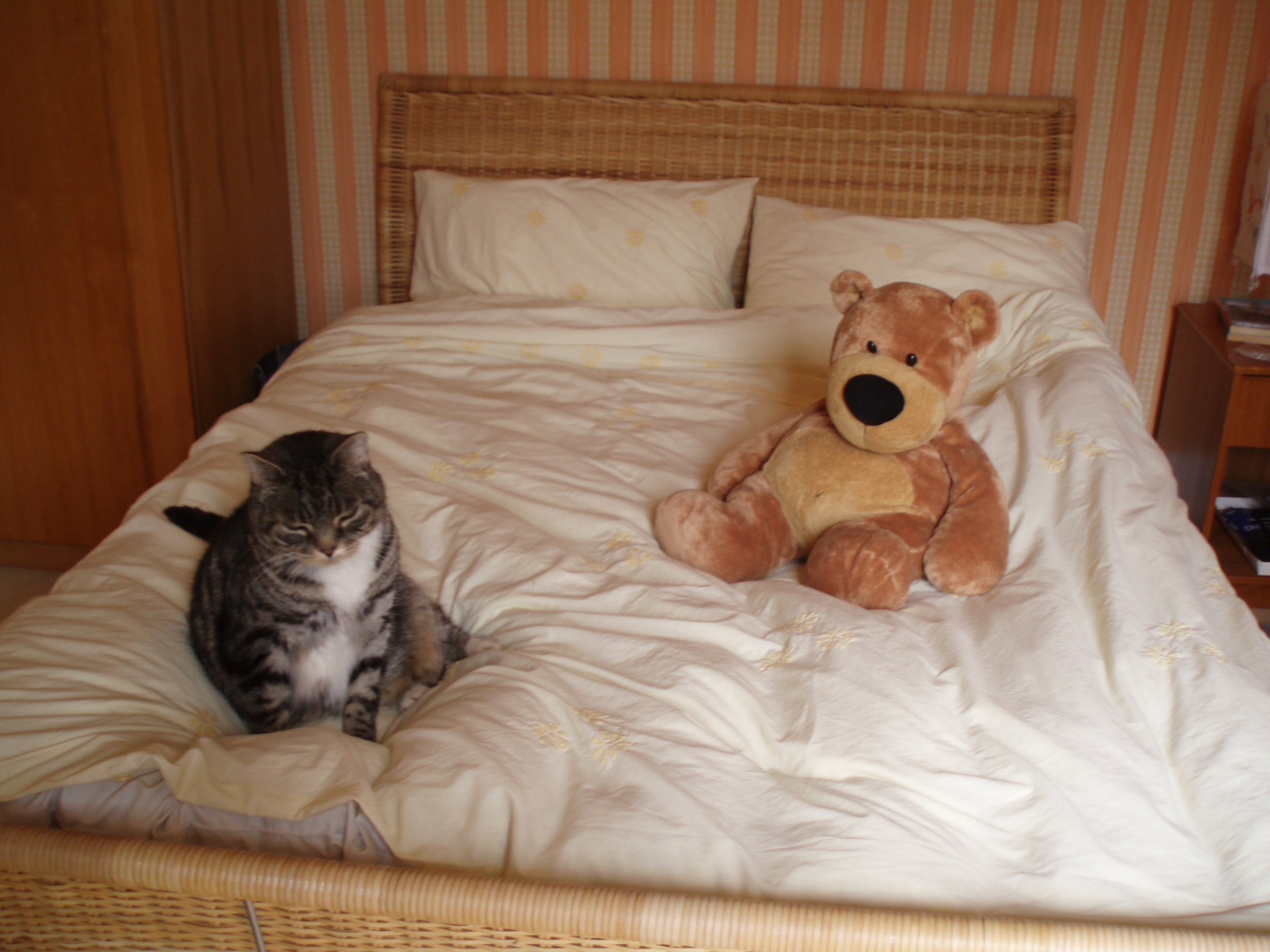
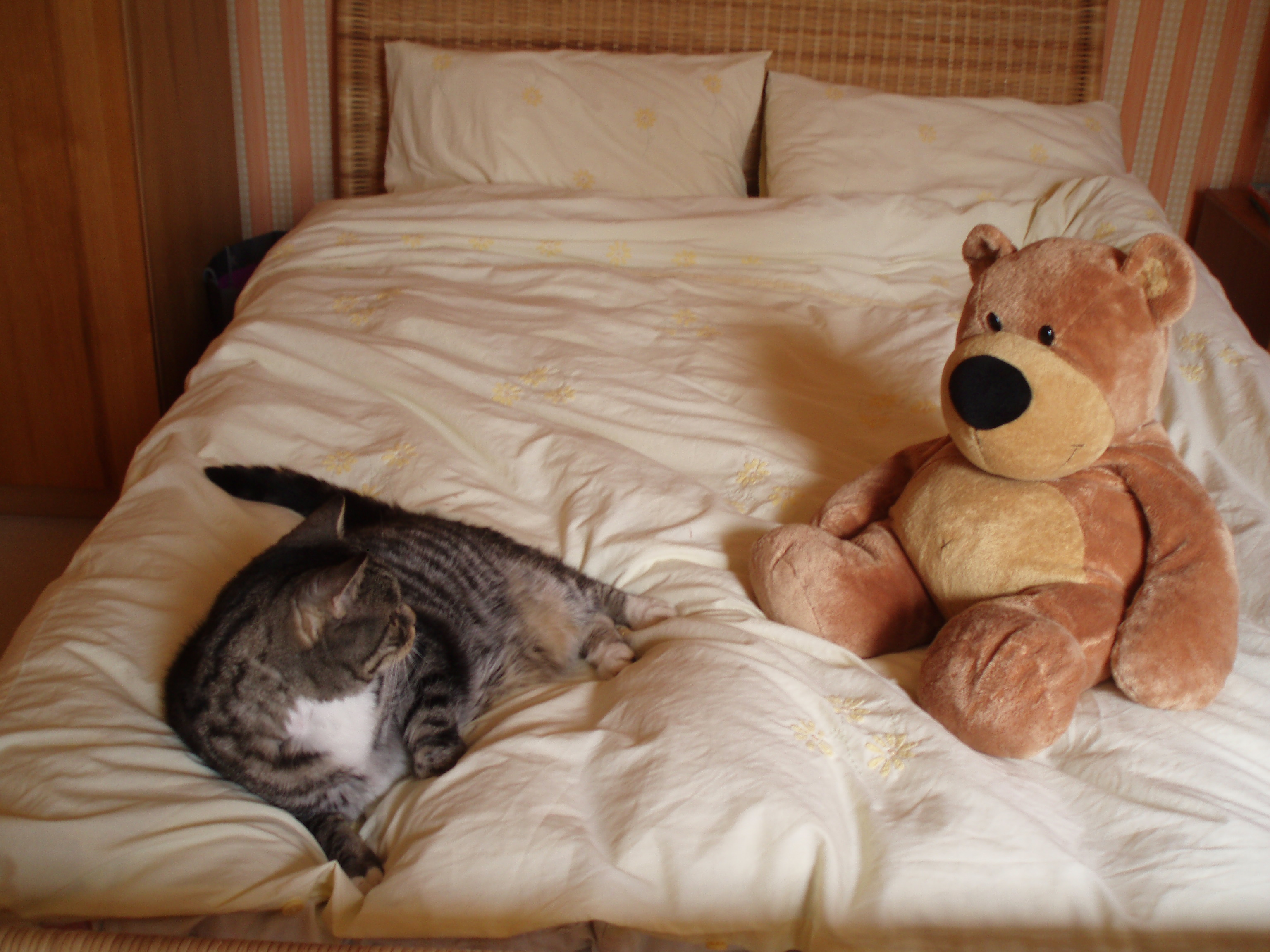
Some years ago, back in Beeston days, my friend and former student Rockhee tried to arrange a blind date for Columbo. I’ve just rediscovered these photographs of the event. I don’t think it was a success.
Come, night; come, Romeo; come, thou day in night;
For thou wilt lie upon the wings of night
Whiter than new snow on a raven’s back.
Come, gentle night, come, loving, black-brow’d night,
Give me my Romeo; and, when he shall die,
Take him and cut him out in little stars,
And he will make the face of heaven so fine
That all the world will be in love with night
And pay no worship to the garish sun.
From Romeo and Juliet, Act III Scene 2, by William Shakespeare.
Follow @telescoperIt’s not widely known that the painstaking detective work done by Penzias and Wilson in confirming the extraterrestrial
origin of the excess noise that they measured, and eventually understood to be evidence of the cosmic microwave background radiation, was actually the original inspiration for the 1970s British television police drama, The Sweeney.

I hope they’ve patented this idea, because it could be worth a fortune, although I hasten to add it shouldn’t be used as a sex toy.
It’s been a while since I’ve blogged about local affairs, but the emergence of three items of news in the past few days has given me an opportunity to remedy that.
First, and hot off the press this morning, is the news that Cardiff University has at last decided who its next Vice-Chancellor will be after the incumbent, David Grant, retires next year. The lucky winner is Professor Colin Riordan, who is currently Vice-Chancellor of the University of Essex (which apparently exists). His background is in the humanities, and his speciality post-war German literature. Since his previous institution doesn’t have a Physics Department, we’re probably safe for a few years until he finds out Cardiff has one and decides to close it.
Anyway, Professor Riordan became a Vice Chancellor for the first time at the age of 48, which is the same age I am now. Maybe I should be climbing aboard the gravy train? I hear there’s a vacancy as Vice Chancellor at the University of Essex. I would apply, but I fear I have all the wrong vices…
That brings me to yesterday’s news that Cardiff University, along with all the proper most other universities in Wales, is to charge annual tuition fees of, you guessed it, £9K. This is despite recent reports that the Higher Education Funding Council for Wales (HEFCW) was set to refuse permission to set such high fees. I always thought it was inevitable that Welsh universities would want to charge as much as possible to bring funding levels closer to those in England, but it remains to be seen what effect the new regime will have on student recruitment. The £9K level is substantially higher than the Welsh Assembly Government’s initial estimate of £7K so it also remains to be seen what the implications are for the WAG budget. We live in interesting times…
However, not wishing to end on a down note, I’ll finish by passing on a bit of up-beat news. Apparently – according to the esteemed National Geographic Magazine – Cardiff is one of the top ten places in the world to visit in 2011, coming in at Number 6 in this rigorously compiled and totally objective league table. I’m usually a bit skeptical about such things, but who could possibly disagree with the ranking?
1. Muskoka Orange County, Ontario, Canada
2. Patagonia, Argentina
3. San Juan Islands, Washington
4. Minneapolis, Minnesota
5. Glacier Bay National Park, Alaska
6. Cardiff, Wales
7. Stockholm Archipelago Sweden
8. Azores, Portugal
9. Roatan, Honduras
10. Istria, Croatia
Hang on a minute. Minneapolis? At Number 4?
Follow @telescoperIn physics we often have to resort to computer simulations in which continuously varying quantities are modelled on a discrete lattice. We also have recourse from time to time to model physical properties of a system as random quantities with some associated probability distribution. The following problem came up in a conversation recently, and I think it’s rather cute so thought I’d post it here.
Consider a regular three-dimensional Cartesian grid, at each vertex of which is defined a continuous variable 

Now define a local maximum of the fluctuating field defined on the lattice to be a point at which the value of 

What is the probability that an arbitrarily-chosen point is a local maximum?
Well, the most popular answer is in fact the correct one but I’m quite surprised that a majority got it wrong! Like many probability-based questions there are quick ways of solving this, but I’m going to give the laborious way because I think it’s quite instructive (and because I’m a bit slow).
Pick a point arbitrarily. The probability that the associated value lies between 


![[F(x)]^{26}](https://s0.wp.com/latex.php?latex=%5BF%28x%29%5D%5E%7B26%7D&bg=000000&fg=B0B0B0&s=0&c=20201002)
![f(x)dx\times [F(x)]^{26}](https://s0.wp.com/latex.php?latex=f%28x%29dx%5Ctimes+%5BF%28x%29%5D%5E%7B26%7D&bg=000000&fg=B0B0B0&s=0&c=20201002)
![\int f(x) dx [F(x)]^{26}](https://s0.wp.com/latex.php?latex=%5Cint+f%28x%29+dx+%5BF%28x%29%5D%5E%7B26%7D+&bg=000000&fg=B0B0B0&s=0&c=20201002)
because 

So you don’t need to know the form of
This long-winded method demonstrates the applicability of the product rule and the process of marginalising over variables, but the answer should tell you a much quicker way of getting there. The central point and the 26 neighbours constitute a set of 27 points. The probability that any particular one is the largest of the set is just 1/27, as each is equally likely to be the largest. This goes for the central value too, hence the answer.
Follow @telescoper
Last week I found myself a bit perplexed by the frenzy of twitter angst surrounding the last ever launch of the Space Shuttle. It’s not the first time something like this has happened. I’ve often felt like there must be something wrong with me for not getting agitated over such things. After Altantis returns to Earth in a couple of weeks’ time she will be taken out of service and, for the foreseeable future, America will no longer have the ability to put humans into orbit. This does mark the end of an era, of course, but is it really something to get all upset about?
I find myself agreeing with the Guardian editorial, which I’ve taken the liberty of copying here:
Fewer than 600 people have been admitted an exclusive club: space travel. Now, with the last flight of the space shuttle under way, the membership list is harder to join than ever. When Yuri Gagarin orbited the earth, half a century ago, and when astronauts landed on the moon eight years later, it would have been inconceivable to think of a time when manned space flight began to slip from the present to the past. But America, at least for the moment, no longer has the capacity to send people into space. In terms of national pride, this may be a failure. In terms of scientific advancement, it may not matter that much at all. Deep space exploration – using robot probes – is a very different and more useful thing than the expensive and unreliable effort to send human beings into low earth orbit, no further from Cape Canaveral than New York. The shuttle has been an icon of its age, but its human passengers – however brave and skilled – have made their flights as much to show the world what America could do as for any particular and necessary purpose. Even the International Space Station, extraordinary though it is, could operate without a human presence, its experiments automated. The only good argument for sending people into space is the simple daring of it – the need, as Star Trek used to claim, “to boldly go where no man has gone before”. Visit Mars, by all means – but there is little to be gained by sending astronauts to orbit this planet, not all that far above our heads.
For me, the most remarkable thing about the Space Shuttle is how matter-of-fact it has become. It’s rather like Concorde, which was an engineering marvel that people would drop everything and gawp at when it first appeared, but which soon became a part of everyday life. Technology is inevitably like that – what seemed remarkable twenty years ago is now pretty commonplace.
I had similar feelings a couple of years ago, when Planck and Herschel were launched. Of course I was extremely nervous then , because many of my colleagues had invested so much time and effort in these missions. However, watching the behaviour of the mission control staff at ESA during the launch it struck me how routine it all was for them. It’s a great achievement, I think, to take something so complex and turn it into an everyday operation.
Incidentally, it always strikes me as curious that people use the phrase “rocket science” to define something incredibly difficult. In fact rocket science is extremely simple: the energy source is one of the simplest chemical reactions possible, and the path of the rocket is a straightforward consequence of Newton’s laws of motion. It’s turning this simple science into working technology where the difficulties lie, and it’s a powerful testament to the brilliance of the engineers working in the space programme that workable solutions have been found and implemented in working systems.
So now the era of the Shuttle has passed, what next? Should America (and Europe, for that matter) be aiming to send people to Mars? Should manned spaceflight resume at all?
Different people will answer these questions in different ways. Speaking purely from a scientific point of view I would say that manned space exploration just isn’t cost effective. But going to Mars isn’t really about science; going to the Moon wasn’t either. It’s partly an issue of national pride – note how loss of the Shuttle programme has effectively ended America’s dominance in space, and how keenly that has been felt by many US commentators.
Others argue that manned space flight inspires people to become scientists, and should be done for that reason. I can’t speak for anyone but myself, and I’m sure there will be many who disagree with me, but it wasn’t the Apollo missions that inspired me to become a scientist. When I was a kid I found the footage of people jumping around on the Moon rather boring, to be honest. What inspired me was the excellent science education I received at School. And just think how many physics teachers you could train for the cost of, e.g. the ESA Aurora program…
Another argument is “because it’s there” or, as Walt Whitman put it,
| THE untold want, by life and land ne’er granted, | |
| Now, Voyager, sail thou forth, to seek and find. |
As a species we have an urge to set challenges for ourselves, whether by asking difficult questions, by designing and building difficult devices, or by attempting difficult journeys – sometimes all three! This is our nature and we shouldn’t shy away from it. But we should also recognize that “going there” is just one of the ways in which we can explore the cosmos. Modern telescopes can see almost to the visible edge of the Universe, the Large Hadron Collider can probe scales much smaller than the nucleus of an atom. I worry sometimes that the political lobbying for manned space flight often seems to be arguing that it should be funded by taking money from other, more fundamental, scientific investigations. Astronomers and particle physcisists are explorers too, and they also inspire. Don’t they?
Follow @telescoperIt looks set to be the proverbial wet weekend here in Cardiff and I’m waiting for a pause in the rain before going out to do my Saturday shopping. Having done the crossword already, I should be cleaning the house but instead I thought I’d post a quick comment about the fascinating book I’ve just finished reading.
The Knife Man, by Wendy Moore, is an account of “The Extraordinary Life and Times of John Hunter, Father of Modern Surgery”. It’s a measure of my ignorance about medical history that I didn’t even know who John Hunter was when I started reading this, although I had heard of the Hunterian Museum without realising who it was named after.
I won’t give a lengthy account of Hunter’s biography; that’s done very well elsewhere on the net and indeed in the book, which I thoroughly recommend. It is worth emphasizing, however, what a remarkable man he was. Born in Scotland in 1728, he didn’t go to University and received no formal medical training. He went to London in 1748 in order to become assistant to his brother William, a noted surgeon at the time. John’s primary rsponsibility was to help with the dissection of human cadavers during William’s anatomy classes. He soon became fascinated by anatomy and himself became extremely adept at dissection. He received some medical training in London, had a spell as an army surgeon and eventually set up a private medical practice in London at which he ran his own anatomy classes for paying students. He became one of the top surgeons in London and attended to the needs of many prominent Georgian figures, including King George III.
But, as impressive as it was, his medical career wasn’t the most remarkable thing about Hunter’s life. His interests extended far beyond human anatomy and from an early age he was an avid collector of all sorts of animals, alive and dead. As he became wealthier through his medical practice and lectures he spent increasing amounts of cash on acquiring rare specimens, which he usually dissected in order to understand them better. He also collected specimens of diseased human organs, bones, and fossils. There was a very dark side to this work too. The grisly business of acquiring fresh human human corpses led him to make connections with graverobbers. Worse, he also experimented on human specimens, usually members of London’s poor. He did pay them for their pains, but that’s hardly the point.
Hunter’s studies led him to conclude – years before Darwin – that species were not fixed and immutable but that animal populations altered over time, with some creatures becoming extinct. Although he doesn’t seem to have used the word “evolution”, his work in this area was certainly heading in that direction. He was made a Fellow of the Royal Society in 1767.
Above all I think what stands out about Hunter was that he pioneered the use of the scientific method in the field of medicine. His lack of formal training meant that he wasn’t steeped in the dogma or orthodox medicine which had led to many bizarre and/or dangerous practices. One wonders what chain of reasoning had led doctors to suppose that pumping tobacco smoke into a patient’s anus using specially constructed bellows could possibly have any therapeutic value!
Hunter learned primarily from experience. He knew, for example, that major surgery in Georgian times was very likely to kill the patient. There were no anaesthetics, so death by shock was a strong possibility. Loss of blood was a danger, too, unless the operation was completed extremely quickly. Moreover, doctors at the time – Hunter included – had no idea about how infections were spread and surgeons would often operate with instruments encrusted with the blood of previous victim. In the (unlikely) event of a patient surviving the agony of, say, an amputation, they would probably die of some form of infection within a few days anyway. Hunter’s policy in the light of all this was to refuse to operate unless the situation was truly desperate.
For example, when Hunter was an army surgeon, the prevailing attitude to gunshot wounds was that the bullet had to be removed at all costs. Moreover, it was believed that gunpowder was poisonous, so entry wounds were usually “enlarged” to remove tissue that had been blackened or burnt. One day, a group of British soldiers had come under fire and several had been badly injured. They escaped the ambush and holed up in a farmhouse, where they were found a few days later. One had two bullets in his thigh, another had one in his chest. However, although seriously ill, all were still alive. Hunter knew that if men in that condition had been brought into his field hospital and operated on in the usual manner, they would all almost certainly have died. After this experience Hunter was extremely reluctant to operate at all on battlefield injuries unless they were immediately life-threatening, and often decided to let nature take its course with flesh wounds.
The Knife Man contains many more examples of Hunter’s pionering use of empirical evidence in medicine and, as such, is well worth reading by anyone interested in the scientific method. It also provides a fascinating insight into life in Georgian London. Notable characters appear in extremely unexpected ways in Hunter’s story:
I could give more examples, but that’s 1000 words, and it’s now sunny outside, so you’ll have to go and read the book, which I recommend heartily. However, I really should point out that it’s not for the squeamish. The primitive surgical procedures deployed in the 18th Century are described in excrutiating detail and parts of the book make for very uncomfortable reading. If you don’t think you can cope with a detailed account of an operation, without anaesthetic, to remove stone from a patient’s bladder, then perhaps this isn’t a book for you!
Follow @telescoperI have a friend who’s an artist and has sometimes taken a view which I don’t agree with very well. He’ll hold up a flower and say “look how beautiful it is,” and I’ll agree. Then he says “I as an artist can see how beautiful this is but you as a scientist take this all apart and it becomes a dull thing,” and I think that he’s kind of nutty. First of all, the beauty that he sees is available to other people and to me too, I believe. Although I may not be quite as refined aesthetically as he is … I can appreciate the beauty of a flower. At the same time, I see much more about the flower than he sees. I could imagine the cells in there, the complicated actions inside, which also have a beauty. I mean it’s not just beauty at this dimension, at one centimeter; there’s also beauty at smaller dimensions, the inner structure, also the processes. The fact that the colors in the flower evolved in order to attract insects to pollinate it is interesting; it means that insects can see the color. It adds a question: does this aesthetic sense also exist in the lower forms? Why is it aesthetic? All kinds of interesting questions which the science knowledge only adds to the excitement, the mystery and the awe of a flower. It only adds. I don’t understand how it subtracts.
Richard Feynman (1918-1988)
And this time, as a bonus, here’s a clip of him saying the words..
Regular readers of this blog – both of them – will know that I’m an avid listener of BBC Radio 3, and will be listening even more over the summer when the annual season of Promenade Concerts (“The Proms”) begins in a week’s time. That’s why I thought I’d post this video I came across recently, which shows a number of the presenters playing duets on the piano. It’s quite a surprise to see what people look like when you only know them by their voice, so here’s your chance to see if they look like you think they sounded!
The piece they’re playing – with varying degrees of success – is the Berceuse from the Dolly Suite by Gabriel Fauré which those of us of a certain age will remember as the music from Listen with Mother.

![\int f(x) dx [F(x)]^{26} = \int dF \times F^{26} = \frac{1}{27} \int d\left(F^{27}\right) = \frac{1}{27},](https://s0.wp.com/latex.php?latex=%5Cint+f%28x%29+dx+%5BF%28x%29%5D%5E%7B26%7D+%3D+%5Cint+dF+%5Ctimes+F%5E%7B26%7D+%3D+%5Cfrac%7B1%7D%7B27%7D+%5Cint+d%5Cleft%28F%5E%7B27%7D%5Cright%29+%3D+%5Cfrac%7B1%7D%7B27%7D%2C&bg=000000&fg=B0B0B0&s=0&c=20201002)

 In the Dark