Archive for August, 2012

The Shell House Raid

Posted in Biographical, History with tags , , , , , , , , , on August 10, 2012 by telescoper

An early morning walk around Copenhagen this morning reminded me of a longer visit I made here about 25 years ago, during which I rented a room in a nice large apartment on Frederiksberg Allé, which is in a rather posh part of the city called Frederiskberg. The landlord, who also lived on the premises, was a Mr Vagn Jul Pedersen, a nice old man who had lived in that part of the city all his life. One evening we sat talking over a beer or two and he told me of a terrible thing that he had seen during the latter stages of the Second World War when he was a young man, and I thought some of you might be interested to learn about it.

In March 1945, the British decided to carry out a low-level bombing attack on a target in Copenhagen, which was under German occupation at the time. The mission was given the codename Operation Carthage and its primary objective was the Shellhus (“Shell House”) originally owned by the oil company, but commandeered by the Nazis for wartime use as the Gestapo headquarters. The request to bomb the Shellhus came from the Danish Resistance, despite the fact that it was known that the top floor of the building was being used to house Danish prisoners as a kind of human shield.

I have based the following on a post I found elsewhere on the net. You can also read the official RAF account here.

By the end of 1944 the Danish resistance movement in Copenhagen was in danger of being wiped out by the Geheime Staatspolizei (Gestapo). Many of their leaders were arrested and a lot of material was filed in the Gestapo archives in the Shell house. Leading members of the resistance-movement requested an attack by air on the Shell House via the Special Operations Executive (SOE) in London.

Eventually on 21 March 1945, 20 de Havilland Mosquito fighter-bombers from 2nd TAF escorted by 28 Mustang Mk. III fighters from 11 Group took off from RAF Fersfield in Norfolk, England. 18 of the Mosquito bombers were F.B. Mk. VIs and 2 were Mosquito B. Mk. IVs from the Photographic Reconnaissance Unit (PRU). The Mosquito force attacked in 3 waves: 1st wave with 7 Mosquitoes (one PRU); the 2nd wave with 6 Mosquitoes; and finally the 3rd wave with 7 Mosquitoes (one PRU). The primary objective for the Mustangs was to engage, distract, suppress and, if possible, destroy anti-aircraft “Flak” batteries concentrated in central Copenhagen.

The first wave approached their target from the South West but, as they passed Enghave Station, which is near the famous Carlsberg brewery, Mosquito SZ 977, with Pilot W/Cdr. Peter A Kleboe and Navigator F/O K Hall, struck a 30 metre lamppost or pylon; the wingtip of the Mosquito then hit the roof of No 106 Sonder Boulevard. The two 500lb bombs carried by the aircraft ripped off and exploded, killing twelve civilians. Flying at roof-top level over a densely populated area it was inevitable that there would be casualties if a plane crashed or were shot down, but the Fates that day were in an especially cruel mood and far worse was to follow.

The stricken Mosquito “T for Tommy” crashed seconds later in a garage near the Jeanne d`Arc French Catholic school on Frederiksbergs Allé. The front part with the cockpit with the two crew members landed on Dr. Priemesvej; they were badly burned and later died of their injuries. Pilot W/C Peter A. Kleboe and Navigator F/O Reginald J.W. Hall were laid to rest in Bispebjerg Cemetery on 28 March 1945.

The rest of the first wave found and bombed the Gestapo Headquarters successfully. In all six bombs exploded in the Western wing and, of the nine prisoners in this part of the building, six were killed instantly and another died when jumping from the 5th floor to the ground.

But the tragedy that had begun to unfold at Frederiksberg Allé was about to get even darker. The 2nd wave of Mosquitoes became confused by the smoke and flames from the crashed Mosquito and thought it must be their target. Two of the Mosquitoes in the 2nd wave dropped their bombs on the French school and only one proceeded to bomb the Shell House. The 3rd wave approached Copenhagen from the West, and again became confused. All but one of the Mosquitoes dropped their bombs by mistake on the French Jeanne d`Arc Catholic School killing 86 children and 16 adults out of 482 children and adults, while 67 children and 35 adults were wounded.

This is the site of the modern Shell House, the original being completely destroyed during Operation Carthage. It’s quite easy to find, on the North side of Kampmannsgade, just to the East of Sankt Jørgens Sø, between Nyropsgade and Vester Farimagsgade. It’s actually quite close to the splendid modern Tycho Brahe Planetarium.

Inside the doorway at the far right of this building as seen in the above view is the following inscription, giving the names of the Danish resistance members who died that day
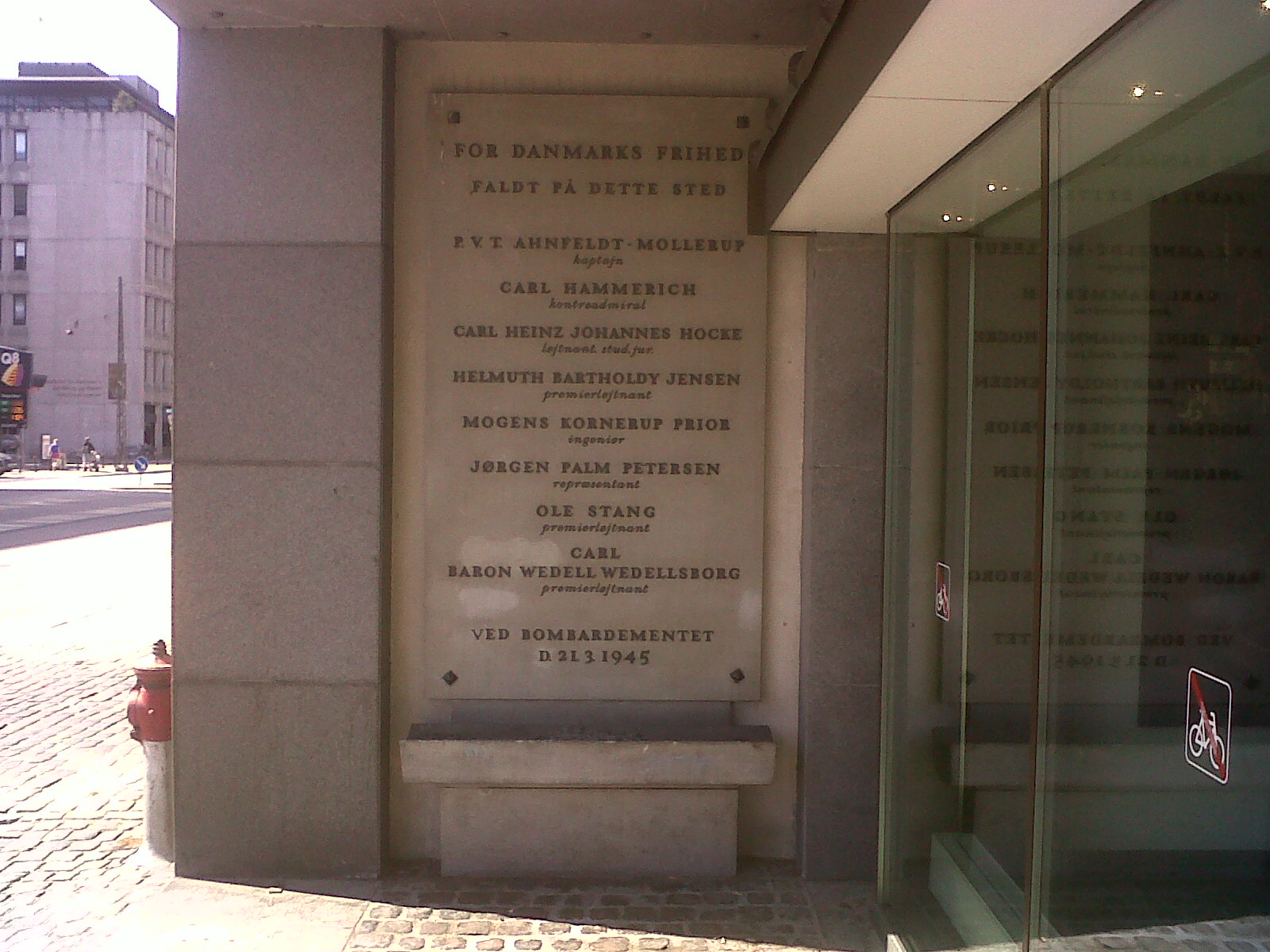
You can see here below a map showing the location. Enghave Station is to the South-West, the natural direction from which the incoming planes would have come. The Mosquito “T for Tommy” must have veered North, i.e. to its left, after its collision with the pylon in order to have crashed where it did.

Reading about this terrible episode, I was at first surprised that so many pilots misidentified the target, especially since the correct one is so close to Sankt Jørgens Sø, a prominent expanse of water that makes up one of a string of shallow lakes that extend along most of the Western side of Copenhagen’s city centre, which one would have thought was easily identifiable by its absence at the French School. The pilots had, after all, been shown detailed models of the location before the raid. But then I’m sitting at a desk with a map in front of me, not screaming along at 400mph, over rooftops bristling with anti-aircraft guns, into the teeth of withering Flak fire.

I walked the distance from the Jeanne D’arc School to the Shell House and I reckon it’s not much further than 1km, perhaps less as the Mosquito flies. That’s just seconds at the speed the planes would have been flying. That, together with the general confusion of smoke, gunfire and fear, could easily account for the navigational errors.

Owing to the presence of planes from the RAF photographic unit, there is remarkable film footage shot during the actual raid, some of which can be seen in the following film. It’s interesting how little Copenhagen’s skyline has changed; much of the city is immediately recognizable. There is also some very moving eye-witness testimony.

Even to a non-expert like me this was clearly an extremely dangerous mission. Mr Pedersen told me he saw Mosquitoes flying between the houses, along some of Copenhagen’s admittedly very wide roads, below the level of the rooftops; presumably the anti-aircraft guns were unable to aim downwards. A total of 4 Mosquitoes and 2 Mustangs were lost to flak with 9 crewmen KIA and 1 POW. Incidentally, one of the two Mustangs shot down that day crashed in Fælledparken, the park just behind the Niels Bohr Institute.

Mounted on the wall of the present Shell House is a bronze cast of a propeller from one of the downed Mosquitoes. A plaque is placed below the propeller with the names of the 9 crew members who were killed in the attack.

A total of 133 Danes died during and after the raid, including 86 children and 18 adults (including many nuns, and some bystanders who had tried to help) at the French School. At the Shell House, 8 Gestapo prisoners were killed and 18 managed to escape; 55 German soldiers and 47 Danish employees of the Gestapo died. In those days they hadn’t invented bland phrases like “collateral damage” to disguise the real horror of war, and it wasn’t possible to use unmanned drones as deployed by the US in their covert “war on terror”. Although Operation Carthage did achieve its objective, the loss of innocent life was so appalling it remains difficult to see it as a success.

I remember very well the tears in Mr Pedersen’s eyes when he told me about what had happened at the French School that day; it was only later that he found out what the actual objective of the raid was. At the end he said “You are lucky that you will never have to witness anything like that.” That goes for all of us who have had the good fortune to live in a time of peace. But let’s not forget the other parts of space-time where things are/were very different.

Postcard from Brumleby

Posted in Biographical with tags , , on August 9, 2012 by telescoper

The last few weeks having been a bit chaotic, it’s probably a good idea to mention that I’m currently in the fine city of Copenhagen. This may come as a bit of a surprise to some of you, and it’s a long story how I ended up here at this time. I won’t bore you with the details, except to say I needed to get away for a while and with the help of friends and colleagues here I’m convalescing and trying to get back to doing some research at the Niels Bohr Institute, where I’ve been a visitor on many occasions.

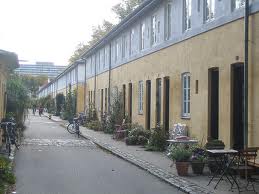
As a matter of fact I’m staying in a very nice part of Copenhagen, called Brumleby, “an enclave of terraced houses” in many ways not dissimilar to Pontcanna, the part of Cardiff where I usually live. Incidentally the -by ending (pronounced “be” in English) which also can be found in many English place names, especially along the East coast, is pronounced more like “bue” in Danish. Footballer Jan Mølby’s name was constantly mispronounced by English commentators…

Brumleby has an interesting history. It was one of a number of social housing developments constructed in the mid-19th century in Copenhagen in response to a cholera outbreak caused by chronic overcrowding and insanitary conditions in the old city. The original name for Brumleby was Lægeforeningens Boliger, which means the “Medical Association’s Buildings” for it was set up by the Danish Medical Association, Den Almindelige Danske Lægeforening. Most of the other similar developments have now been demolished, but Brumleby is now listed and preserved as a conservation area. The apartments are small, but very cosy, and as an added convenience for me only about 5 minutes walk from the Niels Bohr Institute.

Thanks once again for all the kind and concerned emails and other messages I’ve received over the past few days and weeks. I’m definitely on the mend and will start on a `permanent’ programme when I return to Wales. I also apologize yet again to my work colleagues, visitors, students, etc, for being so erratic recently. One day, perhaps, you’ll understand and maybe even forgive.

The Cool Web

Posted in Poetry with tags , , on August 9, 2012 by telescoper

Children are dumb to say how hot the day is,
How hot the scent is of the summer rose,
How dreadful the black wastes of evening sky,
How dreadful the tall soldiers drumming by,

But we have speech, to chill the angry day,
And speech, to dull the roses’s cruel scent,
We spell away the overhanging night,
We spell away the soldiers and the fright.

There’s a cool web of language winds us in,
Retreat from too much joy or too much fear:
We grow sea-green at last and coldly die
In brininess and volubility.

But if we let our tongues lose self-possession,
Throwing off language and its watery clasp
Before our death, instead of when death comes,
Facing the wide glare of the children’s day,
Facing the rose, the dark sky and the drums,
We shall go mad, no doubt, and die that way.

by Robert Graves (1895-1985)

A blog by any other name..

Posted in The Universe and Stuff with tags , , , on August 8, 2012 by telescoper

While I’m online I thought I’d pass on the following gripe.

\begin{gripe}

Some months ago I saw a message going around on Twitter that the Guardian was looking for new science bloggers to cover a wide range of disciplines for its website. After thinking hard about it, I decided to submit an application basically so I could find out more about what was involved and see if I really wanted to do it. Anyway, I’ve already written a commissioned piece for the Guardian website, so I thought it was an idea worth pursuing.

My idea wasn’t to scrap In the Dark or move it all to the Guardian, but to post less frequent and more sciencey pieces there and keep this as a personal ego-trip blog. The advantage of that being that they pay, whereas this blog doesn’t make me any dosh at all, and also presumably generates significantly wider exposure. As well as making a pitch for the content of the proposed blog, I had to think of a new title if In the Dark was to carry on, so I came up with Across the Universe, which seemed to me to emphasize nicely the cosmological slant of the pieces I would be likely to write. It’s not a new coinage, of course. It’s based on a Beatles song I have posted about previously.

So I filed the application and waited. Then I was contacted by Alok Jha, who looks after the Science blog network at the Grauniad, who initially made encouraging noises, explained that there would be minimal editorial control and  I would keep copyright of anything I wrote for them, etc. Most of my questions having been answered I awaited further developments. Then Alok Jha contacted me again and explained that the editorial team wanted me to jump through several extra hoops if I wanted to take the idea forward. I sensed cold feet. For a number of reasons, the timing of these new phases of the process were also very inconvenient, so, after mulling it over, I contacted Alok Jha and politely withdrew my application.

I’ve no regrets about that decision, and thought no more about it, until last week when the Guardian started to roll out its new blogging team. I was delighted to see neuroscientist, comedian, and fellow Cardiff University chappie Dean Burnett among the bloggers. Their new blogger for matters astronomical is Stuart Clark, a well-known and respected science writer who I’m sure will cover a wide range of interesting topics (as he has already started to do).

What I’m peeved about, however, is that Stuart’s blog title is Across the Universe, exactly what I had suggested in my proposal! Coincidence? I asked Stuart via Twitter and he told me that the name was suggested to him by none other than Alok Jha.

Of course the title isn’t copyrighted by me, and wasn’t even original, but it was my suggestion and I do think it’s very poor form to have appropriated what was on my proposal without asking or giving acknowledgement. I’ve no complaints about Stuart Clark, of course. He didn’t know what had happened, and I wish him well with his new blog – which I shall certainly be reading. But I’m not at all chuffed about the way this was handled by the Guardian.

In the interests of full disclosure, I should point out Alok Jha recently contacted me to apologize and say that he had “forgotten” that Across the Universe was the title I gave on my proposal.

\end{gripe}

Anyway, the upshot of all this is that I’ll be keeping In the Dark going pretty much as it is for the foreseeable future.

Health willing.

Top Tips for Academic Job Interviews..

Posted in Uncategorized on August 8, 2012 by telescoper

Not ready yet to resume full-time blogging, but have enough internet access to reassure everyone that I am indeed still alive, and able at least to reblog this nice article by Bruce Bassett, giving advice to anyone preparing for an interview for an academic position….

Bruce Bassett's avatarCosmology at AIMS

We have recently gone through an extensive senior job search for a joint position and the questions we asked the candidates were fairly generic. But I remember my own early job interviews and how badly prepared I was for them, so I thought it might be of interest to list the questions we asked the candidates and the kind of responses panels are typically looking for. At a certain level these questions are obvious as soon as you put yourself in the shoes of the interview panel, and that would be my single biggest piece of advice. Imagine that you are on an interview panel looking for a colleague. What would you be looking for?

Forbes recently crunched recruiter questions down to three core issues:  “Can you do the job? Will you love the job? And can we tolerate working with you?” In the academic context, where permanent positions…

View original post 1,452 more words

Interlude

Posted in Uncategorized on August 3, 2012 by telescoper

Owing to foreseen circumstances I’m going to be taking a break from blogging for a while. Normal services will be resumed as soon as possible but, for the time being, there will now follow a short intermission.


The Epoch of Galaxy Formation, Durham 1988.

Posted in Biographical, The Universe and Stuff with tags , , , on August 2, 2012 by telescoper

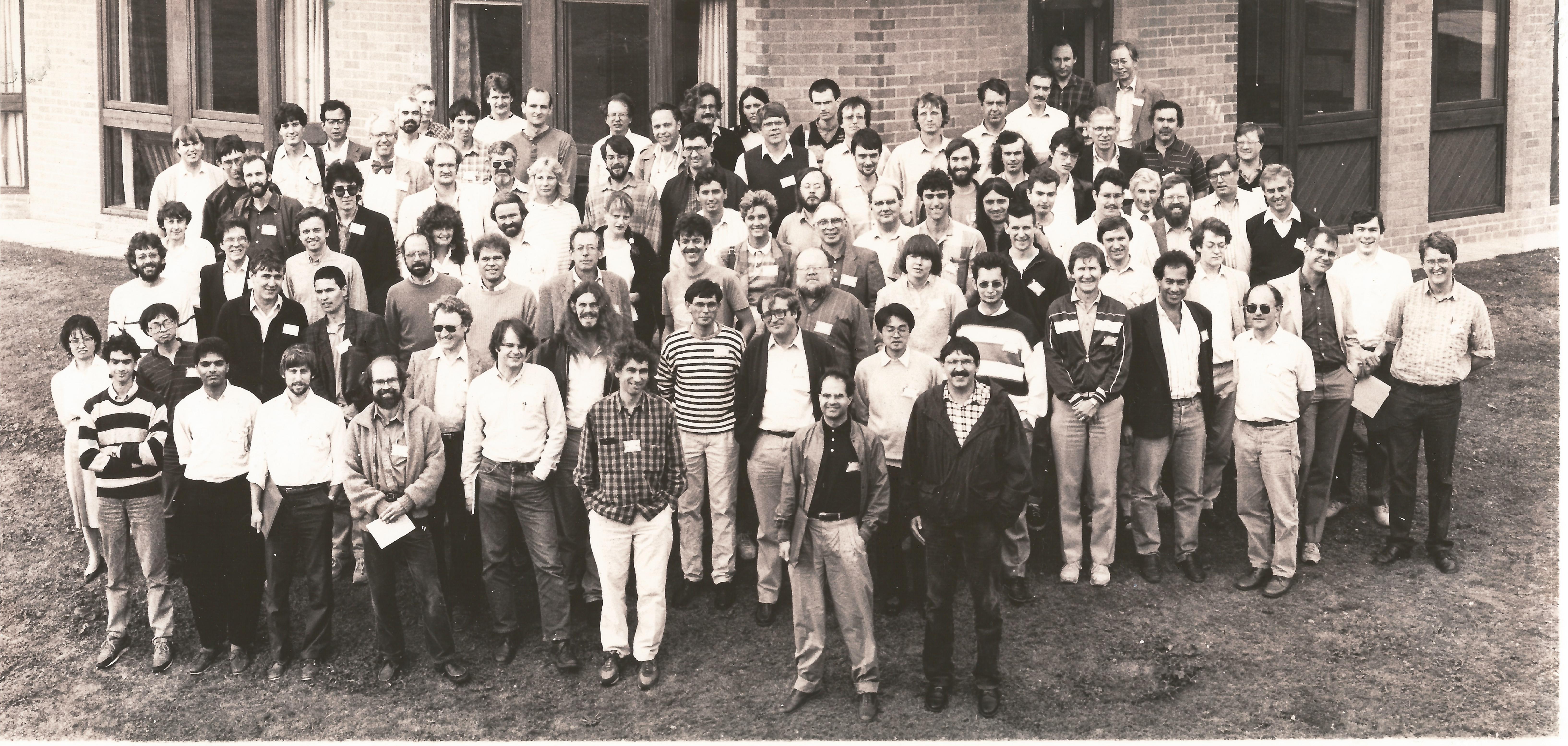
The previous old conference photograph I posted seemed to be quite popular, so I thought I’d try an even older vintage. This was also taken at Durham, but at a meeting entitled The Epoch of Galaxy Formation, which took place between July 18th and 22nd 1988. Appropriately enough, this one is in glorious monochrome. Spot any familiar faces?

The Low-down on the LHC Boson

Posted in Open Access, The Universe and Stuff with tags , , , , , , on August 2, 2012 by telescoper

Although it’s a little late I thought I’d just put up a brief post to draw your attention to the news that a couple of technical papers have appeared on the arXiv giving updated details of the recent discovery at the Large Hadron of a new scalar particle that could be the Higgs boson. I don’t think it’s yet absolutely proven that this is what the new particle is, which is why I’ve called it the “LHC boson” in the title.

The ATLAS paper reports the detection of a Higgs-like particle with a 5.9 sigma confidence level, up from the 5.0 sigma reported on July 4. Here’s the abstract:

A search for the Standard Model Higgs boson in proton-proton collisions with the ATLAS detector at the LHC is presented. The datasets used correspond to integrated luminosities of approximately 4.8 fb^-1 collected at sqrt(s) = 7 TeV in 2011 and 5.8 fb^-1 at sqrt(s) = 8 TeV in 2012. Individual searches in the channels H->ZZ^(*)->llll, H->gamma gamma and H->WW->e nu mu nu in the 8 TeV data are combined with previously published results of searches for H->ZZ^(*), WW^(*), bbbar and tau^+tau^- in the 7 TeV data and results from improved analyses of the H->ZZ^(*)->llll and H->gamma gamma channels in the 7 TeV data. Clear evidence for the production of a neutral boson with a measured mass of 126.0 +/- 0.4(stat) +/- 0.4(sys) GeV is presented. This observation, which has a significance of 5.9 standard deviations, corresponding to a background fluctuation probability of 1.7×10^-9, is compatible with the production and decay of the Standard Model Higgs boson.

The paper from CMS reinforces the discovery of a Higgs-like particle with a mass of 125 GeV at a 5-sigma level of confidence:

Results are presented from searches for the standard model Higgs boson in proton-proton collisions at sqrt(s)=7 and 8 TeV in the CMS experiment at the LHC, using data samples corresponding to integrated luminosities of up to 5.1 inverse femtobarns at 7 TeV and 5.3 inverse femtobarns at 8 TeV. The search is performed in five decay modes: gamma gamma, ZZ, WW, tau tau, and b b-bar. An excess of events is observed above the expected background, a local significance of 5.0 standard deviations, at a mass near 125 GeV, signalling the production of a new particle. The expected significance for a standard model Higgs boson of that mass is 5.8 standard deviations. The excess is most significant in the two decay modes with the best mass resolution, gamma gamma and ZZ; a fit to these signals gives a mass of 125.3 +/- 0.4 (stat.) +/- 0.5 (syst.) GeV. The decay to two photons indicates that the new particle is a boson with spin different from one.

I’ll refrain from commenting on the use of frequentist language in both these papers, but instead just comment that these extremely important papers are available for free on the arXiv. Open access, we call it.

PS. There’s an interesting blog post related to these papers, about citations in particle physics here.

Camera may have exposed a fossil…

Posted in The Universe and Stuff with tags , , , on August 1, 2012 by telescoper

Yesterday’s old photograph reminded me of this classic from Private Eye ages ago. It appeared originally in the Guardian (before it went all Helvetica). Sorry it’s a bit battered…

A Year without Columbo

Posted in Biographical, Columbo with tags , on August 1, 2012 by telescoper

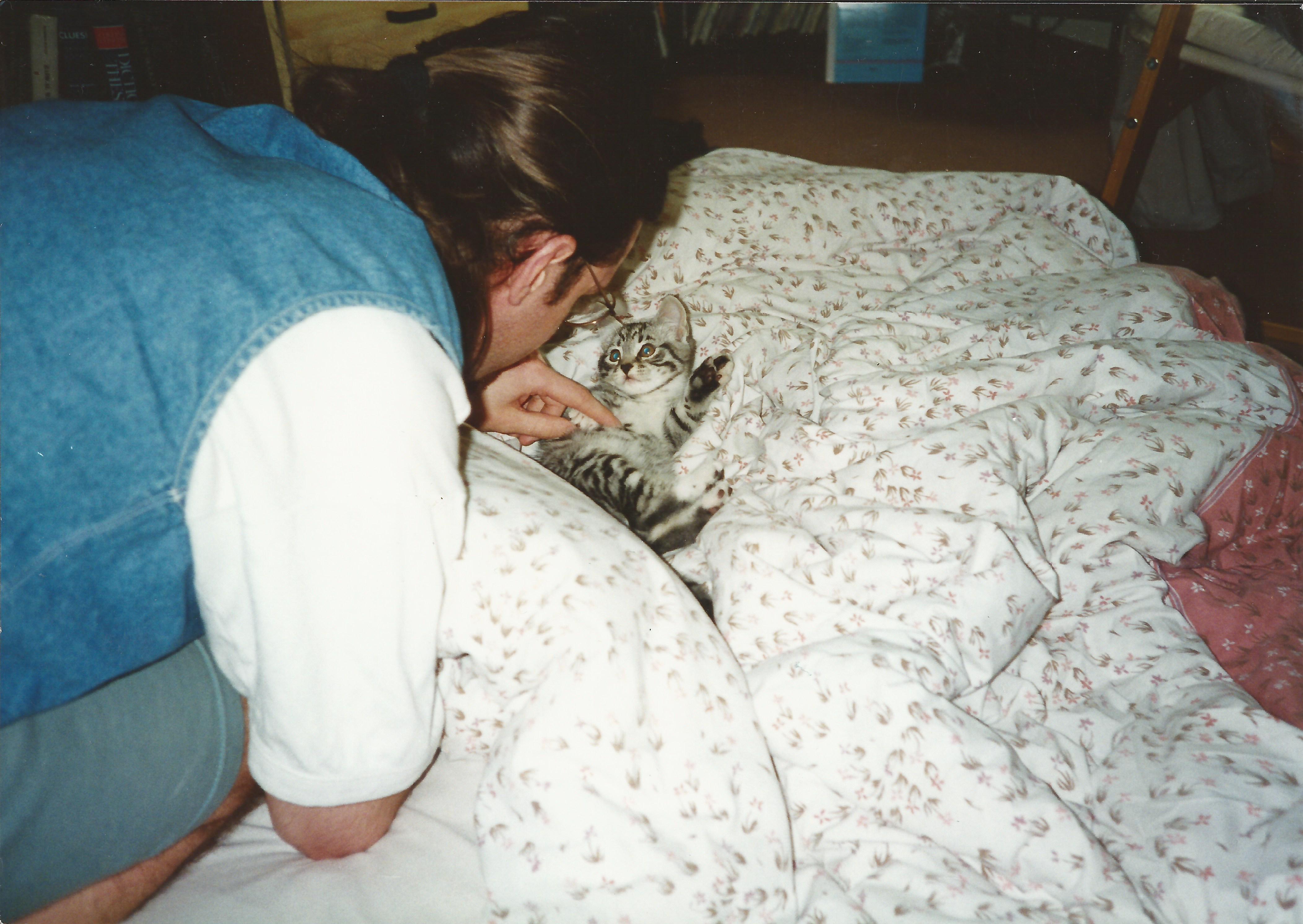
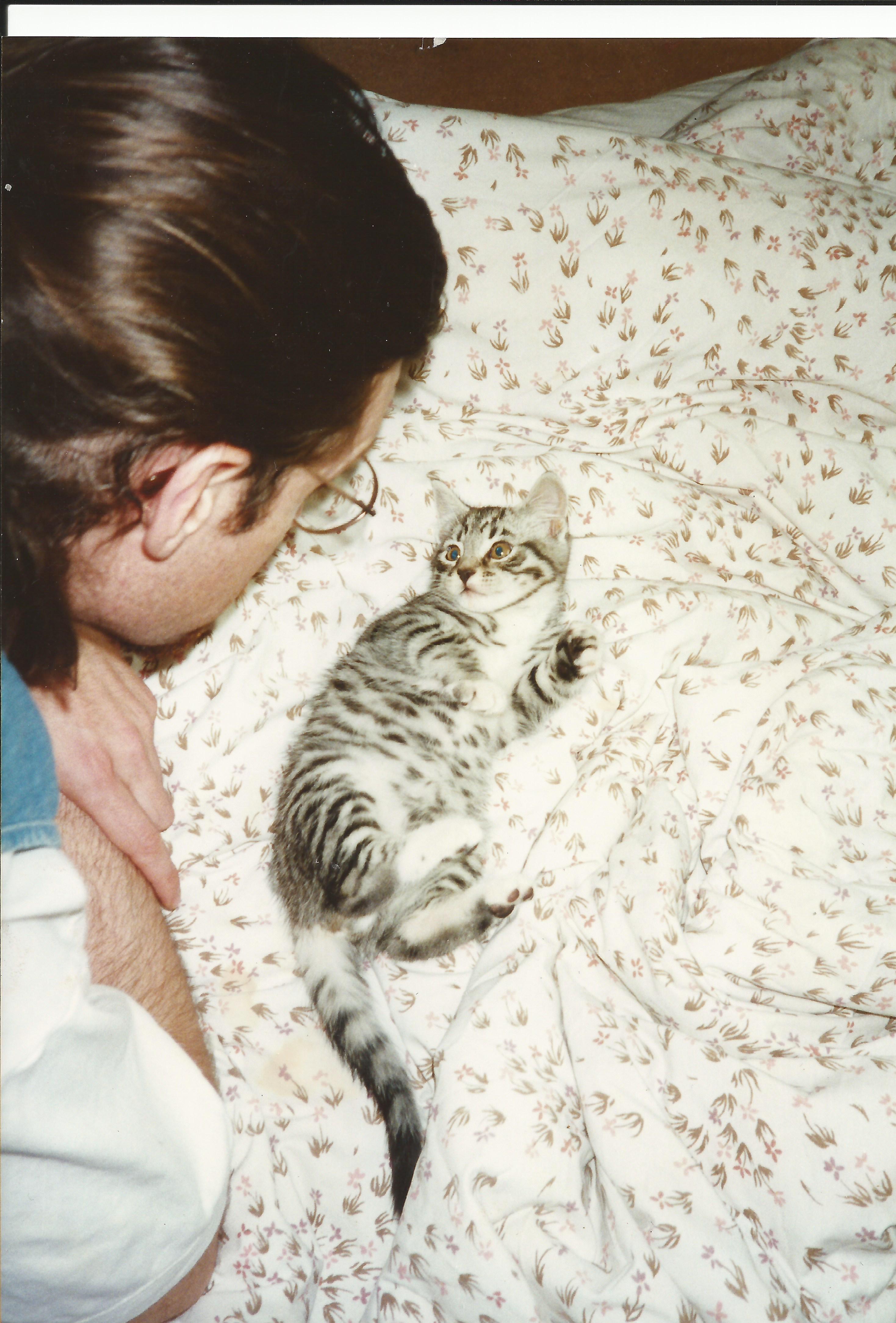
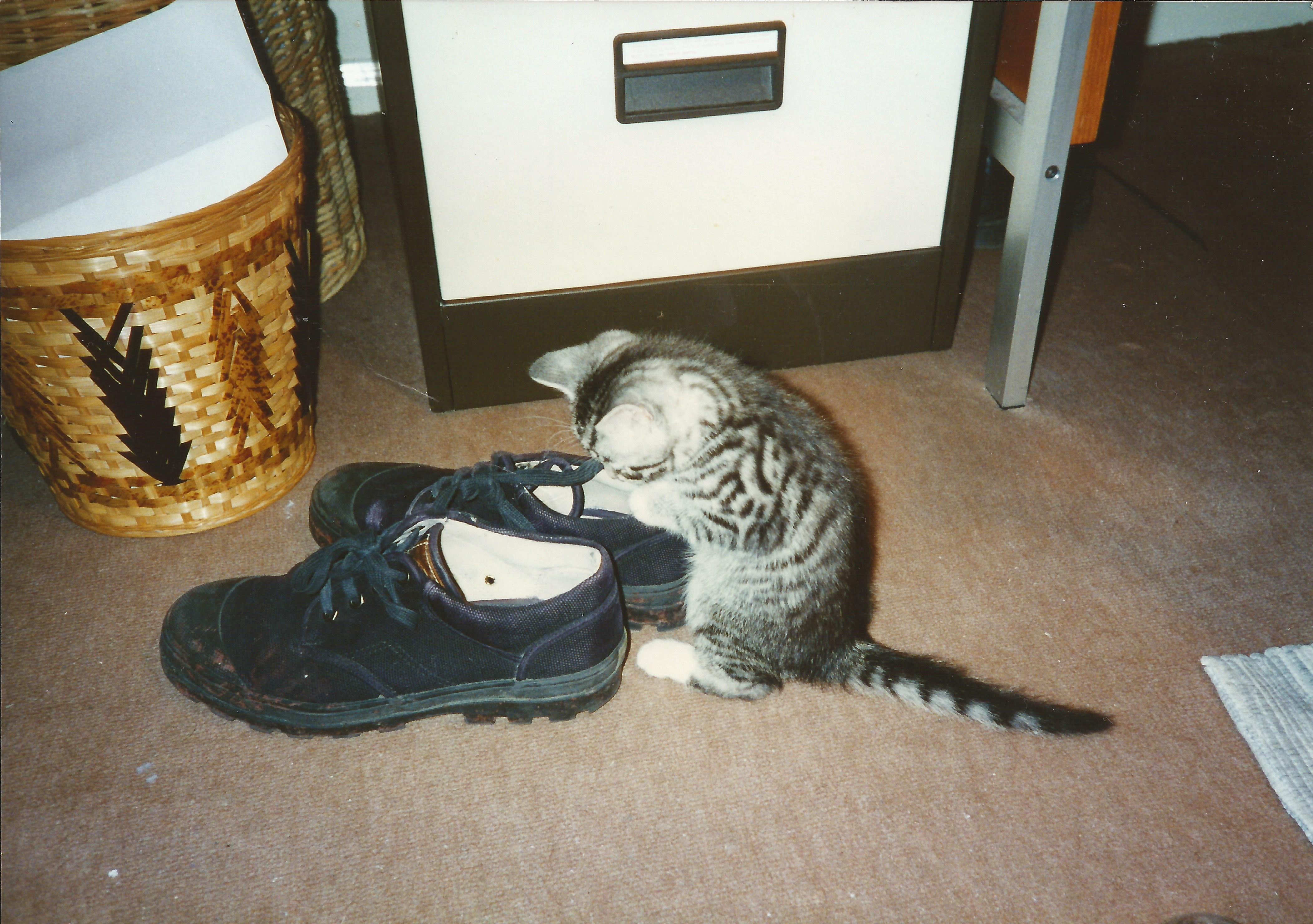
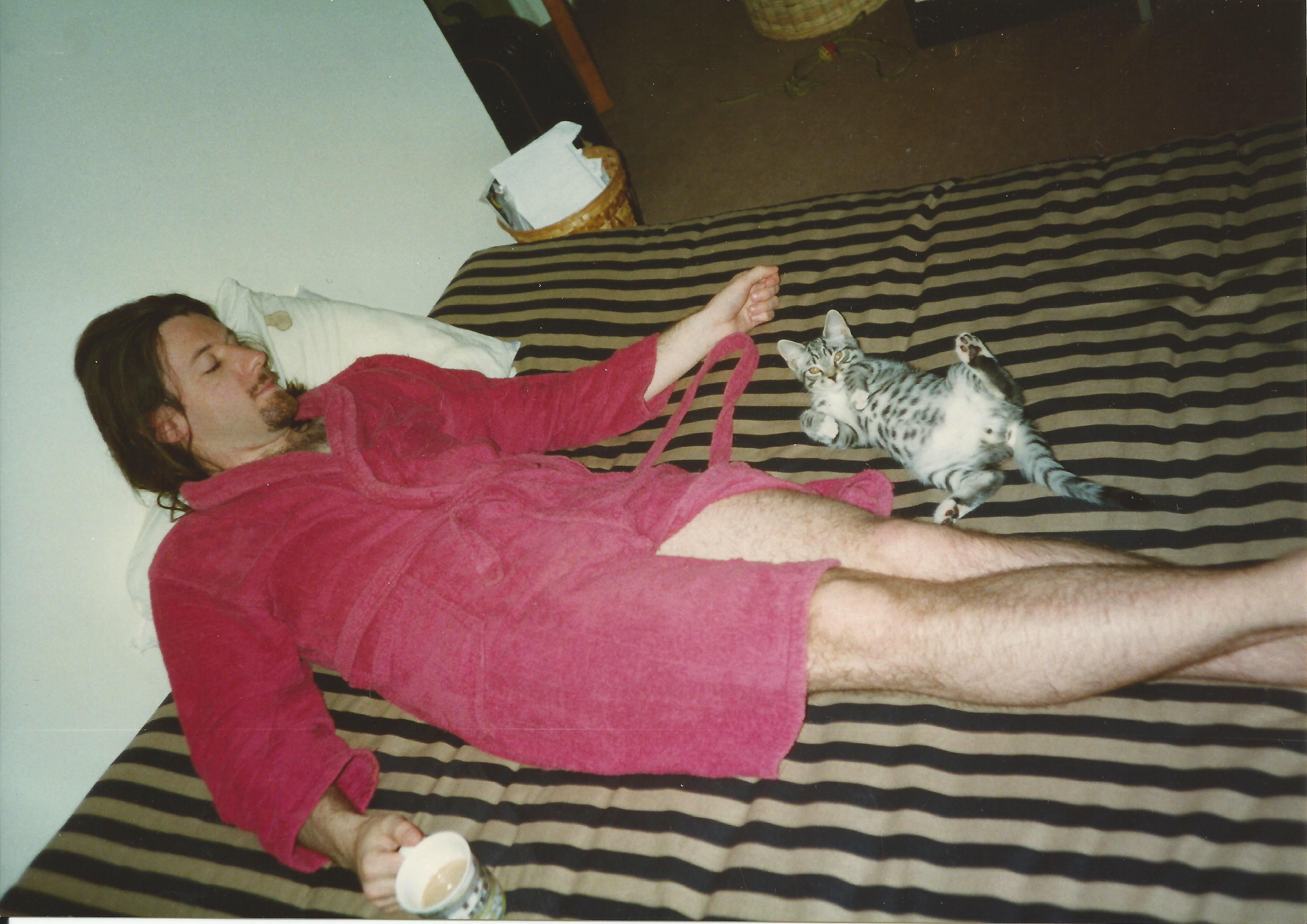
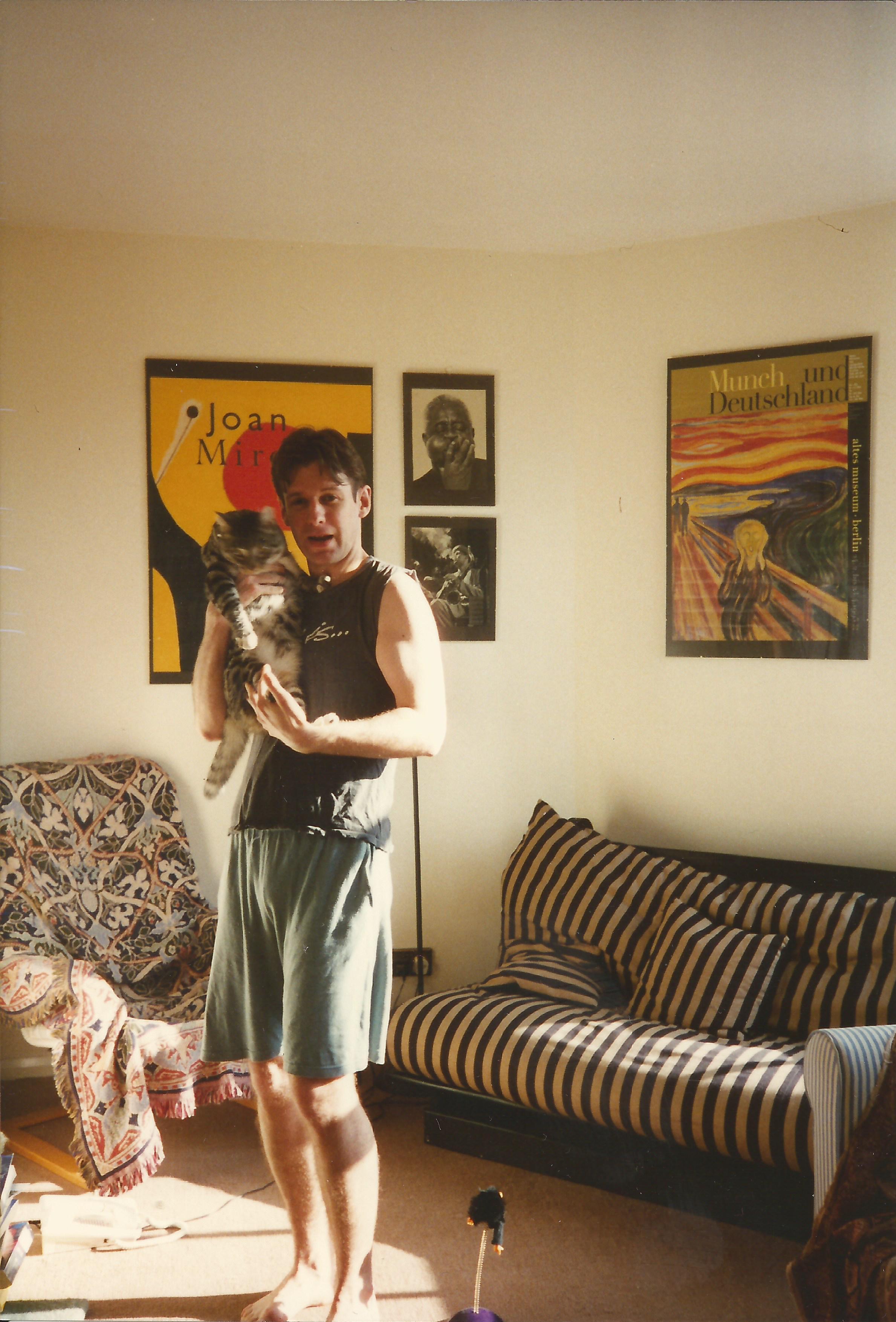
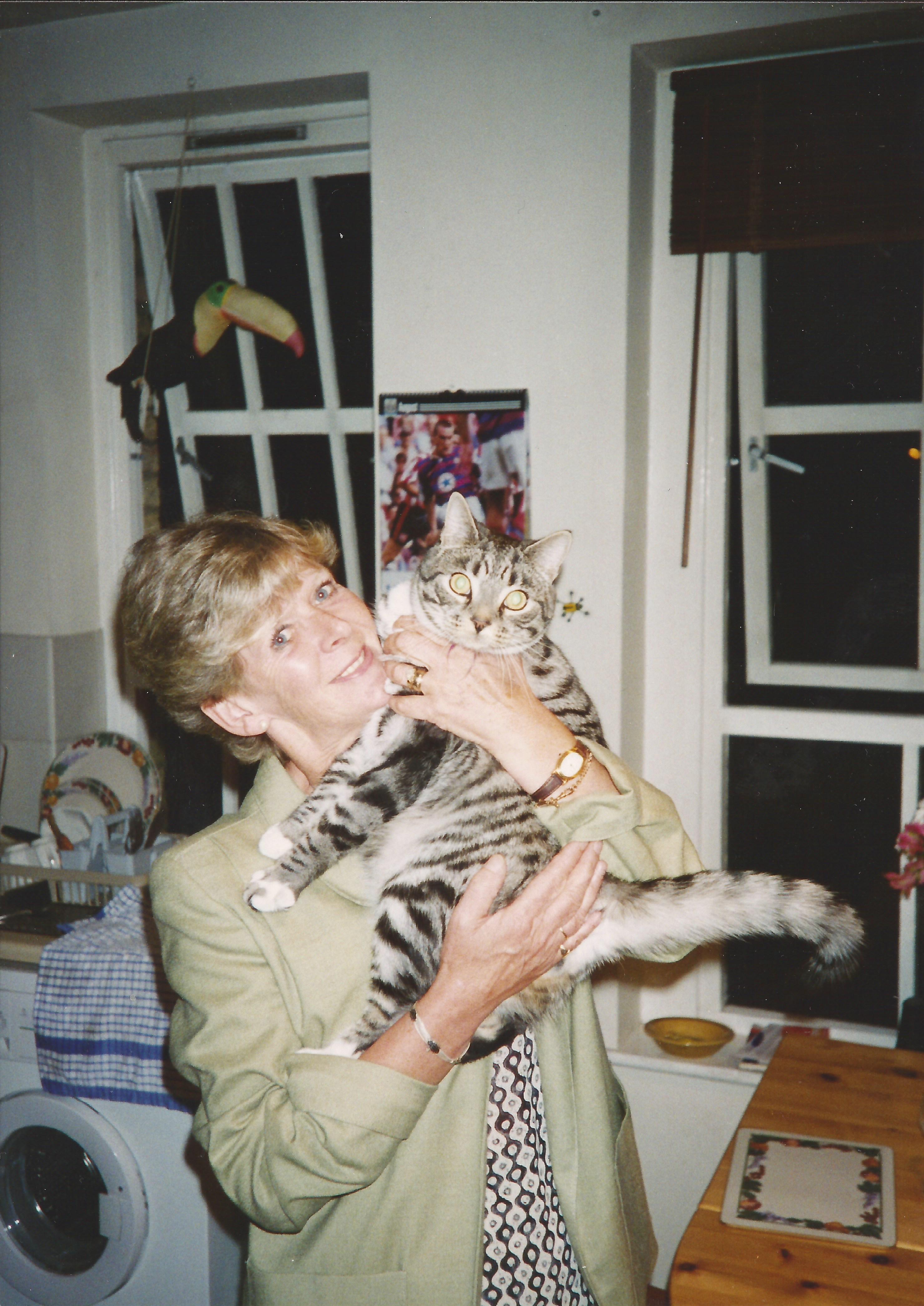
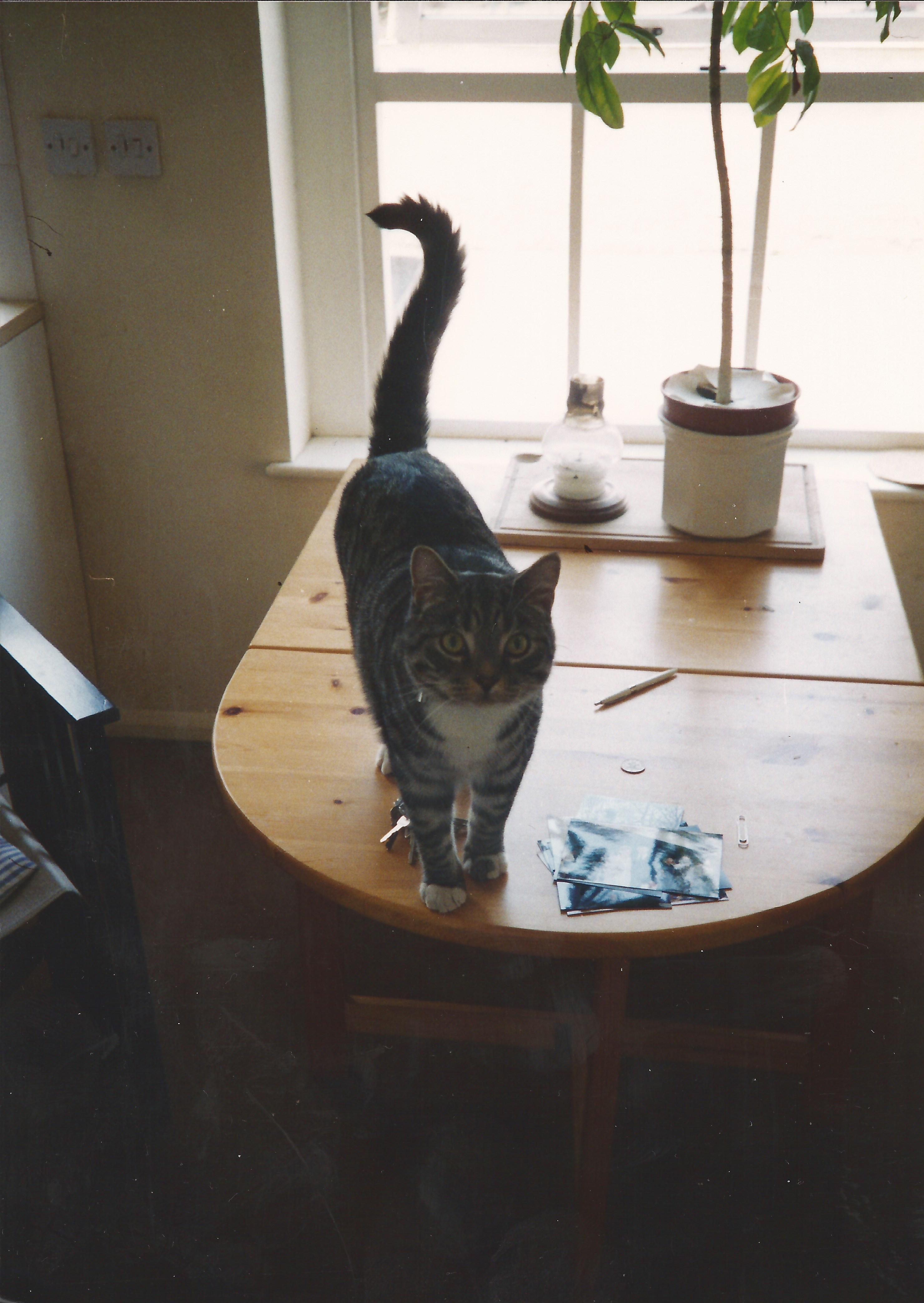
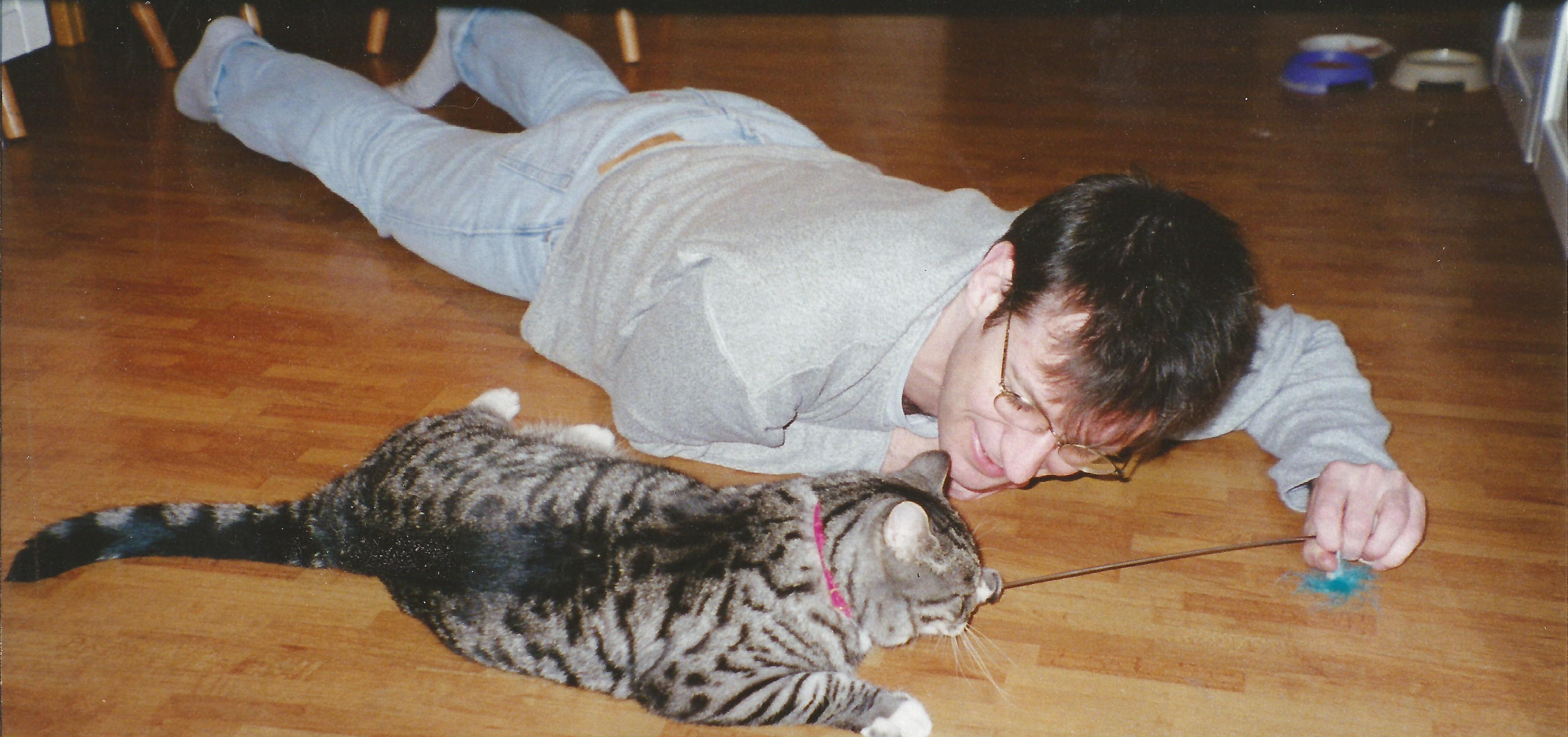
It’s a year to the day since my old feline friend Columbo passed away. I still miss him, and have indeed felt his absence as strongly as ever over the last few weeks. Still, going through photographs and other memorabilia recently has not been without its therapeutic value. Here are a few pictures over the years, showing how Columbo stayed with me through many changes of hairstyle! Most of the pictures were taken in my flat in Bethnal Green during the 90s; the last one in my house in Beeston, Nottingham. The antepenultimate picture shows Columbo with my mum…