Archive for February, 2014

Jacques Loussier and the Pekinel Twins play Bach

Posted in Jazz, Music with tags , , on February 21, 2014 by telescoper

I heard a track by this combination on the Breakfast Programme on BBC Radio 3 yesterday morning and thought I’d include something on here; it’s basically the Jacques Loussier Trio, which is famous for its Jazz re-workings of the music of Johann Sebastian Bach with the addition of the identical twins Güher  and Süher Pekinel on pianos.

Apparently some members of the Radio 3 audience didn’t take kindly to Ian Skelly’s decision to play something by this combination, but I have to say I loved it; it really put a spring in my step. I’ve remarked before on this blog that many Jazz musicians are great admirers of Bach (who was himself a talented improviser).  It’s not difficult to understand why this is the case, particularly in the case of the keyboard works, because the music always has such a rich and compelling  harmonic progression built into it – just what a Jazz musician needs. Bach’s compositions are so well constructed that they can cope with being pulled around more than those of any other composer I can think of. Above all, despite the change of musical vocabulary and the addition of a rhythm section, the best Jazz versions still somehow manage to sound  like Bach….

From the following clips you can see that the twins play from sheet music – I think the arrangement was written  by Jacques Loussier – while Loussier’s contribution is largely improvised. In the clip they play versions of Bach’s Triple Concerto in D minor BWV 1063 (with Jacques Loussier) followed the Concerto for Two Keyboards in C minor, BWV 1060  (without Loussier)…

Double Indemnity – Statistics Noir

Posted in Film with tags , , , , on February 20, 2014 by telescoper

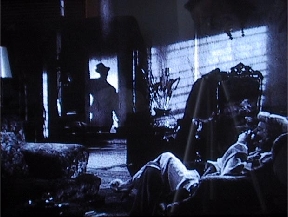
The other day I decided to treat myself by watching a DVD of the  film  Double Indemnity. It’s a great movie for many reasons, not least because when it was released in 1944 it immediately established much of the language and iconography of the genre that has come to be known as film noir, which I’ve written about on a number of occasions on this blog; see here for example. Like many noir movies the plot revolves around the destructive relationship between a femme fatale and male anti-hero and, as usual for the genre, the narrative strategy involves use of flashbacks and a first-person voice-over. The photography is done in such a way as to surround the protagonists with dark, threatening shadows. In fact almost every interior in the film (including the one shown in the clip below) has Venetian blinds for this purpose. These chiaroscuro lighting effects charge even the most mundane encounters with psychological tension or erotic suspense.

di6

To the left is an example still from Double Indemnity which shows a number of trademark features. The shadows cast by venetian blinds on the wall, the cigarette being smoked by Barbara Stanwyck and the curious construction of the mise en scene are all very characteristic of the style. What is even more wonderful about this particular shot however is the way the shadow of Fred McMurray’s character enters the scene before he does. The Barbara Stanwyck character is just about to shoot him with a pearl-handled revolver; this image suggests that he is already on his way to the underworld as he enters the room.

I won’t repeat any more of the things I’ve already said about this great movie, but I will say a couple of things that struck me watching it again at the weekend. The first is that even after having seen it dozens of times of the year I still found it intense and gripping. The other is that I think one of the contributing factors to its greatness which is not often discussed is a wonderful cameo by Edward G Robinson , who steals every scene he appears in as the insurance investigator Barton Keyes. Here’s an example, which I’ve chosen because it provides an interesting illustration of the the scientific use of statistical information, another theme I’ve visited frequently on this blog:

It’s Official, it’s PLATO!

Posted in Science Politics, The Universe and Stuff with tags , , , , on February 19, 2014 by telescoper

Just a quick post to pass on the news that the European Space Agency has officially selected the third M-Class mission to form part of its Cosmic Vision Programme (which covers the period 2015-2025). The lucky winner is PLATO (PLAnetary Transits and  Oscillations of stars) and it will detect extra-solar planets by monitoring relatively nearby stars, searching for tiny, regular dips in brightness as planets transit in front of them. It will also study astroseismological activity, enabling a precise characterisation of the host star of each planet discovered, including its mass, radius and age.

plato_satelliteIt is expected that PLATO will find and analyse thousands of  such exoplanetary systems in this way, with an emphasis on discovering and characterizing Earth-sized planets and super-Earths in the habitable zone of their parent star. PLATO will be launched on a Soyuz rocket from Europe’s Spaceport in Kourou by 2024 for an initial six-year mission. It will operate from the Second Lagrange Point, or L2 for short. It’s an intriguing design consisting of 34 small telescopes (left).

PLATO joins Solar Orbiter and Euclid, which were chosen in 2011 as ESA’s first two M-class missions. Solar Orbiter will be launched in 2017 to study the Sun and solar wind from a distance of less than 50 million km, while Euclid, to be launched in 2020, will focus on dark energy, dark matter and the structure of the Universe.

The decision to select PLATO wasn’t exactly a surprise as it was singled out as the leading candidate by an expert panel last month, but there was nevertheless some nervousness among certain senior astronomers at the Royal Astronomical Society on Friday in advance of the formal decision. I suspect they’ll all be out celebrating tonight!

Spring is like a perhaps hand

Posted in Poetry with tags , , on February 19, 2014 by telescoper

Spring is like a perhaps hand
(which comes carefully
out of Nowhere) arranging
a window,into which people look (while
people stare
arranging and changing placing
carefully there a strange
thing and a known thing here) and

changing everything carefully

spring is like a perhaps
Hand in a window
(carefully to
and from moving New and
Old things, while
people stare carefully
moving a perhaps
fraction of flower here placing
an inch of air there) and

without breaking anything.

by e e cummings (1894-1962).

Cat Curling

Posted in Sport with tags , on February 18, 2014 by telescoper

No cats were curled during the making of this video…

Power Point Presentation

Posted in Uncategorized on February 17, 2014 by telescoper

I haven’t got time for a proper blog post today so I thought I’d just share with you my latest powerpoint presentation:

powerpoint

The Royal Observatory Bomb and the Rise of Unreason

Posted in History, Literature, Politics, Science Politics with tags , , , , , , , , , , on February 16, 2014 by telescoper

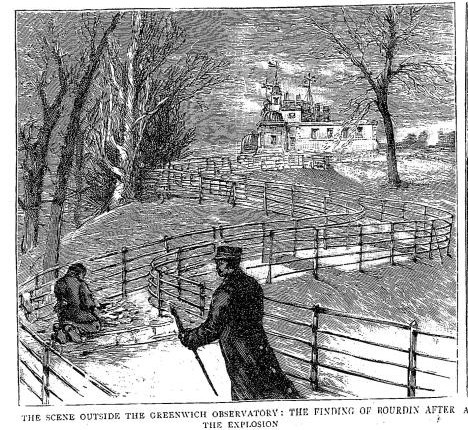
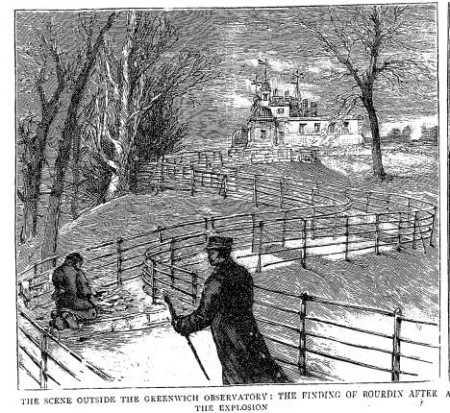
I missed the anniversary by a day but I thought I’d pass on a fascinating but very sad little bit of history. One hundred and twenty years ago yesterday, on February 15th 1894, a 26-year old Frenchman by the name of Martial Bourdin blew himself up near the Royal Observatory in Greenwich. His death seems to have been an accident caused by the bomb he was carrying going off prematurely. It is not really known either whether the bomb was meant for the Royal Observatory or somewhere else. Anarchist attacks involving bombs were not uncommon in the 1890s and the range of targets was very wide.
Greenwich_Observatory_Bomb

Bourdin was found alive, though very seriously injured, by people who heard the blast. Though able to speak he did not offer any explanation for what had happened. He died about half an hour later.

This sad and perplexing story inspired Joseph Conrad‘s famous novel The Secret Agent. Conrad added an “Author’s Note” to the manuscript of his book:

The attempt to blow up the Greenwich Observatory: a blood-stained inanity of so fatuous a kind that is is impossible to fathom its origin by any reasonable or even unreasonable process of thought. For perverse unreason has its own logical processes. But that outrage could not be laid hold of mentally in any sort of way, so that one remained faced by the fact of a man blown to pieces for nothing even most remotely resembling an idea, anarchistic or other. As to the outer wall of the Observatory, it did not show as much as the faintest crack.

We’ll never know what Bourdin’s motivations were; perhaps he didn’t really know himself. He is usually described as an “anarchist” although that term describes such a wide spectrum of political beliefs that it doesn’t really explain Bourdin’s actions; not all anarchists embrace violence and aggression, for example, although some – such as the members of Class War – clearly do. At one end of the anarchist spectrum there are the violent thugs who are nothing more than the mirror image of fascism and at the other there are reasonable intelligent people who simply don’t believe in hierarchical structures.

Brighton has its share of anarchists and the thing that’s most noticeable about them to an outsider like me is their conformity; the dress code is apparently very strictly enforced. The obvious irony aside, this suggests to me that much of the attraction of being an anarchist is not really the existence of a compelling political philosophy, but simply to fulfill the need to belong to something.

The main thing that occurred to me yesterday while I was reading about the Greenwich Observatory bomb plot concerns the implications of the location. If the Royal Observatory was the intended target then why was it so? The simple answer is that a core belief for most varieties of anarchist is their opposition to “the State”. A powerful symbol of the British state in 1894 was the Royal Navy; it was Britain’s maritime traditions that led to the founding of the Royal Observatory in the first place and most of the work carried out there involved accurate positional measurements designed to help with navigation. Or maybe it was to do with the role of the Observatory in defining the time? Insofar as acts like this make any sense at all, these seem reasonable interpretations. 

I’m tempted to suggest that the adoption of Greenwich as the Prime Meridian in 1884 may have given a young Frenchman additional grounds for resentment..

A different answer from the suggestion that it was an anti-establishment gesture stems from  the conflict between anarchism and the nature of scientific knowledge. Anarchists usually express their beliefs in terms of the desire to make society more “equal” and “democratic”, so that decisions should be made collectively for the common good. I’m happy with that line of argument, and agree that we should all enjoy equal rights versus the government and other institutions, and in relation to one another. However, having equal rights does not mean having equal knowledge and it doesn’t mean that any person’s opinion about anything is as good as anyone else’s. What I mean is that there are scientific experts, and the knowledge they possess has demonstrable value.

The approach of some to this challenge is simply to deny the value of scientific knowledge, and assert instead that it’s just a social construct like anything else. I am aware of a number of so-called social scientists at the University of Sussex and elsewhere who hold this view; my usual response is to ask them whether they regard witchcraft or crystal healing as equal to orthodox medicine.

CLARIFICATION: Please note I do not mean to imply that all social scientists hold the opinions described above. I’m fully aware that they are fringe views. The phrase “so-called social scientists” does not refer to all social scientists, just the fringe in much the same way I’d use “so-called geographers” to describe the Flat Earth Society.

I’m not trying to suggest that members of the Department of Sociology are plotting to blow up the Astronomy Centre! What I do think that while we should always strive to be as democratic as possible there are always limits, not just because of what is practically possible but also what is socially desirable. Any organization in which everyone votes about every decision that has to be made would struggle to function at all. We have to find ways of working that make best use of the different skills and knowledge we all possess.

A constructive approach is to argue that if we are to build  a more democratic society it is first necessary to greatly increase the level of scientific literacy in the population, so that more people can make informed decisions about the big issues facing the future, such as how we fulfill our energy requirements for the next 30 years and how we cope with global warming. That will not be an easy thing to do given the dearth of scientists in Parliament and in the media, but that’s not an argument for not trying.

Symptomatic of the widespread rejection of science among the politically disaffected is the lamentable state of Green politics in the United Kingdom. In my opinion there is huge potential for a scientifically-informed political movement focussed on environmental issues. Unfortunately the current Green Party is anti-science to the core, which would doom it to perpetual marginalization even without the loss of credibility stemming from the childish antics of the only Green MP, Caroline Lucas. I know that many will argue with me about whether the Green Party should be included in “The Left”, but since both Labour and Conservative parties now belong to the Centre-Right it seems a sensible classification to me.

It hasn’t always been like this. As Alice Rose Bell pointed out in a Guardian piece some time ago, there have been examples of constructive engagement between science and left-wing politics. This seems to me to have largely evaporated. I don’t think that’s so much because scientists have rejected the left. It’s more that the left has rejected science.
Brighton after another storm…

Posted in Biographical, Brighton with tags , , , on February 15, 2014 by telescoper

I got back from London a bit later than expected yesterday. I left the Athenaeum in good time to get the 10.06 from London Victoria back to Brighton. It was a bit breezy but not raining so I walked to the station, past Buckingham Palace. When I got there the 10.06 was marked as “delayed” on the screen. It stayed that way until about 10.15 at which point it became “cancelled”. The next train was the 10.36 which until then was apparently “on time” but in no time that was “cancelled” too. Faced with the prospect of waiting until 11.06 for the next chance of seeing a train cancelled, I got on a slow train to Bognor Regis via Hove; the connection to Brighton from there was late and I arrived about a quarter past midnight.

The weather didn’t seem particularly bad and there wasn’t a word of explanation for the cancellations. There was no sign of flooding en route and although it was a bit windy there was nothing extreme. Not impressed with Southern Rail I can tell you…


UPDATE: it appears that the problem was caused by flooding very close to Brighton, in fact at Preston Park. Ground water levels were so high that they flooded the signals equipment, a story repeated elsewhere on the network. Not that they bothered to tell any passengers this.

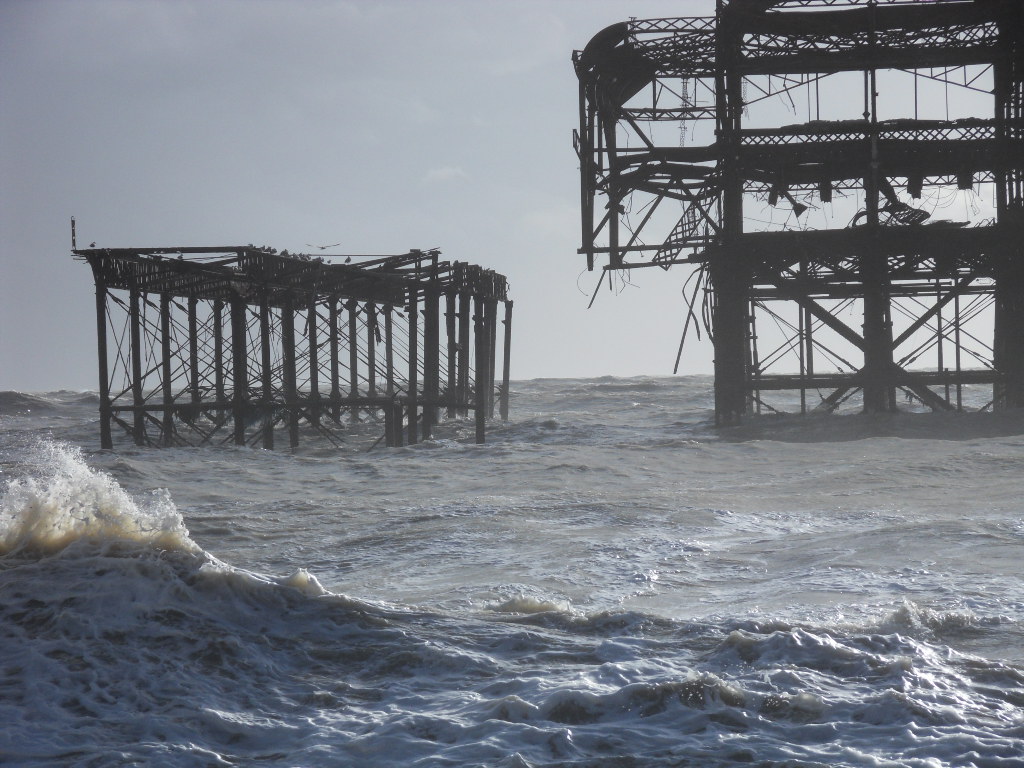
Something more like a storm hit Brighton in the early hours of the morning, and it did cause some damage along the seafront. This afternoon I took a stroll along and took a few snaps. The poor old West Pier, which has been left to rot since it was closed in the 1970s, is now on its last legs. Part of it collapsed a few weeks ago in another storm, and it can’t be long before the entire Pavilion section collapses into the sea:

SAMSUNG DIGITAL CAMERA

SAMSUNG DIGITAL CAMERA

I wasn’t on campus yesterday as I was in London, but it seems there has been a bit of damage here too. This tree must have just fallen:

SAMSUNG DIGITAL CAMERA

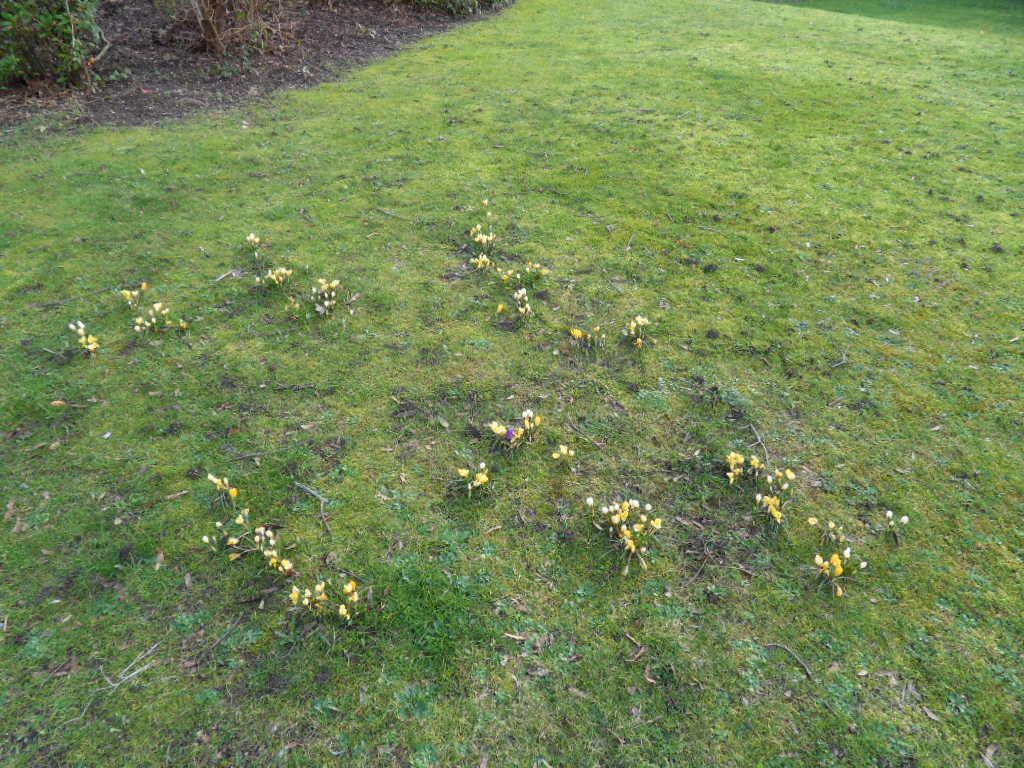
It’s been a rough winter so far – not cold but lots of gales and rain. Still, at least there are signs that spring is not too far off: the crocuses have started to appear…

SAMSUNG DIGITAL CAMERA

Coming out as a scientist

Posted in Education, LGBTQ+, The Universe and Stuff with tags , on February 14, 2014 by telescoper

So here I am sitting in the library at Burlington House, the Royal Astronomical Society Council meeting I was attending having just finished slightly ahead of schedule.

I only have time for a brief post, so I’ll take the opportunity to direct your attention to an interesting piece in the Grauniad by Tom Welton. Tom is Professor of Sustainable Chemistry at Imperial College. He was also a contemporary of mine in old Sussex days. He was doing a PhD in Chemistry in MOLS while I was doing mine in Astrophysics in MAPS. Come to think of it we both did DPhils actually.

Anyway, Tom’s piece is related to something I blogged about a while ago (being a gay scientist) but he turns it the other way round and writes about how the difficulties of coming out as a scientist to your gay friends..

The most beautiful equation?

Posted in The Universe and Stuff with tags , , , , on February 13, 2014 by telescoper

There’s an interesting article on the BBC website today that discusses the way mathematicians’ brains appear to perceive “beauty”. A (slightly) more technical version of the story can be found here. According to functional magnetic resonance imaging studies, it seems that beautiful equations excite the same sort of brain activity as beautiful music or art.

The question of why we think equations are beautiful is one that has come up a number of times on this blog. I suspect the answer is a slightly different one for theoretical physicists compared with pure mathematicians. Anyway, I thought it might be fun to invite people offer suggestions through the comments box as to the most beautiful equation along with a brief description of why.

I should set the ball rolling myself, and I will do so with this, the Dirac Equation:

dirac_equation

This equation is certainly the most beautiful thing I’ve ever come across in theoretical physics, though I don’t find it easy to articulate precisely why. I think it’s partly because it is such a wonderfully compact fusion of two historic achievements in physics – special relativity and quantum mechanics – but also partly because of the great leaps of the imagination that were needed along the journey to derive it and my consequent admiration for the intellectual struggle involved. I feel it is therefore as much an emotional response to the achievement of another human being – such as one feels when hearing great music or looking at great art – as it is a rational response to the mathematical structure involved. But it’s not just that, of course. The Dirac Equation paved the way to many further developments in particle physics. It seems to encapsulate so much about the behaviour of elementary particles in so few symbols. Some of its beauty also derives from its compactness.

Anyway, feel free to suggest formulae or equations through the comments box, preferably with a brief explanation of why you think they’re so beautiful.