Archive for June, 2016

The Lord’s Day

Posted in Cricket on June 12, 2016 by telescoper

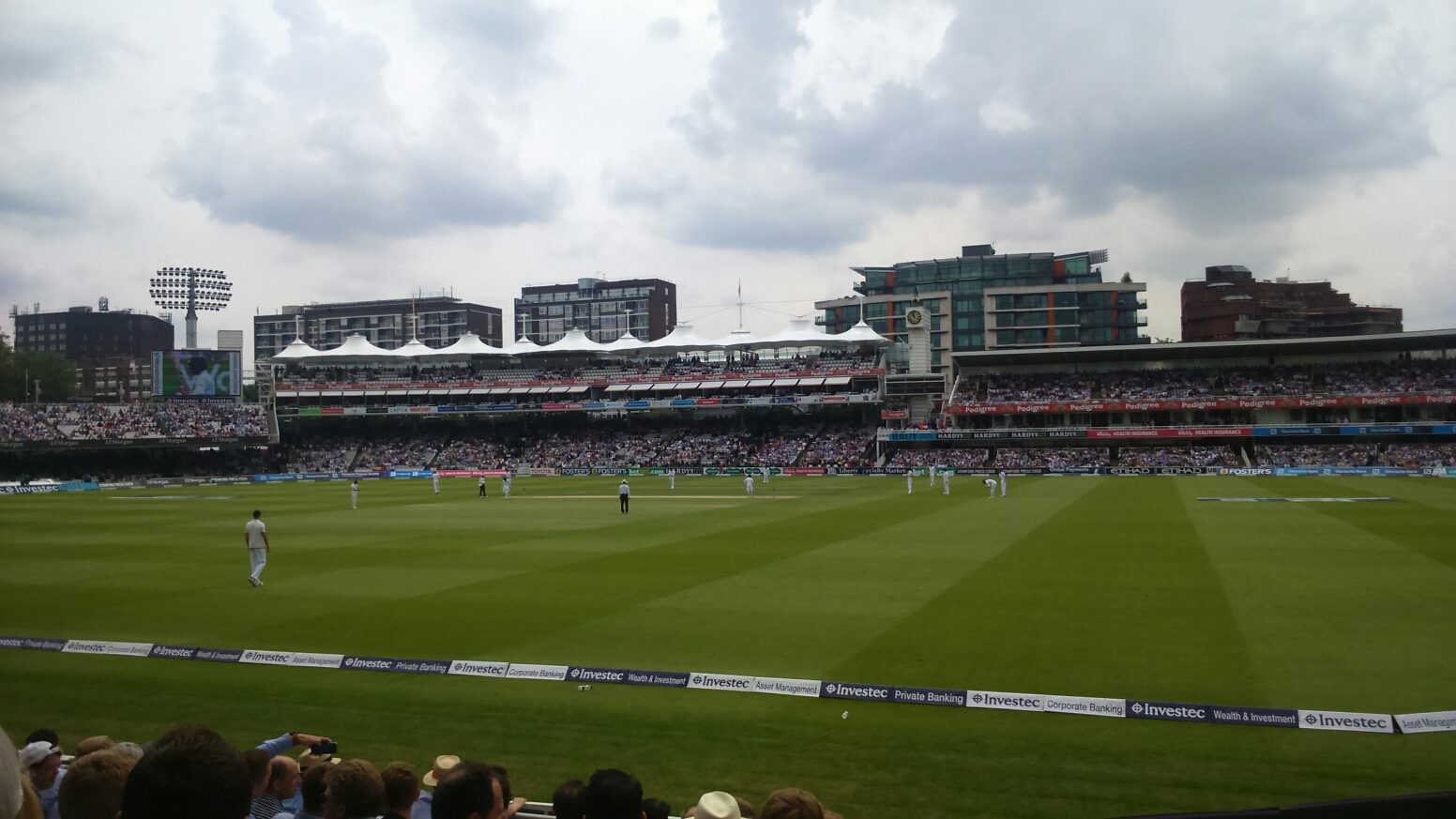
I didn’t post yesterday because I was In London all day, at Lord’s cricket ground for Day 3 of the Third Test between England and Sri Lanka.

Here’s the view of “The Home Of Cricket” we had from the Grand Stand just as play was starting;

image

It was cloudy all day but there were no interruptions to play for rain or bad light. It also remained very warm and humid all day, surprising so for early June.
The lights did come on later, when England batted, along with the usual ridiculous announcement that they were there to “augment the natural light rather replace it”. If anyone can explain what that means I’d be very grateful.
Perhaps the clouds didn’t actually make it dark, but instead just augmented the darkness that was already there?

image

Anyway, Sri Lanka’s batsmen started the day on 162 for 1 chasing England’s first innings total of 416. The batsmen had looked well set on Friday evening but they lost batsmen Mendis and Silva before they had augmented their overnight scores. Matthews quickly followed, but Chandimal, Perera and Herath added useful runs; the latter led a charmed life, scoring a lot of his runs off the edge, but he also hit some powerful shots.

In the end Sri Lanka’s innings folded quickly,  going from 288 for 7 to 288 all out as the tailenders failed to cope with the movement generated by “English conditions”. They must have been disappointed to add only 126 for the loss of nine wickets, but batting was far from easy against Broad, Anderson and (especially) Woakes, who bowled very accurately. England’s first innings lead was 128.

England’s 2nd innings commenced after the tea interval. Alastair Cook was unable to bat, having received a knee injury in the field, so Nick Compton stepped up to open the innings with Alex Hales. Compton has been in poor form since returning to the England side and he never looked comfortable, eventually falling for 19. He may not play for England again. Root and Vince also departed quickly, the latter clean-bowled first ball for a golden duck.

That brought England’s first innings hero Johnny Bairstow in, and he and Hales steadied the ship. There then followed a dull passage of play in which England batted cautiously, wary of losing further wickets, and Sri Lanka, wary of conceding runs, bowled defensively and were in no hurry to get through their overs.

Bairstow was looking quite comfortable as the final session drew to a close, but suddenly he was out, for 32, making his aggregate for the match 199.

Finn came in as night watchman and survived a couple of overs to take England to 109 for 4 at the close. Only 235 runs were scored and 13 wickets fell.

So England go into the 4th day with a lead of 237. I reckon if they can get another hundred runs or so they will win this game but, as I write, on Sunday morning, it’s raining at Lord’s.

Flaming June Again

Posted in Art, Biographical, Bute Park, History with tags , , , , on June 10, 2016 by telescoper

Since we’re in the middle of a modest heatwave I thought “Flaming June” would be a good title for a blog post. Until a few years ago I always thought that “Flaming June” was some sort of folk expression or quotation from a poem, but it is instead the title of this Pre-Raphaelite painting by Frederic Leighton of a lady wearing what looks like a dress made out of old curtains. Apparently the oleander branch seen in the upper right symbolizes the fragile link between sleep and death. It looks to me like she must be attending a lecture…

But I’m rambling. This has been an exhausting week, probably because I a few days off last week and have come back to one of the busiest periods of the academic year. The examination period is over so there are scripts to mark,  examiners’ meetings, class lists and the like, all parts of the arcane business of academic life. In fact I’ll be spending the first three days of next week in Cambridge where I’m External Examiner for Physics, and I have a lot to do here before I go.

In between all the meetings I had to attend yesterday I noticed that it was the 9th of June, a date of enormous cultural significance for those of us born on Tyneside, as Geordie Ridley’s famous music hall song The Blaydon Races begins “I went to Blaydon Races, ’twas on the 9th of June… The original Blaydon Races were horse races and site of the course is long since gone, but the name has recently been resurrected as a road race involving people on foot rather than on horseback. Incidentally, the usual “Whit Week” holiday in late May or early June is still referred to on Tyneside as “Race Week”.

All this reminded me of the occasion – over twenty years ago – when I entered the Great North Run for the first time. Nowadays this race – the biggest mass participation half-marathon race in the world, with 50,000 competitors – is run in September, but in those days it was held in June. As it happened, there was also a heatwave the first time I did it. I remember lining up at 9.30 on a Sunday morning on the start grid (I was number eleven thousand and something) while the stewards went round pleading with all the participants to take plenty of water as they went around as it was going to be very hot indeed and they didn’t want people suffering from dehydration.

In those days I was quite a keen long-distance runner and was fairly fit. I wasn’t that concerned about the heat but took the advice to heart and determined to stop at all the water stations on the way from Newcastle to South Shields. When we started I also took care not to go off too fast over the first mile or so, which is basically all downhill from the Town Moor to the Tyne Bridge. Not that you could go fast anyway, as the track was so crowded with runners.

I remember the wonderful feeling as we emerged onto the Tyne Bridge and took in the splendid view of the bridges along the river. When we got to Gateshead the crowds were out in large numbers cheering everyone on and I felt completely elated. The first water station was near Gateshead athletics stadium, and I took a drink there as I did at the next, and the next. After Gateshead the route heads towards the Felling bypass at about 4-5 miles and then the runners can see a long climb in front of them. A large thermometer showed the temperature on the road to be about 45 Celsius. Fortunately the people living in houses either side of the road were out in their front gardens offering encouragement and sometimes had their hoses out to shower people as they went past. At one point there was a fire engine that had made an impromptu fountain by the side of the road too.

Unfortunately, as I near the ten mile mark I started to feel a bit strange. I had never actually taken on water while I was running before this race; I never felt the need for it when on training runs. My stomach wasn’t used to the water sloshing around while I was running. I felt quite sick by the time we got to the top of the climb but when I saw the sea and felt its breath on my face I cheered up and descended the steep downward slope towards the seafront near Marsden Rock.

There’s a good mile and a half along the seafront to the finish, however, and I was definitely struggling really badly by then. I could see the finish line but it felt like it wasn’t getting any closer. I slowed to a crawl but kept going, finally reaching the grandstand where a large crowd shouted encouragement. I must have looked dreadful because I heard several people shouting out my number along with “keep going, son”  and “you’re nearly there”.

Eventually I got to the finish line but the feeder lanes were quite busy then – I was finishing at about the peak  time of about 1hr 50 – so I was forced to slow right down because of the people in front of me.

As I crossed the line, I stopped running and was immediately overcome with nausea. I bent over, hands on my knees and emptied the contents of my stomach – mainly water – all over the grass. I felt absolutely dreadful but, after a quick check from the St John Ambulance crew who were on hand, I recovered and found my folks who were nearby. After we got home and I had a shower I felt fine.

About a week later, when I had returned to my flat in London a letter arrived for me. I opened it up and found a small passport-sized photograph, with the caption “YOUR MOMENT OF TRIUMPH”. It turns out there was an automatic camera near the finishing line that snapped everyone crossing it along with a shot of the digital clock showing their finishing time. The idea is that you could order a blow-up of the picture for £25 to put on your wall.

In my case, though, the picture showed not a moment of splendid athletic achievement, but a bedraggled creature puking uncontrollably while those around him looked on in disgust. I didn’t order the blow-up of my throw-up.

Over the years I did the Great North Run a number of times – six or seven, I don’t remember exactly – and a few marathons too, but the strain of running on the roads around London gradually told on my knees and I had to stop because of recurrent pain and swelling. Eventually, a few years ago I surrendered to the inevitable and had arthroscopic surgery to sort out the damage to my knee joints. That seems to have fixed the problem, but my running days are over.
 

Migration: Time to tear up Leave’s last card

Posted in Politics, Uncategorized on June 10, 2016 by telescoper

From the same sources as yesterday’s reblog, here’s an important post about immigration.

I’ve long felt that there is a big problem with immigration in the United Kingdom. There simply isn’t enough of it!

Rick's avatarFlip Chart Fairy Tales

Nigel Farage told the TV debate audience on Tuesday that, under his proposed immigration points system, more black people would be allowed into Britain. The following morning, when grilled by Piers Morgan, he said:

What I would like is us to return to post-war normality. For about 60 years, we had net migration into Britain between 30,000 and 50,000 people a year.

Now there could be a bit of a problem with this. It depends on how you define black but I’m guessing most of the people from sub-Saharan Africa would fall into that category. Last year, net migration from that region was 21,000. Allow for people coming from the Carribean and you’d already be around half way to Nigel’s target. If he’s said that more black people are going to come in, that doesn’t leave much room for anyone else.

Meanwhile Priti Patel has been promising Asian voters that, after…

View original post 973 more words

Why are the boomers so angry?

Posted in Uncategorized on June 9, 2016 by telescoper

A question I’ve been asking myself…

Rick's avatarFlip Chart Fairy Tales

A quote about Brexit supporters by a friend of mine last week attracted a lot of attention when I stuck it on Twitter yesterday.

This is the last ‘fuck you’ from the baby boomers. They took the secure corporate and government jobs with the guaranteed pay rises and final salary pension schemes and benefitted from property they bought cheap and sold dear. They burnt the bridges behind them by colluding with the dismantling of the very things that had brought them prosperity. Their last act will be to burn the economy before they die.

It even made the Independent. Some people were offended by it but, for the majority of those who commented, it seemed to strike a chord, suggesting there is at least a grain of truth in it.

It is certainly true that the pollsters are recording the highest support for Brexit among older voters. YouGov data

View original post 607 more words

The Northumbrian Riviera

Posted in Uncategorized on June 9, 2016 by telescoper

By way of a change I thought I’d reblog this post about the delights of Northumberland.

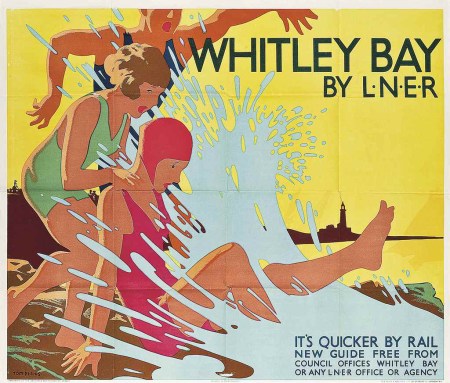
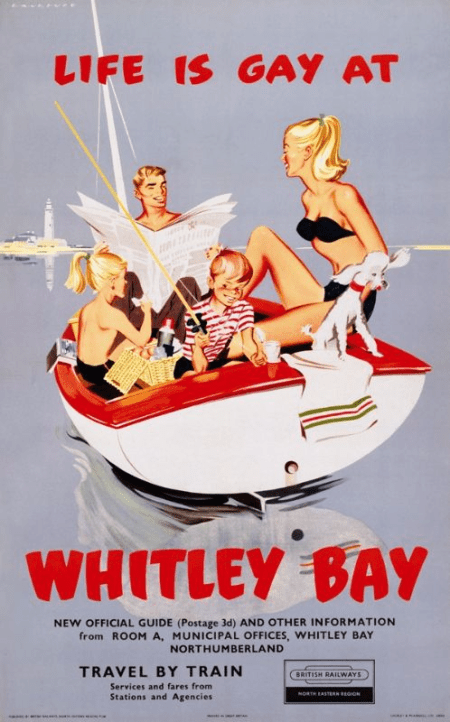
I particularly like the poster about Whitley Bay!

northumberlandia's avatarnorthumberlandia

WB LNER

To the coast! And an abrupt change of mood as riverside North Shields turns 90 degrees north to seaside; business turns to pleasure, and production to consumption.

Just as the Victorians invented industrial life, and the discipline of the factory hooter and dockyard clock, so too did they conceive of leisure as a commodity that was consumed at certain times and in certain demarcated zones.  By 1911 Britain had over a hundred substantial seaside resorts, from the big boys Blackpool and Brighton to lower league Largs and Llandudno.  The Northumbrian Riviera fits somewhere in between these poles, more akin to the maritime resort suburbs of Penarth or Southsea; but like all of them it was a place of beaches, bathing and boarding houses – with a big slug of hedonism.

life-is-gay-in-whitley-bay-50x70cm-railway-poster-18544-p

Here the eight miles of metal-bashing Tyneside – from Newcastle to the sea – transforms sharply into the ancestral coastal…

View original post 3,103 more words

Lisa Pathfinder: it works!

Posted in The Universe and Stuff with tags , , , on June 8, 2016 by telescoper

Just time for a quick post to pass on some impressive news from LISA Pathfinder (which is basically a technology demonstrator mission intended to establish the feasibility of a proposed space-based gravitational wave facility called LISA). LISA Pathfinder is ostensibly an extremely simple experiment, consisting of two metal cubes (made of a gold-platinum mixture) about 38cm apart. The question it tries to answer is how accurately these two cubes can be put an ideal “free-fall” state, i.e. when the only force acting on them is gravity.

Here’s a short explanatory video about the latest results:

The technical details are presented in a paper in Physical Review Letters, from which the key figure is this:


Lisa_PathfinderThis shows very clearly that the performance of the LISA Pathfinder experiment (as shown by the red measurements) comfortably exceeds the requirements of the full LISA experiment (black curve). Indeed, these results, from only two months of science operations, show that the two cubes are in free-fall to a precision more than five times better than originally required.

So, not to put too fine a point on it,  it works!


Cav/Pag and WNO

Posted in Opera with tags , , , , , on June 7, 2016 by telescoper

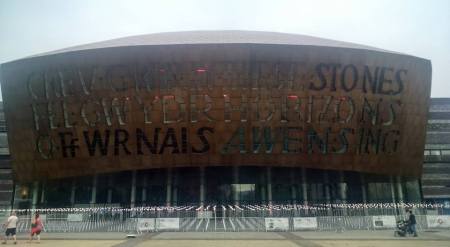
Well, I’m back in Brighton after a short break either side of my nth birthday (where n→∞). As is traditional on such occasions I spent the evening of the day in question at the Wales Millennium Centre for a night at the Opera:

WNO

On the bill for Saturday night were Cavalleria Rusticana and Pagliacci, two short operas written (respectively) by Pietro Mascagni and Ruggero Leoncavallo. Both works are in the verismo tradition of late 19th Century Italian opera and have central themes of love, jealousy, betrayal revenge and murder. So idea fare for a birthday treat!

The “Cav/Pag” package is quite a familiar pairing to opera goers. They weren’t actually written to be performed together, though it is believed that Leoncavallo wrote his piece Pagliacci in response to the success of Cavalleria Rusticana. The compositional style and orchestration are not dissimilar and often the principals are played by the same singers. The latter was the case with Saturday’s production, at least in terms of the two male roles: Gwyn Hughes Jones (shown below as Canio in Pagliacci; he also sang Turiddu in Cavalleria Rusticana) sang both tenor parts, while David Kempster (baritone) played Alfio (Cav) and Tonio (Pag). Both were excellent throughout.

Pagliacci.GwynHughesJones(Canio).Photocredit-BillCooper1244a

These two productions of this combo differ very much in their look and feel. Cavalleria Rusticana is beautifully staged, in a conventional 19th Century rural Italian setting. The lighting is particularly impressive: the opening looks like a scene from a painting by a Grand Master. The excellent chorus of Welsh National Opera is very much to the fore, especially in the famous Easter Hymn, and the principal soprano Camilla Roberts sang the role of Santuzza with great depth of expression. Carlo Rizzi conducted the Orchestra of Welsh National Opera.

Pagliacci is given a more modern setting – costumes were generally around the 1950s – but still set in Italy. The set is much plainer and the lighting harsher. The chorus has less to do in terms of singing, but provides colour and movement to the drama. Although the two male principals were good I felt the cast overall was weaker. Meeta Raval (Nedda) sang her part well enough, and got some good laughs in the moments of comedy, but she didn’t have the emotional depth needed to make her part really come alive. Gyula Nagy (as Nedda’s lover Silvio) also sang well enough, but really needs to take some acting lessons..

The big set-piece in Pagliacci is Vesti La Giubba, a powerfully emotional tenor ara which never fails to move. Enrico Caruso’s version of this was the hit record of its day.

Although there were some shortcomings it was still a very enjoyable evening of music drama. Indeed it was the last night in Cardiff for this season, Welsh National Opera’s 70th. The company’s debut when it gave its first performance – as an amateur organisation – on 15th April 1946, was a double bill of Cavalleria Rustica and Pagliacci

I’d therefore like to end by wishing Welsh National Opera a very happy birthday and send my deepest thanks for providing me with so many hours of pleasure through their performance. Long may they continue!


R.I.P. Muhammad Ali (1942-2016)

Posted in Sport with tags , on June 4, 2016 by telescoper

image

The Greatest.

Posted in Uncategorized on June 3, 2016 by telescoper

A very interesting and well argued case for remaining in the European Union, from eminent mathematician Tim Gowers.

gowers's avatarGowers's Weblog

For several reasons, I am instinctively in favour — strongly so — of remaining in the EU: I have a French wife and two bilingual children, and I am an academic living in the age of the internet. The result is that my whole outlook is international, and leaving the EU would feel to me like a gigantic step in the wrong direction. But in this post I want to try to set those instincts aside and try to go back to first principles, which doesn’t make it a mathematical post, but does make it somewhat mathematical in spirit. That is why I have chosen as my title the mathematical symbol for “is a member of”, which can also be read (in some contexts) as “in”, and which conveniently looks like an E for Europe too.

I’ll consider three questions: why we need supranational organizations, to what extent we should…

View original post 2,764 more words

R.I.P. Tom Kibble (1932-2016)

Posted in The Universe and Stuff with tags , , , , , on June 2, 2016 by telescoper

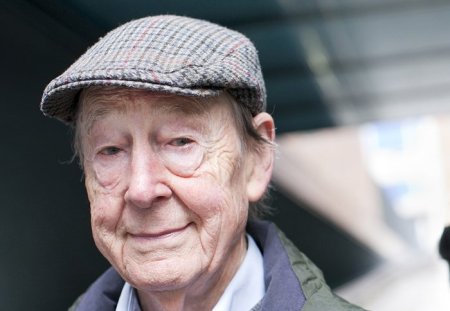
Yet again, I find myself having to use this blog pass on some very sad news. Distinguished theoretical physicist Tom Kibble (below) passed away today, at the age of 83.

Kibble

Sir Thomas Walter Bannerman Kibble FRS (to give his full name) worked on  quantum field theory, especially the interface between high-energy particle physics and cosmology. He has worked on mechanisms ofsymmetry breaking, phase transitions and the topological defects (monopoles, cosmic strings or domain walls) that can be formed in some theories of the early Universe;  he is  probably most famous for introducing the idea of cosmic strings to modern cosmology in a paper with Mark Hindmarsh. Although there isn’t yet any observational support for this idea, it has generated a great deal of very interesting research.

Tom was indeed an extremely distinguished scientist, but what most people will remember best is that he was an absolutely lovely human being. Gently spoken and impeccably courteous, he was always receptive to new ideas and gave enormous support to younger researchers. He will be very sadly missed by friends and colleagues across the physics world.

Rest in peace, Tom Kibble (1932-2016).