Archive for March, 2020

#WorldPoetryDay: ‘Black March’, by Stevie Smith

Posted in Poetry with tags , , , on March 21, 2020 by telescoper

My third choice for World Poetry Day is by Stevie Smith and is called  Black March.

I have a friend
At the end
Of the world.
His name is a breath

Of fresh air.
He is dressed in
Grey chiffon. At least
I think it is chiffon.
It has a
Peculiar look, like smoke.

It wraps him round
It blows out of place
It conceals him
I have not seen his face.

But I have seen his eyes, they are
As pretty and bright
As raindrops on black twigs
In March, and heard him say:

I am a breath
Of fresh air for you, a change
By and by.

Black March I call him
Because of his eyes
Being like March raindrops
On black twigs.

(Such a pretty time when the sky
Behind black twigs can be seen
Stretched out in one
Uninterrupted
Cambridge blue as cold as snow.)

But this friend
Whatever new names I give him
Is an old friend. He says:

Whatever names you give me
I am
A breath of fresh air,
A change for you.

by Stevie Smith (1902-1971)


#WorldPoetryDay: “Hope” is the thing with feathers, by Emily Dickinson

Posted in Poetry with tags , , , , , on March 21, 2020 by telescoper

My second poem for  United Nations World Poetry Day is by Emily Dickinson:

“Hope” is the thing with feathers –
That perches in the soul –
And sings the tune without the words –
And never stops – at all –

And sweetest – in the Gale – is heard –
And sore must be the storm –
That could abash the little Bird
That kept so many warm –

I’ve heard it in the chillest land –
And on the strangest Sea –
Yet – never – in Extremity,
It asked a crumb – of me.

by Emily Dickinson (1830-1886)


#WorldPoetryDay: `Solitude’ by Lord Byron

Posted in Poetry with tags , , , , , , on March 21, 2020 by telescoper

Today (Saturday 21st March 2020) is United Nations World Poetry Day. As I think we need poetry now more than ever I thought I’d post some poems to celebrate. There will be five altogether, spread throughout the day. My first choice is by Lord Byron:

To sit on rocks, to muse o’er flood and fell,
To slowly trace the forest’s shady scene,
Where things that own not man’s dominion dwell,
And mortal foot hath ne’er or rarely been;
To climb the trackless mountain all unseen,
With the wild flock that never needs a fold;
Alone o’er steeps and foaming falls to lean;
This is not solitude, ’tis but to hold
Converse with Nature’s charms, and view her stores unrolled.

But midst the crowd, the hurry, the shock of men,
To hear, to see, to feel and to possess,
And roam alone, the world’s tired denizen,
With none who bless us, none whom we can bless;
Minions of splendour shrinking from distress!
None that, with kindred consciousness endued,
If we were not, would seem to smile the less
Of all the flattered, followed, sought and sued;
This is to be alone; this, this is solitude!

by Lord Byron (1788-1824)


Farewell to Flybe

Posted in Biographical, Covid-19, Finance on March 20, 2020 by telescoper

Just for the record, I today received a full refund for the cost of my Flybe tickets via the Chargeback scheme. Thanks to AIB for processing this so quickly!

The collapse of Flybe happened on 5th March 2020, just over two weeks ago. Can it really have been so recent? It seems like ages ago.

telescoper's avatarIn the Dark

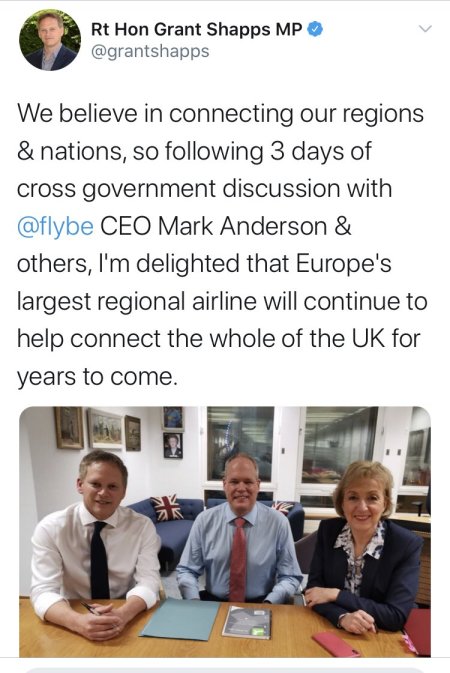
It had been on the cards for some time, but last night the airline Flybe collapsed and has now gone into administration. Let me just leave this Twitter announcement made in January by Transport Secretary Grant Shapps here:

It seems that Flybe has gone the inevitable way of every Tory promise.

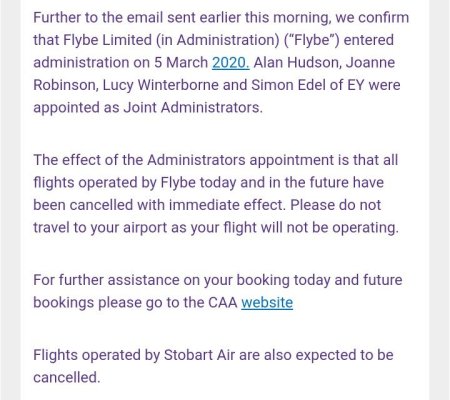
I had bought a ticket to fly from Dublin to Cardiff at the end of next week as the following week is a study break that includes the St Patrick’s Day holiday. As a result I got this email this morning.

Obviously it’s an inconvenience for me as I’ll have to find another way to get to Cardiff, but I’ll probably get my money refunded by the Chargeback scheme so it’s not such a big deal. The same can’t be said of the 2000 people who worked for Flybe who have now lost their jobs, nor the many…

View original post 181 more words

The Vernal Equinox 2020

Posted in History, Maynooth with tags , , , , on March 20, 2020 by telescoper

With everything else going on I quite forgot that the Vernal Equinox or Spring Equinox (in the Northern hemisphere) took place today (Friday 20th March) at 3.49am (Irish Time). This is in fact the earliest Spring Equinox for 124 years, the fact that 2020 is a leap year moving it a day earlier in our calendar. It’s a lovely day in Maynooth too!

People sometimes ask me how one can define the `equinox’ so precisely when surely it just refers to a day on which day and night are of equal length, implying that it’s a day not a specific time?

The answer is that the equinox is defined by a specific event, the event in question being when the plane defined by Earth’s equator passes through the centre of the Sun’s disk (or, if you prefer, when the centre of the Sun passes through the plane defined by Earth’s equator). Day and night are not necessarily exactly equal on the equinox, but they’re the closest they get. From now until the Autumnal Equinox days in the Northern hemisphere will be longer than nights, and they’ll get longer until the Summer Solstice before beginning to shorten again.

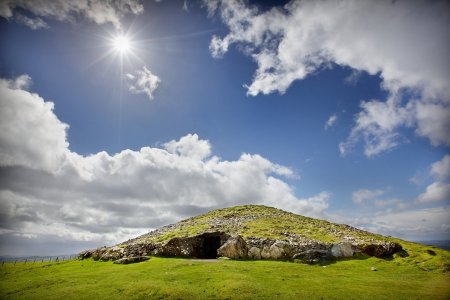
Loughcrew (County Meath), near Newgrange, an ancient burial site and a traditional place to observe the sunrise at the Equinox

Here in Ireland we celebrated Saint Patrick’s day on March 17th, the reputed date of his death in 461 AD. Nobody really knows where St Patrick was born, though, so it would be surprising if the when were any better known.

In any case, it wasn’t until the 17th Century that Saint Patrick’s feast day was placed on the universal liturgical calendar in the Catholic Church. In the thousand years that passed any memory of the actual date was probably lost, so the Equinox was perhaps rebranded for the purpose.

The early Christian church in Ireland incorporated many pre-Christian traditions that survived until roughly the 12th century, including the ancient festival of Ēostre (or Ostara), the goddess of spring associated with the spring equinox after whom Easter is named. During this festival, eggs were used a symbol of rebirth and the beginning of new life and a hare or rabbit was the symbol of the goddess and fertility. In turn the Celtic people of Ireland probably adapted their own beliefs to absorb much older influences dating back to the stone age.

St Patrick’s Day and Easter therefore probably both have their roots in prehistoric traditions around the Spring Equinox, although the direct connection has long been lost.

On Virtual Meetings

Posted in Education, Maynooth with tags , , , on March 19, 2020 by telescoper

We’ve now had almost a week of campus closure here at Maynooth and it has now become clear that there will be no more face to face teaching for the remaining half of the Spring Semester. That does not mean that everything stops, just that all teaching from now on will be delivered remotely.

There probably won’t be any in situ exams in May either: these will have to be replaced by assessments to be submitted online.

During this ‘working from home’ period I’ve been experiencing a few Google hangouts, but that’s just because I was trying to work while still in my underwear.

More relevantly, I have been gradually discovering new ways of holding virtual meetings, which is just as well because we’ll be doing teaching sessions that way starting on Monday.

I’ve been participating in regular videoconferences to do with Euclid using Zoom for a whole now. That seems quite a good easy-to-use platform which can cope with 100 participants.

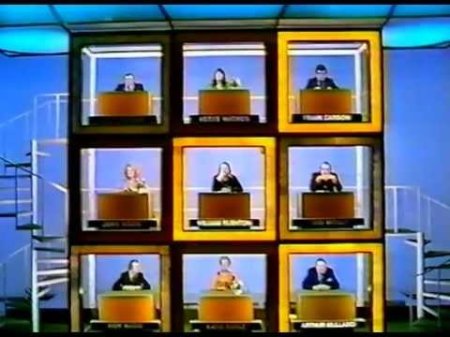
Yesterday I took part in a virtual meeting using GoToMeeting which is also quite good, although it did remind me of watching Celebrity Squares

(without the celebrities of course).

My video feed kept freezing but that was probably a bandwidth issue at my end rather than a software problem.

This morning I had another new experience, using Microsoft Teams. That wasn’t great to be honest, but it comes with Office 365 so I suppose we should use it on the grounds that we’re paying for it anyway.

I’m not all that experienced at virtual meetings but one tip I can pass on is that if you’re not speaking it’s a good idea to mute your microphone (and probably your video too). Otherwise any noise from shuffling papers, coughing or dropping things gets broadcast to everyone. If you’re presenting something it’s likewise a good idea to ask the audience to mute themselves.

Another point of etiquette is to exercise a bit of self-discipline in not talking over other participants. One should do that anyway, of course, but it’s even more vital in a virtual meeting, otherwise it quickly becomes unbearable. Even if you’re not using Microsoft Teams..

Anyway, if any among you has any further tips to pass on about virtual meetings or remote teaching (including other software platforms worth thinking about) please feel free to make remote use of the Comments Box below.

Early Dark Energy and Cosmic Tension

Posted in The Universe and Stuff with tags , , , , , on March 19, 2020 by telescoper

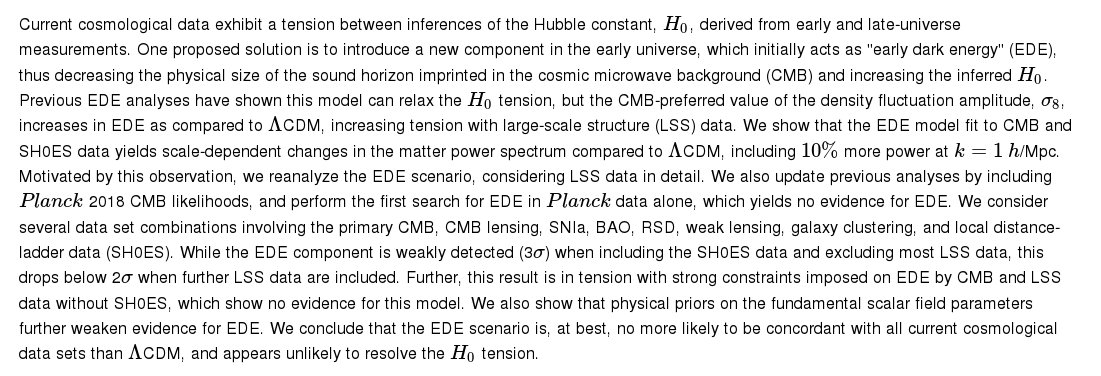
To avoid talking any more about you-know-what I thought I would continue the ongoing Hubble constant theme. Rhere is an interesting new paper on the arXiv (by Hill et al.) about the extent to which a modified form of dark energy might relieve the current apparent tension.

The abstract is:


You can click on this to make it bigger; you can also download the PDF here.

I think the conclusion is clear and it may or may not be related to a previous post of mine here about the implications of Etherington’s theorem.

Here’s my ongoing poll on the Hubble constant poll. Feel free to while away a few seconds of your time working from home casting a vote!


A Note from Maynooth

Posted in Biographical, Covid-19, Education, Maynooth with tags , , , , on March 18, 2020 by telescoper

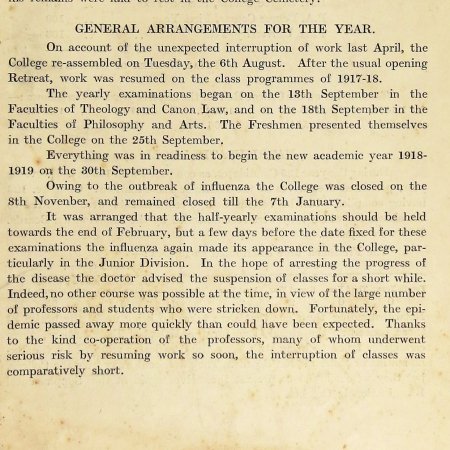
I’m indebted to colleagues from Maynooth University Special Collections & Archives for sending out the following bit of history.

It is now over 100 years ago the 1918 “Spanish ‘flu” influenza pandemic came to Maynooth College. It was officially closed from 8th November until 7th January and 60 students remained in the infirmaries. Over 500 students went home and sadly 11 of these did not survive the pandemic. More details below.

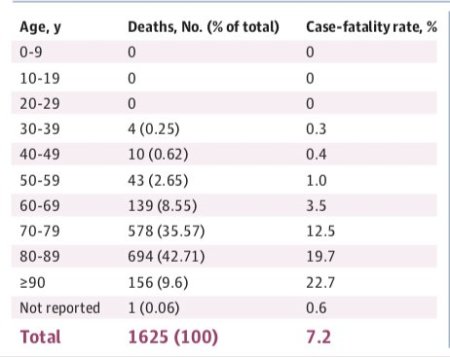
One difference between 1918 and 2020 is that the Spanish flu mainly affected the young. Covid-19 is remarkably different, as these grim mortality statistics from Italy demonstrate:

Nobody at all under the age of 30 has died (so far) of Covid-19 in Italy. It’s the mortality rate for those over 70 that is terrifying. This is just the rate so far. Many of those currently in intensive care won’t make it, so these figures will probably change significantly.

Last night the Taioseach Leo Varadkar gave an unusual address to the nation, which pointed out the gravity of the situation facing Ireland and indeed the world in genderal, which is even more serious that a century ago. In particular he stressed that the COVID-19 emergency would probably last well into the summer.

I don’t agree with Varadkar on many political issues but I think his speech last night was very good. He praised Ireland’s front line medical staff, but also found time to mention the teachers and lecturers who trying their best to deliver remote teaching. Above all, though, he was honest.

I feel very lucky right now, not only to be so far unaffected by Coronavirus but also to be living and working in a small University town in Ireland right now.

There are no obvious shortages of anything and my local (small) supermarket has put out hand wash and wipes for people to use on baskets and trolleys.

We’re also in a Study Week that has at least given us some time to figure out how to move to online teaching by next Monday when we are supposed to start again.

We are probably going to be in this for months rather than weeks but aat least we academics are in no imminent danger of losing our jobs. The same is not true for the folk working in local shops, restaurants and other businesses. We owe it to them to do what we can to support the local community and its economy as much as possible.

In particular, I’ve often remarked that we are lucky in a small town like Maynooth to have quite a few nice cafés and restaurants. Some of these have switched to takeaway or delivery mode during the emergency. I wouldn’t normally use a takeaway service but I will do now, and I suggest my colleagues and friends in Maynooth might do likewise. If we don’t support these establishments now we might lose them for good.

That goes for other local businesses too!

St Patrick’s Day Beard of Ireland 2020

Posted in Beards, Biographical with tags , on March 17, 2020 by telescoper

Lá Fhéile Pádraig Sona Daoibh!

Today is St Patrick’s Day, a national holiday in Ireland, so I’ve swapped working from home for not working from home.

Anyway it has been officially announced that I am the winner of the 2020 Beard of Ireland poll. Thank you so much to everyone who voted for me!

It is was a nail-biting contest (though we all washed our hands carefully afterwards).

The runner-up was Aodhán Connolly who is from Northern Ireland, as were many of the other contenders. There was a nice piece in the Belfast Telegraph but I haven’t seen anything in the Republic.

Anyway, for those who asked here is one of those selfie picture things that young people do, showing current beard configuration.

Now wash your hands please!

Public Health and Open Science – Updated

Posted in Covid-19 with tags , , , on March 16, 2020 by telescoper

Preface: I wrote this on Monday 16th March, before the release of a report from Imperial College admitting that the previous modelling was based on incorrect assumptions. Most of what I argued still stands but I have updated a few points.

–o–

The current Coronavirus outbreak is posing a great many questions not only about how governments should act but also about how they should communicate with the public. One aspect of this issue that came up last week was an open letter (now closed) asking the UK Government to release the data and models underpinning its COVID-19 strategy. In the interest of full disclosure, I didn’t sign it but only because I’m no longer based in the UK.

Although this letter received many signatures, I was very surprised by the negativity with which it was greeted from some corners of the scientific community. Those of us who work in astrophysics are of course used to open sharing of data and models being the norm. Some of us even see it as an essential component of the scientific method, so I was a bit shocked to see hostility from some other scientists. I think the reason was largely that it wouldn’t help to people without expert knowledge playing around with the data, getting hold of the wrong end of the stick, and jumping to erroneous conclusions. There is of course a danger of that, but in the absence of openness people are jumping to conclusions anyway and conspiracy theories are rife.

For what it’s worth, my view is that if governments can’t get those with scientific training on board then it has no chance with the general population. Astrophysicists, for example, at least understand what an exponential curve really means. Those of us who have a scientific background will not stop asking questions – nor, I think, should we. That’s how we view the world and for many equations and numbers are how we make sense of things.

So, undaunted by the calls that I should shut up because I’m not an expert, but prefaced by a clear admission that I am not an expert, I’m going to comment on a question that a lot of people are asking: why is the UK Government’s Coronavirus strategy so different from that adopted in other countries?

I didn’t watch the press conference last week that ignited this question, but I have listed to clips. The controversial issue is that of so-called herd immunity. Here is a quote by Sir Patrick Vallance, the UK’s chief scientific advisor:

Our aim is to try to reduce the peak, broaden the peak, not suppress it completely; also, because the vast majority of people get a mild illness, to build up some kind of herd immunity.

Now in the absence of a vaccine there isn’t going to be herd immunity in the sense that I understand it, but (as I have already said) I am not an expert. I think the key words are `some kind of’ in the above quote. What is envisaged is a large number of people getting infected, hopefully only contracting mild symptoms, but in any case subsequently acquiring immunity. It would be bad news for this line of thought if it turns out that people can be reinfected, as indeed seems to be the case.

After listening to the press briefings, however, it seems to me that this idea isn’t a key driver of the science policy and that Vallance simply used the phrase `herd immunity’ inadvisedly.

So if that’s not the reason why would the UK’s approach be so different from other countries? Again I preface this by admitting that I’m not an expert.

At the core of a public health strategy to combat a pandemic will be mathematical models of the spread of infection. I only know a little bit about these but I’d guess that most government agencies will have similar models (though there might be different choices of parameters reflecting different populations). But that’s not all the strategy will be based on. Among the other factors are:

  1. the resources available for treating infected persons; and
  2. the likely behaviour of the population (and hence the infection rate) as a result of any measures taken.
  3. A decision about what it means for a strategy to be ‘optimal’.
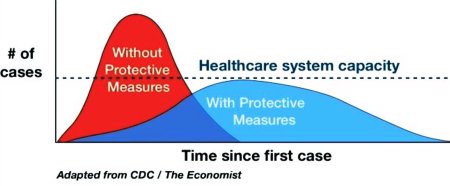
In the first of these the UK is clearly in a very different situation from most of the rest of the world: the National Health Service has (per capita) far fewer hospital beds and, most importantly, far fewer intensive care unit facilities than other developed nations. The latter, in any case, run at close to capacity even at normal times so the resource available is severely limited. The need to `flatten the curve’ would therefore seem to be even more pressing for the United Kingdom than in many other nations.

Update: the Imperial College report explains that previous models made unrealistically optimistic assumptions about the number of infected persons requiring critical treatment. The old strategy would have led to upwards of 250,000 deaths as the NHS would have been swamped. This was exactly what was being pointed out by ‘inexpert’ commenters on social media.

Here is a dramatic confirmation of this:
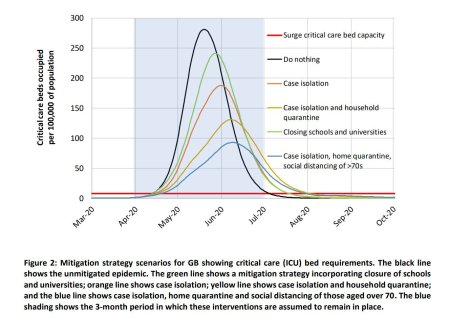
The red line represents UK current critical care capacity. No amount of ‘flattening’ will be enough to avoid the NHS being overwhelmed.

That is a difference in input, but it doesn’t explain why the UK is not taking more stringent measures on social distancing. Quite the opposite, in fact. Apparently the Government has already accepted that hospitals are going to be overrun and that things are going to be very grim indeed for a long time.

By way of support for this interpretation, Boris Johnson recently announced that the elections scheduled for May 2020 will be postponed for a whole year, rather than the six months recommended by the Electoral Commission. It is a reasonably inference that the Government does not believe that this will be anywhere near over by the end of 2020. That signals that it won’t be able to put extra resources in place on the timescale needed to deal effectively with COVID-19 as China and South Korea seem to have done.

It seems, then, that the reason for not enforcing stricter policies now is item 2 above, and it is a judgment based on behavioural psychology: that severe social distancing measures would not be effective because people would get bored or there would be widespread social unrest if folk were asked to endure them for many months. That very pessimistic view of the likely behaviour of the UK population may well be realistic but assuming it has serious implications for mortality.

My interpretation of this is that the Government thinks people won’t really pay enough attention to social distancing instructions until the body count starts to become very scary indeed which, with exponential growth leading to a doubling of cases, every 2-3 days, won’t take very long.

So that brings me the reason why I think there is no way the UK Government is going to release its modelling calculations, namely that they contain numbers for how many people are going to die over the next few months. It won’t do that because it thinks the numbers would just cause people to panic. That may be a correct call too. Those of us who work in subjects like astrophysics don’t have to worry that releasing our data and models will terrify people.

There’s also point (3) about what defines an optimal strategy, as constrained by (1) & (2). The criterion could be overall mortality, but one can imagine that a government might decide to include economic cost as well or instead. One can certainly imagine the UK Government making such a choice.

I’ll add one final comment.

Here in Ireland the HSE has increased the level of testing in recognition of the evidence that community transmission seems to be more probable than previously thought. A surge in the number of confirmed cases of COVID-19 is expected.

Meanwhile, in the United Kingdom, the National Health Service is no longer carrying out any community testing:
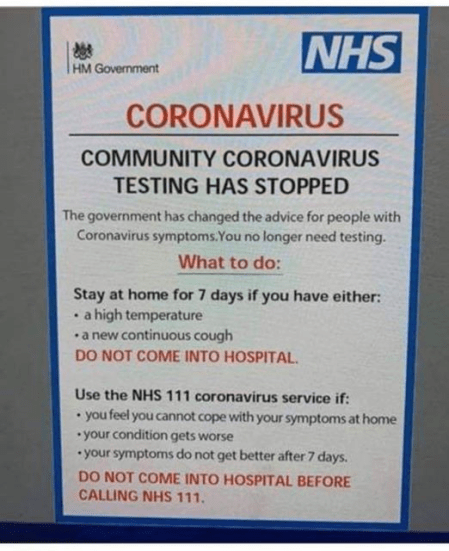
I suspect the reason for this is a combination of (1) and (2). Counting deaths rather than infections is arguably a more reliable indicator of the growth of the epidemic and it is certainly cheaper. Moreover, one way of keeping the numbers down to avoid frightening people is to stop counting them…

Update: As of yesterday Germany had 5813 COVID cases and had 13 deaths; Norway had 1356 cases and only 3 deaths. The UK claimed 1391 cases but 35 deaths. These numbers provide drastic evidence of undercounting cases in the UK.