Archive for June, 2021

The Summer Solstice 2021

Posted in The Universe and Stuff with tags , , , , , , on June 20, 2021 by telescoper

The Summer Solstice in the Northern hemisphere happens tomorrow, Monday 21st June 2021, at 04:32  Irish Time (03:32 UTC). Among other things, this means that tomorrow is the longest day of the year around these parts.  Usually I post about the Solstices and Equinoxes close to the time that they occur,  and on the same day, but because I don’t want to get up before 4.32am and few would be awake to read it then, I thought I’d do this one in advance.

Sunrise in the Dublin area is about 04:56 local time tomorrow and sunset is at 21:57: the interval between sunrise and sunset will be just about 1s longer on 21st June than today, 20th June, and 5 seconds longer than Tuesday 22nd June. The longest day will last 17 hours and 11 seconds (approximately) so make the most of it – it’s all downhill from now on!

Days will get shorter from tomorrow until the Winter Solstice in December, although this does not mean that sunset will necessarily happen earlier on 22nd  than it does tomorrow. In fact it is a little later. This is because there is a difference between mean solar time (measured by clocks) and apparent solar time (defined by the position of the Sun in the sky), so that a solar day does not always last exactly 24 hours. A description of apparent and mean time was given by Nevil Maskelyne in the Nautical Almanac for 1767:

Apparent Time is that deduced immediately from the Sun, whether from the Observation of his passing the Meridian, or from his observed Rising or Setting. This Time is different from that shewn by Clocks and Watches well regulated at Land, which is called equated or mean Time.

The discrepancy between mean time and apparent time arises because of the Earth’s axial tilt and the fact that it travels around the Sun in an elliptical orbit in which its orbital speed varies with time of year (being faster at perihelion than at aphelion).

Using a rapid calculational tool (Google), I found a table of the local mean times of sunrise and sunset for Dublin around the 2021 summer solstice. This shows that the earliest sunrise was actually on 17th June and the latest sunset is on 24th.

If you plot the position of the Sun in the sky at a fixed time each day from a fixed location on the Earth you get a thing called an analemma, which is a sort of figure-of-eight curve whose shape depends on the observer’s latitude. Here’s a photographic version taken in Edmonton, with photographs of the Sun’s position taken from the same position at the same time on different days over the course of a year:
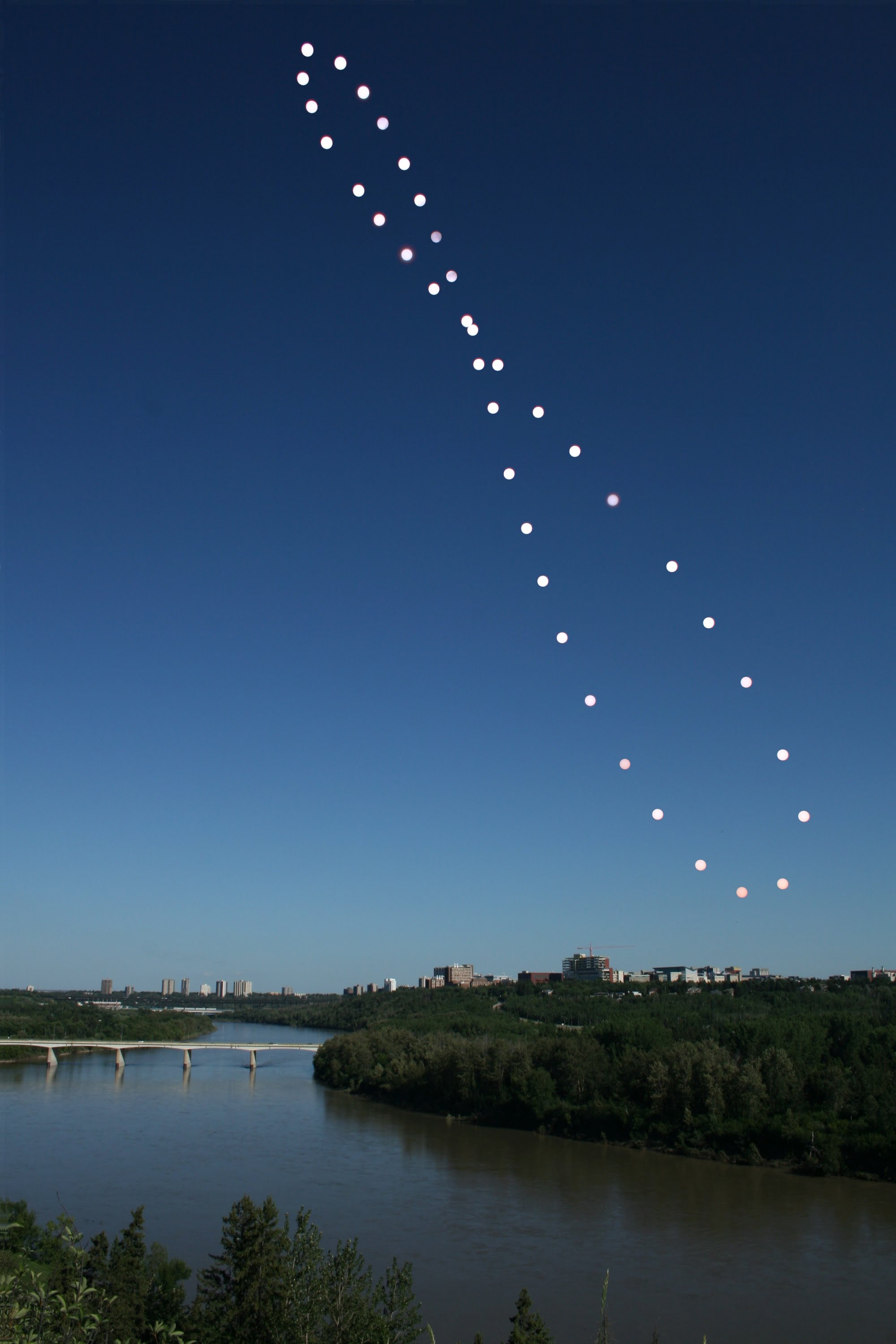
maxresdefault

The summer solstice is the uppermost point on this curve and the winter solstice is at the bottom. The north–south component of the analemma is the Sun’s declination, and the east–west component is the so-called equation of time which quantifies the difference between mean solar time and apparent solar time. This curve can be used to calculate the earliest and/or latest sunrise and/or sunset.

P.S. A bit of light googling revealed to me that if you live in York then your sunrise on 21st June 2021 is at 4.32am, precisely the same time as the Solstice.

Canal Bank Walk, by Patrick Kavanagh

Posted in Maynooth, Poetry with tags , , on June 19, 2021 by telescoper

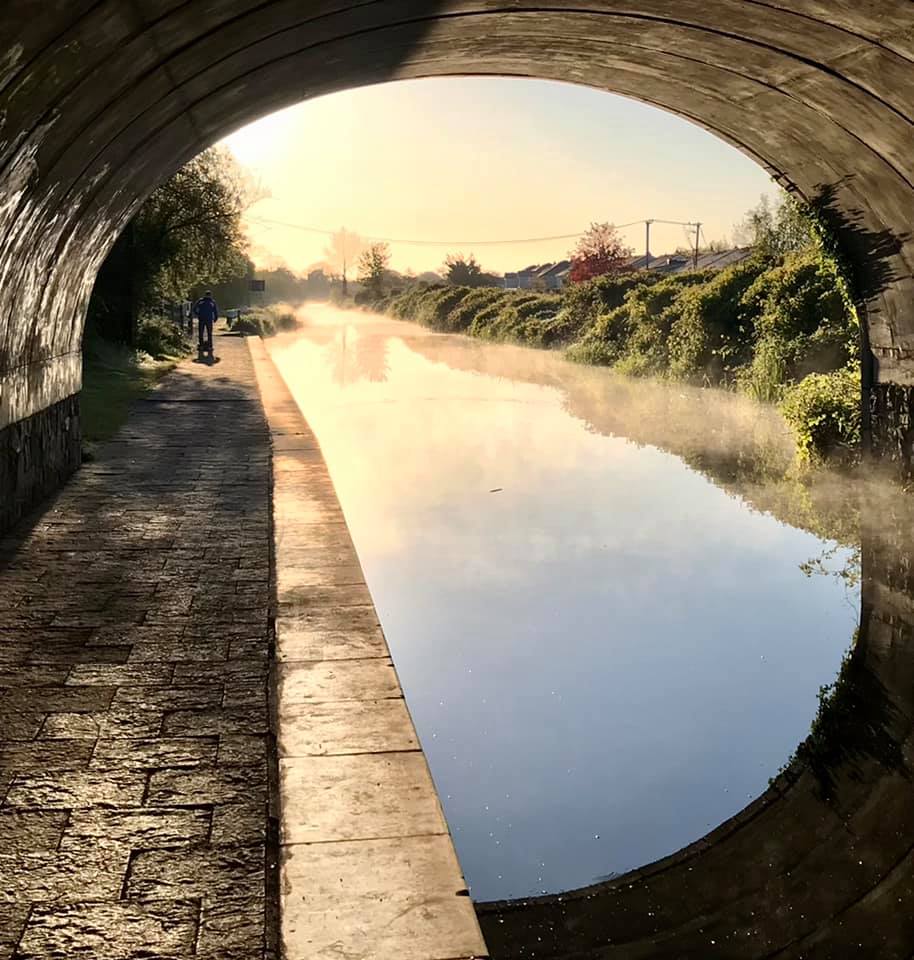
The Royal Canal, Maynooth (Picture Credit: M. Maher)

Written in 1954 when the poet was recovering from a life-threatening illness this poem – a sonnet by Patrick Kavanagh – is a celebration not only of nature’s powers of regeneration but of the delight in taking things slowly. As he expressed in his lecture Man and Poet:

We are in too great a hurry. We want a person or thing to yield their pleasures and their secrets to us quickly for we have other commitments. But it is the days when we are idle, when nothing appears to be happening, which provide us, when no one is looking, with all that is memorable.

Here is the poem Canal Bank Walk:

Leafy-with-love banks and the green waters of the canal
Pouring redemption for me, that I do
The will of God, wallow in the habitual, the banal,
Grow with nature again as before I grew.
The bright stick trapped, the breeze adding a third
Party to the couple kissing on an old seat,
And a bird gathering materials for the nest for the Word
Eloquently new and abandoned to its delirious beat.
O unworn world enrapture me, encapture me in a web
Of fabulous grass and eternal voices by a beech,
Feed the gaping need of my senses, give me ad lib
To pray unselfconsciously with overflowing speech
For this soul needs to be honoured with a new dress woven
From green and blue things and arguments that cannot be proven.

The Hundred

Posted in History with tags , on June 18, 2021 by telescoper

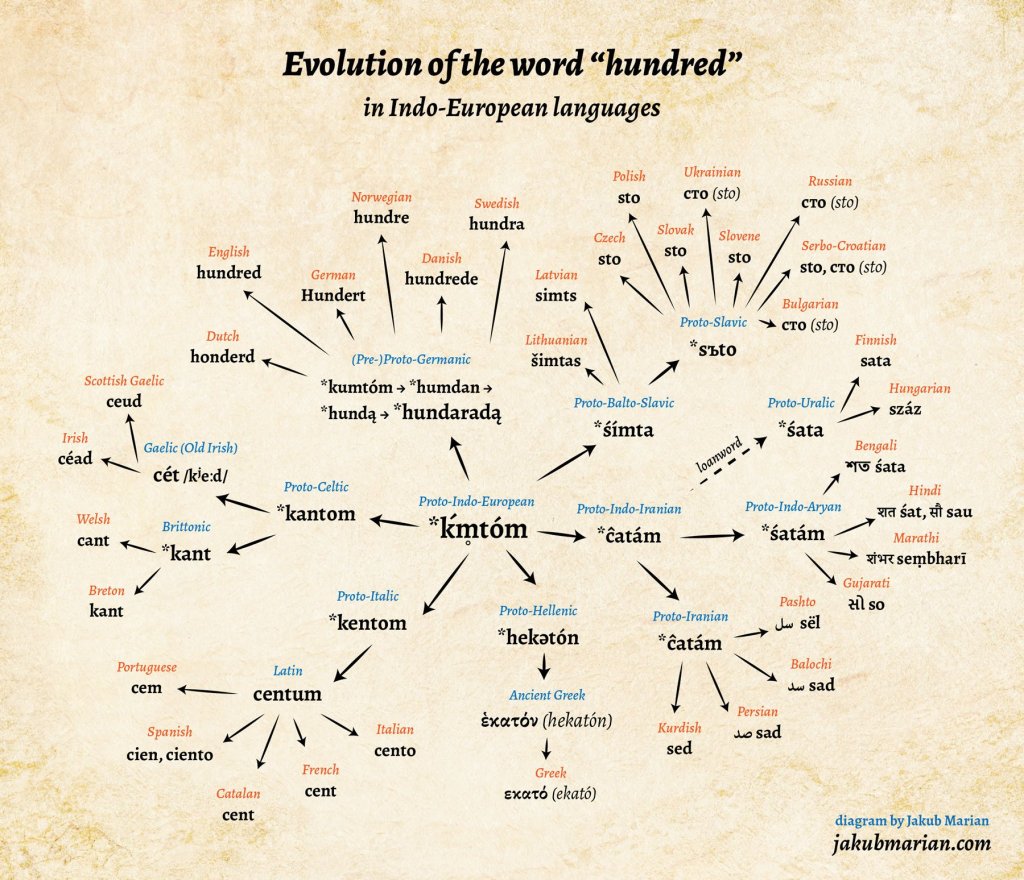
I saw this on Twitter recently and thought I’d share it because I found it fascinating. Taken from here and it shows the evolution of the word “hundred” across Indo-European languages:

Apologies if you thought I was going to go off on one about the silly new English cricket format. I think it’s best I don’t discuss that.

Remembering John Barrow

Posted in Biographical with tags , , on June 17, 2021 by telescoper

This is a special post about John D. Barrow who passed away from colon cancer last year. As you probably know John Barrow was my thesis advisor.

John’s son Roger is running the London Marathon in October this year to raise funds for MacMillan Cancer Support. It’s a very special cause for John’s family and friends and I hope you will consider helping Roger money for this charity as an excellent way of remembering John.

You can donate here.

Please feel free to share this as widely as possible. Let’s raise that total as high as we can!

Marking Bloomsday 2021 with beard power

Posted in Beards, Biographical, Literature on June 16, 2021 by telescoper

Although my primary research interest is in the area of astrophysics and cosmology I think it is important to get involved whenever possible in interdisciplinary scholarship. My latest such contribution was to use the “find” facility on the online version of Ulysses by James Joyce to establish that the word “beard” appears 59 times in that work. A thorough analysis of the role of beards in Ulysses would make an interesting PhD topic, in my opinion.

kmflett's avatarKmflett's Blog

As former Beard of Ireland Peter Coles noted on twitter there are 59 references to beards in James Joyce’s Ulysses.

On Bloomsday 2021 the Beard Liberation Front salutes the hirsute canon of Joyce.

A typical Ulysses reference is below:

Mastiansky and Citron approach in gaberdines wearing long earlocks. They wag their beards at Bloom

(page 438)

View original post

#Bloomsday and Things Joycean

Posted in Literature with tags , , on June 16, 2021 by telescoper

So it’s 16th June, a very special day in Ireland – and especially Dublin – because 16th June 1904 is the date on which the story takes place of Ulysses by James Joyce. Bloomsday – named after the character Leopold Bloom – is an annual celebration not only of all things Joycean but also of Ireland’s wider cultural and literary heritage. Of course it’s mainly virtual this year, as it was last year.

I was toying with the idea of going into Dublin and wandering about some of the locations described in Ulysses, but I have too much work to do. Maybe next year.  Instead I thought I’d prepare dinner this evening in a style that Leopold Bloom would enjoy:

He liked thick giblet soup, nutty gizzards, a stuffed roast heart, liver slices fried with breadcrumbs, fried hen cod’s roe. Most of all he liked grilled mutton kidneys which gave his palate a fine tang of faintly scented urine.

Or perhaps not.

If you haven’t read Ulysses yet then you definitely should. It’s one of the great works of modern literature. And don’t let people put you off by telling you that it’s a difficult read. It really isn’t. It’s a long read that’s for sure -it’s over 900 pages – but the writing is full of colour and energy and it has a  real sense of place. It’s a wonderful book.

(There’s also quite a lot of sex in it….)

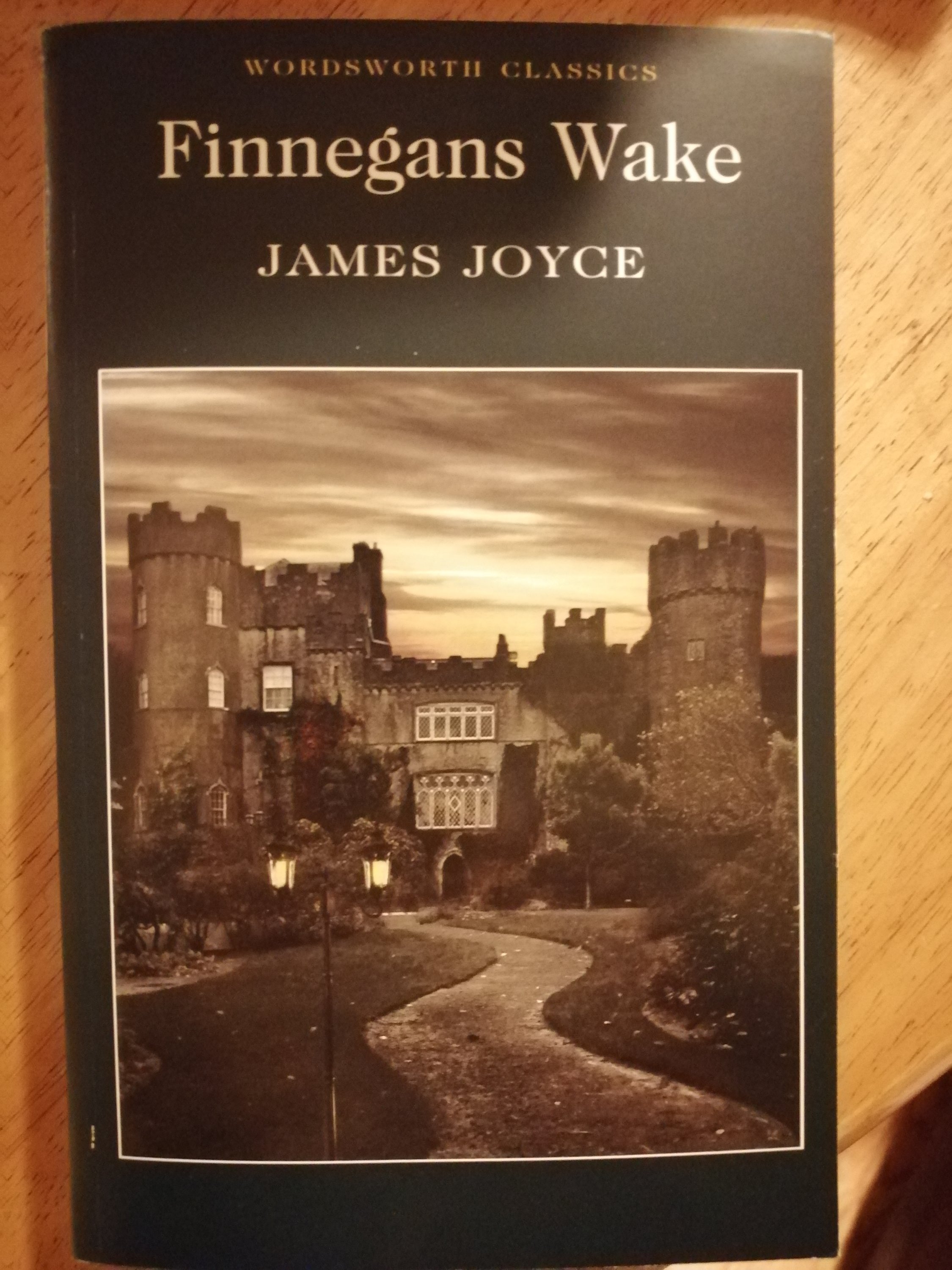
I’ve read Ulysses twice, once when I was a teenager and once when I was in my thirties. I then lent my copy to someone and never got it back. The copy shown above is a new one I bought last year with the intention of reading the novel again now that I live in Ireland but I sadly have not had the time yet. I will, though.

I did manage to read all of Finnegans Wake last summer which I think is quite a difficult read so I approached it by rationing myself to ten pages per day and going slowly, often reading it out loud. In many ways it’s really a more like a very long poem than a prose work. It is

Incidentally if you would like to limber up before making an attempt on either  Ulysses or Finnegans Wake I recommend this set of short stories.

But if you don’t fancy reading it you can listen to an epic 29 hour dramatisation of Ulysses on the radio via RTÉ; see here for details.

Opening Up Again

Posted in Biographical, Covid-19, Maynooth, The Universe and Stuff on June 15, 2021 by telescoper

The Irish Government has just produced its plan for A Safe Return to on-site further and higher education and research that outlines what is basically a full return to on-campus activity from September 2021.
I quote from the preamble to the document linked to above:

It is expected that the majority of the people over 18 in Ireland will have been vaccinated by September 2021, and so planning is proceeding on the basis that full resumption of on-site activity is possible, while ensuring that overall numbers attending on-site are monitored and controlled.

In the absence of regular updates about the progress of Ireland’s vaccination programme it is difficult to know whether the first sentence is accurate or not, especially since it appears that two vaccine doses are needed to protect against the Delta-variant. I think most teaching staff will have been immunized by September, but am not so sure about the student population.

I’m also mindful that we were optimistic in advance of the start of last academic year and things didn’t exactly go to plan then. Nevertheless there do seem to be reasonable grounds for believing that we can return to on-campus teaching in September and we will be planning on that basis until there is evidence to the contrary. I just hope we don’t have to do a rapid about-turn like we did last year.

The first step in this process for us here in Maynooth is that from 5th July staff and research students can return to their offices on campus – following the existing protocols on social distancing, sanitation and ventilation – without having to make a special case. Only a few people have been working inside the Department since the start of the year and I’d expect most to begin making their way back.

In fact some members of the Department of Theoretical Physics joined us only this academic year and have never actually been the building (or on campus) at all. I suppose I’ll now have to find office space for them, something that hasn’t been necessary while we have all been working from home!

As a matter of fact, since it’s a nice day and I’ve been on Teams all morning, I might take a walk onto campus myself this afternoon and visit my office in the Department for the first time in a month…

Challenges for the Standard Cosmological Model

Posted in The Universe and Stuff with tags , , , on June 14, 2021 by telescoper

I recently came across a comprehensive review article on the arXiv and thought some of my regular readers might find it interesting as a description of the current state of play in cosmology. The paper is called Challenges for ΛCDM: An update and is written by Leandros Perivolaropoulos and Foteini Skara.

Here is the abstract:

A number of challenges of the standard ΛCDM model has been emerging during the past few years as the accuracy of cosmological observations improves. In this review we discuss in a unified manner many existing signals in cosmological and astrophysical data that appear to be in some tension (2σ or larger) with the standard ΛCDM model as defined by the Planck18 parameter values. In addition to the major well studied 5σ challenge of ΛCDM (the Hubble H0 crisis) and other well known tensions (the growth tension and the lensing amplitude AL anomaly), we discuss a wide range of other less discussed less-standard signals which appear at a lower statistical significance level than the H0 tension (also known as ‘curiosities’ in the data) which may also constitute hints towards new physics. For example such signals include cosmic dipoles (the fine structure constant α, velocity and quasar dipoles), CMB asymmetries, BAO Lyα tension, age of the Universe issues, the Lithium problem, small scale curiosities like the core-cusp and missing satellite problems, quasars Hubble diagram, oscillating short range gravity signals etc. The goal of this pedagogical review is to collectively present the current status of these signals and their level of significance, with emphasis to the Hubble crisis and refer to recent resources where more details can be found for each signal. We also briefly discuss possible theoretical approaches that can potentially explain the non-standard nature of some of these signals.

Among the useful things in it you will find this summary of the current ‘tension’ over the Hubble constant that I’ve posted about numerous times (e.g. here):

DES in the Eye

Posted in The Universe and Stuff on June 13, 2021 by telescoper

I see that the press interest in the recent Dark Energy Survey results (to which I referred in a post here) has extended to a cartoon in the latest Private Eye

On Valerian

Posted in Uncategorized on June 12, 2021 by telescoper

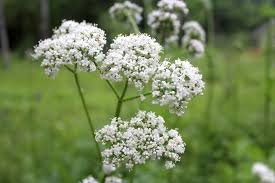
Pottering about in the garden this morning I remember that on my little birthday trip last week I noticed a huge amount of the above plant growing on various railway embankments between Maynooth and Dublin.

It’s red valerian (aka spur valerian, kiss-me-quick, fox’s brush, devil’s beard & Jupiter’s beard among other names). I’d like to have some on my garden, actually. It’s very attractive and is probably sufficiently hardy to survive my lack of gardening skills.

Incidentally, is is not the same species as the true valerian shown above (also known as all-heal and setwall) which is also very nice, but has lighter flowers, a very pale pink or white. You will sometimes find this interspersed with red valerian when growing wild. It grows to quite a height and is not particularly fragrant so is probably not one for the garden but is a common wild flower.

Incidentally, in Agatha Christie’s Murder on the Orient Express the victim is sedated prior to his murder using valerian, which can be taken as a tonic in the form of a dilute infusion (hence the name “all-heal”), but a powerful hypnotic in concentrated doses. It’s one of many common wild flowers that has medicinal properties but can be toxic if taken excessively.

It’s perhaps also worth mentioning that cats adore valerian in the same way they do catnip.