Archive for Elaine Clark

Higdon, Strauss and Ravel at the National Concert Hall

Posted in Music with tags , , , , , , , , , , on February 21, 2026 by telescoper

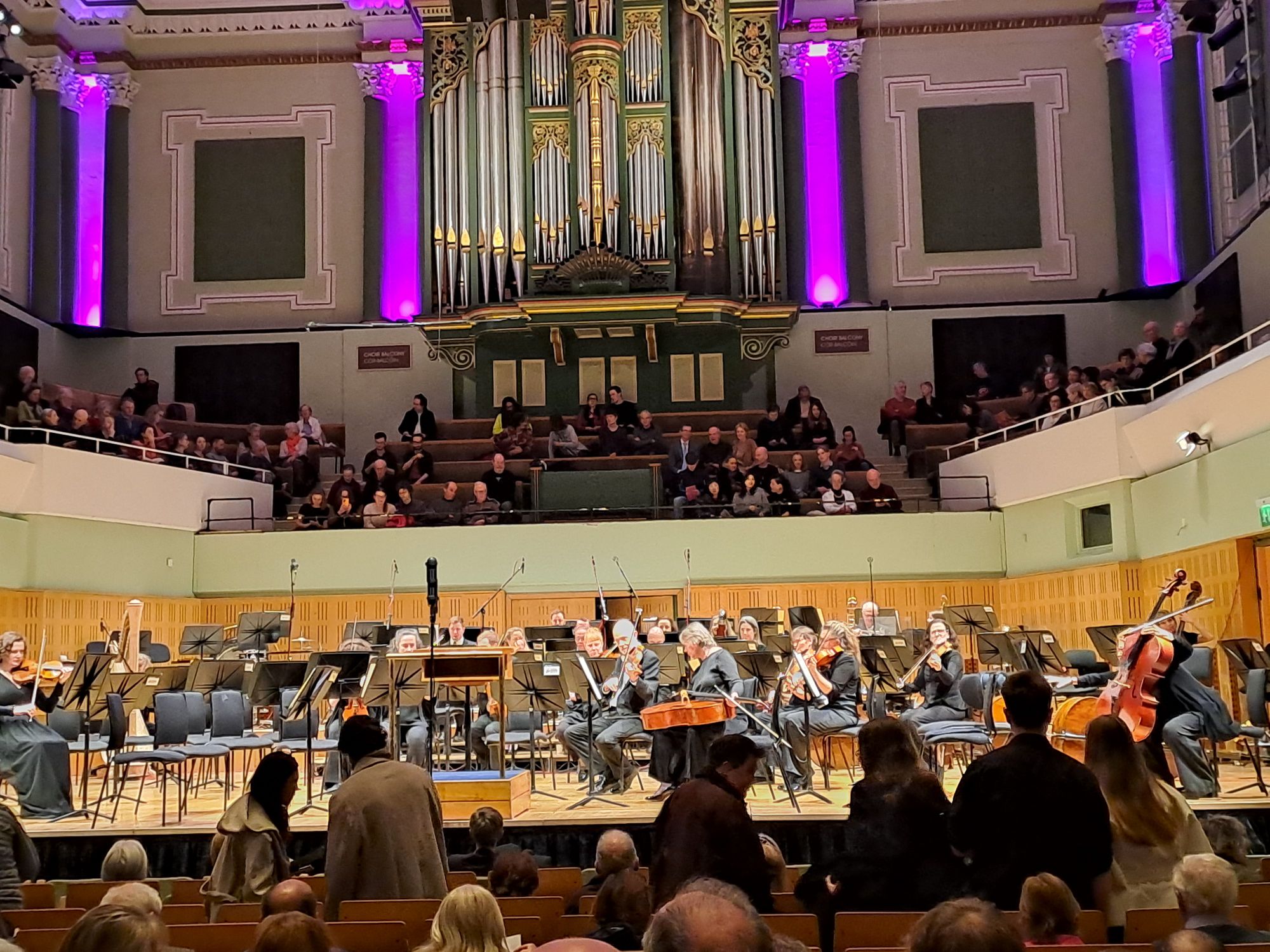
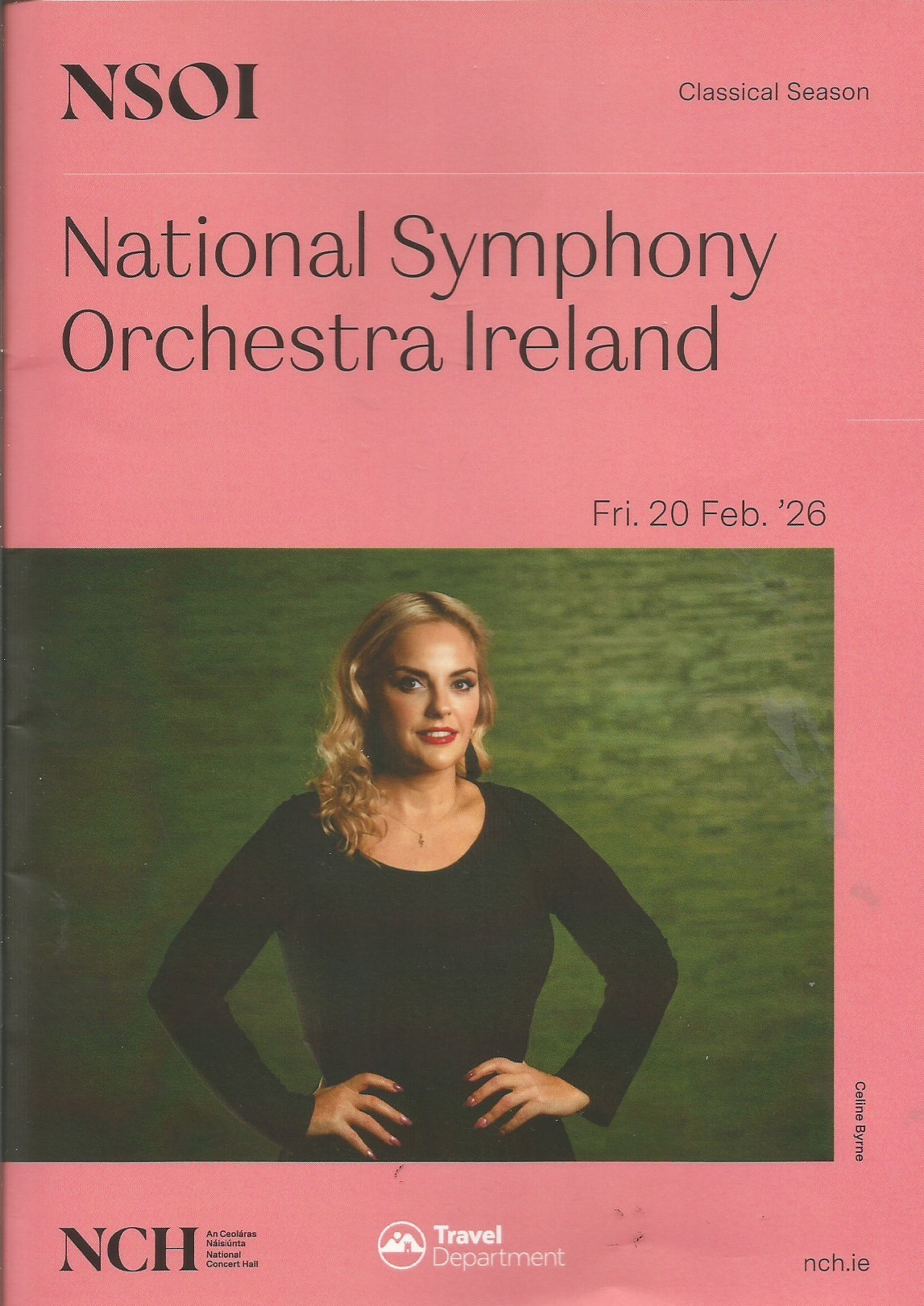
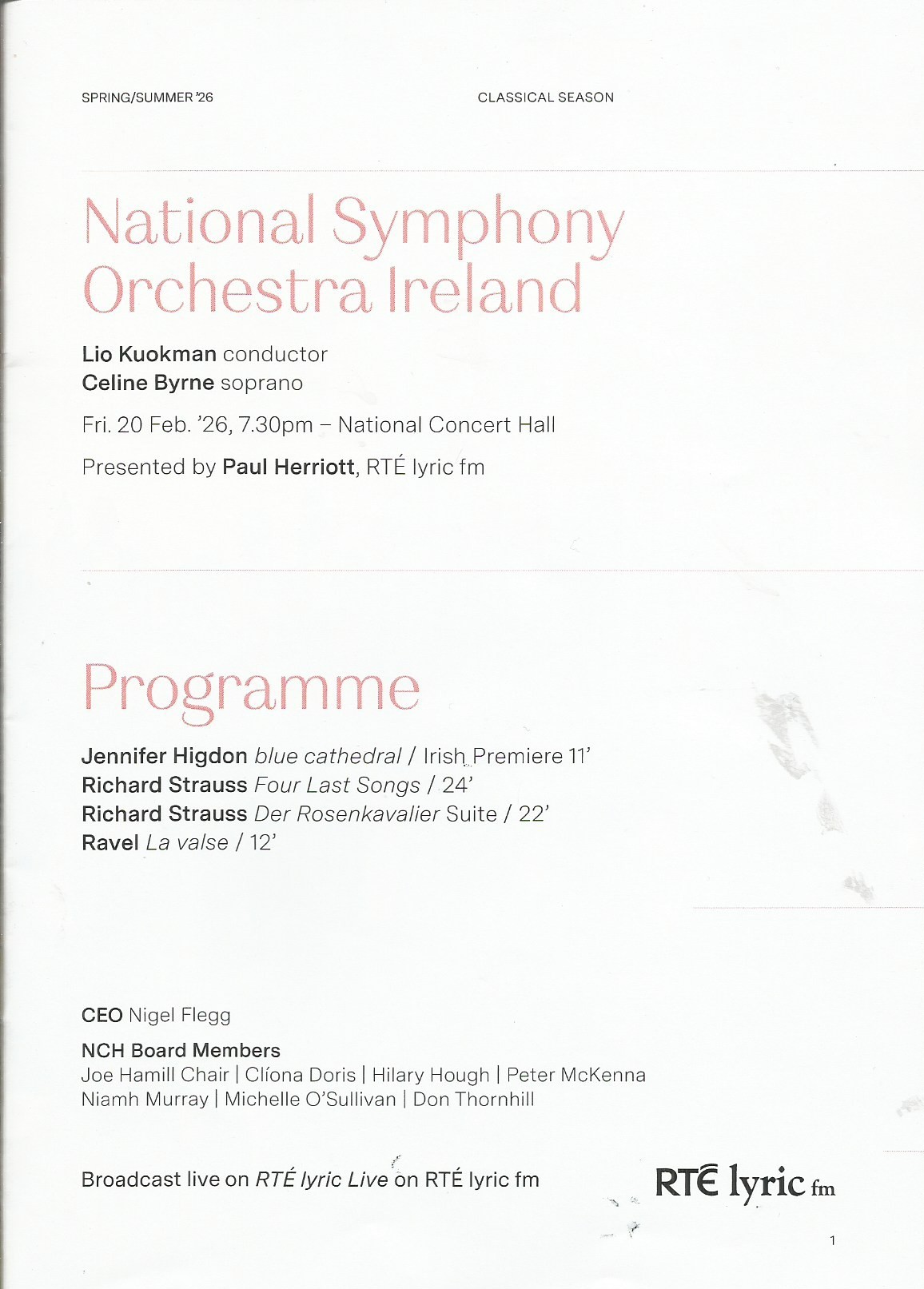
And so it came to pass that last night I went to the National Concert Hall in Dublin for another concert by National Symphony Orchestra Ireland, this time conducted by Lio Kuokman and joined, for a performance of the Strauss’s Four Last Songs, by the wonderful soprano Celine Byrne. Given the presence of an Irish favourite it was no surprise to find the concert hall very busy indeed.

The first item on the agenda was the Irish premier of blue cathedral by Jennifer Higdon, an elegaic piece she composed on the death of her younger brother. It’s an interesting piece which is quite easy on the ear as well as incorporating some very original effects. The string section, for example, use handbells to maje gentle tinkling noises near the end. I’ve never heard this piece before and I think it’s one that will bear repeated listening.

Next came the main item on the agenda. The Four Last Songs were published after the composer’s death, so Richard Strauss never heard them performed. The very first time they were performed was in 1950 at the Royal Albert Hall, by the London Philharmonia. One can only imagine what it must have been like for the orchestra making this music live for the very first time.  Apparently the first time any of them had seen the score was when they turned up for the rehearsal. I’m sure they knew as soon as they started playing that it was a masterpiece.

Last night we heard these songs sung by Celine Byyne, who was born in Kildare. She arrived on stage resplendent in a black dress with red feathers around the shoulders. I don’t know how many times I’ve heard these songs and they never fail to move me. The opening of the first song, Frühling, is in the chest register for a soprano which is the most difficult to project over an orchestra, but Celine Byrne took it in her stride, as she did with the others. I must single out the leader of the National Symphony Orchestra Elaine Clark for her gorgeous playing of the lovely violin solo in the third song, Beim Schlafengehen. I don’t mind admitting that it brought a tear to my eye, as did the final Im Abendrot which is one of my very favourite pieces of music. I was sitting next to an elderly couple, and I coultn’t help noticing that they spontaneously held hands on the words “Hand in Hand”.

Incidentally, as far as I know the Four Last Songs were not specifically intended to be performed together as they inevitably are these days. Although the last is my favourite, I think the first three (all based on poems by Herman Hesse) have much more in common with each other than Im Abendrot (which is a poem by Joseph von Eichendorff).

After the wine break we continued with more Strauss, sort of, in the form of a suite from the Opera Der Rosenkavalier. Although Strauss allowed this to be assembled from his music as a concert work I don’t think he actually created it as such. It’s relatively brief ( just over 20 minutes in performance) that begin’s with the opera’s orchestral prelude, depicting the Marschallin’s and Octavian’s night of passion (vividly portrayed by whooping horns). Next comes the appearance of Octavian as the “Rosenkavalier”, depicted in tender gorgeous music; the sight of him looking so young makes the Marschallin realise that he will soon leave her for a younger woman. There follows the duet between Octavian and Sophie (oboe and horn) – in which their love for each other becomes ever more obvious, but this is abruptly interrupted by the discordant music associated with the clumsy arriva of the buffoonish Baron Ochsl. Next the violins tentatively introduce the first waltz, followed by another given out by the solo violin, before the whole orchestra settles into waltz mode. A general pause and a violin solo leads into the nostalgic music where the Marschallin sadly realises she has lost Octavian. Then comes its ecstatic climax. The work closes with another robust waltz, depicting Ochs at his most pompous, and a boisterous coda apparently composed for the suite. Listening to this is like a fast-forward through the opera, but it does lack the vocal parts, and I think Strauss was at his best writing for, especially female, voices.

And finally, picking up on the theme of waltzes prevalent in the preceding piece we had La Valse by Maurice Ravel. This is a great masterpiece, originally conceived as a tribute to the Viennese waltz, but not composed until after the First World War, and turned into a kind of tragic parody, starting out sombre and brooding, gradually building into a garish intensity and then into a brutal, almost chaotic, ending.

This was a very nice concert, with a varied programme and some fine playing throughout. The performance being relatively short, and wanting to avoid sitting in Pearse station for a long time waiting in Pearse Station for the 10.14 train, I broke with tradition and took a bus. I started out about 20 minutes earlier than I would have done had I waited for the train, but when I got to Maynooth at a bus stop next to the railway station, the train I would have got had just arrived….
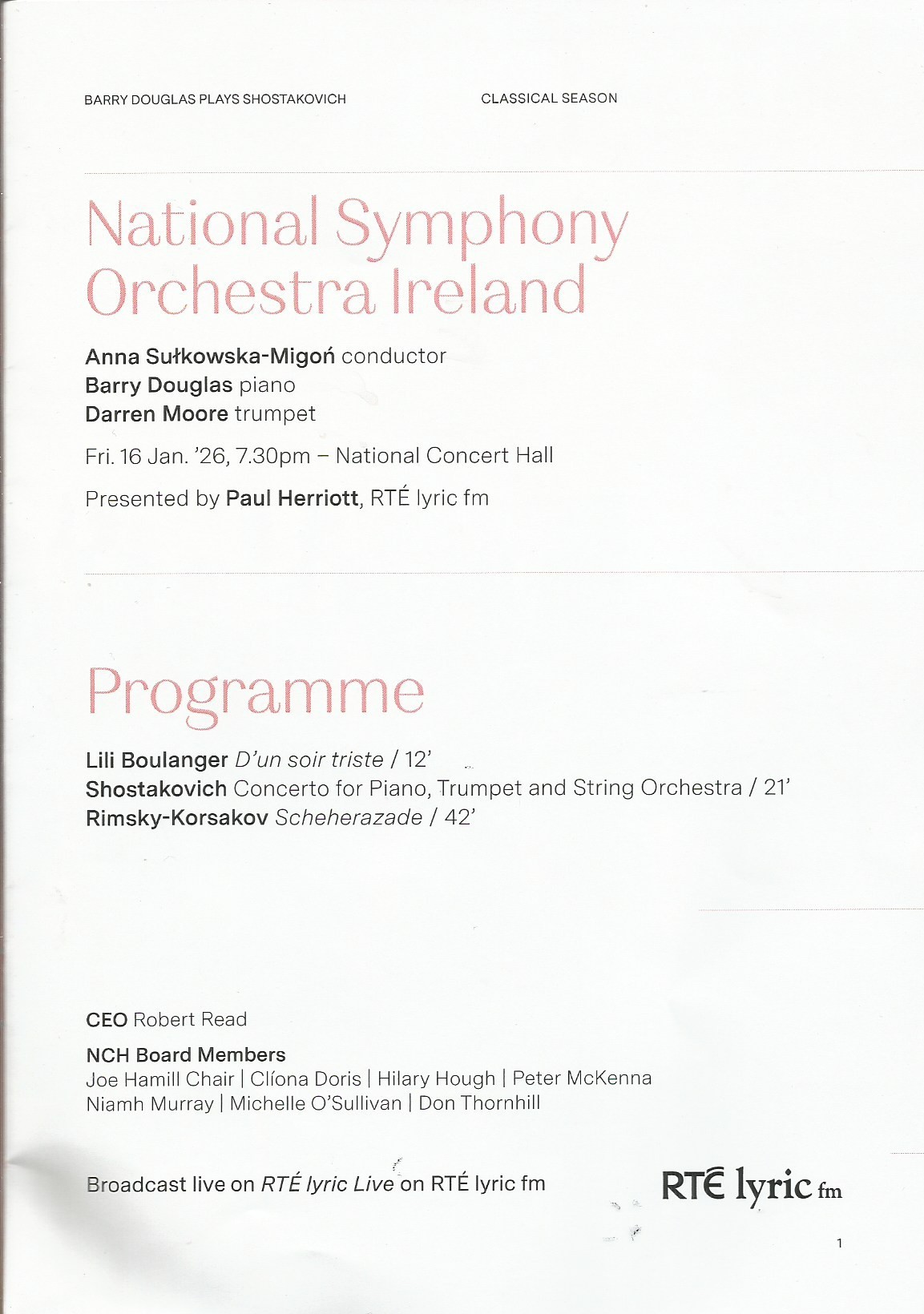
Boulanger, Shostakovich and Rimsky-Korsakov at the National Concert Hall

Posted in Biographical, Music with tags , , , , , , , , , , , , on January 17, 2026 by telescoper

It was a great pleasure last night to be able to attend my first concert of 2026 at the National Concert Hall. It was a rainy evening in Dublin, but the auditorium was nevertheless packed. The only issue was that so many people were there, mostly with overcoats checked into the cloakroom, that it took a long time to get out at the end!

Before the performance

National Symphony Orchestra Ireland was conducted for the evening by guest conductor Anna Sułkowska-Migoń who directed a fine and varied programme of music.

The first piece (D’un Soir Triste; Of a Sand Evening) was by Lili Boulanger. I’ve heard a few pieces by her and found them all excellent, as was this one which is very atmospheric and packs a lot into the 12 minutes or so it takes to perform. The only reason Lili Boulanger is so much less famous than her older syster Nadia is that Lili suffered from ill health nearly all her life, eventually dying from tuberculosis just a few months after this piece was composed at the age of 24. Inevitably the number of compositions by her is very small, but as I said earlier everything I’ve heard by her is very good indeed. Her premature tragic death was a great loss.

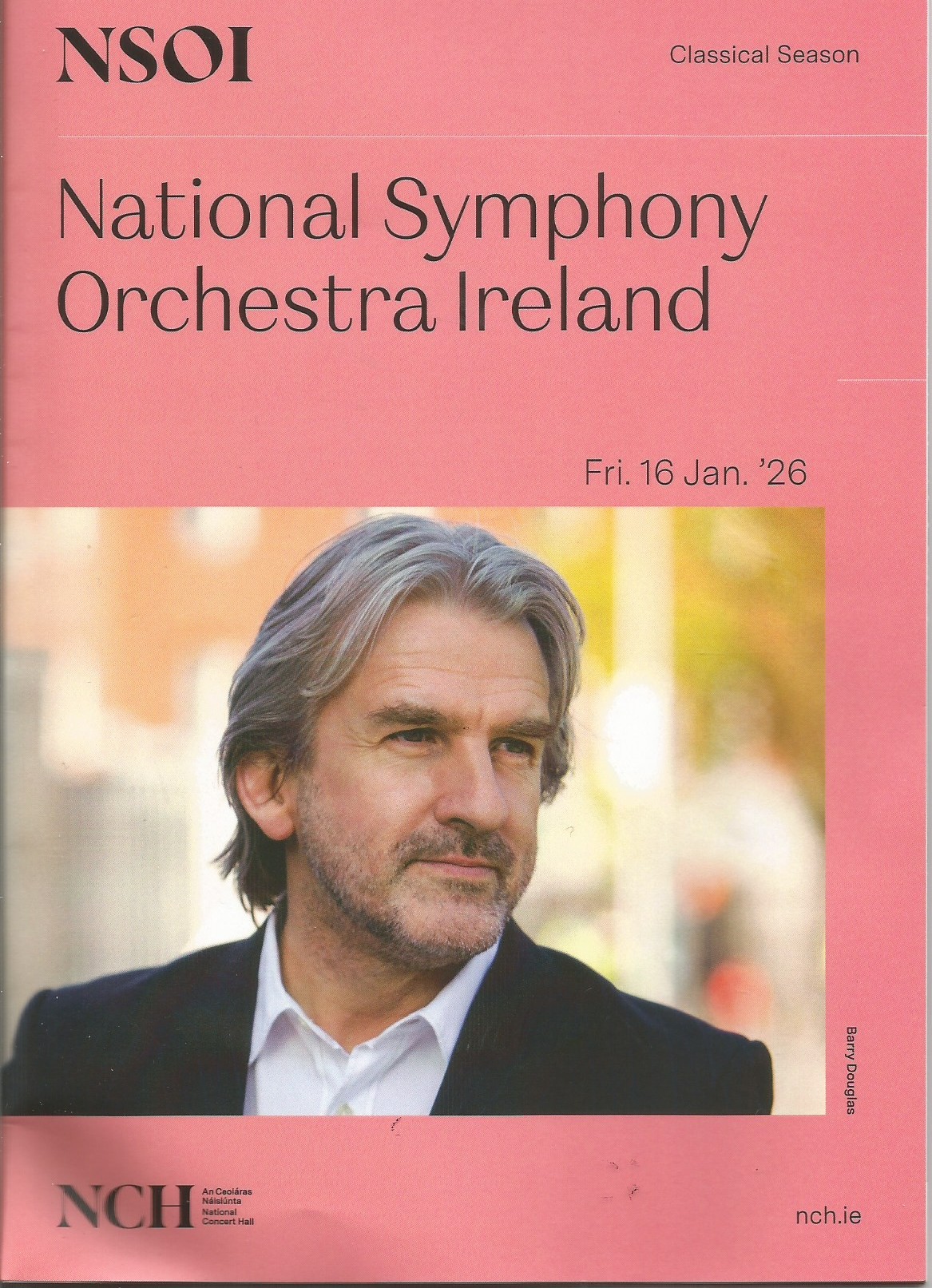
After that piece there was considerable reorganization on the stage. The brass, woodwinds and percussion all left and space was made for the Steinway (between the conductor and the audience). Then we were joined by pianist Barry Douglas and trumpeter Darren Moore. The latter brough two trumpets with him, actually, of which more shortly.

The piece we were about to hear was listed in the programme as Concerto for Piano, Trumpet and String Orchestra (which is a more accurate description than the usual name Piano Concerto No. 1) by Dmitri Shostakovich. It’s quite hard to classify really, perhaps you could call it a Triple Concerto, but that doesn’t matter much. Music is much more important than how it is classified.

Although I admire the music of Shostakovich greatly, and look out for performances whenever I can, I had never heard this piece before. I was delighted by it. Written in 1933 when Shostakovich was only 27, it is instantly recognisable in style although I bit lighter and quirkier than one normally expects from that composer. Shostakovich had a wry sense of humour, but he often concealed his jokes to avoid getting into trouble. Not so in this piece, which is overtly playful and mischievous, rather than crypic

The trumpet plays a modest – indeed muted – part early on but, over the four movements, gradually becomes more prominent and at the end it delivers a series of exuberant fanfare-like figures as the key switches from C minor to close in C major. At this point I should given special mention to Darren Moore, Principal Trumpet of the NSOI, who played beautifully. He swtiched trumpets just before the end, where the trumpet is required to be louder and more assertive. I’m going to hazard a guess that he switched to a C trumpet for the closing stages, perhaps from a standard B♭ trumpet used earlier. I’ve heard it said that a C trumpet produces a brighter and cleaner sound, and it certainly did sound different from the other trumpet. If I am right it means that the piece concluded with none of the instruments on stage being transposing instruments.

Now a couple of questions for my readers. I have known some jazz trumpeters over the years and they all played B♭ trumpets. On this basis I always assumed that trumpets in classical orchestras would be B♭ instruments. Now I’m not sure this is true. Do trumpet players in classical orchestras usually use B♭ instruments, or does practice vary? A follow-up question is whether orchestral parts for trumpets and other transposing instruments are scored differently, or are the musicians required to do any transposition themselves? (If I had to bet I’d wager that professionally-trained classical musicians can transpose on sight.) Answers and comments through the comments box please.

Anyway, the hugely enjoyable performance was greeted with cheers and generous applause not only for the excellent soloists Barry Douglas and Darren Moore but for the whole Orchestra.

After the wine break we had a much more familiar work, the orchestral suite Scheherazade by Nikolai Rimsky-Korsakov. Pieces from this suite – especially the first section, The Sea and Sindbad’s Ship – often find their way into collections of popular classics and it is probably Rimsky Korsakov’s greatest hit. It’s inspired by the One Thousand and One Nights although there are only four movements, not 1001! The composer certainly included something for all sections of the orchestra, but there was especially beautiful playing by Elaine Clark (leader). I enjoyed this performance too, mainly as a bit of colourful escapism as did the audience, who have it another standing ovation.

Then it was into the queue to collect my coat and thence on foot to Pearse station for the train back to Maynooth. The rain had stopped by then.