It had been a month since my last visit to the National Concert Hall in Dublin, as I have had many distractions recently, so I was pleased to find the time yesterday evening to go again. The walk through Dublin was very pleasant in the fine weather, with lots of people outside the bars and pubs having a drink and enjoying the sunshine.
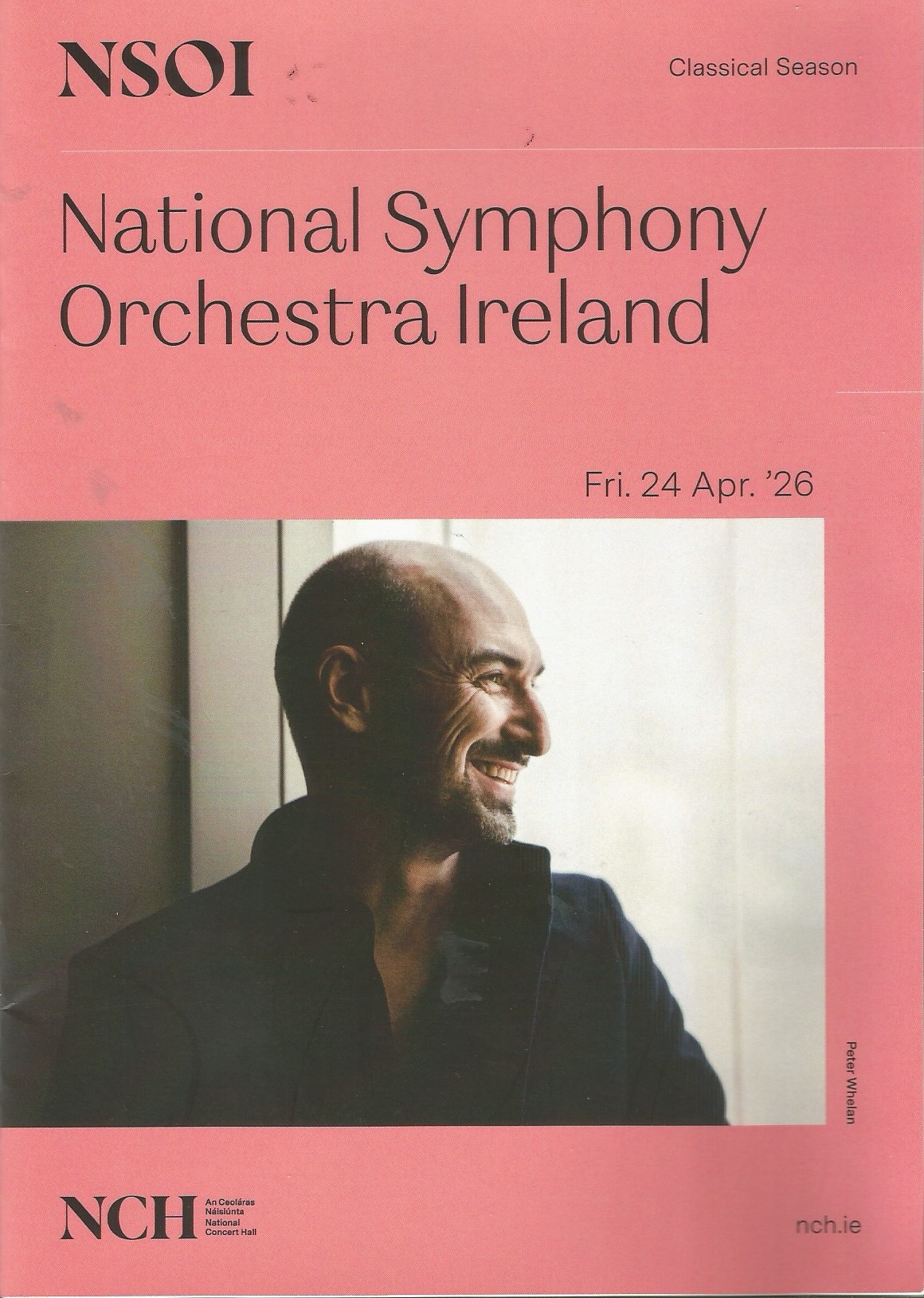
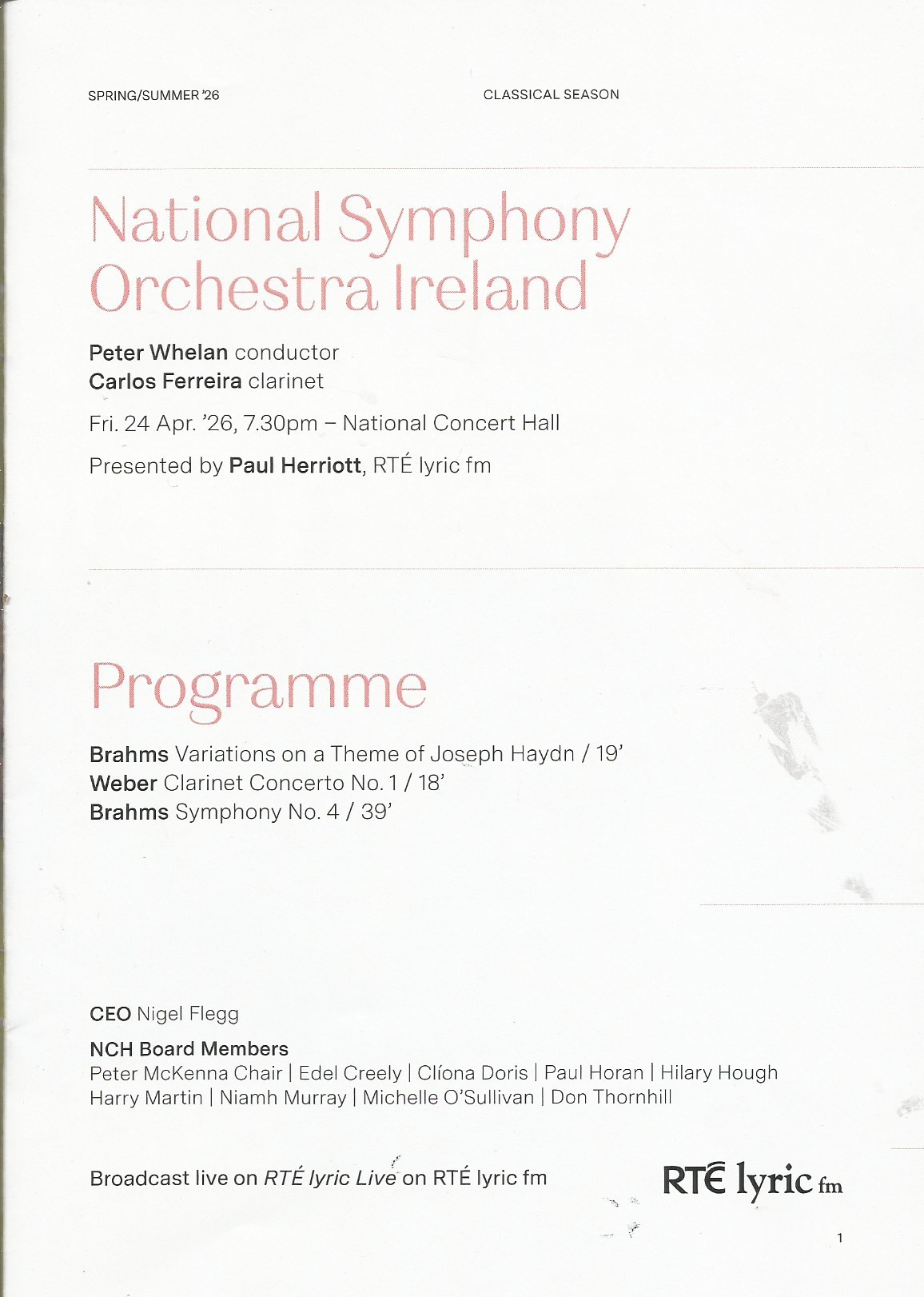
National Symphony Orchestra Ireland was conducted for the occasion by Peter Whelan for a concert of two pieces by Johannes Brahms either side of the Clarinet Concerto No. 1 by Carl Maria von Weber. When I first started writing this blog years ago, I mentioned that I didn’t really get why people think Brahms is so good. It’s not that I actively dislike Brahms, it’s just that I don’t find that he moves me as much as many other composers and so many people rave about him that I think I must be missing something. Anyway, I have persevered and now enjoy at least some of his music.
The Variations on a Theme by Joseph Haydn was written in 1873, when Brahms was three years before wrote his First Symphony. Interestingly it’s not clear whether the theme concerned was actually due to Haydn at all, but whoever supplied the raw material, this is one of the first compositions by anyone that featured a set of variations for a full orchestra. I had never heard this work before found it generally enjoyable, pedestrian in places, but with some excellent sections. There are 8 variations, bookended by the Introduction of the Theme and a Finale 7th variation is very lyrical and romantic, others are more upbeat and light-hearted.
After that introduction the Orchstra was joined on stage by Portuguese clarinetist Carlos Ferreira for the Clarinet Concerto No. 1 by Carl Maria von Weber. This is one of only two works by this composed that I’ve ever heard – the other being the Opera Oberon (which, incidentally has its original libretto in English) – and I have a couple of recordings on CD. It’s a very popular element of the clarinet repertoire and I’ve heard the last movement – a sprightly and tuneful Rondo – played on its own quite a few times on the radio. This piece was written in 1811 and you could say it provides an early Romantic contrast with the late Romantic style of Brahms. You can hear the influence of Mozart in it, and it has a slow-fast-slow three movement structure very reminiscent of the classical period.
I really enjoyed the playing of Carlos Ferreira. I especially liked the tone he produced and his ability to project even when apparently playing rather softly. The audience liked it too, and he got a standing ovation at the end (and did an encore).
After the wine break interval came the main course in the form of the Symphony No. 4 in E Minor by Johannes Brahms. This is of course a very familiar work, but that there’s always something new to find in it. and the 4th Symphony is a very fine work, which is now up among my favourite symphonies. There’s a great deal of interest in every moment from the simple phrase that introduces the first movement to the last movement, which is in three sections and which owes a lot to Bach and is almost a symphony in itself. It was performed beautifully last night by NSOI under the direction of Peter Whelan.
It was still quite warm in Dublin when I walked to Pearse Station to get the train back to Maynooth. The train filled up at Drumcondra with Shelbourne supporters on their way home from a match at Tolka Park, so it was much busier than usual but there wasn’t any trouble at all.

 In the Dark