Author Archive

The Summer Solstice 2019

Posted in Uncategorized with tags , , , , , , on June 21, 2019 by telescoper

The Summer Solstice in the Northern hemisphere happens today, Friday 21st June 2019, at 16.54 Irish Time (15.54 UTC). Among other things, this means that today is the longest day of the year. Days will get shorter from now until the Winter Solstice in December. Saturday June 22nd will be two seconds shorter than today!

This does not mean that sunset will necessarily happen earlier tomorrow than it does today however.  This is because there is a difference between mean solar time (measured by clocks) and apparent solar time (defined by the position of the Sun in the sky), so that a solar day does not always last exactly 24 hours. A description of apparent and mean time was given by Nevil Maskelyne in the Nautical Almanac for 1767:

Apparent Time is that deduced immediately from the Sun, whether from the Observation of his passing the Meridian, or from his observed Rising or Setting. This Time is different from that shewn by Clocks and Watches well regulated at Land, which is called equated or mean Time.

The discrepancy between mean time and apparent time arises because of the Earth’s axial tilt and the fact that it travels around the Sun in an elliptical orbit in which its orbital speed varies with time of year (being faster at perihelion than at aphelion).

Using a rapid calculational tool (Google), I found a table of the local mean times of sunrise and sunset for Dublin around the 2019 summer solstice. This shows that today is indeed the longest day (with a time between sunrise and sunset of 17 hours and 10 seconds), but sunset on 22nd June is actually a bit later than this evening, while sunrise is a bit later.

In fact if you plot the position of the Sun in the sky at a fixed time each day from a fixed location on the Earth you get a thing called an analemma, which is a sort of figure-of-eight curve whose shape depends on the observer’s latitude. Here’s a photographic version taken in Edmonton, with photographs of the Sun’s position taken from the same position at the same time on different days over the course of a year:
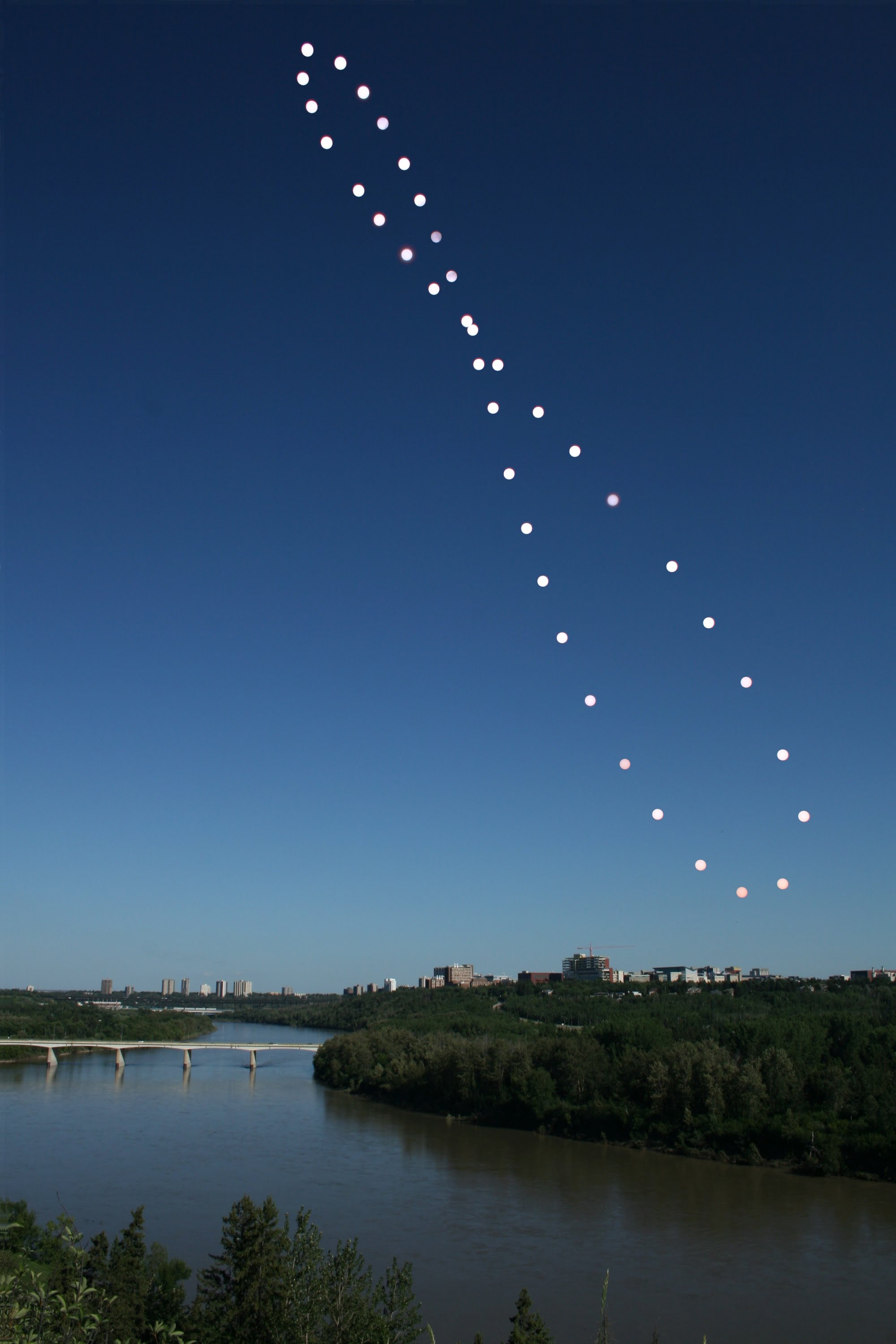
maxresdefault

The summer solstice is the uppermost point on this curve and the winter solstice is at the bottom. The north–south component of the analemma is the Sun’s declination, and the east–west component is the so-called equation of time which quantifies the difference between mean solar time and apparent solar time. This curve can be used to calculate the earliest and/or latest sunrise and/or sunset.


Vain Human Fake (Cosmology) Science

Posted in Uncategorized with tags on June 20, 2019 by telescoper

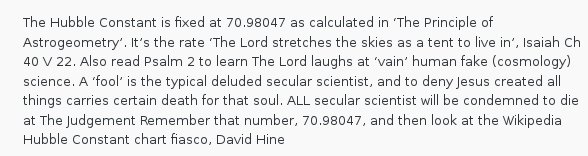
I haven’t mucked out my spam folder for a while and when I did so just now I found that a long-term irritant of mine, a certain Mr David Hine, had attempted to post another comment:

I have to admit that I’m not well up on the biblical references so I looked them up. Isaiah Chapter 40 Verse 22

He sits enthroned above the circle of the earth, and its people are like grasshoppers. He stretches out the heavens like a canopy, and spreads them out like a tent to live in.

I don’t see any mention of the Hubble constant, nor indeed any statement that the stretching of the heavens follows a linear relation (Hubble’s Law).

As for Psalm 2. In the New International Version, Verse 1 reads:

Why do the nations conspire
    and the peoples plot in vain?

I have only just now realized that the second part of this verse refers to the construction of graphs. Personally, I never plot in vain. I normally use python.


Margaret Skinnider – in her own words

Posted in History with tags , , on June 20, 2019 by telescoper

A few weeks ago, occasioned by a stroll around St Stephen’s Green in Dublin, I put up a post that included the the remarkable story of Margaret Skinnider.

Before the 1916 Easter Rising Margaret Skinnider was a school teacher. During the hostilities she initially acted as a scout and a runner, carrying messages to and from the GPO, but when given the chance she proved herself a crack shot with a rifle and showed conspicuous courage during the heavy fighting in and around St Stephen’s Green. In particular, on 27th April she lead a squad of men in an extremely dangerous mission against a British machine gun position, during which she was hit three times by rifle bullets and very badly wounded.

Anyway, I found this fascinating recording of Margaret Skinnider herself telling the story of her part in the 1916 Easter Rising.

After the War of Independence and the subsequent Civil War were over, Margaret Skinnider returned to her career as a primary school teacher. She died in 1971.

While Tories distract us with Brexit, the NHS has just slipped out its first price list for treatments

Posted in Uncategorized on June 19, 2019 by telescoper

Don’t say you weren’t warned.

Tom Pride's avatarPride's Purge

Please don’t say you weren’t warned.

Because you’ve been warned time and time and time again the Tories are stealthily privatising the NHS.

This doesn’t mean just handing over hospitals and NHS services to private firms.

It means stealthily introducing actual charges to NHS patients at point of need.

This is all totally ignored by the mainstream press of course.

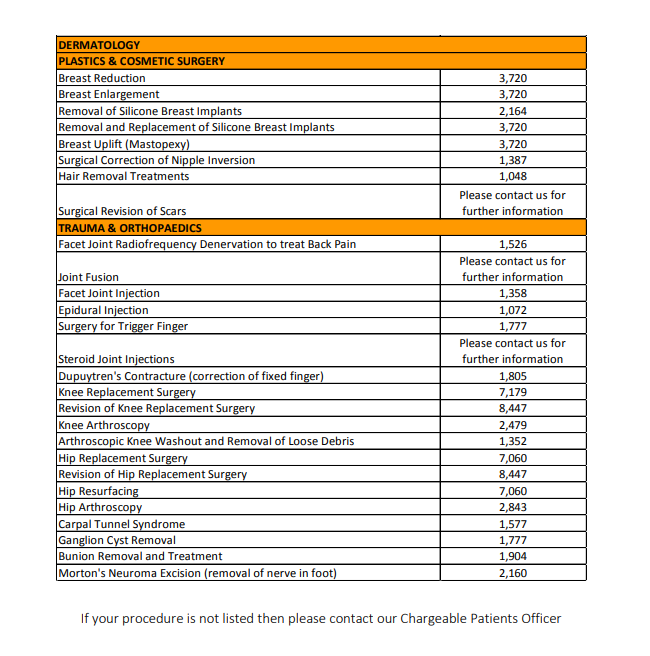
NHS trusts are now so confident they’ll get away with it, they are openly publishing the very first price lists since the formation of the NHS – for NHS operations, NHS procedures and NHS consultations (see here):

nhs charges 1

PLEASE SHARE if you care about the NHS. Thanks.

View original post

Atmospheric Muons as an Imaging Tool

Posted in The Universe and Stuff with tags , , on June 19, 2019 by telescoper

The other day I came across an interesting paper with the above title on the arXiv. The abstract reads:

Imaging methods based on the absorption or scattering of atmospheric muons, collectively named under the neologism “muography”, exploit the abundant natural flux of muons produced from cosmic-ray interactions in the atmosphere. Recent years have seen a steep rise in the development of muography methods in a variety of innovative multidisciplinary approaches to study the interior of natural or man-made structures, establishing synergies between usually disconnected academic disciplines such as particle physics, geology, and archaeology. Muography also bears promise of immediate societal impact through geotechnical investigations, nuclear waste surveys, homeland security, and natural hazard monitoring. Our aim is to provide an introduction to this vibrant research area, starting from the physical principles at the basis of the methods and reviewing several recent developments in the application of muography methods to specific use cases, without any pretence of exhaustiveness. We then describe the main detector technologies and imaging methods, including their combination with conventional techniques from other disciplines, where appropriate. Finally, we discuss critically some outstanding issues that affect a broad variety of applications, and the current state of the art in addressing them.

This isn’t a new field, but it’s new to me and this paper provides a very nice introduction to it. I’ve taken the liberty of reproducing Figure 3 here to show one application of `muography’..


Physics Lectureship in Maynooth!

Posted in Maynooth with tags , , , , , on June 18, 2019 by telescoper

Every now and then I have the opportunity to use the medium of this blog to draw the attention of my vast readership (both of them) to employment opportunities. Today is another such occasion, so I am happy to point out that my colleagues in the Department of Experimental Physics are advertising a lectureship. For full details, see here, but I draw your attention in particular to this paragraph:

The Department of Experimental Physics is seeking candidates with the potential to build on the research strengths of the Department in the areas of either terahertz optics or atmospheric physics. The Department is especially interested in candidates with research experience that could broaden the scope of current research activity. This could include for example terahertz applications in space, imaging, remote sensing and communications or applications of atmospheric physics related to monitoring and modelling climate change. It would be an advantage if the candidate’s research involved international collaboration with the potential for interdisciplinary initiatives with other University institutes and departments.

The deadline for applications is Sunday 28 July 2019 at 11.30pm.

Euclid Updates

Posted in Euclid, The Universe and Stuff with tags , , , , on June 17, 2019 by telescoper

Following the Euclid Consortium Meeting in Helsinki a couple of weeks ago, here are a couple of updates.

First, here is the conference photograph so you can play Spot The Telescoper:

(The picture was taken from the roof of the Finlandia Hall, by the way, which accounts for the strange viewpoint.

The other update is that the European Space Agency has released a Press Release releasing information about the location on the sky of the planned Euclid Deep Fields. Here they are (marked in yellow):

These deep fields amount to only about 40 square degrees, a small fraction of the total sky coverage of Euclid (~15,000 square degrees), but the Euclid telescope will point at them multiple times in order to detect very faint distant galaxies at enormous look-back times to study galaxy evolution. It is expected that these fields will produce several hundred thousand galaxy images per square degree…

Selecting these fields was a difficult task because one has to avoid bright sources in both optical and infrared (such as stars and zodiacal emission) so as not to mess with Euclid’s very sensitive camera. Roberto Scaramella gave a talk at the Helsinki Meeting showing how hard it is to find fields that satisfy all the constraints. The problem is that there are just too many stars and other bits of rubbish in the sky getting in the way of the interesting stuff!


For much more detail see here.


The Coloured Ball Illusion

Posted in Art on June 16, 2019 by telescoper

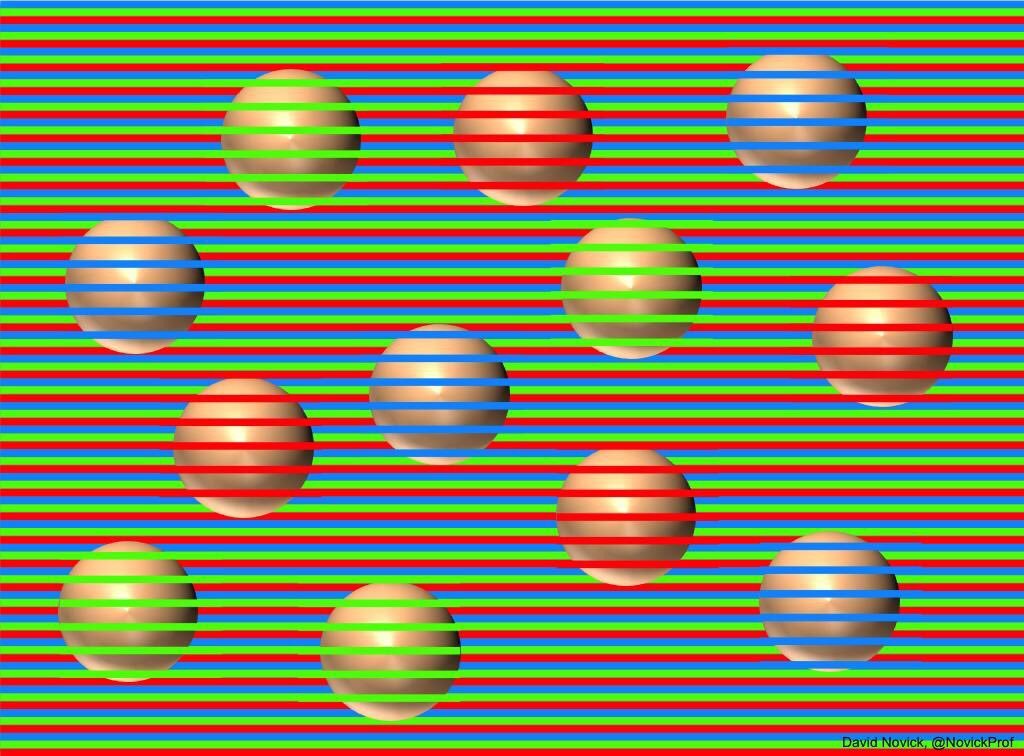
This image, created by David Novick, is the most impressive colour illusion I have ever seen: all the balls are actually the same colour, brown.

If you don’t believe me, zoom in on any one of them…

I don’t really know why this fascinating image causes the effect that it does, but think it is a combination of hardware and software issues! The hardware issues include the fact that colour receptors are not distributed uniformly at the back of the human eye, so colour perception is different when peripheral cues are present, and also that their spectal response is rather broad with considerable overlap between the three types of cell. The software issue is something to do with how the brain resolves a colour when there are other colour nearby:nNotice how the balls take on the colour of the lines passing across them..

A Ring of Controversy Around a Black Hole Photo

Posted in The Universe and Stuff on June 15, 2019 by telescoper

This is a long post but well worth reading if you want to know what we really know about the black hole in M87..

Matt Strassler's avatarOf Particular Significance

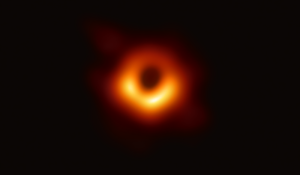
It’s been a couple of months since the `photo’ (a false-color image created to show the intensity of radio waves, not visible light) of the black hole at the center of the galaxy M87, taken by the Event Horizon Telescope (EHT) collaboration, was made public. Before it was shown, I wrote an introductory post explaining what the ‘photo’ is and isn’t. There I cautioned readers that I thought it might be difficult to interpret the image, and controversies about it might erupt.EHTDiscoveryM87

So far, the claim that the image shows the vicinity of M87’s black hole (which I’ll call `M87bh’ for short) has not been challenged, and I’m not expecting it to be. But what and where exactly is the material that is emitting the radio waves and thus creating the glow in the image? And what exactly determines the size of the dark region at…

View original post 6,013 more words

The End of the Common Travel Area?

Posted in Biographical, Cardiff, Politics with tags , , on June 14, 2019 by telescoper

I’m back in Cardiff for a couple of days after flying from Dublin this morning.

When my flight arrived at Cardiff Airport there was yet again a full passport and immigration check on all passengers.

There is supposed to be a Common Travel Area including the UK and Ireland (as well as the Channel Islands and the Isle of Man), and passport checks are not supposed to be made routinely at borders within the CTA.

I have noticed passport checks happening at Cardiff Airport before (e.g. here and here) but I’ve previously imagined there was some specific reason for them. Passport checks have, however, been carried out every time I have arrived in Cardiff recently and it is now abundantly clear that there has been a material change of policy.

When I got to the desk and handed over my passport I asked the Officer whether these checks were being imposed all the time now. She said yes: there are now full passport and immigration checks on all flights to Cardiff from Dublin.

This is from the UK Government’s website:

Well, if they check all passengers on all flights then that sounds like ‘routine’ to me. In other words the British authorities are violating the Common Travel Area agreement just weeks after undertaking to uphold it.

Did someone say ‘Perfidious Albion’?