Author Archive

Nothing, by Basil Bunting

Posted in Poetry with tags , , on September 4, 2017 by telescoper

I spent this weekend catching up with some old friends in London, and making the most of the opportunity to behave as a tourist. Most of my visits to the Capital are on business so it was nice to have the chance to wander around aimlessly. Anyway, when I got to Charing Cross I suddenly remembered I had a half-spent book token in my wallet, so popped into Foyles and bought this hefty tome, which had been on my list since I read about it when it was reviewed in TLS.

Basil Bunting was born in 1900 in the Scotswood area of Newcastle upon Tyne (i.e. not in the Midlands). His life story is fascinating. Imprisoned as a conscientious objector during World War 1, Bunting worked for the intelligence services in Persia during World War 2, after which he remained as the Times Correspondent in Iran. Eventually, after much travelling, he returned to England, winding up as a journalist working for the Newcastle Evening Chronicle. Largely through a very long poem called Briggflats Bunting established a reputation as a very important modernist poet who some felt was a worthy successor to T.S. Eliot, though Eliot did not rate his work particularly highly and Bunting’s main poetic influence was clearly Ezra Pound.

One thing I particularly like about the poems of Basil Bunting is that they sound so great when read out loud. `Compose aloud. Poetry is a sound.’ is a famous quotation of his. Unlike many poets he was utterly compelling when reading his own work ; see here for an excerpt of him reading Briggflats. He has a wonderful voice, and there’s music in the way he speaks.

Briggflats  is too long to reproduce here, so here’s a shorter one called Nothing:

Nothing
substance utters or time
stills and restrains
joins design and

supple measure deftly
as thought’s intricate polyphonic
score dovetails with the tread
sensuous things
keep in our consciousness.

Celebrate man’s craft
and the word spoken in shapeless night, the
sharp tool paring away
waste and the forms
cut out of mystery!

When taut string’s note
passes ears’ reach or red rays or violet
fade, strong over unseen
forces the word
ranks and enumerates…

mimes clouds condensed
and hewn hills and bristling forests,
steadfast corn in its season
and the seasons
in their due array,

life of man’s own body
and death…
The sound thins into melody,
discourse narrowing, craft
failing, design
petering out.

Ears heavy to breeze of speech and
thud of the ictus.


by Basil Bunting (1900-85).

Doubt expressed over accuracy of measurement of the ‘Beard-Second’

Posted in Beards, Science Politics with tags , , , on September 4, 2017 by telescoper

As a practising scientist I too am concerned about the reliability of the definition of the `Beard Second’. In addition to the intrinsic variability from one individual to another (including genetic influences) many external environmental factors affect beard growth, so any definition must include conditions such as temperature, pressure, sunlight levels and whether or not the beard is supplied with nutrients. In any case the term `average’ usually applies to the arithmetic mean, whereas the quoted text seems to imply the median.

My advice to the Beard Liberation Front is to refer this matter to the National Measurement and Regulation Office for review but along with most government offices nowadays it only seems interested in issues that directly affect the ability of businesses to profit rather than safeguarding the accuracy and reproducibility of scientific matters of direct interest to the public, such as the rate of beard growth.

In the longer term, however, I believe the only way to establish a reliable standard for the `beard second’ is through an extensive research programme. A detailed proposal is in preparation to UK Research and Innovation, as it seems an appropriate topic for an interdisciplinary award.

kmflett's avatarKmflett's Blog

Beard Liberation Front

press release 3rd September contact Keith Flett 07803 167266

Doubt expressed over accuracy of measurement of the ‘Beard-Second’

The Beard Liberation Front, the informal network of beard wearers, has expressed doubt over the accuracy of the unit of measurement known as the ‘Beard-Second’.

The ‘Beard-Second’ is designed to measure how quickly in time a beard grows.

According to Wiki:

The beard-second is a unit of length inspired by the light-year, but applicable to extremely short distances such as those in integrated circuits. The beard-second is defined as the length an average beard grows in one second. Kemp Bennett Kolb defines the distance as exactly 100 angstroms (10 nanometers). as does Nordling and Österman’s Physics Handbook. However, Google Calculator supports the beard-second for unit conversions using the value 5 nm.

The beard-second establishes a related unit of time, the beard-inch which is 29.4 days (or 58.8 days…

View original post 111 more words

A Year Back

Posted in Biographical, The Universe and Stuff with tags , on September 1, 2017 by telescoper

So, with the summer drawing to a close, and the contents of my weekly veggie box changing to autumnal varieties, I realise that today is the first anniversary  of my first day back in the School of Physics and Astronomy at Cardiff University. In other words, I’ve now been in office in the Data Innovation Research Institute for a full year.  Very soon we get to the official launch of a couple of things that have started during this time – including a new Centre for Doctoral Training in Data-Intensive Science and two new MSc course which have recruited their first students for entry this year.


I seem to remember this day last year mainly involving running around dealing with administrative matters: taking my P45 to the Human Resources Department, getting my new Staff ID card, trying to get myself set up on the University computer network, and so on. I moved into a large empty office, but it’s now gradually filling up with staff: a couple of Research Software Engineers have been appointed, together with an administrators, and two members of Supercomputing Wales are joining us soon too.

Anyway, I’m shortly off to London for the weekend to catch up with an old friend I haven’t seen for ages. I’m currently pissed off with Great Western Railways for failing to pay a compensation claim I lodged back in June and for slow running on the mainline to Paddington today due to planned engineering to works, so I’ll be travelling to the Big Smoke and back by National Express Coach.


Death and Shingles

Posted in Biographical, History, Mental Health with tags , , , , , on August 31, 2017 by telescoper

So it is now twenty years to the day since news broke of the death of Diana Spencer, formerly the Princess of Wales, along with Dodi Fayed and driver Henri Paul, after a car accident in Paris. I’ve noticed many people posting their memories on social media of where they were when they heard that Diana had died so I thought I’d do the same as I remember it very well.

In the weeks leading up to 31st August 1997 I had been suffering from shingles, a very unpleasant condition that results from the reactivation of the virus responsible for chicken pox, which I’d suffered from as a kid. Shingles causes nasty skin rashes, but on this occasion I was also treated to a spell of almost total deafness. This is a fairly unusual side-effect of the disease but is well known to occur in some cases. Hearing loss caused in this way can be permanent, but thankfully mine wasn’t.  I responded rather well to the anti-viral drugs I was given and it took only a matter of weeks for my hearing to be fully restored.

Suddenly becoming deaf was an unsettling enough experience, but it was even stranger to have been unable to hear anything during the period just after Diana’s death, which turned out to be one of the weirdest times of my life.

On the morning of 31st August 1997, which was a Sunday, I got up rather late and went to the local newsagent to buy a Sunday paper. They were sold out of everything. I thought that was a bit strange but walked out unaware of the reason everyone was buying papers that morning. I went back to my flat – I was living in London at the time – made breakfast, and did some reading. I was looking forward to the football match that was going to be live on TV that afternoon – Liverpool versus Newcastle Utd – but didn’t switch on the TV until it was just about the start. All I saw was a shot of an empty Anfield and some football pundits talking. I assumed there had been a bomb score or something, but I couldn’t hear so had no idea. I decided to have a look at Ceefax (remember that?) and then found out the story.

I was shocked, of course. She was still young when she died and I was fully aware of the reputation she had earned through numerous acts of kindness, e.g. towards people living with AIDS. That said, I was completely unprepared for the events of the following week which seemed to me to amount to an outbreak of national hysteria. I don’t know if it was more extreme in London than elsewhere in the UK, but I felt the whole country had lost its grip. Together with the sense of isolation caused by my deafness, it was a most uncomfortable time. I was saddened by her death, but I just couldn’t feel the extreme grief that others seemed to be displaying about someone that I didn’t know personally. Worse, there was a palpable sense of pressure being exerted on people to fall into line with the deification of Diana. Anyone who expressed anything even slightly short of devout praise was treated as some kind of blasphemer. It is probably the only time in my life I’ve felt that I was the only one to have remained sane while everyone around me had gone mad.

As my hearing slowly recovered I decided to go out with some friends for a drink in a pub in Bethnal Green. I mentioned in a conversation that I never knew her personally and therefore found it hard to understand how the feelings of grief people professed to having could be genuine and that the whole atmosphere that had been created seemed to me to be profoundly unhealthy. A bloke from another table came across and threatened me with violence unless I stopped `insulting Diana’. Insulting Diana was not at all my intention, though I think what the bloke was angry about was the (probably correct) interpretation that I was criticising those who had bought into the Diana cult.

Anyway, over the week following her death my hearing had improved a little bit, so I decided to watch the memorial service on TV. I couldn’t hear the music or speeches very well, but I remember watching the soldiers carrying Diana’s coffin into Westminster Abbey. It must have been a very heavy coffin as it was a very wobbly process and I thought at one moment the pall-bearers might drop it. They slowly approached stone structure on which the coffin was to be laid. Then I heard the commentator on TV solemnly announce that it was “placed on the catapult”.

This is novel, I thought. She’s going to be launched into the hereafter on a ballistic trajectory through the stained glass windows.  However, that didn’t happen and the service continued without an aerial display.

I found out much later that the word used was not catapult, but catafalque….


LIGO/VIRGO Update

Posted in The Universe and Stuff with tags , , on August 30, 2017 by telescoper

Judging by by the WordPress blog statistics page, there’s been a lot of traffic here in the past week owing to my post about the rumours of a new gravitational wave source detected by LIGO (and possibly VIRGO). In the interest of completeness I’ll just post a quick update to mention that the latest Observation run at LIGO  finished as planned on 25th August, and this has been marked by an official announcement which I have taken the liberty of presenting here in full:

The Virgo and LIGO Scientific Collaborations have been observing since November 30, 2016 in the second Advanced Detector Observing Run ‘O2’ , searching for gravitational-wave signals, first with the two LIGO detectors, then with both LIGO and Virgo instruments operating together since August 1, 2017. Some promising gravitational-wave candidates have been identified in data from both LIGO and Virgo during our preliminary analysis, and we have shared what we currently know with astronomical observing partners. We are working hard to assure that the candidates are valid gravitational-wave events, and it will require time to establish the level of confidence needed to bring any results to the scientific community and the greater public. We will let you know as soon we have information ready to share.

The last two sentences can be translated roughly as “Back off, and give us time to analyse the data!”, which is not an unreasonable request. Judging by the timescale between detection and publication of the previous LIGO events, it will probably be a matter of months before a formal announcement is made.

I hope this clarifies the situation.


On the West Indies Winning

Posted in Cricket with tags , , , , , on August 30, 2017 by telescoper

Back in the office after a rather chaotic Bank Holiday Weekend during which, among other things, I managed to mislay my phone, I couldn’t resist a short post about yesterday’s victory by the West Indies over England at Headingley. I don’t often write about sporting events that I haven’t attended in person, but I thought I’d make an exception in this case for the reasons I’ll outline below.

The first is that, although England will be hurting after losing a game many expected them to win comfortably, I think this result is great for cricket.  Before this game I was gearing up to write a post wondering why there seem to be so few close Test matches these days, the previous series and the first one in this series having been quite one-sided. Although the West Indies won this one fairly comfortably in the end – by five wickets with several overs to spare, it still counts as `close’ in my book because the final day started with any result possible. That doesn’t happen very often, but when it does it makes for a marvellous experience. I wish I had been there. Long may five-day Test matches endure!

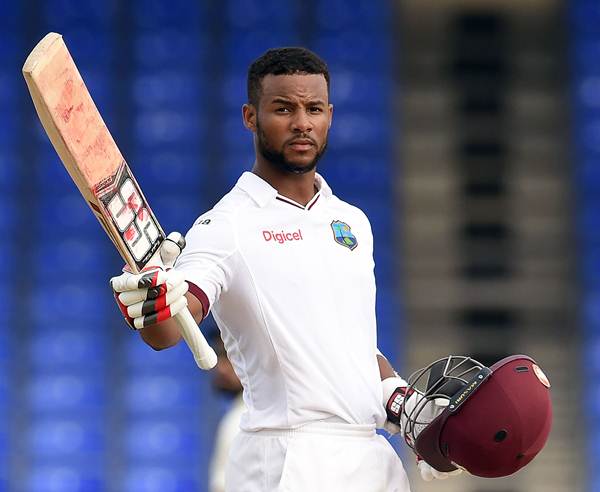
Shai Hope, whose beardpower led the West Indies to victory  (Photo credit: JEWEL SAMAD/AFP/Getty Images)

Secondly, I am not as critical as some of Joe Root’s decision to declare on 490-8 on Monday evening, leaving the visitors 322 to win. He obviously hoped to knock over a  couple of West Indian wickets in the six overs left to play that evening, but that didn’t happen. However, as long as no significant time was lost to the weather (which it wasn’t), that decision meant took the draw out of the equation. If the Windies batted all day on the last day – a big `’if’ – they would comfortably score the runs as only a shade over three an over was required. It’s one of the fascinating curiosities of cricket that maximising the chance of winning by declaring  can also maximise the chance of losing.

In the end, England’s bowlers didn’t perform to their best on the last day and, while many expected the batsmen to feel the pressure, it was England that seemed to crack, losing their cool in the field and dropping a couple of important catches. Crucially, Jimmy Anderson just didn’t get the ball to swing enough to be the threat that he can be. The other likely match-winner, Moeen Ali, did not bowl well either. But let that take nothing away from the excellent performance by the West Indies batsmen, especially Shai Hope (above), who looks a super player. Well played to him, and the rest of his team!

Incidentally, England’s 2nd innings score of 490 for 8 (declared) is the largest Test innings ever in which no batsmen has scored a century. Not a lot of people know that.

I have to admit that I was a bit saddened by the manner of the West Indies defeat in the First Test at Edgbaston because they looked so outclassed. So many of my boyhood sporting heroes were from the West Indies (including such illustrious names as Clive Lloyd, Viv Richards, Gordon Greenidge, Michael Holding, Joel Garner, and Malcom Marshall to name but a few) that it was painful to think of the team fading so badly as a force in Test cricket. They seem to have been in decline for some years, but perhaps the comeback starts now. I certainly hope so. The game is richer for having the West Indies as a force.

Finally, on the result. As regularly readers of this blog will know, I’m not averse to placing the odd bet now and then. When Joe Root declared I had a look at the website of Mr William Hill and noticed that the West Indies were 12/1 against to win the match. Largely based on England’s lacklustre bowling in  the first innings (with the exception of James Anderson), the strong batting performance by the West Indies in their first innings,  and the draw having been eliminated from consideration, I decided to put a pony (£25) on a West Indies win.  I had a look at the betting markets along with the score now and then throughout the day yesterday. The available odds changed throughout the day: at 84 for 2 the price was 8-1, at 101 for 2 it was 5-1, at 169 for 2 it was 13/10 and by the time they passed 200 the West Indies were favourites at 11/10 on (England 4/1 against).

At one game apiece with the West Indies on a high,  it’s all set up nicely for the deciding match of the series at Lord’s next week!


A Million Thanks!

Posted in Uncategorized on August 28, 2017 by telescoper

I haven’t been paying much attention to the blog statistics recently, what with one thing and another, but I just realized when I checked tonight  that sometime in the last week or so In The Dark received its one millionth visitor. 

I don’t know how or why so many people found their way here, but you’re all very welcome!

Cardiff Pride “Big Weekend”

Posted in Biographical, LGBTQ+ on August 26, 2017 by telescoper

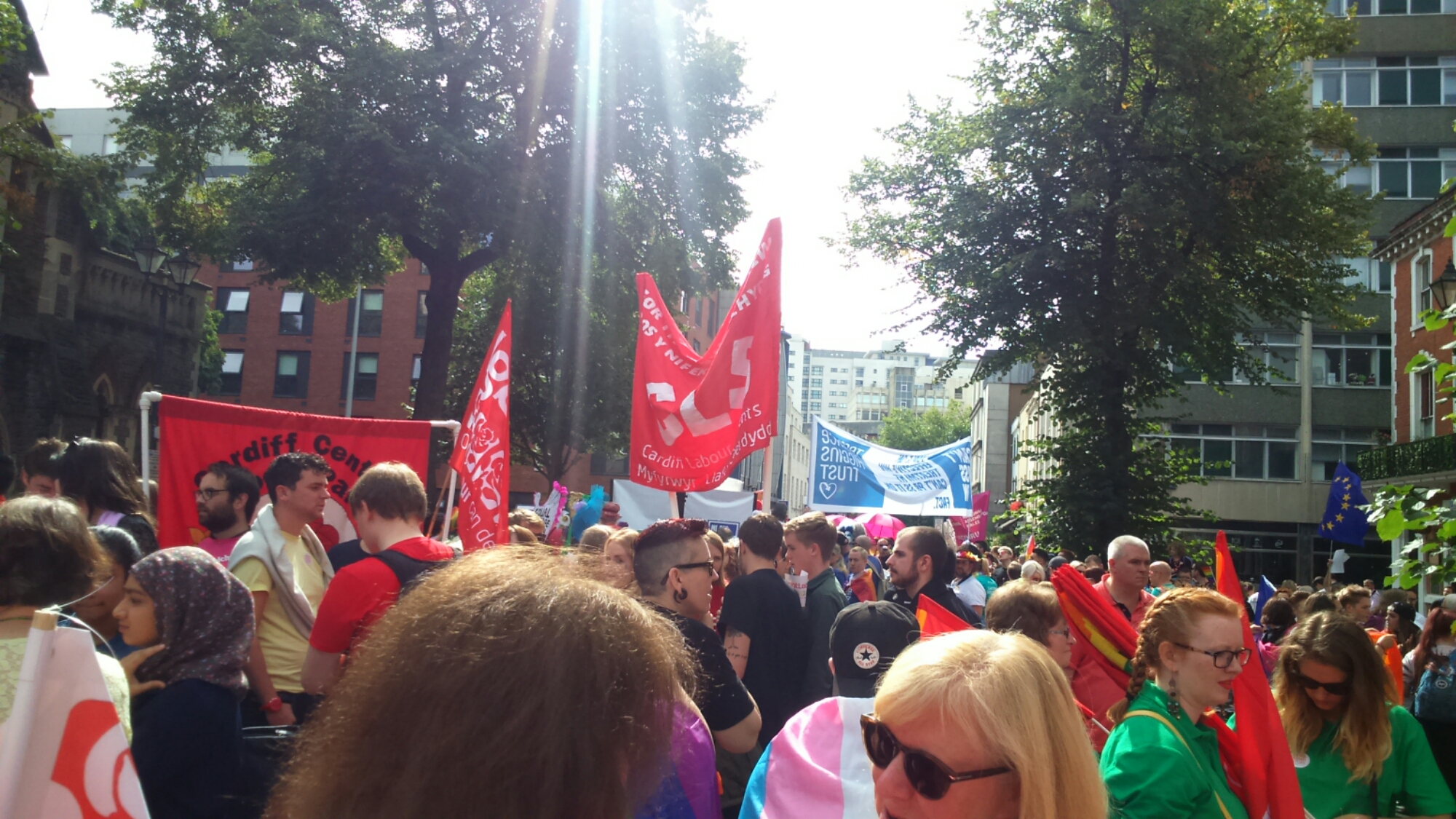
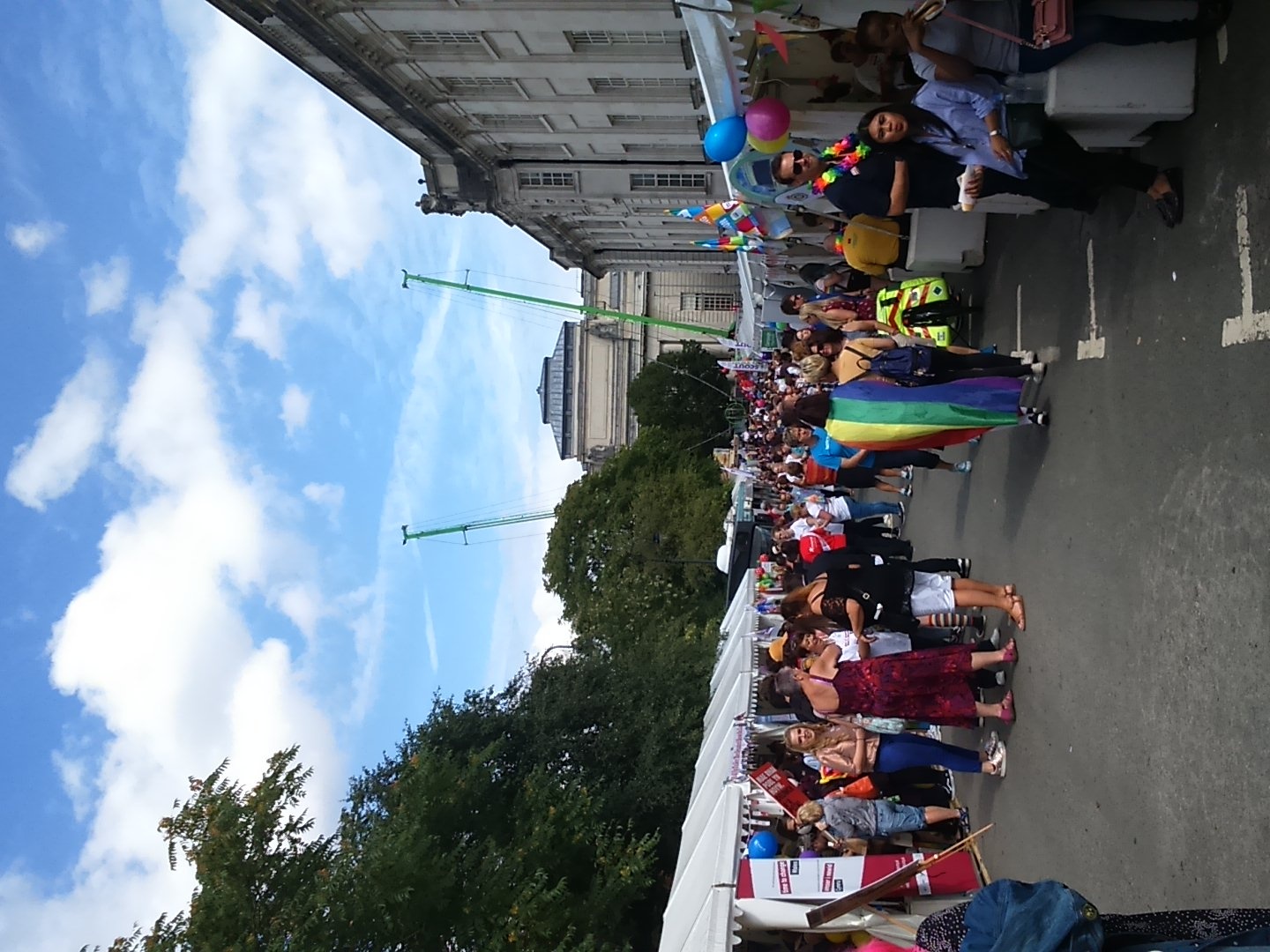
Today I took part in the annual Cardiff Pride Parade – which was much bigger than I expected! – followed by the ‘Big Weekend’ festival in Cathays Park. I walked in the Parade with LGBT Labour Wales. Here’s the group photo taken at the end of the march:

The start, in Windsor Place, was quite congested and we were rather late setting off because of the crowds in front of us, as we were quite near the back.

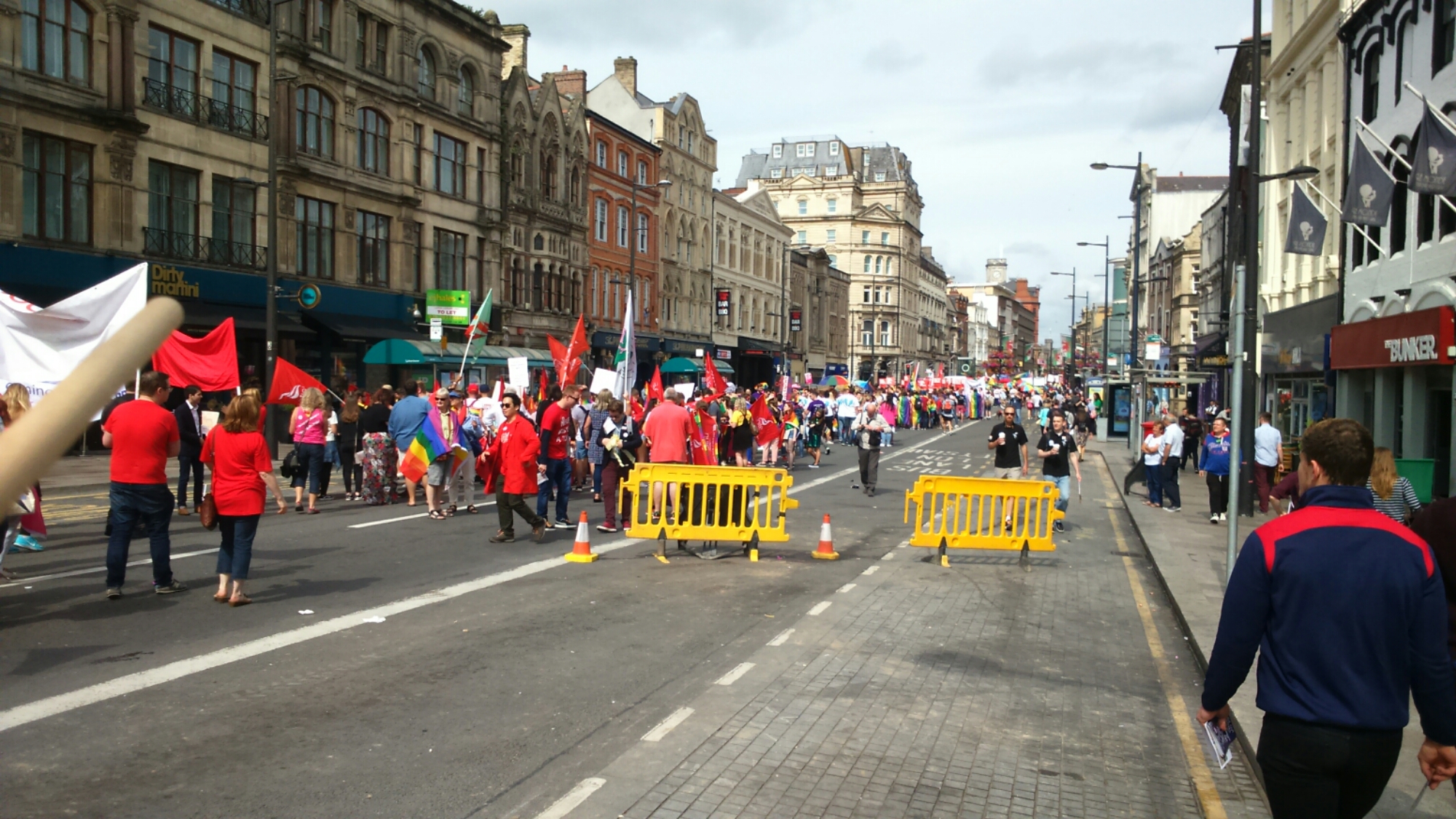
Here’s the view from the bottom of St Mary Street:

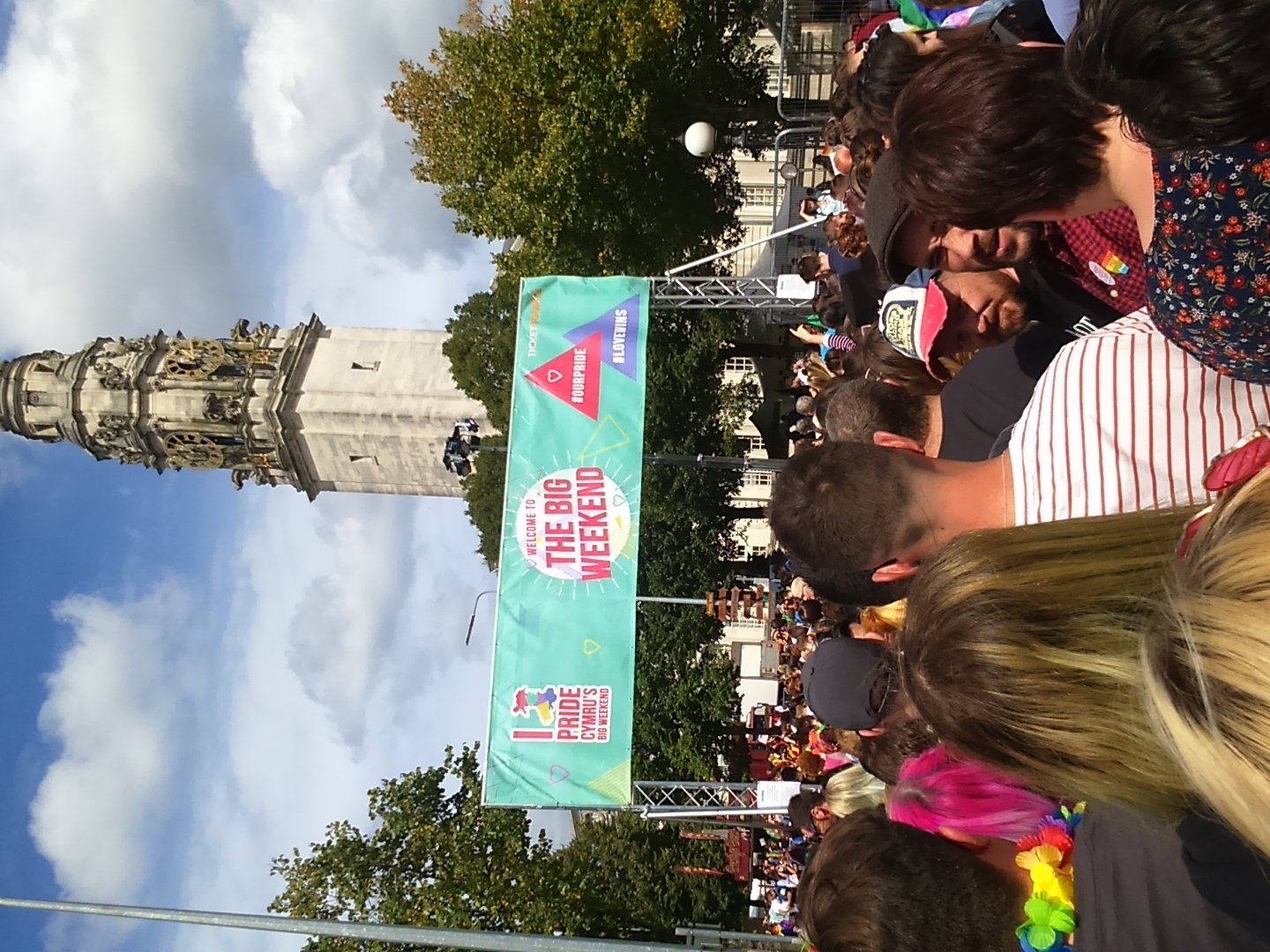
It was a lovely day, marred only by poorly organised access to Cathays Park. I had to queue for 90 minutes..

Once inside, though, there was plenty to do: funfair, music, food and drink, and of course stalls run by various organisations. I had a chat with the good folk of Time To Change Wales, who campaign on mental health issues, and spent some time with Enfys, the Cardiff University Staff LGBT+ network.

And, of course, no Cardiff Pride event would be complete without a Shirley Bassey impersonator!

The ‘Big Weekend’ continues tomorrow, but I’m busy elsewhere so I’ll wish everyone a happy time for the rest of the festival!

Natwest T20 Blast Quarter Final: Glamorgan v Leicestershire 

Posted in Cricket with tags , , , , on August 24, 2017 by telescoper

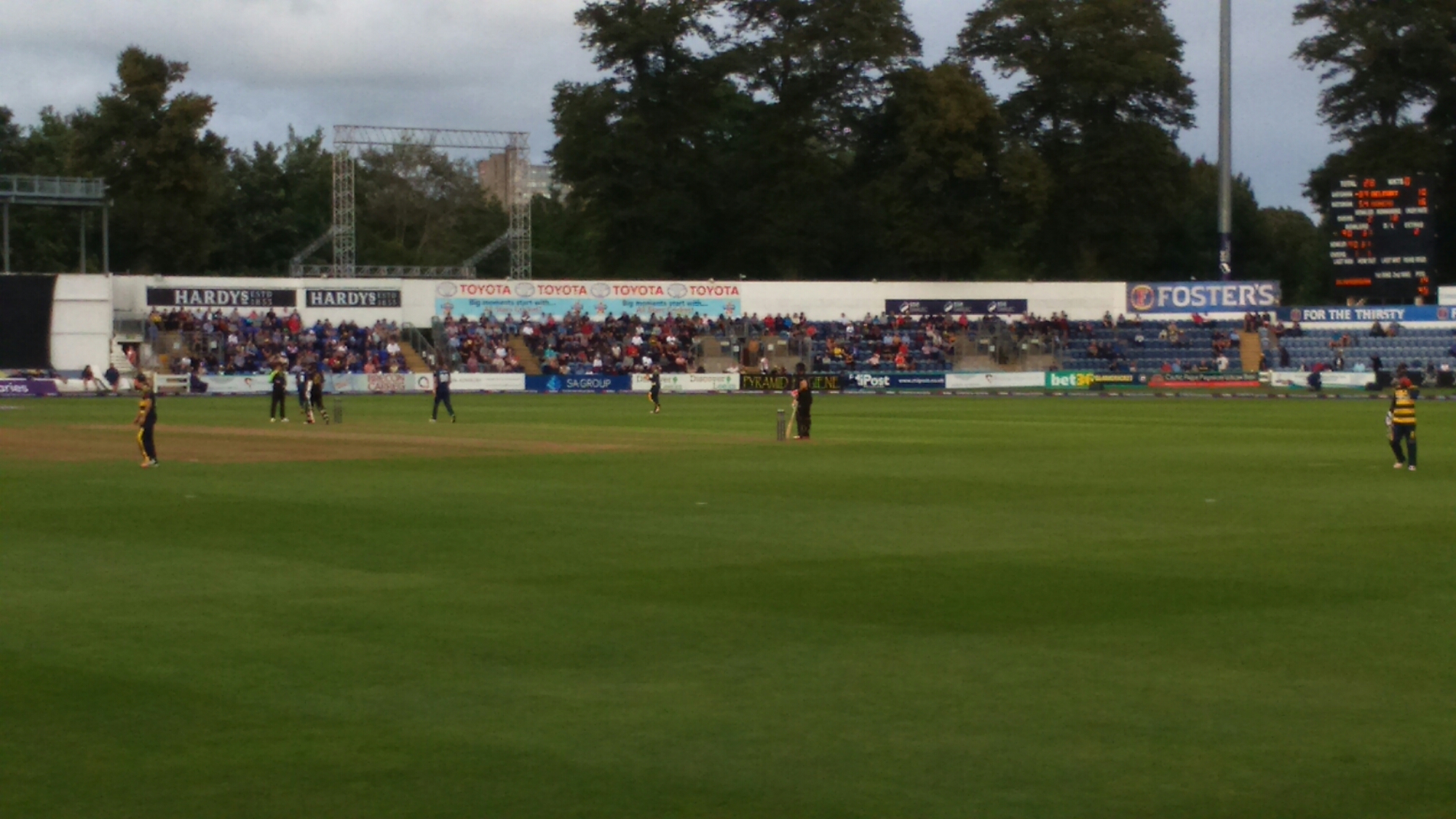
Last night I went to the Natwest T20 Blast Quarter Final match between Glamorgan and Leicestershire at the SSE Swalec Stadium in Cardiff. By beating Middlesex last week, Glamorgan finished top of the `South’ Group hence the home tie against Leicestershire who finished fourth in the North Midlands Group. In contrast to most of the rest of the competition, we had good weather: there was a bit of cloud, but it was warm and as we settled into our seats we were confident of a full match.

The game was preceded by a moving tribute to the late Don Shepherd, who died last week shortly after celebrating his 90th birthday. It’s a shame he wasn’t around to experience what turned out to be a fine evening for Glamorgan cricket.

Leicestershire won the toss and decided to bat first. They got off to a flying start and although Cameron Delport and Luke Ronchi were both clean bowled by excellent deliveries (the former a superb yorker from Marchant De Lange), Leicestershire emerged from the six overs of Powerplay on 57 for 2. A big score looked likely.

The trajectory of the match thereafter was defined by a really excellent bowling and fielding display from Glamorgan, to such an extent that the next ten overs for Leicestershire produced just 43 runs for the loss of seven wickets. Their last wicket fell in the last over, by which time they had accumulated only 123 runs.

The pick of the Glamorgan bowlers was Craig Meschede who bowled at a sharpish fast-medium, but with the wicket-keeper standing up to the stumps to frustrate the batsmen who clearly wanted to come down the wicket to make use of the short straight boundaries. He also bowled a considerable number of slower balls and cutters, but despite these variations he kept to a very accurate line. He finished with figures of 3 for 17 off his four overs, which is really excellent for this format. At the other end for much of the time, Colin Ingram bowled his leg breaks with similar accuracy and got quite a few to turn; he took the wicket of Wells with one that turned enough to take the leading edge, resulting in a simple caught-and-bowled. Ingram finished with 1-19; both he and Meschede bowled 12 dot balls in their four-over spells. All this was backed up by sharp fielding and good catching.

The target of 124 never looked like being enough, although there was nervousness around the ground when Aneurin Donald holed out to mid off early on after which Glamorgan’s batsmen took some time to get the scoreboard moving. But that was just Rudolph and Ingram being sensible. They had no need to rush with such a modest score to chase. Suddenly Ingram sprang into life and took the bull by the horns. The scoring accelerated with a flurry of boundaries, the tension melted away and the Glamorgan supporters starting singing. In all, Ingram clubbed five huge sixes including one that went so high I lost it in the floodlights and feared it might land on my head. It actually landed in the crowd a few yards away but didn’t cause any injury. Ingram is an impressive player when he gets doing – he hits the ball very hard but it looks so effortless, and he’s as skilled with the rapier as with the bludgeon: many deft flicks and cuts were included in his innings.

Ingram was in no mood to hang about once he’d got his eye in. At the end of the 13th over, Glamorgan were 104 for 1. The next five balls went for 6-6-4-2-4 and that was that. Glamorgan finished 126 for 1, winning by nine wickets. Ingram finished on 70 not out having overtaken Jacques Rudolph and left him stranded four short of a fifty. Together with his excellent bowling, his batting amply justified the Man of the Match award. It had been a one-sided contest, but in a way that I found entirely satisfactory. Well played Glamorgan, and commiserations to the Leicestershire fans who played their part in creating a great atmosphere at Sophia Gardens.

So there we are. For the first time since 2004, Glamorgan have qualified for the semi-finals of the Twenty20 competition, where they join Hampshire (who thrashed Derbyshire on Tuesday night); the two remaining quarter-finals are played tonight and tomorrow. Both semi-finals and the final are played on Saturday September 2nd at Edgbaston. David Miller, who had flown back for this match having played in South Africa the day before, was scheduled to bat at No. 4 last night but wasn’t needed. He may well get a game on Finals Day!

UPDATE: Here’s a short video of the highlights of the match! De Lange’s brilliant yorker is about 19s in…

LIGO, Leaks and NGC 4993

Posted in Open Access, The Universe and Stuff with tags , , , , on August 23, 2017 by telescoper

No matter what the official policy may be, the more people there are in a collaboration the more likely it is that someone will let their excitement get to their head and start leaking news and starting rumours either directly or indirectly via social media. And so it came to pass last Friday that the following tweet appeared:

I didn’t comment on the time as I thought it might be unreliable – as it indeed it still may be – but now New Scientist has amplified the signal I feel I can’t really be blamed for mentioning it here.

The rumours going round identify the optical counterpart as being in the galaxy NGC 4993 , a red band image of which, from the Second Digitized Sky Survey (DSS2) is shown below:

NGC 4993 is the fuzzy blob slightly above and to the left of the centre of the image. It’s a fairly nondescript lenticular galaxy in a group that can be found in the constellation of Hydra. It lies in the constellation of Hydra, was actually first discovered by William Herschel and it is about 10 arcmin across on the sky. It’s quite nearby, as these things go, with a distance of about 124 million light years (i.e. 40 Mpc or so) and is about 14th magnitude.

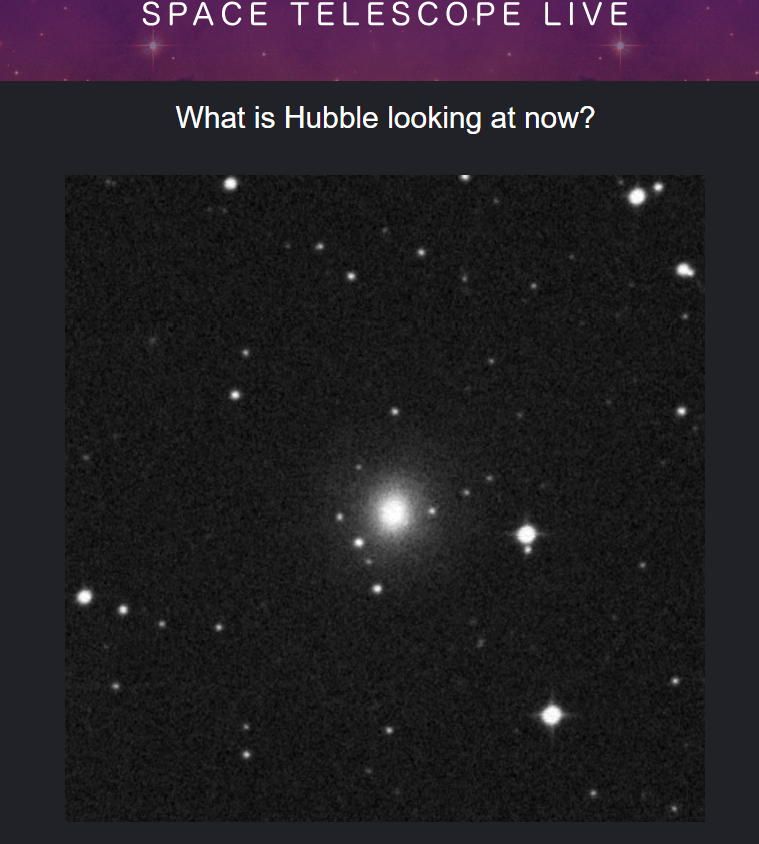
If there is an optical counterpart to a gravitational wave event coming from this galaxy then that suggests it may be a coalescence of neutron stars. The black hole mergers that appear to be responsible to the three existing gravitational wave signals that are claimed to have been detected are not expected to release optical light. Confirmation of this interpretation can be found by where the Hubble Space Telescope was pointed yesterday:

Look familiar? HST was, in fact, observing a `BNS-Merger’ (which is short for `Binary Neutron Star’)…

BNS

If this rumour is true then it’s obviously exciting, but there are questions to be asked. Chief among these is how sure is the identification of the counterpart? A transient optical source in NGC4993 may have been observed at the same time as a gravitational wave signal was detected,  but the ability of LIGO to resolve positions on the sky is very poor. On the other hand, the European VIRGO experiment joined Advanced LIGO for the ongoing `O2′ observing run (which ends in a couple of days). Although VIRGO is less sensitive than LIGO having a third detector does improve the localization of the source – assuming, of course, that it detects a signal. Even in that case it certainly won’t be possible to pinpoint the GW source to within 10 arc minutes, which is the precision needed to place it definitely within NGC 4993.

Anyway, we wait and see what, if anything, has been found. If it is a claimed detection then I hope that LIGO and VIRGO will release sufficient data to enable the analysis to be checked and verified. That’s what most of the respondents to my poll seem to hope too!