Author Archive

Physics & Astronomy at Sussex – The Videos!

Posted in Brighton, Education with tags , , on January 20, 2016 by telescoper

So the annual University admissions cycle is getting into gear, which means I’ll be spending quite a few Saturdays giving talks and chatting to prospective students and their parents. As we prepare for  the first of Applicant Visit Days at the University of Sussex (on Saturday 23rd January) we’ve produced a number of videos featuring current students in the Department of Physics & Astronomy. I thought I’d share a couple here.

First here’s Anjelah, a student on our 4-year MPhys degree in Theoretical Physics. She still seems quite keen, despite having taken my Theoretical Physics module in her second year!

Here’s Joe, a 4-year MPhys (Physics) student:

And here’s another by Linn, who is on the BSc in Physics with Astrophysics degree:

You’ll notice that both of them talk about our dedicated study spaces, which the students really like. We’re one of the few Physics & Astronomy Departments in the UK – in fact the only that I know of – that has turned over the management of a large suite of rooms over to our students. We don’t just allow them to use the rooms 24 hours a day; we also give them a budget for furniture and books and they basically decide what they want and how to arrange it all. We also provide a constant supply of free tea and coffee (although I have to admit that I do pop in there from time to time and help myself too).


The Universe is inhomogeneous. Does it matter?

Posted in The Universe and Stuff with tags , on January 20, 2016 by telescoper

Interesting piece by Buchert et al. about the role of inhomogeneities in cosmology….

Adam Day's avatarCQG+

Yes! The biggest problem in cosmology—the apparent acceleration of the expansion of the Universe and the nature of dark energy—has stimulated a debate about “backreaction”, namely the effect of inhomogeneities in matter and geometry on the average evolution of the Universe. Our recent paper aims to close a chapter of that debate, to encourage exciting new research in the future.

Although matter in the Universe was extremely uniform when the cosmic microwave background radiation formed, since then gravitational instability led to

View original post 1,044 more words

Morning over the Marina

Posted in Brighton with tags on January 19, 2016 by telescoper

image

Ligatures, Diphthongs and Supernovae

Posted in History, Pedantry, The Universe and Stuff with tags , , , , , , , , on January 18, 2016 by telescoper

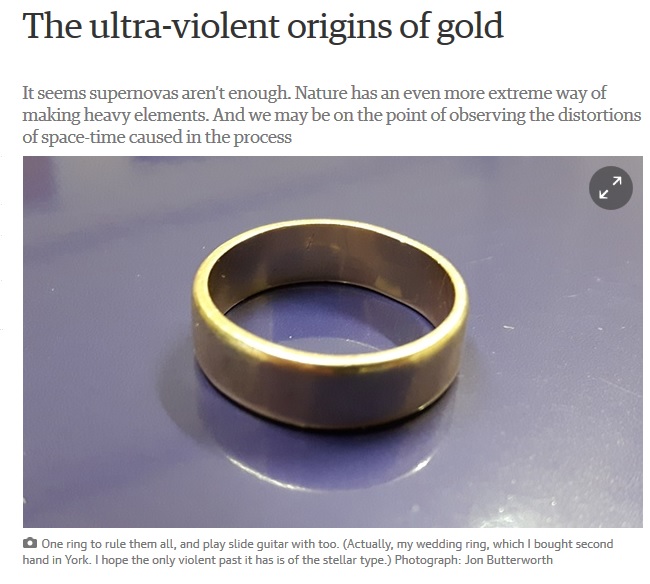
At the weekend I noticed a nice article by John Butterworth on his Grauniad blog about where Gold comes from. Regular readers of this blog (Sid and Doris Bonkers) know that I am not at all pedantic but my attention was drawn to the plural of supernova in the preamble:

Supernovas

I have to confess that I much prefer the latin plural “supernovae” to the modernised “supernovas”, although most dictionaries (including the One True Chambers) give these both as valid forms.  In the interest of full disclosure I will point out that I did five years of Latin at school, and very much enjoyed it…

When I tweeted about my dislike for supernovas and preference for supernovae some replied that English words should have English plurals so that supernovas was preferred (although I wonder if that logic extends to, e.g. datums and phenomenons). Others said that supernovae was fine among experts but for science communication purposes it was better to say “supernovas” as this more obviously means “more than one supernova”. That’s a reasonable argument, but I have to admit I find it a little condescending to assume that an audience can cope with the idea of a massive star exploding as a consequence of gravitational collapse but be utterly bewildered by a straightforward latin plural.

One of the reasons I prefer the Latin plural – along with some other forms that may appear archaic, e.g. Nebulae – is that Astronomy is unique among sciences for having such a long history. Many astronomical terms derive from very ancient sources and in my view we should celebrate this fact because it’s part of the subject’s fascination. That’s just my opinion, of course. You are welcome to disagree with that too.

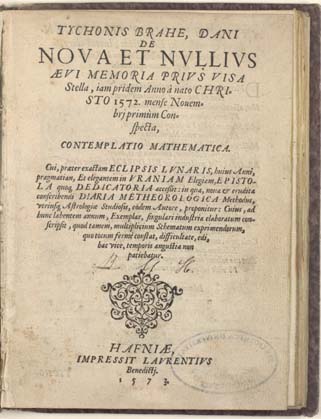
Anyway, you might be interested to know a couple of things. One is that the first use of “super-nova” recorded in the Oxford English Dictionary was in 1932 in a paper by Swedish astronomer Knut Lundmark. This word is however formed from “nova” (which means “new” in Latin) and the first use of this term in an astronomical setting was in a book by Tycho Brahe, published in 1573:

Brahe_book(I’ll leave it as an exercise to the student to translate the full title.)

Nowadays a nova is taken to be a much lower budget feature than a supernova but the “nova” described in Tycho’s book was was actually a supernova, SN1572 which he, along with many others, had observed the previous year. Historical novae were very often supernovae, in fact, because they are much brighter than mere novae. The real difference between these two classes of object wasn’t understood until the 20th Century, however, which is why the term supernova was coined much later than nova.

Anyway, back to pedantry.

A subsequent tweet from Roberto Trotta asserted  that in fact supernovae and supernovas are both wrong; the correct plural should be supernovæ, in which the two letters of the digraph “ae” are replaced with a single glyph known as a ligature. Often, as in this case, a ligature stands for a diphthong, a sort of composite vowel sound made by running two vowels together.   It’s one of the peculiarities of English that there are only five vowels, but these can represent quite different sounds depending on the context (and on the regional accent). This  means that English has many hidden diphthongs. For example,  the “o” in “no” is a diphthong in English. In languages such as Italian, in which the vowels are very pure, “no” is pronounced quite differently from English. The best test of whether a vowel is pure or not is whether your mouth changes shape as you pronounce it: your mouth moves as you say an English “no”, closing the vowel that stays open in the Italian “no”…

So, not all diphthongs are represented by ligatures. It’s also the case that not all ligatures represent diphthongs. Indeed some are composed entirely of consonants. My current employer’s logo features a ligature formed from the letters U and S:

image

The use of the ligature æ arose in Mediaeval Latin (or should I say Mediæval?). In fact if you look at the frontispiece of the Brahe book shown above you will see a number of examples of it in its upper-case form Æ. I’m by no means an expert in such things but my guess is that the use of such ligatures in printed works was favoured simply to speed up the typesetting process – which was very primitive – by allowing the compositor to use a single piece of type to set two characters. However, it does appear in handwritten documents e.g. in Old English, long before printing was invented so easier typesetting doesn’t explain it all.

Use of the specific ligature in question caught on particularly well in Scandinavia where it eventually became promoted to a letter in its own right (“aesc”) and is listed as a separate vowel in the modern Danish and Norwegian alphabets.  Early word-processing and computer typesetting software generally couldn’t render ligatures because they were just too complicated, so their use fell out of favour in the Eighties, though there are significant exceptions to this rule. Latex, for example, always allowed ligatures to be created quite easily. Software – even Microsoft Word – is much more sophisticated than it used to be, so it’s now not so much of a problem to use ligatures in digital text. Maybe they will make a comeback!

Anyway, the use of æ was optional even in Mediaeval Latin so I don’t think it can be argued that supernovæ is really more correct than supernovae, though to go back to a point I made earlier, I do admit that a rambling discussion of ligatures and diphthongs would not add much to a public lecture on exploding stars.


“Stars” by Kandinsky

Posted in Art with tags , on January 17, 2016 by telescoper

No time for a proper post so I thought I’d fill a bit of space with Stars, or at least with a picture of the lithograph of that title by Wassily Kandinsky made, I think, in 1938. It is certainly a different kind of image from that produced by astronomers, but it does put me in mind of star-forming regions such as the Orion Nebula..

wp-1453055880496.jpeg

Saturday Night Function

Posted in Jazz with tags , , on January 16, 2016 by telescoper

Well, it’s Saturday Night so I thought I’d post a bit of classic Jazz from the late twenties. This is from the superb Duke Ellington band, vintage 1929, which was resident at the Cotton Club in Harlem, New York City. I haven’t seen a personnel listing for this but the soloists are easy to identify: Barney Bigard on clarinet, James “Bubber” Miley on trumpet, and Joe “Tricky Sam” Nanton on trombone. The tune Saturday Night Function has become a traditional jazz standard but not many bands can get close to that unique Ellington sound, especially the growling trumpets. Enjoy!

How bad is Stormtrooper aim exactly?

Posted in Uncategorized on January 15, 2016 by telescoper

Here’s a tongue-in-cheek analysis of the inaccuracy of stormtroopers’ use of firearms in the Star Wars movies.

This is just one manifestation of a general phenomenon – bad guys are always terrible shots! At least in movies…

davehullo's avatarDelight Through Logical Misery

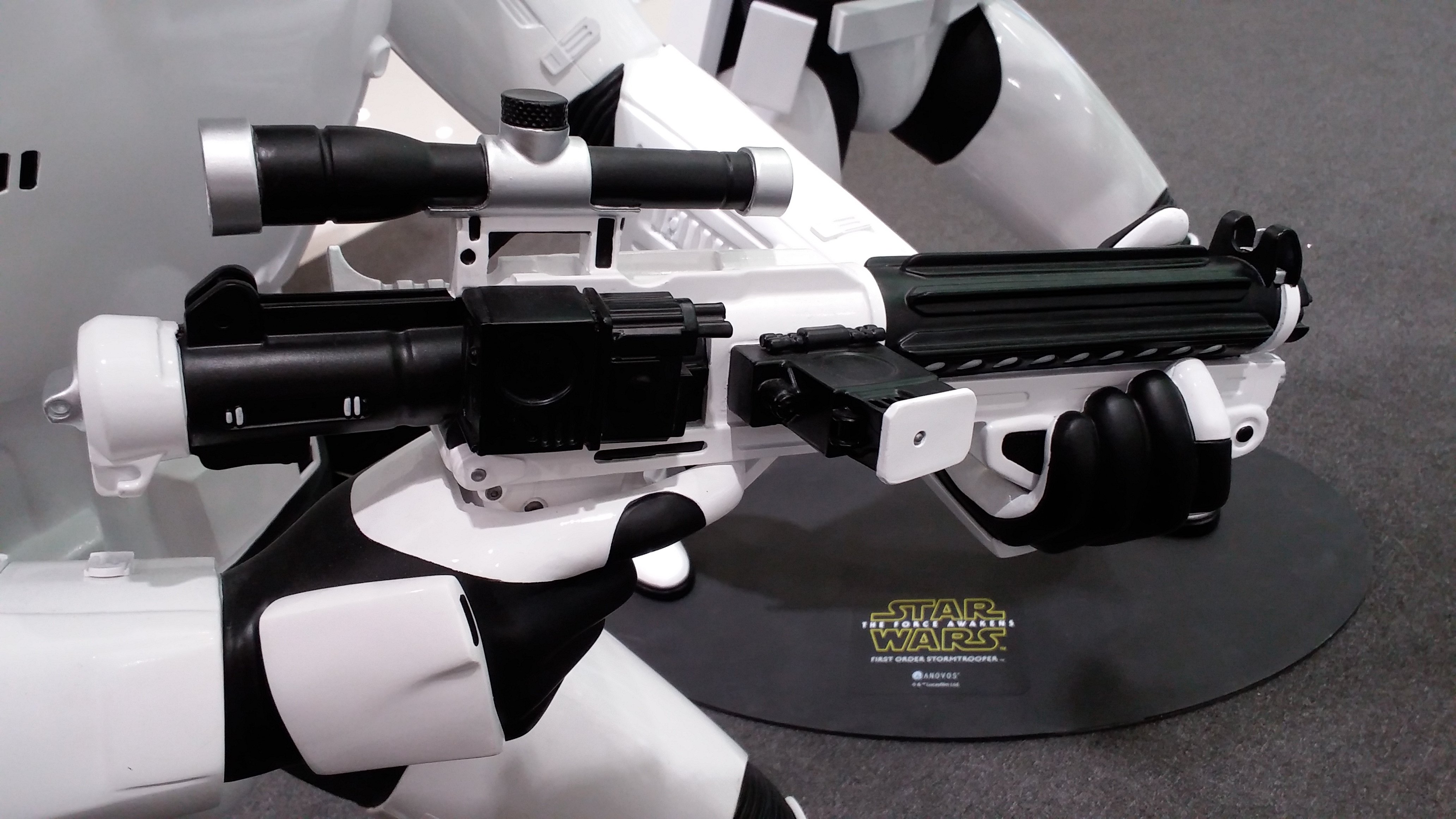
Stormtrooper_Gun A Stormtrooper gun. It’s possible they don’t know what these are for. Photo by Roy Kabanlit.

For some unknown reason, I’ve been thinking a lot about Star Wars recently. Going forward, I’ll assume you’ll be familiar with the events and characters of at least the first six films. If not, what have you been doing? Living in a recent, recent time in a galaxy that’s very close to here? Broadly speaking, this post inevitably contains minor spoilers for Episodes II−VI of the Star Wars films. If you haven’t seen them, inexplicably want to find out about Stormtrooper aim and don’t mind knowing some plot details, then feel free to read on.

There are some characteristics of characters or groups of characters within the Star Wars register that are widely held to be fact. This may be despite them not being explicitly stated within the films. Red lightsabers are for the…

View original post 1,641 more words

Should the ‘Roast beef of Old England’ be restored as the English anthem?

Posted in Uncategorized on January 15, 2016 by telescoper

Here’s an important (?) poll about what an English National Anthem should be, reblogged from Keith Flett’s blog..

I voted for Other (The Blaydon Races) …

kmflett's avatarKmflett's Blog

Should the ‘Roast Beef of Old England’ be restored as English anthem

beef

Chesterfield MP Toby Perkins may have a point in bringing  a bill to the Commons to replace God Save the Queen at sporting events where the England team plays with a specifically English anthem.

The national anthem, God Save the Queen or King, first became common in the 1790s when ‘Church and King’ mobs backed by sailors were keen to oppose radicals who supported the French Revolution.

The traditional English anthem had been the Roast Beef of Old England, and the playing of the new national anthem did not always go down well. A riot took place in Sheffield in 1812 when naval officers insisted it was played at a theatrical performance.

Mr Perkins, not to be confused with Harry Perkins in Chris Mullins a Very British Coup novel, is a supporter of hard right group Progress in…

View original post 73 more words

Truly, Madly, Deeply – R.I.P. Alan Rickman

Posted in Film with tags , , on January 14, 2016 by telescoper

Well, I can’t say that I’m very impressed with 2016 so far. Now the wonderful actor Alan Rickman has been taken from us. The first time I saw him act was on the small screen, in a bit part in Smiley’s People. Anyone remember who he played? It says a lot about his talent that he could make such a small role so memorable. However the first feature film I saw him in was Truly, Madly, Deeply which co-starred the marvellous Juliet Stevenson. I cried more than I’d like to admit.

Anyway, by way of a tribute here he is singing, appropriately enough, The Sun Ain’t Gonna Shine Anymore.

Rest in peace, Alan Rickman (1946-2016).

Harassment and Confidentiality

Posted in Harassment Bullying etc with tags , , on January 13, 2016 by telescoper

News of yet another sexual harassment scandal in Astronomy has broken, this time at Caltech. The individual concerned was not named by Caltech but has subsequently been identified as Christian Ott (whom I don’t know at all), who was investigated following complaints by two female PhD students. The complaints were upheld and Ott has been suspended.

This case would be difficult enough to comment on even without the complex backstory, some of which is in the public domain: two of the three protagonists appear in this article which dates from 2014. Clearly a lot has happened since then and it would be intrusive and unhelpful for me to speculate publicly about things know I nothing about.

What I will say, as clearly as I possibly can, that it is that due process has been followed and that there is no question the right decision was reached. My only surprise is that Dr Ott was not summarily dismissed.

In the interests of full disclosure I should make it clear that I do know one of the complainants in a professional capacity, Sarah Gossan, who was an undergraduate Astrophysics student at Cardiff while I was there and who started a PhD at Caltech in 2012.

Also for the record I should state that one of my duties as a Head of School here at the University of Sussex is to investigate and deal  with allegations of harassment or other misconduct by staff. I obviously can’t comment on individual cases I have dealt with, but will say that it is probably my least favourite job but someone has do it.

If such a complaint is upheld it can lead to summary dismissal (for very serious misconduct) or, at very least, a formal written warning. It’s worth also stating that the standard applied is that of a Civil rather than Criminal Court, i.e. the decision is based on the “balance of the evidence” rather than “beyond reasonable doubt”.

Concerning the Caltech/Ott case, according to this source:

The university investigation, which concluded in September, found that Ott violated the school’s harassment policies with both women. Ott, a 38-year-old rising star who had been granted tenure the year before, was placed on nine months of unpaid leave. During that time he is barred from campus, his communication with most of his postdoctoral fellows will be monitored, and, with the exception of a single graduate student, he is not allowed to have contact with any other students. Before returning, he must undergo what a school official calls “rehabilitative” training.

The first thing to say is that I find it very hard to believe that Ott will ever be able to return to his worksplace after the revelations of his behaviour even if he does attend “rehabilitative training”.  I very much doubt that the faculty or students would want him back. It surprises me that Caltech could even imagine that this is a realistic possibility.

Another feature worthy of comment is that Caltech itself did not name the perpetrator, although his name very rapidly appeared in the public domain. Disciplinary procedures of this type are also treated confidentially in all UK universities with which I am familiar (including the University of Sussex). I think there are good reasons for this, primarily to protect individuals from false or malicious allegations, but also to protect the complainant(s) from unwelcome publicity or other unwanted attention. However, it has to be said that this often also ends up protecting the culprit too. If  a person ends up getting the sack as as  result of sexual harassment then news will almost certainly leak out about why Dr Bloggs has left suddenly. However, if it leads to a warning then this outcome is generally not disclosed. In such a situation, Dr Bloggs could move to another institution and carry on where he left off.

They have been suggestions in the USA, discussed in this article, that legislation could be intoduced to force institutions to disclose information about harassment cases when an individual moves from one to another. I think this is an idea well worth thinking about, but I am not sure how workable it is in practice.

Failure to act strongly when such behaviour is proven just sends out the message that the institution doesn’t take sexual harassment seriously. In my view, confidentiality is needed during an investigation – to protect both sides and indeed the person doing the investigation – but if the conclusion is that misconduct has taken place, it should  be ackowledged publicly. Justice has to be seen to be done. Sexual assault, of course, is another matter entirely – that should go straight to the police to deal with.

I’ve talked about protocols and procedures, but these can only ever apply a sticking-plaster solution to a problem which is extremely deeply rooted in the culture of many science departments and research teams across the world. These tend to be very hierarchical, with power and influence concentrated in the hands of relatively few, usually male, individuals. A complaint about harassment generally has to go up through the management structure and therefore risks being blocked at a number of stages for a number of reasons. This sort of structure reinforces the idea that students and postdocs are at the bottom of the heap and discourages them from even attempting to pursue a case against someone at the top.

The unhealthy power structures I’ve discussed will not be easy to dismantle entirely, but there are simple things that can be done to make a start. “Flatter”, more democratic, structures not only mitigate this problem but are also probably more efficient by, for example, eliminating the single-point failures that plague hierarchical organisational arrangements.

We are very far indeed from eliminating harassment or the conditions that allow it to continue but although cases like this are painful, I think they at least demonstrate that we are beginning to acknowledge that there’s a problem.