I’ve posted this before but I thought I would do so again, just because it’s so marvellous.
I wonder what you felt as you watched it? What went through your mind? Amusement? Fascination? I’ll tell you how it was for me when I first saw it. I marvelled.
Seeing the extraordinary behaviour of this incredible creature filled me with a sense of wonder. But I also began to wonder in another sense too. How did the Lyre Bird evolve its bizarre strategy? How does it learn to be such an accurate mimic? How does it produce such a fascinating variety of sounds? How can there be an evolutionary advantage in luring a potential mate to the sound of foresters and a chainsaw?
The Lyre Bird deploys its resources in such an elaborate and expensive way that you might be inclined to mock it, if all it does is draw females to “look at its plumes”. I can think of quite a few blokes who adopt not-too-dissimilar strategies, if truth be told. But if you could ask a Lyre Bird it would probably answer that it does this because that’s what it does. The song defines the bird. That’s its nature.
I was moved to post the clip some time ago in response to a characteristically snide and ill-informed piece by Simon Jenkins in the Guardian. Jenkins indulges in an anti-science rant every now and again. Sometimes he has a point, in fact. But that article was just puerile. Perhaps he had a bad experience of science at school and never got over it.
I suppose I can understand why some people are cynical about scientists stepping into the public eye to proselytise about science. After all, it’s also quite easy to come up with examples of scientists who have made mistakes. Sadly, there are also cases of outright dishonesty. The inference is that science is no good because scientists are fallible. But scientists are people, no better and no worse than the rest. To err is human and all that. We shouldn’t expect scientists to be superhuman any more than we should believe the occasional megalomaniac who says they are.
To many people fundamental physics is a just a load of incomprehensible gibberish, the Large Hadron Collider a monstrous waste of money, and astronomy of no greater value to the world than astrology. Any scientist trying to communicate science to the public must be trying to hoodwink them, to rob them of the schools and hospitals that their taxes should be building and sacrifice their hard-earned income on the altar of yet another phoney religion.
And now the BBC is participating in this con-trick by actually broadcasting popular programmes about science that have generated huge and appreciative audiences. Simon Jenkins obviously feels threatened by it. He’s probably not alone.
I don’t have anything like the public profile of the target of Jenkins’ vitriol, Lord Rees, but I try to do my share of science communication. I give public lectures from time to time and write popular articles, whenever I’m asked. I also answer science questions by email from the general public, and some of the pieces I post on here receive a reasonably wide distribution too.
Why do I (and most of my colleagues) do all this sort of stuff? Is it because we’re after your money? Actually, no it isn’t. Not directly, anyway.
I do all this stuff because, after 25 years as a scientist, I still have a sense of wonder about the universe. I want to share that as much as I can with others. Moreover, I’ve been lucky enough to find a career that allows me to get paid for indulging my scientific curiosity and I’m fully aware that it’s Joe Public that pays for me to do it. I’m happy they do so, and happier still that people will turn up on a rainy night to hear me talk about cosmology or astrophysics. I do this because I love doing science, and want other people to love it too.
Scientists are wont to play the utilitarian card when asked about why the public should fund fundamental research. Lord Rees did this in his Reith Lectures, in fact. Physics has given us countless spin-offs – TV sets, digital computers, the internet, you name it – that have created wealth for UK plc out of all proportion to the modest investment it has received. If you think the British government spends too much on science, then perhaps you could try to find the excessive sum on this picture.
Yes, the LHC is expensive but the cost was shared by a large number of countries and was spread over a long time. The financial burden to the UK now amounts to the cost of a cup of coffee per year for each taxpayer in the country. I’d compare this wonderful exercise in friendly international cooperation with the billions we’re about to waste on the Trident nuclear weapons programme which is being built on the assumption that international relations must involve mutual hatred.
This is the sort of argument that gets politicians interested, but scientists must be wary of it. If particle physics is good because it has spin-offs that can be applied in, e.g. medicine, then why not just give the money to medical research?
I’m not often put in situations where I have to answer questions like why we should spend money on astronomy or particle physics but, when I am, I always feel uncomfortable wheeling out the economic impact argument. Not because I don’t believe it’s true, but because I don’t think it’s the real reason for doing science. I know the following argument won’t cut any ice in the Treasury, but it’s what I really think as a scientist (and a human being).
What makes humans different from other animals? What defines us? I don’t know what the full answer to that is, or even if it has a single answer, but I’d say one of the things that we do is ask questions and try to answer them. Science isn’t the only way we do this. There are many complementary modes of enquiry of which the scientific method is just one. Generally speaking, though, we’re curious creatures.
I think the state should support science but I also think it should support the fine arts, literature, humanities and the rest, for their own sake. Because they’re things we do. They make us human. Without them we’re just like any other animal that consumes and reproduces.
So the real reason why the government should support science is the song of the Lyre Bird. No, I don’t mean as an elaborate mating ritual. I don’t think physics will help you pull the birds. What I mean is that even in this materialistic, money-obsessed world we still haven’t lost the need to wonder, for the joy it brings and for the way it stimulates our minds; science doesn’t inhibit wonder, as Jenkins argues, it sparks it.
I was intrigued by an article I found at the weekend which reports on a (no doubt rigorous) scientific study that claims a connection between the relative lengths of index and ring fingers and the propensity to be promiscuous. The assertion is that people whose ring finger is longer than their index finger like to play around, while those whose index finger is longer than their ring finger are inclined to fidelity. Obviously, since the study involves the University of Oxford’s Department of Experimental Psychology, there can be do doubt whatsoever about its reliablity or scientific credibility, just like the dozens of other things supposed to be correlated with digit ratio. Ahem.
I do remember a similar study some time ago that claimed that men with with a longer index finger (2D) than ring finger (4D) (i.e. with a 2D:4D digit ratio greater than one) were much more likely to be gay than those with a digit ratio lower than one. Taken with this new finding it proves what we all knew all along: that heterosexuals are far more likely to be promiscuous than homosexuals.
For the record, here is a photograph of my left hand (which, on reflection, is similar to my right, and which clearly shows a 2D:4D ratio greater than unity):
Inspired by the stunning application of the scientific method described in the report, I have decided to carry out a rigorous study of my own. I have heard that, at least among males, it is much more common to have digit ratio less than one than greater than one but I can’t say I’ve noticed it myself. Furthermore previously unanswered question in the literature is whether there is a connection between digit ratio and the propensity to read blogs. I will know subject this to rigorous scientific scrutiny by inviting readers of this blog to complete the following simply survey. I look forward to publishing my findings in due course in the Journal of Irreproducible Results.
PS. The actual paper on which the report was based is by RafaelWlodarski, JohnManning, and R. I. M.Dunbar, Biol. Lett.: 2015 11 20140977; DOI: 10.1098/rsbl.2014.0977.
Posted in Uncategorized on February 8, 2015 by telescoper
Taking a short break from this weekend’s task of preparing notes and problem sets for the Theoretical Physics module I’m teaching this term. In the course of putting this stuff together I remembered an old post I did some time ago about lecture notes.
I won’t repeat the entire content of my earlier discussion, but one of the main points I made in that was about how inefficient many students are at taking notes during lectures, so much so that the effort of copying things onto paper must surely prevent them absorbing the intellectual content of the lecture (assuming that there is any).
I dealt with this problem when I was an undergraduate by learning to write very quickly without looking at the paper as I did so. That way I didn’t waste time moving my head to and fro between paper and screen or blackboard. Of course, the notes I produced using this method weren’t exactly aesthetically pleasing, but my handwriting is awful at the best of times so that didn’t make much difference to me. I always wrote my notes up more neatly after the lecture anyway. But the great advantage was that I could write down everything in real time without this interfering with my ability to listen to what the lecturer was saying.
An alternative to this approach is to learn shorthand, or invent your own form of abbreviated language. This approach is, however, unlikely to help you take down mathematical equations quickly.
My experience nowadays is that students simply aren’t used to taking notes like this – I suppose because they get given so many powerpoint presentations or other kinds of handout – so they struggle to cope with the old-fashioned chalk-and-talk style of teaching that some lecturers still prefer. That’s probably because they get much less practice at school than my generation. Most of my school education was done via the blackboard..
Nowadays, most lecturers use more “modern” methods than this. Many lecturers using powerpoint, and often they give copies of the slides to students. Others give out complete sets of printed notes before, during, or after lectures. That’s all very well, I think, but what are the students supposed to be doing during the lecture if you do that? Listen, of course, but if there is to be a long-term benefit they should take notes too.
Even if I hand out copies of slides or other notes, I always encourage my students to make their own independent set of notes, as complete as possible. I don’t mean copying down what they see on the screen and what they may have on paper already, but trying to write down what I say as I say it. I don’t think many take that advice, which means much of the spoken illustrations and explanations I give don’t find their way into any long term record of the lecture.
And if the lecturer just reads out the printed notes, adding nothing by way of illustration or explanation, then the audience is bound to get bored very quickly.
My argument, then, is that regardless of what technology the lecturer uses, whether he/she gives out printed notes or not, then if the students can’t take notes accurately and efficiently then lecturing is a complete waste of time. In fact for the Theoretical Physics module I’m doing now I don’t hand out lecture notes at all during the lectures, although I do post lecture summaries and answers to the exercises online after they’ve been done.
As a further study aid, most lectures at Sussex University are recorded and made available to students to view shortly after the event. In most cases this is video as well as audio but in some smaller rooms only audio capture is available. I checked the attendance at my lecture last week (the third week of Term) and found over 95% of those enrolled were at the lectures. There’s no evidence that availability of recorded lectures has lowered the attendance. It appears that students use the recordings for revision and/or to clarify points raised in the notes they have taken.
I would actually like to put my lectures online, e.g. on YouTube, so they could be viewed freely by anyone who wanted but I am told this is against University policy as the campus trade union, UCU, had objected to the suggestion. I don’t know why.
I do like lecturing, because I like talking about physics and astronomy, but as I’ve got older I’ve become less convinced that lectures play a useful role in actually teaching anything. I think we should use lectures more sparingly, relying more on problem-based learning to instil proper understanding. When we do give lectures, they should focus much more on stimulating interest by being entertaining and thought-provoking. They should not be for the routine transmission of information, which is far too often the default.
I’m not saying we should scrap lectures altogether. At the very least they have the advantage of giving the students a shared experience, which is good for networking and building a group identity. Some students probably get a lot out of lectures anyway, perhaps more than I did when I was their age. But different people benefit from different styles of teaching, so we need to move away from lecturing as the default option and ensure that a range of teaching methods is available.
I don’t think I ever learned very much about physics from lectures – I found problem-based learning far more effective – but I’m nevertheless glad I learned out how to take notes the way I did because I find it useful in all kinds of situations. Effective note-taking is definitely a transferable skill, but it’s also in danger of becoming a dying art. If we’re going to carry on using lectures, we old fogeys need to stop assuming that students learnt it the way we did and start teaching it as a skill.
I looked for this quotation last week when I heard a reference to it on Radio 3 in connection with some incidental music written by Dmitry Shostakovich for a film of King Lear. Reading the full text it struck me that academic life has many of the advantages of being in prison…
No, no, no, no! Come, let’s away to prison:
We two alone will sing like birds i’ the cage:
When thou dost ask me blessing, I’ll kneel down,
And ask of thee forgiveness: so we’ll live,
And pray, and sing, and tell old tales, and laugh
At gilded butterflies, and hear poor rogues
Talk of court news; and we’ll talk with them too,
Who loses and who wins; who’s in, who’s out;
And take upon’s the mystery of things,
As if we were God’s spies: and we’ll wear out,
In a wall’d prison, packs and sects of great ones,
That ebb and flow by the moon.
Today marks the start of this season’s RBS Six Nations Rugby, which kicks off at 8.05pm at the Millennium Stadium in Cardiff with Wales versus England. The town will be buzzing in the evening, overrun with rugby fans in various states of drunkenness but with that extra special atmosphere that makes this such a fantastic place to be on such occasions, even if you’re not in the ground. It promises to be a bit chaotic, but it’s always an extra special day in Cardiff when the old adversaries meet. I’m heading off this afternoon in order to get there in time, and spending the weekend in Cardiff.
The Six Nations is a difficult competition to predict, but I think Wales must be strong favourites to win this particular match as England have had to cope with a number of injuries to key players. However, there is one battle whose outcome you can bet your bottom dollar on, and that’s the crowd singing. That one is always won by the Welsh.
Get a load of this example, from a few years ago which at least gives some idea what I’m talking about. This is the stirring Welsh National Anthem Hen Wlad Fy Nhadau (Land of My Fathers). And if you feel like singing along, here are the lyrics (in Welsh, of course):
Mae hen wlad fy nhadau yn annwyl i mi, Gwlad beirdd a chantorion, enwogion o fri; Ei gwrol ryfelwyr, gwladgarwyr tra mâd, Tros ryddid gollasant eu gwaed.
Chorus: Gwlad, Gwlad, pleidiol wyf i’m gwlad,
Tra môr yn fur i’r bur hoff bau,
O bydded i’r heniaith barhau.
Hen Gymru fynyddig, paradwys y bardd; Pob dyffryn, pob clogwyn, i’m golwg sydd hardd Trwy deimlad gwladgarol, mor swynol yw si Ei nentydd, afonydd, i fi.
Chorus
Os treisiodd y gelyn fy ngwlad dan ei droed, Mae hen iaith y Cymry mor fyw ag erioed, Ni luddiwyd yr awen gan erchyll law brad, Na thelyn berseiniol fy ngwlad.
Chorus
UPDATE: the Big Match didn’t turn out quite as I expected. Wales were all over England early on, taking a 10-0 lead. But once they had steadied themselves England began to claw their way back into contention. With the half-time score at 16-8 the game still looked to be heading for a Welsh victory. However in the 2nd half England’s more disciplined approach paid dividends. The English pack, compact and powerful, began to make deep inroads into the Welsh defence and gradually established a stranglehold on the game. Thirteen unanswered points in the second half gave England a memorable victory on a dramatic night. Wales 16 England 21.
Just time for a very quick post today to pass on thhe news that most of the 2015 crop of papers from the Planck mission have now been released and are available to download here. You can also find some related data products here.
The Department of Physics & Astronomy at the University of Sussex has been supporting some fantastic research into the accessibility of science education. Daniel Hajas, a blind second year physics undergraduate student has been working with Dr. Kathy Romer, Reader in Astrophysics, on a research project related to innovative assistive technology.
Daniel came up with the idea of an audio-tactile graphics display (TGD) that should allow representation of graphical information in audio and tactile modalities, mostly focusing on figures used in mathematical sciences such as graphs, geometric shapes etc. The TGD is a device with approximate dimensions of a tablet that can sit on a table top and can be connected with a PC using either a wired or wireless solution.
During the summer of 2014, Daniel wrote a research proposal, attended an assistive technology oriented conference and since the beginning of this academic year has been searching for partners/funding. Daniel and Kathy recently submitted an application to the Inclusive Technology Price (ITP).
Since October they have made contact with IT and cognitive science experts from the Sussex IT department and are also in contact with an LHC Sound project (CERN) team member to assist with sonification. Daniel and Kathy plan to establish collaboration with experts from various fields, find research partners and funding. Such an interdisciplinary research requires collaboration of various Sussex Departments if not other Universities from across the UK.
Daniel’s 3D Vector Board
Daniel has also been busy inventing the ‘3D vector board’, a small plastic board with two flexible rubber stripes perpendicular to each other which can be can moved around such that they show the axes of a coordinate system. The board has a grid on it with 1×1 cm squares. At the junctions four little holes are drilled in the corner of the squares. This allows the vectors (metal sticks of different length) to be fixed on the board. Since there are horizontal, diagonal and vertical sticks i.e. the sticks are either in the plane, perpendicular to or in an angle respect to the plane of the board 3D vector scenarios can be modelled easily.
Although Daniel intended to use the board solely for his own purposes, feedback suggests this relatively simple tool could be used efficiently in education for demonstrational purposes. Both visually impaired and sighted students could benefit from it. Sketches on paper or black boards only allow 2D representations. The 3D vector board might also work well in illustrating aims of the TGD project. Although the main goal is to develop a very advanced high-tech assistive device over a period of years, Daniel and Kathy might also come up with a number of low-tech ideas to improve accessibility of mathematical sciences for visually impaired students.
Although I’m in the middle of a very busy day (with no time for a lunch break) I thought I’d take a few minutes to advertise a very special one-off opportunity. As many of you will be aware, the Chancellor of the Exchequer announced in the Autumn Statement last year that loans of up to £10,000 would be made available to students on postgraduate (Masters) courses from 2016/17 onwards. Welcome though this scheme may be it does not apply to students wanting to start a Masters programme this September (i.e. for Academic Year 2015/16).
But fear not. The University of Sussex has come to the rescue! Last week the University unveiled a generous new funding scheme to bridge the gap. In particular, a huge boost to the University’s flagship Chancellor’s Masters Scholarships means that 100 students graduating this summer with a first-class degree from any UK university will be eligible to receive a £10,000 package (non-repayable) to study for a Masters degree at Sussex. There are also specific schemes to support students who are already at Sussex; see here.
This is a huge opportunity for high-flying physics graduates to get a funded place on any of our MSc programmes to start later this year. Indeed, the deal that is being offered is so good that I would recommend students who are currently in the third year of 4-year MPhys or MSci integrated Masters programmes, perhaps at a dreary University in the Midlands, to consider switching to a BSc bailing out of your current course, and graduating in June in order to take up this opportunity. The last year of an integrated Masters consists of 120 credits of material for which you will have to be a further £9K of fees; a standalone Masters at Sussex would involve 180 credits and be essentially free if you get a scholarship.
Think about it, especially if you are interested in specializing in Quantum Technology. Sussex is the only university in the UK where you can take an MSc in this subject!
Note for Sussex students: if you’re on the 3rd year of an MPhys here at Sussex the situation is a bit more complicated and the incentive to move to MSc is much weaker because we have additional Scholarships to offset the £9K fee for the 4th year. Please feel free to discuss this with me if you want some more information.
Up very early this cold and frosty morning to get a train back from Cardiff to Brighton, I listened to this track on my iPod and no longer felt either tired or cold. I have posted this before, but that was six years ago, so I hope you won’t mind me posting it again too much.
At one point in the film Manhattan, the character played by Woody Allen makes a list of the things that make life worth living. This record is one of them. Potato Head Blues was recorded on May 10th 1927 in the Okeh Studios in Chicago by Louis Armstrong and the Hot Seven. It’s not actually a blues, but we won’t quibble about that because whatever it is not it is definitely a timeless Jazz masterpiece.
The other members of the band are Johnny Dodds (clarinet, heard to good effect in the solo before Louis Armstrong), Johnny’s brother Warren “Baby” Dodds (drums), Louis Armstrong’s first wife Lil Armstrong (née Hardin, piano), Johnny St Cyr (banjo), Pete Briggs (brass bass or tuba) and John Thomas on trombone. But the star of the performance is, of course, Satchmo himself, who was at the absolute peak of his powers when this record was made. If you have any doubts about what a musical genius he was, go straight to the point (at about 1:50) where he announces his intent with a characteristic three note BA-DA-DAA, a device he used very often to kick off a solo. In this case it provides an entry into his famous stop-time chorus which is just breathtaking in its power, inventiveness and sheer beauty. Built from a succession of dazzling impromptu phrases, it explodes into a joyous climax which is beautifully sustained into the final ensemble chorus that follows. If I ever had to go on one of those radio programmes that involve people picking their favourite pieces of music, this would definitely be one of my selections.
The views presented here are personal and not necessarily those of my employer (or anyone else for that matter).
Feel free to comment on any of the posts on this blog but comments may be moderated; anonymous comments and any considered by me to be vexatious and/or abusive and/or defamatory will not be accepted. I do not necessarily endorse, support, sanction, encourage, verify or agree with the opinions or statements of any information or other content in the comments on this site and do not in any way guarantee their accuracy or reliability.

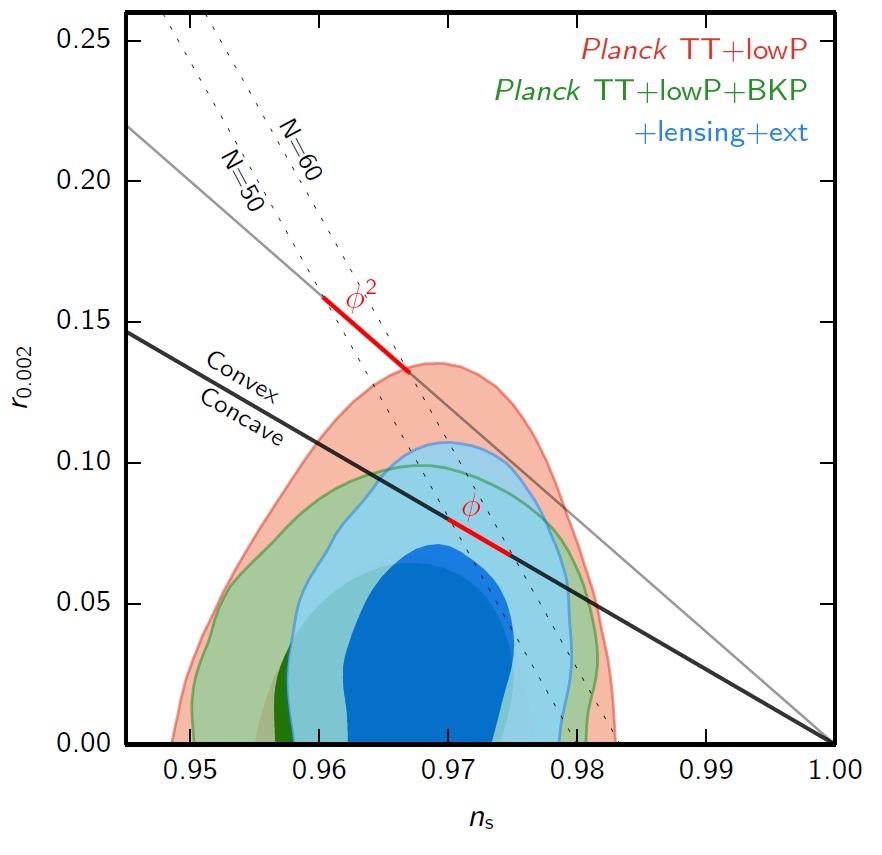
 model of inflation is excluded at greater than 99% confidence…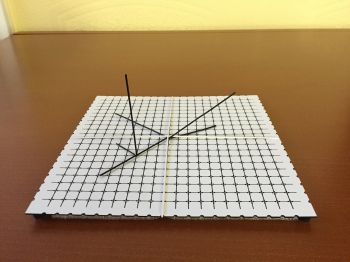

 In the Dark