Author Archive

After Bank Holiday

Posted in Poetry with tags , , on August 26, 2014 by telescoper

Now deserted are the roads
Where awhile the lovers went;
Vacant are the field-abodes
Where a vivid hour they spent:
Solemn dark
Broods again in lane and park.

‘Tis no matter where are gone
Those warm lives—to halls, maybe,
Festive, or to lodgings lone:
Of the land their tenancy
Now is o’er;
Earth to earth belongs once more.

Gone are they as hourly goes
From the sombre fields of space
Our world, with its little glows—
Passion’s ship that has no place,
Leaves no track,
On time’s endless ocean black.

by Elizabeth Daryush (1887-1977)

R.I.P. Richard Attenborough (1923-2014)

Posted in Film with tags , , , , , on August 25, 2014 by telescoper

Late last night the sad news broke of the death at the age of 90 of Richard Attenborough (lately “Lord Attenborough”). Tributes have since poured in from around the world, both to celebrate his career as actor and director and also to acknowledge the many wider contributions of a warm and kindly human being. There was – and will remain – a very strong connection between Richard Attenborough and the University of Sussex, where I work. His connection with the University spanned four decades and was at its strongest for the period 1998-2008 when he was Chancellor of the University in which role he congratulated countless students during their graduation ceremonies.

It is very sad to lose a person so universally loved and admired, especially since he didn’t live to see the completion of the Attenborough Centre for the Creative Arts scheduled to open on campus next year.

I’m doubly sad in fact because I never had the opportunity to meet him, having arrived here only last year some time after he stood down as Chancellor. Though I never interacted with him personally, I shall of course remember him through his great career on the big screen, first as an actor then as a director. Much has already been said about his contribution to the world of film by people much better qualified to comment than I, so I’ll just say that I’ll remember him best as a superb actor. He was chillingly believable as the real-life serial murderer John Christie in 10 Rillington Place, a film that also included a wonderful performance by John Hurt, but I think his finest screen role was in the classic 1947 film of Graham Greene‘s novel Brighton Rock.

This is a great film, not only because of superb central performance by Richard Attenborough as the young sociopathic gangster, Pinkie, but also and more generally because it is a rare example of an authentic British Film Noir. A nihilistic central character is of course an essential noir element but the expressionistic use of lighting, deep shadows, and strangely disorienting camera angles, exemplified in this clip turn this into a classic of its genre.

In fact, I think I’ll spend this wet Bank Holiday evening watching the whole DVD of Brighton Rock and drink a few glasses of wine to Richard Attenborough’s memory.

R.I.P. Richard Attenborough (1923-2014)

Back in Blighty

Posted in Biographical on August 24, 2014 by telescoper

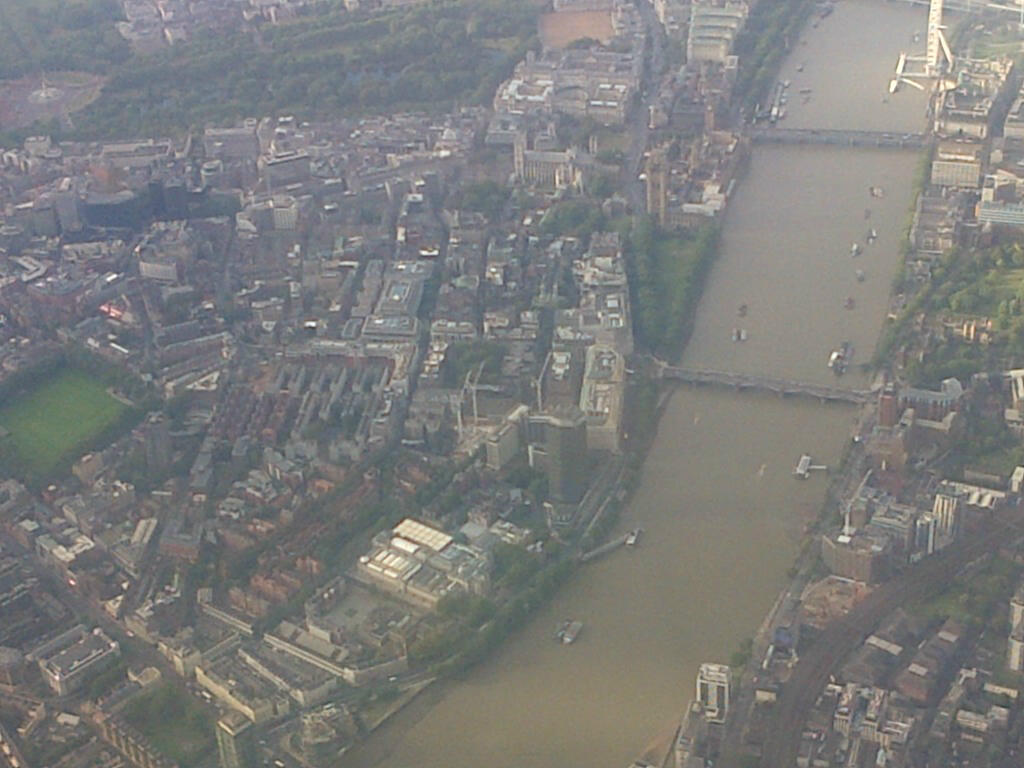
So here I am then, back in Brighton. My flight yesterday actually arrived 20 minutes early at Heathrow with (astonishingly) no air traffic delays at all. I got a nice aerial view of London on the way in too! Despite the usual congestion at passport control, barely three hours later I was back in my flat drinking a nice cup of tea. I did tube+train this time, as I would have had to wait an hour for the next coach..

I enjoyed my little trip to Copenhagen, as I do every time I go there. Thanks to the Niels Bohr Institute for inviting me!

Anyway, now there’s the rest of the bank holiday weekend to relax and catch up on the crosswords…

The truth is out there

Posted in Biographical, The Universe and Stuff with tags , , , , , on August 23, 2014 by telescoper

So here I am, then, sitting in my hotel room in Copenhagen and drinking coffee, filling in time before I check out and travel to the airport for the journey home. I don’t have to be there until this afternoon so today is going to be a bit more leisurely than the rest of the week has been. It’s nice to get a couple of hours to myself.

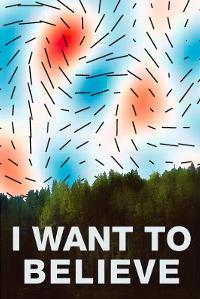
It was an interesting little workshop, with lots of time for discussions, but lurking in the background of course was the question mark  over BICEP2. Many theorists have clearly been beavering  away on models which assume that BICEP2 has measured primordial gravitational waves and I suspect most of them really want the result to be correct. When I posted a message on Twitter about this, Ian Harrison posted this homage to a famous poster for the TV series The X-files. There’s more than a little truth in the comparison!

BICEP_Xfiles

Whatever the truth about the BICEP2 measurements there’s no question that it’s a brilliant experiment, with exquisite sensitivity. There is no question that it has detected something so faint that it boggles the mind. Here is a slide from Phil Lubin’s talk at the meeting, which shows the unbelievably rapid improvement in sensitivity of microwave detectors:


IMG-20140820-00388

I don’t think cosmologists ever pay enough credit to the people behind these technological developments, as it is really they who have driven the subject forward. In the case of BICEP2 the only issue is whether it has picked up a cosmological signal or something from our own Galaxy. Whatever it is, it’s an achievement that deserves to be recognized.

And as for the claims of the person responsible for the post I reblogged yesterday that the cosmic microwave background is a fraud, well I can assure you it is not. Any scientific result is open to discussion and debate, but the ultimate arbiter is experimental test. Several independent teams are working in competition on CMB physics and any fraud would be easily exposed. The cosmic microwave background is out there.

And so is the truth.

COSMIC BLACKBODY ALIVE AND WELL IN MAINSTREAM PHYSICS ESTABLISHMENT

Posted in Uncategorized on August 22, 2014 by telescoper

As an “intellectual poseur” I couldn’t resist reblogging this piece …

dreamheron's avatarThe Dreamheron Chronicles

Just this summer, Professor Amber Miller of Columbia University (appearing at the World Science Festival panel discussion on BICEP2), stated emphatically (and it seems, not required by the context of the discussion) that the cosmic blackbody is intact. Her taxpayer-funded high-tech research in the high frontier is riding on this assumption. (Watch the video from 1:07 to 1:09).

A video released last month by the learned society SPIE and filmed at NASA Goddard pointedly avers that the blackbody is fully intact, with 50 ppm accuracy.

And today this bit of public education from Professor Peter Coles of the University of Sussex (upon holding many consultations with mainstream colleagues at a conference on this very subject in Denmark) states:

The problem – the Achilles Heel of BICEP, so to speak – is that it operates at a single frequency, 150 GHz. That means that it is not possible for this experiment…

View original post 120 more words

BICEP2: Watch this Space!

Posted in The Universe and Stuff with tags , , , on August 21, 2014 by telescoper

One of the advantages of informal workshops like this one I’m attending in Copenhagen right now is that there’s a lot of time for discussions and picking up various bits of gossip. Some of the intelligence gathered in this way is unreliable but often it represents knowledge that’s widely known in the cosmological community but which I’ve missed because I don’t spend as much time on the conference circuit these days.

Anyway, those of you with more than a passing interest in cosmology will remember the results from the BICEP2 experiment announced with a great fanfare of publicity in March this year. A significant number of eminent cosmologists immediately seized on the detection of B-mode correlations in the polarized cosmic microwave background as definitive proof of the existence of primordial gravitational waves. Some went even further, in fact, and claimed that the BICEP2 results prove all kinds of other things too.

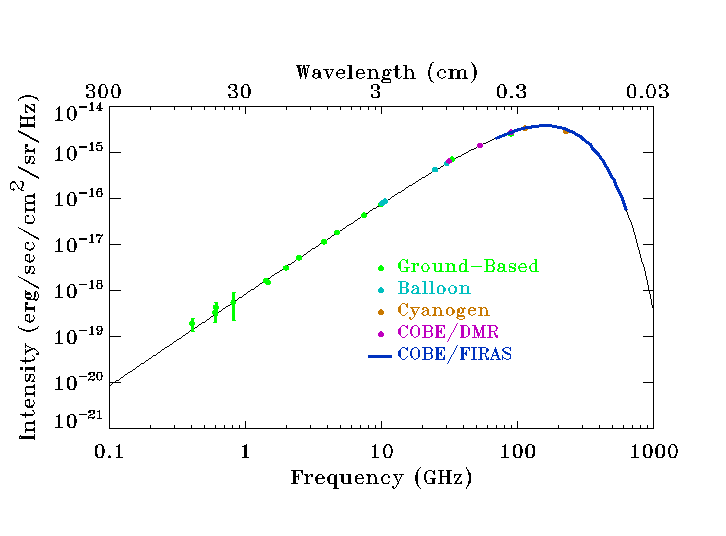
As time passed, however, and folks had time to digest some of the details presented by the BICEP2 team, there has been a growing unease about the possibility that the measurements may have been misinterpreted. The problem – the Achilles Heel of BICEP, so to speak – is that it operates at a single frequency, 150 GHz. That means that it is not possible for this experiment on its own to determine the spectrum of the detected signal. This is important because it is not only the cosmic microwave background that is capable of producing polarized radiation at a frequency of 150 GHz, foreground dust inside our own Galaxy being the prime suspect as an alternative source. It should be possible to distinguish between dust and CMB using measurements at different frequencies because the microwave background has a black-body spectrum  whereas dust does not. However, BICEP2 maps only a small part of the sky and at the time of the announcement there were no other measurements covering the same region, so a convincing test has not so far been possible.


cmbspectrum

The measured spectrum of the cosmic microwave background. It’s indistinguishable from the theoretical black-body curve shown as a solid line

The initial BICEP2 announcement included a discussion of foregrounds that concluded that these were expected to be much lower than their detected signal in the area mapped, but serious doubts have emerged about the accuracy of this claim. Have a look at my BICEP2 folder to see more discussion.

More recently, in July, it was announced that the BICEP2 team would collaborate with the large consortium working on the analysis of data from the Planck experiment to try to resolve these difficulties. Planck not only covers the whole sky but also has detectors making measurements over a wide range of frequencies (all the way up to 857 GHz). This should provide a definitive measurement of the contribution of Galactic dust to the BICEP2 field and at last give us a strong experimental basis on which to decided whether the BICEP2 signal is primordial or not. The result of my informal poll on BICEP2 was a clear majority (~62%) in favour of the statement that it was “too early to say” what the BICEP2 signal actually represents.

Anyway, I have it on very good authority that Planck’s analysis of the Galactic foregrounds in the BICEP2 region will be published (on the arXiv) on or around September 1st 2014. That’s just about 10 days from now. Maybe then this tantalizing wait will be over. I’ll try my best to post about the results when it comes out. In the meantime, I thought I’d do something completely unscientific and try to gauge what how current opinion stands on this issue by means of a poll of the total unrepresentative readership of this blog. Suppose you had to bet on whether the BICEP2 result is due to (a) primordial gravitational waves or (b) Galactic foregrounds, which would you go for?

Of course, those working on this project probably know the answer already so they’ll have to decide for themselves whether they wish to vote!

Riverbed

Posted in Art with tags , , , , on August 20, 2014 by telescoper

Yesterday afternoon I skived off the last session of the workshop I’m attending and took the train to the small town of Humlebæk, which is about 35 north of Copenhagen and is the site of the Louisiana Museum of Modern Art. The purpose of my visit was to attend an invitation-only preview of a new installation by Olafur Eliasson called Riverbed. The invitation to this came relatively recently and it was only the coincidence of my being here at this workshop that made it possible for me to attend.

As it turned out, I arrived quite early and the weather was fine, so I took the chance to wander around the sculpture park before the main event. There are many fine works there. This, for example, is by Henry Moore:

SAMSUNG DIGITAL CAMERA

This one is by Henri Laurens

SAMSUNG DIGITAL CAMERA

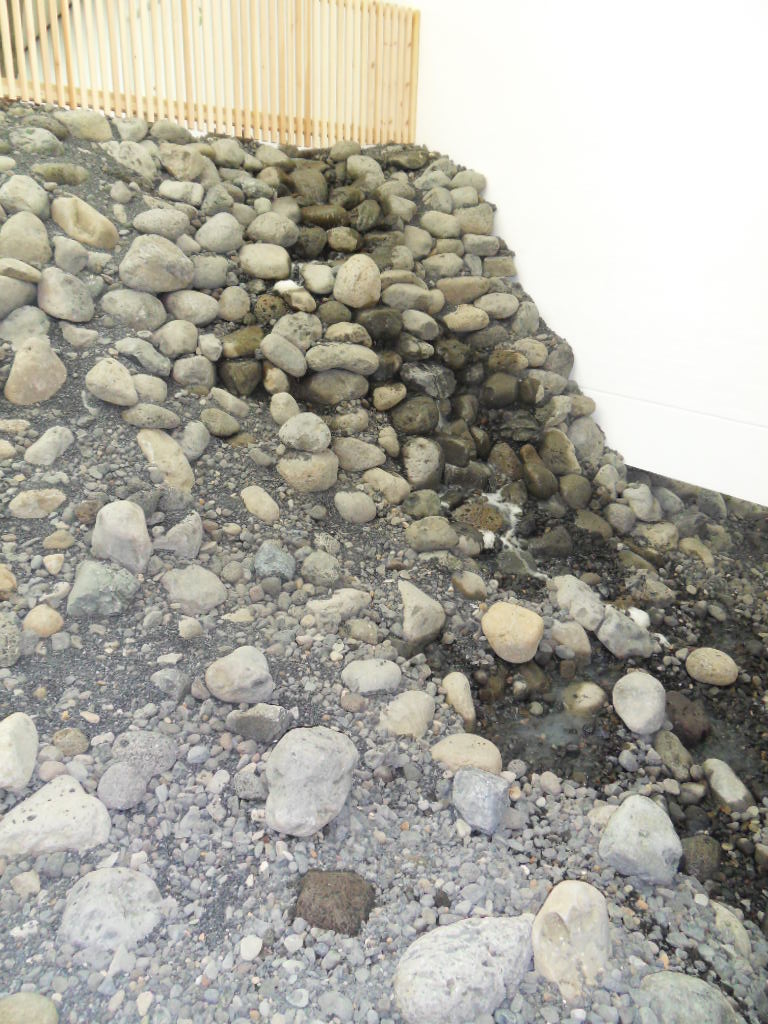
And so to Riverbed. This is a large work featuring boulders and gravel, brought all the way from Iceland, which have been used to recreate a section of the landscape of Olafur’s native land. The distinctive colouring and granularity of the raw material produces terrain of a texture that must look very alien to anyone who has never been to Iceland. The installation is contained within a space which is contained within and divided by stark white-painted walls, with rectangular gaps where necessary to let the water through from room to room. These boundaries, with their geometrically precise edges, affect the experience of the naturalistic landscape in a very interesting way. The Riverbed itself may look “natural” but the structures surrounding it constantly remind you that it isn’t. Viewers are permitted to wander through the piece wherever they like and interact however they please, sitting down on a boulder, paddling in the stream or even just watching the other people (which is mainly what I did). I don’t know what’s more interesting, the work itself or the way people behave when inside it!

Here are some pictures I took, just to give you a flavour:

SAMSUNG DIGITAL CAMERA
SAMSUNG DIGITAL CAMERASAMSUNG DIGITAL CAMERASAMSUNG DIGITAL CAMERA
SAMSUNG DIGITAL CAMERA

Anyway, after that we adjourned for a drinks reception and a splendid dinner in the Boat House, which part of the Louisiana complex. Being neither an artist nor an art critic I felt a bit of an outsider, but I did get the chance to chat to quite a few interesting people including, by sheer coincidence, a recent graduate of the University of Sussex. The Boat House looks out towards the island of Hven, home of the observatory of Tycho Brahe, so naturally I took the opportunity to drink a toast to his memory:

Bvat-UeCAAA9u4p

After that I had to return to Copenhagen to write my talk, as I was on first this morning at 9.30. This afternoon we have a bit of a break before the conference excursion and dinner this evening. The excursion happens to be to Louisiana Museum of Modern Art (although we’re all going by bus this time); dinner is in the cafeteria rather than the Boat House, though..

On Problems

Posted in Poetry, The Universe and Stuff with tags , , , on August 19, 2014 by telescoper

Since I’m in Denmark I thought I’d put up one of the wonderfully witty little poems written by Danish mathematician Piet Hein. He called each of these verses a “grook” (or actually, in Danish, the word is gruk) and he wrote thousands of them over his long life. I’ve posted one of these before but this one is even shorter but it makes a deep point, the danger of becoming be trapped by your own assumptions. I won’t comment on the relevance of this to the cosmology workshop I’m attending…

Our choicest plans
have fallen through
our airiest castles
tumbled over
because of lines
we neatly drew
and later neatly
stumbled over.

by Piet Hein (1905-1996).

Copenhagen, Cosmology and Coleman Hawkins

Posted in Biographical, Jazz, The Universe and Stuff with tags , , on August 18, 2014 by telescoper

Now that I’ve finally checked into my hotel in the wonderful city of Copenhagen I thought I’d briefly check in on the old blog as well. I’m here once again for a meeting, this time as an invited speaker at the 2nd NBIA-APCTP Workshop on Cosmology and Astroparticle Physics; NBIA being the Niels Bohr International Academy (based in Denmark) and APTCTP being the Asia Pacific Centre for Theoretical Physics (based in Korea). This is the kind of meeting I actually like, with relatively few participants and lots of time for discussion; as a welcome gesture for the first day there was also free beer!

I decided for some reason to try an experimental route getting here. There wasn’t a flight at a convenient date and  time from Gatwick, the nearest airport to my Brighton residence, so I decided to get an early morning flight from Heathrow instead. The departure time of 06:40, however, left me with the difficulty of getting there in time by public transport as the relevant trains don’t run overnight. I toyed with the idea of booking an airport hotel for the night, but decided that would be extravagant so instead opted to get a coach from Brighton; this was cheap and comfortable – only a handful of other passengers got on the bus – and got me there right on schedule. The downside was that I had to catch the 01:40 from Brighton Coach Station, which arrived at about 4am at Heathrow Terminal 3. It was quite interesting finding the normally busy terminal almost deserted but although I did a self-service check-in straight away the bag drops didn’t open until almost 5am. None of the cafes in the check-in area were open, so I had to hang around for an hour before finally getting rid of my luggage and passing through to the airside whereupon I nabbed some coffee and a bite to eat.

The flight was almost uneventful. Unfortunately, however, as we came in to land at Copenhagen’s Kastrup airport, a young person sitting behind me vomited uncontrollably and at considerable length, producing a steady flow both of chunder and unpleasant noises. The aftermath was quite unpleasant, so I was quick out of the blocks when the plane finally came to a stop at the gate. An aisle seat turned out to have been a wise choice.

Assuming it would be too early to check into the hotel that had been booked for me, I decided to go straight to the meeting but got to the Niels Bohr Institute’s famous Auditorium A near the end of the first talk, about the Imprint of Radio Loops on the CMB (a subject I’ve blogged about), which is a shame because (a) its interesting and (b) some of my own work was apparently discussed. That happens so rarely these days I’m sorry I missed it.

I was a bit tetchy as a result of my sleepless night, though I limited the expression of this to a  couple of rants about frequentist statistics during the discussions.

After the free beer I finally made my way to the hotel and checked in. It’s not bad, actually. There can’t be that many hotel rooms that have a picture of the great tenor saxophonist Coleman Hawkins on the wall:

SAMSUNG DIGITAL CAMERA

Anyway, I was due to give the conference summary on Friday but I’ve been moved forward to Wednesday so I’d better think of something to say. Maybe in the morning though, I could do with an early night…

Newcastle Joins the Resurgence of UK Physics

Posted in Education, Science Politics, The Universe and Stuff with tags , , , on August 17, 2014 by telescoper

I’ve posted a couple of times about how Physics seems to undergoing a considerable resurgence in popularity at undergraduate level across the United Kingdom, with e.g. Lincoln University setting up a new programme. Now there’s further evidence in that Newcastle University has now decided to re-open its Physics course for 2015 entry.

The University of Newcastle had an undergraduate course in Physics until 2004 when it decided to close it down, apparently owing to lack of demand. They did carry on doing some physics research (in nanoscience, biophysics, optics and astronomy) but not within a standalone physics department. The mid-2000s were tough for UK physics,  and many departments were on the brink at that time. Reading, for example, closed its Physics department in 2006; there is talk that they might be starting again too.

The background to the Newcastle decision is that admissions to physics departments across the country are growing at a healthy rate, a fact that could not have been imagined just ten years ago. Times were tough here at Sussex until relatively recently, but now we’re expanding on the back of increased student numbers and research successes. Indeed having just been through a very busy clearing and confirmation period at Sussex University, it is notable that its the science Schools that have generally done best.  Sussex has traditionally been viewed as basically a Liberal Arts College with some science departments; over 70% of the students here at present are not studying science subjects. With Mathematics this year overtaking English as the most popular A-level choice, this may well change the complexion of Sussex University relatively rapidly.

I’ve always felt that it’s a scandal that there are only around 40 UK “universities” with physics departments Call me old-fashioned, but I think a university without a physics department is not a university at all; it’s particularly strange that a Russell Group university such as Newcastle should not offer a physics degree. I believe in the value of physics for its own sake as well as for the numerous wider benefits it offers society in terms of new technologies and skills. Although the opening of a new physics department will create more competition for the rest of us, I think it’s a very good thing for the subject and for the Higher Education sector general.

That said, it won’t be an easy task to restart an undergraduate physics programme in Newcastle, especially if it is intended to have as large an intake as most successful existing departments (i.e. well over 100 each year). Students will be applying in late 2014 or early 2015 for entry in September 2015. The problem is that the new course won’t figure in any of the league tables on which most potential students based their choice of university. They won’t have an NSS score either. Also their courses  will probably need some time before it can be accredited by the Institute of Physics (as most UK physics courses are).

There’s a lot of ground to make up, and my guess is that it will take some years to built up a significant intake.The University bosses will therefore have to be patient and be prepared to invest heavily in this initiative until it can break even. The decision a decade ago to cut physics doesn’t exactly inspire confidence that they will be prepared to do this, but times have changed and so have the people at the helm so maybe that’s an unfair comment.

There are also difficulties on the research side (which is also vital for a proper undergraduate teaching programme), there are also difficulties. Grant funding is already spread very thin, and there is little sign of any improvement for the foreseeable future  in the “flat cash” situation we’re currently in. There’s also the stifling effect of theResearch Excellence Framework I’ve blogged about before. I don’t know whether Newcastle University intends to expand its staff numbers in Physics or just to rearrange existing staff into a new department, but if they do the former they will have to succeed against well-established competitors in an increasingly tight funding regime. A great deal of thought will have to go into deciding which areas of research to develop, especially as their main regional competitor, Durham University, is very strong in physics.

On the other hand, there are some positives, not least of which is that Newcastle is and has always been a very popular city for students (being of course the finest city in the whole world). These days funding follows students, so that could be a very powerful card if played wisely.

Anyway, these are all problems for other people to deal with. What I really wanted to do was to wish this new venture well and to congratulate Newcastle on rejoining the ranks of proper universities (i.e. ones with physics departments). Any others thinking of joining the club?