Author Archive

Statistical Challenges in 21st Century Cosmology

Posted in The Universe and Stuff with tags , , on December 2, 2013 by telescoper

I received the following email about a forthcoming conference which is probably of interest to a (statistically) significant number of readers of this blog so I thought I’d share it here with an encouragement to attend:

–o–

IAUS306 – Statistical Challenges in 21st Century Cosmology

We are pleased to announce the IAU Symposium 306 on Statistical Challenges in 21st Century Cosmology, which will take place in Lisbon, Portugal from 26-29 May 2014, with a tutorial day on 25 May.  Apologies if you receive this more than once.

Full exploitation of the very large surveys of the Cosmic Microwave Background, Large-Scale Structure, weak gravitational lensing and future 21cm surveys will require use of the best statistical techniques to answer the major cosmological questions of the 21st century, such as the nature of Dark Energy and gravity.

Thus it is timely to emphasise the importance of inference in cosmology, and to promote dialogue between astronomers and statisticians. This has been recognized by the creation of the IAU Working Group in Astrostatistics and Astroinformatics in 2012.

IAU Symposium 306 will be devoted to problems of inference in cosmology, from data processing to methods and model selection, and will have an important element of cross-disciplinary involvement from the statistics communities.

Keynote speakers

• Cosmic Microwave Background :: Graca Rocha (USA / Portugal)

• Weak Gravitational Lensing :: Masahiro Takada (Japan)

• Combining probes :: Anais Rassat (Switzerland)

• Statistics of Fields :: Sabino Matarrese (Italy)

• Large-scale structure :: Licia Verde (Spain)

• Bayesian methods :: David van Dyk (UK)

• 21cm cosmology :: Mario Santos (South Africa / Portugal)

• Massive parameter estimation :: Ben Wandelt (France)

• Overwhelmingly large datasets :: Alex Szalay (USA)

• Errors and nonparametric estimation :: Aurore Delaigle (Australia)

You are invited to submit an abstract for a contributed talk or poster for the meeting, via the meeting website. The deadline for abstract submission is 21st March 2014. Full information on the scientific rationale, programme, proceedings, critical dates, and local arrangements will be on the symposium web site here.

Deadlines

13 January 2014 – Grant requests

21 March 2014 – Abstract submission

4 April 2014 – Notification of abstract acceptance

11 April 2014 – Close of registration

30 June 2014 – Manuscript submission

The World’s Oldest Professor?

Posted in Education with tags , , , on December 1, 2013 by telescoper

Yesterday I was sitting at home listening to the radio when someone used the phrase “The World’s Oldest Profession”. Naturally, that made me think of those such as myself who Profess for a living (although that’s apparently not what the original expression applies to). Anyway, that idle thought made me wonder whether there is, in the Guinness Book of Records or elsewhere, a recognized holder of the title World’s Oldest Professor?

A short tweet about this elicited one suggestion: Professor Ephraim Engleman of the University of California at San Francisco who is an extremely distinguished Professor of Rheumatology and is still active at the age of 102. Blimey. That’s going to be a pretty though record to beat, but I thought I’d post about it to see there are any other contenders for (a) the world’s oldest professor in any discipline and (b) the world’s oldest professor in physics and astronomy?

Suggestions through the comments box please.

P.S. Apart from anything else, Prof. Engleman’s inspirational example has made me feel guilty for moaning about the advancing years at the tender age of 50; he’d reached my current age before I was even born!

Farewell to Araucaria

Posted in Crosswords with tags , on December 1, 2013 by telescoper

I was just thinking this morning that it’s been a while since I posted about crosswords, and then an email arrived from Prof. Monica Grady pointing out the sad news of the passing (on Tuesday, 26th November, at the age of 92) of Johh Galbraith Graham, better known to crossword fans as Araucaria of the Guardian. I had missed the announcement of his death because I’ve just been too busy recently to look at the papers except at weekends.

For those of you not aware, the pseudonym Araucaria is the “Monkey Puzzle ” tree. Those of you who were aware already of that, I’ll add that another name for this tree is “Chile Pine” whence John Graham formed the anagram CINEPHILE, under which pseudonym he also set puzzles in the Financial Times for many years. Not a lot of people know that.

John Graham was an undoubted genius as a crossword setter, one of the few whose clues have made me laugh out loud when working out the solution not only because of their cleverness but also because of the wonderful sense of humour with which they were composed. His clues didn’t always abide by the strict conventions laid down by the father of the crossword puzzle, Derrick Somerset MacNutt (aka Ximenes) but he was a compiler whose transgressions in this regard were easy to forgive when so many of his clues were so brilliant.

Here’s a nice video made about a year ago featuring the man himself talking about the art of crossword setting:

I switched from the Guardian to the Independent some time ago so haven’t done any of Araucaria‘s recent puzzles – my only regret for having switched allegiances, as it happens. I’ve actually won prizes from the weekend Independent competition over twenty times subsequently, which has given me a steady supply of dictionaries. More importantly I do find their crosswords generally more challenging and more entertaining than the Guardian‘s. But the irreplaceable Araucaria was in a class on his own. Having given so much pleasure to so many people for such a long time, he has certainly earned his status as national treasure.

Rest in peace John Galbraith Graham (1921-2013).

Out and G3 Awards – How about some scientists?

Posted in LGBTQ+ with tags , , , , , , on November 30, 2013 by telescoper

I’m taking it easy today so this will be a brief post to follow up on an old one in which I bemoaned the lack of (visible) Lesbian, Gay, Bisexual or Transgendered physicists. I was subsequently invited to speak at an event in London about this issue. I couldn’t make it because of other commitments, but I gather it went well. Anyway, in my earlier post I wrote

It has always annoyed me that the Independent newspaper’s annual “Pink List” of the UK’s most influential LGBT people never – and I mean never – has a single LGBT scientist on it, despite the immense amount they do not only in research, but also in teaching and outreach. It’s very sad that this work is largely unacknowledged and even sadder that a great many potential role models are hidden.

Actually this year’s Pink List did have one scientist on it, but my point remains relevant. It turns out that nominations are open for the Readers’ Awards of Out  and g3 magazines  to be voted on by the public in 2014. The prizes will awarded in April and expect to be reported in the gay media, they often lead on to more widespread publicity for the winners. So I thought I’d do my little bit to encourage folk out there to think about nominating a scientist or engineer for this prize.

You may nominate your favourite sportsperson, broadcaster, celebrity or  ‘straight ally’, but why not put forward the name of a Lesbian, Gay, Bisexual, Transgender person you know from the world of science, medicine or engineering under the ‘Inspirational Role Model of the Year’ category?

All you need for now is their name and email address, so it only takes a few seconds.

Go on. You know you want to. The link is here.

The Russell Groupies

Posted in Education, Politics with tags , , , on November 29, 2013 by telescoper

There’s an interesting article in Research Professional upon which I thought a brief comment would be appropriate. The article is mainly about the recent demise of the 1994 Group of universities, made inevitable when some of its larger members jumped ship to climb on board the much posher Russell Group. I’ve always felt that mission groups of this type were of little interest or value, but the growth of the Russell Group has, in my view, become rather sinister because it involves a cynical attempt to manufacture status when none is justified by performance.

The piece in Research Professional says:

Vice-chancellors and principals are not the only ones playing the status game. Students, employers, academics and government ministers—who seem to love visiting Russell Group universities—all want to be associated with high-status universities, even if those institutions do not necessarily provide better education or research. A 2009 analysis of the results of the 2008 Research Assessment Exercise, carried out by the Higher Education Policy Institute, found that Russell Group institutions performed only half a percentage point better than the overall average, and that when universities in the golden triangle were excluded the score fell to below average. Truly, this is an emperor with very modest clothes.

This echoes my experience. Before moving to the University of Sussex earlier this year I worked in two Russell Group universities (and one which wasn’t in the Russell Group when I worked there but is now). All these institutions have much to recommend them – and I have no desire whatsoever to say negative things about former colleagues – but it is clear to me that they (or at least their Physics Departments) can’t claim to be any better than the one in which I currently work. Indeed the Physics department that performed best in the 2008 Research Assessment Exercise was Lancaster, which is also not in the Russell Group.

It’s also noticeable that the primary characteristic of Russell Group universities in the National Student Survey tables is that they generally do quite poorly relative to non-members. Does Russell Group status mean promoting research at the expense of teaching and the student experience generally?

There’s no doubt that by many metrics there is a group of “elite” English universities – Oxford, Cambridge, UCL, and Imperial. The Russell group comprises these and a few other excellent institutions. But the later additions are simply a group of fairly average universities who thought the £500,000 joining fee was worth paying to try to convince students and others that they had elite status too. Worryingly, it seems that the Russel Brand Group Group Brand has been marketed so effectively that politicians are starting to talk as if “research intensive” and “Russell Group” mean one and the same thing.

Night Sky

Posted in Poetry, The Universe and Stuff with tags , on November 29, 2013 by telescoper


What they are saying is
that there is life there, too:
that the universe is the size it is
to enable us to catch up.

They have gone on from the human:
that shining is a reflection
of their intelligence. Godhead
is the colonisation by mind

of untenanted space. It is its own
light, a statement beyond language
of conceptual truth. Every night
is a rinsing myself of the darkness

that is in my veins. I let the stars inject me
with fire, silent as it is far,
but certain in its cauterising
of my despair. I am a slow

traveller, but there is more than time
to arrive. Resting in the intervals
of my breathing, I pick up the signals
relayed to me from a periphery I comprehend.

by Ronald Stuart Thomas (1913-2000)

Pseudospheres Corner..

Posted in Cute Problems with tags , , , , on November 28, 2013 by telescoper

I’m sure you have all seen a knitted pseudosphere, but this is a particularly fine collection made by the excellent Miss Lemon and briefly displayed in my office this morning.

IMG-20131128-00223

A pseudosphere is a space of negative curvature (whereas a sphere is one of constant positive curvature). There are various ways to realize a two-dimensional surface which has negative curvature everywhere; this knitted version is based on hyperbolic space. If you’re keen to have a go at making one yourself you can find some instructions here. I’m advised, though, that the better way to approach the task is to start out with a large circular ring onto which you cast about 400 stitches, gradually working your way in with fewer and fewer stitches (say 400,200,100,50 etc), which is much easier than working outwards as described in the link. The folds and crenellations are produced quite naturally as a consequence of tension in the wool.

Happy knitting!

Lecture Capture

Posted in Education with tags , , , , on November 27, 2013 by telescoper

One of the things that I found out when I came to the University of Sussex in February this year is that it provides something that I think is a very good thing for both staff and students – facilities for lecture capture which are in all the main lecture theatres on campus. These facilities allow lecturers to record videos of their own lectures which are then made available for students to view online. This is of course very beneficial for students with special learning requirements, but in the spirit of inclusive teaching I think it’s good that all students can access such material. Some faculty were apparently a little nervous that having recordings of lectures available online would result in falling attendances at lectures, but in fact the evidence indicates precisely the opposite effect. Students find the recorded version adds quite a lot of value to the “live” event by allowing them to clarify things they might not have not noted down clearly.

Anyway, I like this idea a lot and am very keen to do it with my own lectures. It does seem to be the case however that some staff are wary of this innovation. I thought this might be an interesting issue to put to a public poll open to staff, students and interested others either at Sussex or elsewhere to gauge the general feeling about this:

If you don’t like the idea I’d welcome a comment explaining why. I’d also be interested in comments from colleagues in other institutions as to the extent to which lecture capture technology is used elsewhere.

How to segregate your lecture

Posted in Education, Politics with tags , on November 26, 2013 by telescoper

Following the announcement that UniversitiesUK has decided that it is acceptable for audiences at events held at UK universities to be segregated by gender, I thought I’d would explain how such segregation should be achieved for speakers who require it.

To start with the lecture theatre chosen for the event should be equipped with suitable man-sized box trunk or cabinet into which the guest speaker is to be placed. An illustrative example of the type of container required is shown here:

_DSC2585-black-upload

Care must of course be taken to ensure that the box is of sufficiently large dimensions that it is capable of containing the speaker without causing undue discomfort.

Before the audience is admitted to the event, the speaker should be placed inside the box whereupon it should be locked.

The audience can then enter the lecture theatre, sit down wherever they like and make themselves comfortable, being confident that the appropriate level of segregation has been enforced.

An additional advantage of this scheme is that a suitably chosen box will make it impossible for the audience to hear the stream of misogynistic drivel produced by the invited guest, thus ensuring that the event runs smoothly and without disruption.

I hope this clarifies the situation.

Respect to Jonathan Trott

Posted in Cricket, Mental Health with tags , , , on November 25, 2013 by telescoper

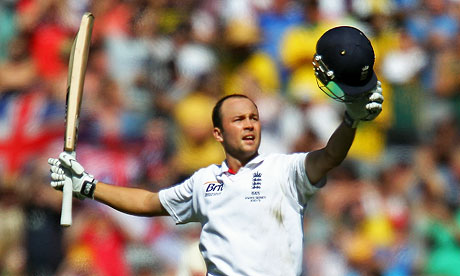
News broke this morning that Jonathan Trott who batted at No. 3 for England has left the Ashes tour because of a “long-standing stress related condition”.

Jonathan Trott in happier days

Jonathan Trott in happier days

Jonathan Trott isn’t the first England cricketer to have been forced out of the game in such a fashion – Marcus Trescothick and Michael Yardy are two others who have found themselves unable to cope with the pressures of the modern game; neither Trescothick nor Yardy played for England again and this may indeed be the end of Trott’s career. I hope it isn’t because he’s an immensely talented player but that’s his decision to make. I think he’s right to leave if he feels he can’t give 100% to his team. He will almost certainly be feeling that he’s let his side down, but he hasn’t. Had he been forced to withdraw because of a bad back or a hamstring problem nobody would have said such things; a mental health problem is no different.

I think his decision shows considerable personal courage. It’s not easy to admit that you can’t cope. Whether or not it was triggered by David Warner’s unpleasant comments makes no difference to me. I know which of these two I respect more. I hope he gets all the help he needs to get over his problems, and that he makes a full and speedy recovery unhindered by press intrusion.

In any case, as Mike Selvey put it in today’s Guardian

… when all is said and done, it is just a game. There are more important things in life.

Quite so.