I’m sure you have all seen a knitted pseudosphere, but this is a particularly fine collection made by the excellent Miss Lemon and briefly displayed in my office this morning.
A pseudosphere is a space of negative curvature (whereas a sphere is one of constant positive curvature). There are various ways to realize a two-dimensional surface which has negative curvature everywhere; this knitted version is based on hyperbolic space. If you’re keen to have a go at making one yourself you can find some instructions here. I’m advised, though, that the better way to approach the task is to start out with a large circular ring onto which you cast about 400 stitches, gradually working your way in with fewer and fewer stitches (say 400,200,100,50 etc), which is much easier than working outwards as described in the link. The folds and crenellations are produced quite naturally as a consequence of tension in the wool.
One of the things that I found out when I came to the University of Sussex in February this year is that it provides something that I think is a very good thing for both staff and students – facilities for lecture capture which are in all the main lecture theatres on campus. These facilities allow lecturers to record videos of their own lectures which are then made available for students to view online. This is of course very beneficial for students with special learning requirements, but in the spirit of inclusive teaching I think it’s good that all students can access such material. Some faculty were apparently a little nervous that having recordings of lectures available online would result in falling attendances at lectures, but in fact the evidence indicates precisely the opposite effect. Students find the recorded version adds quite a lot of value to the “live” event by allowing them to clarify things they might not have not noted down clearly.
Anyway, I like this idea a lot and am very keen to do it with my own lectures. It does seem to be the case however that some staff are wary of this innovation. I thought this might be an interesting issue to put to a public poll open to staff, students and interested others either at Sussex or elsewhere to gauge the general feeling about this:
If you don’t like the idea I’d welcome a comment explaining why. I’d also be interested in comments from colleagues in other institutions as to the extent to which lecture capture technology is used elsewhere.
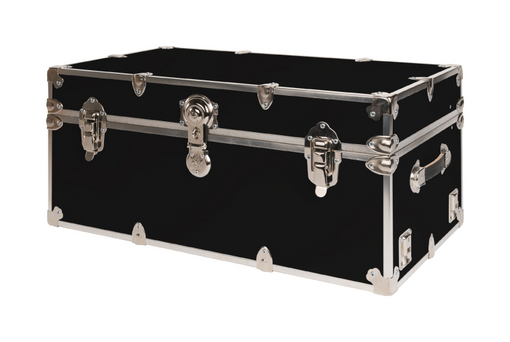
To start with the lecture theatre chosen for the event should be equipped with suitable man-sized box trunk or cabinet into which the guest speaker is to be placed. An illustrative example of the type of container required is shown here:
Care must of course be taken to ensure that the box is of sufficiently large dimensions that it is capable of containing the speaker without causing undue discomfort.
Before the audience is admitted to the event, the speaker should be placed inside the box whereupon it should be locked.
The audience can then enter the lecture theatre, sit down wherever they like and make themselves comfortable, being confident that the appropriate level of segregation has been enforced.
An additional advantage of this scheme is that a suitably chosen box will make it impossible for the audience to hear the stream of misogynistic drivel produced by the invited guest, thus ensuring that the event runs smoothly and without disruption.
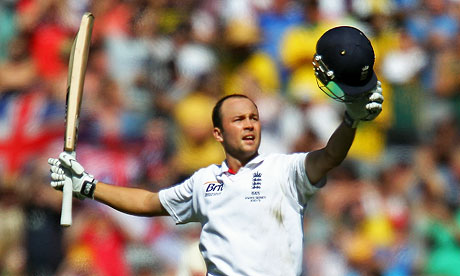
News broke this morning that Jonathan Trott who batted at No. 3 for England has left the Ashes tour because of a “long-standing stress related condition”.
Jonathan Trott in happier days
Jonathan Trott isn’t the first England cricketer to have been forced out of the game in such a fashion – Marcus Trescothick and Michael Yardy are two others who have found themselves unable to cope with the pressures of the modern game; neither Trescothick nor Yardy played for England again and this may indeed be the end of Trott’s career. I hope it isn’t because he’s an immensely talented player but that’s his decision to make. I think he’s right to leave if he feels he can’t give 100% to his team. He will almost certainly be feeling that he’s let his side down, but he hasn’t. Had he been forced to withdraw because of a bad back or a hamstring problem nobody would have said such things; a mental health problem is no different.
I think his decision shows considerable personal courage. It’s not easy to admit that you can’t cope. Whether or not it was triggered by David Warner’s unpleasant comments makes no difference to me. I know which of these two I respect more. I hope he gets all the help he needs to get over his problems, and that he makes a full and speedy recovery unhindered by press intrusion.
Just back from my travels so I only have time for a brief post today, but it’s about something potentially very important. It seems that there are big problems with the budget for the Department of Business, Innovation and Skills which includes the budget for universities in England and also the Research Councils under the umbrella of RCUK. The government has lost control over the number of students recruited into universities – particularly privately run colleges – with the result that it faces a massive £1.4 billion recurrent overspend. A leaked memorandum suggests making immediate £350 million cuts into funding for the poorest students, which is bad enough, but nowhere near enough. It seems the rest of the shortfall will have to be tackled by big cuts in the previously “ring-fenced” science budget. Such a move would run counter to numerous pledges made by the Minister David Willetts and would be devastating for the already underfunded science budget. There is already talk of the Science and Technology Facilities Council having to close one of its major research facilities.
I don’t like to say I told you so, but I have had suspicions for a long time that the government was planning to cut the amount of QR research funding allocated via the 2014 Research Excellence Framework to which submissions are due at the end of this week. Now I think it is virtually inevitable that all the years of preparation for this exercise across the country will earn universities virtually nothing. The total amount allocated via the QR mechanism is currently £1.6 billion – easily enough to cover the gaping hole in the budget caused by Whitehall incompetence. Slashing this budget will hit university science departments particularly hard.
Science has struggled along during the tenure of this government with a flat cash settlement, equivalent to a 10% real terms decline. That’s by no means a good result, but substantially better than other areas of public spending. Now it looks like austerity is really going to bite us very hard indeed.
I’m very worried for students and for science. But you can bet your bottom dollar that the people responsible for creating this fiasco in the first place won’t be in fear of losing their jobs. It may be that “we’re all in it together”, but some of us are in it a lot deeper than others.
In common with much of the professional sports media, this blog on a number of occasions has given the impression that England’s cricket team boasts excellent team spirit, a strong batting line-up and powerful bowling attack so, as a consequence, has a realistic prospect of retaining the Ashes on their current tour of Australia.
In the wake of their humiliating defeat in the First Ashes Test in Brisbane, however, I realise that this opinion was misguided and in fact they are poorly prepared, lacking in determination and confidence, their batting is flimsy and prone to collapse, and their bowlers ineffectual and unconvincing.
I would like therefore to apologize for having misrepresented the situation and for any inconvenience caused by this error.
Today is the official 50th birthday celebration of Doctor Who and, since The Doctor and myself are of the same vintage, I thought I’d repeat an old post about the show. I just listened to the original theme music again before posting this and I still think it sounds amazingly fresh.
–0–
As a Professor of Astrophysics I am often asked “Why on Earth did you decide to make a career out of such a crazy subject?”
I guess many astronomers, physicists and other scientists have to answer this sort of question. For many of them there is probably a romantic reason, such as seeing the rings of Saturn or the majesty of the Milky Way on a dark night. Others will probably have been inspired by TV documentary series such as The Sky at Night, Carl Sagan’s Cosmos or even Horizon which, believe it or not, actually used to be quite good but which is nowadays uniformly dire. Or it could have been something a bit more mundane but no less stimulating such as a very good science teacher at school.
When I’m asked this question I’d love to be able to put my hand on my heart and give an answer of that sort but the truth is really quite a long way from those possibilities. The thing that probably did more than anything else to get me interested in science was a Science Fiction TV series or rather not exactly the series but the opening titles.
The first episode of Doctor Who was broadcast in the year of my birth, so I don’t remember it at all, but I do remember the astonishing effect the credits had on my imagination when I saw later episodes as a small child. Here is the opening title sequence as it appeared in the very first series featuring William Hartnell as the first Doctor.
To a younger audience it probably all seems quite tame, but I think there’s a haunting, unearthly beauty to the shapes conjured up by Bernard Lodge. Having virtually no budget for graphics, he experimented in a darkened studio with an old-fashioned TV camera and a piece of black card with Doctor Who written on it in white. He created the spooky kaleidoscopic patterns you see by simply pointing the camera so it could see into its own monitor, thus producing a sort of electronic hall of mirrors.
What is so fascinating to me is how a relatively simple underlying concept could produce a rich assortment of patterns, particularly how they seem to take on an almost organic aspect as they merge and transform. I’ve continued to be struck by the idea that complexity could be produced by relatively simple natural laws which is one of the essential features of astrophysics and cosmology. As a practical demonstration of the universality of physics this sequence takes some beating.
As well as these strange and wonderful images, the titles also featured a pioneering piece of electronic music. Officially the composer was Ron Grainer, but he wasn’t very interested in the commission and simply scribbled the theme down and left it to the BBC to turn it into something useable. In stepped the wonderful Delia Derbyshire, unsung heroine of the BBC Radiophonic Workshop who, with only the crudest electronic equipment available, turned it into a little masterpiece. Ethereal yet propulsive, the original theme from Doctor Who is definitely one of my absolute favourite pieces of music and I’m glad to see that Delia Derbyshire is now receiving the acclaim she deserves from serious music critics.
It’s ironic that until earlier this year I used to live in Cardiff, where the newer episodes of Doctor Who and its spin-off, the anagrammatic Torchwood, are made. One of the great things about the early episodes of Doctor Who was that the technology simply didn’t exist to do very good special effects. The scripts were consequently very careful to let the viewers’ imagination do all the work. That’s what made it so good. I’m pleased that the more recent incarnations of this show also don’t go overboard on the visuals. Perhaps that’s a conscious attempt to appeal to people who saw the old ones as well as those too young to have done so. It’s just a pity the modern opening title music is so bad…
Anyway, I still love Doctor Who after all these years. It must sound daft to say that it inspired me to take up astrophysics, but it’s truer than any other explanation I can think of. Of course the career path is slightly different from a Timelord, but only slightly.
At any rate I think The Doctor is overdue for promotion. How about Professor Who?
I agree with some of Jon’s comments and do believe that past Research Assessment Exercises have generally raised the quality of research in UK universities. I do however think that there are some very bad things about the way the REF is being implemented, and that these far outweigh the positives Jon mentions. In the interest of balance, therefore, I thought I’d respond with a list of six (very) bad things about the REF, and particularly how it applies to physics. I’ll keep them brief because I’ve blogged about most of them before:
The rules positively encouraged universities to play games with selectivity. This is absurd. All academic staff on teaching and research contracts should be submitted if a true indication of research quality is to be obtained.
The criteria for what constitutes 3* or 4* publications are vague and subjective, leaving everything in the hands of the panels. Worse, all paperwork will be shredded after the panel’s deliberations leaving no possibility for appeal. This absolutely stinks.
How QR funding will be allocated on the basis of the REF is not made clear in advance of the submission. Nobody knows how heavily the funding will be skewed towards 4* and 3* submissions. Having encouraged departments to play games, therefore, the REF refuses to disclose the rules. It’s not even clear there will be any QR funding.
The panels will be unable to perform a detailed peer review of submissions simply because there will be too many papers. Each panel will be expected to make decisions on many hundreds of papers, leaving time only for a cursory reading of each.
Limiting the physics submission to 4 papers per person is ridiculous. This corresponds to a tiny fraction of the outputs of a typical physics researcher. If someone has written ten 4* publications in the REF period, why should these not be counted?
Impact counts for a sizable fraction (20%) of the funding, but the rules governing what counts as “impact” are absurdly restrictive and clearly encourage short-term commercially-oriented boilerplate stuff at the expense of genuine long-term “blue skies” research.
Well, I got to six in just a few minutes and could easily get to sixty, but that will do for now. Perhaps you’d like to contribute your own bad things through the comments box?
No time for a proper post today as I’ve got a lot to do before this afternoon’s meeting of Senate. It’s such a cold and miserable day I thought it would be an idea to post this which I bookmarked some time ago but have never got round to posting. If you enjoy it half as much as I did then I enjoyed it twice as much as you…
The views presented here are personal and not necessarily those of my employer (or anyone else for that matter).
Feel free to comment on any of the posts on this blog but comments may be moderated; anonymous comments and any considered by me to be vexatious and/or abusive and/or defamatory will not be accepted. I do not necessarily endorse, support, sanction, encourage, verify or agree with the opinions or statements of any information or other content in the comments on this site and do not in any way guarantee their accuracy or reliability.



 In the Dark