Today is 1st May, so it’s the Labour Day Holiday in Barcelona. Colleagues in Ireland will have to wait until Monday 6th May for their equivalent holiday. The First of May, Beltane (Bealtaine in Irish), is a festival of pagan origin that roughly marks the mid-point between the Spring Equinox and the Summer Solstice. It’s one of the so-called Cross-Quarter Days that lie halfway between the equinoxes and solstices.
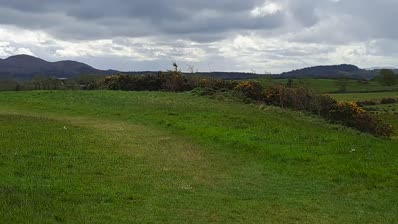
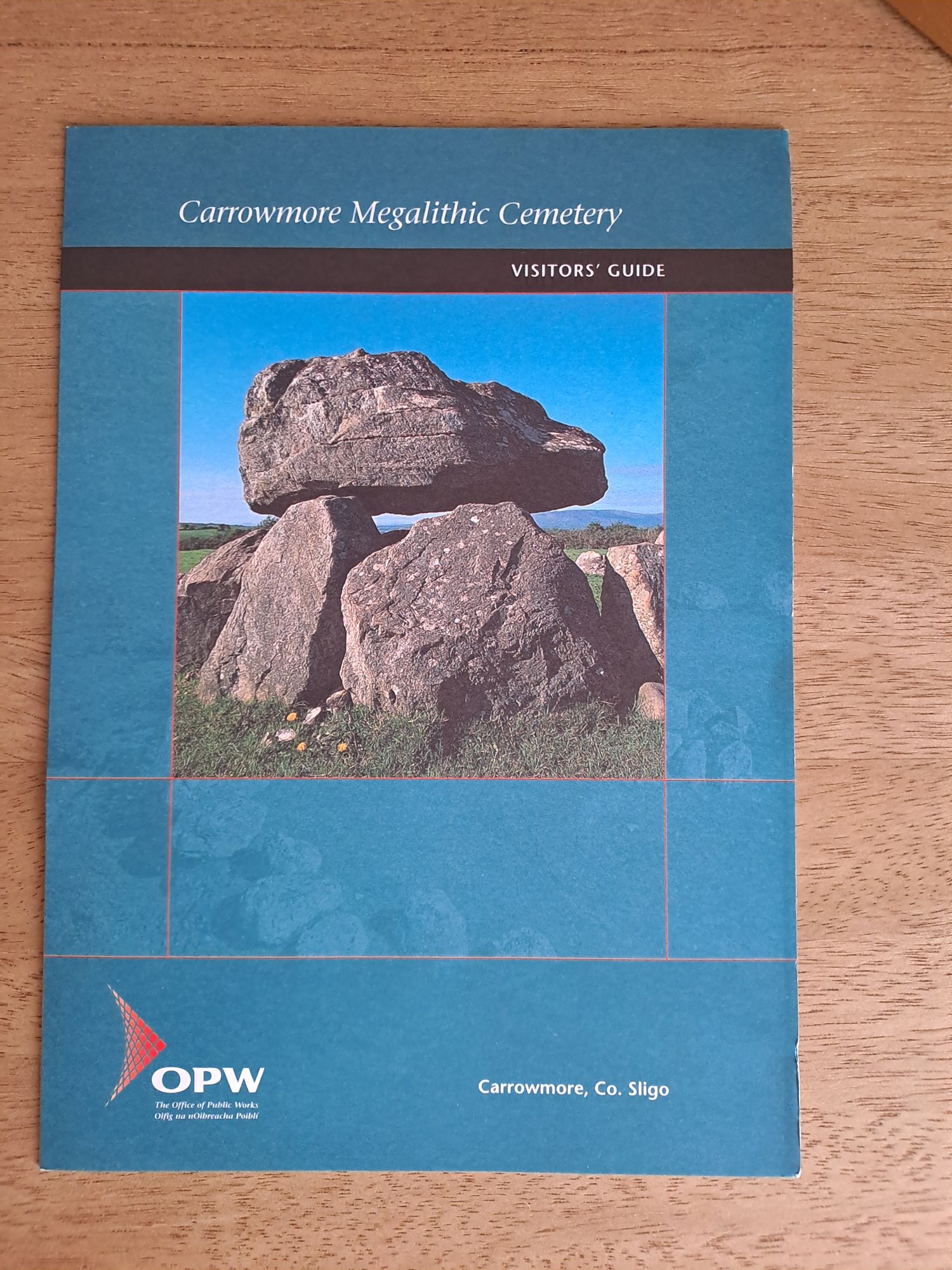
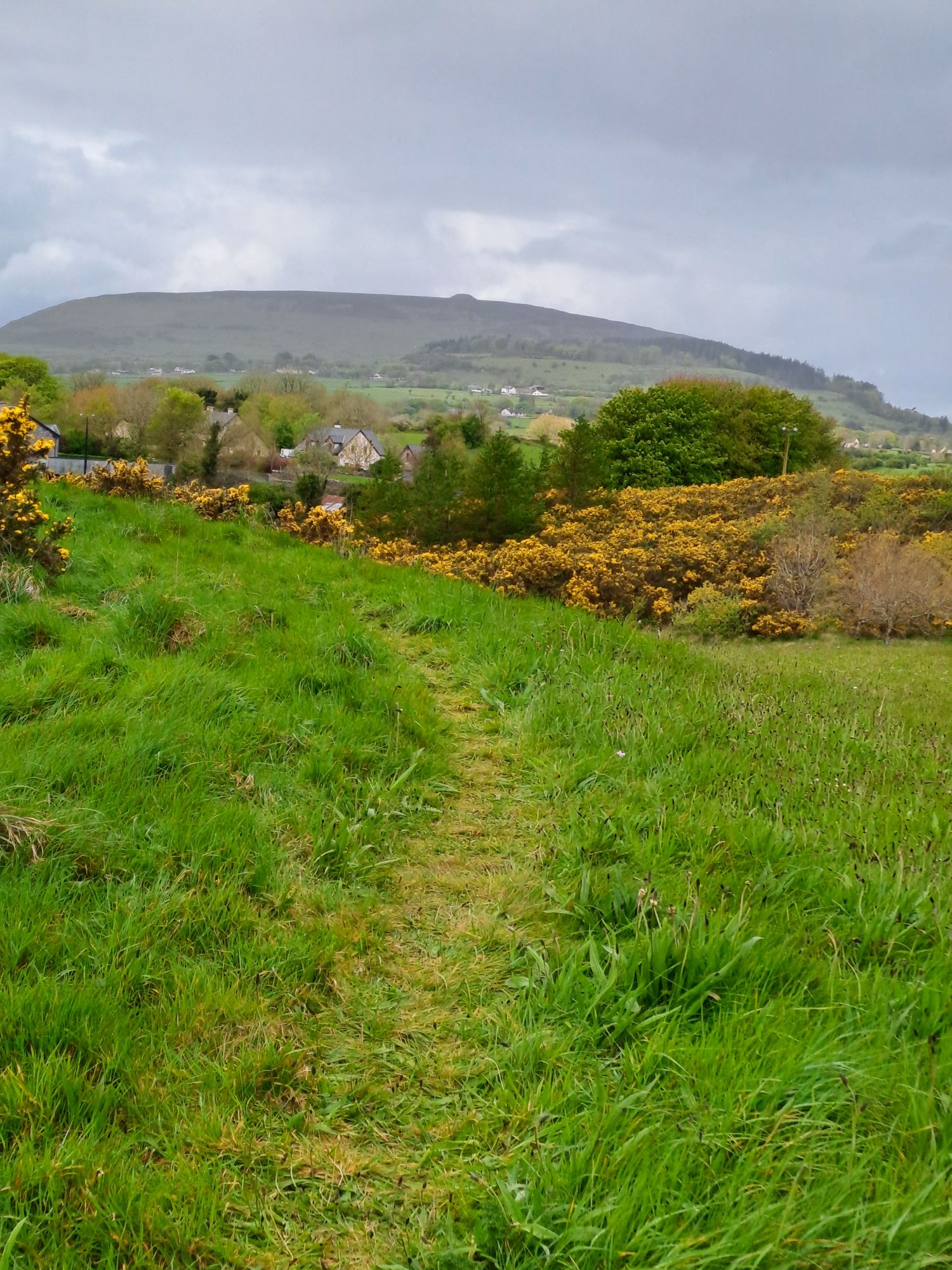
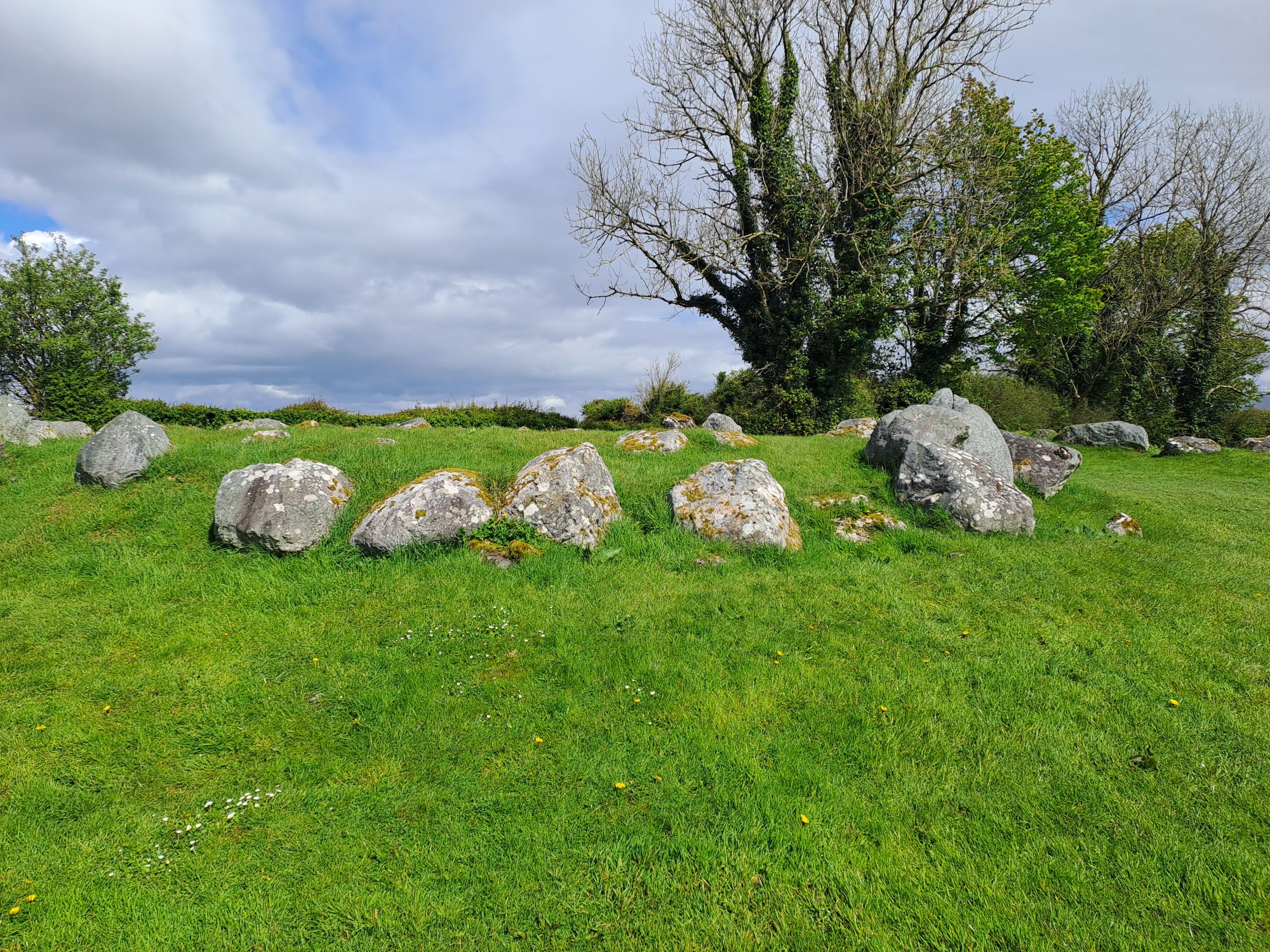
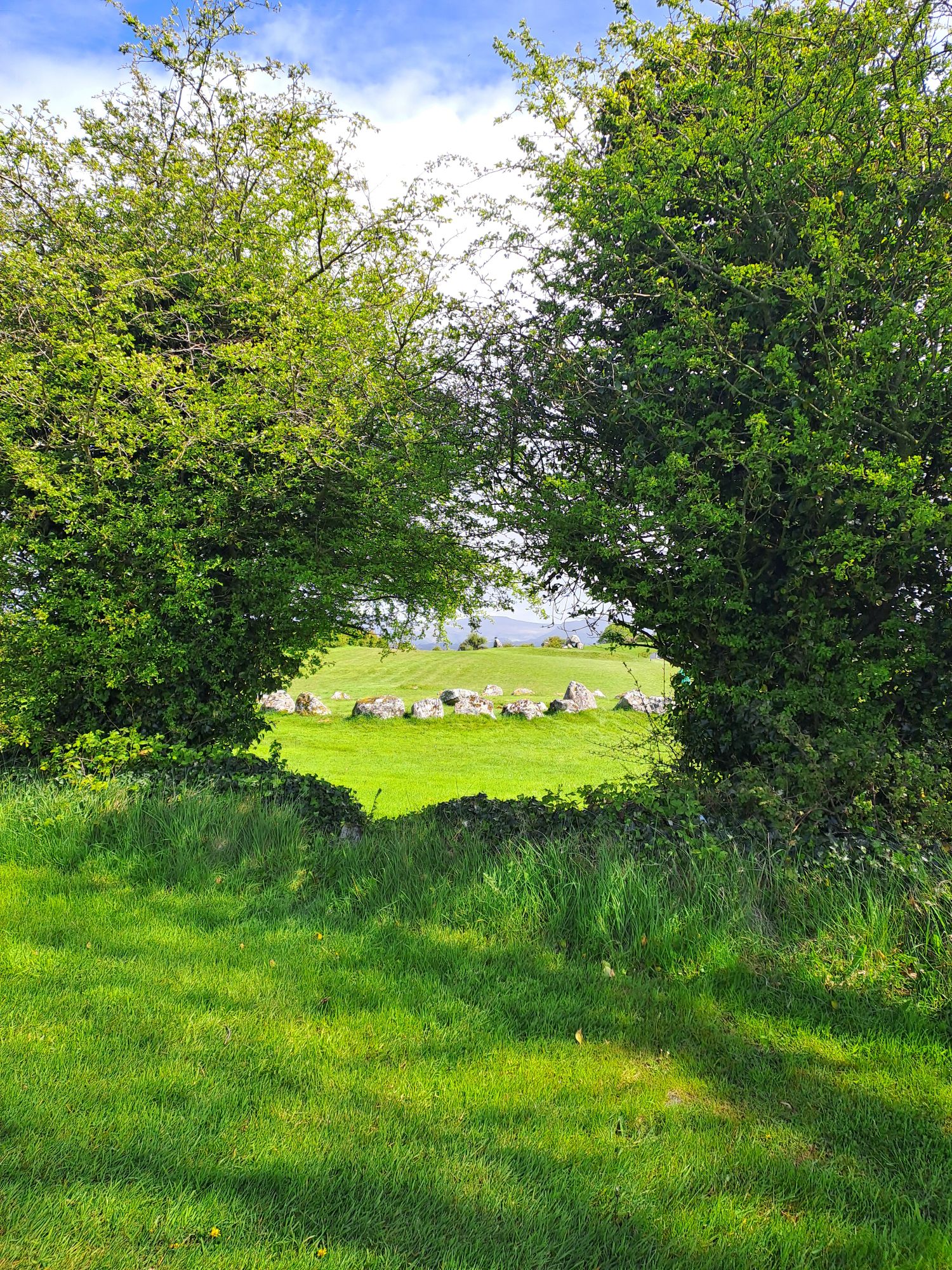
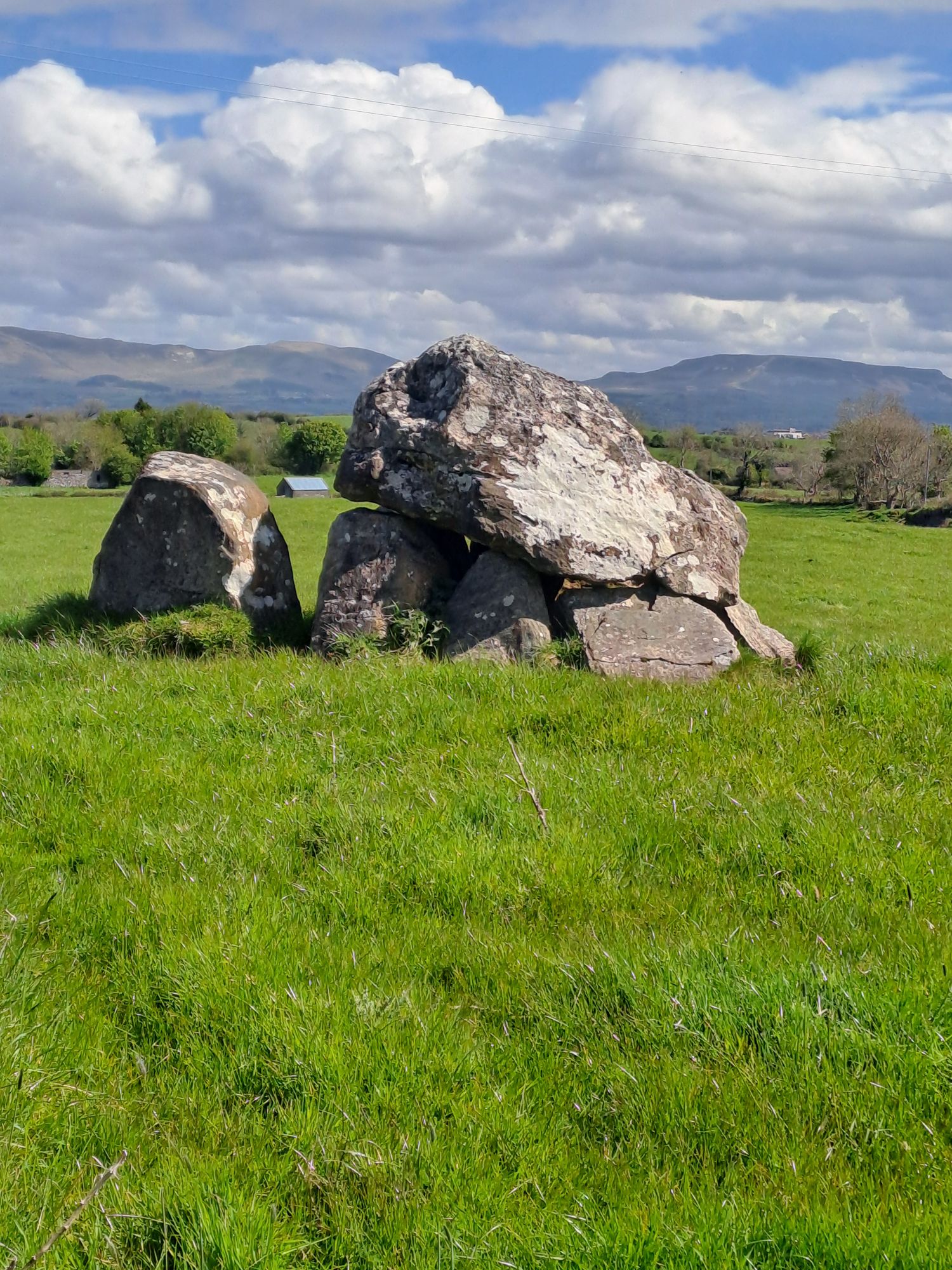
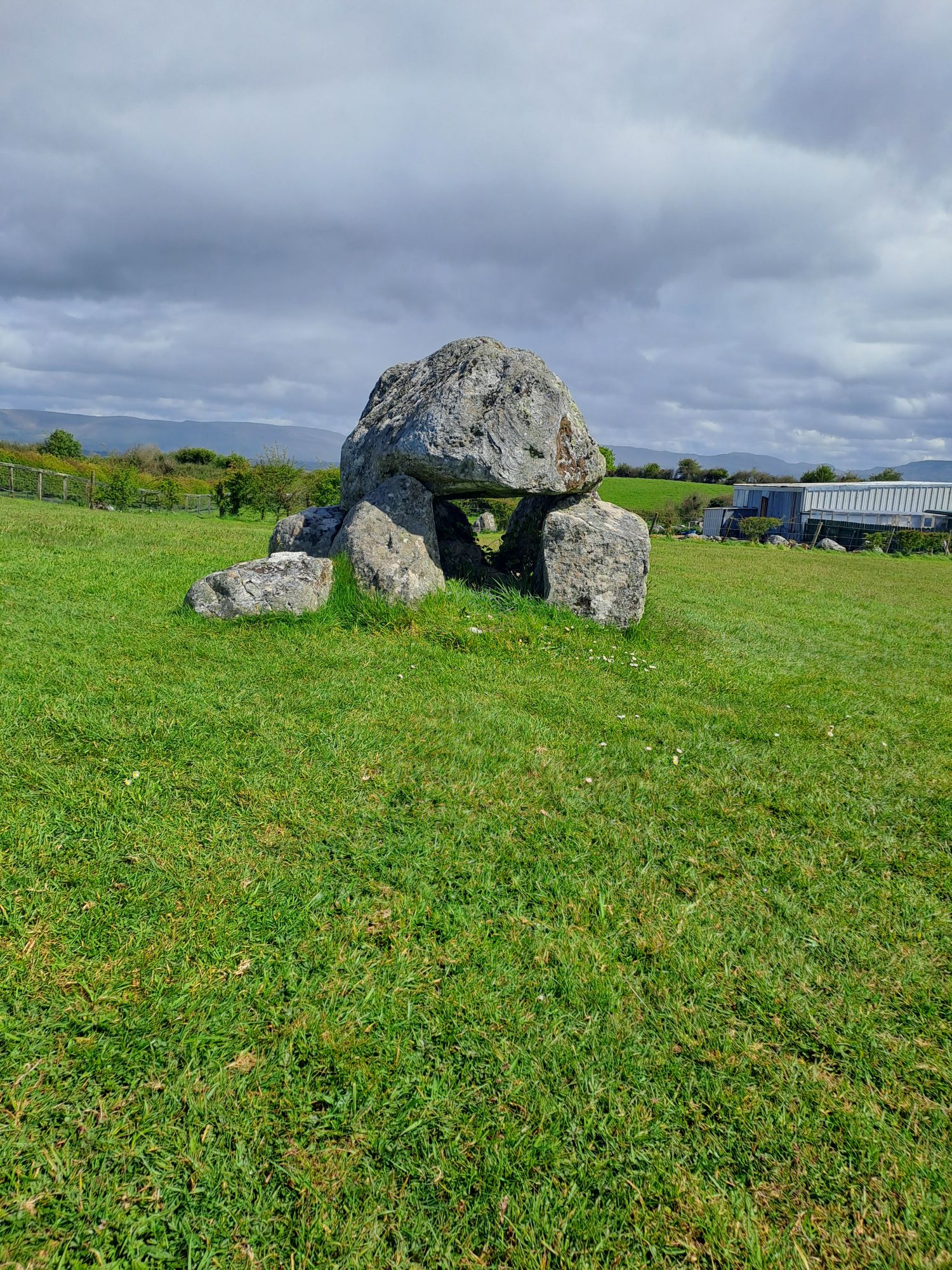
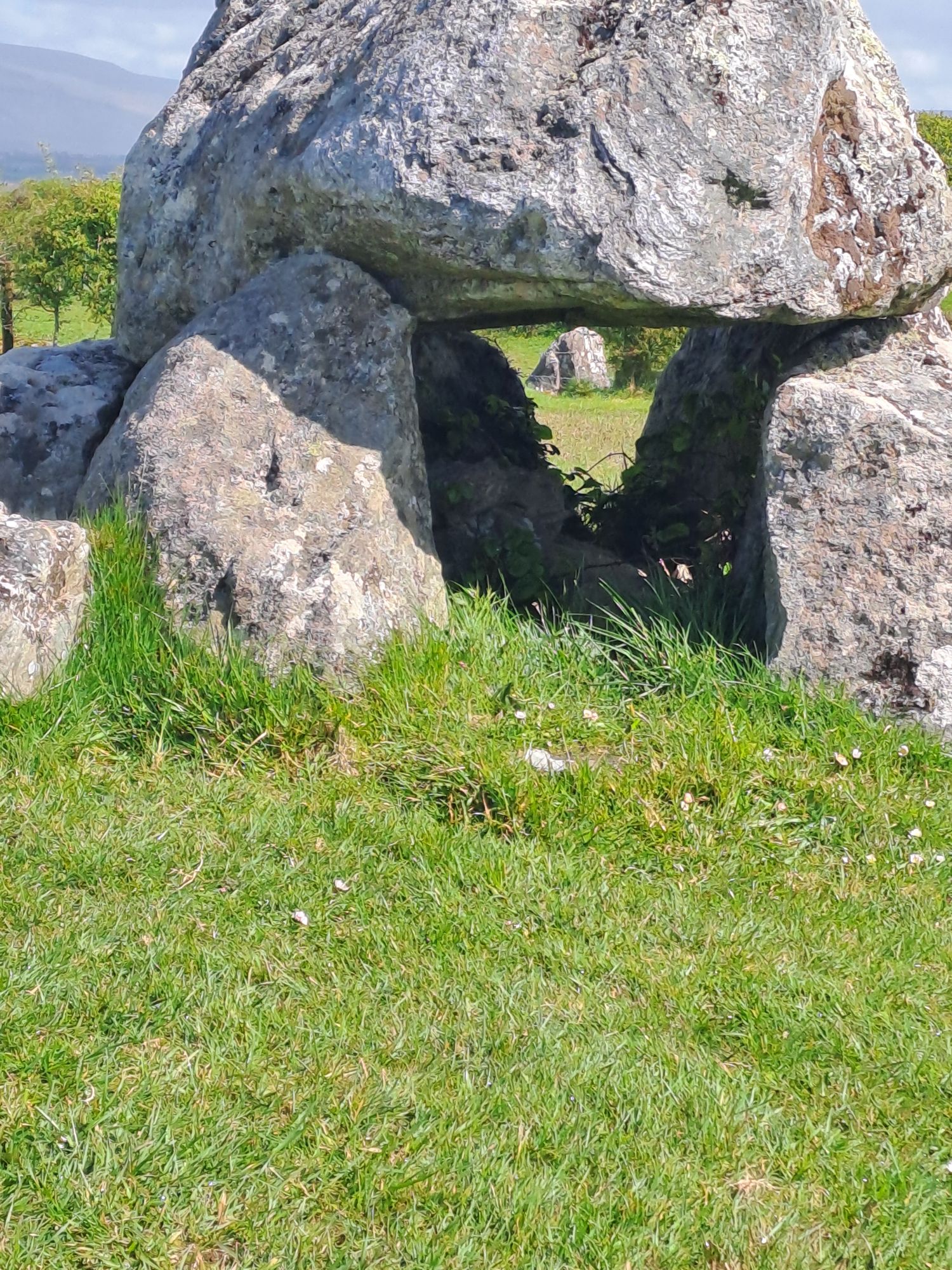
In view of the ancient origins of this holiday I thought I’d share some pictures of the amazing megalithic burial grounds at Carrowmore which is about 4km outside Sligo (where I have been on a secret mission). Carrowmore is the largest of the four megalithic cemeteries in Ireland in terms of the number of tombs, although the tombs are smaller in size and less complicated than the larger structures found at Brú na Bóinne. The structures at are also significantly older; there are signs of human habitation on the site going back at least 6000 years. The English name derives from the Irish An Cheathrú Mhór, which means ‘the great quarter’. Photographs don’t do justice to the extraordinary beauty of the landscape around the site but here is a panorama which gives some impression.
A visitor can easily understand why this was felt to be an appropriate last resting place for the Great and the Good. The surrounding topography is very interesting, as you can see from the first picture (of a model in the Visitor’s Centre); it’s on a peninsula between Sligo Harbour to the North and Ballysadare Bay to the South, and is surrounded on three sides by mountains. In particular, the site is overlooked from the west by Knocknarea, on top of which lies a large cairn, Miosgán Meadhbha, reputed to be the burial-place of the legendary Queen Maeve (Méabh in modern Irish). I was surprised to learn that this has never been excavated, so nobody really knows who or what is inside though it probably contains a passage tomb of similar form to those on the Carrowmore site. The cairn at the centre of Carrowmore, called Listoghil, the entrance to which you can see in one of the pictures, is a reconstruction.
Sadly, many other tombs were destroyed in the 19th Century, with stones being robbed to make walls when the land was enclosed, and large-scale quarrying for gravel in the area. Only some of the tombs are on publicly-owned land, but others are visible in nearby fields and indeed all around the area. There is even a stone circle in Sligo itself, on a housing estate called Abbeyquarter. Who knows what else is lurking under the unexcavated ground?
This forthcoming Bank Holiday weekend there is the Queen Maeve Festival in Sligo, but I will be in Barcelona.
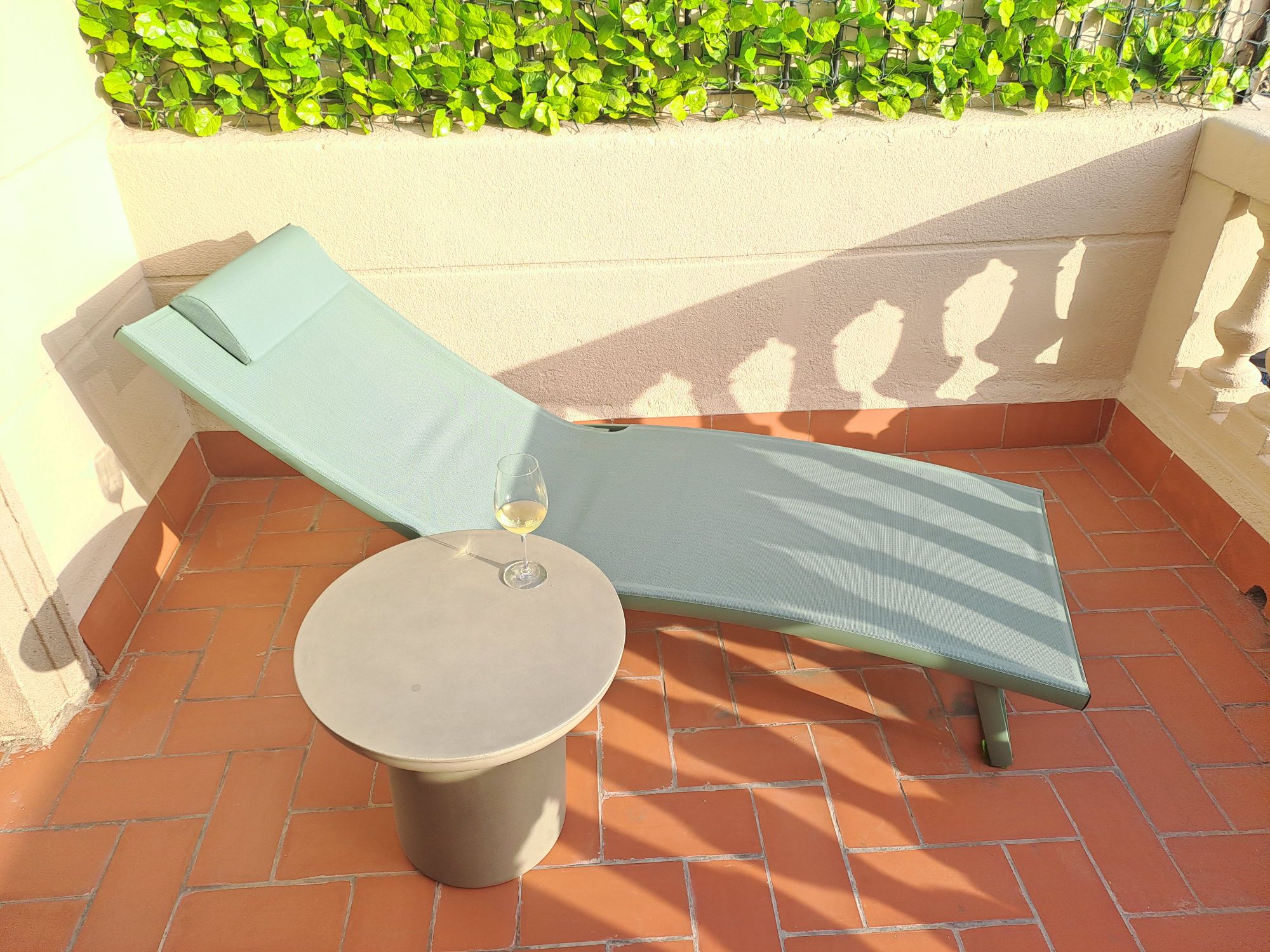
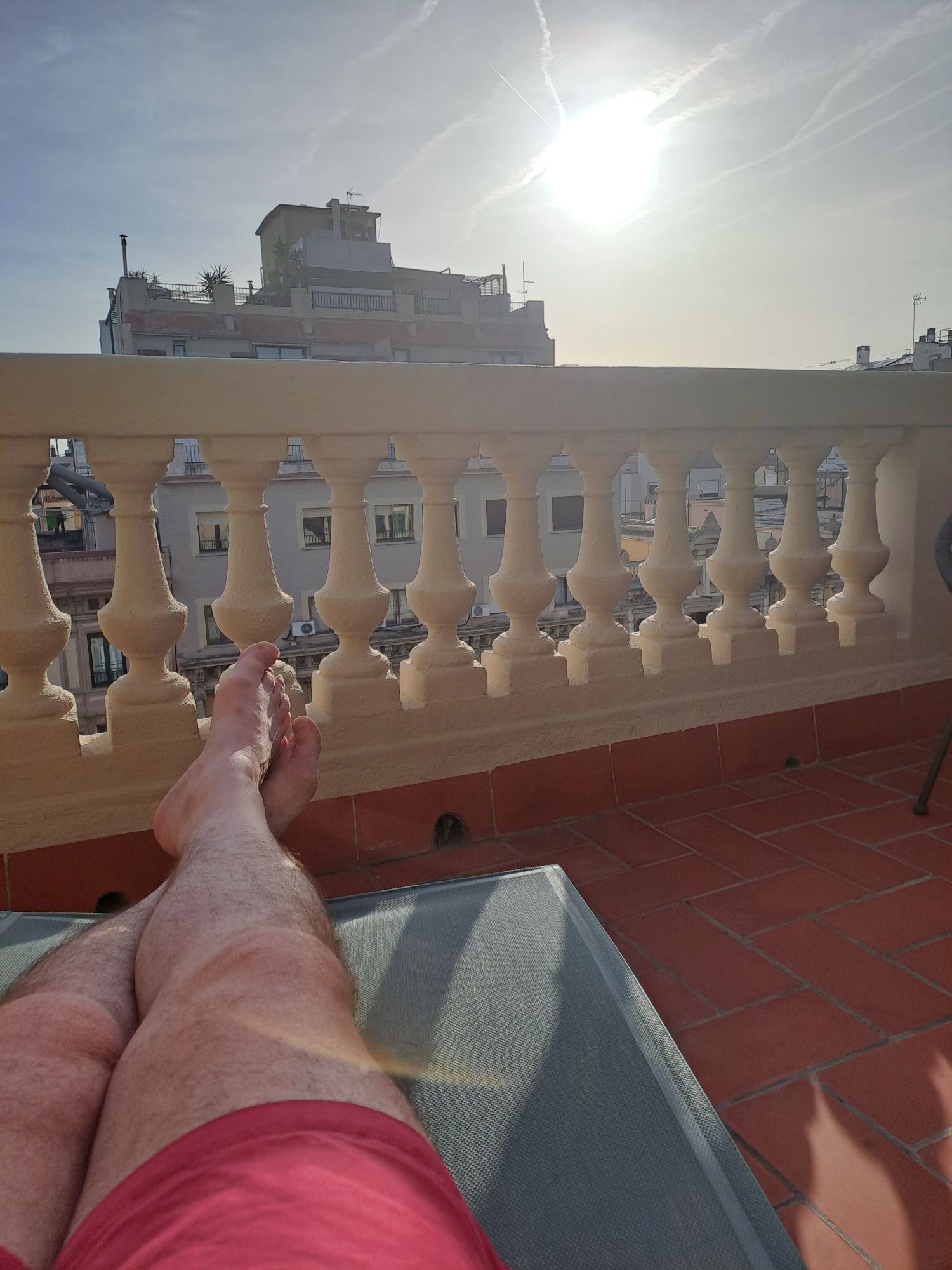
It’s Saturday morning, and this week has been very busy and stressful, mostly for reasons that I can’t blog about, but it helped yesterday to come back to my very pleasant top-floor apartment on the Rambla de Catalunya to have a glass or several of wine on the terrace and enjoy the lovely weather. It reached 22°C yesterday afternoon, and my flat gets the sun most of the day.
I chose the angle for the second pic carefully, as a lady on the side of the street had obviously done her laundry recently and hung the smalls out to dry. I thought it would be indelicate to photograph them.
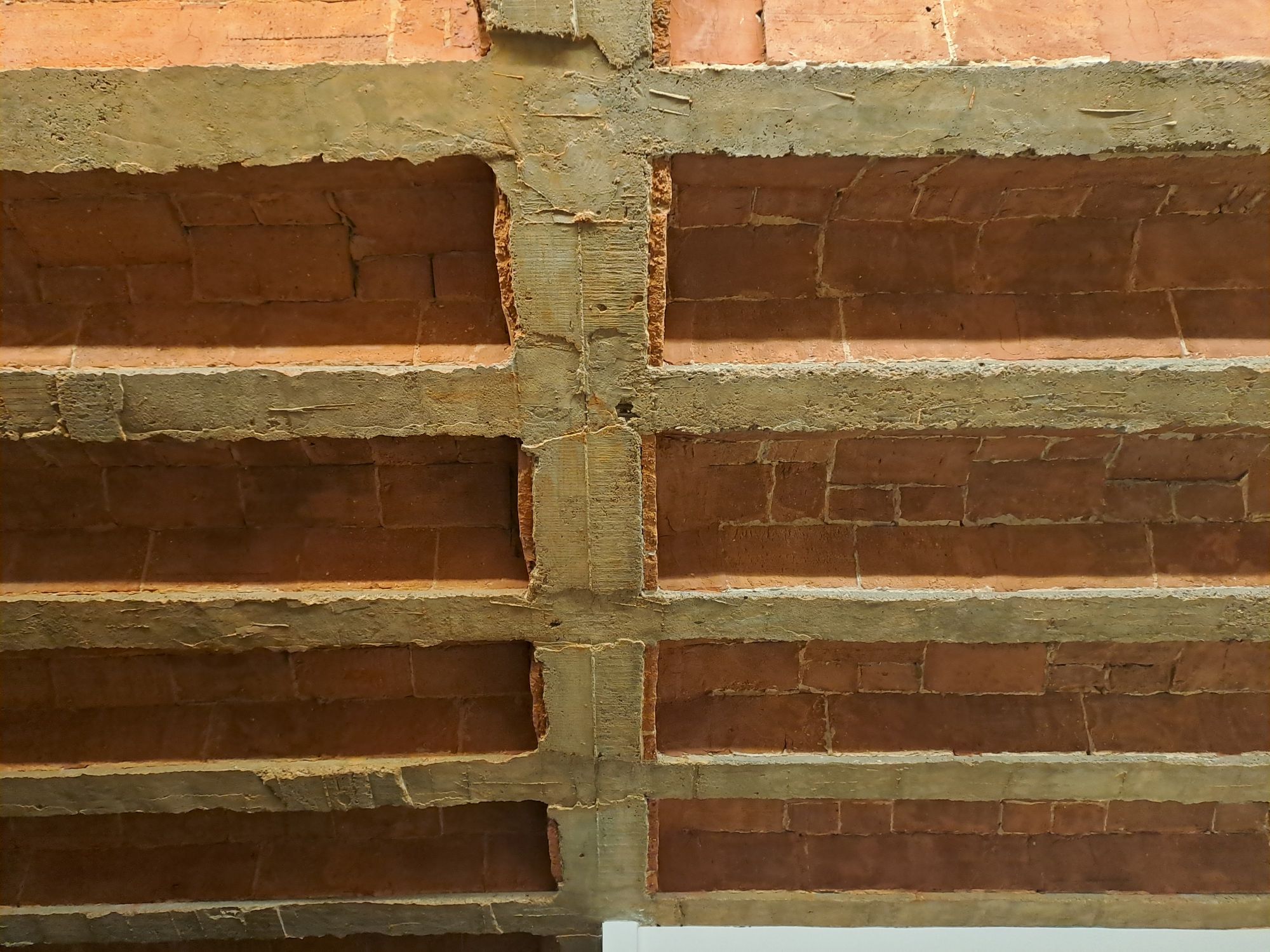
When the apartment was refurbished recently they took down the ceiling to reveal some interesting brickwork with the distinctive red clay that features in many buildings; the bricks are often covered with decorative ceramic tiles in a style called Bóveda Catalana in Spanish (Volta Catalana in Catalan), but along with the bare brickwork on the wall, this is a much plainer look.
You can see the mortar which attached the false ceiling removed during the refurbishment.
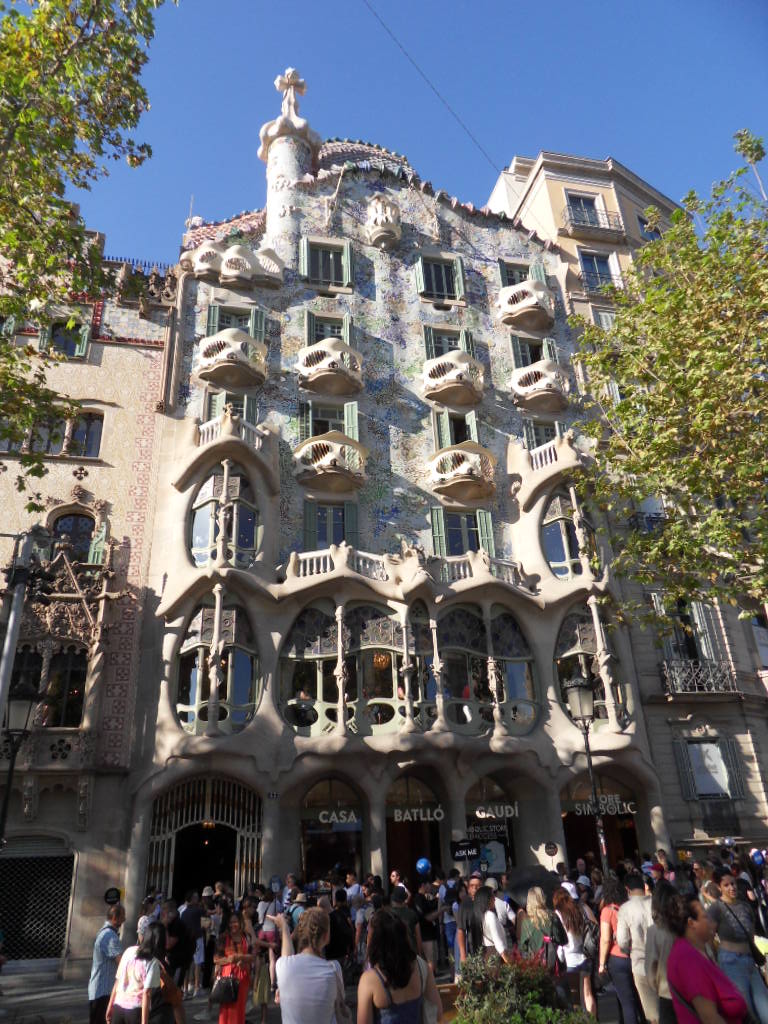
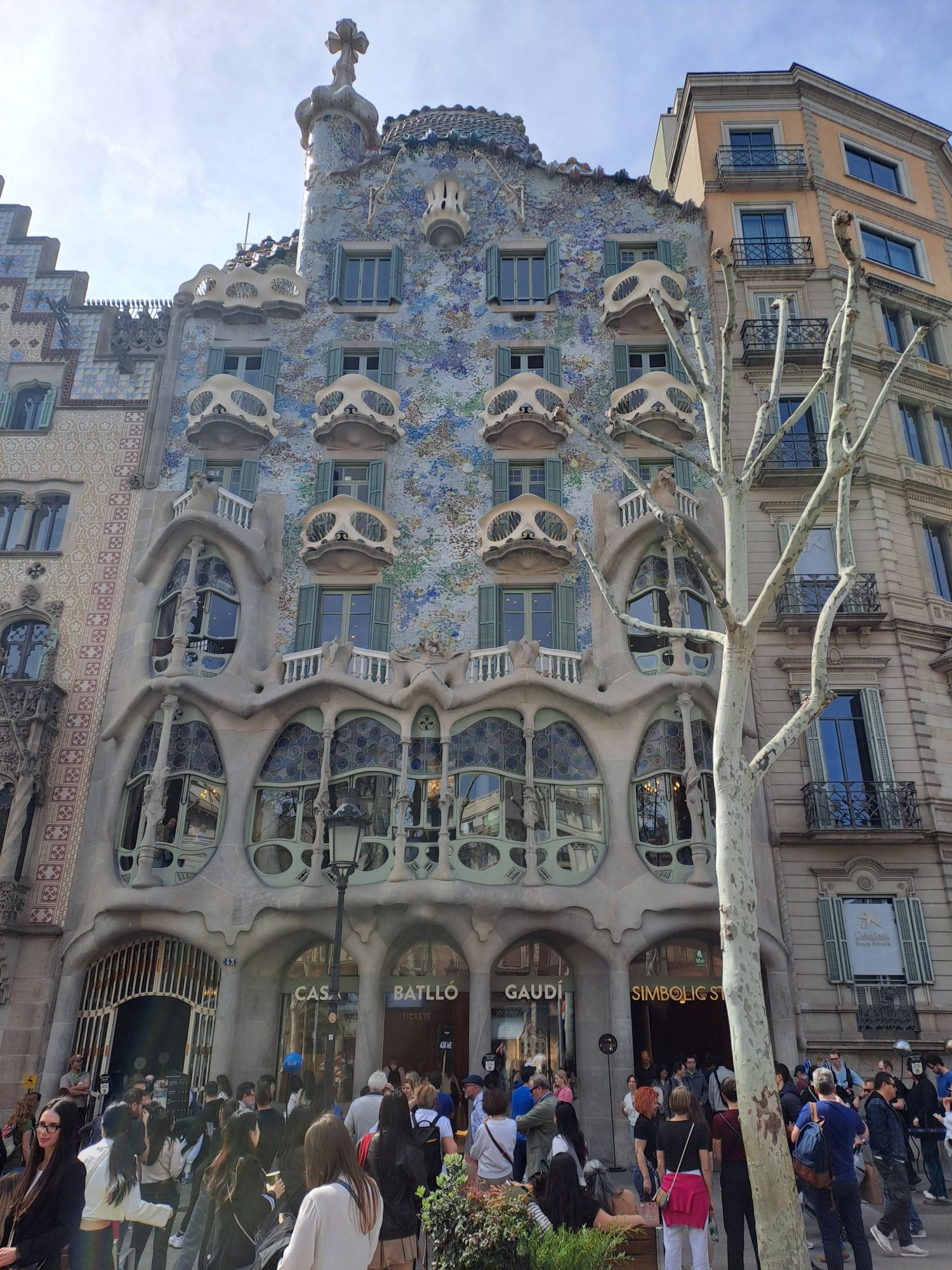
Anyway, if you want to know roughly where I am, it is just one block away from the Casa Batlló. I took the picture on the left last September but the crowds outside queuing to get in are apparently a perennial feature as you can see from the picture on the right I took today.
Casa Batlló from outside, September 30th 2023Today, March 23rd 2024
Anyway, I’m determined to relax today so will now go for a stroll, and do some shopping in preparation for cooking dinner tonight.
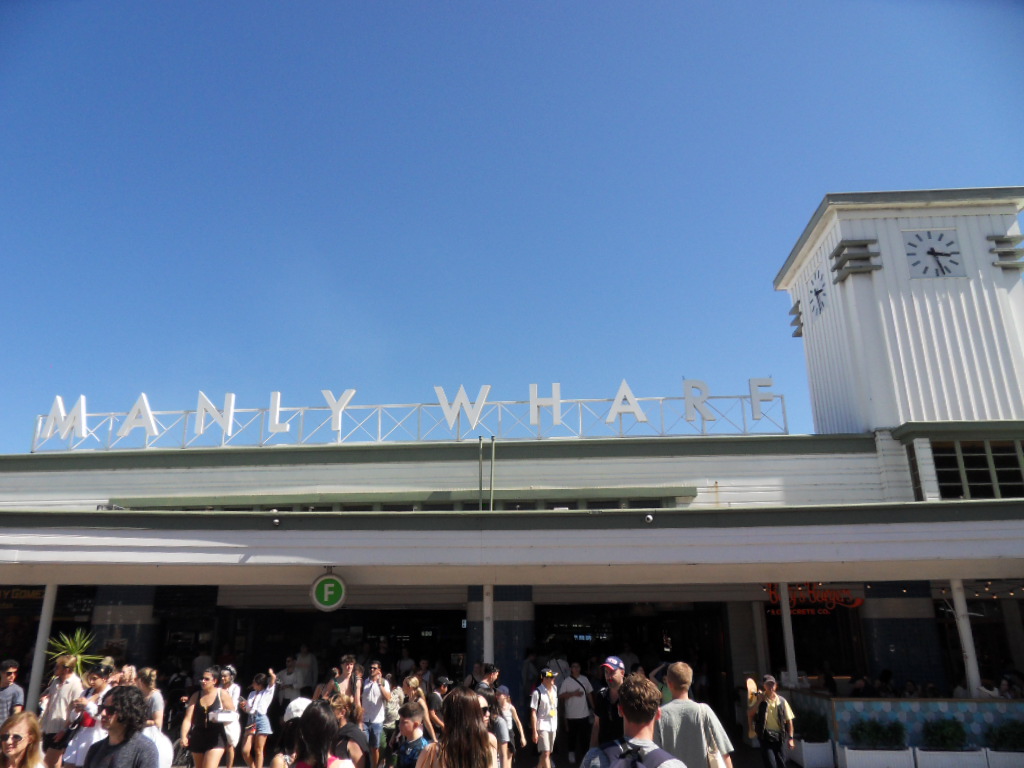
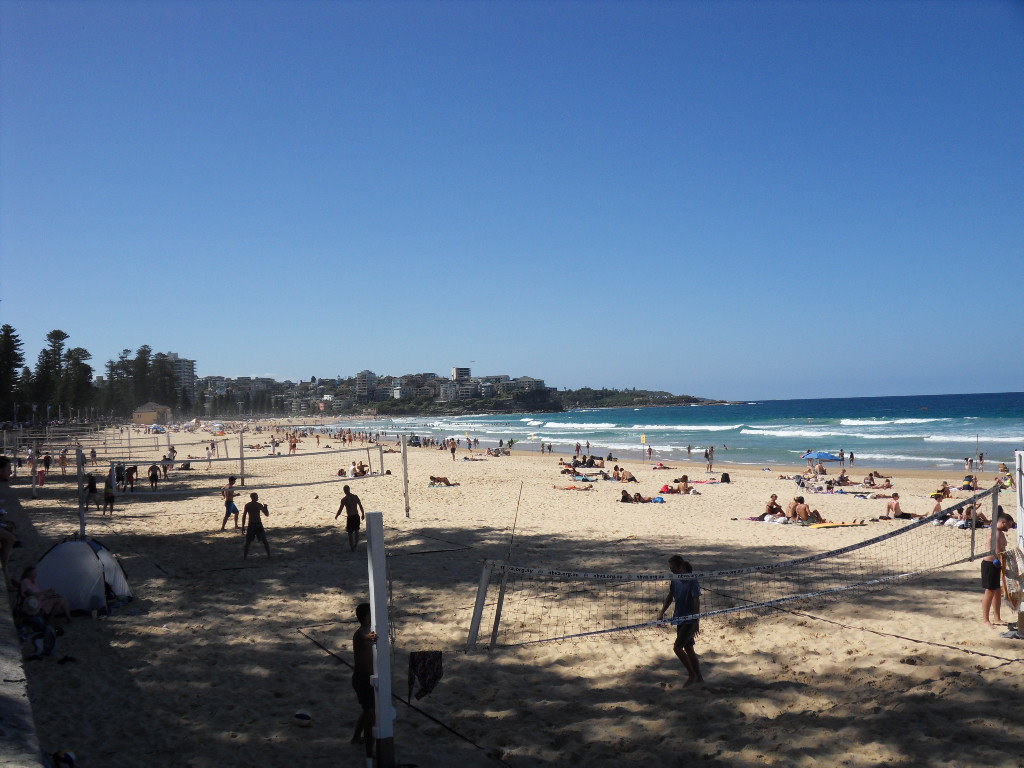
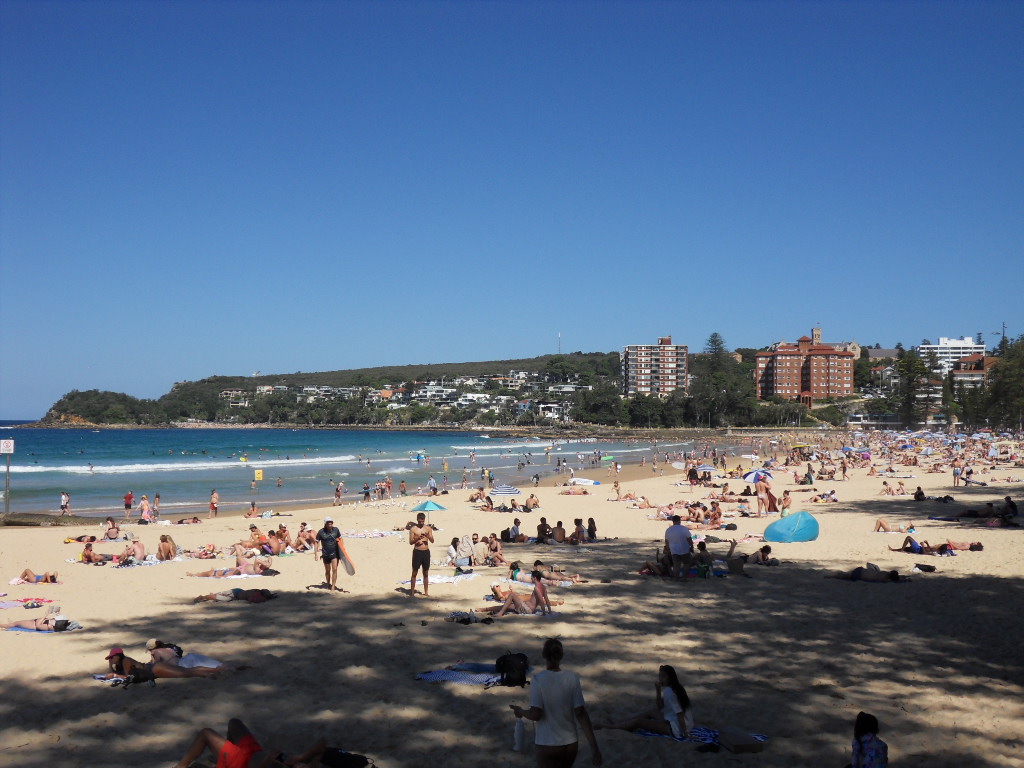
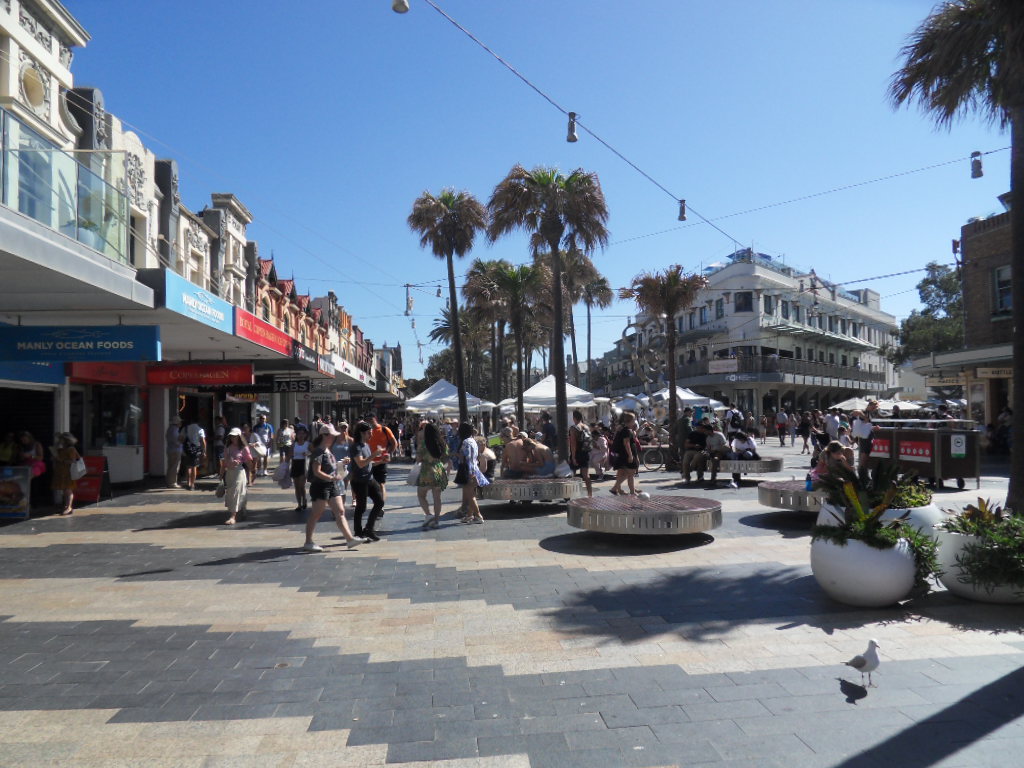
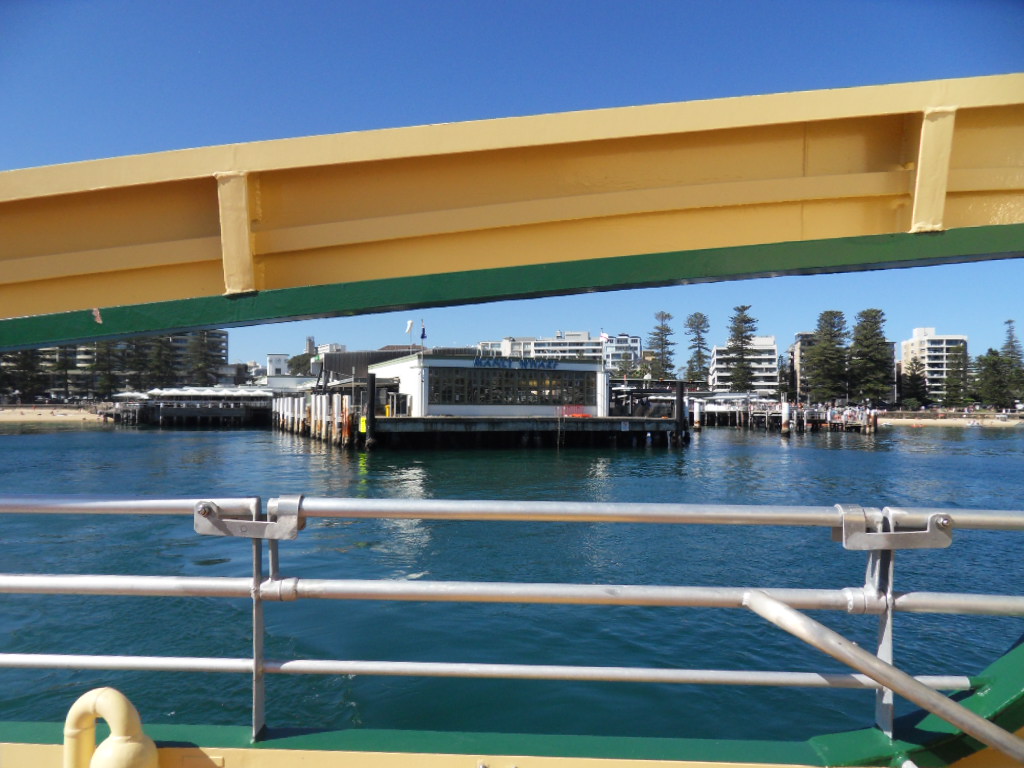
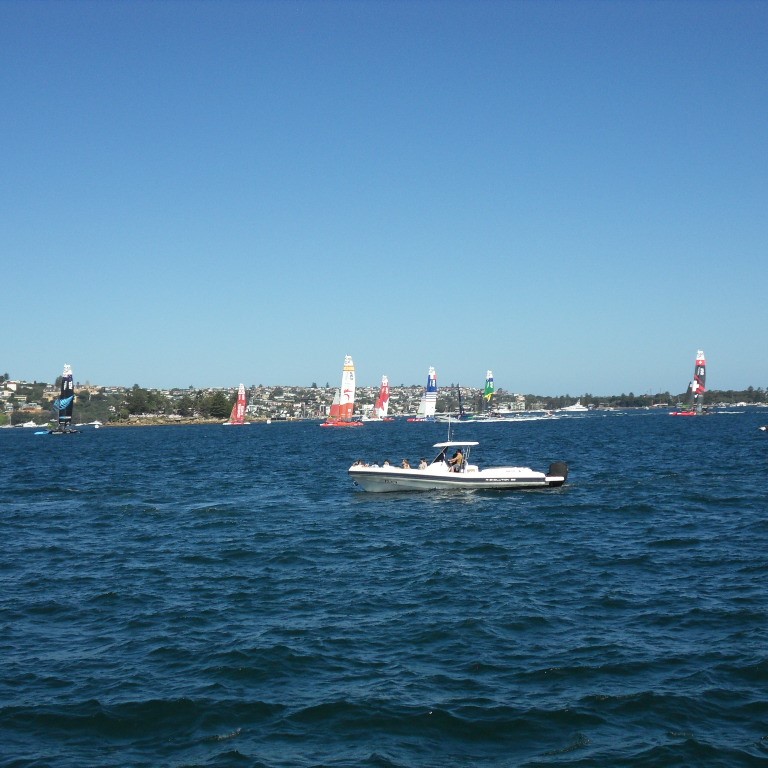
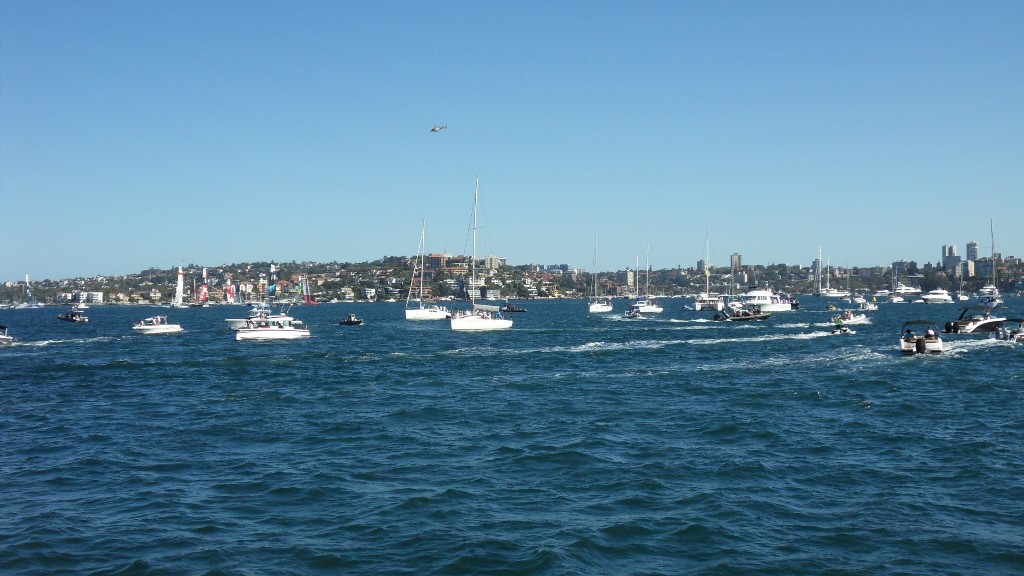
I realized this morning, with a shock, that I only have one more week in Sydney so I decided to cross off another of my things to do by taking the ferry (F1) from Circular Quay to Manly, so I could have a view of the Pacific Ocean. The most fun was on the way back, when a yacht race was under way in Sydney Harbour. Lots of small boats had come out to get a good view, many of them right in the ferry path. An officer of the Harbour Police on a jet ski was buzzing around politely inviting the offenders to get out of the way. At one point a quite large boat came right across our bow and the captain of the ferry had to sound the alarm. No harm was done, but that clown could have caused a serious accident.
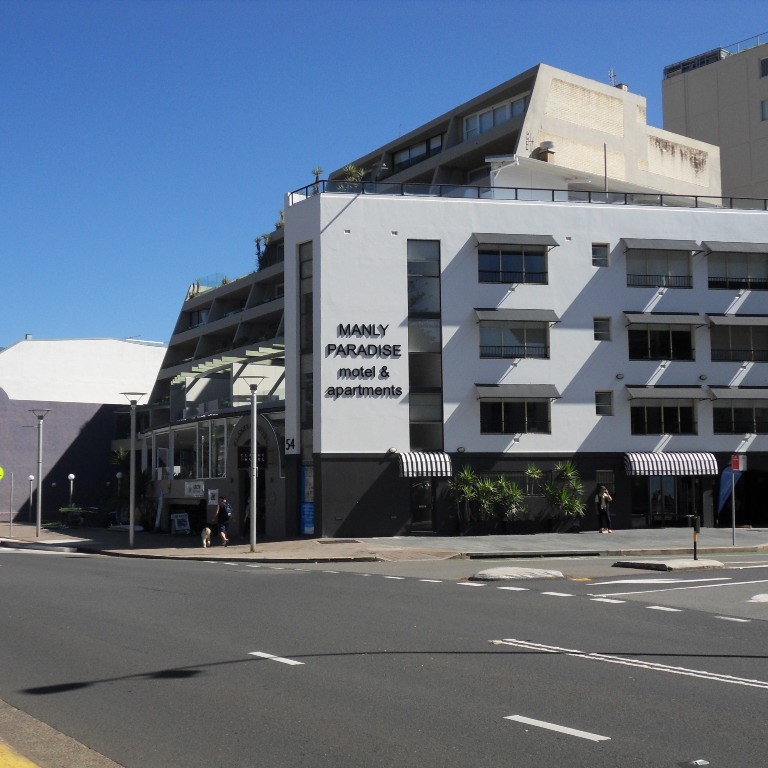
Anyway, there are lots of Manly things in Manly: a Manly Wharf, Manly Beach, a Manly Bank, Manly Pharmacy and, as you can see in one picture, Manly Paradise; there’s even, as pointed out to me by Richard Easther, Manly Astrophysics. I only stayed long enough to have a Manly beer and some Manly Fish & Chips before heading back to Circular Quay.
Here are some snaps.
Anyway, here are a few little videos from my instagram page:
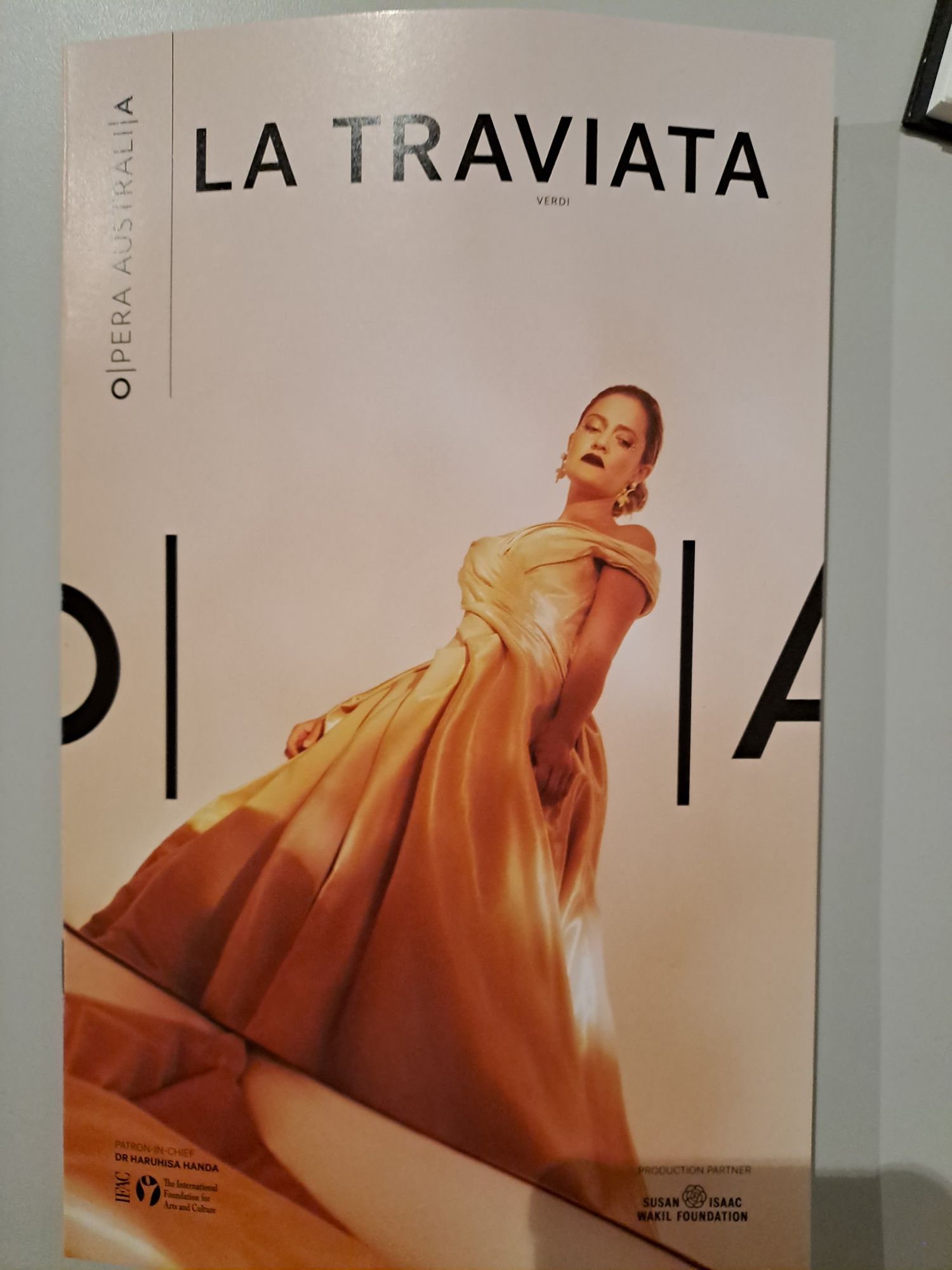
Last night I fulfilled a longstanding ambition of mine, to see an opera at the Sydney Opera House. It wasn’t that easy to get tickets, but last night I managed to see Opera Australia’s production of La Traviata by Giuseppe Verdi.
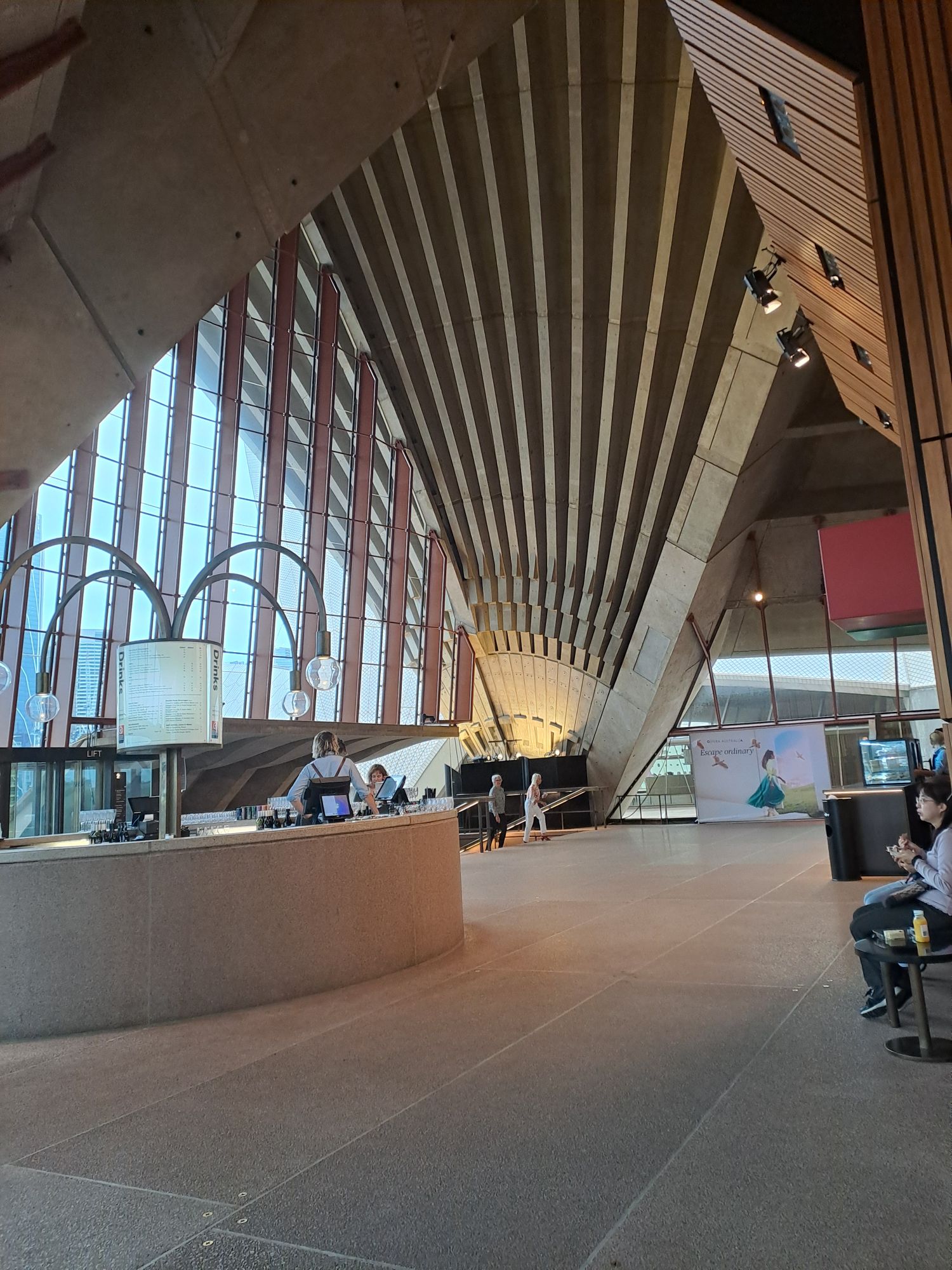
Foyer and BarJoan Sutherland Theatre
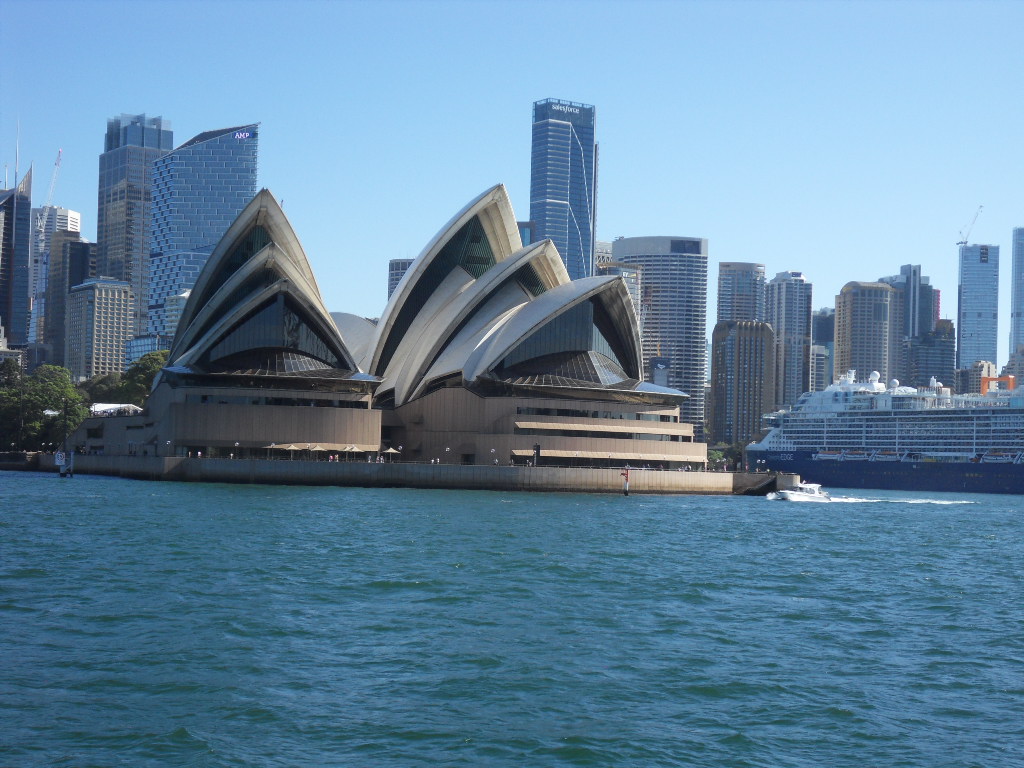
First a couple of comments about the Sydney Opera House. It is of course a splendid building but rather complicated inside, with surprising staircases and bizarre balconies. At dinner on Thursday, one of the locals here told me it is like a “1960s vision of The Future”, which is very apt. One of the nice things is that you can take your drink outside to get a breath of fresh air and a view of the harbour, which is very nice in the dark with all the lights from the boats and surrounding houses. The Joan Sutherland Theatre – where the operas are staged – is very nice. I have to say, though, that it’s a bit smaller than I’d anticipated. The seating capacity is just over 1500, while the Wales Millennium Centre – where Welsh National Opera perform – can seat 2500 people.
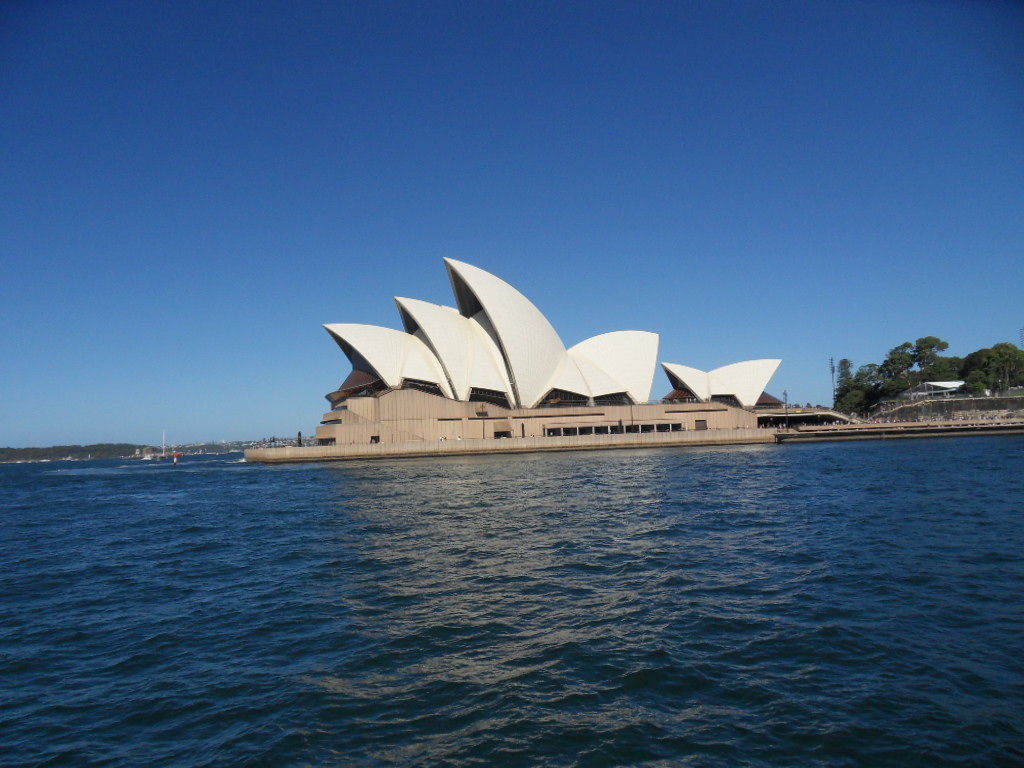
I took this picture from the Harbour Ferry
Sydney Opera House from the Harbour Ferry
The Joan Sutherland Theatre is actually in the slightly smaller edifice to the left; the other side is a Concert Hall. Anyway, the place has a nice ambience and very friendly staff. They even give out free programmes!
And so to the performance. The staging in this production is relatively simple, with the opulence of the Paris settings achieved by costumes and lighting rather than by scenery. In Act II Scene 1, when Violetta and Alfredo are in the country, the back of the set is opened out to give a view of gardens and a tree. This device returns to touching effect at the end; see below. Costumes and design are pretty much 19th Century, with some (deliberate) anachronisms in dress style for humorous effect.
The Opera is in three acts, lasting about 2 hours and 30 minutes with one interval. When I heard there was only one wine break interval I wondered how they would manage it without making the performance a bit lop-sided. In fact the break came between Scenes 1 and 2 of Act II, with the first scene performed as a continuation of Act 1 and Act III following directly from Scene 2. It worked well, with changes of costume and scenery achieved onstage by the cast in view of the audience.
This production has been running since December 2023 but the principals changed earlier this month (February). We saw Sophie Salvesani as Violetta, Tomas Dalton as Alfredo Germont, and Luke Gabbedy as Giorgio Germont (Alfredo’s Father); all of them Australian born and bred. The performance was sung in Italian.
La Traviata is one of the most enduringly popular of all operas – and is one of the most frequently performed. It’s quite curious that its first performance in Venice was a complete disaster and it took several revisions before it became established as part of the operatic repertoire. A production like the one we saw last night, however, makes it abundantly clear why it is such an evergreen classic. Act I in particular is just one memorable tune after another.
The opera is based on the novel La Dame Aux Caméliaswhich later became a play with the same name. It tells the story of Violetta, a glamorous courtesan and flamboyant darling of the Paris party scene. She meets a young chap called Alfredo at a spectacular do in her house in Act I and he tells her he’s completely in love with her. She laughs him off and he departs crestfallen. When the party’s over and he’s gone, though, she finds herself thinking about him. The trouble with Violetta is that she is already seriously ill with consumption (tuberculosis) at the start. She knows that she is doomed to die and is torn between her desire to be free and her growing love for Alfredo.
Cut to Act II, Scene I, a few months later. Violetta and Alfredo are shacked up in a love nest away from Paris. While Alfredo is away paying off some of Violetta’s bills, Alfredo’s father Giorgio turns up and tries to convince Violetta to abandon her relationship with his son because its scandalous nature threatens their family’s prospects, particular his daughter’s (Alfredo’s sisters) plans to get married. Violetta eventually agrees to do a runner. Alfredo returns and meets his father who tries to convince him to return to his family in Provence. Alfredo is distraught to hear of Violetta’s departure, refuses to go with his father, and vows to find Violetta again.
Scene 2 is back in Paris, at the house of a lady called Flora. There’s a lot of singing and dancing and general riotousness.Alfredo turns up, slightly the worse for drink and proceeds to gamble (winning a huge amout of money). Violetta turns up and Alfredo insults her by throwing his winnings at her. He’s then overcome by remorse but the Baron Douphol, a wealthy friend of Violetta, is outraged and challenges Alfredo to a duel.
Act III is set a few months later in Violetta’s bedroom where she’s clearly dying. Alfredo has run off after wounding the Baron in a duel. The doctor gives Violetta just a few hours to live. Alfredo returns. The lovers forgive each other and embrace. Violetta dies.
I thought Sophie Salvesani was a very convincing and sympathetic Violetta. She has a very nice, fluid voice and engaging stage presence. Violetta is a demanding role- there are several tricky coloratura passages to cope with – but her character is quite complicated too. Although we know she’s ill right from the start she’s not by any means a passive victim. She’s a courtesan who has clearly put it about a bit, but she’s also got a strong moral sense. She’s vulnerable, but also at times very strong.
All the cast sang very well, actually. I particularly liked the baritone of Luke Gabbedy (though even with his make up he looked too young to be Alfredo’s Daddy).
The look of the opera – staging, lighting and costumes – also worked very well. The Paris parties were riots of colour and movement with just as much debauchery as desired. The start of Act III finds the same set as Act I, bare apart from a Chaise Longue, bathed in a ghostly greenish light. A particularly moving touch was right at the end when Violetta is dying. Here last lines (and the last of the Opera) are:
È strano! Cessarono gli spasimi del dolore. In me rinasce – m’agita insolito vigor! Ah! ma io ritorno a viver! Oh gioia! (Ricade sul canapè.)
How strange! The spasms of pain have ceased: A strange vigour has brought me to life! Ah! I shall live – Oh, joy! (She falls down, senseless, upon the sofa.)
Most productions I have seen follow these directions but, in this one, before delivering these lines, Violetta stands up, while the other members of the cast present on stage – Alfredo, Giorgio, the maid Annina, and the Doctor – freeze as she sings the lines in full voice. The back of the set lifts up and shows the tree we saw in Act II and Violetta walks out into the sunshine while a double takes the place of the lifeless Violetta on the sofa. The implication is that she is already dead when she sings these last lines. It’s a powerful device, and puts quite a different perspective on the ending.
Anyway, congratulations to Opera Australia on an excellent production which I enjoyed greatly.
P.S. I’ll be going again to the Sydney Opera House next week, to see their Magic Flute.
Having a lazy Saturday morning before going out to do some shopping I thought I’d do a silly post about a few random things that struck me about Barcelona. As I have mentioned before, I am resident in area of the city known as Eixample. Most of this zone was built in the 19th and early 20th centuries and its layout was very carefully planned, as you can see from this aerial picture:
I initially thought that the name Eixample related to the exemplary nature of the area, but in fact it means something like “extension”; the “ample” has a similar sense to the English “ample”.
To orient yourself, the Sagrada Familia is towards the bottom left. In the middle of the top you can see Plaza de Cataluña. Near that there is a junction of two wide tree-lined roads; the one running from SW to NE (relative to the picture) is the Gran Via de les Corts Catalanes (which is actually 8 miles long altogether); the one perpendicular to the Gran Via is Passeig de Gràcia. My apartment is a few blocks SW of this junction. You can see to the top left how the pattern of streets changes, as you approach the older part of town, the harbour and the sea.
Anyway, the street plan of Eixample is generally rectangular but if you look carefully you will note that the footprint of the blocks is not quite rectangular; the corners are shaved off to make them octagonal. This is a very nice feature because it means that visibility around the corners is very good and there is a lot of pavement space near the entrances. Many of these buildings now have a bar or restaurant on the ground floor and there is plenty of room for seated areas. Above all, combined with the wide boulevard-type roads, this gives this densely-populated area a much less claustrophobic feel than other cities with rectilinear street layouts, such as New York. Note also that each block encloses a communal space which contains private gardens, play areas, etc, though some appear to have been built over especially.
The road passing diagonally through the picture is called, um, Avenida Diagonal. It plays a rather similar role to Broadway in Manhattan.
As well as A. Diagonal, Barcelona has A. Parallel. In Spanish this is called Avenida del Paralelo; in Catalan it is Avinguda del Paral·lel. The signs on the Metro are all in Catalan so the one on the Metro station on this road says Paral·lel. I was puzzled for some time by the dot between the two letters “l” but it’s quite straightforward. In Catalan (and Spanish) the diagraph “ll” (which used to be listed a separate letter of the alphabet) is pronounced like the English letter “y”, e.g. in paella and amontillado. The dot in Paral·lel is there to indicate that it’s not the letter “ll” in the middle but two letters “l” next to each other and is pronounced para-lel rather than para-yel. The Spanish word “Paralelo” avoids this problem by simply dropping an “l”.
Now it’s nearly time to get ready to go out. The temperature here has fallen noticeably over the last few weeks. It was around 15° last week with a stiff westerly breeze. That was enough to persuade some of the locals to put on their winter coats, scarves and woolly hats although to me it still felt warm when in the sun. Today is about 19° C. The cooler weather makes it far less sweaty and much more pleasant to walk about. It’s also noticeable that there are fewer tourists around, which has two advantages: (a) one’s mean free path between people is longer and (b) it’s much easier to get into places of interest. I hope to ramp up my visits to museums and art galleries between now and Christmas.
I think I’ve settled in pretty well now. I went for a longish walk this morning and didn’t once have to use Google Maps to find out where I was! It’s a bit cooler today (although still 25°C) so a bit more comfortable walking around. Temperatures are forecast to drop to about 21°C tomorrow, and there’s even a forecast for rain. I might even change out of my shorts!
I’ve been here almost three weeks now, and in my apartment for one. It does feel like I’ve been here longer, actually, but I suppose that’s because so many nice and interesting things have happened.
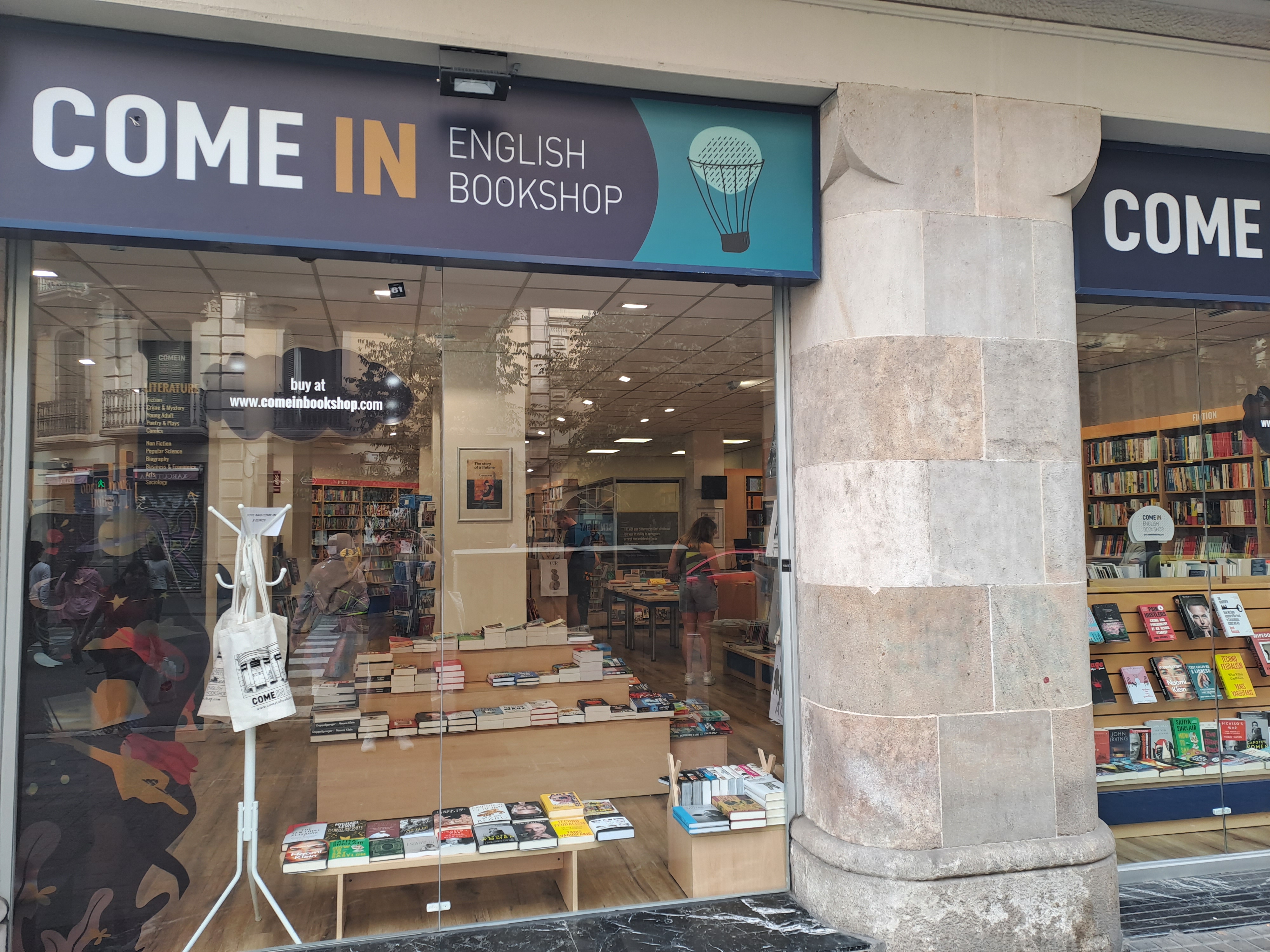
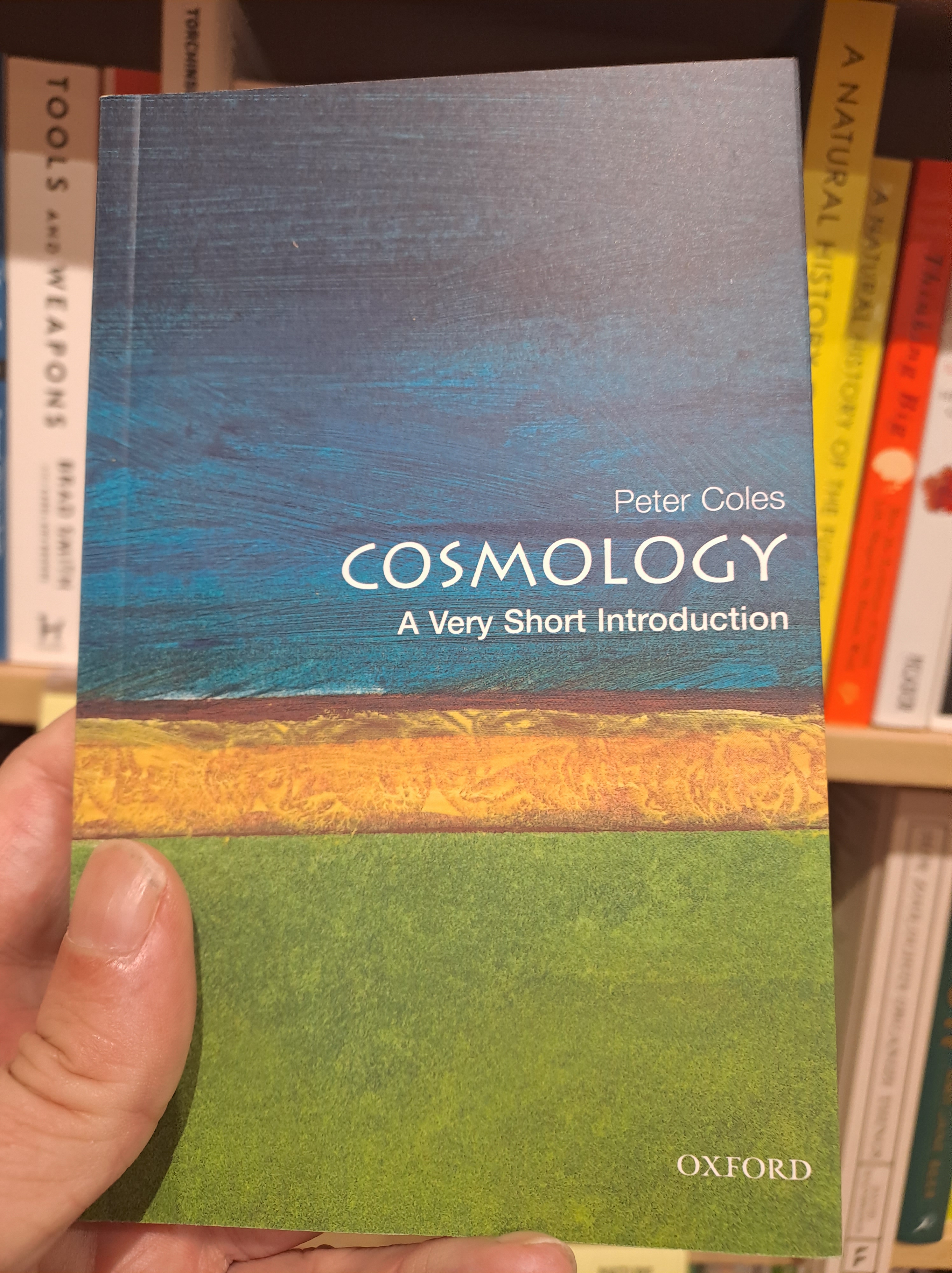
Anyway, on my way around I dropped in at Come In, a very good English-language bookshop. You can see how good it is by the quality of the books it sells…
It has a very wide range: new books and classics, fiction and non-fiction, and books for children. I suspect quite a few of its sales are to students of English, as well as tourists and migrants such as myself. It’s definitely worth a visit if you’re here. The staff are very friendly and helpful too. I bought a couple of items there, of which more anon.
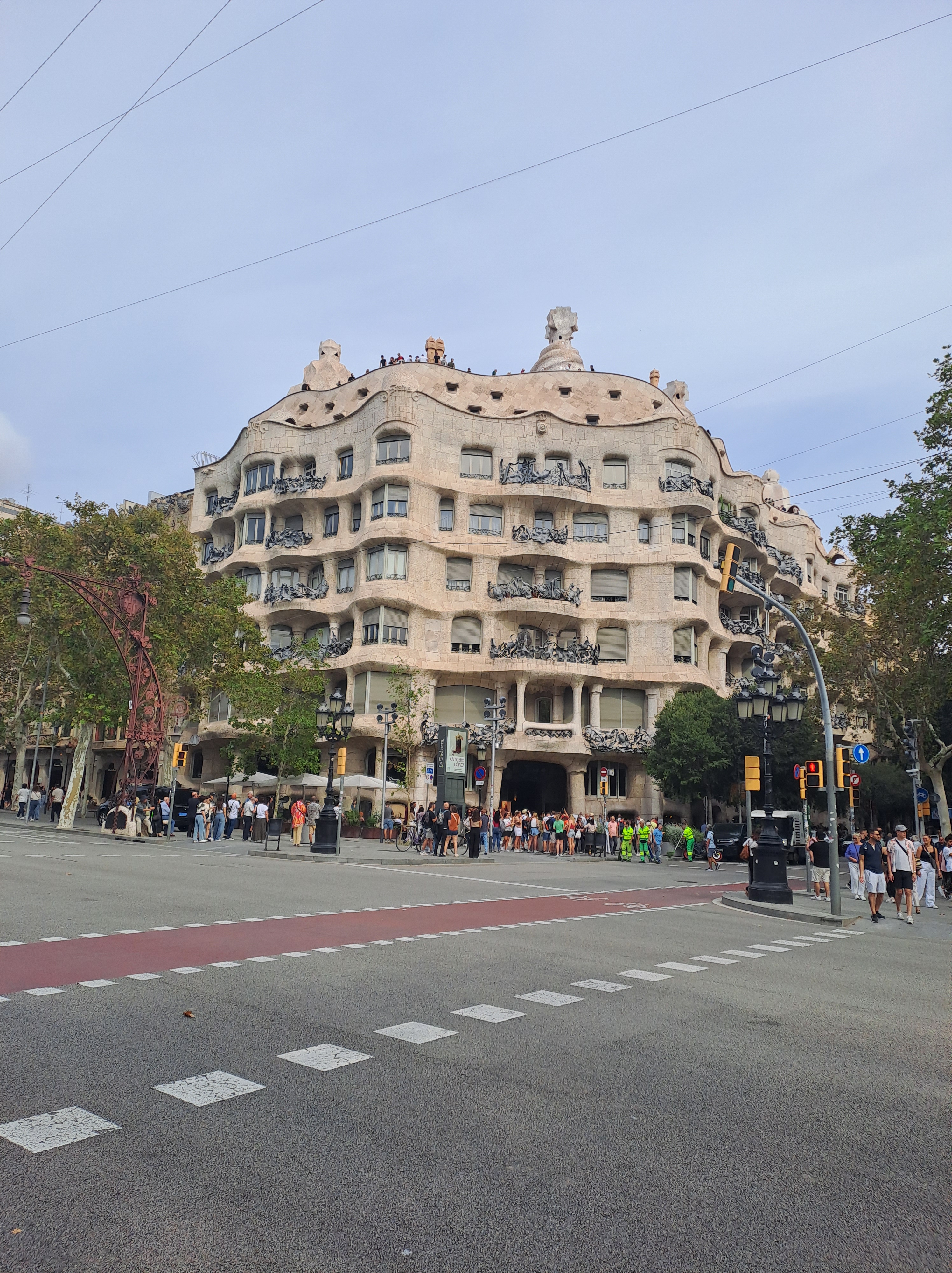
Oh, and I also passed by La Casa Milà, which is quite close to my place of residence…
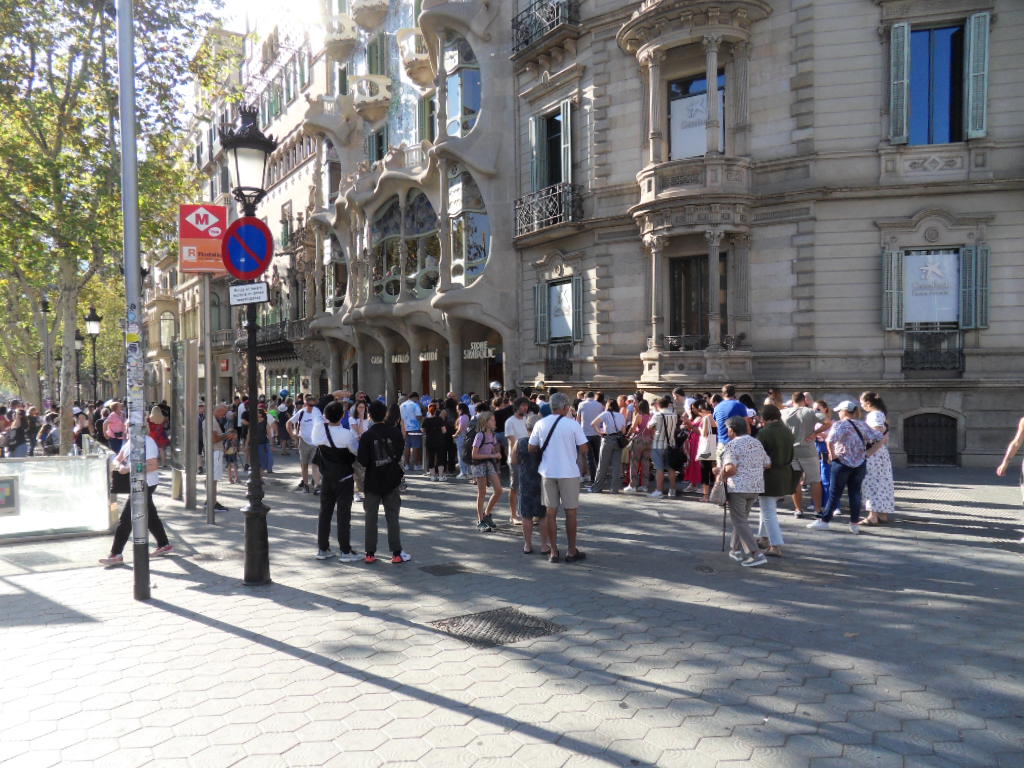
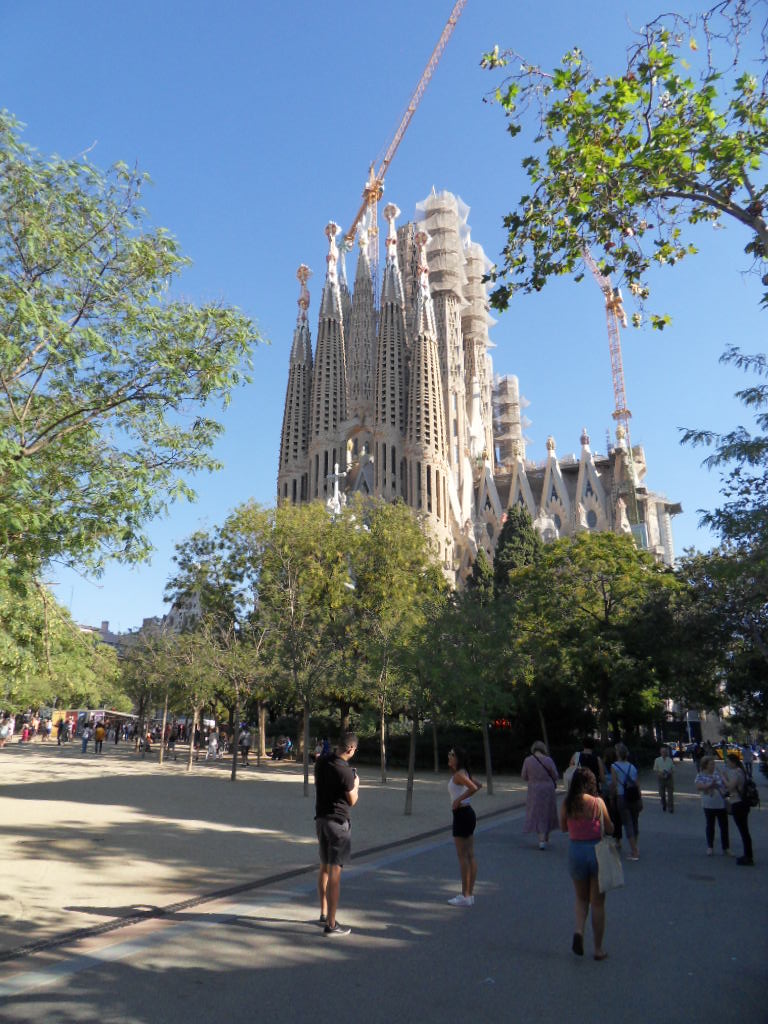
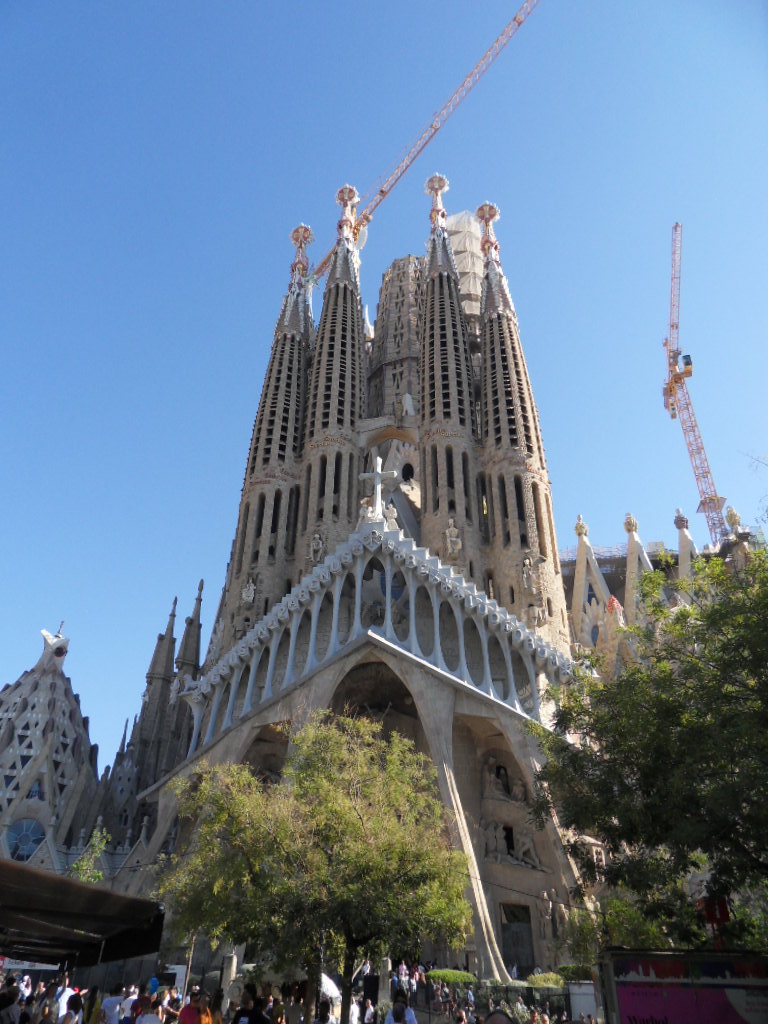
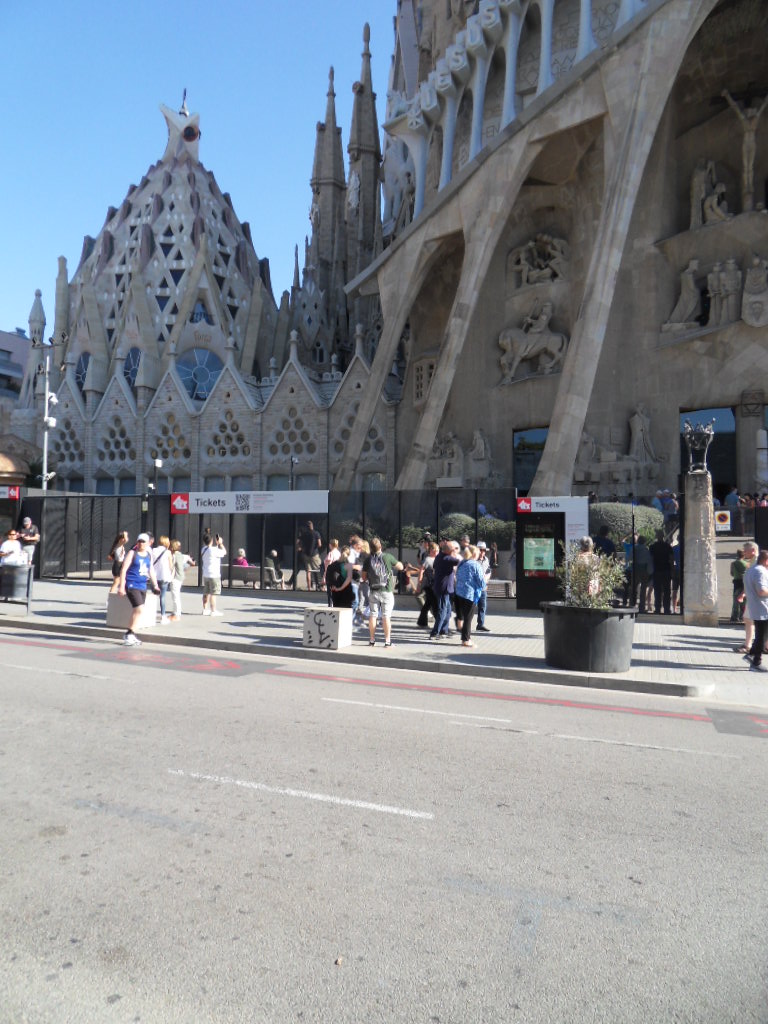
It being a Saturday, and the weather forecast suggesting a temperature of around 30° C, I made an early start this morning to beat the tourist crowds and the heat as I walked around. I managed the latter but not the former. My aim was to visit the famous landmarks associated with architect Antoni Gaudí, the Casa Botlla and the still unfinished Sagrada Familia. Here are some pics I took on the way there and back.
Casa Batlló Crowded HouseApproaching La Sagrada Familia Closer view, with crowdsEntranceHere’s another church they did earlier…
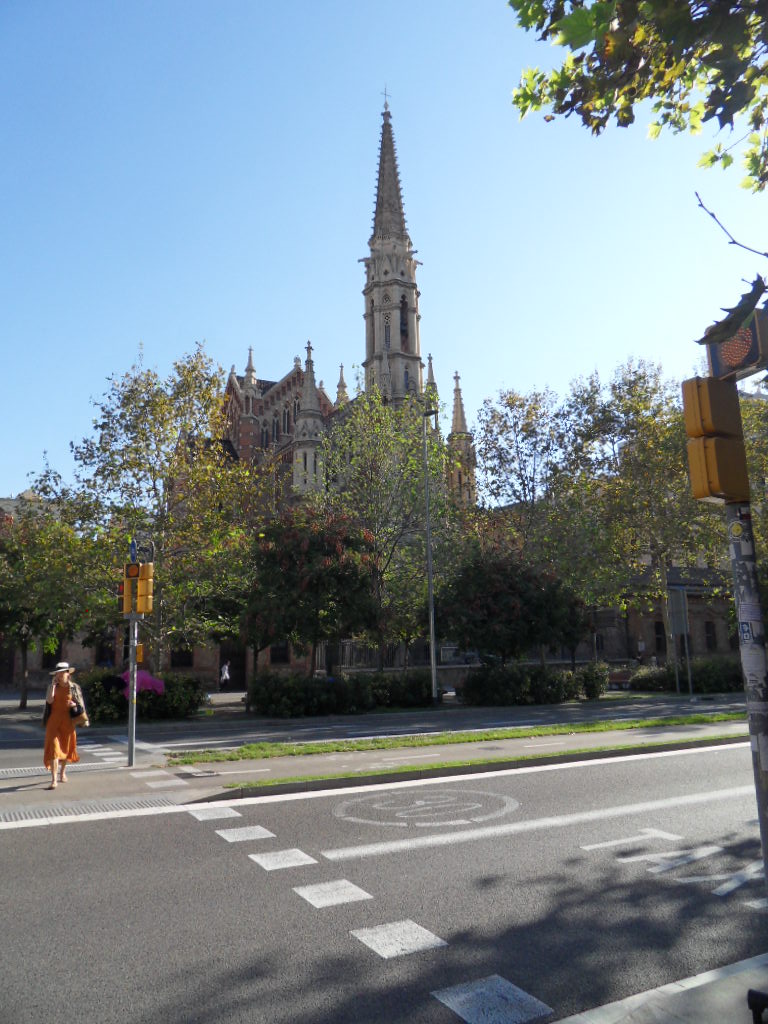
I didn’t actually go in either establishment because of the cost and the crowds. I’m told things will get a bit quieter later in the year so I might try again in November or so. Incidentally, if you’re interested in visiting the Sagrada Familia then be careful as it is quite difficult to get to: there are a lot of roadworks nearby associated with a new tram track so it’s best to walk there than try to get near it by car. It’s also quite expensive to get in – €34, no less. The other church (in the 6th pic) I passed on the way is, I think, this one.
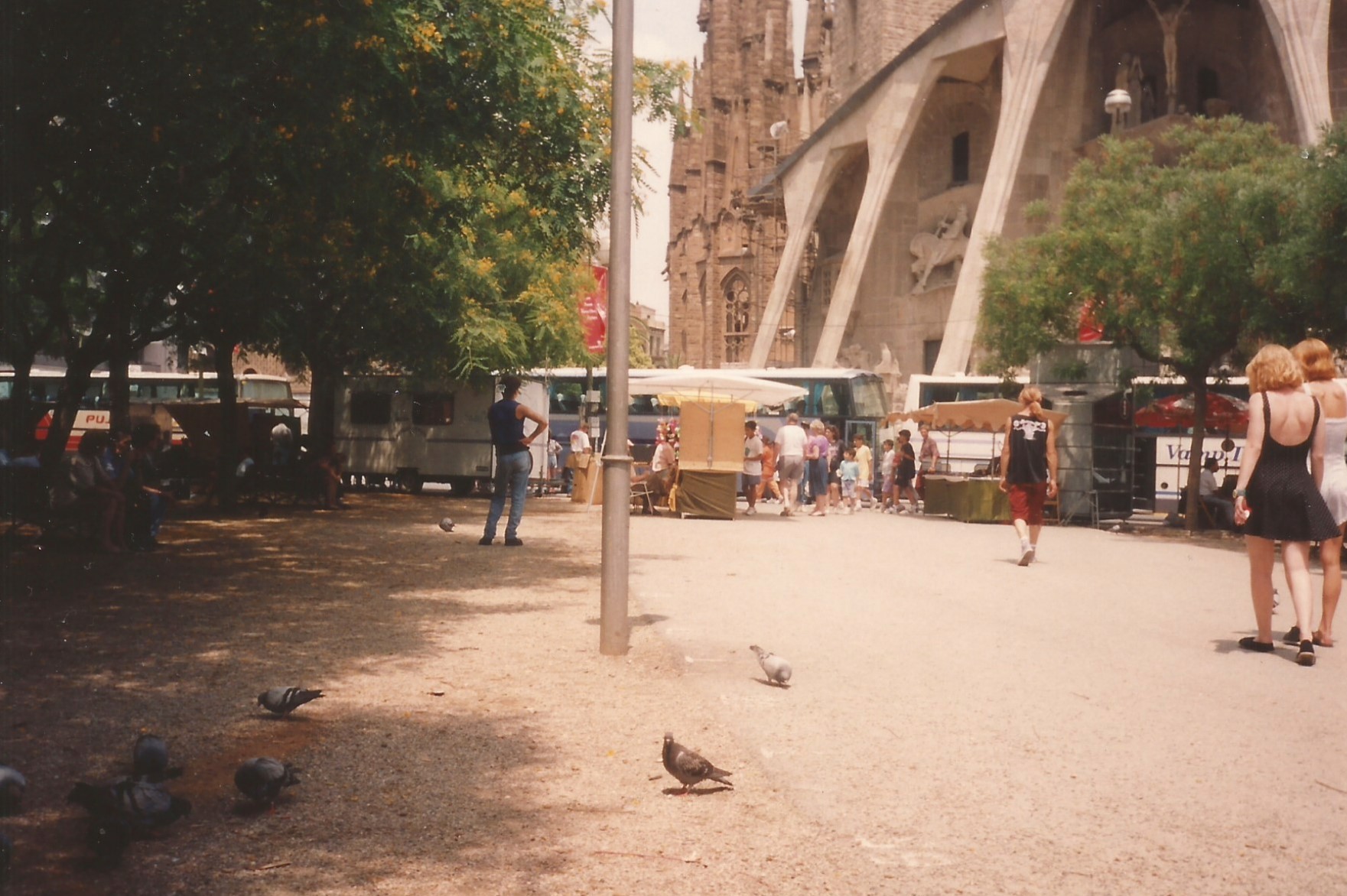
The approach to the Sagrada Familia triggered some memories of my last visit there 30 years ago but the surrounding area has changed quite a bit. The fifth picture, entitled ‘Entrance’, was the best attempt I could make at recapturing an old view:
19932023
There is a busy main road now where there was a dirt track back in 1993 and I didn’t want to get run over by bus taking my picture so I couldn’t get close enough to reproduce the angle. Note also that the tower to the left in the old picture now has a new structure in front of it.
Anyway, I had a nice walk around, ending up by the harbour where there was a jazz-and-cocktails event going on but it was getting too hot by then so I went and ate an indoor pizza then retreated to my hotel for a siesta.
Last week, discovering how warm it is here, I decided to buy a new pair of shorts (Bermudas). That turned out to be trickier than expected. Many stores here are selling their autumn range rather than summer gear, but when I tried a nearby El Corte Inglés I found the remnants of the summer short range were on sale at half price. Sadly I was then flummoxed by the sizes and confounded by the lack of a signal so I could check using my phone. When I did find a conversion table from UK to Spanish sizes I found it was wildly inaccurate and had to try on three pairs of increasing size until I found a pair that fit.
Fancy that. Inaccurate information on the internet! Who would have though it?
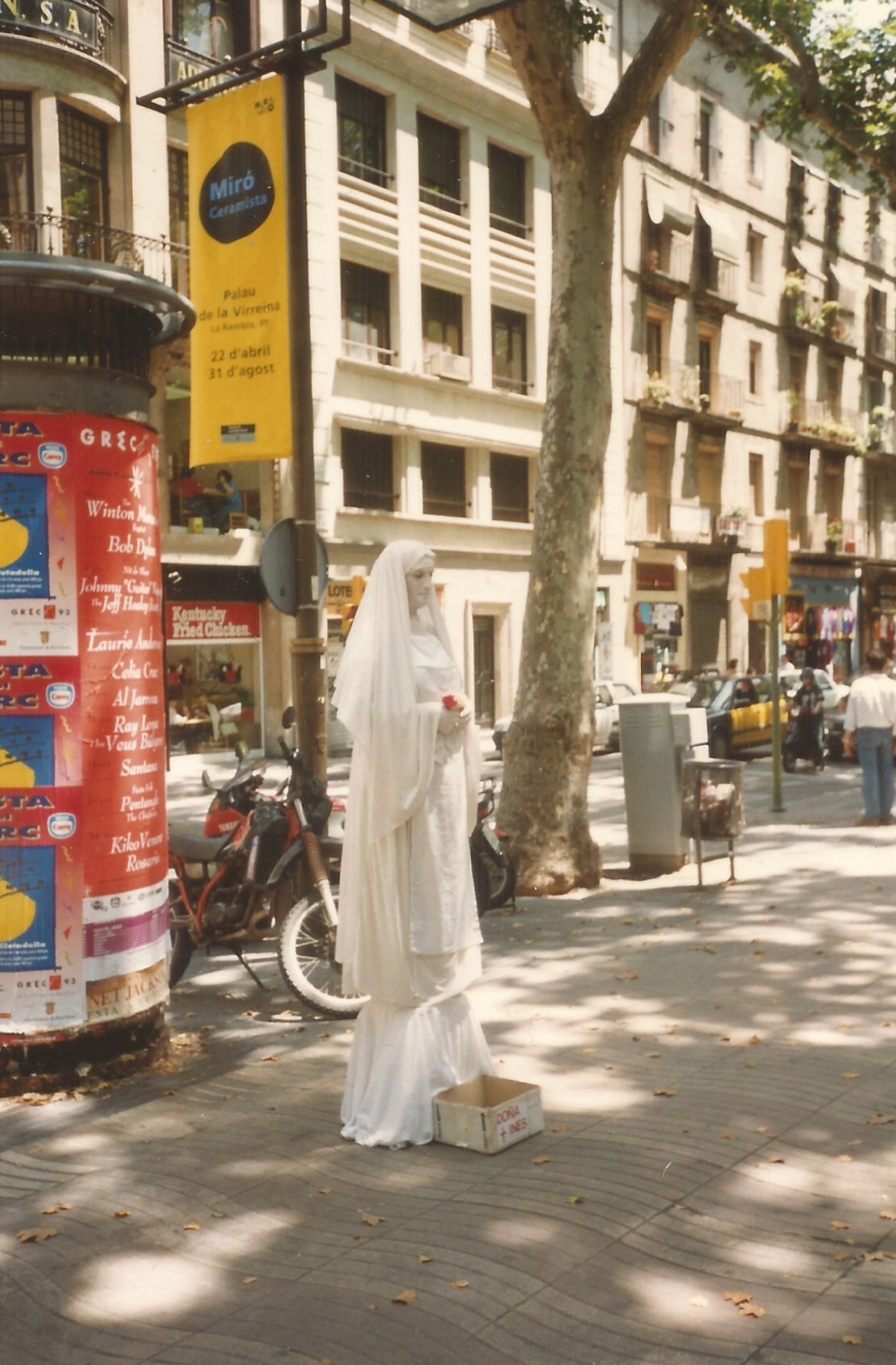
I’ve had this poster for 30 years. It’s survived several relocations and is now on my bedroom wall in Maynooth. I bought it on a holiday in Barcelona in 1993 which, coincidentally, was the centenary of the birth of Joan Miró, and the reason for a special exhibition.
Since it’s a rainy Sunday afternoon and I’m feeling a bit nostalgic with just a week to go before I go to Barcelona once more, I thought I’d rummage through some boxes of old photographs to share some pictures taken on that trip in 1993. The first one is me being a bit scared on the funicular railway. The last picture shows my holiday mate David in blue (to the centre left) looking rather fetching from the rear as he ponders the Sagrada Familia:
Back in 1993 the Sagrada Familia was basically a building site. Thirty years on, it still isn’t finished but will be completed in 2026. Possibly. So I’m told.
I don’t often post about television but I couldn’t resist a quickie about a fascinating programme I just watched called The Dead Zoo, about Dublin’s splendid Natural History Museum, which opened in 1857. I visited this place way back in 2019 on which occasion I took this picture of the interior:
I thought the museum was wonderful if a bit creepy. I remember thinking while I wandered around that I wouldn’t like to be stuck there overnight, surrounded by over 10,000 dead animals in Victorian glass cabinets. It would make a grand setting for a ghost story!
The building had been somewhat neglected and the splendid roof was prone to leaking, so the Museum was closed for renovation in 2020 and all the specimens on the upper floors – including the huge skeleton of a Fin Whale that you can see in the photo hanging from the ceiling – were removed to a storage facility.
This operation -carried out against the backdrop of the Covid-19 pandemic – is the subject of Paul Duane’s excellent documentary, the trailer of which you can watch here:
If you didn’t get the chance to watch it you can catch it on the RTÉ Player here.
The work on the roof and other renovations will take some time to complete but the ground floor will re-open to visitors tomorrow (2nd August 2022). I imagine it will be pretty busy and you have to book in advance, though as with all Ireland’s National Museums, admission is free.
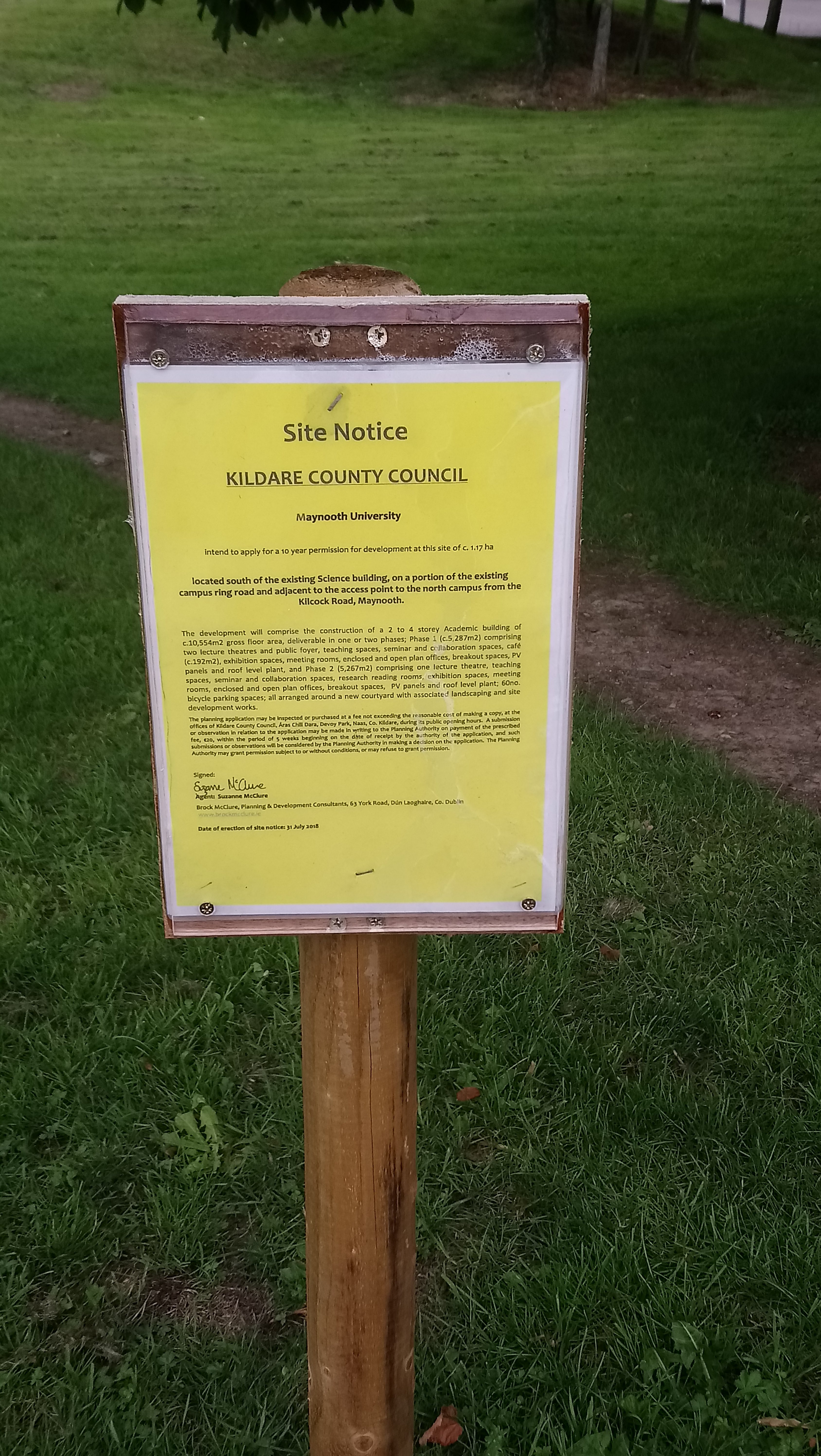
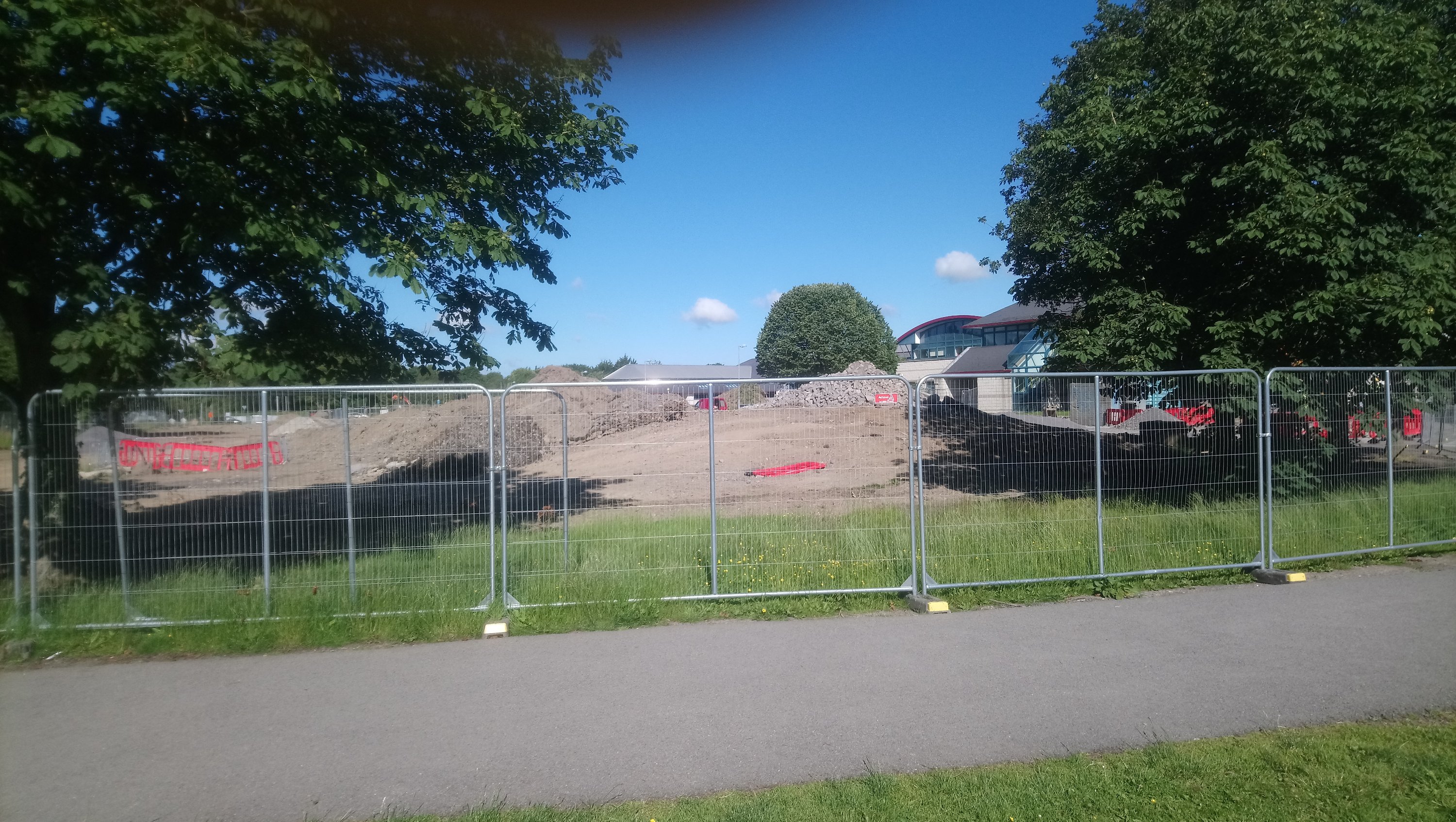
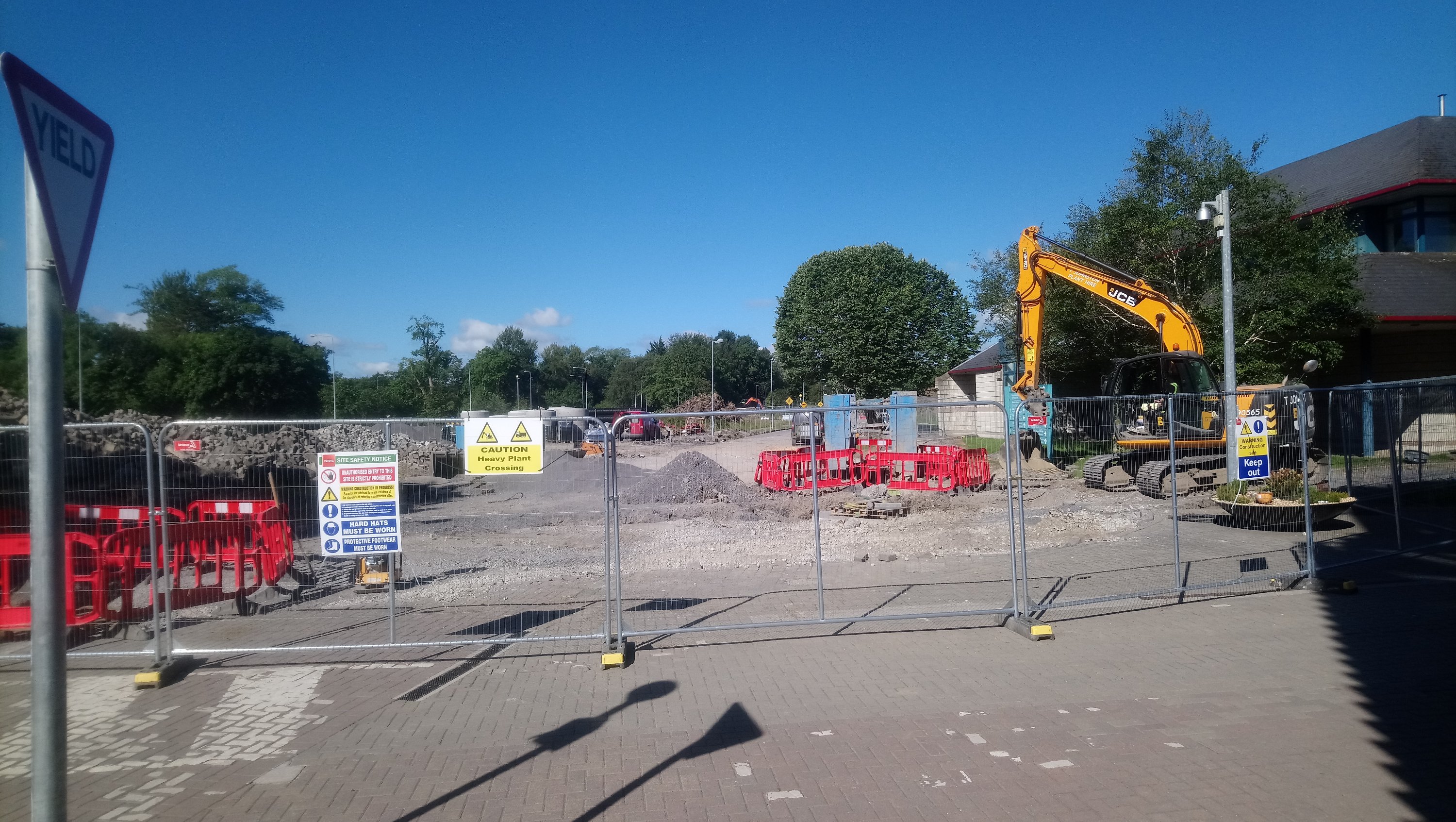
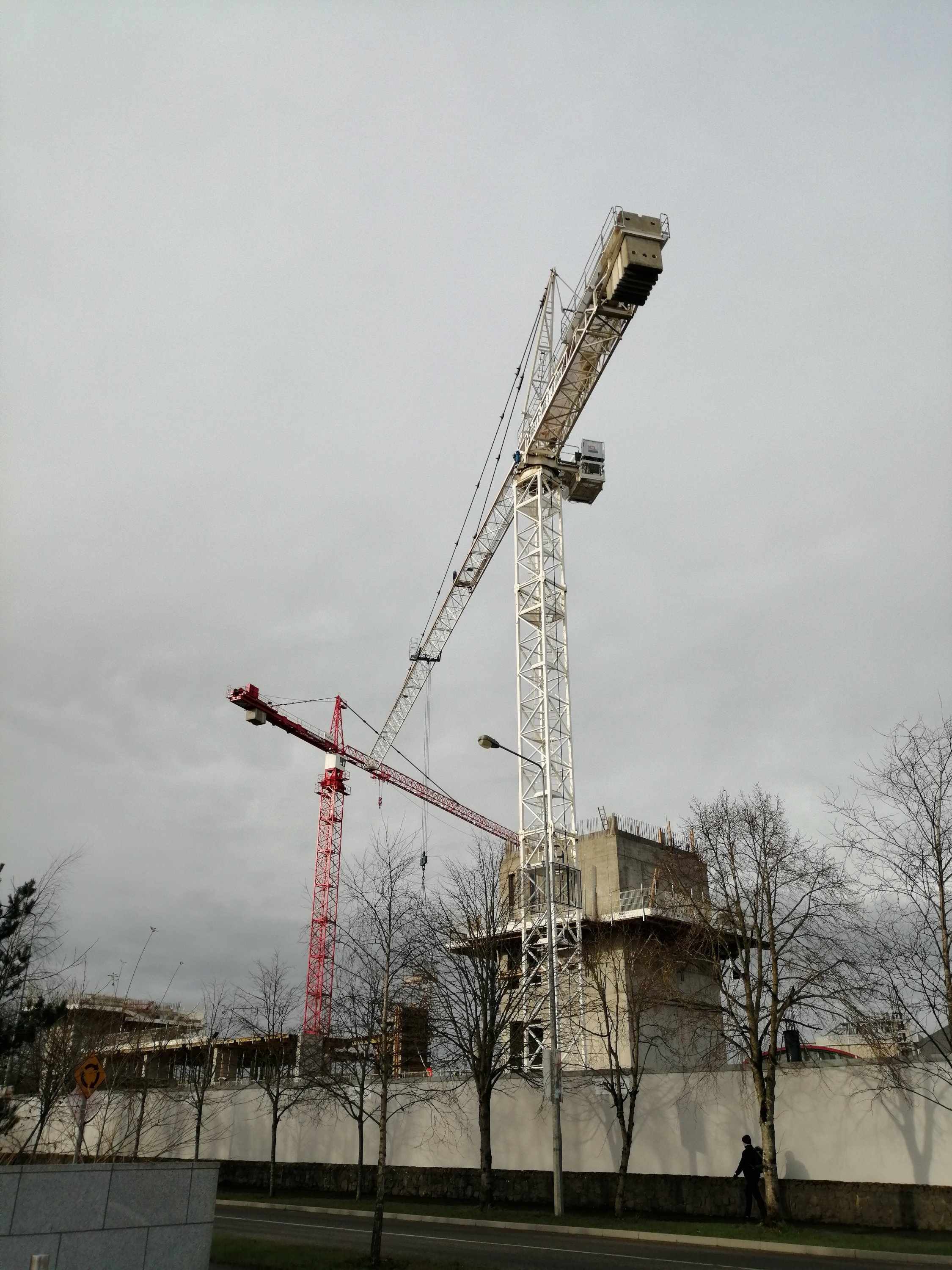
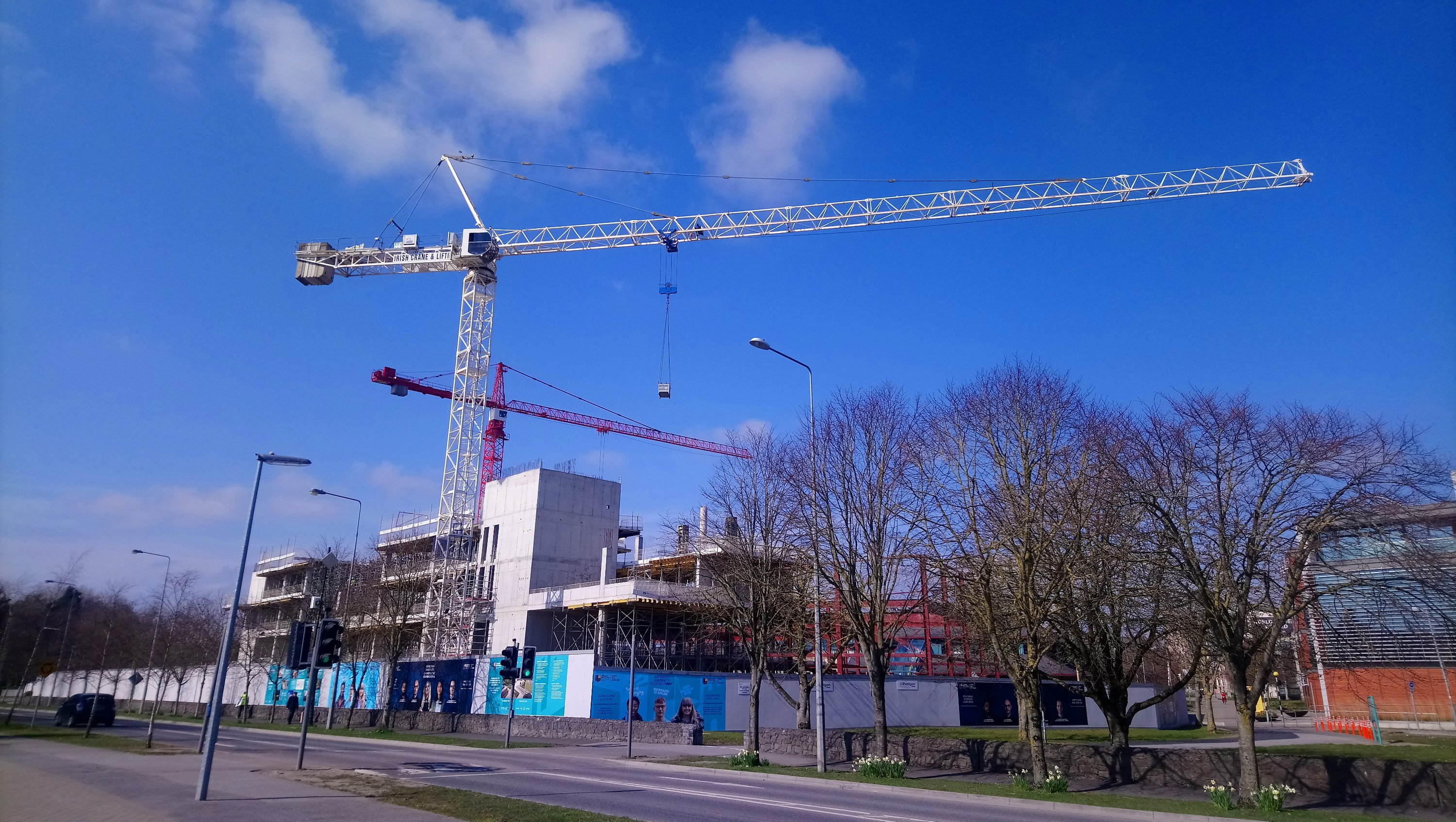
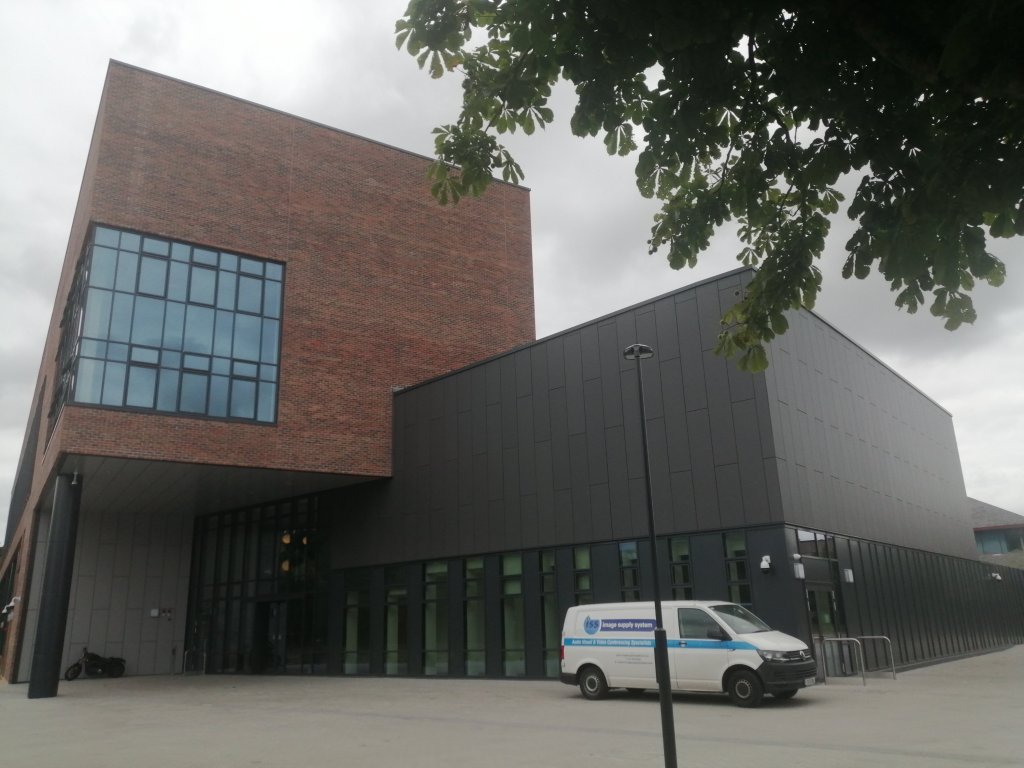
It seems that after long delays, the new building on Maynooth University’s North Campus is finally finished. Or at least I think it is. I haven’t been inside yet. I don’t know who are what is going to be housed there, except that the President’s Office is going to be there. The remaining space might nevertheless do something to relieve the shortage of office accommodation on campus.
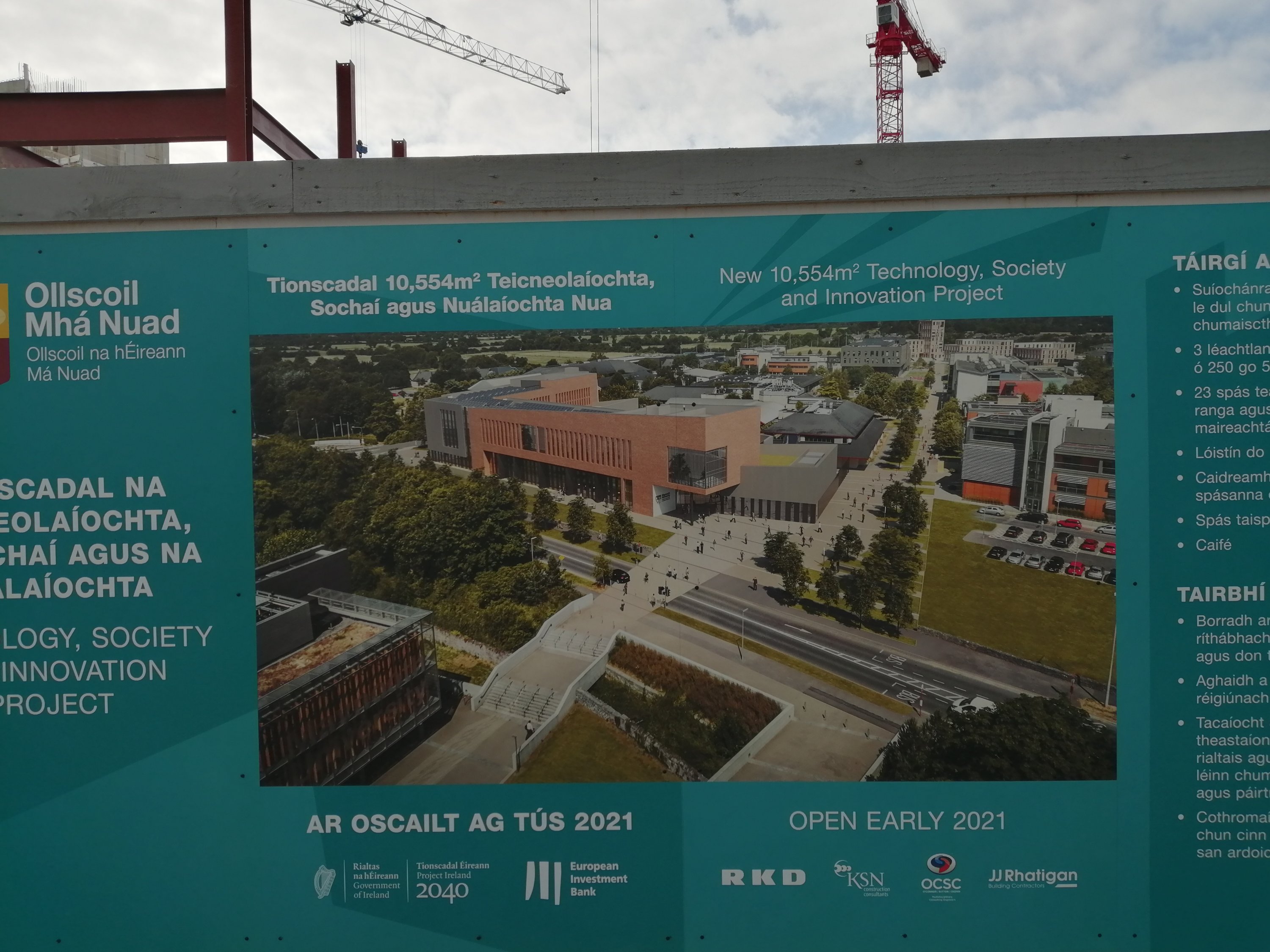
A couple of months later the site was surrounding by fencing decorated by an artist’s impression of the new building:
Notice that the plan was to open in “Early 2021”. Unfortunately the pandemic intervened and building stopped. This was at the end of March.
When building work eventually resumed there were further delays due to difficulties, e.g., in procuring materials. We were supposed to have use of this building for the last two open days on campus but that didn’t happen. It will be hopefully be ready for the new academic year, though. The finished product even looks a bit like the artist’s picture!
The building work has at times caused serious problems with noise in the Science Building, where my office is located, but not any more. Better is the end of a thing than the beginning thereof.
The views presented here are personal and not necessarily those of my employer (or anyone else for that matter).
Feel free to comment on any of the posts on this blog but comments may be moderated; anonymous comments and any considered by me to be vexatious and/or abusive and/or defamatory will not be accepted. I do not necessarily endorse, support, sanction, encourage, verify or agree with the opinions or statements of any information or other content in the comments on this site and do not in any way guarantee their accuracy or reliability.












 In the Dark