Archive for the Biographical Category

Stephen Hawking’s Reith Lectures

Posted in Biographical, The Universe and Stuff with tags , , , , on January 8, 2016 by telescoper

Yesterday I took off early from work to head up to the Royal Institution in London to attend a recording of the Reith Lectures, this year given by Stephen Hawking.

Here’s a rather crappy phone pic to show I was there.

image

In fact they recorded two of this year’s lectures, as well as a lengthy question-and-answer session. The talks and answers to audience questions did of course have to be pre-loaded into Stephen’s computer before delivery which necessitated some pauses for uploads. This together with the recording of various intros, outros and idents made for quite a lengthy event but I found the whole process fascinating and didn’t mind that at all. I did have three glasses of wine at the drinks reception before the show, however, so was in quite a relaxed frame of mind generally.

In charge of the whole thing was the inestimable Sue Lawley who did her job brilliantly. On a few occasions, Stephen Hawking’s computer had a glitch and made a spontaneous interjection in an inappropriate place. Sue Lawley proved  completely unflappable.

The topic for the series is, not surprisingly because it is what Hawking is most closely associated with, Black Holes. The lectures were enjoyably sprinkled with some very witty asides, but I did get surprisingly technical at a few points; the audience members beside me were visibly baffled on more than one occasion. See what you think yourself when the lectures are broadcast, the first on 26th January and the second a week later, both at 9pm on BBC Radio 4. They will also be broadcast on the BBC World Service.

The Reith Lectures are open to the public. Apparently over 20,000 applied for tickets to attend last night, such is the draw of Stephen Hawking. The capacity of the Royal Institution lecture theatre is only about 400 so many were disappointed. Fortunately for me, owing no doubt to some form of administrative error, I was an invited guest. I was however somewhat relieved to find I was only on the B-list so although I got to use the VIP entrance I didn’t have to sit among the big nobs at the front in reserved seats.

Why Does Hot Water Freeze Faster Than Cold?

Posted in Biographical, Cute Problems, The Universe and Stuff with tags , , , on December 15, 2015 by telescoper

Many years ago I had to take a day off School to travel down to Cambridge in order to be interviewed for a place on the Natural Sciences Tripos at Magdalene College. One of the questions I was asked was the following:

If you put a bucket of hot water and a bucket of cold water outside on a freezing cold day, which would freeze first?

I think I gave the right answer, which is that it’s not obvious..

My main argument was that evaporation would increase the rate of cooling of the hot water and also mean that when it did get down to freezing point there would be less of it to freeze. I attempted to work something out based on the heat capacity of liquid water versus the latent heat of freezing, but didn’t get very far with that as I couldn’t remember any numbers. I do remember saying that this would also depend on the shape of the bucket, especially on the surface area exposed: water in a flat dish would experience more evaporation than a narrow cylinder.

I only realised later that it wasn’t really the purpose of such questions to arrive at a definite answer, more to give the interviewer an idea of whether the interviewee is capable of thinking on his/her feet. I guess I must have waffled enough to give the misleading impression that I could, and was offered a place.

The reason I am rambling on about this now is that I stumbled across a blog post yesterday about something called the Mpemba Effect from which I quote:

The Mpemba effect is the observation that warm water freezes more quickly than cold water. The effect has been measured on many occasions with many explanations put forward. One idea is that warm containers make better thermal contact with a refrigerator and so conduct heat more efficiently. Hence the faster freezing. Another is that warm water evaporates rapidly and since this is an endothermic process, it cools the water making it freeze more quickly.

None of these explanations are entirely convincing, which is why the true explanation is still up for grabs

It appears that, depending on the circumstances, hot water does indeed freeze faster than cold water but that the reason why is apparently still not obvious.

However, there is a (fairly) recent paper on the arXiv that claims to solve this problem. The abstract reads:

We demonstrate that the Mpemba paradox arises intrinsically from the release rate of energy initially stored in the covalent H-O part of the O:H-O bond in water albeit experimental conditions. Generally, heating raises the energy of a substance by lengthening and softening all bonds involved. However, the O:H nonbond in water follows actively the general rule of thermal expansion and drives the H-O covalent bond to relax oppositely in length and energy because of the inter-electron-electron pair coupling [J Phys Chem Lett 4, 2565 (2013); ibid 4, 3238 (2013)]. Heating stores energy into the H-O bond by shortening and stiffening it. Cooling the water as the source in a refrigerator as a drain, the H-O bond releases its energy at a rate that depends exponentially on the initially storage of energy, and therefore, Mpemba effect happens. This effect is formulated in terms of the relaxation time tau to represent all possible processes of energy loss. Consistency between predictions and measurements revealed that the tau drops exponentially intrinsically with the initial temperature of the water being cooled.

Although I did study chemistry as part of my Natural Sciences degree, I dropped it after the first year and have subsequently forgotten almost everything I learned. I’m therefore not really qualified to judge whether the explanation presented in this paper is reasonable. I would be convinced if the theory could predict other observable outcomes but at the moment it doesn’t seem to.

Any chemists care to comment?

In the Waitrose of My Mind

Posted in Biographical, Mental Health with tags , , on December 8, 2015 by telescoper

I’m not sure why, but the distressing events at Leytonstone at the weekend seem to have triggered a need to do one of those weird confessional posts that I seem to be prone to posting from time to time. So here goes.

A couple of weeks ago I visited Waitrose in Western Road, Hove. Nothing particularly unusual about that, you might think, although it isn’t actually a very convenient supermarket for me as I live on the other side of town. I’m not sure why I suddenly decided to go there, except that I had been avoiding it for such a long time. In fact I hadn’t set foot in that store for the best part of thirty years. The last time I went there was a few weeks after I had been beaten up on Brighton seafront. I had more-or-less recovered from the physical effects of that late-night encounter with four yobs, but I hadn’t quite got over the anxiety of going out, even in daylight. Little did I know that things were about to get a lot worse.

I only went in to buy a couple of things so it wasn’t long before I was waiting in the queue at the checkout. Suddenly I was gripped by  a deep feeling of apprehension or dread. I began to sweat and tremble, my heart was racing. I became aware of strange shapes moving unpredictably through the corner of my eye. Rapidly the shapes intensified and became threatening, monstrously distorted faces began to swirl around me uttering all kinds of threats and abuse. Terrible sounds reverberated in my ears. I couldn’t take it any more and ran from the store.

Unfortunately I was still carrying a pint of milk and some coffee so, not unreasonably, the security man jumped to the conclusion that I was  shoplifter. I made it as far as the street before he tackled me. By then I was completely incoherent, sobbing and struggling to escape, still beset by all kinds of scary visions. Someone must have called the Police, or maybe they were just passing, and I was soon bundled into a patrol car.

Thereafter it is all a bit of a blur. I was taken to a Police station and spent some time in a cell. I don’t remember how long. A person – presumably a psychiatrist – appeared and tried to talk to me but I don’t think I was making much sense. Pretty soon after that I was informed that I was being detained under then fairly new  Mental Health Act (1983). In other words I was sectioned. I think the idea that I was a shoplifter was abandoned at this point. I was taken to a psychiatric institution some way outside Brighton which looked like something out of a Gothic horror novel and was held there, for assessment.

Fortunately the worst effects of the panic attack I had experienced disappeared fairly quickly, and I was transferred to a (slightly) friendlier-looking hospital nearer home. After a couple of weeks I was discharged with a renewable prescription of heavy-duty antidepressants which seemed to work at preventing further episodes but at the cost of some quite unpleasant side-effects. I returned to work, making up a story to cover my absence. After six months I gave up taking the drugs.

Over the years since then I’ve experienced panic attacks of this type on an intermittent basis, usually much milder but sometimes not. I have been told that there isn’t really a treatment that will banish them for ever, so for the past few years  I have been controlling them using a different type of drug which seems to have fewer and less serious side-effects. I don’t like having to take medication every day, but have come to accept that’s just the way things are.

Anyway, you can now probably understand why I have avoided Waitrose in Western Road. It’s a place of painful memories for me. In a sense I went there a couple of weeks ago to attempt to exorcise a ghost.

When I walked into the shop, however, it was completely unrecognisable. The layout had changed. So had the colour scheme, the staff uniforms, the lighting, the lot.  Expecting to be overwhelmed by dread, I instead felt nothing. Relieved, I actually did some shopping. No ghosts. No swirling shapes. No terrifying noises. The only scary things there  were the prices…


Wiston House, Wilton Park and Chatham House Rules

Posted in Biographical, Brighton with tags , , , on December 2, 2015 by telescoper

Back to work and a whole morning of meetings today I thought I’d pause briefly to say something about the venue for the recent awaydays…

wp-1448904107687.jpeg

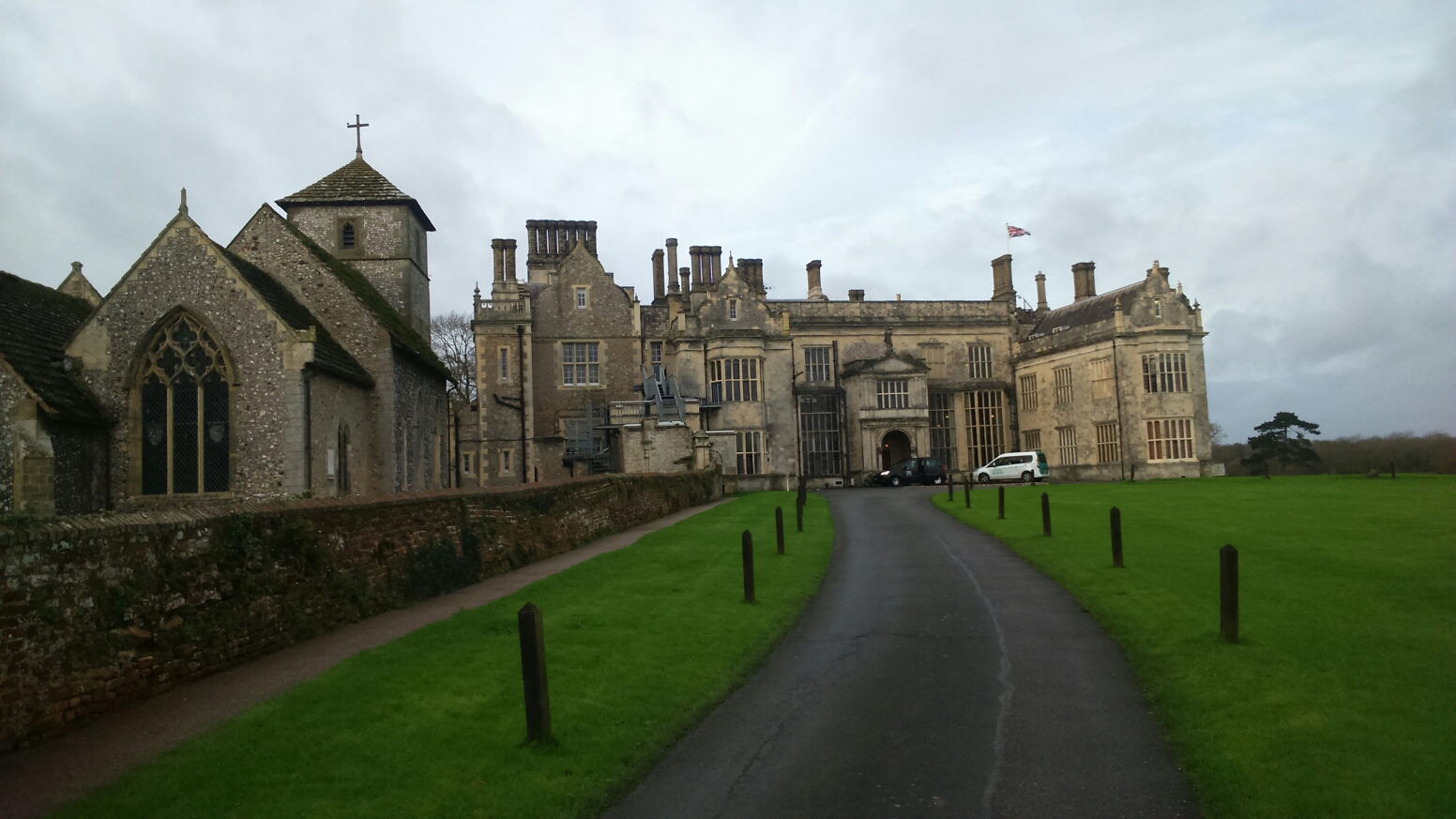
As Colin correctly spotted, the venue was Wiston House which is near Steyning, North of Shoreham, in West Sussex. The house was built in the late 16th Century but extensively modernised and refurbished over the years. It was built by a chap called Thomas Shirley, a politician who basically embezzled the funds needed to build it from the Treasury. Perhaps even worse than that he demolished an entire village to make way for what was essentially a private residence. When his fraud was uncovered he was imprisoned, his family declared bankrupt and the buildings seized by the Government. It wasn’t returned to the poor people thrown off their land to make way for it in the first place.

More recently, during World War 2, Wiston House (along with most large country houses near the South coast), was commandeered for military use; it became the Headquarters for the Canadian High Command and the surrounding parkland was used as a base for troops preparing for the Normandy landings, along with about 200 tanks and other vehicles. The troops stationed in the area formed part of the 3rd Canadian Division that led the the assault on Juno Beach in June 1944.

Since 1951, however, the House has been used by Wilton Park, an offshoot of the Foreign and Commonwealth Office. This organization is probably most famous as being responsible for mediating the talks that took place in 1946 about the future of post-war Germany but at that time it was based at a different location, Wilton Park in Buckinghamshire, which was the site of a camp for German Prisoners Of War. In 1951 it moved to Wiston House, but its name travelled with it so now, somewhat confusingly, Wilton Park is now based in Wiston House. It now hosts a very large number of events involved with global issues, including security, political strategy and conflict resolution as well as some more mundane things that can benefit from their expertise such as the Awaydays I attended on Monday and Tuesday. It’s not generally open to the public and security, though discreet, is quite extensive which is not surprising given the high profile nature of many of their guests, though not so much at the event I attended!

The staff at Wilton Park adopt strict protocols for how they facilitate its discussions, including Chatham House Rules, and bans on the use of social media during sessions. Hence my virtual twitter and blog silence over the past couple of days. Although we didn’t discuss anything that might threaten global security or engender any form of conflict, it would be inappropriate to break the rules for any reason so I won’t say anything about what was said or by whom…

Just for interesting, the small manor church to the left of the main building dates back almost 1000 years – it is mentioned in the Domesday Book – but the interior has been altered considerably and looks quite modern. I was not actually staying in the main house, but in one of the outbuildings, formerly stables but very comfortable and quite reminiscent of the arrangements at The Cosener’s House, a venue familiar to many physicists.

Away Days

Posted in Biographical, Brighton on November 30, 2015 by telescoper

No time to blog today as I am at yet another Awayday. In fact I will be Away for Two Days.

image

Can anyone name my location (in the photograph above)?

R.I.P. Jonah Lomu

Posted in Biographical, Rugby with tags , , , , , , , , on November 18, 2015 by telescoper

At the end of the 2015 Rugby World Cup, I wrote a post recalling the World Cup of 1995, which was held in South Africa while I was visiting there. I had the privilege of seeing the great Jonah Lomu demolishing the England defence that day. Today I learned with greant sadness that he has passed away, aged just 40. Since Jonah Lomu played such a central role in one of the most amazing sporting experiences of my life, which lives in my memory as if it happened yesterday, I wanted to take the opportunity to pay tribute to the awesome sportsman that he was by sharing that memory again.

In 1995 was visiting George Ellis at the University of Cape Town to work on a book, which was published in 1997. The book is now rather out of date, but I think it turned out rather well and it was certainly a lot of fun working on it. Of course it was a complete coincidence that I timed my trip to Cape Town exactly to cover the period of the Rugby Word Cup. Well, perhaps not a complete coincidence. In fact I was lucky enough to get a ticket for the semi-final of that tournament between England and New Zealand at Newlands, in Cape Town. I was in the stand at one end of the ground, and saw New Zealand – spearheaded by the incredible Jonah Lomu – score try after try in the distance at the far end during the first half. Here is the first, very soon after the kickoff when Andrew Mehrtens wrong-footed England by kicking to the other side of the field than where the forwards were lined up. The scrambling defence conceded a scrum which led to a ruck, from which this happened:

Jonah Lomu was unstoppable that day. One of the All Blacks later quipped that “Rugby is a team game. Fourteen players all know that their job is to give the ball to Jonah”.

It was one-way traffic in the first half but England played much better in the second, with the result that all the action was again at the far end of the pitch. However, right at the end of the match Jonah Lomu scored another try, this time at the end I was standing. I’ll never forget the sight of that enormous man sprinting towards me and am glad it wasn’t my job to try to stop him, especially have seen what happened to Underwood, Catt and Carling when they tried to bring him down. Lomu scored four tries in that game, in one of the most memorable performances by any sportsman in any sport. It’s so sad that he has gone. It’s especially hard to believe that such a phenomenal athlete could be taken at such a young age. My thoughts are with his family and friends.

Rest in Peace, Jonah Lomu (1975-2015)

Home Thoughts of Paris

Posted in Biographical with tags , on November 16, 2015 by telescoper

Like many of you I’ve been following the events in Paris over the last few days with a mixture of shock and horror but I couldn’t think of anything useful or insightful to say on this blog. It’s truly terrible to see the levels of cruelty and inhumanity that people can descend to, enough to make one feel ashamed to be human, but the frenzied speculation on the net about the nationality of the assailants – based on very dubious documentary evidence – is’t helping anyone. Whoever they were or wherever they came from I doubt if we’ll ever really know what this murderous gang thought they were going to achieve when they set out on their killing spree on Friday evening. I’d be surprised if any of them could actually articulate their reasons for being involved, any more than a typical British soldier could explain, if asked, what he thought he was achieving by his presence in Iraq or Afghanistan.

It’s a matter of great shame that we have become relatively hardened to the news of deaths abroad. Practically every day we hear of killings of occupying troops, insurgents, or non-combatants in the Middle East or elsewhere but we Europeans seems to pay them little attention now. The sickening bombing of a funeral in Beirut killed 44 people on Thursday, but went largely unnoticed. The death toll in Paris is now at least 129, but this is just a tiny fraction of the number of lives lost to violence around the globe this year.

We live a relatively peaceful life in the West, with the result that it hits us rather hard when we can no longer keep such events at a safe distance in our minds, when they strike on familiar territory, such as was the case for the British in the London bombings of 2005. Only then do we see the horror close-up and personal. The people of Paris have to deal with that reality now, but we shouldn’t forget that in small towns we’ve never heard of all around the world many others are frightened and grieving too, and probably for just as little reason.

I don’t live in Paris, but I have been there many times and do have colleagues who live there, most of them in the suburb of Saclay. They’re all safe and unharmed. There will be many others who can’t say the same thing and my thoughts are with them at this terrible time. It must be very tough for Parisians as they try to restore normality to their lives, but that’s what they must do. The deadly attacks on Friday were not attacks on military targets. They were attacks on a sports stadium, a music venue and some bars and restaurants. The survivors owe it to the dead, the injured and the bereaved to carry on their lives regardless and to refuse to be intimidated by terror. I know that’s easy for me to say. I’m not there. But if London can do it in the wake of the atrocities of 2005, then so can Paris.

I find myself feeling much the same as I did in 2008 after a terrorist attack in Mumbai and in 2010 when the murderer Raoul Moat met a violent end in Rothbury. As I get older memories of places I’ve visited are increasingly precious and it’s deeply unsettling when those memories are corrupted by violence. But I am sure that Paris will survive not only as a place of happy memories for me, nor simply as a symbol of so many of the freedoms that others would destroy, but as a real place where real people continue live the way they want to live, in peace and liberty.

Why I wear a poppy

Posted in Biographical, History with tags , , on November 3, 2015 by telescoper

Once again we’re coming up to Remembrance Sunday, an occasion to remember those who have given their lives in conflicts past and present. This is always held on the second Sunday in November in the United Kingdom, so that it is close to the date of anniversary of the armistice that formally ended the First World War, on 11th November 1918. Another way to commemorate this  is the observance of two minutes’ silence at 11am on 11th November itself. I plan to do that, next Wednesday (which is the 11th November). I’ve kept my calendar free at 11am precisely for that purpose.

Then there  is the wearing of a poppy. The poppy appeal raises money for veterans and their families, but the wearing of these little red paper flowers is something that not everyone feels comfortable with. Some people think that to wear a poppy is to celebrate militarism or even Britain’s imperialist past. I don’t see it that way at all. In fact, if someone asked me to wear a badge to support Britain’s participation in the invasion of Iraq, I’d certainly refuse.

I wrote about my reaction to the horror and futility of war some time ago, so I’ll try not to repeat myself except to say that, to me, the poppy is not about celebrating war or military prowess or imperialism, it’s simply about remembering those who died. In fact, one of the main reasons the paraphernalia of  Remembrance Day observances (the Poppy, the Cenotaph, the Tomb of the Unknown Soldier, etc) were set up in the first place was to remind not just people but also governments of the devastation caused by World War One. That’s why the Remembrance Day ceremonial laying of wreaths takes place in Whitehall, right at the heart of government. The ritual  was specifically intended to be a warning to the politicians who had brought the conflict about not to allow it to happen again.

As a young lefty student I grappled with the implications of the poppy appeal. The Peace Pledge Union produces white poppies, as an overtly anti-war symbol of remembrance. For a time I wore a white poppy but, although I am against war, I don’t think a policy of non-violence would have helped much against Hitler’s Nazi regime and therefore can’t really call myself an out-and-out  pacifist. One year I wore both white and red poppies, but since then I’ve decided to stick with a red one.

Of course many in the Establishment would like the poppy to turn into a symbol of obedience, a kind of alternative national flag. Some people choose not to wear it precisely because it has that implication. The sight of some hypocritical warmongerers wearing the poppy at the Cenotaph on these occasions sickens me, but their betrayal does not make me want to stop wearing it myself. Neither does the fact that our politicians seem content to give away the freedoms that so many died to protect.

People have  a wide range of views about the poppy and its meaning. There is no “right” answer – every person’s attitude is shaped by a number of factors, not least by whether or not they have lost a loved one in any form of armed conflict.  Some of us wear wear a poppy, some don’t. It’s a matter of choice. The fact that we have a choice is important in itself. I would probably refuse to wear a poppy myself if someone tried to make it compulsory.

Some poppy sellers use the slogan  Wear Your Poppy With Pride, but the original meaning  is much better expressed by the original, Lest We Forget. I’m not sure I wear mine with pride at all, in fact. What I feel is really more like shame, at the wastefulness and stupidity of armed conflict. I count myself incredibly lucky that I have never had to live through anything like that, not only because I’ve had a relatively peaceful and comfortable life, but also because I have never been tested in the way previous generations were. I wear the poppy to acknowledge their bravery and to recognize my own good fortune.  When I stand for the two minutes silence I remember those all who fell fighting on all sides of all wars, and  fallen civilians too.

When the newsreader Jon Snow decided not to wear a poppy on TV a few years ago, there were angry complaints. I’m sure he didn’t mean disrespect to the cause but disliked the pressure being put on him to conform. I can see his point. It has to be voluntary if it is to mean anything at all. . But in the end I agree with Euan Ferguson’s piece in the Observer a few years ago:

I don’t like pressure being put on people to conform. Orthodoxy and fear are always to be regretted and today’s society is over-condemnatory, swift to its manufactured outrage. But this change seems to have come from below, not been ordered by bullies: the daily reports of life and death in the forces, of the danger other 20-year-olds daily find themselves facing. And is the symbolism of the poppy being degraded as it is customised? No. You can’t do much to the fabulous simplicity of this symbol. And the poppy doesn’t preach: it’s not about “right” or “wrong” wars, but about brave dead soldiers. And the message was, never, Remember in the way we tell you to remember. It is, simply, Lest We Forget.

So, yes. I am wearing a poppy again this year. Lest we forget.

1995 World Cup Memories

Posted in Biographical, Rugby with tags , , , , , , , , on October 28, 2015 by telescoper

So, the 2015 Rugby World Cup final takes place this weekend. It’s been an interesting tournament with some memorable games (and some notable disappointments). Anyway, I suddenly remembered that in 1995 I was in South Africa during the Rugby World Cup. In fact I was visiting George Ellis at the University of Cape Town to work on a book, which was published in 1997. The book is now rather out of date, but I think it turned out rather well and it was certainly a lot of fun working on it!

Was that really twenty years ago?

Of course it was a complete coincidence that I timed my trip to Cape Town exactly to cover the period of the Rugby Word Cup. Well, perhaps not a complete coincidence. In fact I was lucky enough to get a ticket for the semi-final of that tournament between England and New Zealand at Newlands, in Cape Town. I was in the stand at one end of the ground, and saw New Zealand – spearheaded by the incredible Jonah Lomu – score try after try in the distance at the far end during the first half. Here is the first, very soon after the kickoff when Andrew Mehrtens wrong-footed England by kicking to the other side of the field than where the forwards were lined up. The scrambling defence conceded a scrum which led to a ruck, from which this happened:

Even more impressively I had a very good view when Zinzan Brooke scored at the same end with a drop-goal off the back of a scrum. Not many No. 8 forwards have the skill to do that!

It was one-way traffic in the first half but in the second half England played much better, with the result that all the action was again at the far end of the pitch. However, right at the end of the match Jonah Lomu scored another try, this time at the end I was standing. I’ll never forget the sight of that enormous man sprinting towards me and am glad it wasn’t my job to try to stop him, especially have seen what happened to Underwood, Catt and Carling when they tried to bring him down.

Anyway, I hope it’s a good final on Saturday. For what it’s worth, I did pick the two finalists correctly before the tournament. I’m expecting the All Blacks to beat Australia comfortably, but am not going to bet on the result!

The Open Journal cometh..

Posted in Biographical, Open Access on October 25, 2015 by telescoper

I have been at a meeting in Oxford with a group of conspirators this afternoon to plot the final downfall of the academic publishing industry..

image

All systems are go and we have agreed a schedule for the official launch of the long-awaited Open Journal of Astrophysics.

More details will come out over the next few weeks. Watch this space!