No time to blog today as I am at yet another Awayday. In fact I will be Away for Two Days.
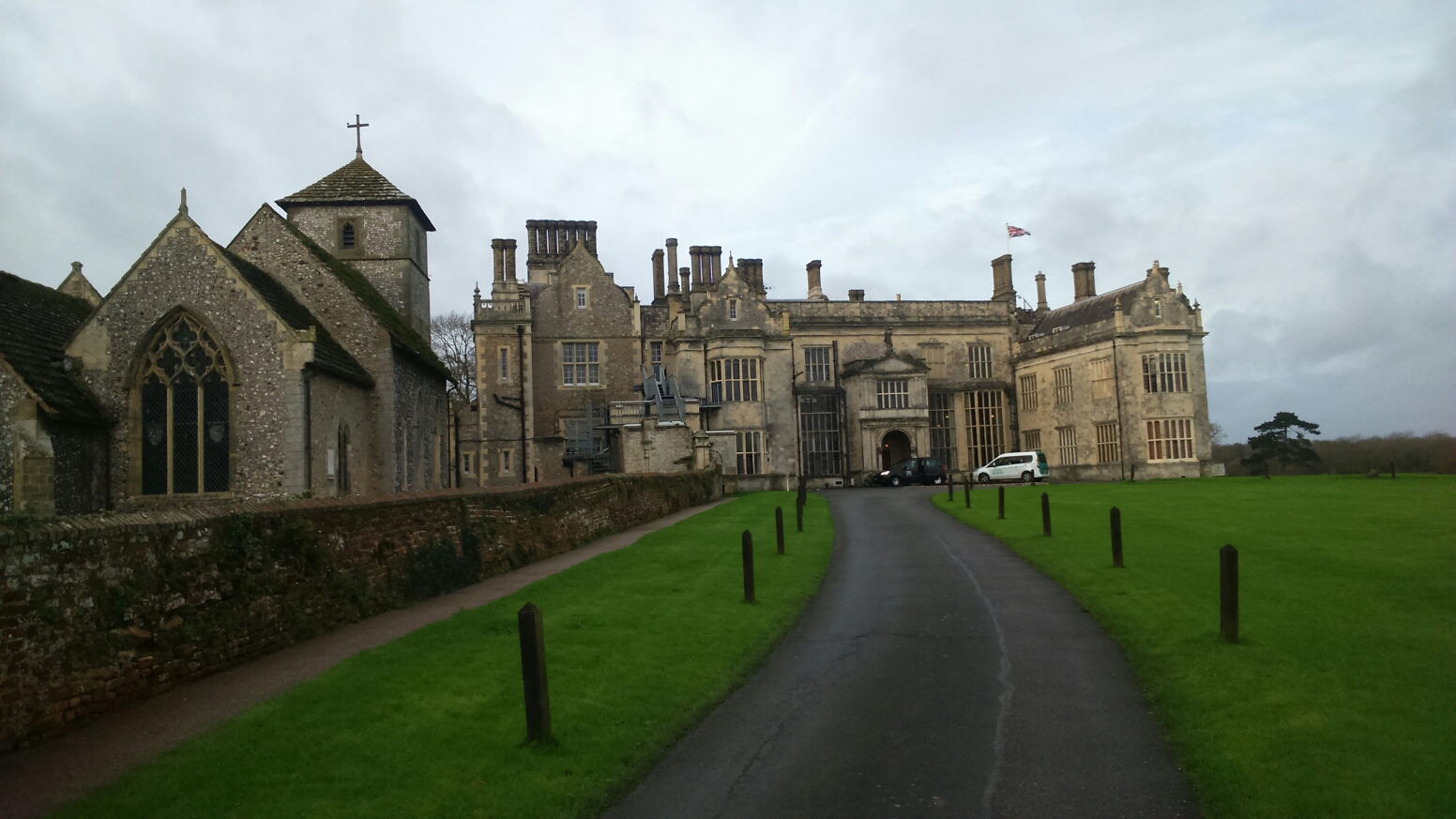
Can anyone name my location (in the photograph above)?
Follow @telescoperNo time to blog today as I am at yet another Awayday. In fact I will be Away for Two Days.
Can anyone name my location (in the photograph above)?
Follow @telescoperAt the end of the 2015 Rugby World Cup, I wrote a post recalling the World Cup of 1995, which was held in South Africa while I was visiting there. I had the privilege of seeing the great Jonah Lomu demolishing the England defence that day. Today I learned with greant sadness that he has passed away, aged just 40. Since Jonah Lomu played such a central role in one of the most amazing sporting experiences of my life, which lives in my memory as if it happened yesterday, I wanted to take the opportunity to pay tribute to the awesome sportsman that he was by sharing that memory again.
In 1995 was visiting George Ellis at the University of Cape Town to work on a book, which was published in 1997. The book is now rather out of date, but I think it turned out rather well and it was certainly a lot of fun working on it. Of course it was a complete coincidence that I timed my trip to Cape Town exactly to cover the period of the Rugby Word Cup. Well, perhaps not a complete coincidence. In fact I was lucky enough to get a ticket for the semi-final of that tournament between England and New Zealand at Newlands, in Cape Town. I was in the stand at one end of the ground, and saw New Zealand – spearheaded by the incredible Jonah Lomu – score try after try in the distance at the far end during the first half. Here is the first, very soon after the kickoff when Andrew Mehrtens wrong-footed England by kicking to the other side of the field than where the forwards were lined up. The scrambling defence conceded a scrum which led to a ruck, from which this happened:
Jonah Lomu was unstoppable that day. One of the All Blacks later quipped that “Rugby is a team game. Fourteen players all know that their job is to give the ball to Jonah”.
It was one-way traffic in the first half but England played much better in the second, with the result that all the action was again at the far end of the pitch. However, right at the end of the match Jonah Lomu scored another try, this time at the end I was standing. I’ll never forget the sight of that enormous man sprinting towards me and am glad it wasn’t my job to try to stop him, especially have seen what happened to Underwood, Catt and Carling when they tried to bring him down. Lomu scored four tries in that game, in one of the most memorable performances by any sportsman in any sport. It’s so sad that he has gone. It’s especially hard to believe that such a phenomenal athlete could be taken at such a young age. My thoughts are with his family and friends.
Rest in Peace, Jonah Lomu (1975-2015)
Follow @telescoperLike many of you I’ve been following the events in Paris over the last few days with a mixture of shock and horror but I couldn’t think of anything useful or insightful to say on this blog. It’s truly terrible to see the levels of cruelty and inhumanity that people can descend to, enough to make one feel ashamed to be human, but the frenzied speculation on the net about the nationality of the assailants – based on very dubious documentary evidence – is’t helping anyone. Whoever they were or wherever they came from I doubt if we’ll ever really know what this murderous gang thought they were going to achieve when they set out on their killing spree on Friday evening. I’d be surprised if any of them could actually articulate their reasons for being involved, any more than a typical British soldier could explain, if asked, what he thought he was achieving by his presence in Iraq or Afghanistan.
It’s a matter of great shame that we have become relatively hardened to the news of deaths abroad. Practically every day we hear of killings of occupying troops, insurgents, or non-combatants in the Middle East or elsewhere but we Europeans seems to pay them little attention now. The sickening bombing of a funeral in Beirut killed 44 people on Thursday, but went largely unnoticed. The death toll in Paris is now at least 129, but this is just a tiny fraction of the number of lives lost to violence around the globe this year.
We live a relatively peaceful life in the West, with the result that it hits us rather hard when we can no longer keep such events at a safe distance in our minds, when they strike on familiar territory, such as was the case for the British in the London bombings of 2005. Only then do we see the horror close-up and personal. The people of Paris have to deal with that reality now, but we shouldn’t forget that in small towns we’ve never heard of all around the world many others are frightened and grieving too, and probably for just as little reason.
I don’t live in Paris, but I have been there many times and do have colleagues who live there, most of them in the suburb of Saclay. They’re all safe and unharmed. There will be many others who can’t say the same thing and my thoughts are with them at this terrible time. It must be very tough for Parisians as they try to restore normality to their lives, but that’s what they must do. The deadly attacks on Friday were not attacks on military targets. They were attacks on a sports stadium, a music venue and some bars and restaurants. The survivors owe it to the dead, the injured and the bereaved to carry on their lives regardless and to refuse to be intimidated by terror. I know that’s easy for me to say. I’m not there. But if London can do it in the wake of the atrocities of 2005, then so can Paris.
I find myself feeling much the same as I did in 2008 after a terrorist attack in Mumbai and in 2010 when the murderer Raoul Moat met a violent end in Rothbury. As I get older memories of places I’ve visited are increasingly precious and it’s deeply unsettling when those memories are corrupted by violence. But I am sure that Paris will survive not only as a place of happy memories for me, nor simply as a symbol of so many of the freedoms that others would destroy, but as a real place where real people continue live the way they want to live, in peace and liberty.
Follow @telescoperOnce again we’re coming up to Remembrance Sunday, an occasion to remember those who have given their lives in conflicts past and present. This is always held on the second Sunday in November in the United Kingdom, so that it is close to the date of anniversary of the armistice that formally ended the First World War, on 11th November 1918. Another way to commemorate this is the observance of two minutes’ silence at 11am on 11th November itself. I plan to do that, next Wednesday (which is the 11th November). I’ve kept my calendar free at 11am precisely for that purpose.
 Then there is the wearing of a poppy. The poppy appeal raises money for veterans and their families, but the wearing of these little red paper flowers is something that not everyone feels comfortable with. Some people think that to wear a poppy is to celebrate militarism or even Britain’s imperialist past. I don’t see it that way at all. In fact, if someone asked me to wear a badge to support Britain’s participation in the invasion of Iraq, I’d certainly refuse.
I wrote about my reaction to the horror and futility of war some time ago, so I’ll try not to repeat myself except to say that, to me, the poppy is not about celebrating war or military prowess or imperialism, it’s simply about remembering those who died. In fact, one of the main reasons the paraphernalia of Remembrance Day observances (the Poppy, the Cenotaph, the Tomb of the Unknown Soldier, etc) were set up in the first place was to remind not just people but also governments of the devastation caused by World War One. That’s why the Remembrance Day ceremonial laying of wreaths takes place in Whitehall, right at the heart of government. The ritual was specifically intended to be a warning to the politicians who had brought the conflict about not to allow it to happen again.
As a young lefty student I grappled with the implications of the poppy appeal. The Peace Pledge Union produces white poppies, as an overtly anti-war symbol of remembrance. For a time I wore a white poppy but, although I am against war, I don’t think a policy of non-violence would have helped much against Hitler’s Nazi regime and therefore can’t really call myself an out-and-out pacifist. One year I wore both white and red poppies, but since then I’ve decided to stick with a red one.
Of course many in the Establishment would like the poppy to turn into a symbol of obedience, a kind of alternative national flag. Some people choose not to wear it precisely because it has that implication. The sight of some hypocritical warmongerers wearing the poppy at the Cenotaph on these occasions sickens me, but their betrayal does not make me want to stop wearing it myself. Neither does the fact that our politicians seem content to give away the freedoms that so many died to protect.
People have a wide range of views about the poppy and its meaning. There is no “right” answer – every person’s attitude is shaped by a number of factors, not least by whether or not they have lost a loved one in any form of armed conflict. Some of us wear wear a poppy, some don’t. It’s a matter of choice. The fact that we have a choice is important in itself. I would probably refuse to wear a poppy myself if someone tried to make it compulsory.
Some poppy sellers use the slogan Wear Your Poppy With Pride, but the original meaning is much better expressed by the original, Lest We Forget. I’m not sure I wear mine with pride at all, in fact. What I feel is really more like shame, at the wastefulness and stupidity of armed conflict. I count myself incredibly lucky that I have never had to live through anything like that, not only because I’ve had a relatively peaceful and comfortable life, but also because I have never been tested in the way previous generations were. I wear the poppy to acknowledge their bravery and to recognize my own good fortune. When I stand for the two minutes silence I remember those all who fell fighting on all sides of all wars, and fallen civilians too.
When the newsreader Jon Snow decided not to wear a poppy on TV a few years ago, there were angry complaints. I’m sure he didn’t mean disrespect to the cause but disliked the pressure being put on him to conform. I can see his point. It has to be voluntary if it is to mean anything at all. . But in the end I agree with Euan Ferguson’s piece in the Observer a few years ago:
I don’t like pressure being put on people to conform. Orthodoxy and fear are always to be regretted and today’s society is over-condemnatory, swift to its manufactured outrage. But this change seems to have come from below, not been ordered by bullies: the daily reports of life and death in the forces, of the danger other 20-year-olds daily find themselves facing. And is the symbolism of the poppy being degraded as it is customised? No. You can’t do much to the fabulous simplicity of this symbol. And the poppy doesn’t preach: it’s not about “right” or “wrong” wars, but about brave dead soldiers. And the message was, never, Remember in the way we tell you to remember. It is, simply, Lest We Forget.
So, yes. I am wearing a poppy again this year. Lest we forget.
Follow @telescoperSo, the 2015 Rugby World Cup final takes place this weekend. It’s been an interesting tournament with some memorable games (and some notable disappointments). Anyway, I suddenly remembered that in 1995 I was in South Africa during the Rugby World Cup. In fact I was visiting George Ellis at the University of Cape Town to work on a book, which was published in 1997. The book is now rather out of date, but I think it turned out rather well and it was certainly a lot of fun working on it!
Was that really twenty years ago?
Of course it was a complete coincidence that I timed my trip to Cape Town exactly to cover the period of the Rugby Word Cup. Well, perhaps not a complete coincidence. In fact I was lucky enough to get a ticket for the semi-final of that tournament between England and New Zealand at Newlands, in Cape Town. I was in the stand at one end of the ground, and saw New Zealand – spearheaded by the incredible Jonah Lomu – score try after try in the distance at the far end during the first half. Here is the first, very soon after the kickoff when Andrew Mehrtens wrong-footed England by kicking to the other side of the field than where the forwards were lined up. The scrambling defence conceded a scrum which led to a ruck, from which this happened:
Even more impressively I had a very good view when Zinzan Brooke scored at the same end with a drop-goal off the back of a scrum. Not many No. 8 forwards have the skill to do that!
It was one-way traffic in the first half but in the second half England played much better, with the result that all the action was again at the far end of the pitch. However, right at the end of the match Jonah Lomu scored another try, this time at the end I was standing. I’ll never forget the sight of that enormous man sprinting towards me and am glad it wasn’t my job to try to stop him, especially have seen what happened to Underwood, Catt and Carling when they tried to bring him down.
Anyway, I hope it’s a good final on Saturday. For what it’s worth, I did pick the two finalists correctly before the tournament. I’m expecting the All Blacks to beat Australia comfortably, but am not going to bet on the result!
Follow @telescoperI have been at a meeting in Oxford with a group of conspirators this afternoon to plot the final downfall of the academic publishing industry..
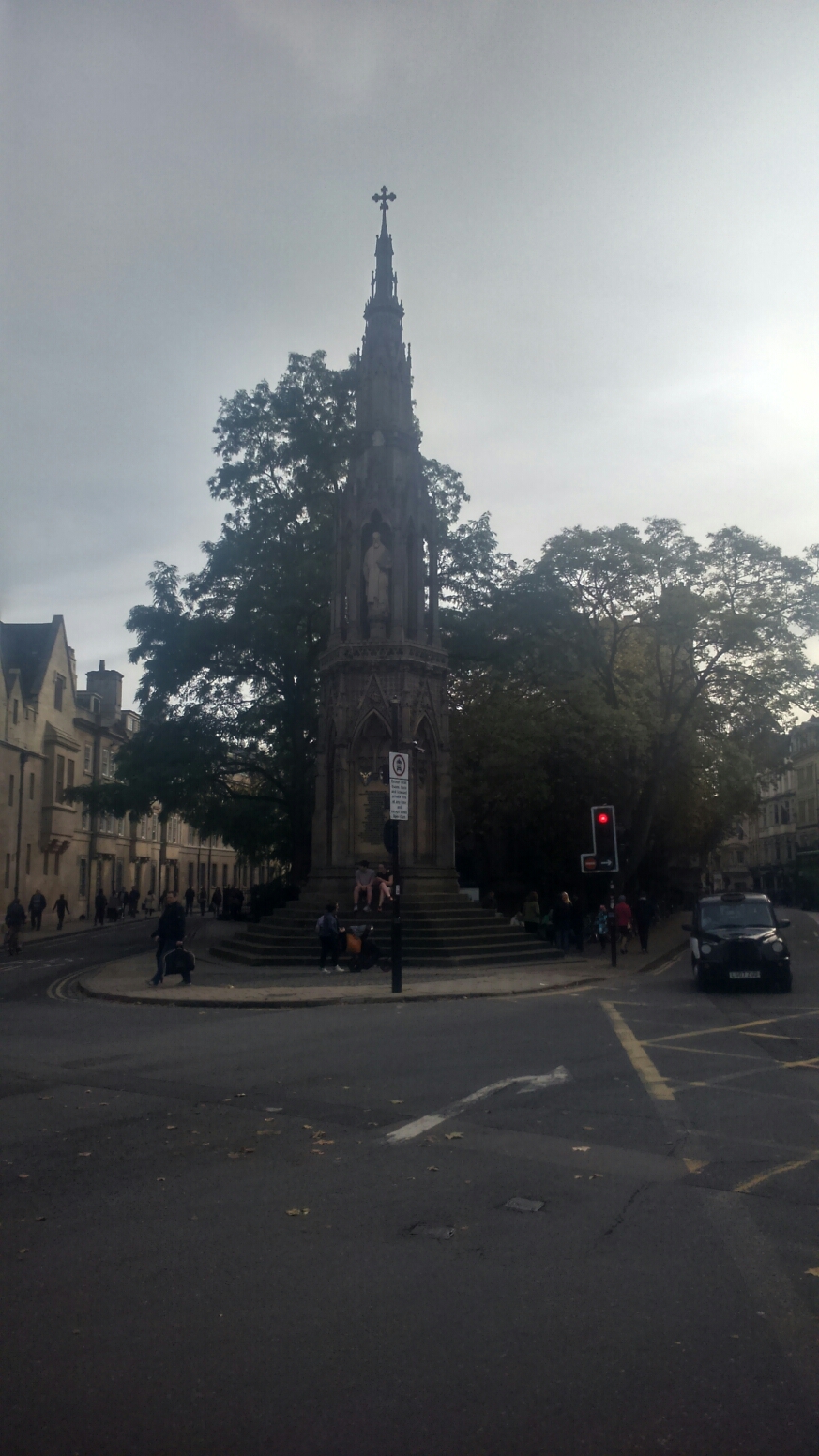
All systems are go and we have agreed a schedule for the official launch of the long-awaited Open Journal of Astrophysics.
More details will come out over the next few weeks. Watch this space!
Follow @telescoperI’ve been on an interview panel all day and have only just emerged, blinking, into the daylight. I thought I’d take the opportunity to remind readers that there is a very important meeting/rally scheduled for Monday evening (26th October) at the Conway Hall in London organised by Science is Vital to campaign against proposed cuts in UK science funding. I got my ticket some time ago, but I think there are a few places left. If you can’t make the meeting then you can still write a postcard to George Osborne. I have done a couple myself. Being in Brighton I was tempted to send one demonstrating the subtle humour characteristic of British seaside postcards, such as this one
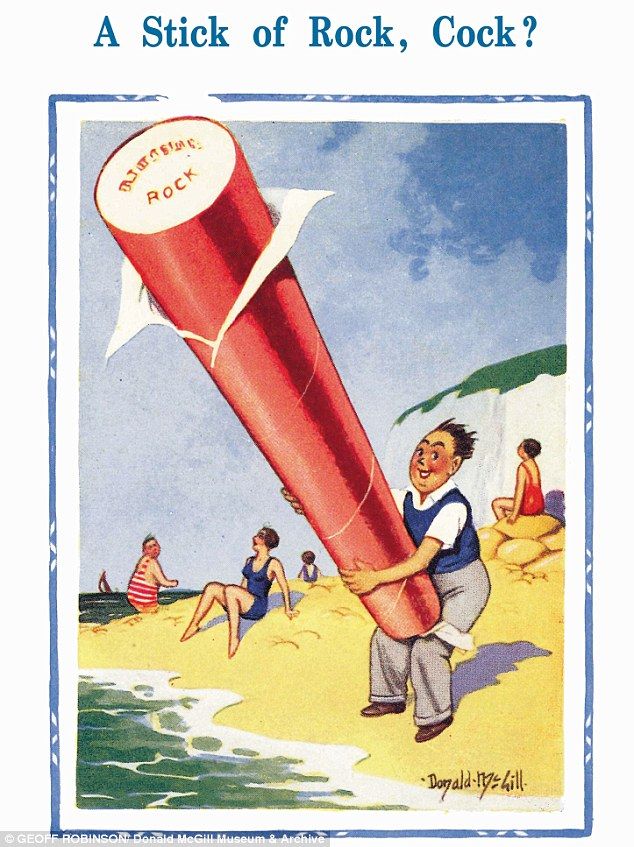 but I decided not to.
Anyway, it’s almost five years since I last participated in a rally in London to protest against proposed cuts to the UK science budget. Since then research funding has been heavily squeezed by a “flat cash” settlement that threatens the survival our science base, with consequent damaging effects on the long-term future of the economy. This graphic, from a post by Stephen Curry, says it all:

Back in 2010, most of us were relieved that the outcome of the Chancellor’s spending review was a level funding in cash terms, although the decline in real terms funding since then has been enormously challenging across the board. The forthcoming spending review puts us in an even more dangerous situation. After the 2010 election the Coalition government announced a “ring fence” that protected science spending from cash cuts for the duration of the last Parliament (although this has, as the graphic above demonstrates) translated into real-terms cuts year on year. This time any commitment to a ring-fence from the Conservative government has been conspicuous by its absence. Indeed, its decision to claw back funding of STEM subjects through HEFCE has demonstrated its intention to remove even this modest protection. The government has signalled its desire to cut overall spending massively this time, and there are few places left for the axe to fall other than in research. Now the UK’s research councils are being told to budget for cuts of 20% and 40% to their core funding. This will lead to the abandonment of many international research projects and lead to large-scale redundancies across the sector, driving the best of our scientists abroad. These plans are bad not only for science, but for the economy as a whole because it is only through growth triggered by research and innovation that this country can hope to recover from the mess that it is currently in.
Follow @telescoper
And now for something completely different: a piece of pure nostalgia. I remember watching Pogles’ Wood when I was a little boy. I wonder if any of my readers are old enough to remember Pippin, Tog and the Pogles? Here is an episode, called Honey Bees, which will bring it all back…
P.S. Should it be Pogles Wood, Pogle’s Wood or Pogles’ Wood?
Follow @pogles_woodI’ve been on the go since 8am today, so I’m going home earlier than usual (i.e. before 7pm). I have just got time before I go to share this picture of staff of the School of Mathematical and Physical Sciences at the University of Sussex taken one sunny day in September.

I am proud that in my role as Head of School I have provided such effective leadership. The number of beards has clearly increased since last year!
Follow @telescoper
I had to miss this meeting – because I was involved in a special Senate meeting on Friday afternoon – but I did make it to the “famous RAS Dining Club” afterwards where I had a brief chat with the author of this post, Cormac O’ Raifeartaigh.
Here, for reference, is the Athenaeum, where we dined on Friday..
The birth centenary of the noted British astrophysicist Sir Fred Hoyle was celebrated on Friday at the Royal Astronomical Society with a one-day meeting of talks describing Sir Fred’s many contributions to 20th century physics. While he is chiefly remembered in some quarters as the physicist who was ‘wrong on the big bang’, Sir Fred in fact made a number of seminal contributions to modern physics in several fields. Indeed, it was a treat to witness former collaborators and students recall his contribution to stellar nucleosynthesis, accretion physics, stellar structure, astrobiology and cosmology, to name but a few.
I hadn’t been to the RAS before although I was elected a Fellow a few years ago, and I was stunned by its fantastic location in central London location. it is housed in the famous Burlington House on Piccadilly, sharing the premises and courtyard with the Linnean Society, the Geological Society
View original post 903 more words


 In the Dark