Archive for the Biographical Category

Talking and Speaking

Posted in Biographical, Books, Talks and Reviews with tags , on August 28, 2015 by telescoper

Just back to Brighton after a pleasant couple of days in Cardiff, mainly dodging the rain but also making a small contribution to the annual STFC Summer School for new PhD students in Astronomy. Incidentally it’s almost exactly 30 years since I attended a similar event, as a new student myself, at the University of Durham.

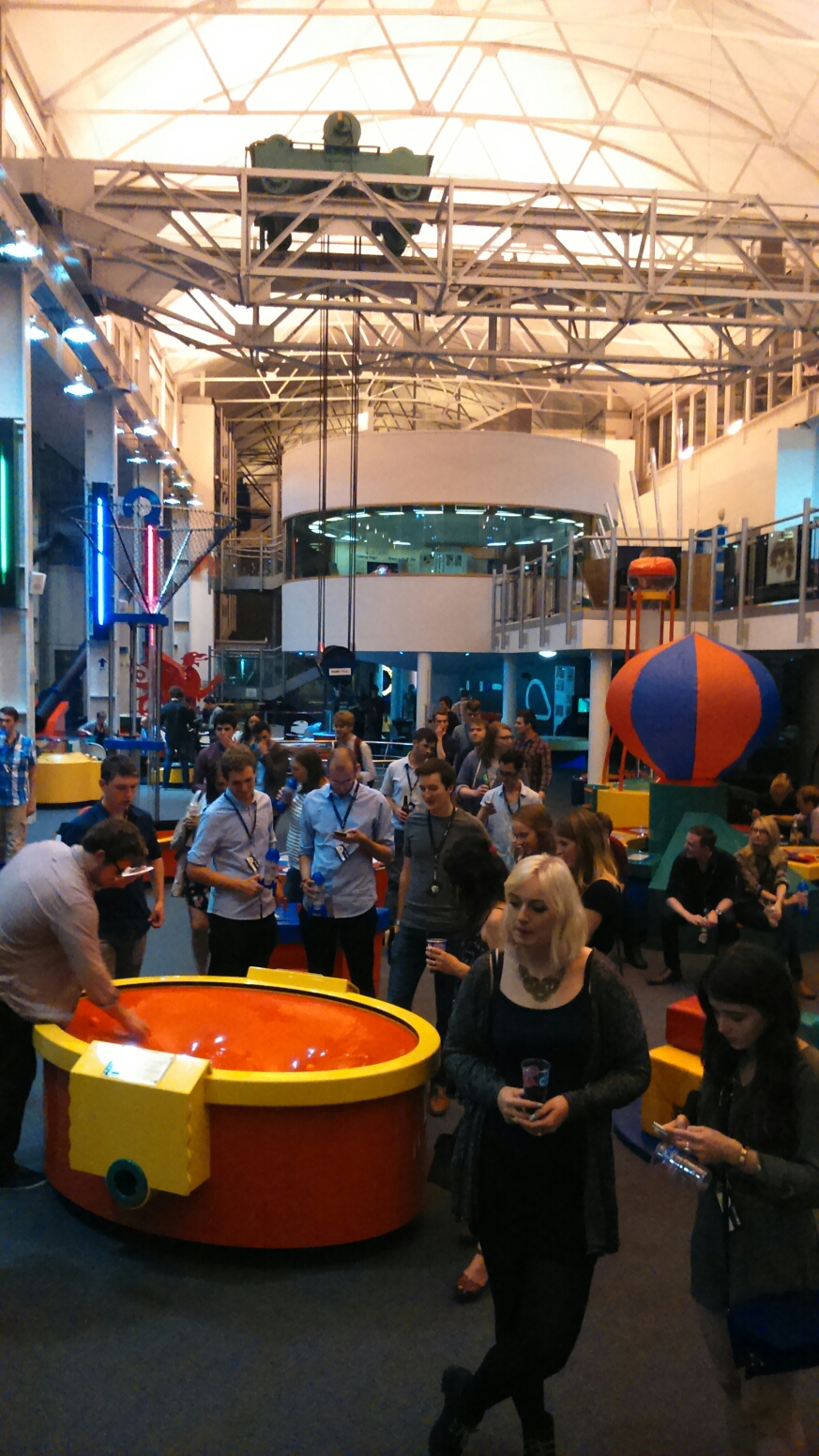
Anyway, I gave a lecture yesterday morning on Statistics in Astronomy (I’ll post the slides on here in due course). I was back in action later in the day at a social barbecue held at Techniquest in Cardiff Bay.

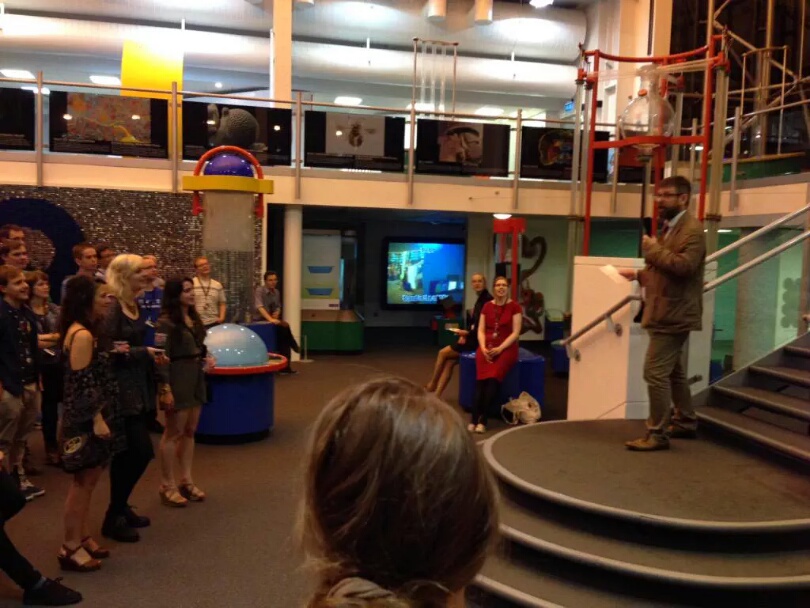
Here’s the scene just before I started my turn:

image

It’s definitely an unusual venue to be giving a speech, but it was fun to do. Here’s a picture of me in action, taken by Ed Gomez:

image

I was asked to give a “motivational speech” to the assembled students but I figured that since they had all already  chosen to do a PhD they probably already had enough motivation. In any case I find it a bit patronising when oldies like me assume that they have to “inspire” the younger generation of scientists. In my experience, any inspiring is at least as likely to happen in the opposite direction! So in the event  I just told a few jokes and gave a bit of general advice, stressing for example the importance of ignoring your supervisor and of locating the departmental stationery cupboard as quickly as possible. 

It was very nice to see some old friends as well as all the new faces at the summer school. I’d like to take this opportunity to wish everyone about to  embark on a PhD, whether in Astronomy or some other subject, all the very best. You’ll find it challenging but immensely rewarding, so enjoy the adventure!

Oh, and thanks to the organisers for inviting me to take part. I was only there for one day, but the whole event seemed to go off very well!

Brighton Pride

Posted in Biographical, Brighton, LGBTQ+ on August 1, 2015 by telescoper

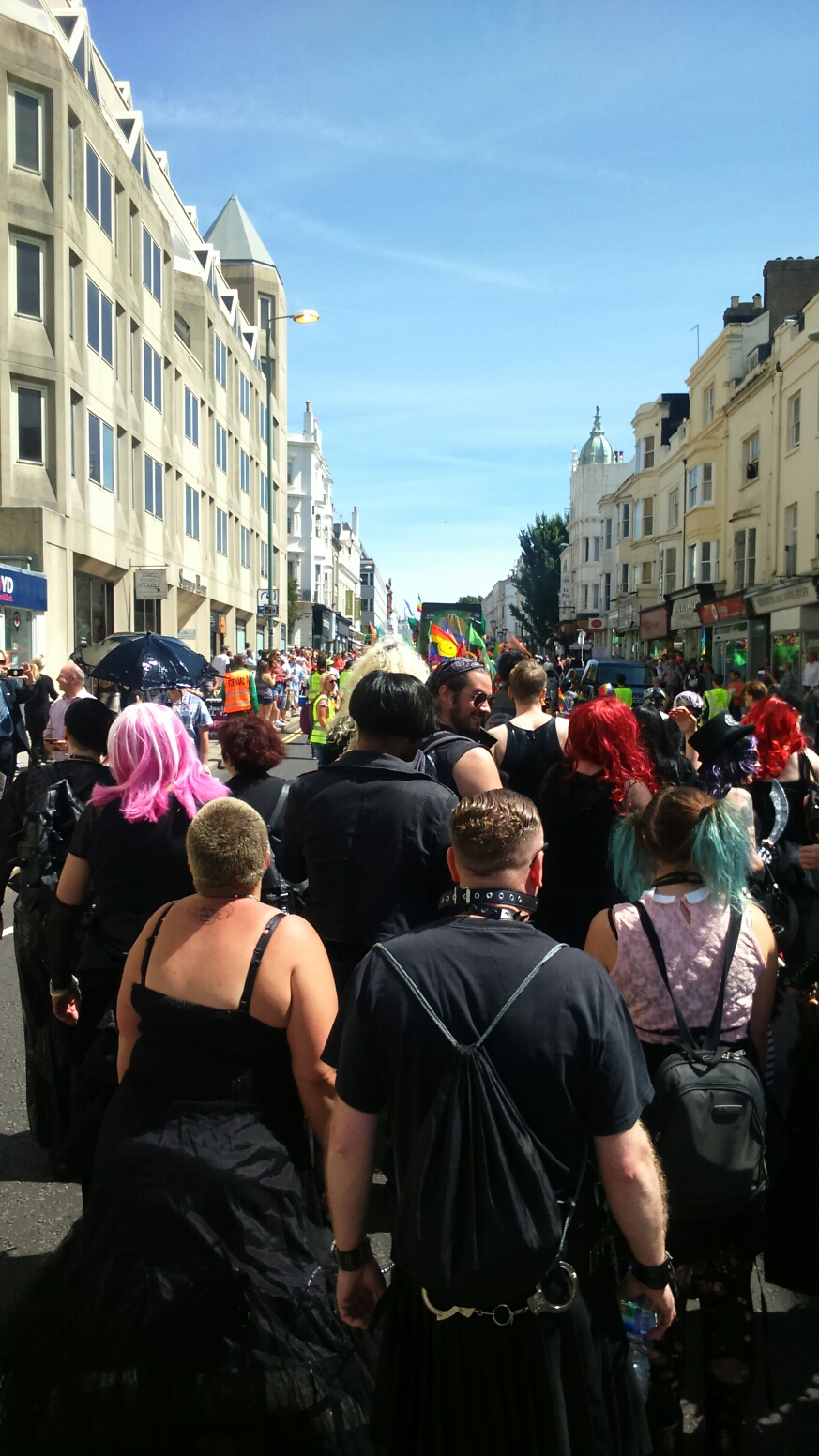
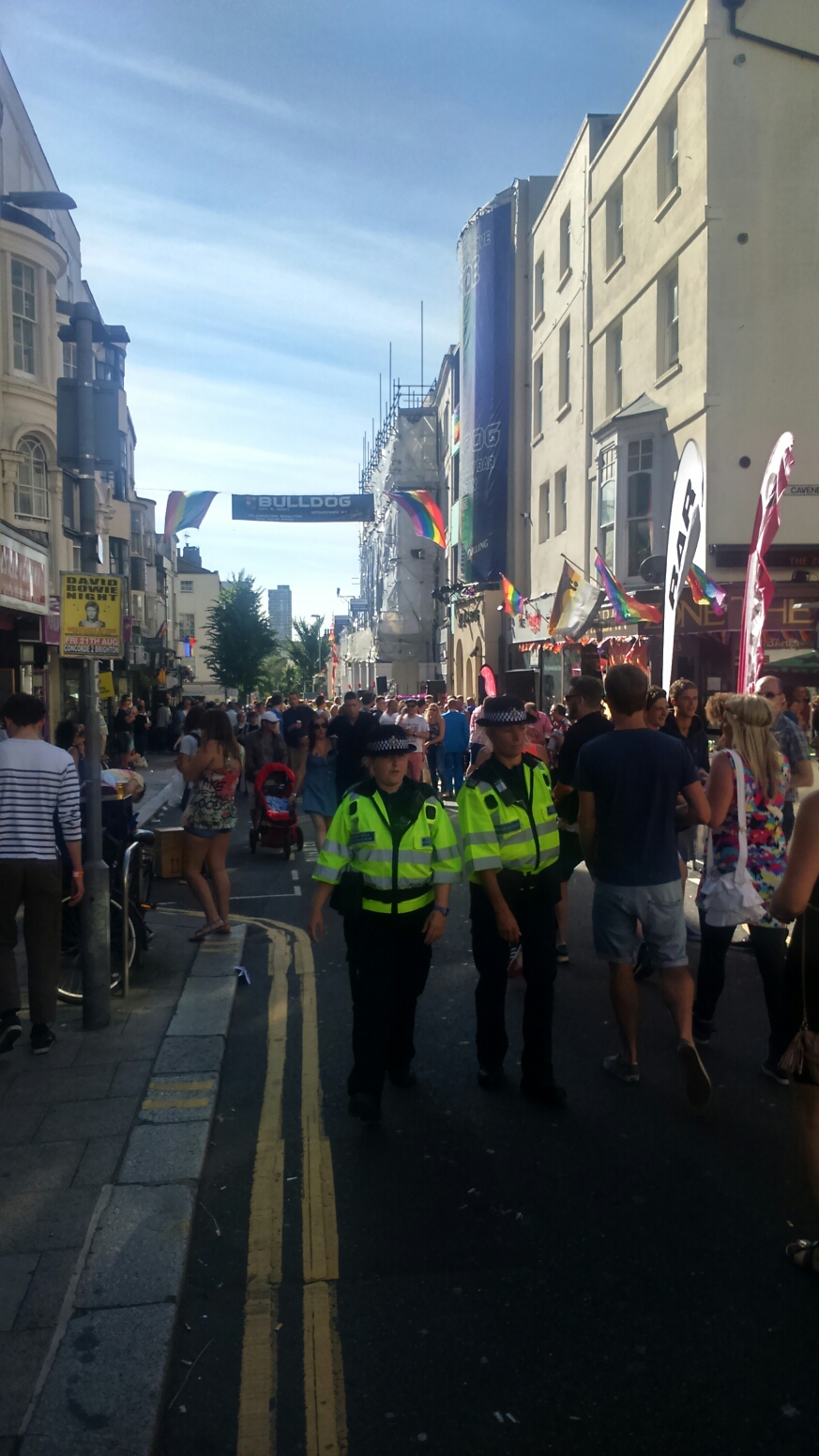
Today I’ve been mainly taking part in the 25th Brighton Pride celebrations. The Parade started out 90 minutes late and on a diverted route because of what appears to have been a hoax bomb (in the words of the police, a “suspect package” – no jokes please) but the atmosphere was incredible. Not only was the parade huge, but the streets were lined with thousands and thousands of people. It was all very friendly so my worries that my fear of crowds would resurface were unfounded.

I walked with the Sussex University student society. Hopefully next year there will be an official staff presence!

The Pride Carnival in Preston Park after the Parade wasn’t so interesting for me so I only stayed a couple of hours before returning to Kemptown for the Village Party, which will go on all night and all day tomorrow. I am just taking a break for a cup of tea and a bite to eat before deciding whether to rejoin the party a bit later. I am however a bit oldy for that sort of thing and may instead decide to listen to the Proms instead..

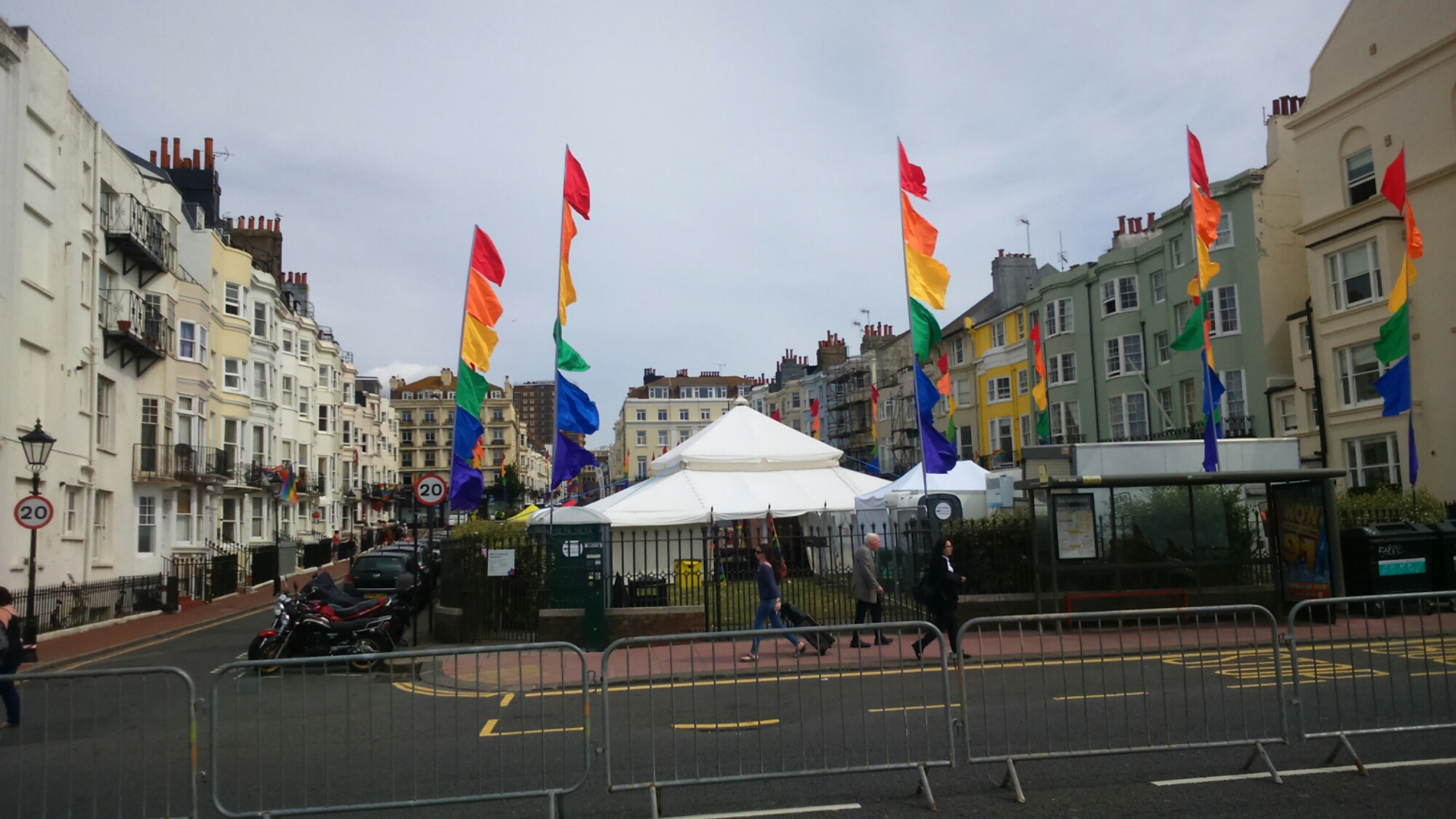
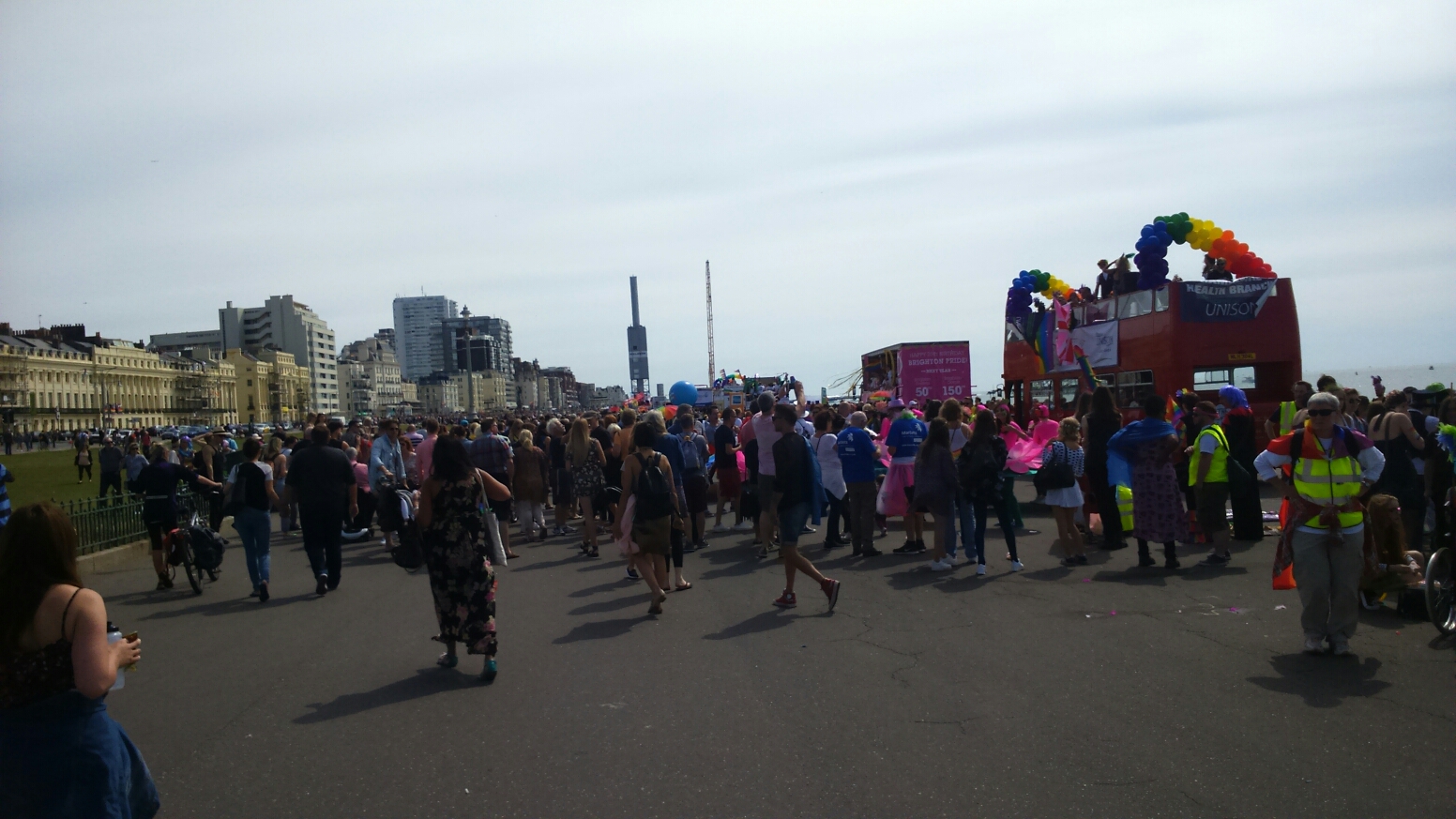
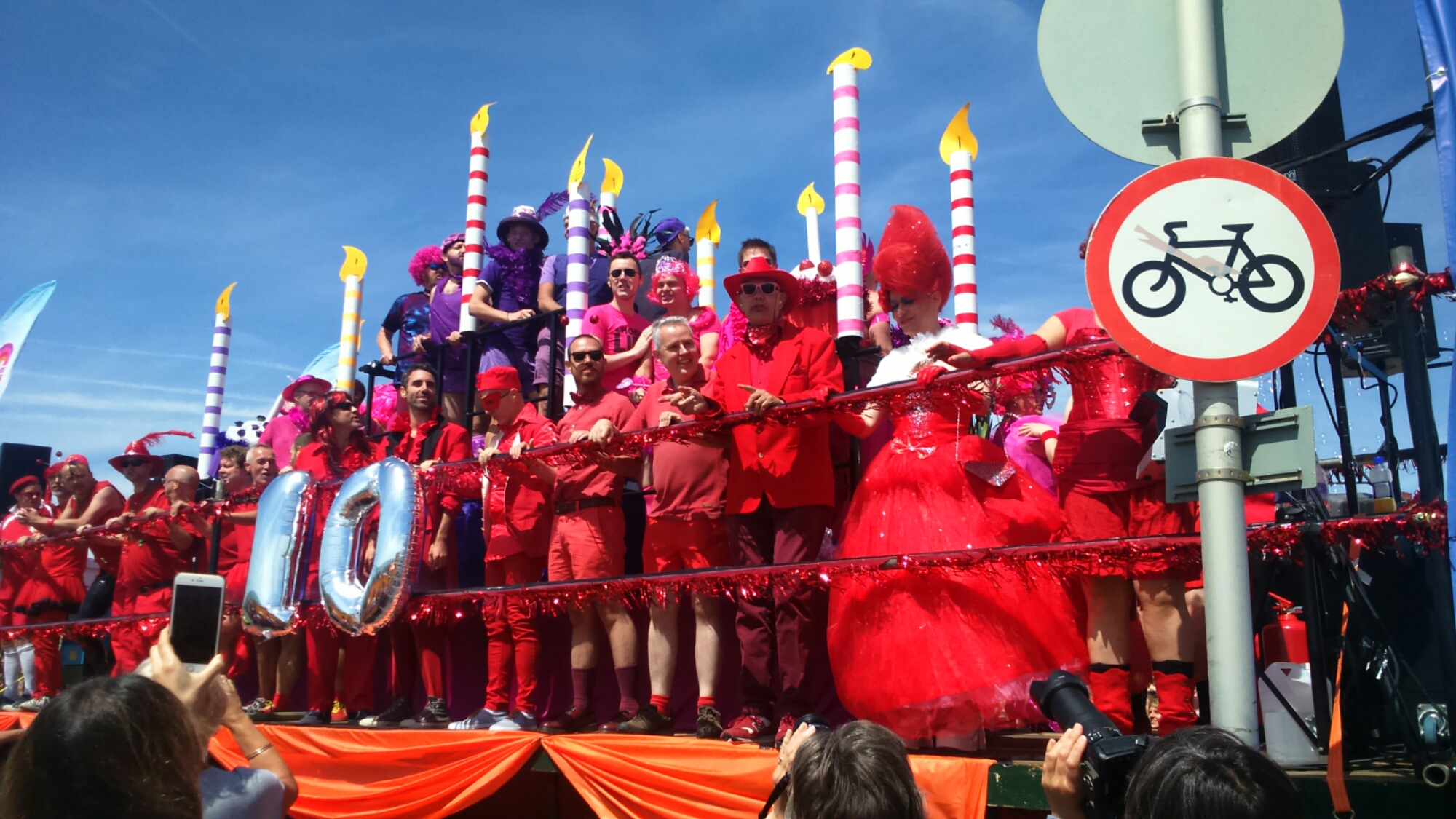
Anyway, here are a few pictures of the parade and village party..

image

image

image

image

image

image

image

Half Term Blue Moon

Posted in Biographical, Music, The Universe and Stuff with tags , on July 31, 2015 by telescoper

Tonight’s a Blue Moon, which happens whenever there are two full moons in a calendar month, although the phrase used to mean the third full moon of a season in which there are four in a quarter-year (or season). A Blue Moon isn’t all that rare an occurence actually. In fact there’s one every two or three years on average. But it does at least provide an excuse to post this again…

Incidentally, today marks the half-way mark in my five-year term as Head of the School of Mathematical and Physical Sciences at the University of Sussex. I started on 1st February 2013, so it’s now been exactly two years and six months. It’s all downhill from here!

Gowns, Grammar and Graduation

Posted in Biographical with tags , on July 19, 2015 by telescoper

After yesterday’s post about the fascinating story of the recipient of an honorary degree, I thought I’d add a few personal comments about last week’s graduation ceremony for the School of Mathematical and Physical Sciences at the University of Sussex, at which I had the pleasure of presenting the graduands. Graduation ceremonies are funny things. With all their costumes and weird traditions, they do seem a bit absurd. On the other hand, even in these modern times, we live with all kinds of  rituals and I don’t see why we shouldn’t celebrate academic achievement in this way. I love graduation ceremonies, actually. As the graduands go across the stage you realize that every one of them has a unique story to tell and a whole universe of possibilities in front of them. How their lives will unfold no-one can tell, but it’s a privilege to be there for one important milestone on their journey. Getting to read their names out is quite stressful – it may not seem like it, but I do spend quite a lot of time fretting about the correct pronunciation of the names.  It’s also a bit strange in some cases finally to put a name to a face that I’ve seen around the place regularly, just before they leave the University for good.

Anyway, here are the obligatory “mortar boards in the air” pictures of graduates and academic staff from  Physics & Astronomy and Mathematics, respectively, taken just outside the Brighton Dome shortly after the ceremony. I am actually in both of these pictures. Somewhere. I also got hit on the head twice by descending hats.

Hatshats_2

Graduation is a grammatical phenomenon too. The word “graduation” is derived from the latin word gradus meaning a step, from which was eventually made the mediaeval latin verb graduare, meaning “to take a degree”. The past participle  of this is formed via the supine graduatus, hence the English noun “graduate” (i.e. one who has taken a degree). The word graduand, on the other hand, which is used before and during the ceremony to describe those about to graduate, is from the  gerundive form graduandus meaning “to be graduated”. What really happens grammatically speaking, therefore, is that students swap their gerundives for participles, although I suspect most participants don’t think of it in quite those terms.

Graduation ceremonies are quite colourful because staff wear the gown appropriate to their highest degree. Colours and styles vary greatly from one University to another even within the United Kingdom, and there are even more variations on show when schools contain staff who got their degrees abroad. Since I got my doctorate from the University of Sussex, which was created in the 1960s, the academic garb I used to wear on these occasions  is actually quite modern-looking. With its raised collar, red ribbons and capped shoulders it’s also more than a little bit camp. It often brought  a few comments when I participated in the academic procession prior to graduation, but I usually replied by saying I bought the outfit at Ann Summers. Here is a picture of me wearing the old-style Sussex doctoral gown just after I received my DPhil in 1989 at a ceremony at the Brighton Centre:

Graduation

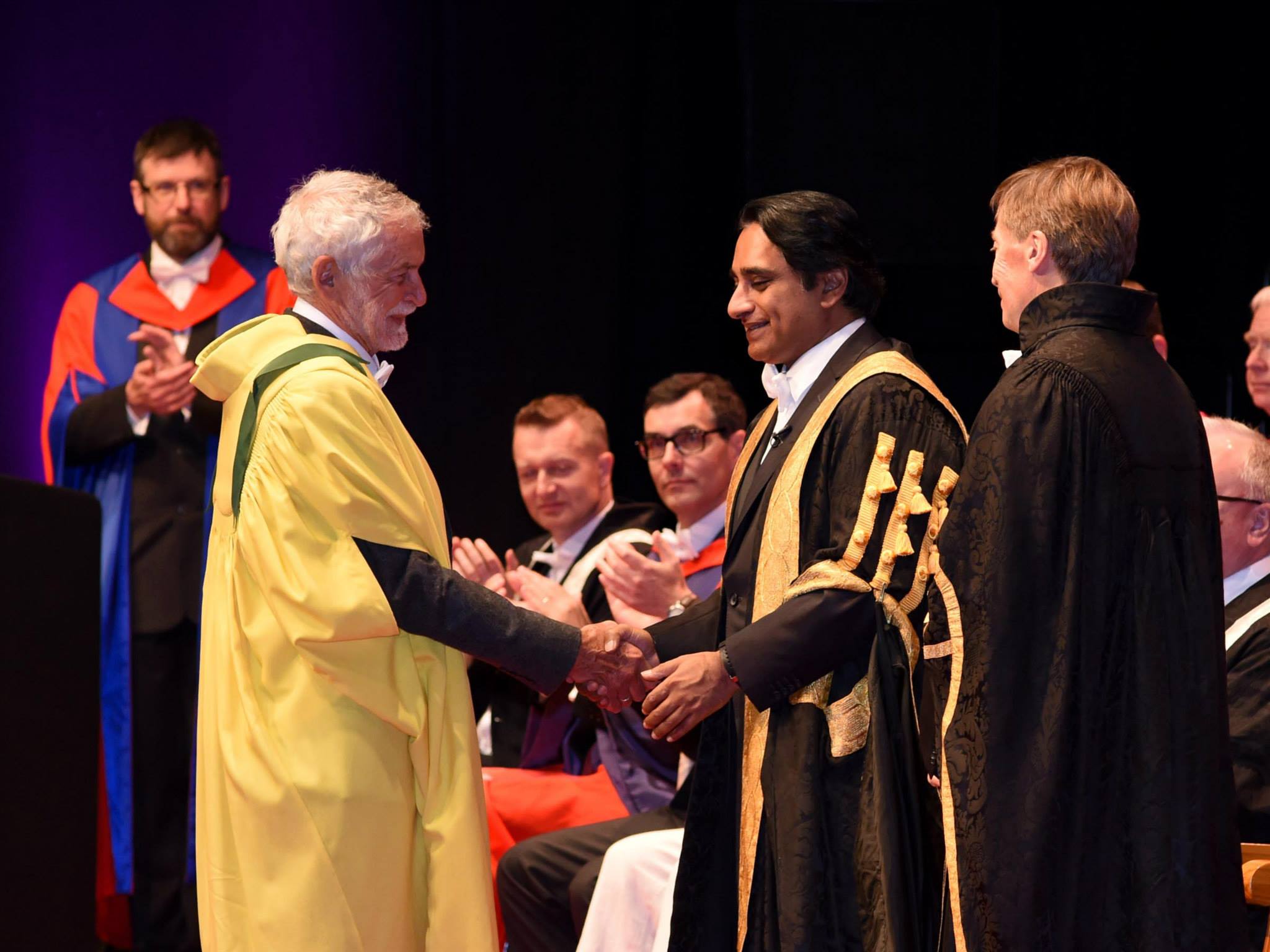
Unfortunately the University decided to change the style recently to something a bit more standard, as demonstrated in this picture from yesterday’s post:

John Francis receiving his Honorary Doctorate from the Chancellor, Sanjeev Bhaskar.

John Francis receiving his Honorary Doctorate from the Chancellor, Sanjeev Bhaskar.

That’s me on the far left, in case you didn’t realise. I still feel a bit uncomfortable wearing academic dress that’s different from what I wore for my graduation. I did mention this once to the Vice Chancellor and he said that it would be perfectly alright if I wore the old style instead. The problem is that I never actually bought the gown and Ede & Ravescroft, who supply the gear for such occasions, no longer provide it. Perhaps I should try to find a second-hand one somewhere?

Graduation of course isn’t just about dressing up. Nor is it only about recognising academic achievement. It’s also a rite of passage on the way to adulthood and independence, so the presence of the parents at the ceremony adds another emotional dimension to the goings-on. Although everyone is rightly proud of the achievement – either their own in the case of the graduands or that of others in the case of the guests – there’s also a bit of sadness to go with the goodbyes. It always seems that as a lecturer you are only just getting to know students by the time they graduate, but that’s enough to miss them when they go.

I’ve also been through two graduations on the other side of the fence, as it were. My first degree came from Cambridge so I had to participate in the even more archaic ceremony for that institution. The whole thing is done in Latin there (or was when I graduated) and involves each graduand holding a finger held out by their College’s Praelector and then kneeling down in front of the presiding dignitary, who is either the Vice-Chancellor ot the Chancellor. I can’t remember which. It’s also worth mentioning that although I did Natural Sciences (specialising in Theoretical Physics), the degree I got was Bachelor of Arts. Other than that, and the fact that the graduands walk to the Senate House from their College through the streets of Cambridge,  I don’t remember much about the actual ceremony.

I was very nervous for that first graduation. The reason was that my parents had divorced some years before and my Mum had re-married. My Dad wouldn’t speak to her or her second husband. Immediately after the ceremony there was a garden party at my college, Magdalene, at which the two parts of my family occupied positions at opposite corners of the lawn and I scuttled between them trying to keep everyone happy. It was like that for the rest of the day and I have to say it was very stressful. A few years later I got my doctorate (actually DPhil) from the University of Sussex, at the Brighton Centre on the seafront. It was pretty much the same deal again with the warring family factions, but I enjoyed the whole day a lot more that time. And I got to wear the funny gown.

Anyway, apologies for going all biographical. My main purpose for writing this post was to thank Thursday’s graduands graduates for the many kind comments and to offer my heartiest congratulations to those I didn’t get to talk to in person. If you are a recent graduate from the School of Mathematical and Physical Sciences then please do stay in touch and let us know how you get on in the big wide world!

Pluto and the Pavilion

Posted in Biographical, Football, History with tags , , , , , on July 14, 2015 by telescoper

This is a busy week in many ways and for many reasons, but the main activity revolves around Graduation at the University of Sussex; the ceremony for graduates from my School (Mathematical and Physical Sciences) takes place on Thursday which gives me a couple of days to practice the pronunciation of the names I have to read out!

Anyway, last night there was a very Commemoration Dinner in the Dining Room of Brighton Pavilion:

Brighton_Pavilion_Dining_room

The decor is a little understated for my tastes, and in any case I was among a group of about 40 guests who were seated elsewhere owing to the popularity of the event. In fact I was in the Red Drawing Room, which as its name suggests is, er, red:

5_royal_pavilion_red_drawing_room

Anyway, the dinner itself was splendid with particularly fine wine to boot. One of the topics of conversation was the forthcoming flypast of Pluto by the NASA New Horizons spacecraft. As the token astrophysicist on my table I tried my best to answer questions about this event. In fact the closest approach to Pluto takes place about 12.50 pm today (BST) but it will take some time for the images to be downloaded and processed; data transmission rates from the outer edge of the Solar System are rather limited! After passing Pluto, the spacecraft will carry on out of the Solar System into interstellar space. One thing I didn’t know until this morning was that the discoverer of Pluto, Clyde Tombaugh, expressed a wish that when he died his ashes should be sent into space. In fact, they are on New Horizons,  being carried past the planet object he found just 85 years ago. I find that very moving, but it’s also so inspiring that such a short time after Pluto was discovered a spacecraft is arriving there to study it. We humans can do great things if we put our minds to them. Science provides us with constant reminders of this inspirational fact. Unfortunately, politics tends to do the opposite…

I hope to provide a few updates with images from New Horizons if I get time. Here to whet your appetite is today’s stunning Astronomy Picture of the Day, showing Pluto and its largest moon, Charon, in the same frame:

PlutoCharon01_NewHorizons_1080

Here’s a close-up of Pluto from yesterday:

Pluto_yesterday

And if that isn’t enough, click here for a simulation of the detail we expect to see when New Horizons reaches its closest approach to Pluto.

Ten Years and a Day…

Posted in Biographical with tags , , on July 7, 2015 by telescoper

Today is the tenth anniversary of the terrorist attacks that killed 58 people in London on 7th July 2005. Can that really have been ten years ago?

It seems apt to post this recollection again.

–o–

One summer morning in 2005 I rose early and left my house – I was living in Nottingham then – and took a train to London. I was quite excited. I was going to be interviewed later that day for a programme in the BBC TV series Horizon called The Hawking Paradox. The filming was to take place inside the Café de Paris near Piccadilly Circus, for the simple reason that it wasn’t used during the daytime, and would therefore be both quiet and cheap to hire. I was keen not to be late so I got a train that was due to arrive at St Pancras Station in London at about 9.30am.

On the train I dealt with a few bits of correspondence, filling in forms and writing out cheques to pay bills, so had a couple of  items of mail to post when I got to London. The train was on time, and it was a fine morning, so I decided to walk from the station down through Soho to the location of the shoot.

I crossed Euston Road and walked down towards Bloomsbury. Spying  a bright red Royal Mail postbox across the road  in Tavistock Square, I waited for a bus to go past, crossed the road and popped my letters into the box. I looked at my watch to see if I had time for coffee on the way to Piccadilly. It was exactly 9.45am, on July 6th 2005.

I enjoyed the filming, although it took quite a long time – as these things do. Breaking for lunch in a local pizzeria, we were surrounded by a hubbub of excitement when news broke that London had been awarded the right to stage the 2012 Olympics. We finished the filming and I headed back to Nottingham on the train. All-in-all it had been a very pleasant day.

Last week the inquest into the terrorist attacks on London delivered its long awaited verdict into the terrible events of 7th July 2005, the day after my trip. Here is a picture of the postbox in Tavistock Square taken on 7/7/2005. The bomb that tore the roof off the bus and killed 13 people went off at 9.47am, almost exactly 24 hours after I had been in precisely the same spot. Spooky.

Should Academics be (Facebook) Friends with Students?

Posted in Biographical, Education with tags , , , , on June 30, 2015 by telescoper

I noticed a short article in the Times Higher last week about a small survey that concluded that more than half academics count students among their Facebook friends. It’s actually a very small survey – of 308 academics, all based in America – of whom 54.4% admitted being “friends” with students.

For those of you who don’t use Facebook, a “Facebook friend” isn’t necessarily an actual real-life friend, it’s just someone else on Facebook with whom  you agree to share information, photographs, music and other stuff. Different people have different policies with regard to whether to accept or decline a friend request (or indeed initiate one). I only ever accept requests from people I know in another context, for example, which restricts the number of people who get to see my Facebook scribblings. Others are less selective and have many many more Facebook friends.

One of the things about Facebook is that people do sometimes share quite personal things, and sometimes things that might be quite compromising in a work context, e.g. pictures of themselves ina  state of inebriation. I suppose that’s why it’s a rather  contentious whether a member of academic staff in a University should or not be “friends” with their undergraduate students. I know many of my friends and colleagues  in academia flatly refuse to befriend undergraduate students (in the Facebook sense) and indeed this is the advice given by some institutions to staff. Most wouldn’t have a problem with having social media interactions with their graduate students, though. The nature of the relationship between a PhD student and supervisor is very different from that between an undergraduate and a lecturer.

There is a point on social media where professionalism might be compromised just as there is in other social interactions. The trouble is knowing precisely where that boundary lies, which is easy to misjudge. I’ve never felt that it was in any way improper to be friendly to students. Indeed I think that could well improve the students’ experience of education. If the relationship with staff is too distant students may not  feel comfortable asking for help with their work, or advice about wider things. Why should being “professional” mean not treating students as human beings?

One can take friendliness too far, however. There have to be some boundaries, and intrusive or demanding behaviour that makes students uncomfortable should be avoided.

I’ve thought about this quite a lot since I joined Facebook, which was in 2007. What I decided to do is simple. If a student initiates a friend request, I usually accept it (as long as I actually know who it is). Not many make such requests, but some do. More often, in fact, students send friend requests after they’ve graduated, when they perhaps feel liberated from the student-teacher relationship. On the other hand, I never initiate friend requests with students, for fear that they might feel pressured to accept it. It’s much the same as with other interactions.  For example, I rarely visit the extensive Student Spaces in the School without being invited there for a specific reason. If I did I’d just feel I was intruding. Many universities don’t bother to provide study space for their undergraduates, so this is probably only relevant here in Sussex.

Anyway, that’s my response. I know it’s a sort of compromise, but there you are. I am however interested in how other academics approach this issue. Plus, I haven’t done a poll for a while. So here we go:


Stonewall and After – in Praise of Drag Queens

Posted in Biographical, History, LGBTQ+ with tags , , , , on June 28, 2015 by telescoper

Despite not being able to go to the big event in London yesterday, it’s been a very memorable Pride Weekend, preceded as it was by the ruling of the Supreme Court of the United States of America that the right for same sex couples to get married was protected under the constitution. The White House responded to the judgement in appropriate style:

white-house-rainbow-3

I’m tempted to quote Genesis 9:16, but I won’t.

My facebook and twitter feeds have been filled with rainbows all weekend, as is my wordpress editor page as I write this piece. It’s been great to see so many people, straight and gay, celebrating diversity and equality. Even a Dalek joined in.

Gay Dalek

I’m a bit more cynical about the number of businesses that have tried to cash in on  Pride but even that is acceptance of a sort. It’s all very different from the first Pride March I went on, way back in 1986. That was a much smaller scale event than yesterday’s, and politicians were – with very few exceptions – notable by their absence.

In fact today is the anniversary of the event commemorated by Pride. It was in the early hours of the morning of Saturday June 28th 1969 that the Stonewall Riots took place in the Greenwich Village area of New York City. There are few photographs and no film footage of what happened which, together with some conflicting eyewitness accounts, has contrbuted to the almost mythical status of these demonstations, which were centred on the Stonewall Inn (which, incidentally, still exists).  What is, I think, clear is that they were the spontaneous manifestation of the anger of a community that had simply had enough of the way it was being treated by the police. Although it wasn’t the first such protest in the USA, I still think it is also the case that Stonewall was a defining moment in the history of the movement for LGBT equality.

One of the myths that has grown up around Stonewall is that the Stonewall Inn was a place primarily frequented by drag queens and it was the drag queens who began the fight back against intolerable  police harassment. That was the standard version, but the truth is much more complicated and uncertain that that. Nevertheless, it is clear that it was the attempted arrest of four people – three male (cross-dressers) and one female – that ignited the protest. Whether they led it or not, there’s no doubt that drag queens played a major role in the birth of the gay liberation movement. Indeed, to this day, it remains the case that the “T” part of the LGBT spectrum (which I interpret to include Transgender and Transvestite) is often neglected by the rest of the rainbow.

I have my own reasons for being grateful for drag queens. When I was a youngster (still at School) I occasionally visited a gay bar in Newcastle called the Courtyard. I was under age for drinking alcohol let alone anything else – the age of consent was 21 in those days – but I got a kick out of the attention I received and flirted outrageously without ever taking things any further. I never had to buy my own drinks, let’s put it that way.

Anyway, one evening I left the pub to get the bus home – the bus station was adjacent to the pub – but was immediately confronted by a young bloke who grabbed hold of me and asked if I was a “poof”. Before I could answer, a figure loomed up behind him and shouted “Leave him alone!”. My assailant let go of me and turned round to face my guardian angel, or rather guardian drag queen. No ordinary drag queen either. This one, at least in my memory, was enormous: about six foot six and built like a docker, but looking even taller because of the big hair and high heels. The yob laughed sneeringly whereupon he received the immediate response of a powerful right jab to the point of the chin, like something out of boxing manual. His head snapped back and hit the glass wall of a bus shelter. Blood spurted from his mouth as he slumped to the ground.

I honestly thought he was dead, and so apparently did my rescuer who told me in no uncertain terms to get the hell away. Apart from everything else, the pub would have got into trouble if they’d known I had even been in there. I ran to the next stop where I got a bus straightaway. I was frightened there would be something on the news about a violent death in the town centre, but that never happened. It turns out the “gentleman” concerned had bitten his tongue when the back of his head hit the bus shelter. Must have been painful, but not life-threatening. My sympathy remains limited.

I think there’s a moral to this story, but I’ll leave it up to you to decide what it is.

Sussex University Memories – MAPS in 1989

Posted in Biographical with tags , , on June 24, 2015 by telescoper

I was at a meeting this afternoon doing some planning for a nice event coming up next month – of which more anon – when I was reminded of this photograph, taken one sunny day on the University of Sussex campus way back in 1989. It shows staff of the School of Mathematical and Physical Sciences which was MAPS, acronymically speaking, in those days; now it is MPS. The picture is taken from a very interesting website of the history of physics at Sussex.

800px-MAPS_photo_1989_colour

I was a postdoctoral research fellow in the Astronomy Centre in those days. I wonder who can spot me in the picture?

My PhD Tree

Posted in Biographical, The Universe and Stuff with tags , , on June 23, 2015 by telescoper

Last week I discovered that somebody has kindly constructed my PhD Tree. I later discovered that similar things have been constructed for quite a few other scientists of my acquaintance. Perhaps even yours?

Anyway, here is my academic lineage. As you can see, I have some distinguished ancestors. In particular, my great-grandfather (academically speaking) was Paul Dirac

PhD Tree

Incidentally, you might like to see Dirac’s hand-written notes for his PhD Thesis, which you can find here. It dates from 1926. As far as I am aware this is the first PhD thesis ever written on the subject of Quantum Mechanics. It’s also worth mentioning the tremendous contribution to British science made by R.H. Fowler. Fifteen Fellows of the Royal Society and three Nobel Laureates (Chandrasekhar, Dirac, and Mott) were supervised by Fowler in Cambridge between 1922 and 1939.