Archive for the Biographical Category

Freshers’ Week Reminiscences

Posted in Biographical, Education with tags , , , , on September 13, 2014 by telescoper

So here I am again, on campus, on a Saturday, this time to attend some receptions for new students (“Freshers”) who have just arrived at the University of Sussex to start their courses. I always enjoy meeting the new intake at this time of year; we sometimes call them “The Autumn Collection”, although it’s only mid-September and definitely not autumn yet. In fact it’s very warm and sunny and summery on Falmer campus today. The  downside of these annual events is that the students look much younger every year, so every one makes me feel a lot older than the one before!

Looking through my back catalogue of blog posts I realize that this blog is six years old next week. One of my first blog posts was about  memories of my own first day at University and it seems appropriate to repeat some of it here. I notice actually that virtually all Freshers’ weeks I’ve written about over the past six years have been accompanied by fine weather. I find this kind of weather a bit spooky because it always takes me back to the time when I left home to go to University, as thousands of fledgling students are about to do this year in their turn. I did it 32 years ago, getting on a train at Newcastle Central station with my bags of books and clothes. I said goodbye to my parents there. There was never any question of them taking me in the car all the way to Cambridge. It wasn’t practical and I wouldn’t have wanted them to do it anyway. After changing from the Inter City at Peterborough onto a local train, we trundled through the flatness of East Anglia until it reached Cambridge. The weather, at least in my memory, was exactly like today.

I don’t remember much about the actual journey, but I must have felt a mixture of fear and excitement. Nobody in my family had ever been to University before, let alone to Cambridge. Come to think of it, nobody from my family has done so since either. I was a bit worried about whether the course I would take in Natural Sciences would turn out to be difficult, but I think my main concern was how I would fit in generally.

I had been working between leaving school and starting my undergraduate course, so I had some money in the bank and I was also to receive a full grant. I wasn’t really worried about cash. But I hadn’t come from a posh family and didn’t really know the form. I didn’t have much experience of life outside the North East either. I’d been to London only once before going to Cambridge, and had never been abroad.

I didn’t have any posh clothes, a deficiency I thought would mark me as an outsider. I had always been grateful for having to wear a school uniform (which was bought with vouchers from the Council) because it meant that I dressed the same as the other kids at School, most of whom came from much wealthier families. But this turned out not to matter at all. Regardless of their family background, students were generally a mixture of shabby and fashionable, like they are today. Physics students in particular didn’t even bother with the fashionable bit. Although I didn’t have a proper dinner jacket for the Matriculation Dinner, held for all the new undergraduates, nobody said anything about my dark suit which I was told would be acceptable as long as it was a “lounge suit” (whatever that is).

Taking a taxi from the station, I finally arrived at Magdalene College. I waited outside, a bundle of nerves, for some time before entering the Porter’s Lodge and starting my life as a student. My name was found and ticked off and a key issued for my room in the Lutyens building. It turned out to be a large room, with a kind of screen that could be pulled across to divide the room into two, although I never actually used this contraption. There was a single bed and a kind of cupboard containing a sink and a mirror in the bit that could be hidden by the screen. The rest of the room contained a sofa, a table, a desk, and various chairs, all of them quite old but solidly made. Outside my  room, on the landing, was the gyp room, a kind of small kitchen, where I was to make countless cups of tea over the following months, although I never actually cooked anything there.

I struggled in with my bags and sat on the bed. It wasn’t at all like I had imagined. I realized that no amount of imagining would ever really have prepared me for what was going to happen at University.

I  stared at my luggage. I suddenly felt like I had landed on a strange island where I didn’t know anyone, and couldn’t remember why I had gone there or what I was supposed to be doing. I’ve had that feeling ever since, but after 32 years I think I’m used to it.

Writer’s Block

Posted in Biographical, Books, Talks and Reviews on August 31, 2014 by telescoper

A few people have asked why I’ve had the sheer effrontery to take a week off and come to Cardiff. Well, it may surprise you to learn that even Heads of School have a holiday entitlement, and in the 18 months I’ve been in that position I’ve only managed to take a small fraction of mine!

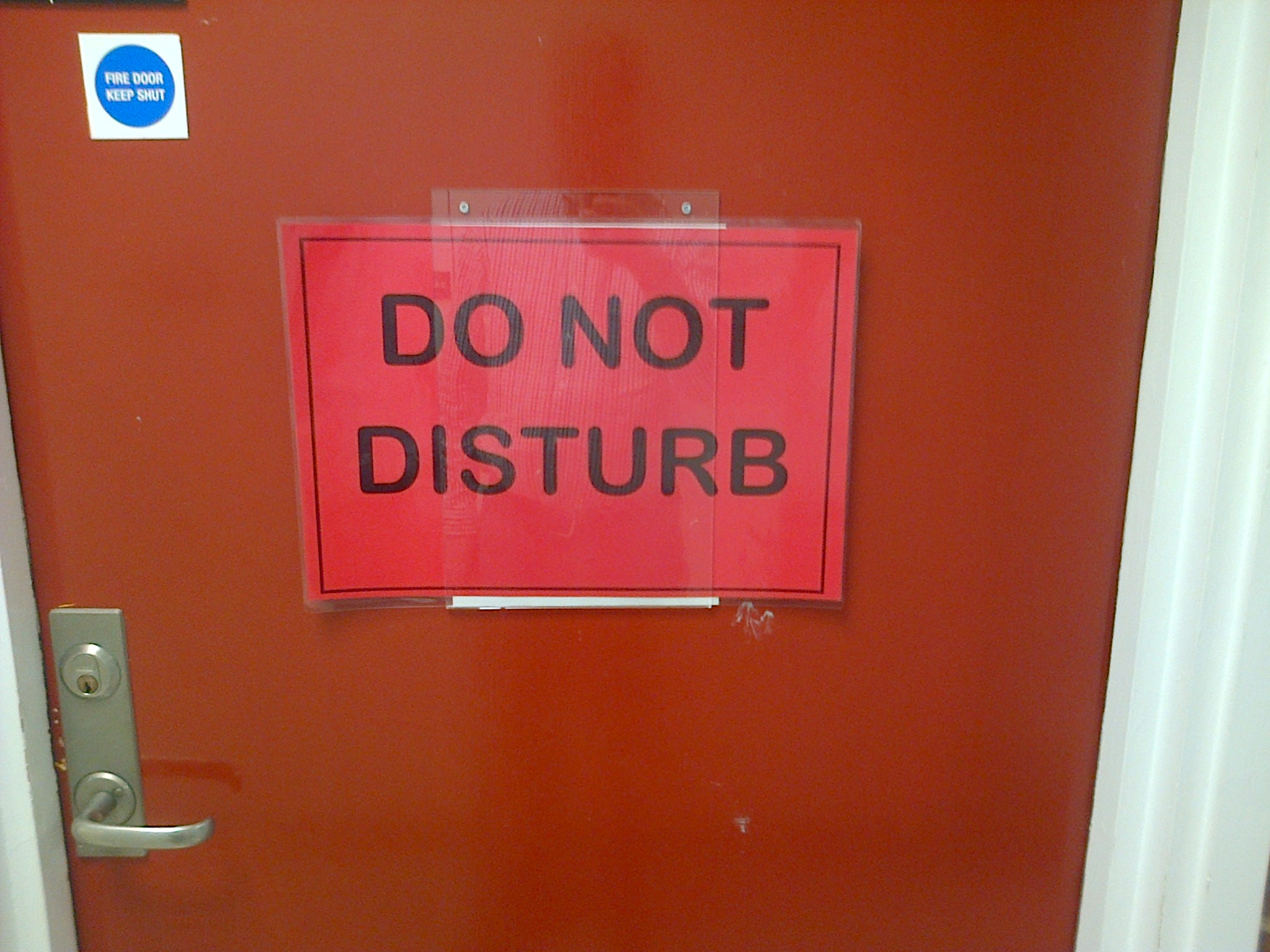
But the real reason for this break is that I need some time without disturbance to finish off the long-awaited Second Edition of Cosmology: A Very Short Introduction. Dorothy made me a subtle sign for my office door, but it has proved largely ineffective at preventing distractions. So here I am, back in the Cardiff residence, blocking out as much as I can to get on with some writing.

I hope this clarifies the situation.

Cold War Cardiff

Posted in Biographical, Politics with tags , on August 30, 2014 by telescoper

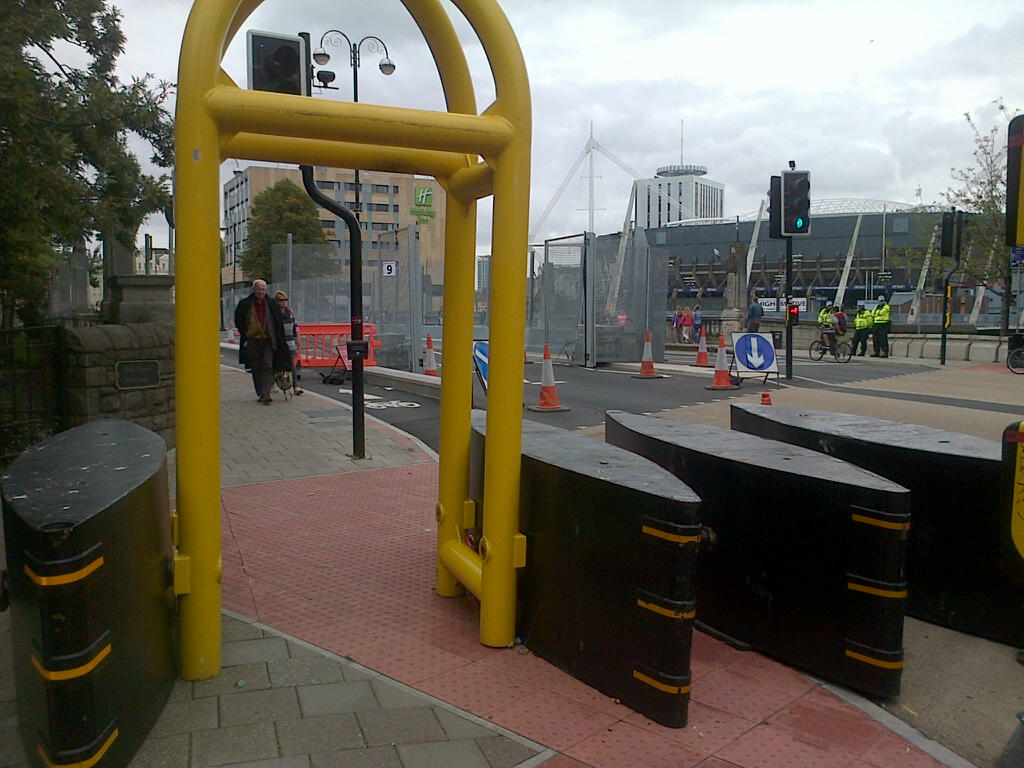
Here I am, back in Cardiff. Though given the roadblocks metal fences and hordes of armed police, you might be forgiven for thinking it was Berlin at the height of the Cold War.

All of beautiful Bute Park is fenced off, and there’s considerable disruption to the traffic through the city. All this will last over a month, and the NATO boondoggle isn’t even here. It actually takes place near Newport, twenty miles away. They’re just using Cardiff for two days..

Whoever made the decision to force this nonsense on the City should be held to account. There should be a full public inquiry into the gross abuse of power. And I hope the people of Cardiff remember this, and express their outrage at the Council when they vote at the next elections..

The photo, by the way, is at the bridge over the Taff at Cowbridge Road. Or is it Checkpoint Charlie?


Back in Blighty

Posted in Biographical on August 24, 2014 by telescoper

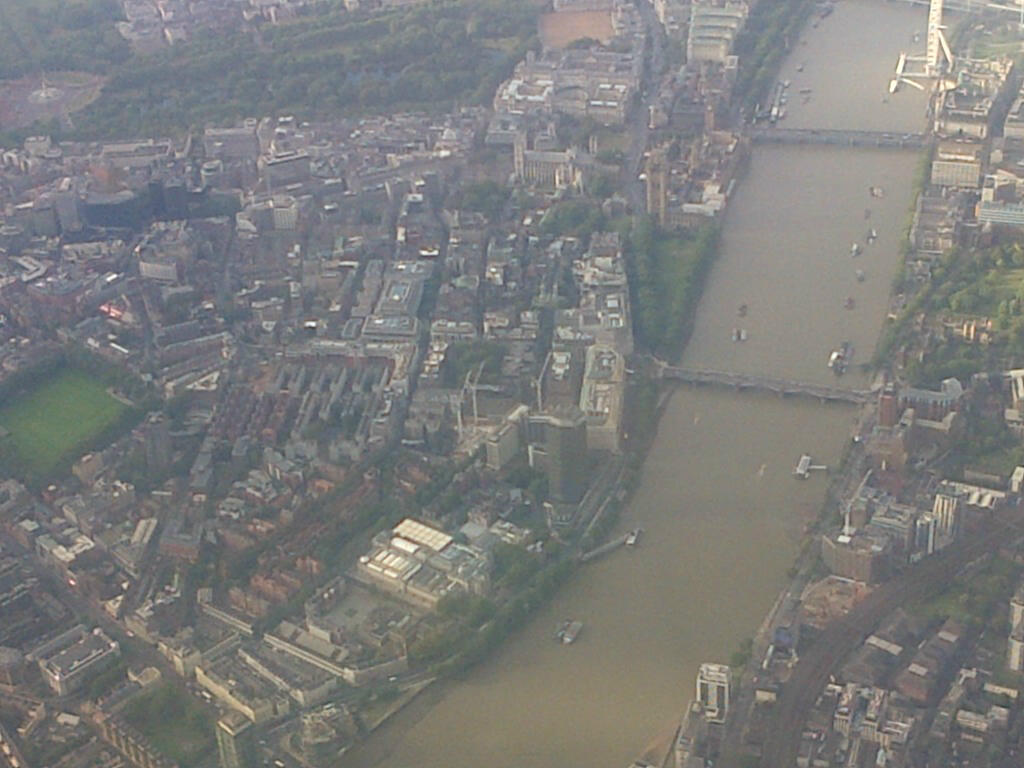
So here I am then, back in Brighton. My flight yesterday actually arrived 20 minutes early at Heathrow with (astonishingly) no air traffic delays at all. I got a nice aerial view of London on the way in too! Despite the usual congestion at passport control, barely three hours later I was back in my flat drinking a nice cup of tea. I did tube+train this time, as I would have had to wait an hour for the next coach..

I enjoyed my little trip to Copenhagen, as I do every time I go there. Thanks to the Niels Bohr Institute for inviting me!

Anyway, now there’s the rest of the bank holiday weekend to relax and catch up on the crosswords…

The truth is out there

Posted in Biographical, The Universe and Stuff with tags , , , , , on August 23, 2014 by telescoper

So here I am, then, sitting in my hotel room in Copenhagen and drinking coffee, filling in time before I check out and travel to the airport for the journey home. I don’t have to be there until this afternoon so today is going to be a bit more leisurely than the rest of the week has been. It’s nice to get a couple of hours to myself.

It was an interesting little workshop, with lots of time for discussions, but lurking in the background of course was the question mark  over BICEP2. Many theorists have clearly been beavering  away on models which assume that BICEP2 has measured primordial gravitational waves and I suspect most of them really want the result to be correct. When I posted a message on Twitter about this, Ian Harrison posted this homage to a famous poster for the TV series The X-files. There’s more than a little truth in the comparison!

BICEP_Xfiles

Whatever the truth about the BICEP2 measurements there’s no question that it’s a brilliant experiment, with exquisite sensitivity. There is no question that it has detected something so faint that it boggles the mind. Here is a slide from Phil Lubin’s talk at the meeting, which shows the unbelievably rapid improvement in sensitivity of microwave detectors:


IMG-20140820-00388

I don’t think cosmologists ever pay enough credit to the people behind these technological developments, as it is really they who have driven the subject forward. In the case of BICEP2 the only issue is whether it has picked up a cosmological signal or something from our own Galaxy. Whatever it is, it’s an achievement that deserves to be recognized.

And as for the claims of the person responsible for the post I reblogged yesterday that the cosmic microwave background is a fraud, well I can assure you it is not. Any scientific result is open to discussion and debate, but the ultimate arbiter is experimental test. Several independent teams are working in competition on CMB physics and any fraud would be easily exposed. The cosmic microwave background is out there.

And so is the truth.

Copenhagen, Cosmology and Coleman Hawkins

Posted in Biographical, Jazz, The Universe and Stuff with tags , , on August 18, 2014 by telescoper

Now that I’ve finally checked into my hotel in the wonderful city of Copenhagen I thought I’d briefly check in on the old blog as well. I’m here once again for a meeting, this time as an invited speaker at the 2nd NBIA-APCTP Workshop on Cosmology and Astroparticle Physics; NBIA being the Niels Bohr International Academy (based in Denmark) and APTCTP being the Asia Pacific Centre for Theoretical Physics (based in Korea). This is the kind of meeting I actually like, with relatively few participants and lots of time for discussion; as a welcome gesture for the first day there was also free beer!

I decided for some reason to try an experimental route getting here. There wasn’t a flight at a convenient date and  time from Gatwick, the nearest airport to my Brighton residence, so I decided to get an early morning flight from Heathrow instead. The departure time of 06:40, however, left me with the difficulty of getting there in time by public transport as the relevant trains don’t run overnight. I toyed with the idea of booking an airport hotel for the night, but decided that would be extravagant so instead opted to get a coach from Brighton; this was cheap and comfortable – only a handful of other passengers got on the bus – and got me there right on schedule. The downside was that I had to catch the 01:40 from Brighton Coach Station, which arrived at about 4am at Heathrow Terminal 3. It was quite interesting finding the normally busy terminal almost deserted but although I did a self-service check-in straight away the bag drops didn’t open until almost 5am. None of the cafes in the check-in area were open, so I had to hang around for an hour before finally getting rid of my luggage and passing through to the airside whereupon I nabbed some coffee and a bite to eat.

The flight was almost uneventful. Unfortunately, however, as we came in to land at Copenhagen’s Kastrup airport, a young person sitting behind me vomited uncontrollably and at considerable length, producing a steady flow both of chunder and unpleasant noises. The aftermath was quite unpleasant, so I was quick out of the blocks when the plane finally came to a stop at the gate. An aisle seat turned out to have been a wise choice.

Assuming it would be too early to check into the hotel that had been booked for me, I decided to go straight to the meeting but got to the Niels Bohr Institute’s famous Auditorium A near the end of the first talk, about the Imprint of Radio Loops on the CMB (a subject I’ve blogged about), which is a shame because (a) its interesting and (b) some of my own work was apparently discussed. That happens so rarely these days I’m sorry I missed it.

I was a bit tetchy as a result of my sleepless night, though I limited the expression of this to a  couple of rants about frequentist statistics during the discussions.

After the free beer I finally made my way to the hotel and checked in. It’s not bad, actually. There can’t be that many hotel rooms that have a picture of the great tenor saxophonist Coleman Hawkins on the wall:

SAMSUNG DIGITAL CAMERA

Anyway, I was due to give the conference summary on Friday but I’ve been moved forward to Wednesday so I’d better think of something to say. Maybe in the morning though, I could do with an early night…

Supermoon Surgery

Posted in Biographical, The Universe and Stuff with tags , , , , , , , on August 11, 2014 by telescoper

I have a busy day today (including my Annual Appraisal) to kick off a very busy week dominated by the release of this years A-level results and consequent admissions business, so I’ll just post a quickie though one which is at least fairly topical.

Last night (10th August) I took a (not very good) picture of the Moon with my phone:


supermoon

This is a so-called “supermoon“, a not particularly rare phenomenon which takes place when there is a Full Moon that coincides with the Moon being at the point of its orbit which is closest to the Earth, i.e. its perigee. A much better name is “Perigee Full Moon”, but that somehow doesn’t seem to have caught on in the popular media. The Moon orbits the Earth in an ellipse rather than a circle and at its closest approach it is about 14% closer than at its furthest (apogee). It therefore looks about 14% bigger and about 30% brighter during a Perigee Full Moon than during an Apogee Full Moon.

The Moon was certainly looking very bright when I took the picture last night, at least compared to a few minutes later when it disappeared behind a supercloud.

The Moon’s proximity to Earth during this Full Moon does have a noticeable effect on terrestrial tides, but not a particularly strong one; certainly not enough to trigger the end of the world. Actually, the tides have an amplitude just a few inches higher than average during a Perigee Full Moon. In any case roughly one in 14 Full Moons is a supermoon so it’s actually quite a common event, and as far as I’m aware the world didn’t come to an end during the last one or the one before that or the one before that or…

Anyway, all this supermoon malarkey reminded me of something that happened about 15 years ago,  just after I had moved to Nottingham to take up the position of Professor of Astrophysics at the University of Nottingham. I was sitting in my office, working – blogs hadn’t been invented then – when the phone rang and the voice at the other end said May I speak to Professor Coles please? When I replied that I was he, the caller went on to explain that he was a surgeon who worked at Queen’s Medical Centre, a hospital located right next to the University of Nottingham, with teaching staff working for the University.

It turned out that news of the setting up of the new Astronomy group there had made it into the University newsletter which my caller had seen. He asked if I had a few moments to answer a question about astrophysics which had been bothering him for some time and which he had just been discussing with some of his colleagues.  I said yes, and he asked: Does the Moon rotate?

I paused a bit, thinking how best to explain, and he went on to clarify his point, which was that if the Moon always has the same face towards the Earth does that mean it’s not rotating?

Understanding his question, I went on to explain that, yes, the Moon does rotate and that the reason it always shows the same face to the Earth (more-or-less, ignoring libration) is that the period of its rotation is the same as the Moon’s orbital period around the Earth. I also explained how to demonstrate this with two coffee mugs, moving one in a circle around the other and rotating the outer one so as to keep the handle pointing towards the central mug. Moreover, I explained the physics of this phenomenon, which is called tidal locking, and pointed out other examples in astrophysics.

After this spiel the caller said that was all very interesting but he had to go  now. Assuming I had bored him, as I fear I tend to do rather a lot, I apologized for going on about it for too long. He said no he wasn’t at all bored by the detail I had put in, he found it all absolutely fascinating. The reason for him needing to go was that he had to go back to tell the answer to the colleagues he had been discussing it with  just before phoning me.  They were all  in the operating theatre,  standing around a patient lying on the operating table, waiting  for him to return and complete the operation he had left in order to make the call…

Solly’s Story

Posted in Biographical, Brighton, History, LGBTQ+ with tags , , , on August 9, 2014 by telescoper

I don’t know why I suddenly remembered a long-forgotten character I knew when I was in Brighton as a research student, but I thought I’d write a blog post so I don’t forget him again.

I moved to Brighton in late September 1985 to start my DPhil. I’d left it quite late looking for accommodation because I’d been working in Newcastle through the summer after my graduation. In the end I had to settle for a bedsit in Hove, quite a long way from central Brighton in a road called Goldstone Villas, not far from Brighton & Hove Albion’s old stadium, the Goldstone Ground.

Round the corner from my place was a pub – I’ve forgotten the name – which became my local. After a few visits there I became friendly with one of the regulars there, a man in his sixties who was known to everyone as Solly, short for Solomon. He was, as I soon came to realise, something of a local celebrity.

Solly was a tall man, always immaculately dressed, and (I would say) handsome for his years. He was also (quite obviously) gay and (also quite obviously) Jewish. He had a great sense of humour and was a wonderful raconteur, but at the same time very kindly and self-effacing; he was liked by everyone in the pub (which wasn’t a gay pub, by the way).

Like everyone else I took an immediate liking to Solly; I greatly enjoyed his company and we had dinner together quite a few times in addition to conversations in the pub. On one of these occasions he told me his life story, or at least some of it. It turns out he was of Anglo-Austrian extraction, with an English mother and an Austrian father, although he had no trace of an accent. He was born in Austria, but his parents sent him to live with relatives in England during the 1930s because they could see what was going to happen there as the power of Nazi Germany grew; he never saw either of them again.

Solly arrived in Brighton when he was about 11 and he was 17 when World War 2 broke out. He immediately tried to join up, but was refused because he was too young. When he reached 18 he tried again but was still refused. He went to London (at the height of the Blitz) to try enlisting there, but was also refused, possibly because of his German-sounding name (and also possibly because of his sexuality).

Having failed to join up he returned to Brighton in late summer 1940 and joined the Local Defence Volunteers (the “Home Guard”). Given his appearance in later life I imagine he would have looked at this time rather a lot like Private Pike from Dad’s Army.

I remember many of his hilarious stories of how shambolic the Home Guard actually was, as well as how they were largely engaged in helping the Police deal with crimes such as racketeering and looting, but there was one particular striking incident that has stuck in my memory.

On 7th September 1940 the War Office issued the following communique:

Message to all UK units: codeword CROMWELL. Home Defence forces to highest degree of readiness. Invasion of mainland UK expected at any time.

After being informed of this signal Solly and his comrades turned up to be issued with the equipment with which they were expected to stop the invasion. In his case it was an ancient pre-WW1 vintage rifle, three rounds of ammunition, and two improvised grenades. With these meagre supplies, they were supposed to hold their positions until reinforced, possibly for up to 7 days.

As they walked to their posts all the volunteers were certain that they had no chance and that none of them would survive the night. The talk was exclusively of the need to make all their shots count. If each man could kill at least one German before he himself was killed then the invasion might be thwarted. Solly certainly had no intention of allowing himself to be taken prisoner, as he knew all too well how he would be treated by the Nazis.
After an agonizing wait, and several false alarms, dawn broke. The Germans never came.

As it turns out, if they had come, Solly’s platoon would have been right in the front line: Operation Sealion (the planned invasion of England) involved the landing of paratroopers on the Downs just behind Brighton with the intention of securing the high ground behind the landings and the main road to London ahead of the invasion:

1024px-OperationSealion.svg

Solly did finally succeed in enlisting, but his good knowledge of the German language meant that he was given a desk job, translating documents and such, until the Normandy invasion when he finally got to fire a weapon in action, although he landed some weeks after the initial assault, when his unit was attacked south of Caen. He didn’t hit anyone.

Incidentally, the 70th anniversary of the D-Day landings passed in June 1944 but it’s worth noting that the German defensive lines were not really broken until August. In fact, on this day in 1944, British and Canadian forces were engaged in heavy fighting about 6 miles from Falaise, while the Americans were executing a wide encircling manoeuvre designed to surround and trap the German army.

Anyway, back to the 1980s. I didn’t stay long in the Hove bedsit and moved out early in 1986. About six months later I happened to be in the area so popped into the pub to see Solly. He wasn’t there; he had passed away suddenly of a heart attack in the Spring.

From Brighton Pride to Sussex Pride

Posted in Biographical, Brighton, LGBTQ+ with tags , , , , , , , , on July 31, 2014 by telescoper

Brighton Pride is coming up this weekend. I heard some people on the train the other day saying that they didn’t think such events were needed any more because “gays have everything they need, especially in Brighton”. Although I was tempted, I didn’t interrupt, though I did disagree. Things have indeed changed a lot over the last twenty years, but they could easily change back if we get complacent and Brighton has its fair share of intolerance and bigotry still.

I was myself beaten up on Brighton’s seafront many years ago, during my previous existence at the University of Sussex as a PhD student and a postdoctoral researcher. There was no doubt why I was attacked: the four young men who surrounded me and punched and kicked me to the ground were shouting just one word over and over again, “faggot”. It’s still a word I hate to hear used, even if purportedly in jest. That event left me with deep psychological scars that contributed to a breakdown I had as recently as two years ago.

Thirty or so years after my encounter with the queerbashers, attitudes have definitely changed, and so has the law. Certain types of criminal offence are now officially recognized as hate crimes: the list treats sexual orientation as equivalent to race, gender, religious belief and disability in such matters. The Police are now obliged to treat these with due seriousness, and penalties for those found guilty of crimes exacerbated by homophobia are consequently more severe. All Police forces now have special units for dealing with them; here is an example.

These changes are mirrored in other aspects of life too. For example, employment law relating to discrimination or harassment in the workplace now puts sexual orientation on the same footing as race, gender, disability and religious belief. In many universities in the UK, staff have been required to attend training in Equality and Diversity matters not only to raise awareness of the legal framework under which we all have to work, but also to promote a sensitivity to these issues in order to improve the working environment for both staff and students. Now we have equal marriage too.

This training isn’t about over-zealous busybodies. Under the law, employers have a vicarious liability for the conduct of their staff with regard to harassment and discrimination. This means that a University can be sued if, for example, one of its employees commits harassment, and it can be shown that it did not make appropriate efforts to ensure its staff did not engage in such activities.

Of course not everyone approves of these changes. Some staff  have refused point-blank to attend Equality and Diversity training, even though it’s compulsory. Others attend grudgingly, muttering about “political correctness gone mad”. You may think all this is a bit heavy handed, but I can tell you it makes a real difference to the lives of people who, without this legal protection, would be victimised, harassed or discriminated against.  It is, also, the law.

I think the efforts that have been made to improve the legal situation have been (at least partly) responsible for the changes in society’s attitudes over the last twenty years, which have been extremely positive. I’m old enough to remember very different times. That’s not to say that there’s no bigotry any more. Even in this day and age, violent crimes against gay men are still disturbingly common and police attitudes not always helpful even though many police forces do now have Lesbian and Gay teams, something that was just unthinkable 25 years ago.

Although relatively few universities appear in the list of gay-friendly employers compiled by the campaigning organisation Stonewall,  my experience generally, having worked in a number of UK universities (Sussex, Queen Mary, Nottingham and Cardiff), is that they are  generally friendly and comfortable places for an openly gay person to work. So much so, in fact, that there’s no real need to make a big deal of one’s sexual identity. It doesn’t really have much to do with the way you do your work – certainly not if it’s astrophysics – and work-related social events are, as a rule, very inclusive.

However, even in the supposedly enlightened environment of a University there do remain islands of bigotry, and not just about gay or lesbian or bisexual or transgender staff.  Sexism is a major problem, at least in science subjects, and will probably remain so until the gender balance improves, which it slowly doing, despite the actions of certain professors who actively block attempts to encourage more female applicants to permanent positions. Universities still do not seem to me to treat sexual orientation with the same seriousness as, say, race or gender discrimination. I’ve had plenty of experiences to back that up.

I recently took part in an interesting meeting involving various staff from the University of Sussex with a representative of Stonewall. The topic was how we could work with Stonewall to make it more gay-friendly. If I remember correctly, there are 78 UK Universities currently taking part in Stonewall’s programmes. It is a matter of some  embarrassment to me that the University of Sussex is not among them. Perhaps the attitude is that because there is such a large and visible gay population in Brighton it’s not necessary for the University of Sussex to take any steps in this direction. I disagree, and am absolutely convinced that there are many Lesbian, Gay, Bisexual or Transgender members of the University of Sussex staff who would love to see some action taken to make their workplace just a little bit friendlier and more inclusive, even if that just amounts to acknowledging their existence.  There is a visible and active LBGT student society on campus, but no such entity exists for staff – an absence that is truly glaring. I don’t even think the University has any idea what fraction of its staff identify themselves as LGBT.

No doubt there’ll be many members of the University of Sussex staff on the Pride Parade on Saturday and at the various parties being held around Brighton afterwards. Perhaps it’s time to start some sort of network so that for staff at the University of Sussex, Pride doesn’t just come once a year…?

If you’re interested in this idea please let me know, either through the comments box or by email.

In Thunder, Lightning and in Rain..

Posted in Biographical with tags , , , , on July 28, 2014 by telescoper

A while before 6am this morning I was woken up by the sound of fairly distant thunder to the West of my flat. I left the windows open – they’ve been open all the time in this hot weather – and dozed while rumblings continued. Just after six there was a terrifically bright flash and an instantaneous bang that set car alarms off in my street; lightning must have struck a building very close. Then the rain arrived. I got up to close the windows against the torrential downpour, at which point I noticed that water was coming in through the ceiling. A further inspection revealed another leak in the cupboard where the boiler lives and another which had water dripping from a light fitting. A frantic half hour with buckets and mops followed, but I had to leave to get to work so I just left buckets under the drips and off I went into the deluge to get soaked.

Here is the map of UK rain at 07:45 am, with Brighton in the thick of it:

rain

I made it up to campus (wet and late); it’s still raining but hopefully will settle down soon. This is certainly turning into a summer of extremes!