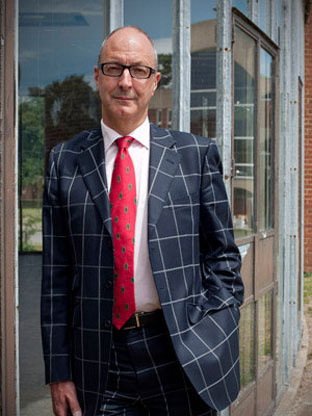
Messages of condolence may be posted via the comments box.
Follow @telescoperArchive for the Biographical Category
My first half-century…
Posted in Biographical on June 4, 2013 by telescoperFinal Goodbyes
Posted in Biographical, Education, Literature with tags Cardiff University, Julius Caesar, Shakespeare on June 1, 2013 by telescoperYesterday, as the week drew to a close, along with the month of May itself, I found myself in a visitor’s office in the School of Physics & Astronomy at Cardiff University, nursing a hangover, and finishing off a few final matters arising from my time as a member of staff here. I took part in a couple of viva voce examinations for 4th year project students. Now the reports are written up, marks agreed, and paperwork handed in. When I’ve handed in my keys and ID card that will be that. I’ll be back at the University of Sussex next week, having fulfilled my obligations (as best I could) to the students whose interest in their projects outweighed the virtually complete absence of their supervisor for half the year.
The project assessments and the examination period in general at Cardiff now being over, it’s time for final-year undergraduate students to think about packing up their things and heading out into the big wide world, to return only briefly in July (perhaps) for their graduation ceremony. It seems that no sooner do students’ faces become familiar than they disappear, most of them never to be seen again, and sometimes without so much as a word of goodbye…
I don’t really know why but this reminded me of Brutus’ famous goodbye to Cassius on the plains of Philippi in Scene V of Julius Caesar:
And whether we shall meet again I know not.
Therefore our everlasting farewell take:
For ever, and for ever, farewell, Cassius!
If we do meet again, why, we shall smile;
If not, why then, this parting was well made.
The Cosener’s House
Posted in Biographical, Science Politics with tags Abingdon, Rutherford Appleton Laboratory, STFC, The Cosener's House on May 9, 2013 by telescoperBack in Brighton after a busy but productive day-and-a-half in Abingdon discussing the future of SEPNET of which more soon. I just have time to post a few pictures of the place I was staying, The Cosener’s House.
Incidentally, being fascinated by words, I just looked up “cosener” on the online Oxford English Dictionary and found that it is a common variant of the word “cozener” which means a “deceiver, cheat or impostor”. I felt quite at home there…
The place is right next to the River Thames, which runs along the bottom of the pleasant garden adjacent to the house. I hadn’t realized that the whole establishment is run by the Science and Technology Facilities Council and is much frequented by users of various large scientific facilities (such as ISIS and the Diamond Light Source) situated nearby at the Rutherford Appleton Laboratory (RAL).
The particle physicists among us were quite familiar with The Cosener’s House owing to the connection with RAL but although I’ve done quite a few STFC panels I’ve never been there before. Anyway, as you can see, it’s a pleasant enough location and it met with my particular strong approval because of the splendid black pudding available at breakfast!
Follow @telescoperVote Away Day
Posted in Biographical, Science Politics with tags Cosener's House, Royal Astronomical Society on May 8, 2013 by telescoperWell, I’m up early today because no sooner do I get back to work when I have to leave for the South East Physics Network SEPNET “Awayday”. Actually it’s more than a day, more like a day and a half but it’s pointless quibbling about such things. Anyway, it’s going to be held at the Cosener’s House in Abingdon and will be my first visit to that august establishment.
Before departing into the wilds of Oxfordshire, however, I thought I’d just post a quick reminder to any Fellows of the Royal Astronomical Society who happen to be reading this blog that the deadline is approaching for votes in the election of a new President and new Members of Council.Electronic votes must be received by 12 noon on 9 May 2013, and paper votes by the start of the Annual General Meeting on 10 May 2013, so if you are eligible but haven’t voted yet please get your finger out.
In the interest of full disclosure I should make it clear that I am standing for election to Council…
Follow @telescoperThe Joy of Pepys
Posted in Biographical, History with tags 1660, Magdalene College, Restoration, Samuel Pepys, Twitter on May 3, 2013 by telescoperTwitter is much maligned by those who don’t use it, and I’d be the first to admit that it has several million downsides, but every now and again you come across something truly wonderful which makes it worthwhile putting up with the dross. Here’s an example. Some time ago, a nameless genius came up with the idea of tweeting excerpts from the Diaries of Samuel Pepys. Those of you on Twitter can follow Samuel Pepys by clicking here:
For those of you not familiar with Twitter, its main characteristic is that messages posted on it (“tweets”) are limited to 140 characters. To outsiders this seems to imply that all tweets are banal and pointless, but this is far from the case. The strict length limit forces a form of creativity that is both rare and wonderful. The stroke of genius in this case was to realize that the Pepys Diaries could be tweeted in chunks of the right size, in a manner that almost suggests they were designed for the purpose!
Pepys was a high-ranking naval administrator and Member of Parliament so he had detailed knowledge of the momentous political events of his period. He’s currently tweeting from May 1660 (near the start of the diaries), giving a vivid insight into the background to the Restoration of the Monarchy. Parliament should be recalled in a few days time, on May 8th…
Here is a selection of recent examples:

But it’s not just the fascinating political context that makes these tweets so interesting. They also give glimpses of everyday life in the 17th Century. Pepys was in poor health for much of his life, for example, and there are frequent references to various physicians and their quack remedies. He also manages to conjure up in just a few words the extraordinary atmosphere and energy of the London of the period, along with some of its excesses (especially drinking and fornication).
Following Pepys’ Twitter feed opens a window into 17th Century England, and what comes through it is both refreshing and illuminating. The reason I find this particularly delightful is something that I’ve blogged about before, so won’t repeat at length. I was a very late developer from an education point of view until I was helped with my reading and arithmetic by a wonderful old lady who lived next door. She encouraged me to read and, after a big struggle, I eventually got the hang of it. After a time I had caught up with the rest of the class in School and eventually managed to read just about every book the School had to offer, including the Diaries of Samuel Pepys which were for some reason on the shelves in Class 2 and which I was allowed to borrow. I don’t think anyone had read them before so nobody, including the teachers, knew how rude they were in places. The Restoration period was generally rather bawdy, and Pepys’ Diaries reflect that.
I had no idea at that time, of course, that less than ten years later I would be studying at Magdalene College, Cambridge, site of the Pepys Library where the orignal diaries are kept as well as the rest of Pepys’ own collection of rare books and music.
Follow @telescoperDon’t Leave Me This Way
Posted in Biographical, Music with tags Don't Leave Me This Way, The Communards on May 2, 2013 by telescoperThis song was playing on the radio in the Bridge Cafe just now when I went to get a cup of coffee, thus providing me with another time warp experience. The Communards’ version of Don’t Leave Me This Way was a big hit way back in 1986 and I remember dancing to it many times in various Brighton clubs and discos; I was here at the University of Sussex then as a research student. Can that really have been 27 years ago? Sigh…
Follow @telescoperBreaking down a breakdown
Posted in Biographical, The Universe and Stuff with tags Dean Burnett, Nervous Breakdown, neuroscience, Panic Disorder, Physics, reductionism on April 25, 2013 by telescoperA blog piece by Dean Burnett I read on on the Grauniad website yesterday set me thinking about whether I should post a personal comment in reaction to it. I never know what is the appropriate way to draw the line between the private and the public on In the Dark but since having a blog is clearly an exercise in self-indulgence anyway I thought I’d go ahead and write a piece.
Dean’s piece is about nervous breakdowns, but it’s really about why “nervous breakdown” is not a very good name for what it purports to describe. Regular readers of this blog (both of them) will know that I went through one last year, and one thing I do remember is the disapproval that the term “nervous breakdown” provoked when I used it during my subsequent course of therapy. Apparently it’s a bit frowned-upon among professionals in the field.
Here is Dean (who is a neuroscientist in his day job) on the subject:
The term nervous breakdown is actually surprisingly old, and stems from a time when both “nervous” and “breakdown” arguably had different meanings to their modern ones. It seems the “breakdown” element refers to a breakdown in the same way that cars or other machines can break down. And nervous just refers to the nervous tissue. So originally it meant a fault or error in the nervous tissue that controls the body. And suddenly my interpretation doesn’t seem so literal.
But this doesn’t mean it’s an invalid term, it’s just more of a rule-of-thumb or generalisation used to refer to what happens when someone becomes psychologically unable to function as normal. In the simplest sense it could be said that, mentally speaking, a nervous breakdown occurs when an individual finds that the number of things that they are able to cope with is lower than the number of things that they have to cope with.
That seems to me to sum up very sensibly why the term is not very useful for an expert: it’s too vague, in that there are so many quite different things that might cause a person to become “psychologically unable to function as normal”. But it also explains quite well why its usage persists in popular language, in that the state of being “”psychologically unable to function as normal” is not as uncommon you might think. Anyway, if someone says they’ve had a nervous breakdown it gives at least a general idea of what they’ve experienced, although the specifics vary widely from individual to individual.
I hope you’ll bear with me if I illustrate this with some personal observations in the light of my own experiences.
I’ve suffered from a form of panic disorder for many years. Actually even that term has a very broad definition, so that different individuals experience different forms of panic attacks and they can also take very different forms for the same individual. For me, a “typical” panic episode begins with a fairly generalized feeling of apprehension or dread. Sometimes that’s as far as it goes. However, more often, there follows a period of increasingly heightened awareness of things moving in my peripheral vision that I can’t keep track of. This leads to a sense of being surrounded by threats of various kinds and panic ensues. Usually, at that point, I run.
A typical panic episode lasts only a few minutes, but that’s not the end of it. For a considerable period (hours) afterwards I find myself in a state of hypervigilance during which I’m such a bundle of nerves that the slightest sound or movement can trigger a repeat.
I tend to think of these episodes as being a bit like earthquakes. The milder ones happen fairly frequently, but they’re quite easy to cope with. I have altered my behaviour to avoid places likely to trigger them (see below) and to be aware of appropriate exit strategies. The more severe episodes are much harder to deal with, though, and when one starts there’s nothing I can do apart from try to find somewhere that feels safe, wait for it to pass and then just get through the aftermath, hoping for no aftershocks.
In Dean’s piece he writes about the different stressors that can trigger a breakdown. In my case it was a bit more complicated than that. Thinking about the milder attacks I find it very difficult to identify specific triggers – they seem to occur more-or-less randomly. However, I can cope with this low-level “noise” pretty well. I’ve had plenty of time to get used to it, at least. The more severe attacks seem more likely to be triggered by specific places, especially if they’re crowded with people moving around – although I don’t always have a problem in places like that. To give an example, crossing the main concourse at Victoria Station is, for me, like descending into the abyss; I simply can’t do it, and have to go outside the station to get between the trains and the underground station. Paddington Station, on the other hand, is fine. Weird.
I think the probability of one of these episodes is also influenced by background levels of stress arising from other independent things. Anyway, last year I got into a state in which I was experiencing multiple episodes per day. I couldn’t sleep or eat for over a week, and couldn’t leave the house for fear of experiencing another major problem. I think “nervous breakdown” is a pretty apt description for that period, but my breakdown was caused not by a new problem, but the amplification of an old problem to completely intolerable levels.
The reason for writing about the anatomy of my breakdown in this context is twofold. One part is just to reinforce Dean’s point that a “nervous breakdown” can be triggered by many different circumstances and conditions. Mine is probably an unusual example, but I think everybody else’s is too.
The other reason is to confess how frustrating it is to be a physicist who has experienced a thing like that. It seems natural that having experienced such an episode I should want or need to try to make sense of it, but I’ve struggled to do that. The way we’re used to thinking about things in physics is to make simple models that capture the relatively simple cause-and-effect relationships between relatively few variables, usually based on the objective analysis of data controlled experiments and/or systematic observations. This all involves trying to break down a phenomenon into its component parts so as to look at their separate action and thus establish the simple rules (if there are any) that govern the overall behaviour.
The trouble with this analytic approach is that the human brain and its interactions with the external world are far too complicated and non-linear to be approached in the simple-minded way we physicists usually do things. Even if you accept that the brain is basically a collection of atoms communicating with each other using electrical impulses, that doesn’t mean that it’s useful to try to describe its action using atomic physics and electromagnetic theory.
On top of all that, there’s the issue that neuroscience is a subject I know very little about at a technical level. There’s only room in my feeble little brain for my own specialism, so I lack the knowledge needed even to understand the literature.
So although I got over my breakdown, it has left me with a huge number of questions I don’t even know how to begin to answer. What is happening in my brain when a panic episode begins? What is going on with my peripheral vision when it goes awry like it does? Why do some particular places or circumstances trigger an attack but other, apparently similar, ones don’t?
I don’t suppose anyone out to answer these questions, but if any neuroscientists out there happen to read this piece I would be grateful if they could recommend appropriate literature, as long as it’s simple enough for an astrophysicist to read…
Follow @telescoperNeutrino Physics in a Small Universe
Posted in Biographical, The Universe and Stuff with tags Institute of Physics, Jeff Hartnell, neutrinos, Nova, Nova experiment, Particle Physics, University of Nottingham, University of Sussex on April 23, 2013 by telescoperI’ve only just got time for a quick lunchtime post before I head off to attend an afternoon of Mathematics presentations, but it’s a one of those nice bits of news that I like to mention on here from time to time.
It is my pleasure to pass on the wonderful news that one of my colleagues in the School of Mathematical and Physical Sciences here at the University of Sussex, Dr Jeff Hartnell,. has been awarded the High Energy Particle Physics prize of the Institute of Physics, which means that his name has now been added to the illustrious list of previous winners. The prize is awarded annually by the HEPP Group, a subject group in the Nuclear and Particle Physics Division of the IOP, to a researcher in the UK who has made an outstanding contribution to their field of study early in their career (within 12 years of being awarded their first degree).
There’s a very nice piece about this award here which reveals, amongst other things, that many moons ago at Nottingham I was Jeff’s undergraduate tutor! In fact Jeff also attended a third-year course on Theoretical Elementary Particle Physics I taught in those days. That he survived those experience and went on to be a world-leading physicist speaks volumes! Not only that, it’s also evidence that the world of physics is smaller than we sometimes suppose. I’ve crossed paths with a number of my new colleagues at various times in the past, but it’s particularly rewarding to see someone you taught as an undergraduate go on to a highly successful career as a scientist. Jeff was awarded a prestigious ERC grant this year too!
Jeff is currently in the USA helping to set up the largest-ever experiment in neutrinos to be built there, called NOvA. You can click on the preceding links for more technical details, and I also found this interesting video showing the NOvA detector being assembled. Particle physics experiments are never small, are they?
p.s. Why do they insist on writing “metric ton” instead of “tonne”?
Follow @telescoperThe Meeting Place
Posted in Biographical with tags Brighton, The Meeting Place Cafe on April 6, 2013 by telescoperSpring seems to be arriving in Brighton at last, so I decided to take a stroll along the seafront. There were substantial crowds out and about who obviously had the same idea. Nice to see the place coming to life as the weather improves.
This little cafe is just on the Hove side of town. I used to be a regular here about 25 years ago, and it hasn’t changed much at all since then.
I can’t visit this spot without rekindling a very sad memory of that time. I was just sitting having a coffee on a Sunday morning when an odd-looking, rather gangly man approached the cafe. He was about 50 years old, wearing a suit and tie, and carrying a newspaper under his arm. As he got closer, however, I saw that he wasn’t just slightly eccentric; he had an expression of pure terror on his face.
The man went up to the counter and after some time managed to order tea and a scone, although by then he was visibly trembling. He sat down. Before he could do any more, however, his nerves got the better of him and he was sick over his table, and a bit on his clothes. He began to cry and left the cafe as quickly as he could, crestfallen. He left his newspaper behind.
I had no idea what torments that poor soul endured that morning, although I probably understand a bit better after recent experiences. I guess that he was trying to conquer a fear of crowds, was unused to everyday situations for some reason, or had some other anxiety-related problem. Sadly he lost that particular battle. I never saw him again at The Meeting Place, and have no idea what became of him.
I should add that neither I nor anyone else at the Meeting Place lifted a finger to help him. If he ever did managed to find some way of handling his problem, it was certainly no thanks to me. Shame lasts a lifetime.
Follow @telescoperImportant News from Sussex
Posted in Biographical with tags Brighton, Stiletto on April 4, 2013 by telescoperI’m back in Brighton after a week off. Not really much of a holiday, actually, as I’ve been a bit poorly (not helped by the cold weather). Anyway, I thought I’d announce my return with an update of important news from the Brighton Evening Argus. I think it shows that it would have been an even bigger drag to have spent my holiday here…
And here’s one I missed over Easter (via @cjsnowdon on Twitter):
Follow @telescoper


