I’m up bright and early this morning – well, early, at least – after my long trip yesterday. I was slightly nervous about my itinerary, especially the (for me) uncharted territory at the end. As it happens, the train from Cardiff to Heathrow, direct flight from Heathrow to Phoenix and shuttle bus from Phoenix to Flagstaff, Arizona, all went to plan. I arrived just after nine yesterday evening, tired but intact.
One thing worth mentioning is that this is the first time I’ve set foot on American soil for many years. My lamentable experience with the US Embassy in London in 2005 succeeding in putting me off visiting the States almost entirely. However, I’m told that travelling is meant to be good for me, so I decided to accept the invitation to attend and speak at the conference I posted about a while ago. One of the relics of the 2005 episode is an unused J-1 visa in my passport, and when we arrived in Phoenix I was consequently a little apprehensive about whether questions might be asked about it. That added to the usual anxiety about length of queues at Immigration. As it turned out, the staff were courteous and efficient and the uniformed officer I spoke to at the desk and who took my fingerprints etc was an enthusiastic amateur astronomer who seemed more interested in my work than in the formalities at hand. Anyway, my virgin visa attracted no comment at all.
Despite landing a bit late, I actually got through the airport in good time to catch the shuttle to Flagstaff. Phoenix, by the way, was a scorching 37 Celsius, even at 5.30 in the pip emma. I dread to think how hot it must have been at mid-day. Flagstaff is, I’m told, a bit cooler being up in the mountains although it was dark when I arrived and I didn’t really see much of the place before getting to the hotel, having a quick blog, and then crashing out.
Incidentally, the route from Phoenix to Flagstaff is north on the I-17 until it hits Route 66, subject of the famous song in which Flagstaff gets a mention:
My hotel is actually situated on Route 66, but so far there’s no sign of anything that could truthfully be described as “kicks”.
Anyway, I have to speak later today so I should probably start writing my talk. As they don’t say around these parts, Toodle-pip!
Since the new series of Doctor Who is to start this evening on BBC1, I thought I’d mark the occasion by posting this old blog item again:
–0–
As a Professor of Astrophysics I am often asked “Why on Earth did you take up such a crazy subject?”
I guess many astronomers, physicists and other scientists have to answer this sort of question. For many of them there is probably a romantic reason, such as seeing the rings of Saturn or the majesty of the Milky Way on a dark night. Others will probably have been inspired by TV documentary series such as The Sky at Night, Carl Sagan’s Cosmos or even Horizon which, believe it or not, actually used to be quite good but which is nowadays uniformly dire. Or it could have been something a bit more mundane but no less stimulating such as a very good science teacher at school.
When I’m asked this question I’d love to be able to put my hand on my heart and give an answer of that sort but the truth is really quite a long way from those possibilities. The thing that probably did more than anything else to get me interested in science was a Science Fiction TV series or rather not exactly the series but the opening titles.
The first episode of Doctor Who was broadcast in the year of my birth, so I don’t remember it at all, but I do remember the astonishing effect the credits had on my imagination when I saw later episodes as a small child. Here is the opening title sequence as it appeared in the very first series featuring William Hartnell as the first Doctor.
To a younger audience it probably all seems quite tame, but I think there’s a haunting, unearthly beauty to the shapes conjured up by Bernard Lodge. Having virtually no budget for graphics, he experimented in a darkened studio with an old-fashioned TV camera and a piece of black card with Doctor Who written on it in white. He created the spooky kaleidoscopic patterns you see by simply pointing the camera so it could see into its own monitor, thus producing a sort of electronic hall of mirrors.
What is so fascinating to me is how a relatively simple underlying concept could produce a rich assortment of patterns, particularly how they seem to take on an almost organic aspect as they merge and transform. I’ve continued to be struck by the idea that complexity could be produced by relatively simple natural laws which is one of the essential features of astrophysics and cosmology. As a practical demonstration of the universality of physics this sequence takes some beating.
As well as these strange and wonderful images, the titles also featured a pioneering piece of electronic music. Officially the composer was Ron Grainer, but he wasn’t very interested in the commission and simply scribbled the theme down and left it to the BBC to turn it into something useable. In stepped the wonderful Delia Derbyshire, unsung heroine of the BBC Radiophonic Workshop who, with only the crudest electronic equipment available, turned it into a little masterpiece. Ethereal yet propulsive, the original theme from Doctor Who is definitely one of my absolute favourite pieces of music and I’m glad to see that Delia Derbyshire is now receiving the acclaim she deserves from serious music critics.
It’s ironic that I’ve now moved to Cardiff where new programmes of Doctor Who and its spin-off, the anagrammatic Torchwood, are made. One of the great things about the early episodes of Doctor Who was that the technology simply didn’t exist to do very good special effects. The scripts were consequently very careful to let the viewers’ imagination do all the work. That’s what made it so good. I’m pleased that the more recent incarnations of this show also don’t go overboard on the visuals. Perhaps thats a conscious attempt to appeal to people who saw the old ones as well as those too young to have done so. It’s just a pity the modern opening title music is so bad…
Anyway, I still love Doctor Who after all these years. It must sound daft to say that it inspired me to take up astrophysics, but it’s truer than any other explanation I can think of. Of course the career path is slightly different from a Timelord, but only slightly.
At any rate I think The Doctor is overdue for promotion. How about Professor Who?
Well, the Olympics are finally over. I have to say I didn’t see much of the games themselves, although I did catch Mo Farah’s excellent run in the 5000m final and afterwards reminding us all that one can be a great athlete as well as humble and likeable individual. I see that Team GB (and NI) have done remarkably well in landing a haul of 29 gold medals, well up on Beijing 2008.
Many of these were in sports I know nothing about (such as Keirin and Dressage, both of which sound to me like items of IKEA furniture) but I’m perfectly happy to accept that winning any Olympic Gold medal is a remarkable achievement and requires not just talent but dedication and hard work. I hope the success of Team GB inspires others with the thought that succeeding in doing what’s difficult can be rewarding in itself, whether or not it leads to personal wealth.
I have just a couple more days here in Copenhagen, where the weather has been lovely throughout my visit. Here’s a gratuitous picture of one of the city’s lovely parks in the sunshine:
I’m feeling a lot better for having been here for the last week or so. The people here have been so very kind and understanding. I have to admit, though, I’m a bit nervous about going back because: (a) I have more medical tests to go through before I start on a proper programme; (b) quite a big backlog has built up of things I have to do; and (c) I have to face the colleagues and students I’ve let down so badly over the last few weeks and try to find a way of making up for my dereliction of duty.
The next big thing when I get back to work will be admissions. On Thursday (16th August) the A-level examination results will be officially announced and the clearing system opens for business. Only then will we find out how many students we’ll have entering the first year in October. We think things have gone pretty well on the recruitment front, but you never know until you see the final numbers. Fingers crossed.
Anyway, with the results having been published, there’ll no doubt be the usual discussion in the newspapers about whether the Olympic Games were easier this year than they were in our day….
It being a lovely day in Copenhagen yesterday I decided to go for a long walk. My destination was the famous Assistens Kirkegård which is in the Nørrebro district of the city. You might think that was a rather morbid choice of place to go for a stroll in the sunshine, but actually it’s not that way at all. It’s actually a rather beautiful place, a very large green space criss-crossed by tree-lined paths. We British have a much more reserved attitude to cemeteries than the Danes seem to have, at least judging by yesterday; joggers and cyclists pass through Assistens Cemetery at regular intervals, and many people were having picnics or just sunbathing between the gravestones. And of course there were many tourists wandering around, myself included. I found this matter-of-fact attitude to the dead rather refreshing, actually.
Incidentally, I was also surprised to see a number of Jewish burials among the Christian ones. I don’t know if this happens in British graveyards.
Part of the attraction of Assistens Kirkegård – the name derives from the fact that it was originally an auxiliary burial place, outside the main city, designed to take some of the pressure off the smaller cemeteries in the inner areas – is the large number of famous people buried there. The cemetery is extremely large (about 25 hectares), and the maps don’t show the locations of all the famous people laid to rest there, but I did find quite a few.
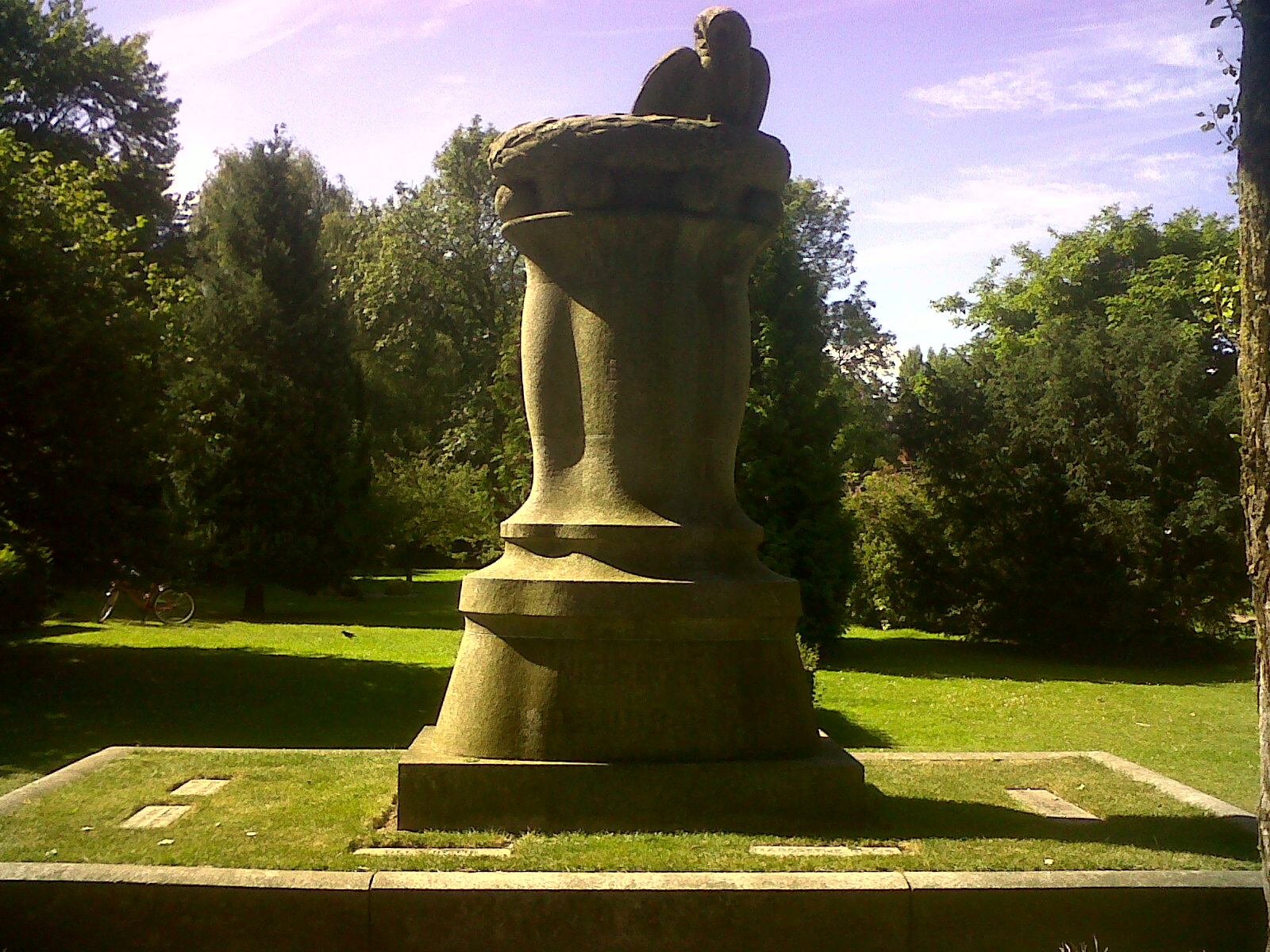
Here for example is the memorial to one of the most famous Danes of all, Hans Christian Andersen
Going by the number of signposts pointing to it, this must be one of the most popular sites for visitors to the cemetery, along with the grave of the philosopher Søren Kierkegaard. One can also quite easily locate the memorial which marks the last resting place of Niels Bohr and various other members of his family:
But it’s not only Danes that are buried here. There’s a corner of one plot occupied by a number of famous American Jazz musicians, including pianist Kenny Drew and, most famously of all, tenor saxophonist Ben Webster whose gravestone is rather small, but clearly very well tended, no doubt by a Danish jazz lover:
Unfortunately, I was unable to locate one of the graves I wanted to find, that of the great HeldentenorLauritz Melchior. I was surprised to find his name was absent from the main index. I know he was cremated and his ashes buried there, and I even found a picture of his memorial on the net, but the cemetery is so large that without further clues I couldn’t find it. I’ll have to go back on a subsequent visit after doing a bit more research.
It’s very interesting that some of the smaller graves are extremely well-tended whereas many of the more opulent memorials are in a state of disrepair. My ambition is to be forgotten as quickly as possible after my death so the idea of anyone erecting some grandiose marble monument on my behalf fills me with horror, but I have to say I do find graveyards are strangely comforting places. Rich and poor, clever and stupid, ugly and beautiful; death comes to us all in the end. At least it’s very democratic.
And after about three hours strolling around in the cool shade of the trees in Assistens Kirkegård the thought did cross my mind there still seems to be plenty of room…
An early morning walk around Copenhagen this morning reminded me of a longer visit I made here about 25 years ago, during which I rented a room in a nice large apartment on Frederiksberg Allé, which is in a rather posh part of the city called Frederiskberg. The landlord, who also lived on the premises, was a Mr Vagn Jul Pedersen, a nice old man who had lived in that part of the city all his life. One evening we sat talking over a beer or two and he told me of a terrible thing that he had seen during the latter stages of the Second World War when he was a young man, and I thought some of you might be interested to learn about it.
In March 1945, the British decided to carry out a low-level bombing attack on a target in Copenhagen, which was under German occupation at the time. The mission was given the codename Operation Carthage and its primary objective was the Shellhus (“Shell House”) originally owned by the oil company, but commandeered by the Nazis for wartime use as the Gestapo headquarters. The request to bomb the Shellhus came from the Danish Resistance, despite the fact that it was known that the top floor of the building was being used to house Danish prisoners as a kind of human shield.
I have based the following on a post I found elsewhere on the net. You can also read the official RAF account here.
By the end of 1944 the Danish resistance movement in Copenhagen was in danger of being wiped out by the Geheime Staatspolizei (Gestapo). Many of their leaders were arrested and a lot of material was filed in the Gestapo archives in the Shell house. Leading members of the resistance-movement requested an attack by air on the Shell House via the Special Operations Executive (SOE) in London.
Eventually on 21 March 1945, 20 de Havilland Mosquito fighter-bombers from 2nd TAF escorted by 28 Mustang Mk. III fighters from 11 Group took off from RAF Fersfield in Norfolk, England. 18 of the Mosquito bombers were F.B. Mk. VIs and 2 were Mosquito B. Mk. IVs from the Photographic Reconnaissance Unit (PRU). The Mosquito force attacked in 3 waves: 1st wave with 7 Mosquitoes (one PRU); the 2nd wave with 6 Mosquitoes; and finally the 3rd wave with 7 Mosquitoes (one PRU). The primary objective for the Mustangs was to engage, distract, suppress and, if possible, destroy anti-aircraft “Flak” batteries concentrated in central Copenhagen.
The first wave approached their target from the South West but, as they passed Enghave Station, which is near the famous Carlsberg brewery, Mosquito SZ 977, with Pilot W/Cdr. Peter A Kleboe and Navigator F/O K Hall, struck a 30 metre lamppost or pylon; the wingtip of the Mosquito then hit the roof of No 106 Sonder Boulevard. The two 500lb bombs carried by the aircraft ripped off and exploded, killing twelve civilians. Flying at roof-top level over a densely populated area it was inevitable that there would be casualties if a plane crashed or were shot down, but the Fates that day were in an especially cruel mood and far worse was to follow.
The stricken Mosquito “T for Tommy” crashed seconds later in a garage near the Jeanne d`Arc French Catholic school on Frederiksbergs Allé. The front part with the cockpit with the two crew members landed on Dr. Priemesvej; they were badly burned and later died of their injuries. Pilot W/C Peter A. Kleboe and Navigator F/O Reginald J.W. Hall were laid to rest in Bispebjerg Cemetery on 28 March 1945.
The rest of the first wave found and bombed the Gestapo Headquarters successfully. In all six bombs exploded in the Western wing and, of the nine prisoners in this part of the building, six were killed instantly and another died when jumping from the 5th floor to the ground.
But the tragedy that had begun to unfold at Frederiksberg Allé was about to get even darker. The 2nd wave of Mosquitoes became confused by the smoke and flames from the crashed Mosquito and thought it must be their target. Two of the Mosquitoes in the 2nd wave dropped their bombs on the French school and only one proceeded to bomb the Shell House. The 3rd wave approached Copenhagen from the West, and again became confused. All but one of the Mosquitoes dropped their bombs by mistake on the French Jeanne d`Arc Catholic School killing 86 children and 16 adults out of 482 children and adults, while 67 children and 35 adults were wounded.
This is the site of the modern Shell House, the original being completely destroyed during Operation Carthage. It’s quite easy to find, on the North side of Kampmannsgade, just to the East of Sankt Jørgens Sø, between Nyropsgade and Vester Farimagsgade. It’s actually quite close to the splendid modern Tycho Brahe Planetarium.
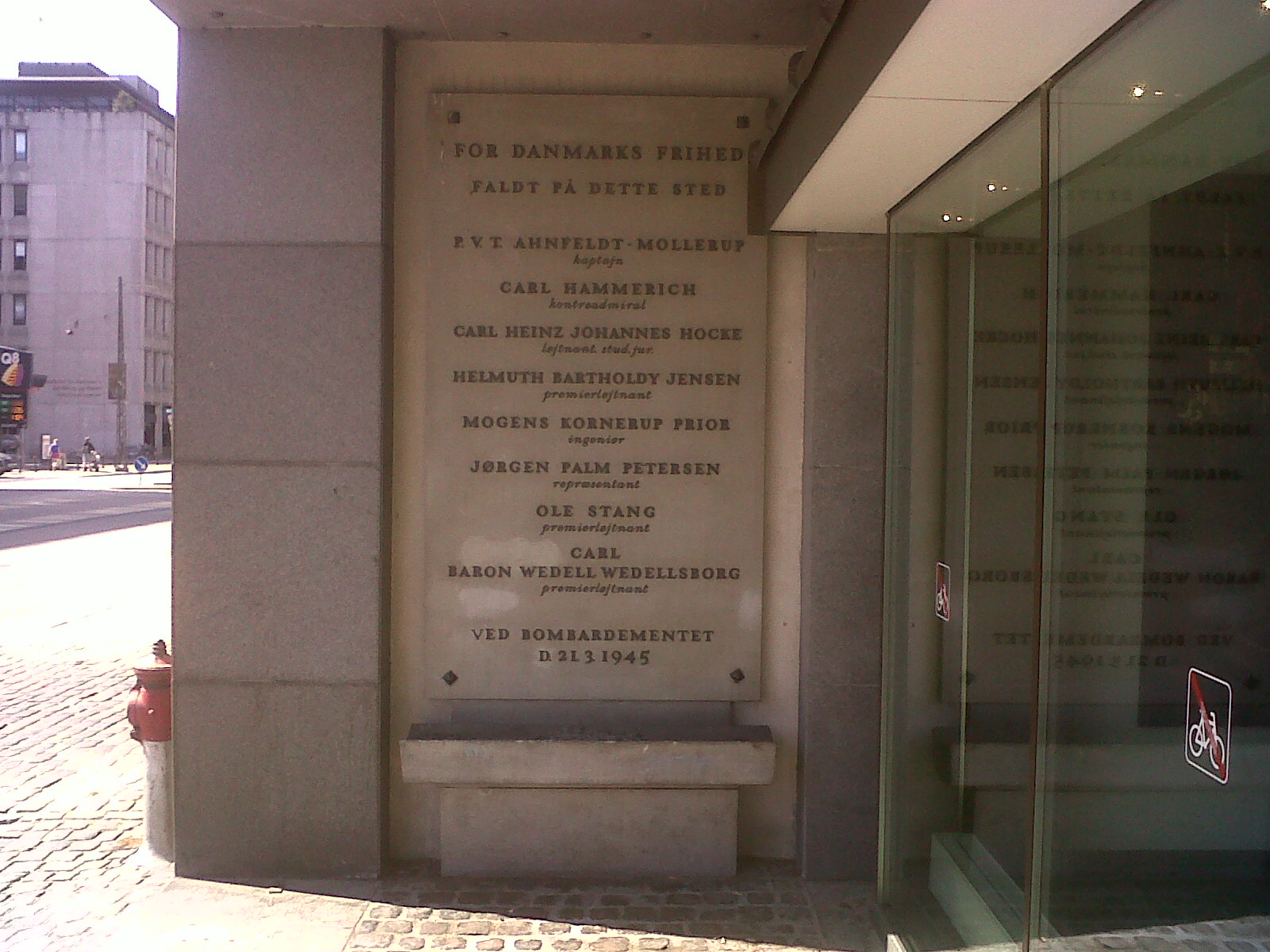
Inside the doorway at the far right of this building as seen in the above view is the following inscription, giving the names of the Danish resistance members who died that day
You can see here below a map showing the location. Enghave Station is to the South-West, the natural direction from which the incoming planes would have come. The Mosquito “T for Tommy” must have veered North, i.e. to its left, after its collision with the pylon in order to have crashed where it did.
Reading about this terrible episode, I was at first surprised that so many pilots misidentified the target, especially since the correct one is so close to Sankt Jørgens Sø, a prominent expanse of water that makes up one of a string of shallow lakes that extend along most of the Western side of Copenhagen’s city centre, which one would have thought was easily identifiable by its absence at the French School. The pilots had, after all, been shown detailed models of the location before the raid. But then I’m sitting at a desk with a map in front of me, not screaming along at 400mph, over rooftops bristling with anti-aircraft guns, into the teeth of withering Flak fire.
I walked the distance from the Jeanne D’arc School to the Shell House and I reckon it’s not much further than 1km, perhaps less as the Mosquito flies. That’s just seconds at the speed the planes would have been flying. That, together with the general confusion of smoke, gunfire and fear, could easily account for the navigational errors.
Owing to the presence of planes from the RAF photographic unit, there is remarkable film footage shot during the actual raid, some of which can be seen in the following film. It’s interesting how little Copenhagen’s skyline has changed; much of the city is immediately recognizable. There is also some very moving eye-witness testimony.
Even to a non-expert like me this was clearly an extremely dangerous mission. Mr Pedersen told me he saw Mosquitoes flying between the houses, along some of Copenhagen’s admittedly very wide roads, below the level of the rooftops; presumably the anti-aircraft guns were unable to aim downwards. A total of 4 Mosquitoes and 2 Mustangs were lost to flak with 9 crewmen KIA and 1 POW. Incidentally, one of the two Mustangs shot down that day crashed in Fælledparken, the park just behind the Niels Bohr Institute.
Mounted on the wall of the present Shell House is a bronze cast of a propeller from one of the downed Mosquitoes. A plaque is placed below the propeller with the names of the 9 crew members who were killed in the attack.
A total of 133 Danes died during and after the raid, including 86 children and 18 adults (including many nuns, and some bystanders who had tried to help) at the French School. At the Shell House, 8 Gestapo prisoners were killed and 18 managed to escape; 55 German soldiers and 47 Danish employees of the Gestapo died. In those days they hadn’t invented bland phrases like “collateral damage” to disguise the real horror of war, and it wasn’t possible to use unmanned drones as deployed by the US in their covert “war on terror”. Although Operation Carthage did achieve its objective, the loss of innocent life was so appalling it remains difficult to see it as a success.
I remember very well the tears in Mr Pedersen’s eyes when he told me about what had happened at the French School that day; it was only later that he found out what the actual objective of the raid was. At the end he said “You are lucky that you will never have to witness anything like that.” That goes for all of us who have had the good fortune to live in a time of peace. But let’s not forget the other parts of space-time where things are/were very different.
The last few weeks having been a bit chaotic, it’s probably a good idea to mention that I’m currently in the fine city of Copenhagen. This may come as a bit of a surprise to some of you, and it’s a long story how I ended up here at this time. I won’t bore you with the details, except to say I needed to get away for a while and with the help of friends and colleagues here I’m convalescing and trying to get back to doing some research at the Niels Bohr Institute, where I’ve been a visitor on many occasions.
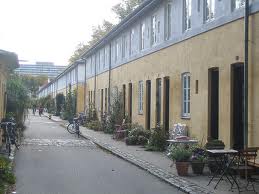
As a matter of fact I’m staying in a very nice part of Copenhagen, called Brumleby, “an enclave of terraced houses” in many ways not dissimilar to Pontcanna, the part of Cardiff where I usually live. Incidentally the -by ending (pronounced “be” in English) which also can be found in many English place names, especially along the East coast, is pronounced more like “bue” in Danish. Footballer Jan Mølby’s name was constantly mispronounced by English commentators…
Brumleby has an interesting history. It was one of a number of social housing developments constructed in the mid-19th century in Copenhagen in response to a cholera outbreak caused by chronic overcrowding and insanitary conditions in the old city. The original name for Brumleby was Lægeforeningens Boliger, which means the “Medical Association’s Buildings” for it was set up by the Danish Medical Association, Den Almindelige Danske Lægeforening. Most of the other similar developments have now been demolished, but Brumleby is now listed and preserved as a conservation area. The apartments are small, but very cosy, and as an added convenience for me only about 5 minutes walk from the Niels Bohr Institute.
Thanks once again for all the kind and concerned emails and other messages I’ve received over the past few days and weeks. I’m definitely on the mend and will start on a `permanent’ programme when I return to Wales. I also apologize yet again to my work colleagues, visitors, students, etc, for being so erratic recently. One day, perhaps, you’ll understand and maybe even forgive.
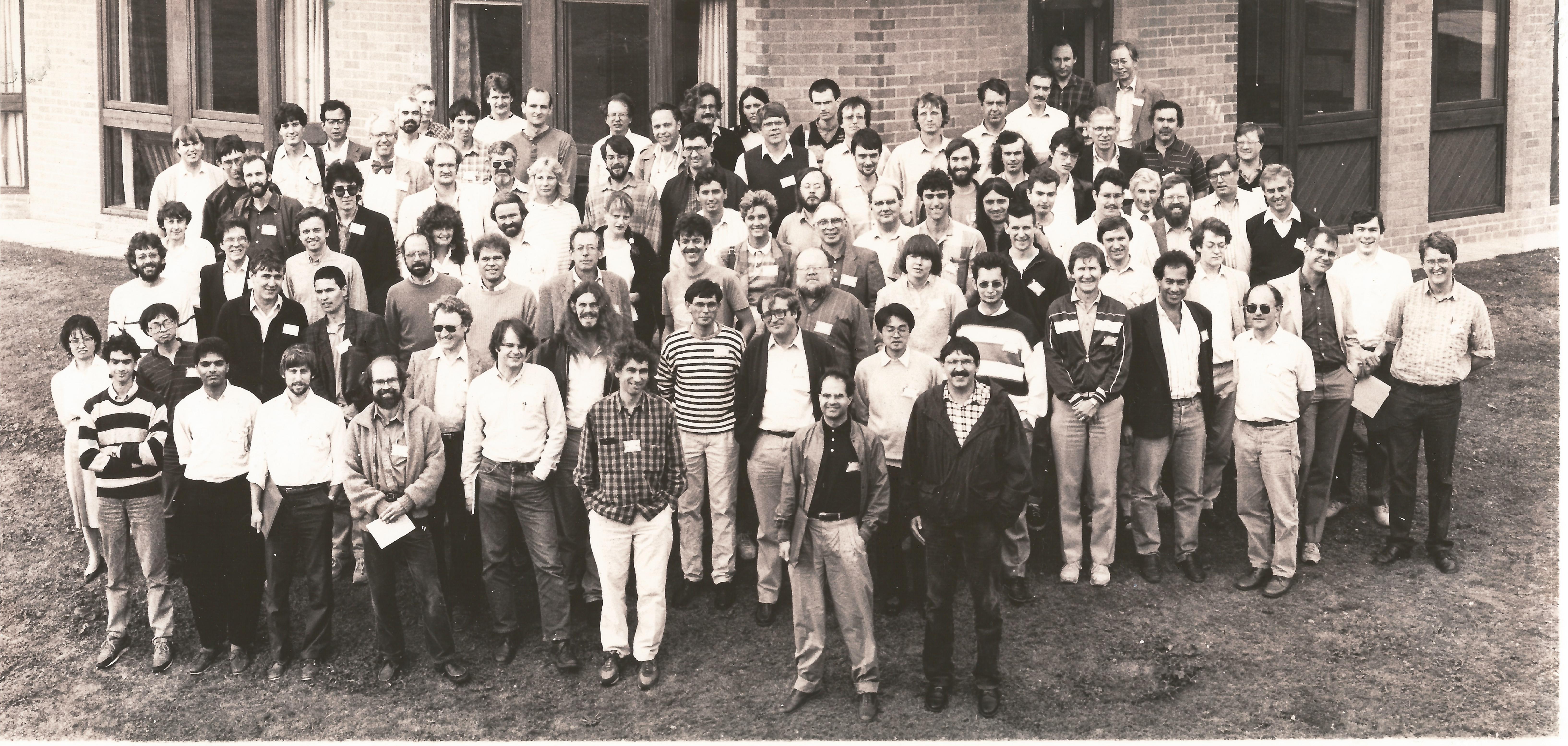
The previous old conference photograph I posted seemed to be quite popular, so I thought I’d try an even older vintage. This was also taken at Durham, but at a meeting entitled The Epoch of Galaxy Formation, which took place between July 18th and 22nd 1988. Appropriately enough, this one is in glorious monochrome. Spot any familiar faces?
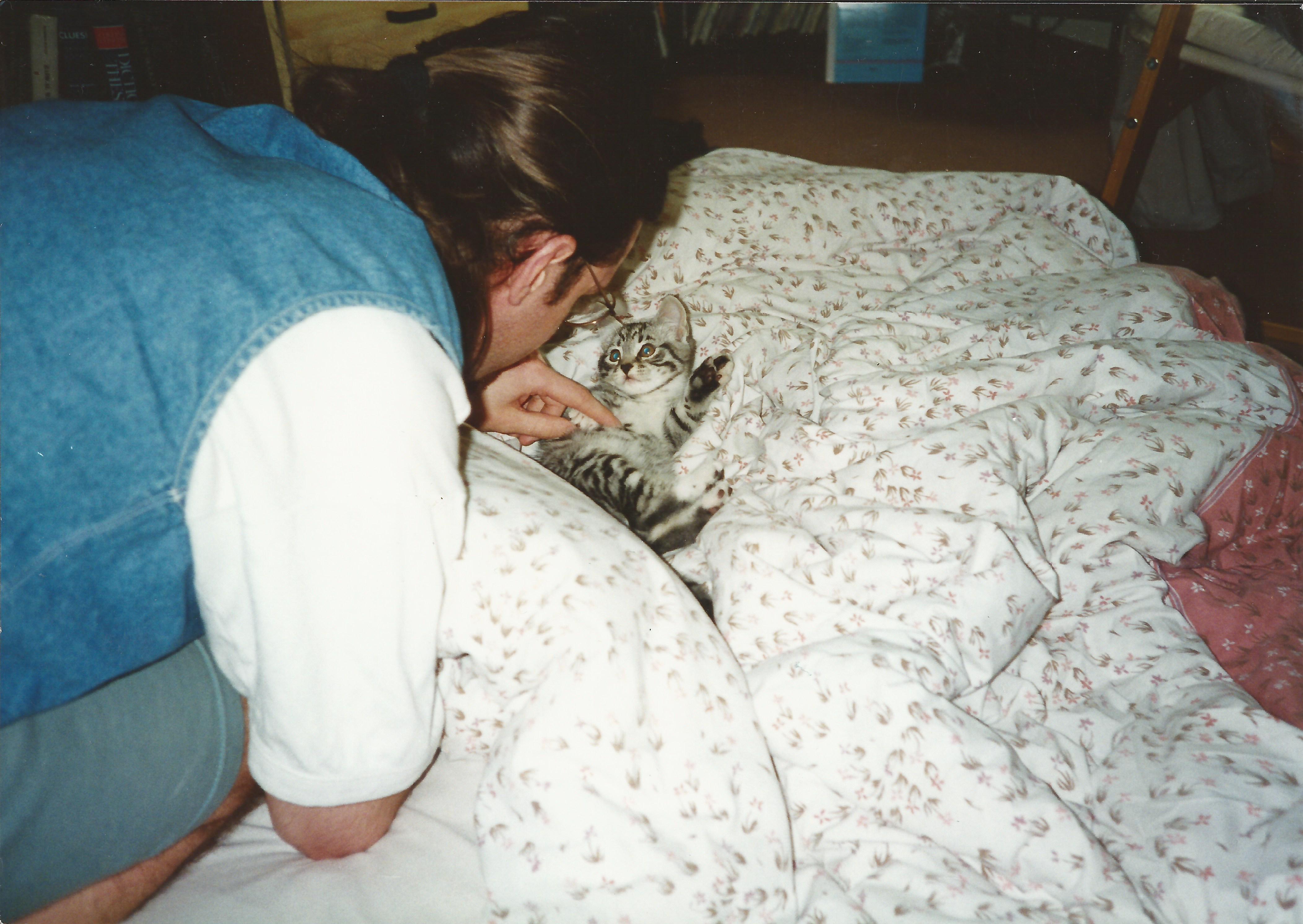
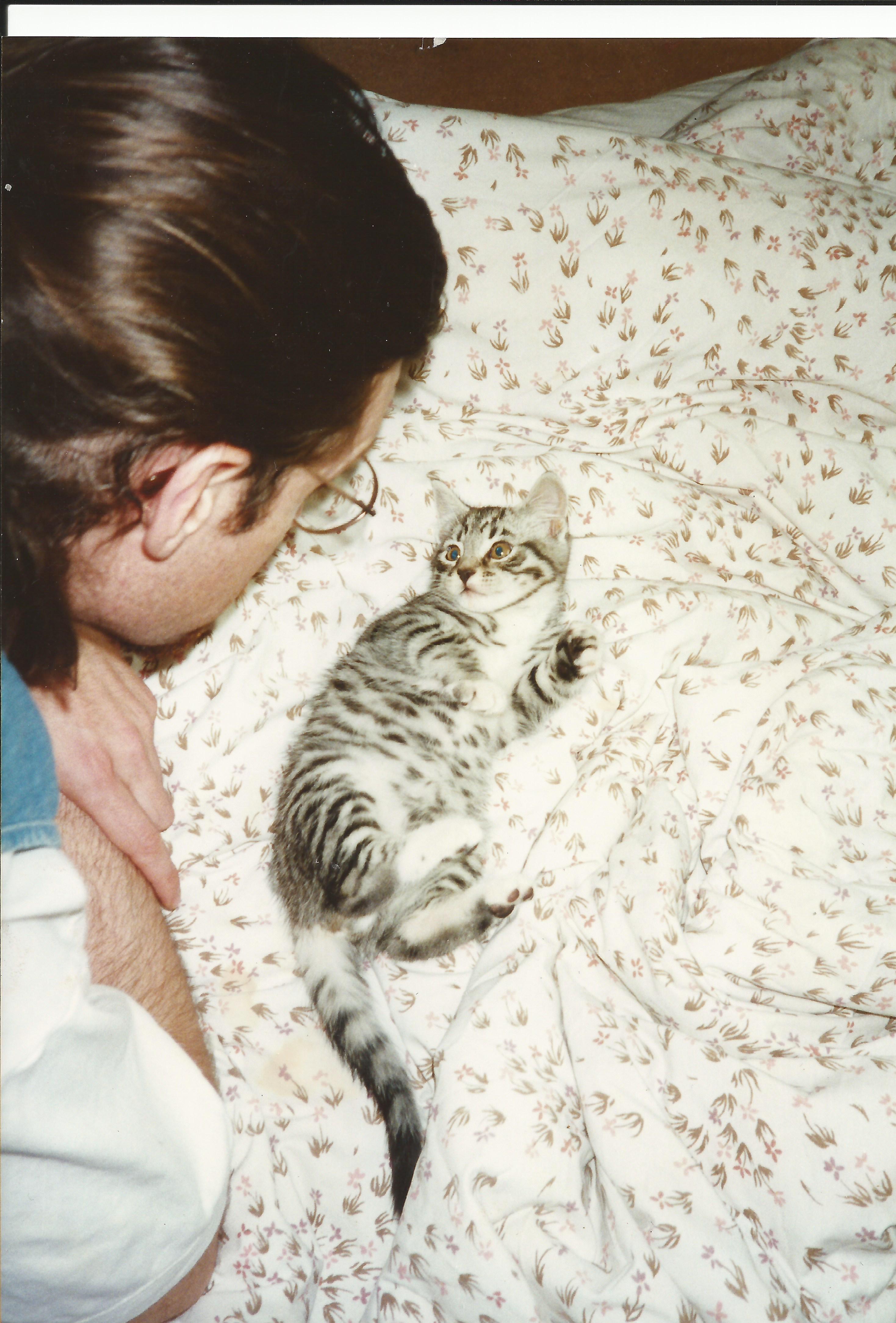
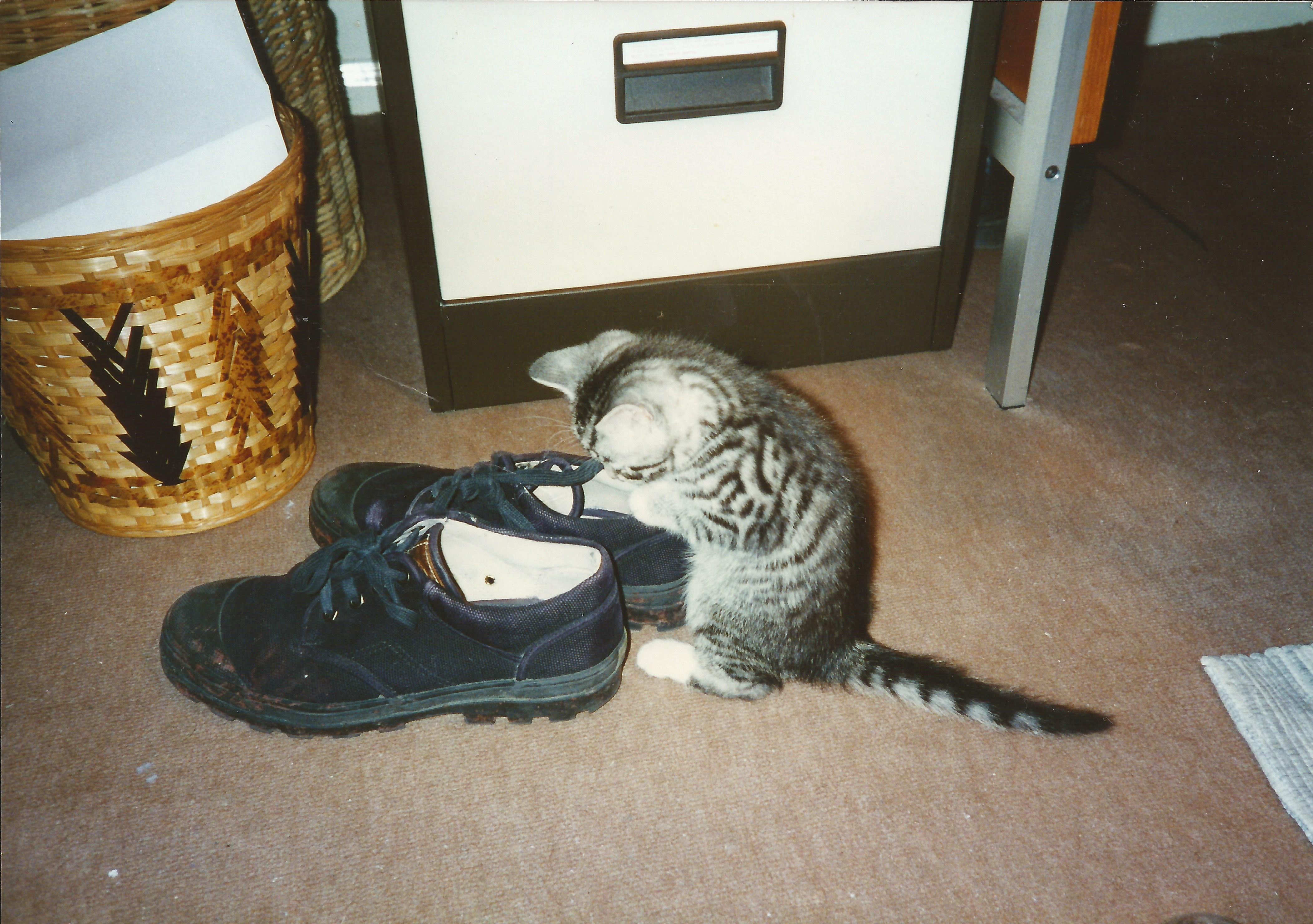
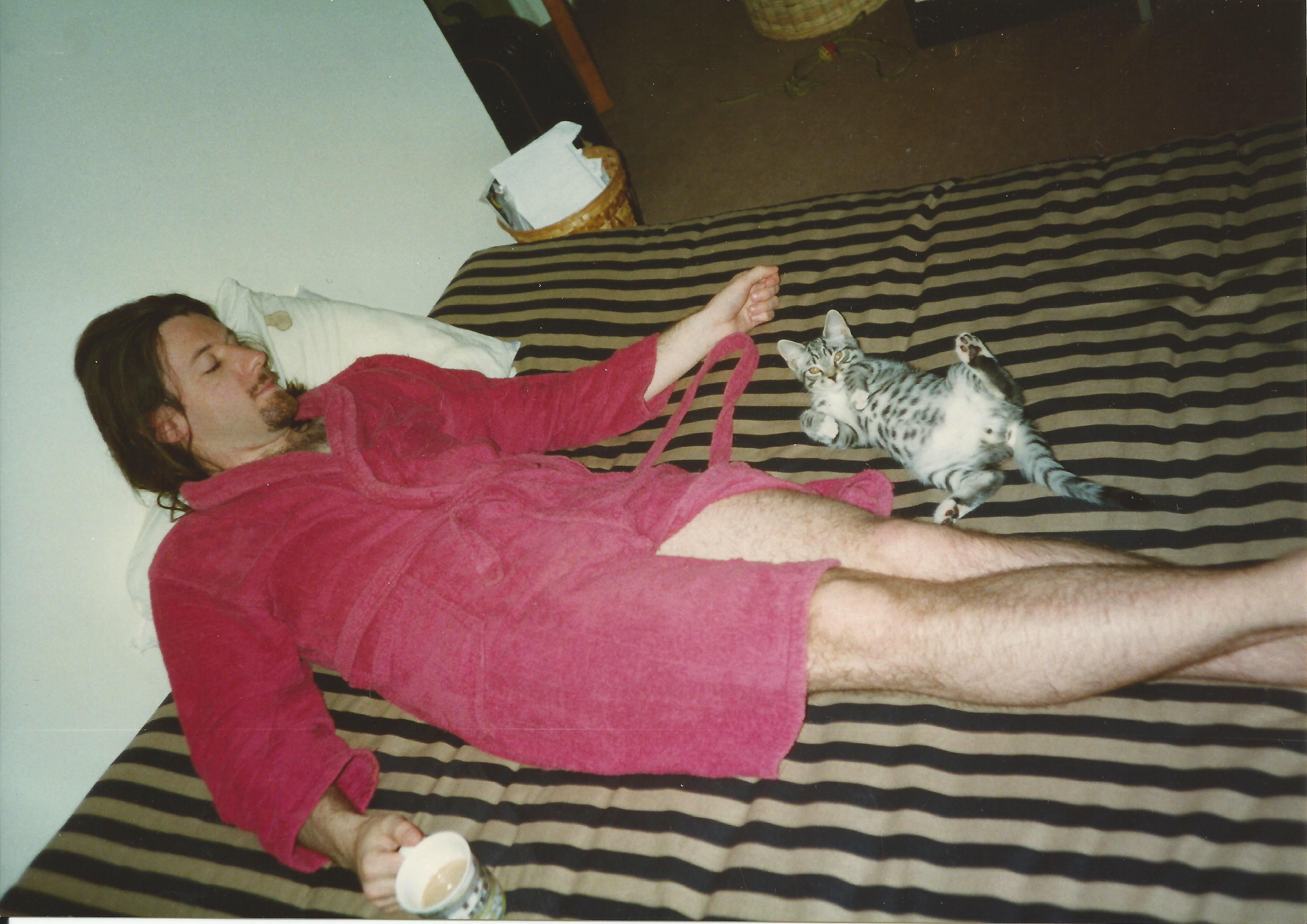
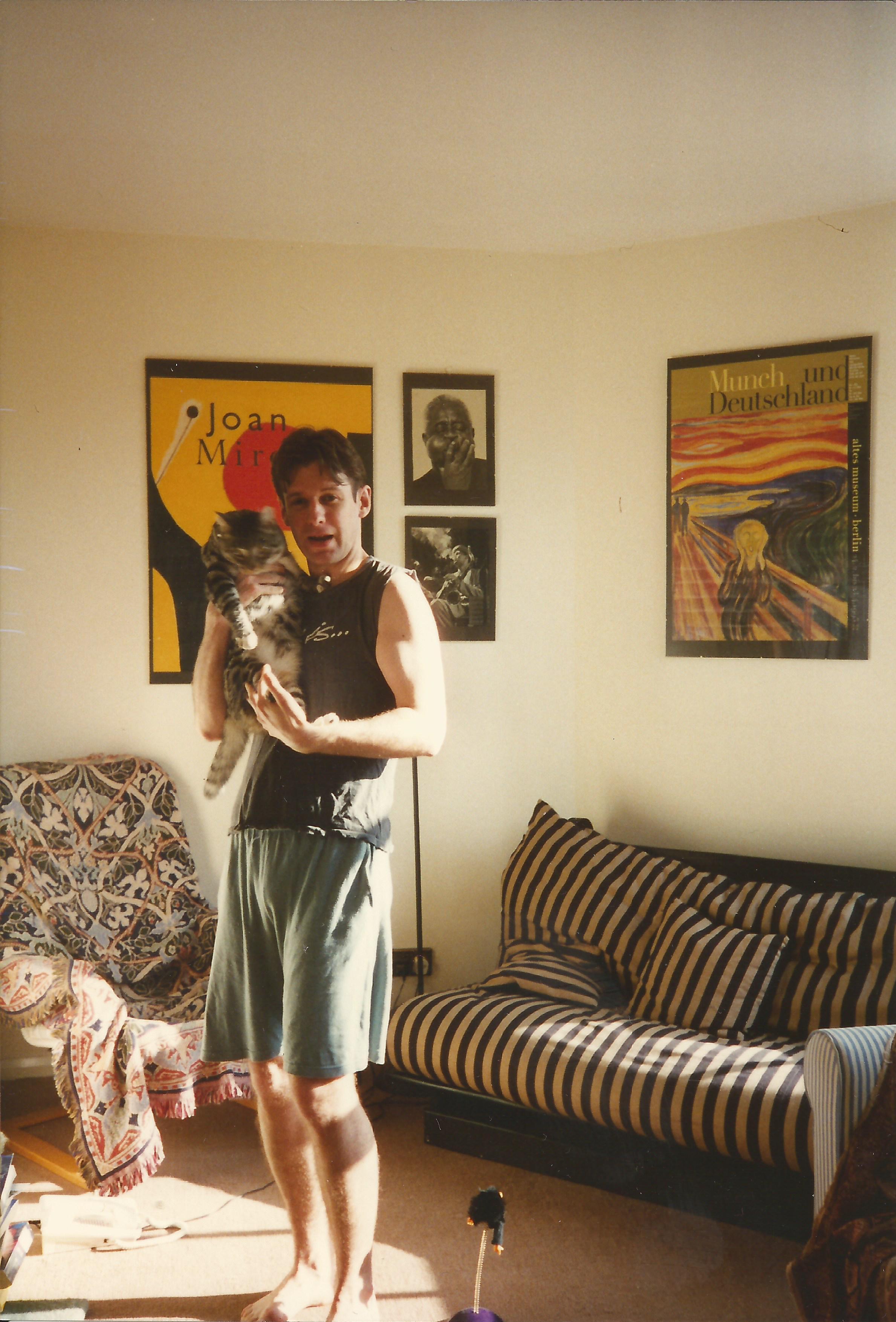
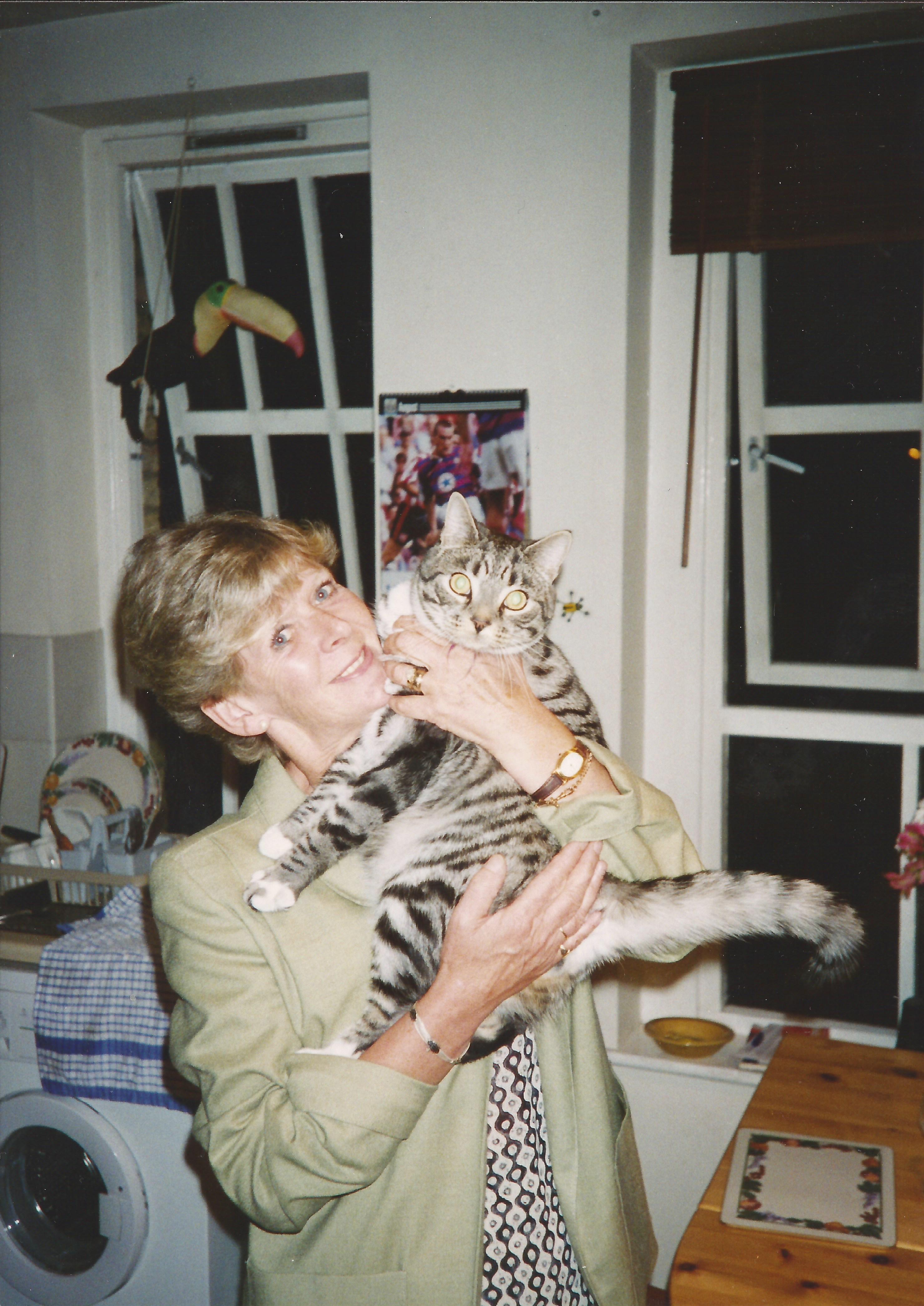
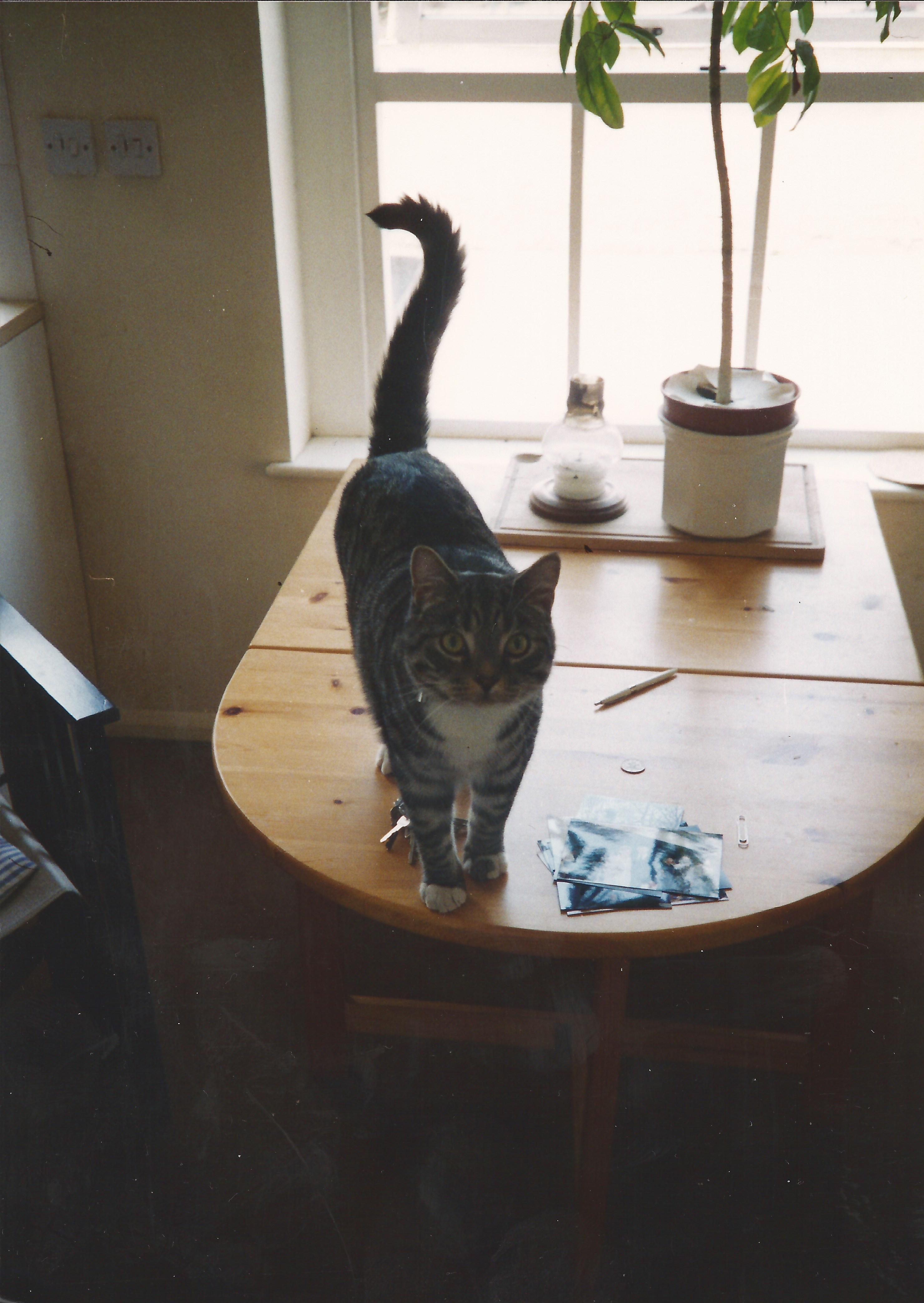
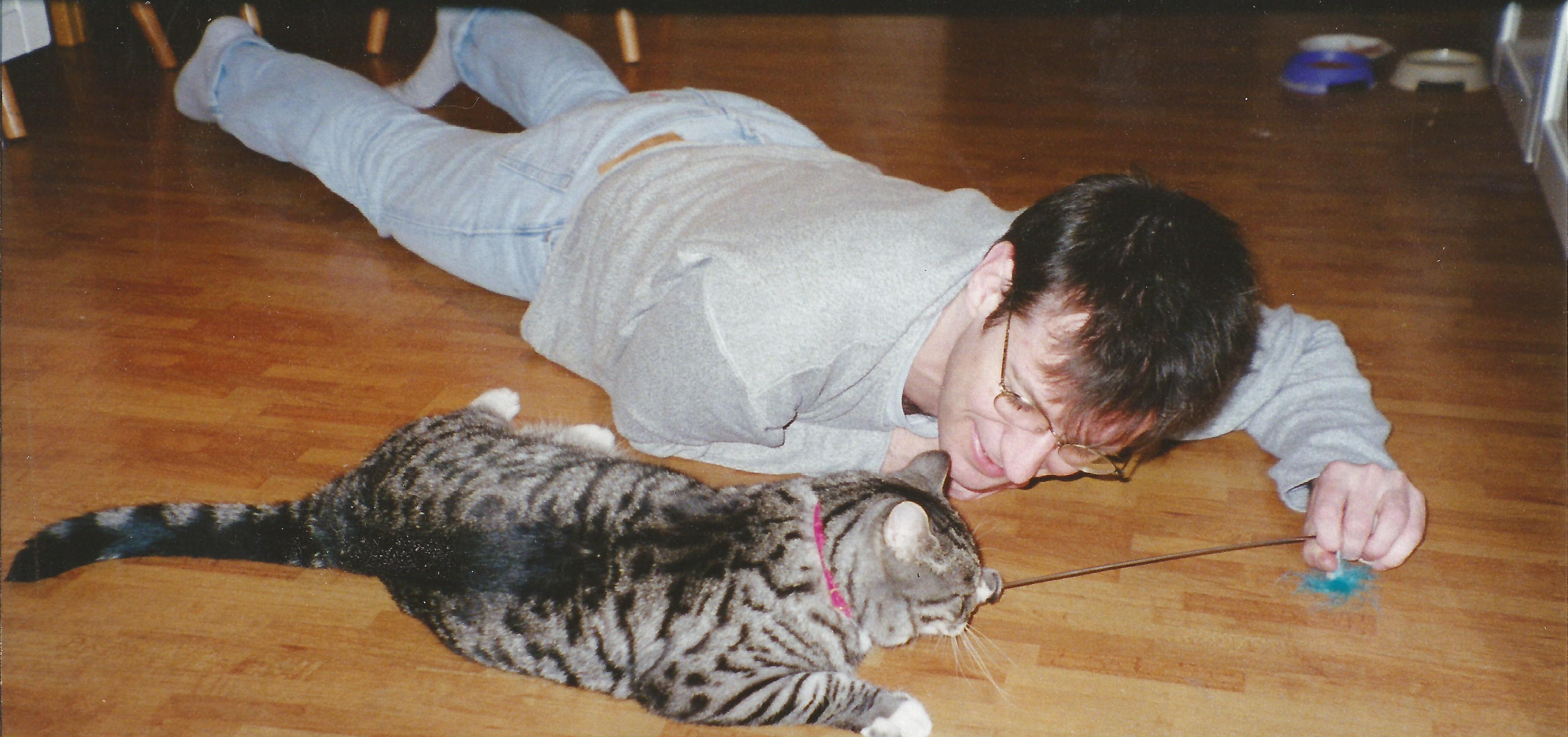
It’s a year to the day since my old feline friend Columbo passed away. I still miss him, and have indeed felt his absence as strongly as ever over the last few weeks. Still, going through photographs and other memorabilia recently has not been without its therapeutic value. Here are a few pictures over the years, showing how Columbo stayed with me through many changes of hairstyle! Most of the pictures were taken in my flat in Bethnal Green during the 90s; the last one in my house in Beeston, Nottingham. The antepenultimate picture shows Columbo with my mum…
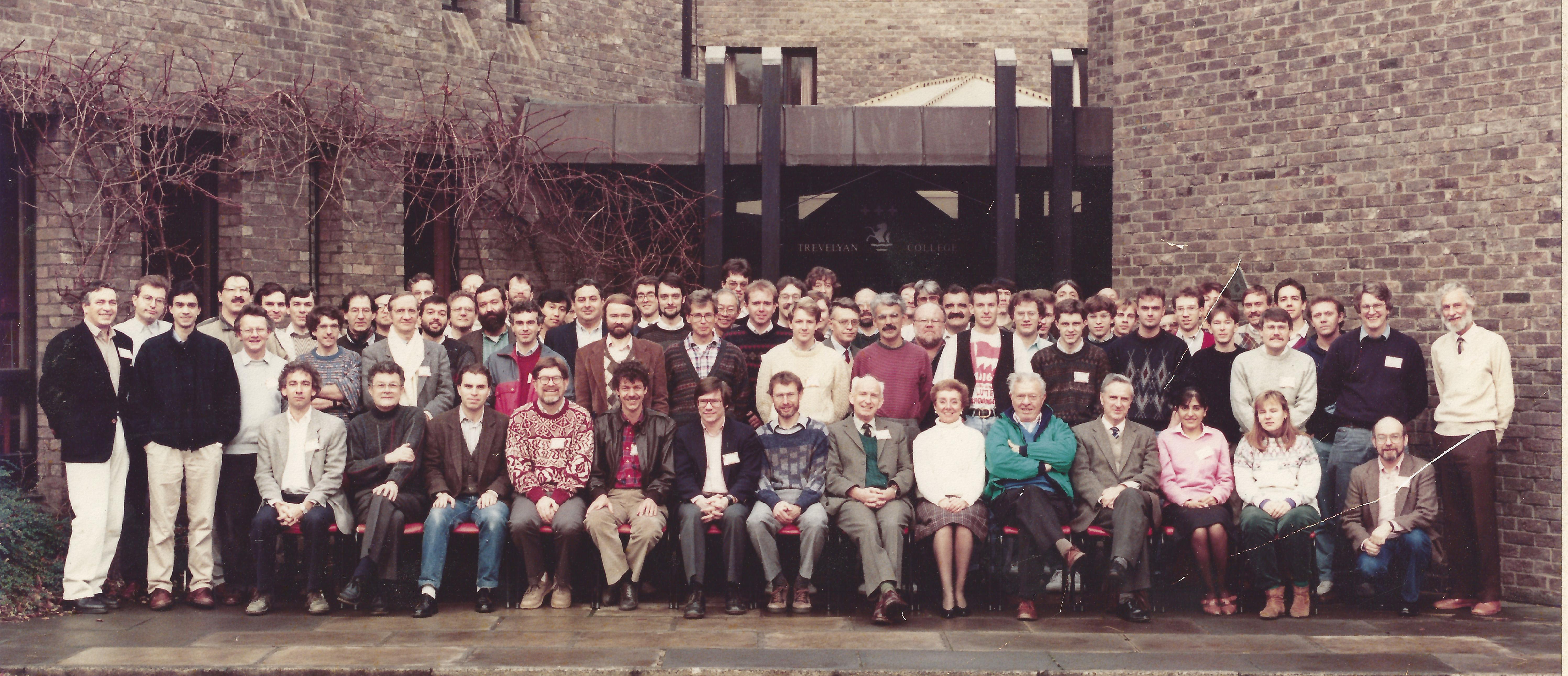
I came across this old picture in my office today and couldn’t resist posting it for nostalgia’s sake. It was taken at a NATO Advanced Research Workshop called Observational Tests of Inflation, which took placed in Durham in December 1990. You’ll probably need to click on the image to be able to recognize faces, but I should at least point out Sir Fred Hoyle in the turquoise jacket in the front row; I am behind in the red and white T-shirt and black waistcoat. In those days I was considered quite trendy, among cosmologists.
You can also see George Smoot, Simon White and Alan Guth sitting next to each other in the front row.
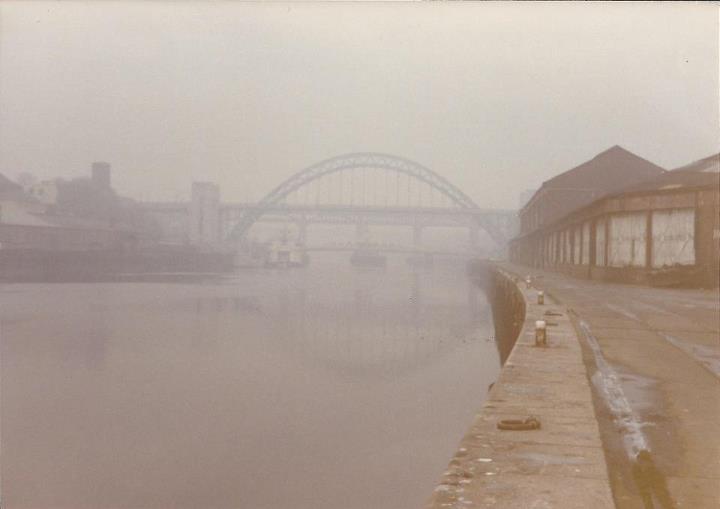
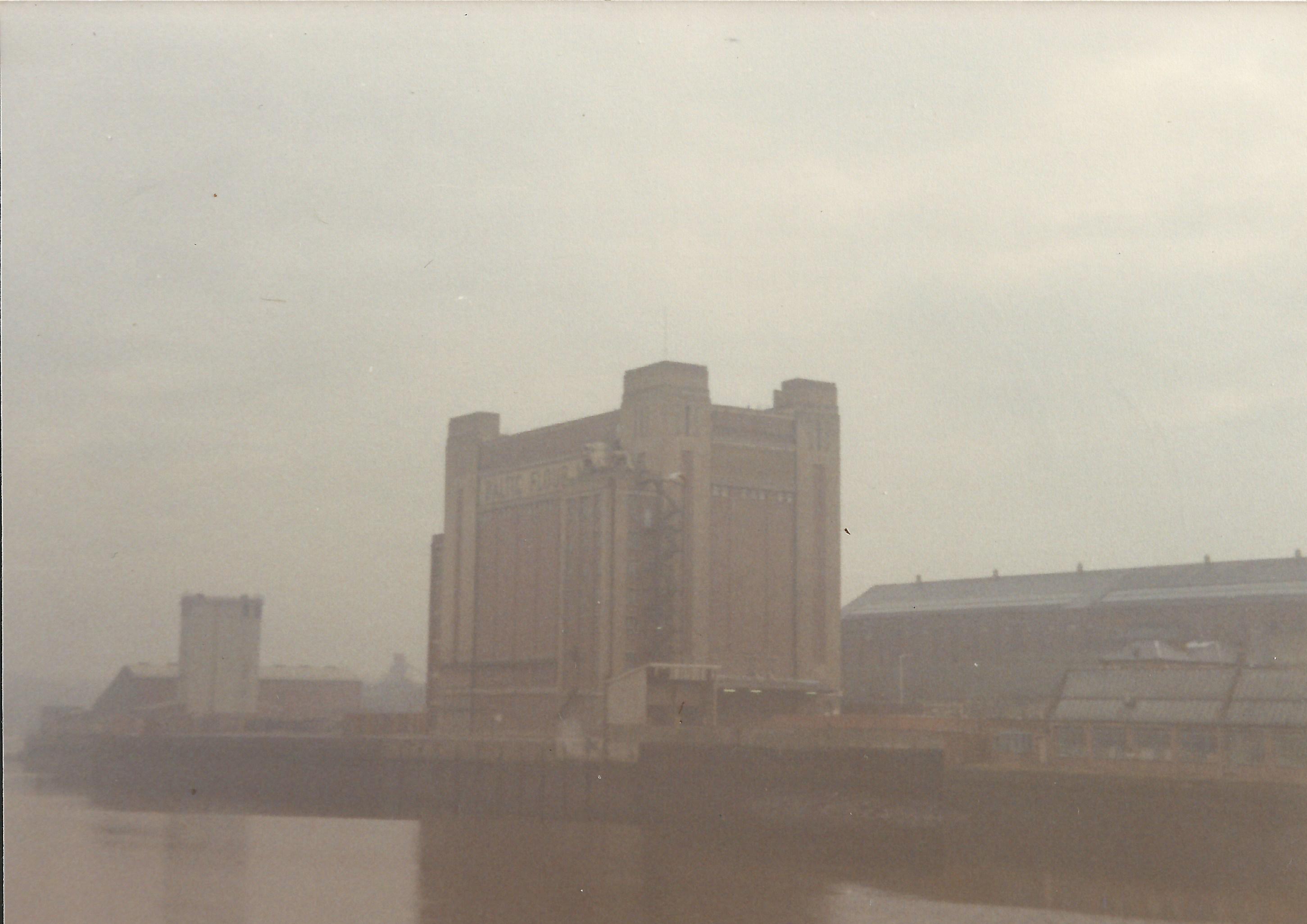
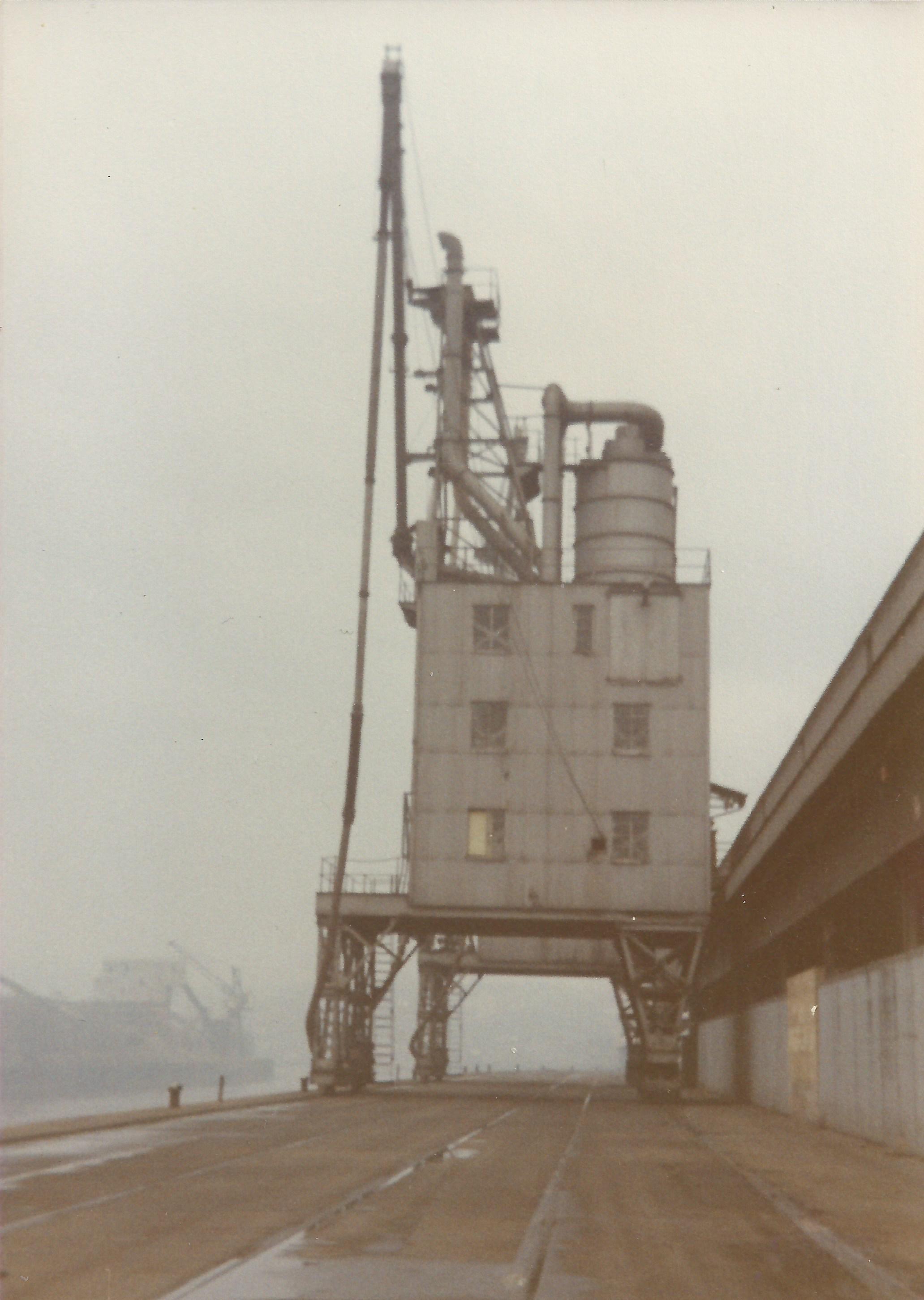
Recently I’ve been digging our boxes of old photographs, and boring all my Facebook friends by posting lots of scans I made from them. I seem to remember this particular batch came as a result of a stroll along the quayside of the River Tyne during one of the vacations when I was an undergraduate. I’m not very good at keeping records (or taking pictures for that matter) but at a guess I’d date them as 1984.
I’ve posted them partly because I think they’re quite atmospheric – there really was Fog on the Tyne that day – but also because the views they depict have long since vanished.
For example, there is now a new bridge – the beautiful Gateshead Millennium Bridge – roughly at the position from which this first picture was taken. In the background (i.e. to the West) you can see the iconic Tyne Bridge and the Swing Bridge. Notice also that in those days the quayside to the right (on the Newcastle side) was virtually derelict; now it is buzzing with fancy cafés, bars and restaurants. In those days the Quayside was a rough and rather dangerous place, especially at night.
This one is of the Baltic Flour Mill, on the Gateshead side of the River Tyne, in the days when it was a disused flour mill. It’s now a famous art gallery and exhibition space, the Baltic Centre for Contemporary Art.
Next one shows a couple of trawlers tugs (see comments below). In fact there is a famous Fish Quay at North Shields further along towards the mouth of the Tyne; it dates back to the 13th Century.
And finally this contraption, which I assume is long gone. I never worked out what it was for. Any suggestions?
The views presented here are personal and not necessarily those of my employer (or anyone else for that matter).
Feel free to comment on any of the posts on this blog but comments may be moderated; anonymous comments and any considered by me to be vexatious and/or abusive and/or defamatory will not be accepted. I do not necessarily endorse, support, sanction, encourage, verify or agree with the opinions or statements of any information or other content in the comments on this site and do not in any way guarantee their accuracy or reliability.






 In the Dark