Archive for the Biographical Category

Snowy Saturday

Posted in Biographical, Sport with tags , , , on November 27, 2010 by telescoper

Up early this morning, cold notwithstanding, to take part in an all-day workshop on Public Attitudes to Science conducted by the market-research organization IPSOS-Mori on behalf of the Department for Business Innovation and Skills (BIS) I can’t really say much about what happened since it’s an ongoing research project, but it was very interesting and particularly nice to talk to the participants (who were aged 18-24). My role was as a “science expert” so my job was to explain a bit about how the kind of science I do actually works in practice, compared with what they thought before the event.

On the way home I had to find my way back through the crowded streets of Cardiff. Today was the last day of the autumn rugby internationals, and Wales were playing New Zealand at home. There was a fantastic atmosphere in the city, as always on match days, although the combination of a rather boisterous rugby crowd with large numbers of Christmas shoppers did slow down my journey home. The game just ended, Wales 25 New Zealand 37; not as one-sided as many feared and a much better spectacle than last week’s awful match against Fiji.

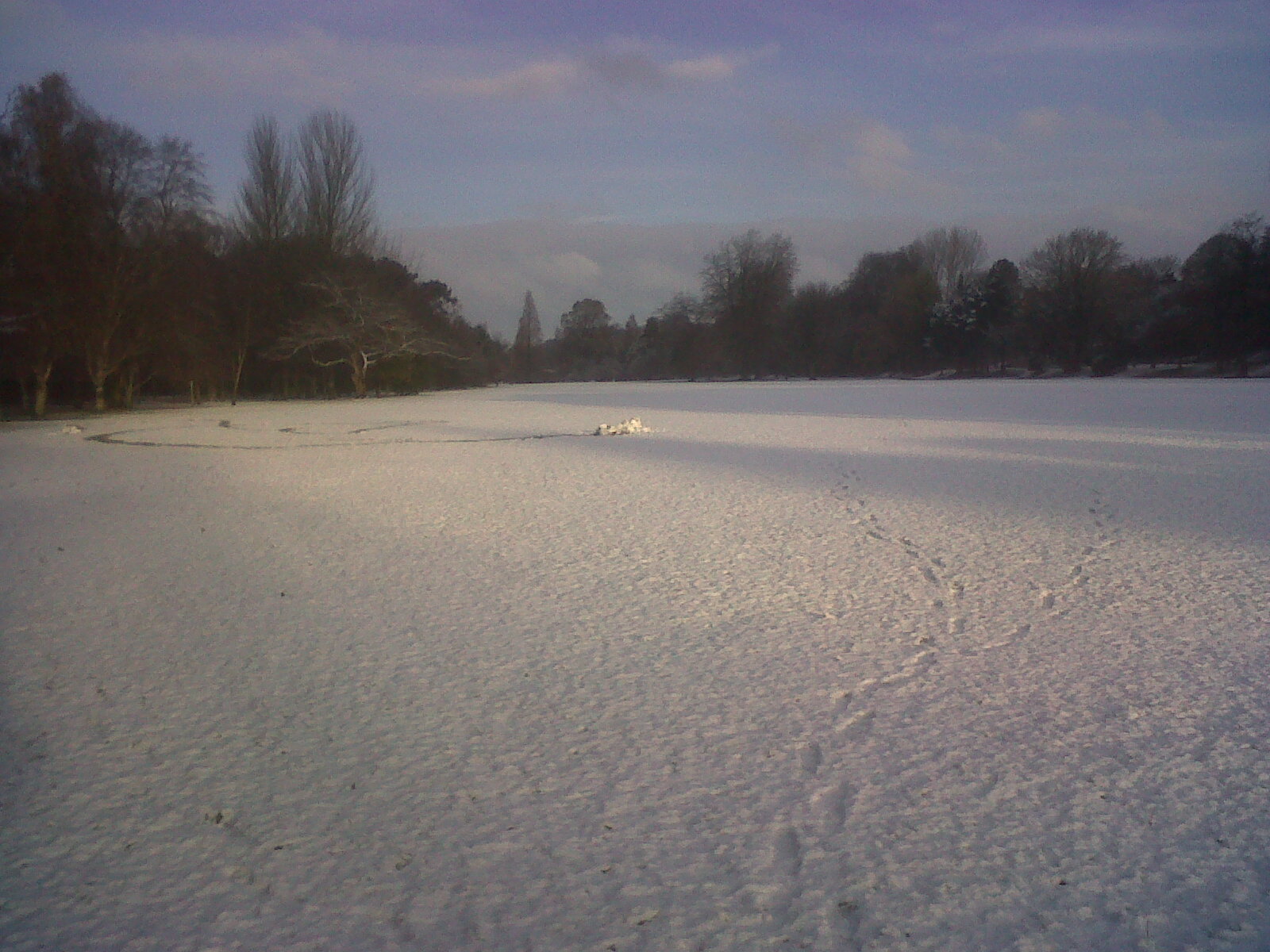
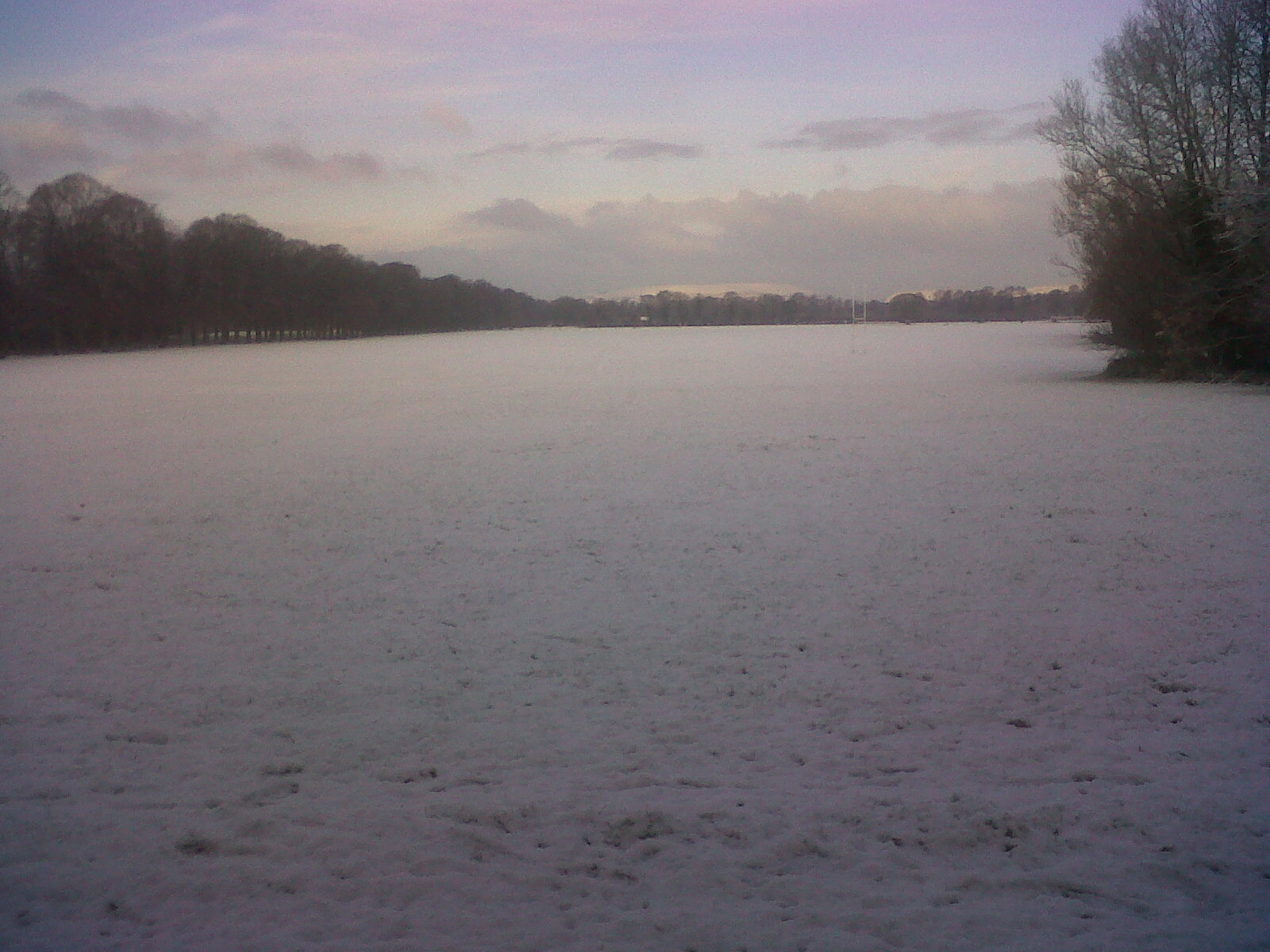
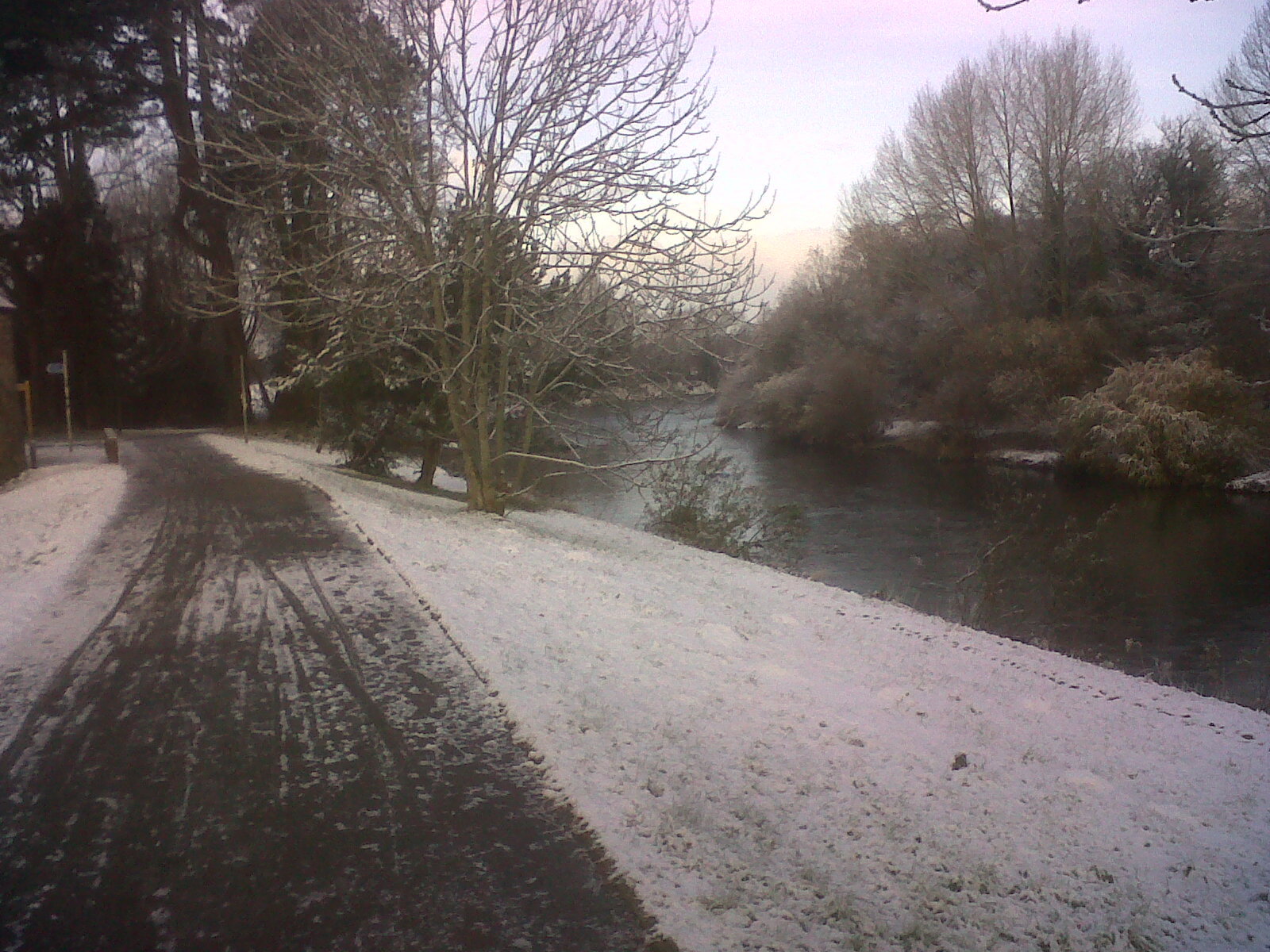
I took a few pictures of Bute Park on my way to the event this morning. It looked very beautiful, but it wasn’t half cold early on. I doubt if there’ll be much rugby played on the sports fields for a while, because the ground is frozen solid at the moment!


Share/Bookmark

Ways of Thinking

Posted in Biographical, The Universe and Stuff with tags , , on November 25, 2010 by telescoper

I’m putting one more Richard Feynman clip up. This one struck me as particularly interesting, because it touches on a question I’ve often asked myself: what goes on in your head when do you mathematical calculations? I think I agree with Feynman’s suggestion that different people think in very different ways about the same kind of calculation or other activity.

There’s no doubt in my mind that I’ve become slower and slower at doing mathematics as I’ve got older, and probably less accurate too. I think that’s partly just age – and perhaps the cumulative effect of too much wine! – but it’s partly because I have so many other things to think about these days that it’s hard to spend long hours without interruption thinking about the same problem the way I could when I was a student or a postdoc.

In any case, although much of my research is mathematical, I’ve never really thought of myself as being in any sense a mathematical person. Many of my colleagues have much better technical skills in that regard than I’ve ever had. I was never particularly good at maths at school either. I was sufficiently competent at maths to do physics, of course, but I was much better at other things at that age. My best subject at O-level was Latin, for example, which possibly indicates that my brain prefers to work verbally (or perhaps symbolically) rather than, as no doubt many others’ do, geometrically or in some other abstract way.

Another strange thing is the role of vision in doing mathematics. I can’t do maths at all without writing things down on paper. I have to be able to see the equations to think about solving them. Amongst other things this makes it difficult when you’re working things out on a blackboard (or whiteboard); you have to write symbols so large that your field of view can’t take in a whole equation. I often have to step back up one of the aisles to get a good look at what I’m doing like that. Other physicists – notably Stephen Hawking – obviously manage without writing things down at all. I find it impossible to imagine having that ability.

But I endorse what Richard Feynman says at the beginning of the clip. It’s really all about being interested in the questions, which gives you the motivation to acquire the skills needed to find the answers. I think of it as being like music. If you’re drawn into the world of music, even if you’re talented you have to practice long for long hours before you can really play an instrument. Few can reach the level of Feynman (or a concert pianist) of course – I’m certainly not among either of those categories! – but I think physics is at least as much perspiration as inspiration.

In contrast to many of my colleagues I’m utterly hopeless at chess – and other games that require very sophisticated pattern-reading skills – but good at crosswords and word-puzzles. Maybe I’m in the wrong job?


Share/Bookmark

Observances

Posted in Biographical, History with tags on November 11, 2010 by telescoper

Just for the record, I sneaked back to my office a little early from this morning’s coffee break, closed the door, and at 11am precisely stood alone for the two minutes’ silence that marks Armistice Day. Cardiff University organised a collective Act of Remembrance in which the two minutes’ silence was preceded by prayers and to which all staff and students were invited. I am, however, not a Christian and the religious dimension means nothing to me, so I did what I prefer to do as long as circumstances permit and marked the occasion on my own.

As I stood in my office looking out over the road, I could see a small group of young people, presumably students, standing outside in silence with their heads bowed. I don’t really understand why but a solitary tear fell from my eye as I watched them.

At 11.02 I went back to work.

Lest we forget.


Share/Bookmark

Our Place in the Universe

Posted in Biographical, The Universe and Stuff with tags , , on November 10, 2010 by telescoper

Just a quick post to plug a forthcoming lecture entitled Our Place in the Universe by my former PhD supervisor, Professor John D. Barrow.

This lecture is one of a series held jointly between the University of Bath and the William Herschel Society. In fact, I gave the corresponding lecture last year on The Cosmic Web, a podcast of which is available here. It doesn’t seem like a whole year has passed since I blogged about that event!

John Barrow’s lecture will take place at 7pm on Thursday 11th November, at the Claverton Campus of the University of Bath. For further details, see the link above. I realise that it’s a bit far for local Cardiff people to get there and back in the evening, but there might be a few readers of this blog who can make it there. John is an excellent public speaker and I’d encourage anyone who can go to do so, as I’m sure it will prove very rewarding.


Share/Bookmark

Business Class

Posted in Biographical, Science Politics with tags , , , , , on November 9, 2010 by telescoper

I’d never heard of Cardiff Business Club until Friday afternoon, when I received a message that they were hosting a lecture by Dr Lyndon Evans, the Director of the Large Hadron Collider experiment at CERN in Geneva, followed by a dinner, and had sent a bunch of invitations to the School of Physics & Astronomy at Cardiff University, where I work.

Given the short notice it was a bit of a scramble to get a group together, but in the end eight of us – 3 staff and 5 students – headed off in taxis yesterday to the swish St David’s Hotel in Cardiff Bay for the welcoming reception.

Earlier in the day I’d been in contact with Alun  Davies, the Secretary of Cardiff Business Club, who had asked me  if I would deliver the vote of thanks at the end of Dr Evans’ lecture.  Naturally, I agreed to do the honours. I’m not actually a particle physicist, of course, but I was the closest thing available. This all meant that, instead of joining my colleagues at the reception, I went off to meet the speaker and various officers of the club in a private lounge where we were plied with drinks and canapés. As well as meeting Lyn Evans, I also got the chance to chat with the Club Chairman, legendary former rugby international Gerald Davies who is an extremely friendly and charming bloke.

Thence it was downstairs to the lecture, during which I sat on the platform, facing the audience, from where it was extremely difficult to see the speaker’s slides. It was a 30-minute overview of the science, technology, and even politics behind the LHC, which went down extremely well. I remember this quote in particular

The greatest economic benefits of scientific research have always resulted from advances in fundamental knowledge rather than the search for specific applications.

It’s  particularly interesting, in the light of  government suggestions that we should  focus science funding more on applied sciences and technology, to note that this remark was made by Margaret Thatcher.

At the end I did my best to keep my vote of thanks as brief as possible – brevity has never been my strong suit, I’m afraid – and we then went off to dinner, with me rejoining the physics crowd at their table in a far-flung corner of the room.

Not surprisingly, the dinner turned out to be quite a formal affair – preceded by grace and followed by the loyal toast – which I think made some of our party feel a little bit uncomfortable, but at least it was all free! The room was dominated by men in suits who all looked like they were used to going everywhere Business Class. We academics usually travel by  Economy Class only.

Proceedings drew to a close quite early, at 10pm. Unfortunately, the temptation to adjourn to the pub for a “quick drink” proved too strong to resist.

I got home at 2.30am.


Share/Bookmark

Tomorrow, and tomorrow, and tomorrow..

Posted in Biographical, Literature with tags , on November 1, 2010 by telescoper

Gearing up for another stint in Swindon for the STFC Astronomy Grants Panel this week, I was trying to think of an appropriate theme for a blog post. The following short soliloquy from Macbeth somehow came up in a conversation in the pub last week, so I thought I’d post it here.

We actually “did” Macbeth at school and I was lucky enough to be cast in the best part, Lady Macbeth. No jokes please. I went to an all-boys school and, anyway, in Shakespeare’s time all the female roles were actually played by boys. I still remember quite a lot of the speeches I learned then, including all of Lady Macbeth’s famous Act I soliloquy The raven himself is hoarse. I’ll keep that for another post, so that no compunctious visitings of nature distract me from reading grant applications.

The speech below is remarkable for two things, I think. One is that it’s where one of the central themes of the play is laid bare: the numbing of the moral sense. Lady Macbeth has just died, but Macbeth himself seems no longer to care. He’s indifferent to everything around him, as the events that his ambitions have set in motion carry him to his ultimate doom. The incessant, mechanical rhythm of the verse accentuates this sense of inevitability.

The other thing is that, with the exception of some passages from Hamlet, this short excerpt has a higher density of familiar phrases than just about anything else in Shakespeare. Titles of novels and TV programmes figure prominently throughout the text but somehow it has survived all that borrowing without any diminution of its dramatic effect.

To-morrow, and to-morrow, and to-morrow,
Creeps in this petty pace from day to day,
To the last syllable of recorded time;
And all our yesterdays have lighted fools
The way to dusty death. Out, out, brief candle!
Life’s but a walking shadow, a poor player,
That struts and frets his hour upon the stage,
And then is heard no more. It is a tale
Told by an idiot, full of sound and fury,
Signifying nothing.

It’s almost as if the immortal bard himself knew what it was like to have to travel to Swindon over and over again…


Share/Bookmark

Azed 2000

Posted in Biographical, Crosswords with tags , , , , , , on September 26, 2010 by telescoper

I was up bright and early yesterday in order to get the train to Oxford where a lunch was held in honour of Jonathan Crowther, who, under the pseudonym Azed, has been setting cryptic crosswords in the Observer for the best part of 40 years. Today (Sunday 26th September 2010) sees the publication of the 2000th Azed puzzle, hence yesterday’s celebration. There’s also a special piece in the Observer today to mark the occasion. One of the authors of that piece, Colin Dexter of Inspector Morse fame (who has won the Azed competition more times than anyone), was at the lunch yesterday; he has a celebration of his own coming up, as he will be 80 years old next week.

I’ve blogged about my enjoyment of Azed‘s puzzles before and was particularly looking forward to the possibility of meeting the man himself and also being able to put faces to the names that often appear (mostly above mine) in the Azed Honours table.

I got quite an early train from Cardiff in order to give myself time to browse a few bookshops in Oxford before the lunch got under way with drinks at noon in Wadham College. There then followed a musical tribute to Azed in various parodies of Gilbert & Sullivan (I am the very model of a modern cruciverbalist, etc…) and others (Azed, Azed, give me your answer do….). Mingling with the other guests I got the chance to chat to some proper professional crossword setters. I’ve never actually tried to set an entire cryptic crossword puzzle but I think I’ll probably give it a go one day, just for fun. Based on what I heard, setting crosswords, even for the national broadsheets, is not something that one can easily make a living doing.  Aside from the professional setters – who seem to dominate the Azed prize list, not surprisingly – there were lots of ordinary folk who just enjoy doing the puzzles.

The lunch was quite splendid (scallops to start, followed by duck) and  lashings of nice wine. Afterwards there were various speeches and presentations, and the results of the last competition (No. 1997) were handed out. I got an “HC” for my clue to the word FADO:

It’s a transitory thing, love, for Portuguese folk (4)

(FAD+O); but once again the winning clues were much better than mine! Officially, HC stands for Highly Commended, but I always interpret it as Hard Cheese.

The guest speaker was Richard Stilgoe (remember him?) who gave a very droll and at the same time very interesting speech that included several things I hadn’t realised before. One is that TWELVE+ONE is an anagram of “ELEVEN+TWO”, perhaps the only example of an anagram that works with characters as well as numbers, i.e. 12+1=11+2. The other, more important, thing he mentioned that struck me was about Apple computers. As you all probably know I’m not a particular fan of Macs and the like, which together with my more general Luddite inclinations, probably explains why I didn’t know the origin of the Apple logo (an apple with a bite taken out from it) .

For those of you who don’t know, the reason why the Apple has a bite taken from it is a reference to Alan Turing, the British mathematician who did more than anyone else to pave the way towards the age of electronic computers through his work on cracking German wartime codes. Turing was gay, but  lived in a time when male homosexual behaviour was a criminal offence. When his sexuality led to a criminal conviction, the courts, instead of sending him to prison, decided to subject him to a barbaric medical “treatment” tantamount to chemical castration. The effect of unbalancing his hormones was to make him so depressed that he decided to take his own life. He knew that cyanide was a quick and effective way of doing this, but also knew that it tasted foul. He therefore made a solution of cyanide and injected it into an apple which he then ate. The bite out of the Apple logo is there as a mark of respect for Alan Turing.

That story is probably old hat to most of you, but I have to admit that hearing it for the first time has rather changed my view of Steve Jobs!

Anyway, after lunch we had the chance to mingle in the pleasant grounds of Wadham College, but I couldn’t stay too long as I had a train to catch. Although I was more than a little tipsy, I managed to get the train I had planned and made it back to Cardiff in time to cater for Columbo‘s insulin needs. On the way back I had a go at the tricky Araucaria puzzle in Saturday’s Guardian, which was of the alphabetical type I enjoy best. I’m glad to say I got it finished in order to clear the decks for today’s Azed 2000 puzzle. I haven’t started it yet, but at first glance it looks like a corker!

Share/Bookmark

The Instinct of Hope

Posted in Biographical, Poetry, Science Politics with tags , , on September 23, 2010 by telescoper

A strenuous and stressful three days commuting to and from sunny Swindon for the STFC Astronomy Grants Panel are now over, just in time for the onset of teaching term next week. For reasons of confidentiality I can’t talk about the actual business of the grants panel, and it’s nowhere near finished anyway – there are several more meetings to come before any results come out. I would say, though, that it’s a curious job that manages to be both inspiring and depressing at the same time. The inspiring thing is that you get to read about so much really exciting science being done by all kinds of people in departments all over the country; the depressing thing is knowing that there isn’t anywhere near enough money to support all the things that one would like to in an ideal world. And our world is becoming less like an ideal one every day…

I decided for these three days not to stay in Swindon but to commute to and from from Cardiff. On balance, I think that was a good decision: I got to sleep in my own bed, didn’t have to arrange for someone to do Columbo’s jabs, and also saved STFC quite a bit of money – a day return from Cardiff to Swindon, a trip of almost exactly one hour each way, is only £26.80 at peak time. The downside was that I’ve been up at 5am each morning and have been in a vegetative state by the time I got home each evening, including this one!

Anyway, lacking the energy to put together a proper post, I’ll just put up this poem by John Clare which appeared in the  Guardian last saturday and which, for some reason, popped into my head during the train journey home. Somehow it seems apt.

Is there another world for this frail dust
To warm with life and be itself again?
Something about me daily speaks there must,
And why should instinct nourish hopes in vain?
‘Tis nature’s prophesy that such will be,
And everything seems struggling to explain
The close sealed volume of its mystery.
Time wandering onward keeps its usual pace
As seeming anxious of eternity,
To meet that calm and find a resting place.
E’en the small violet feels a future power
And waits each year renewing blooms to bring,
And surely man is no inferior flower
To die unworthy of a second spring?


Share/Bookmark

De Juribus Unum

Posted in Biographical with tags , , on September 14, 2010 by telescoper

I got home from work this evening and found an ominous Manilla envelope among my mail. I assumed that it was a tax demand, since a lot of people seem to be getting them these days. But it wasn’t. It was a Jury Summons, requiring me to attend for Jury Service at Cardiff Law Courts, one of the fine civic buildings in Cathays Park, at a date in November 2010. I was relieved (that it wasn’t a tax demand) but also strangely excited. I’ve never actually done Jury Service, you see, and I quite enjoy the odd courtroom drama on the telly. Since I don’t actually have any lectures this semester I think I might as well get it over with, rather than asking for a deferral.

Incidentally, Question F on the form upon which one has to reply to the Jury Summons asks (sic):

Do you currently have, or have had in the past, any disorder or disability of the mind?

Do you think if I correct their grammar they’ll think I’m a busybody and let me off?

Anyway, in anticipation of the forthcoming excitement, I thought I’d post this clip from one of my favourite old movies, 12 Angry Men, starring the great Henry Fonda which delivers an object lesson in how to deal with prejudice.

I’m sure the real thing is nothing like this, of course. The only true tale I can remember was a former colleague of mine who was on a Jury that acquitted a young man of being a drug dealer on the grounds that the quantity of marijuana he was carrying was so small it must have been for his personal use only. The amount concerned was 12 ounces…..

Any readers with other juristic anecdotes to share? If so, you know where to put them. (I mean, in the comments box.)


Share/Bookmark