A couple of months ago a comment appeared on this blog (on a post about Richard Feynman) that said `not so much is known about Landau’. That was swiftly followed by an offer from Anton Garrett to post a biographical essay on him. In the original version of this article the author included his sources, but the references are absent from this piece owing to lack of time. I’m sure if there is demand we can ask Anton to update it with references when he’s back from MaxEnt 2018. In the meantime, here’s the piece:
–0–
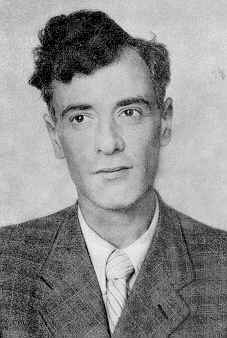
Lev Davidovich Landau, pictured c. 1937
Lev Davidovich Landau was the greatest theoretical physicist that Russia has produced. He was born in 1908; lost to physics by a car crash which left him medically dead for a while, in 1962; and he finally died six years after that, in 1968.
He was born to a Jewish family in Baku, Azerbaijan, a university and oil town on the western shore of the Caspian Sea, in January, 1908. His father was David Lvovich Landau, an engineer from a well-off family. He was the manager of a stock company concerned with the oil business in the Baku oil fields, and was over 40 when Lev Davidovich was born. (There was an elder sister, Sophia, who became a chemical engineer.) Landau’s mother was Lyubov Beniaminovna Garkavi, 10 years younger than her husband. She graduated in 1898 from the St. Petersburg Midwifery Institute, and six years later from the Women’s Medical School. She met her husband when he was visiting his sister, who was having a baby. Landau’s mother ran the school which her son Lev attended at the age of eight, and the young Landau would arrive with her daily by carriage. Both parents perished in the siege of Leningrad in World War II.
As a young child he had been interested exclusively and obsessively in arithmetic and mathematics, concerning himself with anything else – intellectual or other – only to get it out of the way; the interest in music that his parents had hoped for came to nothing. At school he excelled in mathematics and science. When nine years old, he had said that he wished to investigate every matter that life brought him into contact with, and to find his own solutions. (Later in life he seldom read a paper through, looking at the introduction and then working out the rest himself.) He was able to discuss the Revolution seriously in 1918, when aged 10, and had mastered the calculus by the time he left high school aged 13. He appears to have undergone a crisis at that age, for he resolved to commit suicide; fortunately he did not do so. During his schooling, the chaos of revolution was taking place, and Baku was taken four times in the struggle.
His parents felt he was too young for University at 13, and preferred a financial career for him. Accordingly he spent a year with his sister Sophia at Baku Economic Technicum. At his own insistence he then transferred, in autumn 1922, to science at the University of Baku. He enrolled in two departments: physics-mathematics and chemistry.
In 1924, at 16, he transferred to the physics department at Leningrad University. Leningrad was the Soviet Union’s leading physics centre, and it was here that Landau matured into a theoretical physicist proper. He said he only went into the University twice a week to “meet friends and see what was happening”, but he devoted most of his spare time to study, and often could not sleep for turning formulae over in his mind. Landau was staggered by the beauty of Einstein’s conception in general relativity, later stating that such rapture on first meeting it should be recognised as a characteristic of the true theoretical physicist. Experimentalists always found him most approachable, and he would always lay pure theory aside if asked for calculational help by an experimentalist. Later in life he vehemently declined to set up an exclusively theoretical institute.
In 1926 he simultaneously enrolled at the Leningrad Physicotechnical Institute as a supernumerary graduate student, and a year later graduated from the University and commenced full time studies at the Institute under Frenkel. George Gamow was a fellow student. At this time the revolutionary papers on the new quantum physics were coming in, from Schrödinger, Jordan, Born, Heisenberg and Dirac. Landau read them avidly. He immediately saw the importance of the new work, but through youthful lack of experience was not in its forefront. Certainly he had the ability; he often regretted not having been born seven years earlier.
Nevertheless, his first four papers, published in his late teens, all concerned the new quantum mechanics. In the second of these, he quantised the rigid rotator to find the spectra of diatomic molecules, and extended the analysis by perturbation theory to Zeeman splitting in magnetic fields. Another paper was on quantum-mechanical damping, also studying spontaneous emission. It introduced the concept of the density matrix independently of von Neumann. All four papers appeared in Zeitschrift für Physik. He published nothing more for three years.
In 1929 Landau won a Rockefeller Fellowship, which the People’s Commissariat of Education supplemented, and he went abroad to learn from the great European physicists. He took his opportunity, saying later “It was a pleasure to talk with everyone I met. Not one of them showed a trace of conceit, pretentiousness or arrogance.” He met Born in Göttingen, Heisenberg in Leipzig, and went on to Niels Bohr’s Institute of Theoretical Physics in Copenhagen. This was the most formative part of his trip, for all of the leading physicists regularly gathered there for seminars and discussion. Landau was one of the most active participants. He always considered Bohr as his mentor and, once he had gained a measure of autonomy, he returned in 1933 and 1934. From Copenhagen he went on to Cambridge for four months, where he wrote up the idea of innate electron diamagnetism. There he worked with Rutherford, and met his fellow citizens Pyotr Kapitza and George Gamow, touring Britain in a red jacket on the back of Gamow’s motor cycle. After Cambridge he went on to Pauli in Zurich where he also worked with Rudolf Peierls, then assistant to Pauli; Peierls later married a prominent member of Landau’s Leningrad circle.
He returned to Leningrad in March 1931, and became active in teaching as well as research. At this time, dialectical materialism was universal dogma in Russia and it crept into physics. Landau did not initially perceive the seriousness with which this was taken; he, Gamow and three others fell into trouble over a satirical telegram, sent to the author of an encyclopaedia article attacking relativity as incompatible with dialectical materialism.
Nevertheless, at 24 Landau was appointed head of the theoretical division of the newly organised Ukrainian Physicotechnical Institute in Kharkov, then the capital of the Ukrainian SSR.(Today the capital is Kiev.) He stayed in Kharkov five years. The Institute was an offshoot of the Physicotechnical Institute of Leningrad, whose head, Joffe, put great effort into setting up such institutions countrywide.
By this stage Landau knew what he could do, and at 24 was in the enviable position of being in charge. His research flourished, and branched into diverse fields. In 1936 he published or co-authored the following papers:
- Theory of Photo-Emf in Semiconductors,
- Theory of Monomolecular Reactions,
- Theory of Sound Dispersion,
- Transport Equation for Coulomb Interactions,
- Properties of Metals at Very Low Temperatures,
- Scattering of Light by Light
and in 1937:
- Origin of Solar Energy,
- Absorption of Sound in Solids,
- Theory of Phase Transitions (1&2),
- Theory of Superconductivity,
- Statistical Theory of Nuclei,
- Scattering of X-rays by Crystals Near the Curie Point,
- Scattering of X-rays by Crystals with Variable Lamellar
Structure,
- Stability of Neon and Carbon to alpha-Decay,
- Production of Particle Showers by Heavy Particles.
These are impressively varied. He also displayed a mastery of mathematical techniques. It was said of von Neumann that he never solved any problem he found difficult, only problems others found difficult; but when Vitaly Ginzburg put a similar charge to Landau, he replied, “No, that is wrong; I did what I could”. Landau had already developed an interest in the theory of matter at low temperatures, a field studied experimentally in Kharkov by Lev Shubnikov and his wife Olga Trapeznikova, who had both earlier worked in Kamerlingh-Onnes’ pioneering low temperature laboratory in Leiden. These were to become two of Landau’s closest friends; later, Artemii Alikhanian was to become a personal confidant. Paul Ehrenfest, who had lived in St. Petersburg pre-revolution, was a frequent and valued visitor to Kharkov. In 1935 he moved over to head also the general physics department at the University of Kharkov. He must have been able to do with very little sleep!
In Kharkov, Landau met Concordia (Cora, or Korusha) Terentievna Drobantseva, a Ukrainian chemistry student and food technologist. Overcoming his original reticence with women, he courted her, and in 1937 they married. The Landaus had one son, Igor, born in 1946. He became an experimental physicist.
It was at Kharkov that Landau developed his ideas about the teaching of physics. Landau’s master plan was to write, or at least oversee, a graded series of textbooks, from school and lay texts to a course for professional theoreticians. He never completed the task, but by the time of his disablement in 1962, he and Evgeny Lifshitz had finished nearly all of the full Course of Theoretical Physics, and the first part of the Course of General Physics. For this they received the Order of Lenin, the highest Soviet honour. The original nine volume, full Course of Theoretical Physics is universally known as “Landau and Lifshitz”; it has been kept up to date, and translated into English. (Among the translating team was John Bell of Bell’s theorem.) These books are masterpieces. They include all pertinent facts, and never waste a word or use an inferior method. The initial Russian reviews were, ridiculously, negative; again dialectical materialism was involved. But the physicists knew better.
From 1930 on, Landau’s output was actually written by Lifshitz or a collaborator and overseen by Landau; perfectionism to the degree of self-torture was responsible.
The full Course of Theoretical Physics was what Landau uncompromisingly believed every intending theoretician should master before undertaking research. He also believed in a mastery of mathematical methods, so that technicalities should not obscure the physics of a problem. Landau initially examined students for this ‘theoretical minimum’ himself. The test involved the evaluation of indefinite integrals expressible in elementary functions, solution of ordinary differential equations of standard type, vector and tensor analysis, and elements of complex variable theory. 43 persons passed the theoretical minimum from its inception in 1933 up to 1961; by 1988, 10 of these were Members of the Academy of Science (equivalent to FRS), and 20 were D.Sc’s.
In 1937 Kapitza, who three years earlier had been refused permission to return to Cambridge after a visit home, was able to invite Landau to head the theoretical division of the new Institute of Physical Problems in Moscow. Landau accepted, and was based there for the rest of his working life. The timing was fortunate; factions within the Institute at Kharkov were interpreted as being related to those in the secret police (the NKVD), and most of the senior scientific staff were arrested. Landau was aware that his sharp tongue made him an obvious target of the arbitrary purges then prevailing, although a naivety still prevailed, for in 1936 Landau declared that Stalin’s “democratic” constitution would soon deprive him of power.
Unfortunately, departmental factionalism at Kharkov pursued him and in April 1938, in Moscow, he was charged as a German spy. He was only released a year later after Kapitza had risked personal intervention with Stalin, Molotov and Beria, and after Landau had to admit to lying (under torture or its threat) in his “confession”. In his cold and crowded cell, Landau trained himself to think without writing materials, but was convinced that another six months would have killed him. Colleagues report that the experience had a deep effect; “How dare they laugh” he exclaimed, overhearing a party just after his release.
More understandable is secrecy over Landau’s war efforts. In summer 1941 Hitler launched Operation Barbarossa, the invasion of Russia, initiating what Russians call the Great Patriotic War. The Institute was evacuated 400 miles east to Kazan, where it assisted in the war effort. Landau became a member of the Engineering Committee of the Red Army. Later, four papers surfaced on detonation and shock waves. Evacuation and war work did not stop his own research, although a glance at his publications shows it slowed.
In 1941 Landau published the first of several papers for which he was to receive the Nobel Prize: a quantum treatment of the superfluid phase of helium-4 (confusingly called helium-II). Landau deduced the energy spectrum of the Bose excitations semi-empirically; it has a valley at 8-10K. The energy gap is the cause of superfluidity, and the quasiparticles existing in equilibrium in this valley Landau called rotons. This enabled him to reproduce Laszlo Tisza’s prediction of “second sound”, an extra wave mode. It was detected by Peshkov three years later. The differing theories were perceived as rivals, leading to a vigorous exchange which is summarised in Stephen Brush’s fine history of statistical physics.
Landau returned often to the mysteries of low temperatures; he refined his theory in 1947, and in the 1950’s turned to the equally enigmatic isotope, helium-3. In 1950 he and Ginzburg published a paper on superconductivity which is still much used today. Another famous discovery, from 1946, is collisionless (energy-conserving) attenuation of longitudinal waves in plasma (“Landau damping”). It is a kinetic, velocity-space effect which cannot be foreseen from the hydrodynamic plasma equations.
It was in 1946 that the USSR Academy of Sciences, under threat of mass resignations, at last elected Landau a Member. The delay, which particularly incensed Kapitza and Fock, was clearly a result of Landau’s sharp tongue.
Landau was a member of Igor Kurchatov’s nuclear weapons team. (Another prominent figure was Andrei Sakharov.) Although Landau never worked full-time on the Soviet atom bomb, he published nothing for the three years prior to detonation of the first Soviet hydrogen bomb on 8th August 1953. That year he was also awarded the title Hero of Socialist Effort; Kapitza states in the Royal Society of London obituary of Landau that this was partially for “fulfilling government projects”.
Landau resumed his research from 1953. First to surface was the paper he found most challenging, taking up Fermi’s ideas about multiple particle production in collisions. Landau analysed the expansion of a cloud of emerging particles using the equations of relativistic hydrodynamics. These were valid because the mean free path was far less than the dimensions of the cloud. He solved these asymptotically, using tricks borrowed from other areas of physics. He also published on quantum electrodynamics, fluid flow, and many aspects of low temperature theory. His greatest efforts, according to Ginzburg, went into an attempt to develop a theory of second order phase transitions going beyond the self-consistent field approximation. He was particularly appreciative of Onsager’s solution of the two-dimensional Ising model.
The seminars at Moscow, which took place at 11am prompt on Thursdays and lasted the day, were renowned. Questions or interruptions were permitted at any stage, but with ‘Dau (never the formal Lev Davidovich) conducting, a conclusion would be reached. Outstanding results were entered into a “golden book”, and nontrivial problems arising into a “problems book”, a fertile source of research topics. Conclusions were by no means always favourable to the speaker, and waffle was seized on mercilessly. Landau tended to be overly influenced by his first opinion of speakers.
In 1958, on his 50th birthday, a party was held. All formalities were banned. Landau was presented with his own Ten Commandments: small marble tablets engraved with his ten most significant formulae.
Landau was by this time recognised abroad, and added many international honours to his clutch of domestic ones (although he was not permitted to travel abroad, obviously because of his knowledge of Soviet atomic secrets). These included:
- 1951 Member, Danish Royal Academy of Sciences (recall
Bohr was Danish)
- 1956 Member, Netherlands Academy of Sciences
- 1959 Honorary Fellow, British Institute of Physics and
Physical Society
- 1960 Foreign Member (equivalent to Fellow), Royal
Society of London; Foreign Associate, US National Academy of Sciences
Fritz London Prize (USA); Max Planck Medal (Germany).
1962 brought the tragedy which ended his career abruptly at its height. On Sunday, January 7th, Landau was being driven by a colleague to Dubna. In Moscow’s northern suburbs the car braked sharply to avoid a pedestrian, slewing on the icy surface only to stop in the path of an oncoming lorry. In the resulting collision Landau suffered multiple fractures, collapse of one lung and part of the other, severe internal damage to the abdomen, and a fracture to the base of the skull. He was rendered deeply unconscious, and in hospital was thought to be dying on several occasions. Few persons suffering such injuries could be expected to survive, but he hung on with a tenacity belied by his physique.
During his unconsciousness, scores of academics formed a fraternity of volunteers willing to do anything the doctors suggested; at one stage they brought a respirator from the nearby poliomyelitis research institute. The best specialists were summoned to the hospital, in the Timiriasevsky district. Landau had inspired nothing less than love among his fellow physicists.
To minimise trauma, it was decided to repair his body before undertaking any operation on the brain. Late in February, 50 days after the crash, came tentative indications that consciousness was returning. Landau first responded to a request to blink acknowledgement. An international neurosurgical team subsequently decided it better not to operate on his brain. (This was long before non-invasive tissue imaging, which could detect haemorrhage.) In early April Landau began to recover his speech, reflexes and memory, but only in July did he question where he was, and why.
Sadly, it was becoming obvious that Landau would not recover his talents. He remained apathetic. Detailed thought, rather than reactive conversation or specific memory recall, was largely beyond him.
Late in 1962 came the announcement that Landau had been awarded the Nobel Prize in physics “for his pioneering theories concerning condensed matter, especially liquid helium”. Precedent was broken by presenting the prize, not in Stockholm, but at Landau’s bedside, by the Swedish ambassador. This award cannot be given posthumously, so it is likely that Landau’s poor health catalyzed what was a well-deserved honour. That year he also received a Lenin Prize.
Only in 1964 could he at last return home. His physical recovery, though incomplete, was better than his mental. He learned to walk again, though suffering intense frustration. But early in the morning of 1st April, 1968 he died, following an intestinal operation.
The post-war explosion of research led to the founding of an Institute of Theoretical Physics in the USSR in 1964. As tribute, it bears Landau’s name today.
What of Landau’s personality? He was characterized by a sharp and quick tongue – he did not suffer fools gladly – and this abruptness was often likened to Pauli. Examples abound. Landau believed that genuinely talented physicists would be known and have peaked by their late 20’s (a notion he disproved by example), and this led to his famous comment “So young, and already so unknown?” At a conference he replied, after others had demurred, that the difference between Pauli and a particular philosophy professor was that Pauli understood [the uncertainty principle]. Landau’s features, at least in early photographs, were intense. Physically he was very thin, and moved angularly. His hands were never still. He chose never to learn to drive. Nevertheless he played tennis and was fond of (cross-country) skiing. He enjoyed travel, and vacations were often spent driving with Lifshitz. He was an inveterate classifier, classifying physicists on a logarithmic scale; thus a second class physicist supposedly accomplishes ten times as much as a third class physicist. He was already suing this scale by 1929. Einstein alone was rated 1/2, while rank 1 included Schrödinger, Bohr, Heisenberg, Dirac and Fermi. Landau placed himself at 2 1/2, ultimately re-assessing himself at 2. In response to a question he replied: “No, I am not a genius. Bohr is, and Einstein is; I am not. But I am very talented”. Those in the fifth rank he called pathological types; “pathology” was a favourite term of denigration.
Landau did not like the unexpected, and did not alter his opinion easily, although it was so rarely necessary in science as to cause no trouble. In personal contexts this could be more irksome.
Landau was graceful to all correspondents who showed interest in physics, at any level, but if he detected a trace of careerism then his reply was sharp. He disposed of one, enquiring in which branch best to specialise, after first giving the answer: that which interests him most. He wrote a definitive letter to one of that pestilential category who claimed to have disproved relativity:
“I must say that your manuscript is lacking in any interest. Modern physics is a tremendous science, based primarily on a large number of experimental facts. You are patently almost completely unacquainted with this science, and you attempt to explain physical phenomena, about which you know little, with meaningless phrases. It is clear that nothing can come out of it. If you are seriously interested in physics, you should not engage in discoveries, but first learn at least a little about the subject.
“Modern physics is a complicated and difficult science, and in order to accomplish anything in it, it is necessary to know very much. Knowledge is all the more needed in order to advance any new ideas. It is obvious from your letter that your knowledge of physics is very limited. What you call new ideas is simply prattle of an ill-educated person; it is as if someone who never saw an electric machine before were to come before you and advance new ideas on this subject. If you are seriously interested in physics, first take time to study this science. After some time you yourself will see how ridiculous is this nonsense that came out of your typewriter….”
When writing he worked on the floor or on a settee, never at a desk. As a young man he was very shy; he confessed later to despair at this, which he tried to overcome by conscious effort. He saw it as an obligation to be happy. He gave unsolicited personal advice irrespective of possible offence whenever he deemed it necessary. He believed that interpersonal relationships were ultimately simple and analysable. When young he disapproved of marriage as a “typically capitalist institution”, in pushing a good thing too far. He never took Judaism seriously, and was characteristically caustic about religious belief. His “school” of physics, though meritocratic, was predominantly Jewish, and he made no effort to heal the schism with Bogoliubov’s school. He became fond of literature, poetry, realistic art and cinema, but described himself as musically blind, and positively detested opera and ballet. He was uninterested in chess, a Russian passion. He was interested exclusively in an argument’s quality, and never in unsupported appeals to higher authority. Above all else Landau detested pretension; Lifshitz suggests he disliked opera and ballet because they are more contrived ways of telling a story than literature or cinema. He was fond of history. He tried to categorise and quantify everything. The rationalist facet of his personality always dominates.
While the tragedy of his loss – it is not too strong a word – left physics the poorer, his achievements are lasting. Physicists today owe a major debt to his teachings and scientific ideals.
ADDENDUM: Sources Used
SOURCES USED
Usp. Fiz. Nauk vol.64, 615 (1958) (50th birthday biography)
JETP vol.34, 3 (1958), English trans: vol.7, 1 (1958) (50th birthday biography)
Physics Today vol.14, 42-46 (March 1961) (Fritz London prize)
Landau – A Great Physicist and Teacher (A. Livanova; English translation: Pergamon 1980)
Usp. Fiz. Nauk vol.97, 169-183 (1969) (by Lifshitz), English translation: Sov. Phys. Uspekhi vol.12, 135-143 (1969). (Obituary biography)
Mechanics; Course of Theoretical Physics Vol 1, Landau and Lifshitz, 3rd Ed. (Pergamon, 1976); Introduction. A minor emendation of previous reference.
Landau’s Collected Papers, ed D. ter Haar; Intro p(xiii) (1965; Pergamon).
Bird of Passage (R. Peierls; autobiography, Princeton 1985)
Obituaries of Landau: The Times, The Daily Telegraph, The Guardian, London, April 3rd 1968.
The Man They Wouldn’t Let Die. Alexander Dorozynski, Secker & Warburg (1966)
Biographical Memoirs of the Royal Society vol.15, 140 (1969). Obituary by Kapitza and Lifshitz.
My World Line. George Gamow, Viking press, NY 1970.
Statistical Physics and the Atomic Theory of Matter. S.G. Brush, Princeton U.P. 1983 (a history).
Reminiscences of Landau. I.M. Khalatnikov, Physics Today, May 1989, p34.
Landau’s Attitude Towards Physics and Physicists. V.L. Ginzburg, Physics Today, May 1989, p54.
Landau: The Physicist and the Man; Recollections of L.D. Landau, ed: I.M. Khalatnikov. Nauka, Moscow 1988; English translation published by Pergamon, 1989.
Pages from Landau’s Book of Life. Maya Bessarab. Moscow Worker Press, 1971.
Proceedings of the Landau Memorial Conference, Tel Aviv, Israel, 6-10 June 1988, eds E. Gotsman, Y. Ne’eman & A. Voronel (Pergamon 1990).
Reflections on Liquid Helium. E.L. Andronikashvili, Adam Hilger, 1990.
Landau’s Brain Injury: A Fuller Account. Letter to Physics Today, May 1990, p118.
Proceedings of the Landau Birthday Symposium, Copenhagen, 13-17 June 1988, ed A.H. Luther (Pergamon 1990).







 In the Dark