Archive for the Film Category

An Evening of Edgar Allen Poe

Posted in Film with tags , , , , , on August 20, 2012 by telescoper

I chanced upon this the other day and couldn’t resist posting it here.  It’s a short (52-minute) film featuring the wonderful Vincent Price in  a one-man show consisting of dramatic recitations of stories by Edgar Allen Poe: “The Tell-Tale Heart“, “The Sphinx“, “The Cask of Amontillado” and “The Pit and the Pendulum“. As a huge fan of both Price and Poe I don’t really understand why I’ve never seen this before. This film was made in 1972, by which time his acting roles were largely self-parodying, playing  camp villains in hammy horror films, roles I might add that he played with matchless gusto despite the often low quality of the scripts. But in this movie, filmed in front of a live audience, reminds us what a fine actor he was, his theatricality perfectly appropriate for Poe’s writing.

The whole movie’s a bit longer than I’d usually post in a blog item, but at least watch all of the first story which starts

TRUE! –nervous –very, very dreadfully nervous I had been and am; but why will you say that I am mad? The disease had sharpened my senses –not destroyed –not dulled them. Above all was the sense of hearing acute. I heard all things in the heaven and in the earth. I heard many things in hell. How, then, am I mad?

Hmm.

Anyway, they just don’t make them like Vincent Prince any more…

Santa Sangre

Posted in Biographical, Film with tags , , on July 18, 2012 by telescoper

Having spent most of this morning talking about the past (to someone who at least is paid to listen to such boring stuff), I dozed off this afternoon and had a peculiar kind of dream which featured sequences of a film I saw way back in 1990. Strange how the unconscious brain plays with such connections. When I woke up I even thought for a few moments that I was back in 1990 again. Most unnerving.

Anyway the film in question is a neglected masterpiece called Santa Sangre (“Holy Blood”), directed by Chilean-French director Alejandro Jodorowsky. I’m amused that the wikipedia page for this movie is prefaced by a suggestion that the “plot summary may be too long or excessively detailed”, because the plot is so bizarre and convoluted that it would take pages of explanation to do it justice. Anyway, Santa Sangre, set in Mexico, and made on a budget of less than $800,000, is a kind of surrealist horror film, with a complex flash-back then flash-forward narrative structure, that revolves around the life of a young man called Fenix who grows up in a circus. Among a number of traumatic experiences he encounters in his childhood is that his mother has both her arms cut off. Later, in adulthood, Fenix and his mother perform a stage act in which he stands behind her and pretends that his arms are hers. It’s a moving and shocking image, just one of many in a film which is in turns bizarre, disturbing, offensive, violent, horrifying, funny, beautiful and utterly utterly brilliant. Why it’s not more widely celebrated I’ll never know.

Jubilee

Posted in Film with tags , , on June 2, 2012 by telescoper

Since it’s the Diamond Jubilee of Her Majesty Queen Elizabeth II (60 years 59 years since her coronation on 2nd June 1952 1953; I’m grateful to fervent royalist Bryn Jones for correcting my error in the comments below), I thought I’d dig out something to mark the occasion. This is the opening sequence of Jubilee, by Derek Jarman, made to mark the Silver Jubilee in 1977. It’s hardly a celebration, however. In fact it’s a grimly ironic dystopian satire, in which Queen Elizabeth I travels forwards in time to 1970s London and finds a city and a society in a state of terminal decay. It was very controversial when it first came out primarily because, although the cast includes a number of punk icons, it’s as much an anti-punk film as it is anti-establishment. Over the years it has become something of a cult primarily, I suspect, among us oldies who remember what things were like in 1977. Anyway, do watch the whole thing if you get the chance. I think it’s brilliant.

Dracula

Posted in Film, Music with tags , , , , on May 28, 2012 by telescoper

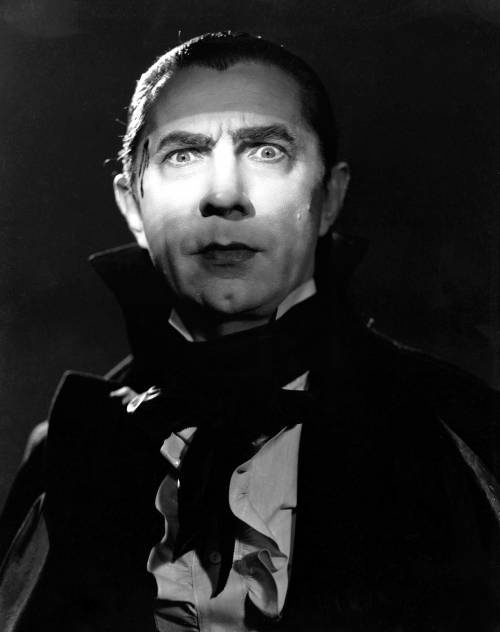
Last night I went with some friends to the Wales Millennium Centre in sunny Cardiff Bay; not, this time, for an Opera but to see a movie. Well, not just to see a movie but to listen to the soundtrack performed live at the same time. It turned out to be a fascinating and memorable evening, enjoyed by a very large audience.

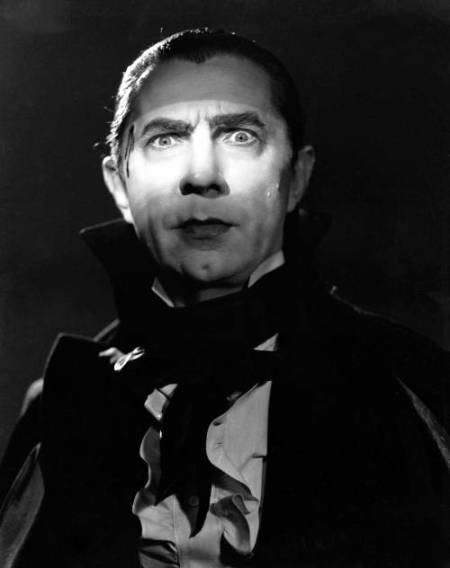
The film was the classic 1931 version of Bram Stoker’s Draculastarring the great Bela Lugosi as the Count. This version – the first of many variations on the theme – was based very closely on the 1927 Broadway play in which Lugosi also played the title role. The music we heard was specially composed to accompany Dracula by Philip Glass, and the man himself was there to perform it. Philip Glass, I mean, not Count Dracula. The musicians numbered six in total, actually, as Philip Glass was joined by the Kronos Quartet  and together they were directed by Michael Riesman, who sat with his back to the audience watching the film on the big screen.

Although the musicians started a bit ropily, they soon pulled themselves together and it became obvious that the music was going to bring a significant new dimension to this pioneering old horror movie. In fact, as a very early “talkie” the original film had no musical score at all and very few sound effects of any kind. The music composed by Philip Glass brings extra dramatic intensity to some of the movie’s iconic sequences, such as the battle of wills when Dracula tries to mesmerise Professor van Helsing. The insistent repetition which is characteristic of Glass’ minimalist approach adds urgency where needed, but there are also contrasting passages of relaxed beauty. The score is also beautifully understated where it needs to be, simple enough not to distract attention away from the screen.

The passing years have not been particularly kind to the film. The effects are often unconvincing (to say the least), especially the  bats-on-strings, some of the acting very hammy, and the audio quality was so poor that the dialogue was often so muffled as to be barely audible (and not helped by bad mixing with the music).

Once you look past these superficial aspects, however, it’s not difficult to understand why this film is regarded as such a classic, because it is a highly original piece of work. It’s a far cry from a modern gore-fest, of course. The horror is implied rather than made explicit; all the actual blood-sucking happens out of shot. But the unsettlingly disjointed narrative, full of unexpected changes of scene and unexplained goings-on, gives it a dream-like feel and conjures up a unique sense of atmosphere. Although it it is now extremely dated, it doesn’t take that much imagination to understand why it created a sensation way back in 1931, with people apparently fainting in shock in the cinema. It also made a huge amount of money at the box office.

Vampire movies  are replete with their own set of clichés – the crucifixes, the absent reflections, the bats, etc etc – but this is the daddy of them all. The one thing that surprised me was the lack of garlic; the favoured protection against this particular member of the Undead is Wolfsbane (a member of the Aconite family of attractive yet lethally poisonous flowering plants; I used to grow a variety called Monk’s-Hood in my garden when I lived in Nottingham).

In the end, however, Dracula owes it all to the mesmerising screen presence of Bela Lugosi. This film made his name, and he was to spend most of the rest of his career typecast as a horror villain. His later years represented a downward spiral. Trouble with sciatica led doctors to prescribe him with opiates, on which he became hooked.  His drug addiction made him notoriously unreliable and work dried up. His career dwindled away into obscure bit parts in poor quality B-movies.

Although Bela Lugosi had his limitations as an actor, he didn’t deserve his fate. I’ve said before on here that I think people should be judged by their best work rather than by their worst, and so it is with Bela Lugosi. He was, and remains, the  Count Dracula.
Great Expectations

Posted in Film, Literature, Television with tags , , , , on December 29, 2011 by telescoper

I don’t make a secret of the fact that I don’t watch TV, and didn’t really do so over the Christmas holiday. However, I did catch the new BBC adapation of Charles Dickens’ Great Expectations which I think is one of the greatest novels in all literature. I wasn’t that keen to watch it, after seeing several pointless modern films of the story that didn’t do justice either to the original novel or to the marvellous 1946 film directed by David Lean, which I think is one of the greatest movies ever made. It’s not that I think people shouldn’t do remakes of classic stories – great novels can bear many different versions – it’s just that they’re often done with neither wit nor imagination and the end result can be so obviously inferior that one wonders why it was ever released. The recent remake of the perfect Ealing Comedy The Ladykillers, for example, was such total crap from start to finish it made me want to beat the director over the head with a blunt instrument.

In the end, though, I was persuaded to watch it and was very impressed indeed with the new version.   Douglas Booth, who plays the teenage Pip, as well as being an extraordinarily handsome young man, is also a fine actor. The young Pip’s encounter with the convict Magwitch (played by Ray Winstone) in Episode 1 was every bit as memorable as the older film, but I’ve decided to put the latter up here to encourage those who haven’t been fortunate enough to see the classic version.

I’m interested in suggestions of best and worst remakes….so feel free to add yours through the comments box.