Archive for the History Category

Extensive view of Carton House, County Kildare, with Maynooth in the distance – Willem van der Hagen

Posted in Architecture, Art, History, Maynooth with tags , , , on July 8, 2021 by telescoper

I came across the above painting on the Maynooth local history Facebook page the other day and thought I’d share it here. It’s by a fairly obscure artist called Willem van der Hagen who was Dutch but who settled in Ireland around 1720. The painting (oil on canvas, 107.6 cm by 133.6 cm) dates from around 1730 and was sold at Christie’s in 2017 for £428,750. The painting was probably commissioned by Henry Ingoldsby who inherited Carton Demesne on the death of his father Sir Richard Ingoldsby in 1712.

The view is of Carton House, a location very close to where I live and which I blogged about here. The grounds of Carton House are very pleasant for taking recreational walks.

The bird’s-eye view in the painting shows Carton and its demesne before the house was extensively remodelled in the mid-18th Century, although the layout is still recognizable in the modern house:
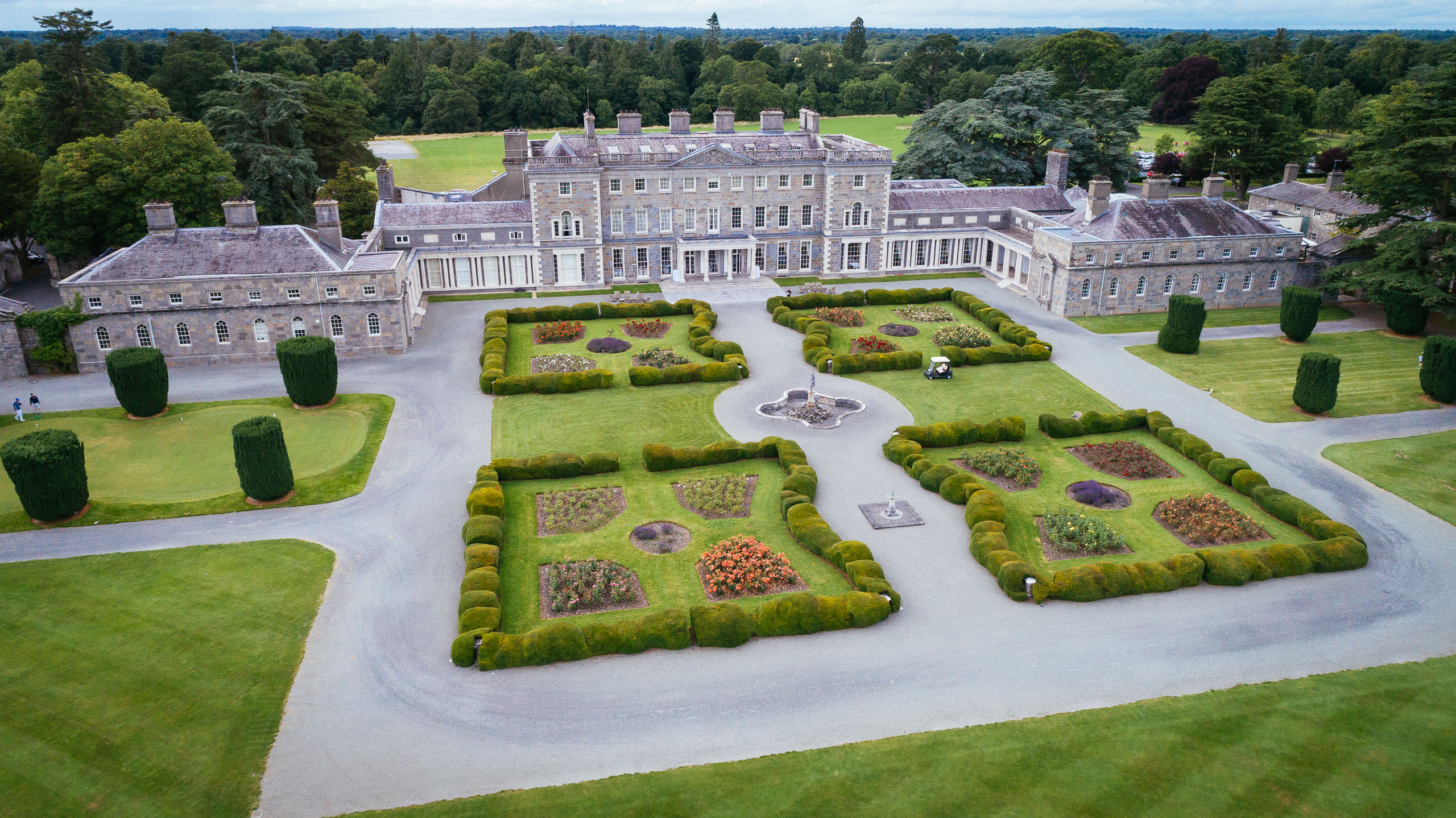
Th refurbishment of the house was undertaken by architect Richard Castle for the 19th Earl of Kildare between 1739 and 1745. The view in the painting dates from before this change and shows Carton at the centre of an elaborate formal garden. In the foreground, on the southern side of the house, avenues of lime trees radiate outward into the countryside from the enclosed entrance courtyard; on the northern side of the house can be seen a stepped series of walled gardens and terraced walks.

The gardens and demesne were also transformed when the house was rebuilt to reflect mid eighteenth-century taste. More recently the grounds have been turned into golf courses, one to the front and one to the rear as the house itself is now a golfing resort hotel so nothing remains of these extensive gardens.

In the distance to the far left you can see the ruins of the keep of the ancient FitzGerald castle in Maynooth, but St Patrick’s College was not built until the end of the 18th Century and much of the present-day town centre dates from the 19th Century so in those days Maynooth was a small place. The area between the castle and the walls surrounding Carton House demesne is now largely built-up although there is a pleasant tree-lined avenue leading from Maynooth towards the House as far as the Dunboyne Road.

In the right foreground you can see the Prospect Tower built by the Earl of Tyrconnell, which still stands. I always assumed this was some sort of folly but it was apparently intended as a mausoleum for one of the previous owners of the house.
The Hundred

Posted in History with tags , on June 18, 2021 by telescoper

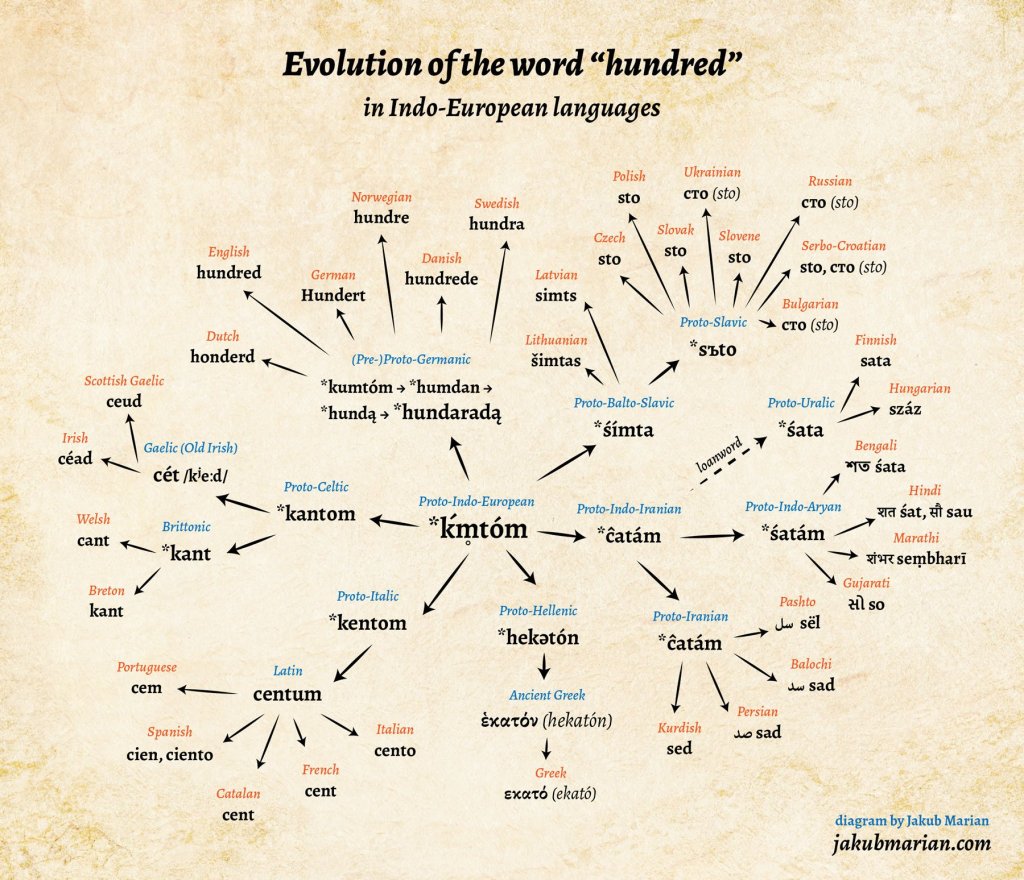
I saw this on Twitter recently and thought I’d share it because I found it fascinating. Taken from here and it shows the evolution of the word “hundred” across Indo-European languages:

Apologies if you thought I was going to go off on one about the silly new English cricket format. I think it’s best I don’t discuss that.

Who is a proper physicist?

Posted in History, The Universe and Stuff on June 1, 2021 by telescoper

There is a rather provocative paper on the arXiv by Jeroen van Dongen with the title String theory, Einstein, and the identity of physics: Theory assessment in absence of the empirical. I thought I’d share it here because it sort of follows on from yesterday’s post.

The abstract is:

String theorists are certain that they are practicing physicists. Yet, some of their recent critics deny this. This paper argues that this conflict is really about who holds authority in making rational judgment in theoretical physics. At bottom, the conflict centers on the question: who is a proper physicist? To illustrate and understand the differing opinions about proper practice and identity, we discuss different appreciations of epistemic virtues and explanation among string theorists and their critics, and how these have been sourced in accounts of Einstein’s biography. Just as Einstein is claimed by both sides, historiography offers examples of both successful and unsuccessful non-empirical science. History of science also teaches that times of conflict are often times of innovation, in which novel scholarly identities may come into being. At the same time, since the contributions of Thomas Kuhn historians have developed a critical attitude towards formal attempts and methodological recipes for epistemic demarcation and justification of scientific practice. These are now, however, being considered in the debate on non-empirical physics.

You can find a PDF of the full paper here.

As always, proper comments are welcome through the box below.

P. S. The answer to the question posed in the title is of course that a proper physicist is a physicist who’s at rest in the laboratory frame.

The Tironian et…

Posted in History with tags , , , , , on May 30, 2021 by telescoper

Last week I had my last Irish language lesson at Level 1. Although I struggled to find the time to do anything outside the actual classes, and am consequently struggling generally with the language, I have enjoyed it a lot and do intend to go again next year to try to learn a bit more and get better at the basics.

One thing that came up in passing last week was the abbreviation “srl” which I’d seen a few times but although I didn’t understand it I didn’t ask – largely because there were so many other things I didn’t understand. Anyway, it turns out that “srl” is short for agus araile which means “and others”, so is the Irish equivalent of “etc” (et cetera in Latin).

In English “etc” can be abbreviated to &c, where the ampersand is a ligature of the e and t that make up “et” and so stands for “and”. After some googling and discussions on Twitter I learn that Old Irish had quite a lot of special symbols for abbreviations which are no longer used in modern Irish. In fact “srl” used to be “⁊rl” where the “⁊” is not a seven (7) but a Tironian et. It looks like 7 in modern typefaces but in older Irish script it looks more like the ligature “koto” found in Japanese (ヿ). Thys symbol is not entirely extinct – I’ve seen it a few times (e.g. above) and also on old post boxes. Here’s another example from a pub sign in Galway.

This is not a name, by the way. The sign means “bar” and “restaurant” (bialann = bia +-lann, the suffix “-lann” meaning place, usually an enclosed space, so it’s literally food place; the Irish word for “library” is leabharlann, srl.)

The Tironian et is one of the characters in a system of shorthand invented by Marcus Tullius Tiro, the slave (subsequently freed) who worked as private secretary to Cicero (aka Marcus Tullius Cicero). This system was used extensively in monasteries until the mediaeval period, which explains how its use came into Irish through Irish monks. It went out of fashion when printing presses became widely available and the Tironian et is one of the few still in use in the age of computers – it does have a unicode and is available in various fonts that come free with most operating systems in use today.

I think one of the reasons I am struggling to learn everyday Irish is that I keep going off at tangents like this, something I tend to do in all kinds of contexts.

The Burning of the Custom House

Posted in History with tags , , , , on May 25, 2021 by telescoper

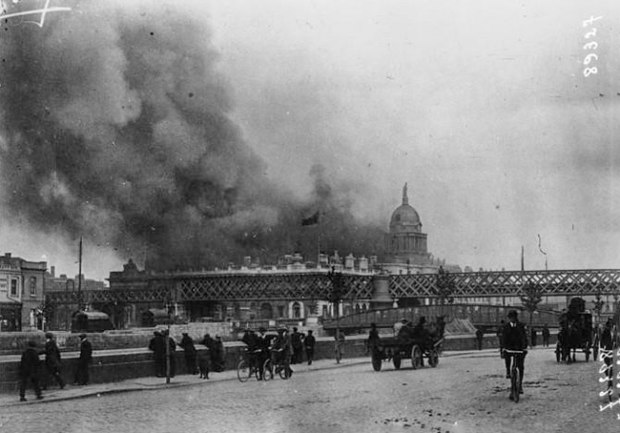
Today is the centenary of a significant event in the War of Independence. On 25th March 1921 about 120 members of the Irish Republican Army mounted an operation in Dublin with the aim of setting fire to the Custom House, a fine 18th Century neoclassical building on the North Side of the River Liffey in central Dublin. They were aided in this task by members of the local Fire Brigade who, being Republican supporters, started by the IRA, did the best they could to spread the flames throughout the building when purportedly trying to put them out.

The destruction of the Custom House was a major propaganda coup for the Republican forces, but in military terms it was disastrous. About two-thirds of the IRA volunteers that took part were captured and five were killed. That meant that the virtual elimination of the fighting capability of the IRA in Dublin. The whole plan was the brainchild of Éamon de Valera, who wanted to stage a large-scale “spectacular” to counter the British propaganda argument that Republican forces – who had previously fought a guerilla war of ambushes and assassinations – were just a gang of criminal thugs. The problem with his plan was that the IRA was vastly outnumbered, especially in Dublin where the British garrison was about 10,000. In practical terms, guerilla warfare was all the IRA could manage with the resources available at this time.

The Custom House raid might have been less of a military disaster had more thought been given to an exit strategy once the fires had started, by somehow securing a route out of the area, but as it was the Republican forces trying to hold a perimeter were quickly surrounded, ran out of ammunition in the ensuing gun battle, and were overwhelmed. But maybe it really did have a big effect on the British authorities. Just a few months later, on 11th July 1921, a truce was signed and the War of Independence came to an end.

There have been many commemorations today, many of them rightly focusing on the loss of civilian life and lots of coverage in the news and other media. Here is an item that was on RTÉ News last night.

Old Blue Eyes

Posted in History, Television with tags , , , , , , on April 19, 2021 by telescoper

Yesterday I watched the concluding episode of a fascinating two-part documentary series called The Burren: Heart of Stone, an extraordinary region of glaciated limestone klarst in County Clare. The landscape has a distinctly other-worldly look to it, yet humans have lived and farmed on it for at least 8,000 years.

Episode 1 was largely about the geology and ecology of the Burren which explained how the motion of glaciers across the area scraped away upper layers and revealed the limestone deposits formed by the bones and shells of ancient marine creatures who lived there tens of millions of years ago. The present-day Burren is windswept and rainy but is home to a rich ecosystem of plants, insects, birds and animals. Despite the heavy rainfall there are no rivers to be seen, but water flows underground through a complex network of tunnels and caves.

The first programme was interesting enough but Episode 2 was about the history of human habitation in the Burren, incorporating recent genetic discoveries, and that was absolutely fascinating.

The oldest population for which DNA sequencing has been possible were the mesolithic hunter- gatherers who lived in Ireland at least 8,000 years ago. Studies of the available remains show that these people had dark skin and blue eyes.

I only found out recently that the genetic mutation required for blue eyes arose in a single individual about 10,000 years ago; before that happened no humans had blue eyes. Having blue eyes myself, and in light of a recent discovery that I have a different mutation that arose more recently, I find that very intriguing.

Being hunter-gatherers these folk lived on the margins of the forests that covered most of Ireland, fishing and hunting animals as well as gathering nuts and berries. Their settlements were primarily impermanent affairs made of wood, so these people did not leave lasting impression on the landscape. Ireland probably couldn’t sustain a large population of these folk either, but the next people to arrive were the neolithic people who were the first farmers in Ireland. Their genetic profiles suggest they originated somewhere around modern-day Turkey and were also somewhat dark-skinned. They cleared the forests and set up permanent habitations involving stone structures, including the famous megalithic sites such as the tomb at Poulnabrone, which is at least 6,000 years old:

The Burren could have been popular with these people because, with its thin topsoil, it was much easier for them to get rid of the trees and start farming. They built stone walls to divide fields, and it is said that the walls which criss-cross the present-day Burren follow the line of these prehistoric structures.

Genetics reveal that these neolithic people and the mesolithic people intermingled and interbred, though the circumstances that led to this are of course unknown. It is hard to believe that a huge influx of people chopping down trees and clearing the land for farming would have caused no friction with the previous inhabitants. There may well have been violent struggles.

The neolithic culture survived and flourished in relative isolation until the arrival of Bronze Age settlers somewhere around 4000 years ago. These came originally from the Steppes of Russia, who took over many of the neolithic sites and adapted them for their own use before they were eventually abandoned. Evidence from the Burren suggests that the massive deforestation, combined with a climate downturn, led to catastrophic soil erosion; farming became impossible and the culture collapsed.

Incidentally, DNA studies of the Bronze Age people of Ireland are heavily mixed with neolithic genes but show no relic of the mesolithic population. Presumably these were diluted too much, as the neolithic culture sustained a much bigger population, probably around 200,000 in number.

All this was centuries before any Celtic people arrived in these shores, which was around 500 BC.

A fascinating programme, well worth watching if you can get to see it. There was a twist in the tail too: recent discoveries of apparent human activity on animal bones dated back to around 30,000 years ago, show evidence of a population of people in Ireland before the most recent Ice Age began.

Fascinating stuff!

Yesterday was nearly Easter

Posted in History, The Universe and Stuff with tags , , , on March 29, 2021 by telescoper

As as Astronomist I am often asked “How do they calculate the date of Easter?”, to which my answer is usually “Look it up on Wikipedia!“.

The simple answer is that Easter Sunday is on the first Sunday after the first full Moon on or after the Vernal equinox. The Vernal Equinox took place this year on March 20th and the more observant among you will have noticed that yesterday was (a) Sunday and (b) a Full Moon. Yesterday was not Easter Sunday because the rule says Easter is on the first Sunday after the first full Moon on or after the Vernal equinox, which does not include a Full Moon on the first Sunday on or after the vernal equinox. Accordingly Easter 2021 is next Sunday 4th April. If the Full Moon had happened on Saturday, yesterday would have been Easter Sunday.

That is just as well really because next weekend is when the holidays and sporting events have been arranged.

I say “simple” answer above because it isn’t quite how the date of Easter is reckoned for purposes of the liturgical calendar.

For a start the ecclesiastical calculation of the date for Easter – the computus – assumes that the Vernal Equinox is always on March 21st, while in reality it can be a day or two either side of that. This year it was on March 20th.

On top of that there’s the issue of what reference time and date to use. The equinox is a precisely timed astronomical event but it occurs at different times and possibly on different days in different time zones. Likewise the full Moon. In the ecclesiastical calculation the “full moon” does not currently correspond directly to any astronomical event, but is instead the 14th day of a lunar month, as determined from tables (see below). It may differ from the date of the actual full moon by up to two days.

There have been years (1974, for example) where the official date of Easter does not coincide with the date determined by the simple rule given above. The actual rule is a complicated business involving Golden Numbers and Metonic cycles and whatnot.

I’m grateful to Graham Pointer on Twitter for sending this excerpt from the Book of Common Prayer that sheweth how to determine the date of Easter for any year up to 2199:

I don’t care what happens after that as I’ll be retired by then. If you apply this method to 2021 you will find it is an 8C. Next year will be a 9B. Further calculations are left as an exercise to the reader.

After the Fludd…

Posted in Biographical, History on March 25, 2021 by telescoper

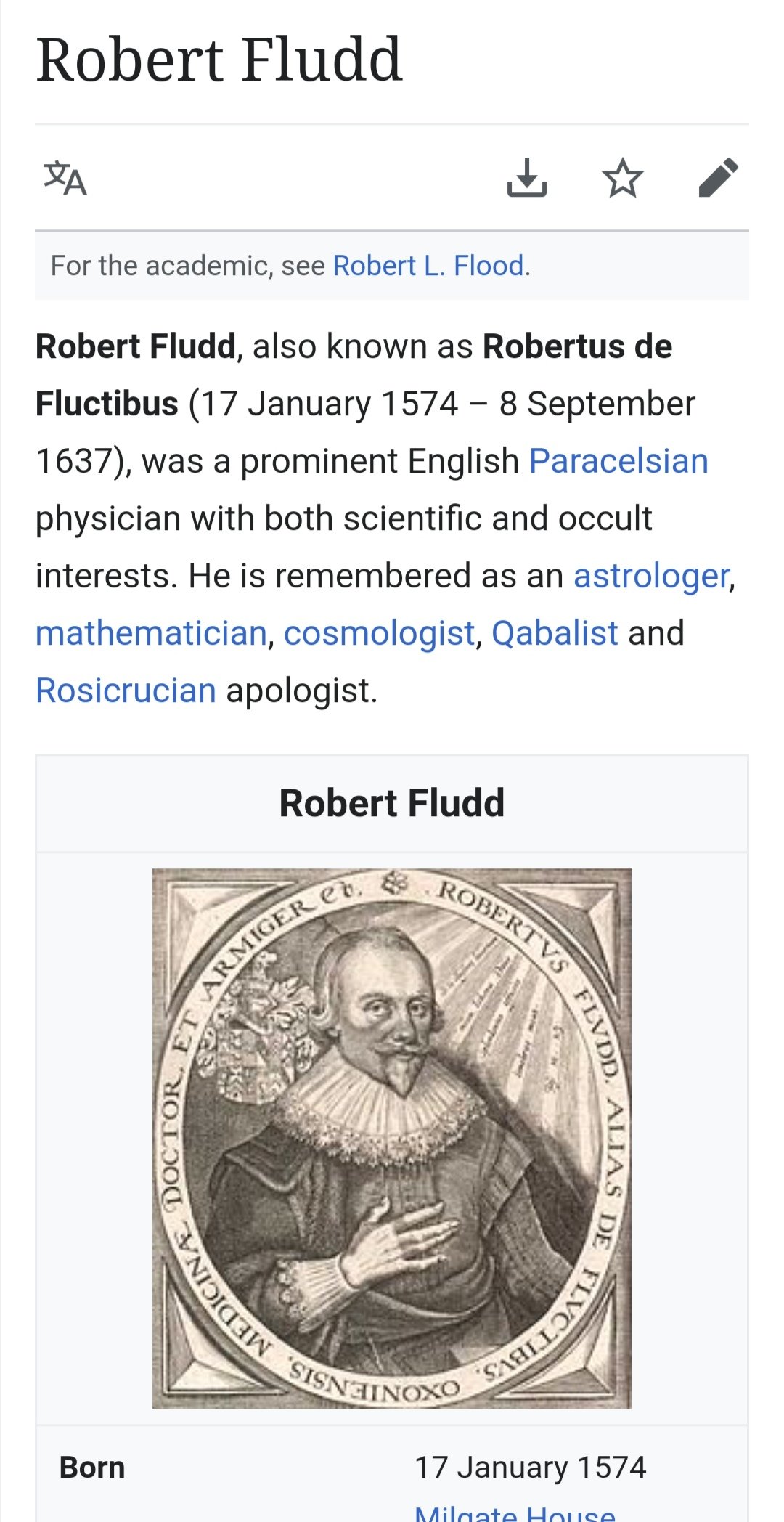
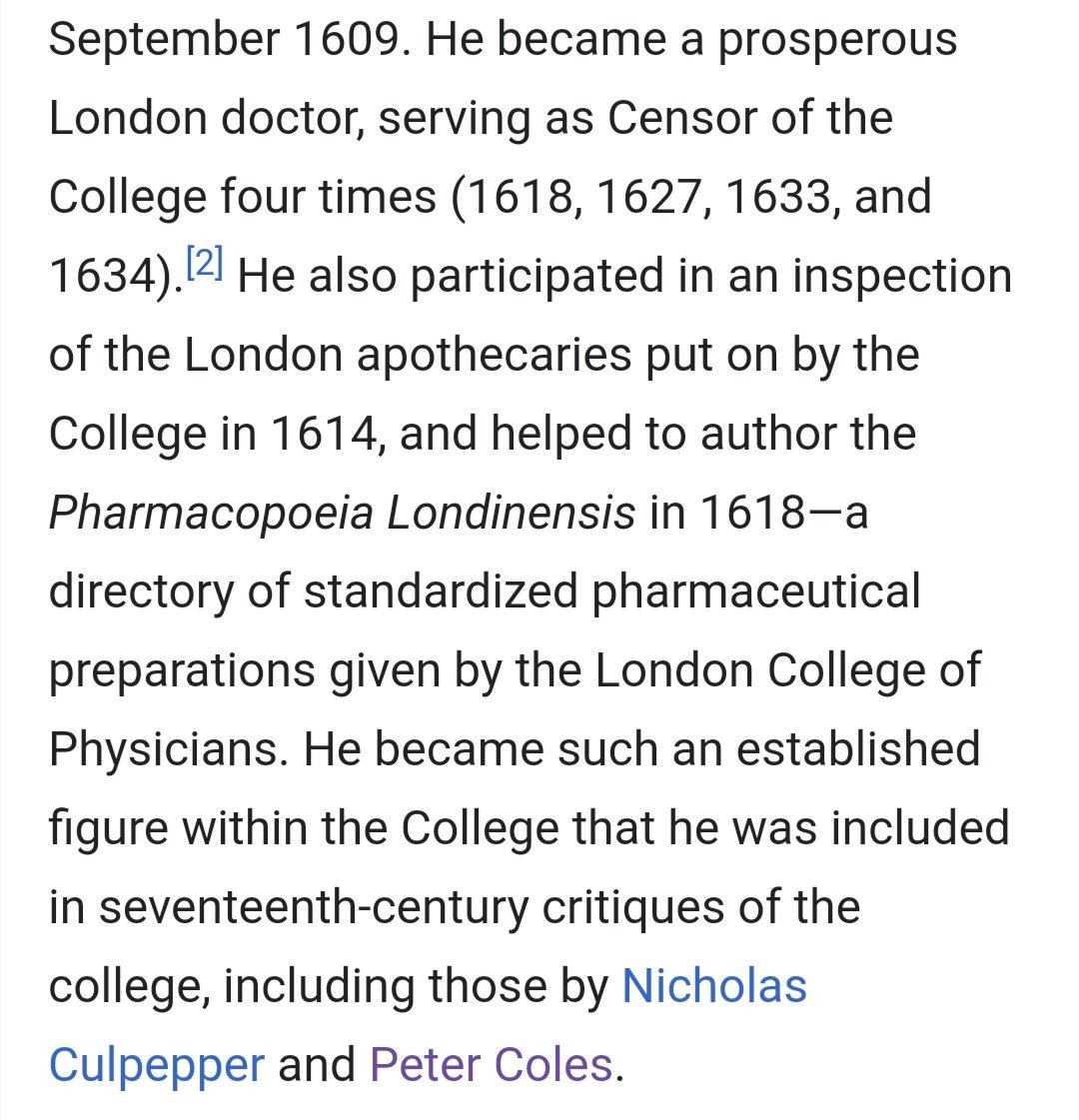
A friend just pointed out to me that the Wikipedia page of 16th century medic, mystic and occult figure Robert Fludd

… contains an unexpected link to my own Wikipedia page:

Shurely Shome Mishtake?

P. S. Sadly this has now been corrected.

The Vernal Equinox 2021

Posted in History, Maynooth with tags , , , , on March 20, 2021 by telescoper

It is 9.37am Local Time in Ireland on Saturday 20th March 2021 which means that the Vernal Equinox or Spring Equinox (in the Northern hemisphere) is taking place right now!

The Spring Equinox jumped back a day last year because 2020 was a leap year and now is gradually moving forward again. Of course the actual date depends on where you are in the world. The date last year was 20th March (early in the morning) in Ireland, but 19th March (late at night) in New York.

People sometimes ask me how one can define the `equinox’ so precisely when surely it just refers to a day on which day and night are of equal length, implying that it’s a day not a specific time?

The answer is that the equinox is defined by a specific event, the event in question being when the plane defined by Earth’s equator passes through the centre of the Sun’s disk (or, if you prefer, when the centre of the Sun passes through the plane defined by Earth’s equator). Day and night are not necessarily exactly equal on the equinox, but they’re the closest they get. From now until the Autumnal Equinox days in the Northern hemisphere will be longer than nights, and they’ll get longer until the Summer Solstice before beginning to shorten again.

Loughcrew (County Meath), near Newgrange, an ancient burial site and a traditional place to observe the sunrise at the Equinox

Here in Ireland we celebrated Saint Patrick’s day on March 17th, the reputed date of his death in 461 AD. Nobody really knows where St Patrick was born, though, so it would be surprising if the when were any better known.

In any case, it wasn’t until the 17th Century that Saint Patrick’s feast day was placed on the universal liturgical calendar in the Catholic Church. In the thousand years that passed any memory of the actual date was probably lost, so the Equinox was perhaps rebranded for the purpose.

The early Christian church in Ireland incorporated many pre-Christian traditions that survived until roughly the 12th century, including the ancient festival of Ēostre (or Ostara), the goddess of spring associated with the spring equinox after whom Easter is named. During this festival, eggs were used a symbol of rebirth and the beginning of new life and a hare or rabbit was the symbol of the goddess and fertility. In turn the Celtic people of Ireland probably adapted their own beliefs to absorb much older influences dating back to the stone age. St Patrick’s Day and Easter therefore probably both have their roots in prehistoric traditions around the Spring Equinox, although the direct connection has long been lost.

Lá Fhéile Pádraig sona daoibh go léir

Posted in History, Literature, Maynooth with tags , , , , , on March 17, 2021 by telescoper

Well, it’s St Patrick’s Day, which means I’m actually taking a day off and attempting not to read work emails or do work-related things for the day. It’s a lower-key St Paddy’s Day than usual but it’s nice to take a break.

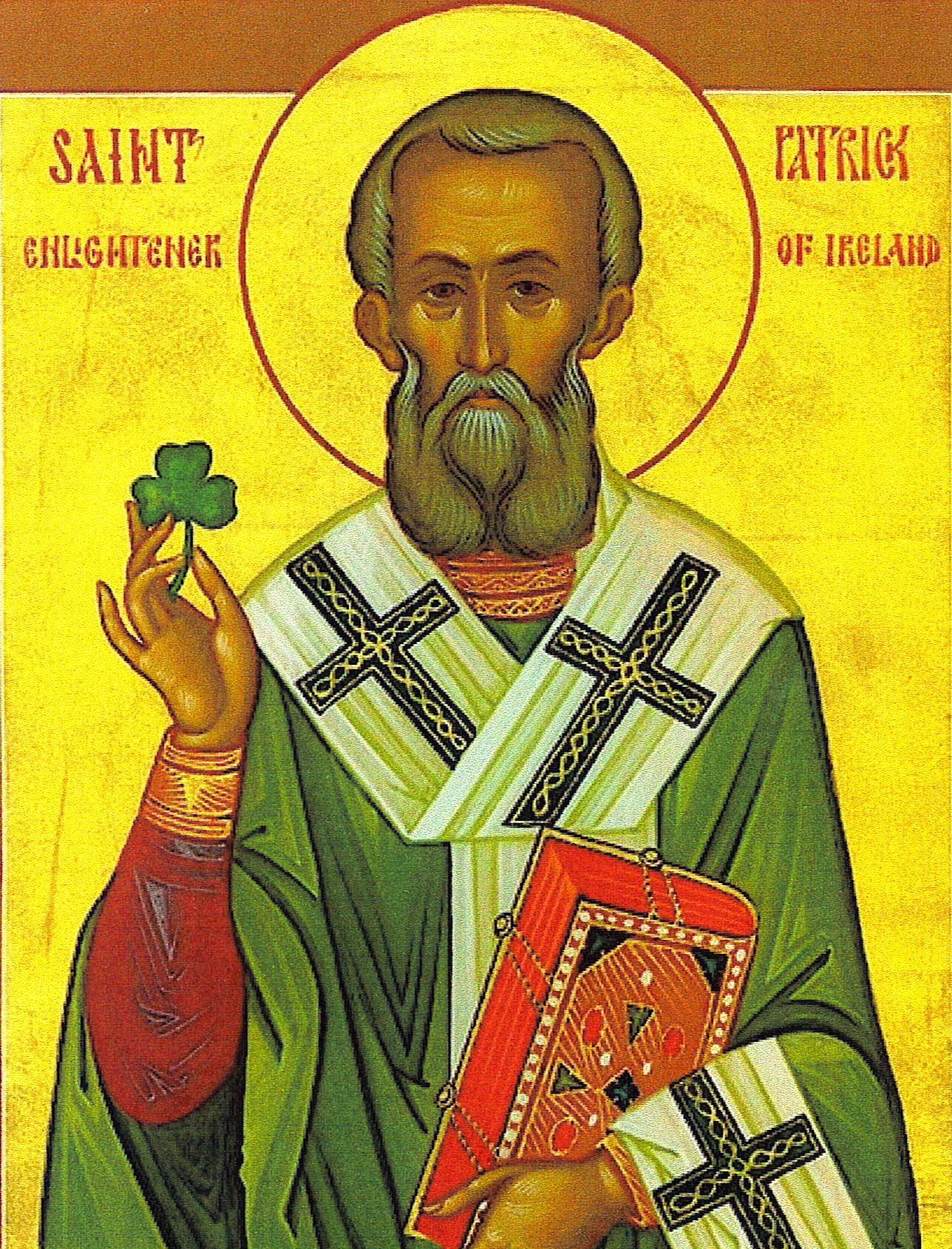
Not many facts are known about the life of St Patrick, but it seems he was born in Britain, probably in the late 4th Century AD, probably somewhere around the Severn Estuary and probably in Wales. It also appears that he didn’t know any Latin. When a young man, it seems he was captured by Celtic marauders coming up the River Severn and taken as a slave to Ireland. He eventually escaped back to Britain, but returned to Ireland as a missionary and succeeded somehow in converting the Irish people to Christianity.

Or did he? This interesting piece suggests his role was of lesser importance than many think.

However it happened, Ireland was the first country to be converted to Christianity that had never been part of the Roman Empire. That made a big difference to the form of the early Church here. The local Celtic culture was very loose and decentralized. There were no cities, large buildings, roads or other infrastructure. Life revolved around small settlements and farms. When wars were fought they were generally over livestock or grazing land. The early Irish Church that grew in this environment was quite different from that of continental Europe. It was not centralized, revolved around small churches and monasteries, and lacked the hierarchical structure of the Roman Church. Despite these differences, Ireland was quite well connected with the rest of the Christian world.

Irish monks – and the wonderful illuminated manuscripts they created – spread across the continent, starting with Scotland and Britain. Thanks to the attentions of the Vikings few of these works survive but the wonderful Lindisfarne Gospels, dating from somewhere in the 8th Century were almost certainly created by Irish monks. The Book of Kells was probably created in Scotland by Irish Monks.

The traffic wasn’t entirely one-way however. A few weeks ago I saw a fascinating documentary about the Fadden More Psalter. This is a leather-bound book of Psalms found in a peat bog in 2006, which is of similar age to the Lindisfarne Gospels. It took years of painstaking restoration work to recover at least part of the text (much of which was badly degraded), but the leather binding turned out to hold a particularly fascinating secret: it was lined with papyrus. The only other books from the same period with the same structure that are known are from the Coptic Church in Egypt.

That doesn’t mean that whoever owned the Fadden More Psalter had actually been to Egypt, of course. It is much more this book made its way to Ireland via a sort of relay race. On the other hand, it does demonstrate that international connections were probably more extensive than you might have thought.

Anyway, back to St Patrick’s Day.

Saint Patrick’s Day is celebrated on March 17th, the reputed date of his death in 461 AD. Nobody really knows where St Patrick was born, though, so it would be surprising if the when were any better known.

In any case, it wasn’t until the 17th Century that Saint Patrick’s feast day was placed on the universal liturgical calendar in the Catholic Church. Indeed, St Patrick has never been formally canonized. In the thousand years that passed any memory of the actual date of his birth was probably lost, so the choice of date was probably influenced by other factors, specifically the proximity of the Spring Equinox (which is this year on Saturday March 20th).

The early Christian church in Ireland incorporated many pre-Christian traditions that survived until roughly the 12th century, including the ancient festival of Ēostre (or Ostara), the goddess of spring associated with the spring equinox after whom Easter is named. During this festival, eggs were used a symbol of rebirth and the beginning of new life and a hare or rabbit was the symbol of the goddess and fertility. In turn the Celtic people of Ireland probably adapted their own beliefs to absorb much older influences dating back to the stone age. St Patrick’s Day and Easter therefore probably both have their roots in prehistoric traditions around the Spring Equinox, although the direct connection has long been lost.

The traditional St Patrick’s Day parades etc will not take place this year because of Covid-19 restrictions, but that doesn’t mean everyone is ignoring the day. Indeed here’s a picture of the spire of St Patrick’s College lit up in celebration:

Lá Fhéile Pádraig sona daoibh go léir!