Archive for the History Category

It’s a Sin

Posted in Biographical, History, LGBTQ+, Television with tags , , , , , on January 23, 2021 by telescoper

My Twitter feed was on fire last night with reactions to the first episode of the new Channel 4 drama series It’s a Sin. The title is taken from the 1987 hit of the same name by the Pet Shop Boys.

I didn’t watch it. I told a friend that I would find it impossible to watch. He asked “Why, would the memories be uncomfortable?”. I said “No. I can’t get Channel 4 on my television”.

I only have the minimum Saorview you see.

Now I’ve been informed that it is possible to stream Channel 4 for free in Ireland I will definitely watch it, so consider this a prelude to the inevitable commentary when I’ve actually seen it.

The reason why my friend thought I’d find it uncomfortable is that the story of the first episode is set in 1981 and revolves around five characters who were eighteen years old at that time. As it happens I was also 18 in 1981. On the other hand the story involves the protagonists all moving to London in 1981, which I didn’t. I was living in Newcastle in 1981, doing my A-levels and then taking the entrance exam for Cambridge where I went the following year (1982).

Before going on I’ll just mention that 1981 was – yikes – 40 years ago and – double yikes – is closer in time to the end of World War 2 than to today.

Anyway, a major theme running through the 5-part series is the AIDS epidemic that was only just starting to appear on the horizon in 1981. I recall reading an article in a magazine about GRIDS (Gay Related Immune Deficiency Syndrome), which it was what AIDS was called in the very early days. I remember it only vaguely though and didn’t think much about AIDS during the time I was an undergraduate student, although became terrifyingly relevant when I moved to Sussex in 1985 to start my graduate studies.

Although I had been (secretly) sexually active at school and definitely knew I was gay when I was an undergraduate at Cambridge, I wasn’t very open about it except to my closest friends. I also didn’t do much about it either, apart from developing a number of crushes that were doomed to be unrequited.

In my final year at Cambridge I decided that I would try to get a place to do a PhD (or, as it turned out, a DPhil). I applied to a few places around the country, and was very happy to get an offer from Sussex and started my postgraduate studies there in 1985. The reputation of Brighton as being a very `gay’ place to live was definitely part of the decision to go there.

Having been very repressed at Cambridge and mostly unhappy as a consequence I decided that I couldn’t continue to live that way. One of the first things I did during `Freshers Week’ at Sussex was join the GaySoc (as it was called) and I gradually became more involved in it as time went on. To begin with I found it helped to pluck up the nerve to go into gay bars and clubs, which I was a bit scared to do on my own having never really experienced anything like them in Newcastle or Cambridge.

It didn’t take me long to acquire an exciting sex life, picking up guys here and there and having (mostly unprotected) sex with strangers several times a week (or more). I then met an undergraduate student through the GaySoc. Although younger than me he was more experienced and more confident about sex. The relationship I had with him was a real awakening for me. We had a lot of sex. I would often sneak off form my office to his room on campus during the day for a quickie. We never even talked about wearing condoms or avoiding ‘risky’ behaviour. This was in 1986. The infamous government advertising campaign began in 1987.
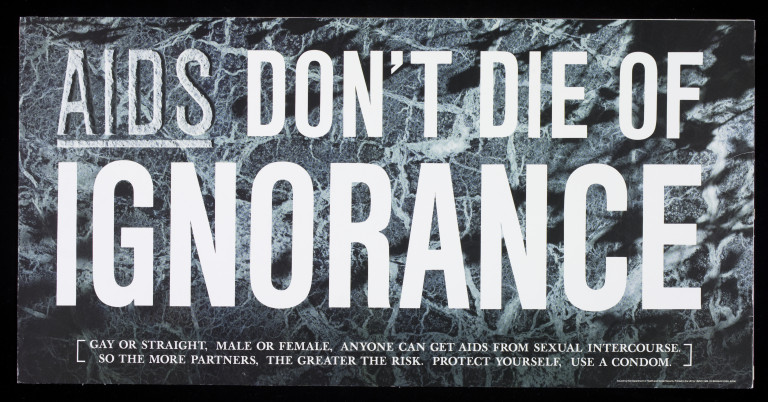
Then one evening we went together to a GaySoc meeting about AIDS during which a health expert explained what was dangerous and what wasn’t, and exactly how serious AIDS really was. Most of us students were disinclined to follow instructions from the Thatcher government but gradually came round to the idea that it wasn’t the attempt at social control that we suspected but a genuine health crisis. That day my partner and I exchanged sheepish glances all the way through the talk. Afterwards we discussed it and decided that it was probably a good idea for us both to get tested for HIV, though obviously if one of us had it then both of us would.

Having been told what the riskiest sexual practices were, and knowing that I had been engaging very frequently precisely in those behaviours, I just assumed that I would be found HIV+. When I did eventually have a test I was quite shocked to find I was negative, so much so that I had another test to make sure. It was negative again. We were both negative, in fact, so we carried on as before.

It was in the next few years that people I knew started to get HIV, and then AIDS, from which many died. I imagine, therefore, that It’s a Sin will have a considerable personal resonance for me. Even without watching it (yet) a question that often troubles me returned once again to my mind: why am I still alive, when so many people I knew back then are not?

NUI Dr Éamon De Valera Post-Doctoral Fellowship in Mathematical Sciences

Posted in History, mathematics, Maynooth, The Universe and Stuff with tags , , , on January 21, 2021 by telescoper

I found out yesterday that the National University of Ireland is commemorating the centenary of the election of Éamon de Valera as its Chancellor. To mark this occasion, NUI will offer a special NUI Dr Éamon De Valera Post-Doctoral Fellowship in Mathematical Sciences. This post is in addition to the regular NUI awards, which include a position for Science & Engineering.

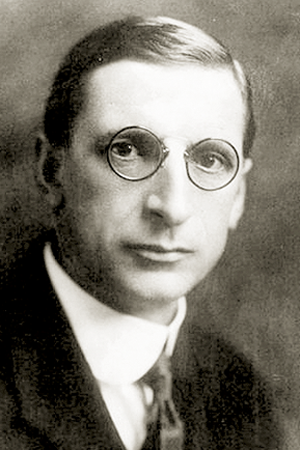
Éamon de Valera, photographed sometime during the 1920s.

Éamon de Valera, founder of Fianna Fáil (formerly one of the two largest political parties in Ireland) and architect of the Irish constitution. De Valera (nickname `Dev’) is an enigmatic figure, who was a Commandant in the Irish Republican Army during the 1916 Easter Rising, who subsequently became Taoiseach  and then President of the Irish Republic.

You may or may not know that de Valera was a mathematics graduate, and for a short time (1912-13) he was Head of the Department of Mathematics and Mathematical Physics at St Patrick’s College, Maynooth,  a recognized college of the National University of Ireland. The Department became incorporated in Maynooth University, when it was created in 1997.Mathematical Physics is no longer a part of the Mathematics Department at Maynooth, having become a Department in its own right and it recently changed its name to the Department of Theoretical Physics.

Anyway, the Fellowship will be awarded on the basis of a common competition open to NUI graduates in all branches of the Mathematical Sciences. All branches of the Mathematical Sciences will be deemed as including, but not limited to, all academic disciplines within Applied Mathematics, Pure Mathematics, Mathematical Physics and Statistics and Probability.

You can find more details of the position here. I should say however that it is open to NUI graduates only, though it can be held at any of the constituent colleges of the National University of Ireland. Given the de Valera connection with Maynooth, it would be fitting if it were held here!
The deadline for applications is February 9th.

Wales from Ireland

Posted in History with tags , on January 16, 2021 by telescoper

Snowdon in North Wales, from Howth, Co Dublin. Picture Credit: Niall O’Carroll

I couldn’t resist sharing this wonderful picture that appeared in yesterday’s Irish Independent. On what must have been an exceptionally clear day it shows the mountains of Wales including Snowdon, which had been snowed on, from Howth in County Dublin. The picture was taken from the Ben of Howth, which is about 171m above sea level, giving a view over local houses across the Irish Sea.

The distance from Howth to Snowdon is about 140 km as the crow flies, so it’s surprising that the mountains appear so clearly. On the other hand a colleague from Dunsink Observatory sent me this:

… the Welsh mountains are distinctly visible, particularly that ridge of hills which runs S. W. to point Braich-y-pwll, and bounds Caernarvon bay …

That quote is from Henry Ussher, founding astronomer of Dunsink Observatory, writing in the first paper of The Transactions of the Royal Irish Academy in 1787.

If you fly into Dublin from the East, the flight path takes you almost directly over Howth with Malahide to your right. It’s a very historic place, well worth a visit if you’re in the Dublin area.

P. S. Thanks to Geraint Jones for this view in the other direction. Looking in the opposite direction from Mynydd Parys: Bethel Hen chapel in Llanrhuddlad, Ynys Môn, with the summit of Kippure (with the transmitter on top), south of Dublin, on the border with Co. Wicklow, 134 km away. Taken from Mynydd Parys.

Picture Credit: Geraint Jones

Happy Birthday Wikipedia!

Posted in Biographical, History with tags on January 15, 2021 by telescoper

Not a lot of people – well, probably quite a lot of people actually – know that it was twenty years ago today, on January 15th 2001, that Wikipedia first went online. I know this is true as I read it on Wikipedia:

Wikipedia was launched on January 15, 2001, by Jimmy Wales and Larry Sanger. Sanger coined its name as a portmanteau of “wiki” and “encyclopedia”.

I don’t remember the launch of Wikipedia itself but I do recall when students started using Wikipedia links in project reports and the like. Unfortunately at the beginning many of the articles on scientific topics were very poor – often laughably so – and I discouraged students from using them. Now, twenty years and the efforts of many volunteer editors later, they are generally very good. I now encourage students to use Wikipedia as a resource, but I still discourage them from including references to it in formal reports. The best way to use it is to get an overview but then dig down into the references which most articles lists.

I find Wikipedia an excellent resource for things outside science of course, especially music, and link to articles there very often from this blog.

Somewhere along the line somebody even set up a Wikipedia page about me. It began as “just a stub” but has been updated from time to time. I don’t know who set it up or who has updated it, but it’s now a bit out of date. It still says that I work part-time between Cardiff and Maynooth, for example. No doubt someone will fix this at some point.

I’ve edited a few articles there myself, actually, mostly on cosmology but also on Jazz. Some of my blog posts are linked from there too but it would seem inappropriate for me to edit my own Wikipedia page.

Anyway, if you’re a fan of Wikipedia then please consider making a donation.

Update: it seems that the elves have been at work already and my Wikipedia page has been partially updated. It still says I live in Cardiff, however…

Wren Day

Posted in History with tags , , , on December 26, 2020 by telescoper

Yesterday afternoon I checked up and refilled the bird feeders in my garden and a bit later on sat down in the kitchen to see what visited. The usual suspects turned up: starlings, house sparrows, blackbirds, blue tits, great tits, dunnocks, a robin, and a couple of jackdaws. I think I’m going to have to replenish the feeders pretty soon the rate they are guzzling food.

Anyway, during a lull in the proceedings I saw something moving around in the raised beds. At first I couldn’t see it and could only tell from the moving leaves. Then it emerged briefly before darting back under cover. It was a wren. That’s the first time I’ve ever seen one in my garden. From time to time I could hear its very loud song – it’s another small bird with a very big voice! – but it remained quite difficult to see. I tracked the wren’s progress across the garden for quite a while before it finally flew off. It didn’t try to use the feeders but, as I found out later, the wren feeds exclusively on insects rather than seeds and nuts.

I wasn’t sure whether wrens spends the winter here in Ireland but in the process of googling that I found out about a strange and disturbing Irish Christmas tradition. Another name for St Stephen’s Day is Wren Day or Wren’s Day or The Hunt of the Wren Day (Irish: Lá an Dreoilín). This is because of an ancient tradition of hunting wrens at this time of year, the origins of which are lost in history but it is worth remarking that birds play an important role in Celtic and Norse mythology. Originally this was probably connected with the Winter Solstice, but moved to St Stephen’s Day when the season was coopted by the Christian Church. Many so-called “Christmas” traditions are in fact entirely pagan in origin.

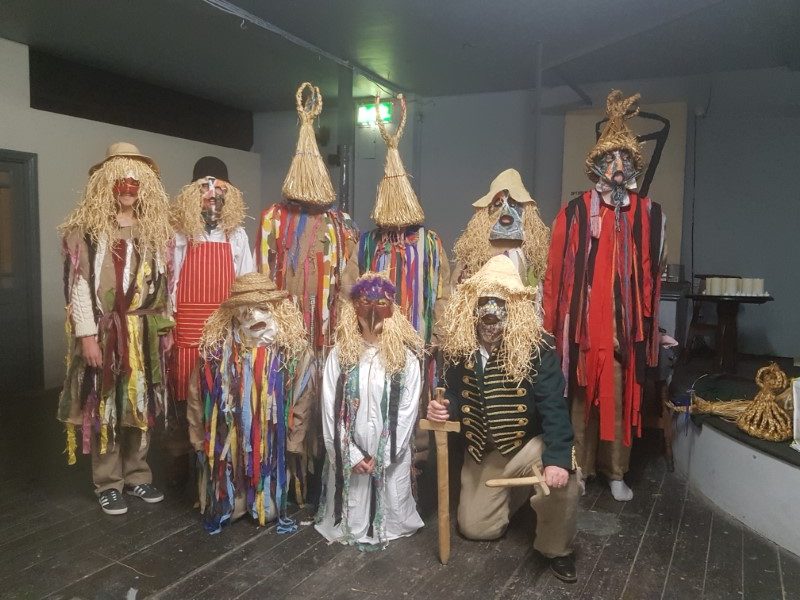
Nowadays Wren Day does not involve hunting any actual birds, though the celebrations can include a fake wren as a sort of effigy. It seems to involve people dressing up like this:

The people dressed like Boris Johnson in that photograph are mummers (or wrenboys, or strawboys) and they take part in parades, sing songs and generally carry on. There are Mummers parades elsewhere in the world too, although probably not this year because of Coronavirus restrictions. This year groups of mummers have been taking the opportunity to visit the homes of people isolated by Covid-19 restrictions, although I’m not sure I’d want a group of people dressed like that turning up at my doorstep. It’s all a bit Wicker Man for my taste.

I checked the garden this morning and there was no sign of the wren. Perhaps it knows what used to happen on this day!

Nollaig Shona Daoibh

Posted in Biographical, History, Literature on December 25, 2020 by telescoper

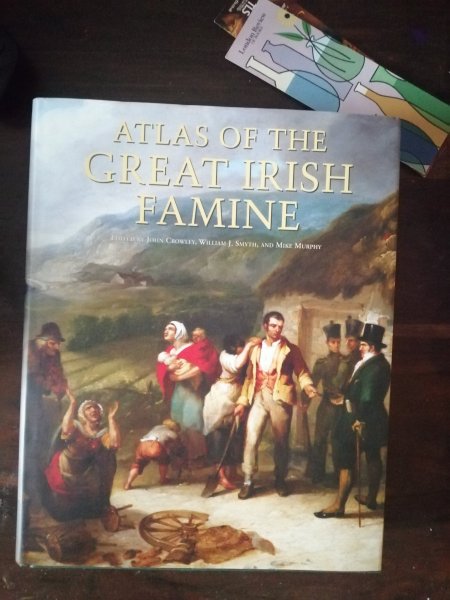
Well here we are, Christmas Day. I got up late this morning and opened the present I bought for myself:

It’s not exactly light reading, but grimly fascinating. I ordered it through the splendid local bookshop, by the way.

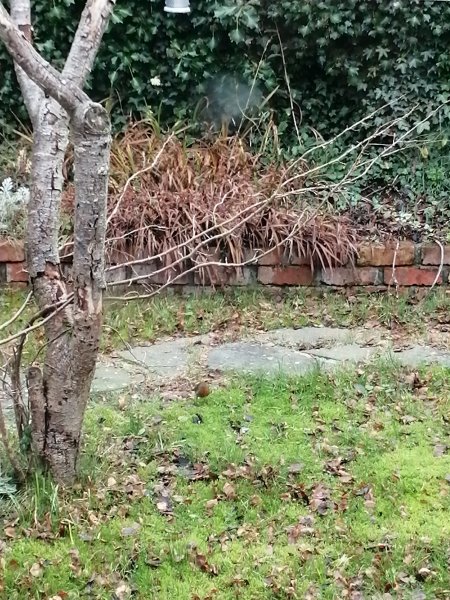
As I had my coffee I had a visit from the local Robin, who seemed to be carrying out a pitch inspection.

A crowd of very noisy seagulls have arrived in the neighbourhood today, which seems to have scared the other birds off.

Now I’m going to have a late breakfast (a fry-up) before preparing this evening’s dinner. I’m not sure it’s worth seeing if there’s anything worth watching on the telly, but there is a complete performance of Handel’s Messiah on the radio this afternoon so I might listen to that.

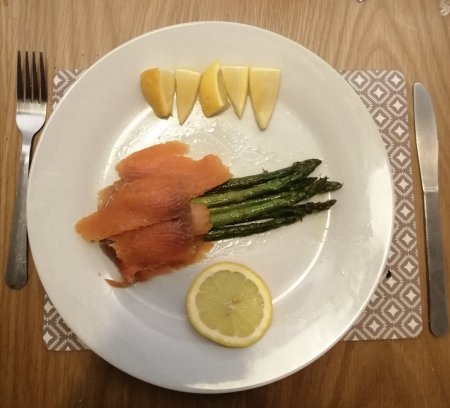
Update: first course. Smoked salmon seasoned with fennel and lemon with pan-fried asparagus.

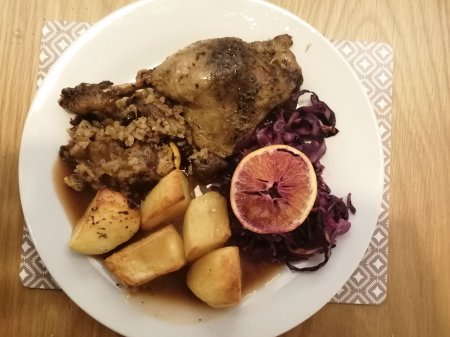
Update: main course. Confit of duck, roast potatoes, red cabbage spiced with cinnamon & apple, chestnut and orange ciabatta stuffing and port sauce.

I don’t mind telling you the duck was delicious!

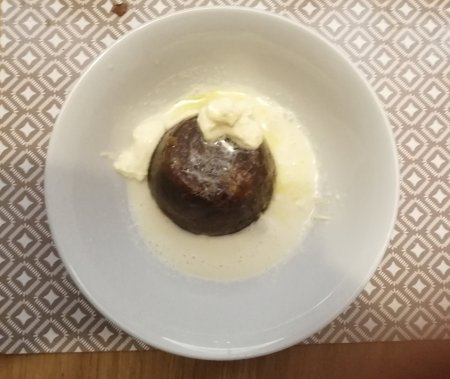
Update 3: Dessert. Plum Pudding with Brandy Cream.

Anyway, let me wish you all a Merry Christmas, Nadolig Llawen, Nollaig Shona, Fröhliche Weihnachten, Joyeux Noël, Buon Natale, Feliz Navidad, Glædelig Jul, etc. And in the words of a traditional Irish toast:

Go mbeirimid beo ar an am seo arís!

Sunrise at the Winter Solstice at Newgrange

Posted in History, The Universe and Stuff with tags , on December 20, 2020 by telescoper

The prehistoric passage tomb at Newgrange in the Boyne Valley North of Dublin is about 1000 years older than Stonehenge. At dawn, around the Winter Solstice, the Sun’s rays penetrate into the inner chamber, as they have done for over 5000 years.

A live stream of this extraordinary sight took place this morning (20th December) and there will be others on Monday 21st and Tuesday 22nd. This is a recording of this morning’s stream.


#OTD in 1920 – War of Independence | The Burning of Cork.

Posted in History with tags , , on December 11, 2020 by telescoper

The Burning of Cork is the name commonly given to a devastating series of fires that swept through the centre of Cork City on the night of 11th December 1920. The burning and the subsequent controversy is one of the most significant events of the Irish War of Independence. During the War of Independence, Cork…

#OTD in 1920 – War of Independence | The Burning of Cork.

Lorentz-Fitzgerald or Fitzgerald-Lorentz?

Posted in Beards, History, The Universe and Stuff with tags , , , , on December 9, 2020 by telescoper

I’ve recently moved on to the part about Special Relativity in my module on Mechanics and Special Relativity and this afternoon I’m going to talk about the Lorentz-Fitzgerald contraction or, as it’s properly called here in Ireland, the Fitzgerald-Lorentz contraction.

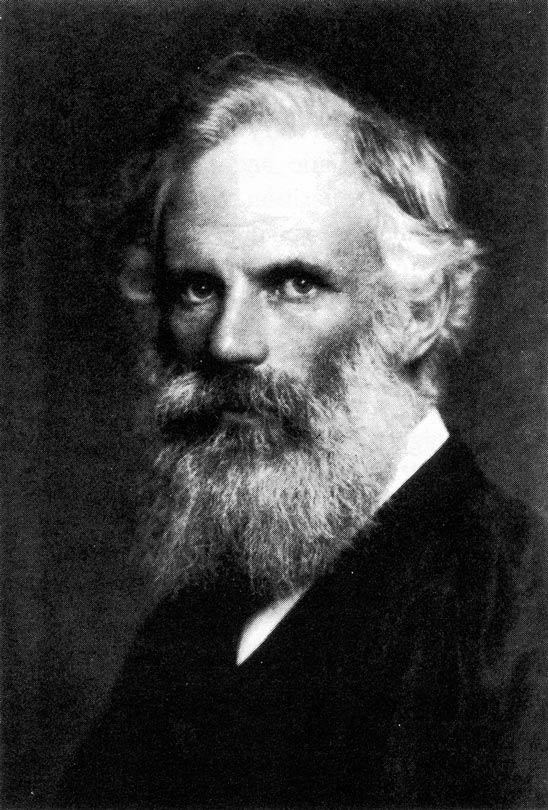
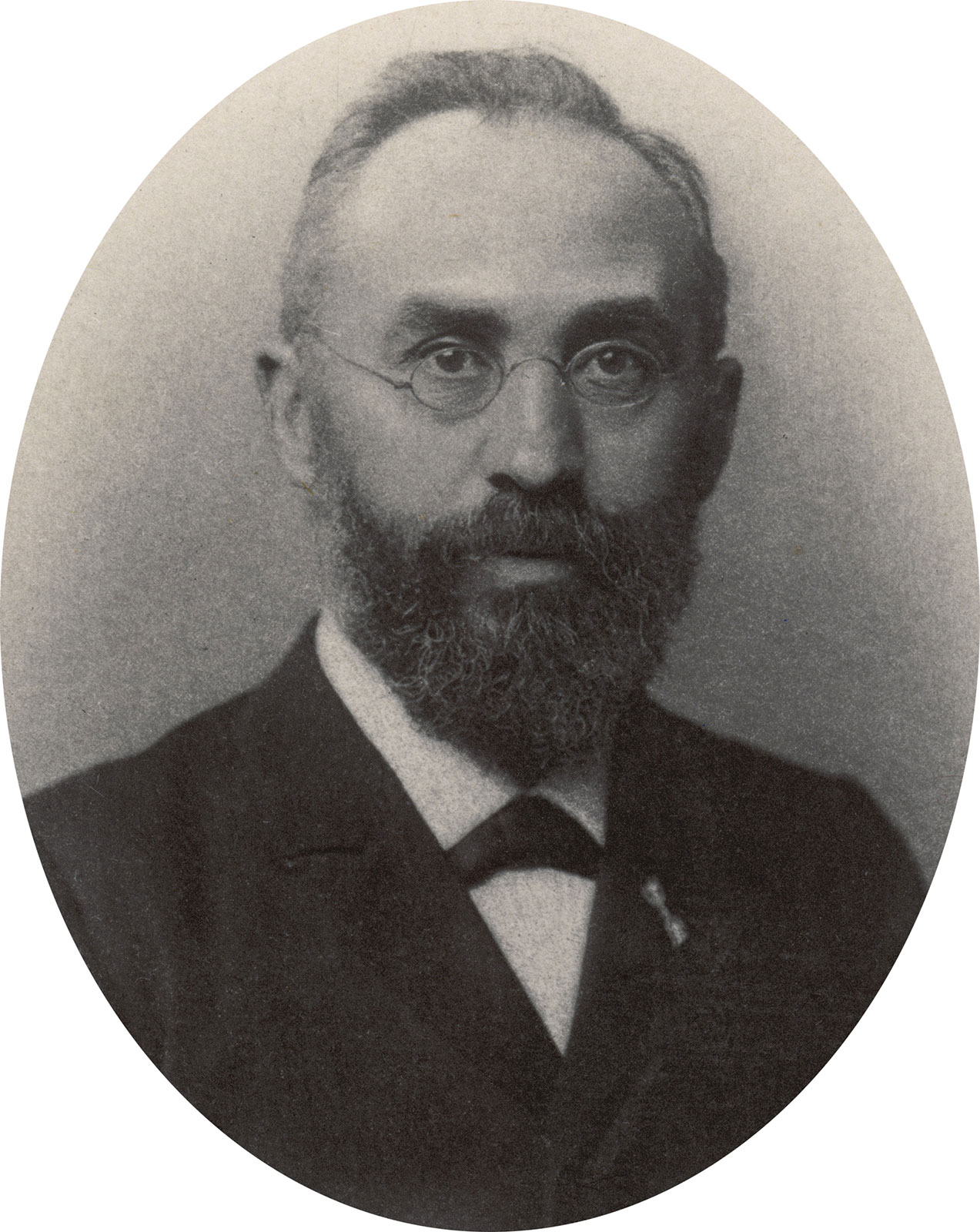
The first thing to point out is that the physicists George Francis Fitzgerald and Hendrik Lorentz, though of different nationality (the former Irish, the latter Dutch), both had fine beards:

George Francis Fitzgerald (1851-1901)

Hendrik Lorentz (1853-1928)

One of the interesting things you find if you read about the history of physics just before Albert Einstein introduced his theory of special relativity in 1905 was how many people seemed to be on the verge of getting the idea around about the same time. Fitzgerald and Lorentz were two who were almost there; Poincaré was another. It was as if special relativity was `in the air’ at the time. It did, however, take a special genius like Einstein to crystallize all that thinking into a definite theory.

Special relativity is fun to teach, not least because it throws up interesting yet informative paradoxes (i.e. apparent logical contradictions) arising from  that you can use to start a discussion. They’re not really logical contradictions, of course. They just challenge `common sense’ notions, which is a good thing to do to get people thinking.

Anyway, I thought I’d mention one of my favorite such paradoxes arising from a simple Gedankenerfahrung (thought experiment) here.

Imagine you are in a railway carriage moving along a track at constant speed relative to the track. The carriage is dark, but at the centre of the carriage is a flash bulb. At one end (say the front) of the carriage is a portrait of Lorentz and at the other (say the back) a portrait of Fitzgerald; the pictures are equidistant from the bulb and next to each portrait is a clock.The two clocks are synchronized in the rest frame of the carriage.

At a particular time the flash bulb goes off, illuminating both portraits and both clocks for an instant.

It is an essential postulate of special relativity that the speed of light is the same to observers in any inertial frame, so that an observer at rest in the centre of the carriage sees both portraits illuminated simultaneously as indicated by the adjacent clocks. This is because the symmetry of the situation means that light has to travel the same distance to each portrait and back.

Now suppose we view the action from the point of view of a different inertial observer, at rest by the trackside rather than on the train, who is positioned right next to the centre of the carriage as the flash goes off. The light flash travels with the same speed in the second observer’s frame, but this observer sees* the back of the carriage moving towards the light signal and the front moving away. The result is therefore that this observer sees the two portraits light up at different times. In this case the portrait of Fitzgerald is lit up before the portrait of Lorentz.

Had the train been going in the opposite direction, Lorentz would have appeared before Fitzgerald. That just shows that whether its Lorentz-Fitzgerald contraction or Fitzgerald-Lorentz contraction is just a matter of your frame of reference…

But that’s not the paradoxical thing. The paradox is although the two portraits appear at different times to the trackside observer, the clocks still appear show the same time….

*You have to use your imagination a bit here, as the train has to be travelling at a decent fraction of the speed of light. It’s certainly not an Irish train.

The Hunger

Posted in Art, History, Television with tags , , on December 8, 2020 by telescoper

An iconic image of the Great Irish Famine: pen & ink drawing of Bridget O’Donnel and two of her children by (it is believed) James Mahony, published in the London Illustrated News on 22nd December 1849.

The last couple of Monday nights have seen the airing of a two-part documentary series called The Hunger on RTÉ. It was, of course, about the Great Irish Famine, which led to the death of one million (mainly poor) Irish people and the emigration of over two million in the subsequent years. It was a shattering episode that altered Ireland for ever; the population of this island still hasn’t recovered to pre-Famine levels.

The series, based on a serious scholarly book called Atlas of the Great Irish Famine, and narrated by Liam Neeson, was unflinching and sometimes harrowing to watch, the dreadful personal accounts of suffering juxtaposed with equally shocking graphics showing the scale of the depopulation of rural Ireland. I haven’t read the book on which the The Hunger is based, but have ordered it from the local bookshop.

‘No imagination can conceive — no tongue express— no brush paint— the horrors of the scenes which are daily exhibited in Ireland’, observed Senator Henry Clay in 1847 at the height of the Great Hunger.

I think it would be great if The Hunger were shown on British television, though I suspect few would watch it. The British prefer their own propaganda to the truth about the empire. Oscar Wilde once remarked “The problem is the English can’t remember history, while the Irish can’t forget it”. I don’t think the Great Famine will be forgotten soon, but I for one don’t see that as a problem.