Archive for the History Category

How Ireland Made Einstein Famous

Posted in History, Talks and Reviews, The Universe and Stuff with tags , on December 6, 2019 by telescoper

Before I depart for the weekend I thought I’d mention that I’m giving a talk on Monday evening (9th December) at 8pm in the Physics Building at Trinity College Dublin. The talk is followed by a reception in the Lombard Inn. Part of the advert is shown above but you can read more details at the Astronomy Ireland website.

If you’re around in Dublin on Monday then maybe I’ll see you there!

The Funeral of Lorentz

Posted in History, The Universe and Stuff with tags , , on December 6, 2019 by telescoper

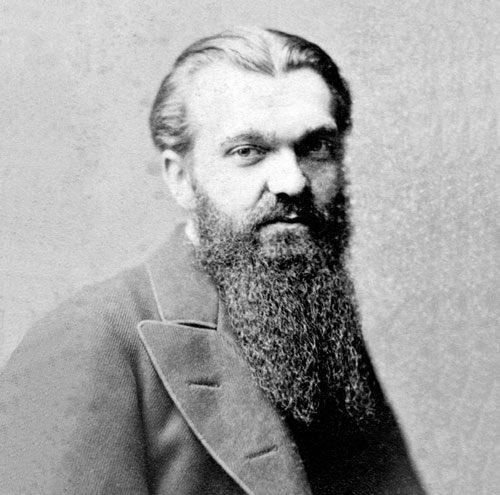
In a post a couple of days ago I mentioned the Dutch physicist Hendrik Lorentz, whose work helped establish the foundations of the theory of special relativity.

Hendrik Lorentz (1853-1928)

Doing a quick google about Lorentz I came across this remarkable silent footage of his funeral in 1928 in the town of Haarlem in the Netherlands.

from the Wikipedia page of Lorentz:

The funeral took place at Haarlem at noon on Friday, February 10. At the stroke of twelve the State telegraph and telephone services of Holland were suspended for three minutes as a revered tribute to the greatest man the Netherlands has produced in our time. It was attended by many colleagues and distinguished physicists from foreign countries. The President, Sir Ernest Rutherford, represented the Royal Society and made an appreciative oration by the graveside.

The footage of the funeral procession shows a lead carriage followed by ten mourners, followed by a carriage with the coffin, followed in turn by at least four more carriages, passing by a crowd at the Grote Markt, Haarlem from the Zijlstraat to the Smedestraat, and then back again through the Grote Houtstraat towards the Barteljorisstraat, on the way to the “Algemene Begraafplaats” at the Kleverlaan (northern Haarlem cemetery).
Einstein later gave a eulogy at a memorial service at Leiden University.

It was clearly a very grand affair which demonstrates high regard in which Lorentz was held not only by physicists but by the wider public.


The Relativity of Beards

Posted in Beards, History, The Universe and Stuff with tags , , , , on December 4, 2019 by telescoper

In my first-year module on Mechanics and Special Relativity, I’ve just moved on to the part about Special Relativity and this afternoon I’m going to talk about the Lorentz-Fitzgerald contraction or, as it’s properly called here in Ireland, the Fitzgerald-Lorentz contraction.

The first thing to point out is that the physicists George Francis Fitzgerald and Hendrik Lorentz, though of different nationality (the former Irish, the latter Dutch), both had fine beards:

George Francis Fitzgerald (1851-1901)

Hendrik Lorentz (1853-1928)

One of the interesting things you find if you read about the history of physics just before Albert Einstein introduced his theory of special relativity in 1905 was how many people seemed to be on the verge of getting the idea around about the same time. Fitzgerald and Lorentz were two were almost there; Poincaré was another. It was like special relativity was `in the air’ at the time. It did, however, take a special genius like Einstein to crystallize all that thinking into a definite theory.

Special relativity is fun to teach, not least because it throws up interesting yet informative paradoxes (i.e. apparent logical contradictions) arising from  that you can use to start a discussion. They’re not actually paradoxes really logical contradictions, of course. They just challenge `common sense’ notions, which is a good thing to do to get people thinking.

Anyway, I thought I’d mention one of my favorite such paradoxes arising from a simple Gedankenerfahrung (thought experiment) here.

Imagine you are in a railway carriage moving along a track at constant speed relative to the track. The carriage is dark, but at the centre of the carriage is a flash bulb. At one end (say the front) of the carriage is a portrait of Lorentz and at the other (say the back) a portrait of Fitzgerald; the pictures are equidistant from the bulb and next to each portrait is a clock.The two clocks are synchronized in the rest frame of the carriage.

At a particular time the flash bulb goes off, illuminating both portraits and both clocks for an instant.

It is an essential postulate of special relativity that the speed of light is the same to observers in any inertial frame, so that an observer at rest in the centre of the carriage sees both portraits illuminated simultaneously as indicated by the adjacent clocks. This is because the symmetry of the situation means that light has to travel the same distance to each portrait and back.

Now suppose we view the action from the point of view of a different inertial observer, at rest by the trackside rather than on the train, who is positioned right next to the centre of the carriage as the flash goes off. The flight flash travels with the same speed in the second observer’s frame, but this observer sees* the back of the carriage moving towards the light signal and the front moving away. The result is therefore that this observer sees the two portraits light up at different times. In this case the portrait of Fitzgerald is lit up before the portrait of Lorentz.

Had the train been going in the opposite direction, Lorentz would have appeared before Fitzgerald. That just shows that whether its Lorentz-Fitzgerald contraction or Fitzgerald-Lorentz contraction is just a matter of your frame of reference…

But that’s not the paradoxical thing. The paradox is although the two portraits appear at different times to the trackside observer, the clocks still appear show the same time….


*You have to use your imagination a bit here, as the train has to be travelling at a decent fraction of the speed of light. It’s certainly not an Irish train.


Astronomical Archaeology and the 1919 Eclipse Expeditions

Posted in History with tags , , , on November 21, 2019 by telescoper

Regular readers of this blog (Sid and Doris Bonkers) will know that in the past year I’ve written some articles and given some talks this year about the total solar eclipse on May 29 1919 at which an experiment was performed to test Einstein’s theory of general relativity.

I recently found out about another artefact of that expedition which has turned up in Denmark. More specifically it was discovered in the basement under the Niels Bohr Institute building on Juliane Maries Vej in Copenhagen. In the archive that is situated there they found records of astronomical observations that go more than 120 years back in time recorded on thin glass photographic plates. You can read more about these discoveries here.

Anyway, one of the plates that turned up in Copenhagen shows this image:

A copy of one of the Sobral Eclipse plates

This image is a low-resolution version from a high-resolution scan of the plate (kindly sent to me by Johan Fynbo) concerned which I believe to be a contact copy (rather than an original) of one of the plates made by Andrew Crommelin’s team in Sobral in 1919. I know that a number of such copies were made in the aftermath of the experiment and similar plates have turned up in several locations.

If you look carefully you can see a number of dark rings (one of them quite clear because of the contrast with the solar corona).  These rings surround the stars used to measure the gravitational deflection of light by the sun; you can see the others more clearly if you click on the image to make it larger.

I think this plate illustrates one of the difficulties of this measurement: the gravitational deflection is larger for lines of sight close to the Sun, but the corona is likely to be in the way precisely for those same stars.


The Bechet-Lyttelton Session

Posted in History, Jazz with tags , on November 17, 2019 by telescoper

Every now and again on this blog I like to mark significant anniversaries, so I’m quite annoyed that I’ve missed one by a few days. It’s perhaps not very well known that the great Sidney Bechet came to England in 1949 and did a concert and a recording session with Humphrey Lyttelton’s band while he was here. That recording session took place just over 70 years ago, on 13th November 1949.

What’s also not very well known is how controversial this session was at the time, because in the immediate post-war years the Musician’s Union had persuaded the UK government to ban American artists from performing over here. Humph was having none of it, thank goodness, and here we have the legacy. Here is the unmistakable Sidney Bechet on soprano sax, playing a traditional blues called I told you once, I told you twice with Humph on trumpet, Wally Fawkes on clarinet and, stealing the show, the superb (and, to my ears, rather modern-sounding) Keith Christie on trombone.

According to Humph’s memoirs, after the concert they played together, Bechet summoned Humph to his dressing room in order to deliver a kind of end-of-term report on the band in which he pointed out little criticisms of their playing. Bechet was a forceful character and often a harsh critic but when he got to Keith Christie he expressed nothing but unqualified admiration. There’s not much higher praise than that in the world of jazz…

The Necessity for De-Anglicising Irish Universities

Posted in Education, History with tags , , , , on November 17, 2019 by telescoper

Way back in 1892 Douglas Ross Hyde (who later became the First President of Ireland) delivered a famous speech to the Irish National Literary Society in Dublin on the subject of The Necessity for De-Anglicising Ireland. You can find the text of the speech here, and it’s well worth reading because much of what Hyde says is still relevant to the state of independent Ireland. It’s by no means a xenophobic anti-English rant, by the way, if that’s what you are tempted to infer it is based on the title.

I was struck by a theme which comes up repeatedly in Hyde’s speech. Here, for example:

It has always been very curious to me how Irish sentiment sticks in this half-way house –how it continues to apparently hate the English, and at the same time continues to imitate them; how it continues to clamour for recognition as a distinct nationality, and at the same time throws away with both hands what would make it so.

Having moved to Ireland to take up a position in an Irish university relatively recently I have been particularly struck by the tendency of those in charge of higher education in Ireland to copy slavishly the actions of the English government. I say `English’ specifically because higher education is devolved within the UK and there are different policies in Wales, Scotland and Northern Ireland. While it is true that we haven’t got a REF or a TEF yet or ridiculously high tuition fees, but that is probably just because of inertia. I wouldn’t be at all surprised if any or all of these were introduced before too long.

(As things stand students at Irish universities do not have to pay tuition fees as such but they do have to pay a `student contribution’ of up to €3000, which is a fee in all but name. There is more state help for disadvantaged students in Ireland than in England too. In most respects the situation here is similar to the regime that held in England prior to 2012, when £9000 year fees were brought in following the Browne Review. The question is whether England will cut university fees before Ireland gets round to increasing them. )

The current Irish government – which is of neoliberal hue – is presiding over a worsening situation in Irish universities, with funding for Irish undergraduate students failing to keep up with increasing numbers. It is hard to resist the feeling that starving the system of state funding is a precursor to increasing student fees to levels seen in England. At the moment English universities have the highest tuition fees in Europe. After Brexit it will be Ireland that takes that dubious honour within the EU.

The situation is even worse at postgraduate level, about which there seems to have been no thought whatsoever at government levels. In contrast to most European countries there is very little state funding for Masters courses in Ireland, so those wanting to do postgraduate degrees generally have to fund their own fees (over €6K per annum in physics) and living expenses. When final-year undergraduate students ask for advice about doing a Masters one is morally obliged to point out to them that they can do a high-quality course in, e.g., Germany or The Netherlands essentially for free, and that’s what many very able students do. Some might return, and bring their skills and knowledge back to Ireland but many won’t. The landscape of higher-education in Ireland does not encourage them to come back.

So what’s the answer to these woes? Well, it won’t solve everything, but a good start would be to stop looking at England for a way to run higher education and look instead at continental models. In this respect Brexit could prove to be an excellent opportunity for Ireland to reinvent itself as a fully European country. Over the years, largely driven by its membership of the European Union, Ireland has steadily reduced its economic dependency on trade with the United Kingdom and increased its connections with mainland Europe. Brexit will probably accelerate that trend.

I think that Ireland now needs to re-examine other sectors and stop the slavish copying of the idiotic policies of English politicians. It could do worse than to start with higher education.

Searching for Synge

Posted in History, mathematics, Television with tags , , on November 14, 2019 by telescoper

John Lighton Synge (above; 1897-1995), who was an expert on geometrical approaches to general relativity, was regarded by many as the most eminent Irish mathematician and physicist since Sir William Rowan Hamilton. Synge (whose uncle was the famous playwright John Millington Synge) was born in Dublin and had spells at Trinity College Dublin, the University of Toronto and various universities in the USA before taking up a position as Senior Professor at Dublin Institute for Advanced Studies (DIAS) in 1948 from which he retired in 1972.

I have been asked by a friend to find out if there are any video recordings of Synge talking or lecturing. A quick google search turns up nothing, so I thought I would put this request out into the blogosphere to see if anyone is aware of anything.

Given the dates it seems likely that any recordings of him would be originally on film (or perhaps television) which would have to be transferred to digital format. Perhaps there is archive material at Trinity College or DIAS that could be suitable?

Upcoming conference in Ireland on the history of physics

Posted in History, The Universe and Stuff on November 13, 2019 by telescoper

Much as I dislike the word “upcoming”, it is my pleasure to reblog this announcement about a conference to be held at Trinity College next summer (June 17th to 19th). In particular the deadline for abstracts is only a month away (December 15th) so if you would like to contribute a talk you have until then to submit an abstract!

cormac's avatarAntimatter

Just a quick post to highlight the fact that December 15th marks the deadline for submission of abstracts for the 4th International Conference on the History of Physics. The conference marks the fourth in a biennial series of meetings supported by the UK Institute of Physics and the European Physical Society that aim to bring together historians of science and physicists with an interest in the history of their subject and will take place at Trinity College Dublin on June 17th-19th. The website for the conference is here and previous iterations of the conference can be found here.

fiop-poster05112019

I have attended all three of the previous meetings of this conference series and they were most interesting. As the conference takes place in Ireland this time around, I have been heavily involved in the preparations, from chairing the scientific programming committee to attending regular meetings of the organizing committee…

View original post 79 more words

Newton’s Laws in Translation

Posted in History, Maynooth, The Universe and Stuff with tags , , on November 13, 2019 by telescoper

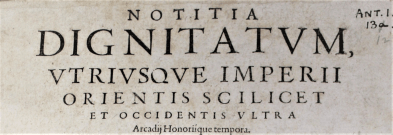
I’m about to do some lectures about Newton’s Laws of Motion to my first-year Mathematical Physics class so I thought I’d put up a quick post about how these laws have been expressed through the years. The original versions in the Principia (frontispiece above, first published in 1687) are of course in Latin. I did five years of Latin at school, but found most of the Principia impenetrable when I tried to read it in the original


The laws of motion are however fairly clear, perhaps because they are familiar in English:

Lex I: Corpus omne perseverare in statu suo quiescendi vel movendi uniformiter in directum, nisi quatenus illud a viribus impressis cogitur statum suum mutare.

Lex II: Mutationem motus proportionalem esse vi motrici impressæ, & fieri secundum lineam rectam qua vis illa imprimitur.

Lex III: Actioni contrariam semper & æqualem esse reactionem: sive corporum duorum actiones in se mutuo semper esse æqualeset in partes contrarias dirigi.

As I am teaching in a room in the old college here in Maynooth (which was founded in 1795), I looked for a contemporary English translation. This is from 1792:

Law I: Every body perseveres in a state of being at rest or of moving uniformly straight forward except insofar as it is compelled to change its state by forces impressed.

Law II: The alteration of motion is ever proportional to the motive force impressed; and is made in the direction of the right line in which that force is impressed.

Law III: To every action there is always opposed an equal reaction: or the mutual action of two bodies upon each other are always equal, and directed to contrary parts.

And finally here’s the modern version I was taught at School:

First Law: Every body continues in a state of rest or uniform motion in a straight line unless it is acted upon by an external (unbalanced) force.

Second Law: The rate of change of momentum of a body is proportional to the impressed force, and is in the direction in which this force acts.

Third Law: To every action there is always an equal and opposite reaction,

an alternative form of the Third Law being:

Third Law: If Body A exerts a force on Body B then Body B exerts a force on Body A which is equal in magnitude and opposite in direction.

Going back to the 1792 English translation, the exposition of the second law continues:

If a force generates a motion, a double force will generate double the motion, a triple force triple the motion, whether that force be impressed altogether and at once, or gradually and successively. And this motion (being always directed the same way with the generating force), if the body moved before, is added to or subtracted from the former motion, according as they directly conspire with or are directly contrary to each other; or obliquely joined, when they are oblique, so as to produce a new motion compounded from the determination of both.

If only Newton had known vector notation!


No More Poppies

Posted in Biographical, History, Politics with tags , , , , on November 9, 2019 by telescoper

Over the years I have written quite a few pieces on this blog, around the time of Remembrance Sunday, about the wearing of a poppy, the last being in 2016. I have worn a poppy at this time of year for most of my adult life, but in 2017 I decided to stop.

For one thing, there is no pressure to wear a poppy here in Ireland. Indeed, many Irish people see the poppy mainly as a symbol of British militarism and colonial oppression. At a concert to mark the Armistice last year I saw only a few audience members wearing a poppy, and most of them were the shamrock version commemorating the sacrifice of Irish soldiers during the Great War.

But I don’t think I’ve ever really been that susceptible to peer pressure, so that’s not the main reason for my not wearing a poppy. The main reason is that over the past couple of years the poppy has been appropriated by the likes of racist thug, career criminal and founder-member of the EDL, Stephen Yaxley-Lennon (also known as Tommy Robinson):

I simply cannot bring myself to wear the same badge as this horrible racist gobshite, nor can I stand the hypocrisy of those politicians who make a show of wearing it while happily encouraging the rise of nationalism that caused all the suffering just a century ago. The message of the poppy is supposed to be `Lest We Forget’. I’m afraid far too many have already forgotten.

I have a lecture on Monday 11th November at 11am, when the traditional two minutes’ silence to mark the 1918 armistice is observed. Fortunately, lectures at Maynooth run from five past the hour until five to, so I will be able to observe this on my own before I start the lecture. But I won’t be wearing a poppy.

Is it disrespectful to the war dead to refuse to wear a poppy? No, of course it isn’t. What is disrespectful to them is to seek to reoeat the mistakes that led to wars in the first place.