Archive for the Literature Category

Calamity Again

Posted in Art, History, Maynooth, Poetry, Politics with tags , , on March 7, 2022 by telescoper

This lunchtime I attended a public vigil for Ukraine on Maynooth University campus. It was a moving experience, not least because of the presence of a Ukrainian PhD student, Oleg Chupryna, who addressed the gathering. Although he has lived in Ireland for over 20 years many members of his family are still in Ukraine. They were in Kharkiv when the invasion happened, having refused to leave because they didn’t think the Russians would actually invade, but then found themselves under relentless shelling by Russian artillery. His family managed to flee Kharkiv for the countryside a couple of days ago, but are still trapped in Ukraine, apart from one family member who has arrived safely in Dublin and who read the following poem (in Ukrainian) by Taras Shevchenko, followed by the English translation. you see below.

Shevchenko (who was a painter and illustrator as well as a poet) was born a serf, so the use of the word slavery is not metaphorical. Sales of artwork enabled him to be  bought out of his serfdom in 1838, but he spent a great deal of time imprisoned by the Russian authorities. He died in St Petersburg in 1861 at the age of 47.

The poem Calamity Again  was written in 1854, in the middle of the Crimean War, at which time Ukraine was part of the Russian Empire. The poem was written at Novopetrovsk Fortress, depicted in the above painting by Shevchenko himself.

Dear God, calamity again! …
It was so peaceful, so serene;
We but began to break the chains
That bind our folk in slavery …
When halt! … Again the people’s blood
Is streaming! Like rapacious dogs
About a bone, the royal thugs
Are at each other’s throat again.


A Poem for St David’s Day

Posted in Literature on March 1, 2022 by telescoper

It’s St David’s Day today, so I wish you all a great big

Dydd Gŵyl Dewi Hapus!

It has become a bit of a St David’s Day tradition on this this blog to post a piece of verse by the great Welsh poet R.S. Thomas. An Anglican clergyman, Thomas was vicar at St Hywyn’s Church (which was built 1137) in Aberdaron at the western tip of the Llŷn Peninsula. This one, called Pact, carries a message for the sad times we’re living through.

This is my child;
that is yours. Let
peace be between them
when they grow up.

They are far off
now; let it not
be through war they are brought
near. Their languages

are different. Let them both
learn it is peace
in the hand is the translation
of peace in the mind.

by R.S. Thomas (1913-2000)

Wind, by Ted Hughes

Posted in Poetry on February 18, 2022 by telescoper

This house has been far out at sea all night,
The woods crashing through darkness, the booming hills,
Winds stampeding the fields under the window
Floundering black astride and blinding wet

Till day rose; then under an orange sky
The hills had new places, and wind wielded
Blade-light, luminous black and emerald,
Flexing like the lens of a mad eye.

At noon I scaled along the house-side as far as
The coal-house door. Once I looked up –
Through the brunt wind that dented the balls of my eyes
The tent of the hills drummed and strained its guyrope,

The fields quivering, the skyline a grimace,
At any second to bang and vanish with a flap;
The wind flung a magpie away and a black-
Back gull bent like an iron bar slowly. The house

Rang like some fine green goblet in the note
That any second would shatter it. Now deep
In chairs, in front of the great fire, we grip
Our hearts and cannot entertain book, thought,

Or each other. We watch the fire blazing,
And feel the roots of the house move, but sit on,
Seeing the window tremble to come in,
Hearing the stones cry out under the horizons.

by Ted Hughes (1930-98)


A Topical Nursery Rhyme

Posted in Poetry on February 17, 2022 by telescoper

I’ve always been fascinated by Nursery Rhymes. Some people think these are little more than nonsense but in fact they are full of interesting historical insights and offer important advice for the time in which they were written. One such poem, for example, delivers a stern warning against the consequences of placing sleeping babies in the upper branches of trees during windy weather.

In the light of recent events I thought I would continue this old tradition by posting a nursery rhyme of topical relevance. Here it is:

Verse:

The Grand Old Duke of York
He gave twelve million quid
To a girl he never met
For a thing he never did.

Chorus:

And when he was up he **censored**

A Century of Ulysses

Posted in Biographical, Literature with tags , on February 2, 2022 by telescoper


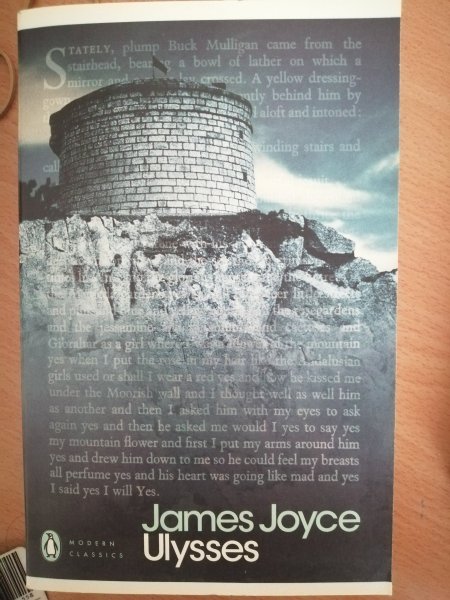
When I woke up this morning the radio reminded me that today, 2nd February 2022, is the centenary of the first complete publication of  Ulysses by James Joyce. It had been published in installments before that, but it took a publisher in Paris to bite the bullet and publish the whole thing. The publication date also happened to be the 40th birthday of the author.

I have toyed with the idea of going into Dublin on Bloomsday (16th June, the day on which Ulysses is set) and wandering about some of the locations described in, but what with work and lockdowns I haven’t got round to it.  Maybe this year will be the time!

Or perhaps instead I’ll prepare dinner this evening in a style that Leopold Bloom would enjoy:

He liked thick giblet soup, nutty gizzards, a stuffed roast heart, liver slices fried with breadcrumbs, fried hen cod’s roe. Most of all he liked grilled mutton kidneys which gave his palate a fine tang of faintly scented urine.

Or perhaps not.

If you haven’t read Ulysses yet then you definitely should. It’s one of the great works of modern literature. And don’t let people put you off by telling you that it’s a difficult read. It really isn’t. It’s a long read that’s for sure -it’s over 900 pages – but the writing is full of colour and energy and it has a  real sense of place. It’s a wonderful book.

(There’s also quite a lot of sex in it….)

I’ve read Ulysses twice, once when I was a teenager and again when I was in my thirties. I then lent my copy to someone and never got it back. The copy shown above is a new one I bought last year with the intention of reading the novel again now that I live in Ireland but I sadly have not had the time yet. I will, though.

R.I.P. Thomas Kinsella

Posted in Poetry on December 22, 2021 by telescoper

The renowned Irish Poet Thomas Kinsella has passed away at the age of 93. By way of a small tribute I thought I would post again a poem by him that I first posted about 7 years ago when I had no inkling that I would move to Ireland. Probably his most famous and definitely his most anthologised work Mirror in February gives us a reflection (in more ways than one) on the inexorable and irreversible process of ageing. Kinsella actually wrote this in May 1962 when he would have been just 34 years old and probably had no idea he would live almost another sixty years. Apart from everything else this poem confirms my opinion that shaving is to be avoided…

The day dawns with scent of must and rain,
Of opened soil, dark trees, dry bedroom air.
Under the fading lamp, half dressed – my brain
Idling on some compulsive fantasy-
I towel my shaven jaw and stop, and stare,
Riveted by a dark exhausted eye,
A dry downturning mouth.

It seems again that it is time to learn,
In this untiring, crumbling place of growth
To which, for the time being, I return.
Now plainly in the mirror of my soul
I read that I have looked my last on youth
And little more; for they are not made whole
That reach the age of Christ.

Below my window the awakening trees,
Hacked clean for better bearing, stand defaced
Suffering their brute necessities,
And how should the flesh not quail that span for span
Is mutilated more? In slow distaste
I fold my towel with what grace I can,
Not young and not renewable, but man.

by Thomas Kinsella (1928-2021)

At Day-Close in November by Thomas Hardy

Posted in Poetry with tags , , on November 21, 2021 by telescoper

The ten hours’ light is abating,
And a late bird wings across,
Where the pines, like waltzers waiting,
Give their black heads a toss.

Beech leaves, that yellow the noon-time,
Float past like specks in the eye;
I set every tree in my June time,
And now they obscure the sky.

And the children who ramble through here
Conceive that there never has been
A time when no tall trees grew here,
That none will in time be seen.

by Thomas Hardy (1840-1928)

Unsolved, by John McCrae

Posted in History, Poetry with tags , , , , on November 11, 2021 by telescoper

The poet John McCrae served with distinction in the Canadian Field Artillery during the First World War, rising to the rank of Lieutenant Colonel. He died in 1918, of pneumonia, shortly before the end of the conflict.
McCrae is best known for writing the poem In Flanders Fields, the imagery of which led to the adoption of the poppy as the emblem of Remembrance Day (11th November i.e. today). He wrote many other interesting poems, however, so I thought I’d share one here to celebrate his life.

Amid my books I lived the hurrying years,
Disdaining kinship with my fellow man;
Alike to me were human smiles and tears,
I cared not whither Earth’s great life-stream ran,
Till as I knelt before my mouldered shrine,
God made me look into a woman’s eyes;
And I, who thought all earthly wisdom mine,
Knew in a moment that the eternal skies
Were measured but in inches, to the quest
That lay before me in that mystic gaze.
“Surely I have been errant; it is best
That I should tread, with men their human ways.”
God took the teacher, ere the task was learned,
And to my lonely books again I turned.

by John McCrae (1872-1918)


Writing Papers for Scientific Journals

Posted in Literature, The Universe and Stuff with tags , on October 14, 2021 by telescoper

Knowing that not all readers of this blog have a flair for writing like what I have got, I thought I’d pass on a link to a paper that appeared on the arXiv earlier this week. Here is the abstract:

Writing is a vital component of a modern career in astronomical research. Very few researchers, however, receive any training in how to produce high-quality written work in an efficient manner. We present a step-by-step guide to writing in astronomy. We concentrate on how to write scientific papers, and address various aspects including how to crystallise the ideas that underlie the research project, and how the paper is constructed considering the audience and the chosen journal. We also describe a number of grammar and spelling issues that often cause trouble to writers, including some that are particularly hard to master for non-native English speakers. This paper is aimed primarily at Master’s and PhD level students who are presented with the daunting task of writing their first scientific paper, but more senior researchers or writing instructors may well find the ideas presented here useful.

Knapen et al. 2021, arXiv:2110.05503

The title of the paper is actually Writing Scientific Papers in Astronomy, which seems curious wording to me – rather like Writing Scientific Papers in French (for example) – which is why I didn’t use it for the title of this post. Not that I’m pedantic or anything.

One of the problems with the scientific literature is that most journals have their own style rules which are often in conflict with one another so the detailed guidance on grammar, etc is probably of lesser value than the good tips on how to structure a paper. Those bits apply to any scientific field really, not just astronomy.

I remember very well what a struggle I found it when I wrote my first scientific paper. I had invaluable help, though, from my supervisor, who was an excellent writer. This is well worth reading for those early career researchers who want to avoid at least some of the pain!

The only tip I can offer to a postgraduate student struggling to write a paper is to think of who is going to be reading it. In most cases that will mainly be other early career researchers, so write in such a way that you can connect with them. That usually means, for example, taking special care to explain the things that you found difficult when you started in the area. In other words, you should put enough in your paper to allow someone else entering the field to understand it.

Other tips are of course welcome through the Comments Box.

Thomas Mann the Magician

Posted in Literature with tags , , , on October 9, 2021 by telescoper

This week I had visitors from Cardiff, one of whom runs a bookshop in Penarth, as a consequence of which on Thursday evening I attended a Zoom event featuring acclaimed author Colm Tóibín whose book The Magician is on sale now. It’s a fictionalised account of the live of Thomas Mann. The event was so interesting that today I went to the local bookshop in Maynooth and bought a copy.

The life of Thomas Mann was colourful to say the least. Born in the German city of Lübeck in 1875, Mann’s father was a wealthy merchant and his mother was from Brazil. His elder brother Heinrich Mann was also a novelist essayist and playwright of considerable reputation. Despite his homosexuality, Thomas Mann married Katia Pringsheim in 1905, his wife seemingly not minding about his sexual orientation. He led a comfortable life until he began to see the signs of the coming descent of Europe into the First World War. He was awarded the Nobel Prize for Literature in 1929 and went into exile from Nazism in 1933, becoming an American citizen in 1944. He spent the last year’s of his life in Zurich, where he died in 1955.

I haven’t read The Magician yet – I’ll post a review when I have – but the event inspired me to dig out my copy of Mann’s greatest novel, The Magic Mountain. The stamp inside reveals that I bought it in 1987, while I was doing my DPhil at Sussex.

In 1912 – the year Death in Venice was published – Thomas Mann and his wife spent some time in a sanatorium where he got the idea for his greatest novel, The Magic Mountain, though it took him over a decade to finish it. It was finally published in 1924 and in my view it merits a place among the greatest works of 20th Century literature.

I had read Death in Venice before The Magic Mountain and there are definite thematic similarities, illness and death being metaphors for the state of Europe at the time. In The Magic Mountain Hans Castorp goes to a Swiss sanatorium for a three-week stay and ends up spending seven years there on a kind of spiritual journey, his isolation from the rest of the world and the ever-present shadow of death heightening his emotional awareness. When he eventually leaves for “real life” outside the dream-like sanatorium, he heads straight for the Great War with the inevitable consequence.

But trying to summarize The Magic Mountain in terms of a plot is pointless. It’s a novel of atmosphere and internal questioning. I found it hard going but immensely rewarding. I always intended to follow up with Buddenbrooks and the Confessions of Felix Krull, but for some reason I never got around to them. I suppose there’s still time, though.