Archive for the Literature Category

The Dead Christ

Posted in Art, Literature with tags , , , on April 3, 2021 by telescoper

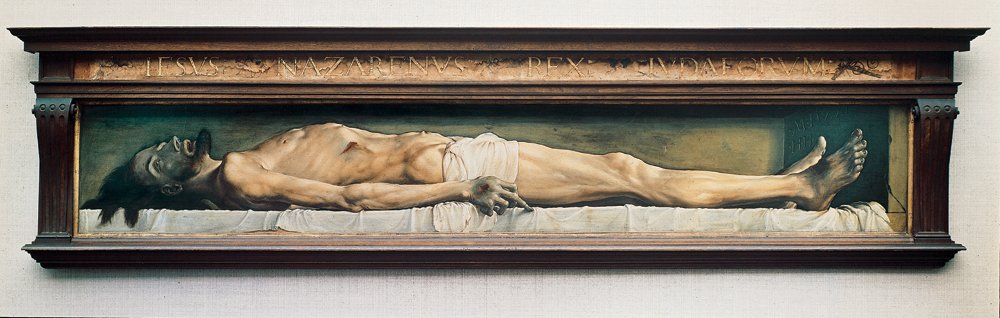
The Dead Christ, 1521 (oil on limewood) by Hans Holbein the Younger (1497/8-1543)

Twitter reminded me this evening of this extraordinary painting by Hans Holbein the Younger and I thought I’d share it here because I realize it was painted in 1521, which means it is 500 years old this year. Despite its age this work still has the power to shock, not least because it is so different from so many works of religious art of its period. The depiction of the dead Christ is 2m long, life-size (so to speak). His eyes and mouth are open, the clear signs of putrefaction appearing in the colouring of his face, hands and feet, the body marked by wounds, is brutal in its frankness and shocking in its authenticity.

But what is the message of this work? Was Holbein questioning the reality of Christ’s bodily resurrection? Or was he emphasizing how miraculous it must have been? And where was a painting of this enormous size and peculiar shape supposed to be displayed? What purpose was it meant to serve? And what’s the reason for the extended middle finger?

I’m not the only one to have asked these questions. The author Fyodor Dostoevsky was famously moved by this work, so much so that in his novel The Idiot he has a character remark “Why, a man’s faith might be ruined by looking at that picture!”.

I don’t expect we’ll ever know what Holbein was trying to say, but perhaps that doesn’t matter. Great art should make you think, but should not necessarily tell you what you should think…

Good Friday Break

Posted in Biographical, Maynooth, Poetry with tags , , on April 2, 2021 by telescoper

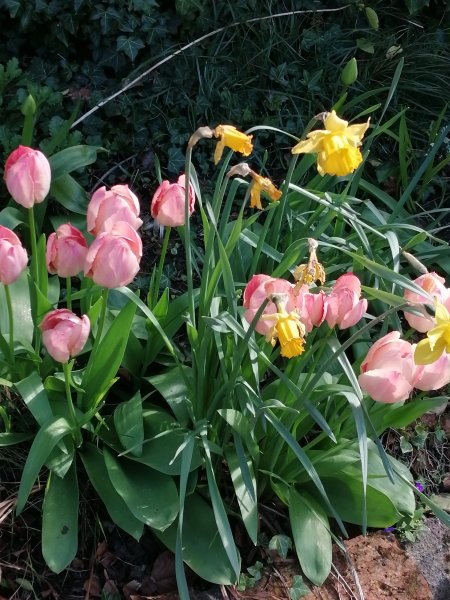
Garden Update: the daffodils are done but the tulips are still going…

Well, here we are. It’s Good Friday, the start of an extra-long weekend (Friday to Monday inclusive). I’m making it a bit longer by taking a few days off next week too. It’s officially Easter break so there are no lectures next week anyway.

I need a break. This term has been exhausting, and the busiest bit is yet to come. We return for four weeks of teaching then, after a short hiatus, we’re into the examination period followed by marking, Exam Boards and all the rest. Oh and there’s the small matter of yet another virtual Open Day at the end of this month.

I’ve put out-of-office replies on my work email and won’t be attending to messages there until I get back to work at the end of next week. Part of me feels a bit guilty for doing that, but only a very small part.

As it’s a nice day, I spent a couple of hours this morning doing some remedial work in the garden. I may have a late lunch out there too as the weather is nice and I recently invested in a garden table and chairs which I have yet to use properly. If the weather holds I might get the mower out and give the lawn a trim. Judging by the constant noise this morning it seems that everyone in the neighbourhood is doing that too. Some people seem to enjoy the sound of their own lawn mowers.

Talking of which I also trimmed my beard this morning, for the first time since Christmas. I have also acquired some clippers and may actually cut the hair on my head at some point over the weekend too.

That’s enough inconsequential rambling for today. Here is a poem on the subject of Good Friday by Christina Rossetti:

Am I a stone, and not a sheep,
That I can stand, O Christ, beneath Thy cross,
To number drop by drop Thy blood’s slow loss,
And yet not weep?

Not so those women loved
Who with exceeding grief lamented Thee;
Not so fallen Peter, weeping bitterly;
Not so the thief was moved;

Not so the Sun and Moon
Which hid their faces in a starless sky,
A horror of great darkness at broad noon –
I, only I.

Yet give not o’er,
But seek Thy sheep, true Shepherd of the flock;
Greater than Moses, turn and look once more
And smite a rock.

Thought for the Day

Posted in Literature, Politics on March 30, 2021 by telescoper

I don’t have time for a full post today but let me just say that I think that the move from a structuralist account in which capital is understood to structure social relations in relatively homologous ways to a view of hegemony in which power relations are subject to repetition, convergence, and rearticulation brought the question of temporality into the thinking of structure, and marked a shift from a form of Althusserian theory that takes structural totalities as theoretical objects to one in which the insights into the contingent possibility of structure inaugurate a renewed conception of hegemony is bound up with the contingent sites and strategies of the rearticulation of power.

Comments welcome.

Lá Fhéile Pádraig sona daoibh go léir

Posted in History, Literature, Maynooth with tags , , , , , on March 17, 2021 by telescoper

Well, it’s St Patrick’s Day, which means I’m actually taking a day off and attempting not to read work emails or do work-related things for the day. It’s a lower-key St Paddy’s Day than usual but it’s nice to take a break.

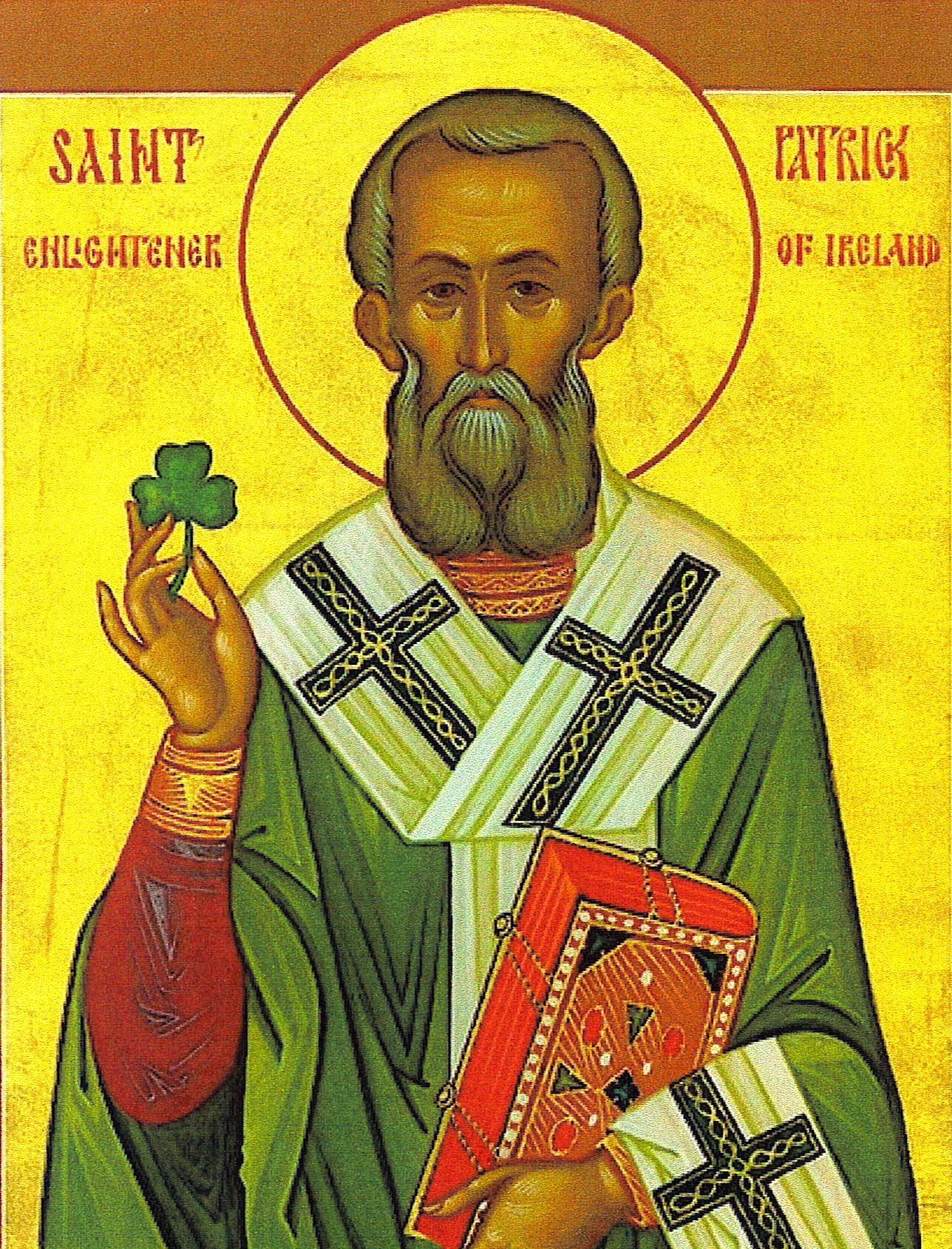
Not many facts are known about the life of St Patrick, but it seems he was born in Britain, probably in the late 4th Century AD, probably somewhere around the Severn Estuary and probably in Wales. It also appears that he didn’t know any Latin. When a young man, it seems he was captured by Celtic marauders coming up the River Severn and taken as a slave to Ireland. He eventually escaped back to Britain, but returned to Ireland as a missionary and succeeded somehow in converting the Irish people to Christianity.

Or did he? This interesting piece suggests his role was of lesser importance than many think.

However it happened, Ireland was the first country to be converted to Christianity that had never been part of the Roman Empire. That made a big difference to the form of the early Church here. The local Celtic culture was very loose and decentralized. There were no cities, large buildings, roads or other infrastructure. Life revolved around small settlements and farms. When wars were fought they were generally over livestock or grazing land. The early Irish Church that grew in this environment was quite different from that of continental Europe. It was not centralized, revolved around small churches and monasteries, and lacked the hierarchical structure of the Roman Church. Despite these differences, Ireland was quite well connected with the rest of the Christian world.

Irish monks – and the wonderful illuminated manuscripts they created – spread across the continent, starting with Scotland and Britain. Thanks to the attentions of the Vikings few of these works survive but the wonderful Lindisfarne Gospels, dating from somewhere in the 8th Century were almost certainly created by Irish monks. The Book of Kells was probably created in Scotland by Irish Monks.

The traffic wasn’t entirely one-way however. A few weeks ago I saw a fascinating documentary about the Fadden More Psalter. This is a leather-bound book of Psalms found in a peat bog in 2006, which is of similar age to the Lindisfarne Gospels. It took years of painstaking restoration work to recover at least part of the text (much of which was badly degraded), but the leather binding turned out to hold a particularly fascinating secret: it was lined with papyrus. The only other books from the same period with the same structure that are known are from the Coptic Church in Egypt.

That doesn’t mean that whoever owned the Fadden More Psalter had actually been to Egypt, of course. It is much more this book made its way to Ireland via a sort of relay race. On the other hand, it does demonstrate that international connections were probably more extensive than you might have thought.

Anyway, back to St Patrick’s Day.

Saint Patrick’s Day is celebrated on March 17th, the reputed date of his death in 461 AD. Nobody really knows where St Patrick was born, though, so it would be surprising if the when were any better known.

In any case, it wasn’t until the 17th Century that Saint Patrick’s feast day was placed on the universal liturgical calendar in the Catholic Church. Indeed, St Patrick has never been formally canonized. In the thousand years that passed any memory of the actual date of his birth was probably lost, so the choice of date was probably influenced by other factors, specifically the proximity of the Spring Equinox (which is this year on Saturday March 20th).

The early Christian church in Ireland incorporated many pre-Christian traditions that survived until roughly the 12th century, including the ancient festival of Ēostre (or Ostara), the goddess of spring associated with the spring equinox after whom Easter is named. During this festival, eggs were used a symbol of rebirth and the beginning of new life and a hare or rabbit was the symbol of the goddess and fertility. In turn the Celtic people of Ireland probably adapted their own beliefs to absorb much older influences dating back to the stone age. St Patrick’s Day and Easter therefore probably both have their roots in prehistoric traditions around the Spring Equinox, although the direct connection has long been lost.

The traditional St Patrick’s Day parades etc will not take place this year because of Covid-19 restrictions, but that doesn’t mean everyone is ignoring the day. Indeed here’s a picture of the spire of St Patrick’s College lit up in celebration:
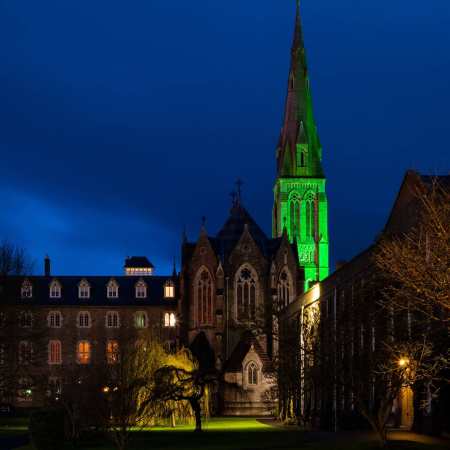
Lá Fhéile Pádraig sona daoibh go léir!

Laocoön and his Sons

Posted in Art, Biographical, Poetry with tags , , , , on March 15, 2021 by telescoper

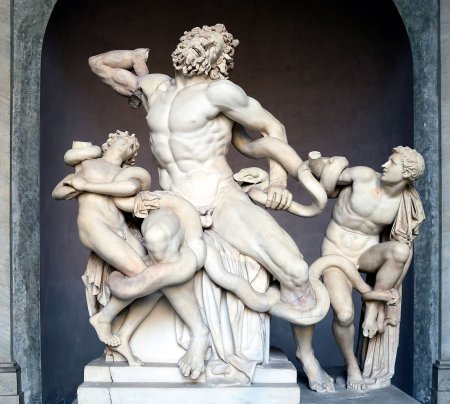
Yesterday I was remind of the above very famous statue which is on display in the Vatican. It dates from antiquity but was unearthed almost intact during an excavation in Rome in the 16th Century. It’s an extraordinary work that depicts a legendary episode in the Trojan wars of priest Laocoön and his sons Antiphantes and Thymbraeus being attacked by sea serpents. Evidently it was very cold that day…

This scene is described in Book II of Virgil‘s Aeneid which happens to be the text I studied for Latin O-level back in the day. Virgil’s verse takes the form of a strict (dactylic) hexameter which provides a rhythmic pulse perfectly designed for action sequences such as this. Before this part, Laocoön (whose name has to be spoken as four syllables – Lah-o-co-ohn – in order to scan correctly) warns the Trojans about their gift of a wooden horse using the most famous phrase in the entire Aeneid:

Primus ibi ante omnis magna comitante caterva 40
Laocoon ardens summa decurrit ab arce,
et procul: ‘O miseri, quae tanta insania, cives?
Creditis avectos hostis? Aut ulla putatis
dona carere dolis Danaum? Sic notus Ulixes?
Aut hoc inclusi ligno occultantur Achivi, 45
aut haec in nostros fabricata est machina muros,
inspectura domos venturaque desuper urbi,
aut aliquis latet error; equo ne credite, Teucri.
Quidquid id est, timeo Danaos et dona ferentis

Then, while about to sacrifice a bull to the god Neptune, he and his sons meet their grisly end:

Laocoon, ductus Neptuno sorte sacerdos,
sollemnis taurum ingentem mactabat ad aras.
ecce autem gemini a Tenedo tranquilla per alta
(horresco referens) immensis orbibus angues
incumbunt pelago pariterque ad litora tendunt;
pectora quorum inter fluctus arrecta iubaeque
sanguineae superant undas, pars cetera pontum
pone legit sinuatque immensa volumine terga.
fit sonitus spumante salo; iamque arva tenebant
ardentisque oculos suffecti sanguine et igni
sibila lambebant linguis vibrantibus ora.
diffugimus visu exsangues. illi agmine certo
Laocoonta petunt; et primum parva duorum
corpora natorum serpens amplexus uterque
implicat et miseros morsu depascitur artus;
post ipsum auxilio subeuntem ac tela ferentem
corripiunt spirisque ligant ingentibus; et iam
bis medium amplexi, bis collo squamea circum
terga dati superant capite et cervicibus altis.
ille simul manibus tendit divellere nodos
perfusus sanie vittas atroque veneno,
clamores simul horrendos ad sidera tollit:
qualis mugitus, fugit cum saucius aram
taurus et incertam excussit cervice securim.

(You can find a translation into English here.)

The colour and energy of this verse, propelled by the remorseless rhythm, brings the horrific episode to life in truly compelling and typically gore-filled way. You don’t really have to be fluent in Latin to appreciate its quality. The line sibila lambebant linguis vibrantibus ora is particularly brilliant. It’s no surprise that Virgil is regarded as such a literary superstar.

My Latin teacher at school pointed out that epic poetry like this would probably have been performed in the Roman era by an actor as a dramatic recitation, probably with a drum pounding out the rhythm and with various sound and lighting effects to boot.

Anyway, today is the Ides of March so I thought I’d keep up classical theme by posting this  priceless bit of British cultural history relevant to such a fateful day.

This is from the First Folio Edition of Carry On Cleo, and stars the sublime Kenneth Williams as Julius Caesar delivering one of the funniest lines in the whole Carry On series. The joke may be nearly as old as me, but it’s still a cracker…


The Intoxication of Power

Posted in Literature, Politics with tags , , , on March 14, 2021 by telescoper

The above in part of the Police, Crime, Sentencing and Courts Bill 2021 which will be voted on in Parliament tomorrow (15th March). As you can see, it is deliberately worded so vaguely that it can and will be used to removes the right to peaceful protest from citizens of the United Kingdom. No doubt what currently passes for a Parliament will wave this Bill through without even reading it.

This comes just after the Metropolitan Police’s brutal suppression of a peaceful candlelit vigil on Clapham Common, the scene of the abduction and subsequent murder of Sarah Everard a crime for which a serving officer of the Metropolitan Police has been charged.

Here’s a view of the Police making social distancing impossible by kettling the participants:

Britain’s transformation into a Police State is proceeding even more rapidly than I feared, though the direction of travel has been apparent ever since the Brexit campaign 5 years ago. A far-right coup is taking place and it is succeeding against a spineless and ineffective opposition, its ringleader delighting in wiping out what remains of civil liberties and turning the media, especially the BBC, into a propaganda machine.

The future of Britain looks very much the one George Orwell foresaw in 1984:

There will be no curiosity, no enjoyment of the process of life. All competing pleasures will be destroyed. But always— do not forget this, Winston— always there will be the intoxication of power, constantly increasing and constantly growing subtler. Always, at every moment, there will be the thrill of victory, the sensation of trampling on an enemy who is helpless.
If you want a picture of the future, imagine a boot stamping on a human face— forever

Still, blue passports eh?

A Poem for St David’s Day

Posted in Poetry with tags , , , on March 1, 2021 by telescoper

It’s St David’s Day today, and a lovely spring morning it is too, so I wish you all a big

Dydd Gŵyl Dewi Hapus!

The daffodils in my garden have come out in celebration, apart from the clump under the tree which are reluctant to emerge:

It has become a bit of a St David’s Day tradition on this this blog to post a piece of verse but instead of the more usual R.S. Thomas I thought I’d carry on with the theme of daffodils with this wonderfully moving poem by Gillian Clarke inspired by Wordsworth’s famous poem and called Miracle on St David’s Day:

‘They flash upon that inward eye
Which is the bliss of solitude’

The Daffodils by W. Wordsworth

An afternoon yellow and open-mouthed
with daffodils. The sun treads the path
among cedars and enormous oaks.
It might be a country house, guests strolling,
the rumps of gardeners between nursery shrubs.

I am reading poetry to the insane.
An old woman, interrupting, offers
as many buckets of coal as I need.
A beautiful chestnut-haired boy listens
entirely absorbed. A schizophrenic

on a good day, they tell me later.
In a cage of first March sun a woman
sits not listening, not seeing, not feeling.
In her neat clothes the woman is absent.
A big, mild man is tenderly led

to his chair. He has never spoken.
His labourer’s hands on his knees, he rocks
gently to the rhythms of the poems.
I read to their presences, absences,
to the big, dumb labouring man as he rocks.

He is suddenly standing, silently,
huge and mild, but I feel afraid. Like slow
movement of spring water or the first bird
of the year in the breaking darkness,
the labourer’s voice recites ‘The Daffodils’.

The nurses are frozen, alert; the patients
seem to listen. He is hoarse but word-perfect.
Outside the daffodils are still as wax,
a thousand, ten thousand, their syllables
unspoken, their creams and yellows still.

Forty years ago, in a Valleys school,
the class recited poetry by rote.
Since the dumbness of misery fell
he has remembered there was a music
of speech and that once he had something to say.

When he’s done, before the applause, we observe
the flowers’ silence. A thrush sings
and the daffodils are flame.

To Solitude – John Keats

Posted in Poetry with tags , , on February 24, 2021 by telescoper

O Solitude! if I must with thee dwell,
Let it not be among the jumbled heap
Of murky buildings; climb with me the steep, —
Nature’s observatory — whence the dell,
Its flowery slopes, its river’s crystal swell,
May seem a span; let me thy vigils keep
‘Mongst boughs pavilion’d, where the deer’s swift leap
Startles the wild bee from the foxglove bell.
But though I’ll gladly trace these scenes with thee,
Yet the sweet converse of an innocent mind,
Whose words are images of thoughts refin’d,
Is my soul’s pleasure; and it sure must be
Almost the highest bliss of human-kind,
When to thy haunts two kindred spirits flee.

by John Keats (1795-1821)

Yesterday (23rd February) marked the bicentenary of the death of John Keats who passed away in Rome of tuberculosis at the age of just 25. The theme of the poem also fits the times we’re living in!


It’s raining…

Posted in Biographical, Maynooth, Poetry with tags , , , , , , on January 19, 2021 by telescoper

Taking a short break from examination marking I had a look outside. I’m not sorry to be cooped up indoors given that it’s pouring with rain. In fact it rained all night and morning and is set to continue in the same vein until tomorrow.

While I was waiting for my coffee to brew I was thinking about some idiomatic expressions for heavy rain. The most familiar one in English is Raining Cats and Dogs which, it appears, originated in a poem by Jonathan Swift that ends with the lines:

Drowned puppies, stinking sprats, all drenched in mud,
Dead cats and turnip tops come tumbling down the flood.

My French teacher at school taught me the memorable if slightly indelicate Il pleut comme vache qui pisse, although there are other French expressions involving, among other things nails, frogs and halberds.

One of my favourites is the Welsh Mae hi’n bwrw hen wragedd a ffyn which means, bizarrely, “It’s raining old ladies and sticks”. There is also Mae hi’n bwrw cyllyll a ffyrc – “It’s raining knives and forks”.

Related idiomatic expressions in Irish are constructed differently. There isn’t a transitive verb meaning “to rain” so there is no grammatical way to say “it rains something”. The way around this is to use a different verb to represent, e.g., throwing. For example Tá sé ag caitheamh sceana gréasaí which means “It’s throwing cobblers’ knives”.

Talking (of) cobblers, I note that in Danish there is Det regner skomagerdrenge – “It’s raining shoemakers’ apprentices” and in Germany Es regnet Schusterjungs – “It’s raining cobblers’ boys”.

Among the other strange expressions in other languages are Está chovendo a barba de sapo (Portuguese for “It’s raining toads’ beards”), Пада киша уби миша (Serbian for “It’s raining and killing mice”),  Det regner trollkjerringer (Norwegian for “It’s raining female trolls”) and Estan lloviendo hasta maridos (Spanish for “It is even raining husbands”).

No sign of any husbands outside right now so I’ll get back to correcting exams.

End of Year Thoughts

Posted in Biographical, Covid-19, Maynooth, Poetry on December 31, 2020 by telescoper

The Royal Canal, Maynooth, looking towards the Railway Station; the harbour is on the right.

The last morning of 2020 found Maynooth covered in a light dusting of snow. Since then the snow has turned to sleet and rain and the town looks a bit less picturesque as a consequence, not least because we haven’t really seen any proper daylight. My trip out this morning was a rare excursion from my house, but I’m glad I was able to get a bit of fresh (though freezing) air without there being lots of people around. I’ll be sitting cosily at home for the rest of the day (and, probability, tomorrow).

It’s extraordinary to think that this time last year there wasn’t an inkling of what was to come in terms of the Coronavirus pandemic. The first cases had been detected in China in December 2019 but I don’t think anyone seriously thought it would go global in the way it did. A year on and we’re still not out of it. Not by a long way. I think this are going to get a lot worse before they get better, but at least there are vaccines on the way.

Looking back over some of my posts from early in the year I’m reminded of two  events in particular- the 200th Anniversary Dinner of the RAS Club in January and the Irish General Election in February, both of which seem now to have happened at least a decade ago. I went to London again in mid-February, but had to cancel my planned trip back to the UK in March because FlyBe went bust. After that I made a couple of trips to Dublin (including a performance of Fidelio)  but since then I haven’t left Maynooth. It’s extremely likely that by March 2021 I will have spent an entire year without leaving the boundaries of Maynooth.

It’s almost a whole year since I posted a list of things I wanted to do in 2020. The first three were:

    1. Go to more live concerts.
    2. See more of Ireland.
    3. No more working weekends

That went well then! I don’t think I’ll bother making a list for next year, or perhaps I’ll just carry over this year’s. Obviously the Covid-19 restrictions and vastly increased workload involved in switching teaching to online put paid to most of my plans for 2020. Although I did manage to buy a house in Maynooth, I will have to wait until the Third Wave is over before I can retrieve the rest of my belongings from Wales and relocate fully.

Although I didn’t make an impact in this year’s Beard of the Year (finishing in last place in the final poll), at least I have the honour of being St Patrick’s Day Beard of Ireland for 2020.

You have to take what positives you can but I’m sure I’m not the only person to think, on balance, this has been a spectacularly awful year. I haven’t myself had Covid-19 but I know people who have and some of them are still struggling with the after-effects. I know many have also lost loved ones to the Coronavirus; condolences to everyone so affected. Although nothing to do with Covid-19, I still feel a very deep sadness that my former thesis supervisor John Barrow is no more. I hope after the pandemic there can be some form of proper tribute to him.

Anyway, to end with, here are a few verses from In Memoriam, by Alfred Lord Tennyson:

Ring out the old, ring in the new,
Ring, happy bells, across the snow:
The year is going, let him go;
Ring out the false, ring in the true.

Ring out the grief that saps the mind,
For those that here we see no more;
Ring out the feud of rich and poor,
Ring in redress to all mankind.

Ring out false pride in place and blood,
The civic slander and the spite;
Ring in the love of truth and right,
Ring in the common love of good.

Ring out old shapes of foul disease;
Ring out the narrowing lust of gold;
Ring out the thousand wars of old,
Ring in the thousand years of peace.