Archive for the Literature Category

The Mystery of Meaning

Posted in Poetry with tags , , , on July 31, 2020 by telescoper

Contrary to the expectation I expressed yesterday when posting an obscure article about the chord changes in Duke Jordan’s Jordu, I got the following alert from WordPress:

Usually I get a bit nervous when there’s a spike in my stats. I tend to imagine I’ve posted something controversial and the people checking it out are all lawyers. As it turns out the destination of most of the traffic was not the piece I had just posted but an old post about a poem, Meaning by Czeslaw Milosz. Here is the poem:

When I die, I will see the lining of the world.
The other side, beyond bird, mountain, sunset.
The true meaning, ready to be decoded.
What never added up will add Up,
What was incomprehensible will be comprehended.
– And if there is no lining to the world?
If a thrush on a branch is not a sign,
But just a thrush on the branch? If night and day
Make no sense following each other?
And on this earth there is nothing except this earth?
– Even if that is so, there will remain
A word wakened by lips that perish,
A tireless messenger who runs and runs
Through interstellar fields, through the revolving galaxies,
And calls out, protests, screams.

I have no idea why there was a sudden surge in interest yesterday – most of it from the USA – in this particular poem. I’d guess that it may have featured in a TV broadcast, as that sort of thing has in the past caused sudden increases in traffic to posts about music.

If anyone can solve the mystery of Meaning I’d be very grateful to hear through the comments box.

Update: Mystery solved. The poem was read by the Reverend James Lawson at the funeral of civil rights campaigner John Lewis. Many thanks to the commenter below for this information.

Stars, by Emily Brontë

Posted in Poetry with tags , , on July 30, 2020 by telescoper

Ah! why, because the dazzling sun
Restored our Earth to joy,
Have you departed, every one,
And left a desert sky?

All through the night, your glorious eyes
Were gazing down in mine,
And, with a full heart’s thankful sighs,
I blessed that watch divine.

I was at peace, and drank your beams
As they were life to me;
And revelled in my changeful dreams,
Like petrel on the sea.

Thought followed thought, star followed star,
Through boundless regions, on;
While one sweet influence, near and far,
Thrilled through, and proved us one!

Why did the morning dawn to break
So great, so pure, a spell;
And scorch with fire the tranquil cheek,
Where your cool radiance fell?

Blood-red, he rose, and, arrow-straight,
His fierce beams struck my brow;
The soul of nature sprang, elate,
But mine sank sad and low!

My lids closed down, yet through their veil
I saw him, blazing, still,
And steep in gold the misty dale,
And flash upon the hill.

I turned me to the pillow, then,
To call back night, and see
Your worlds of solemn light, again,
Throb with my heart, and me!

It would not do—the pillow glowed,
And glowed both roof and floor;
And birds sang loudly in the wood,
And fresh winds shook the door;

The curtains waved, the wakened flies
Were murmuring round my room,
Imprisoned there, till I should rise,
And give them leave to roam.

Oh, stars, and dreams, and gentle night;
Oh, night and stars, return!
And hide me from the hostile light
That does not warm, but burn;

That drains the blood of suffering men;
Drinks tears, instead of dew;
Let me sleep through his blinding reign,
And only wake with you!

by Emily Brontë (1818-1848; she was born on 30th July)

Reading Finnegans Wake

Posted in Literature, Maynooth with tags , on July 25, 2020 by telescoper

Doing my bit to support local businesses as they come out of lockdown I decided to order a book from the excellent independent bookshop on Main Street. You can’t browse there yet but you can order books for collection.

I went to collect my order yesterday. I was worried that they might be struggling for business but the place was chock-a-block with packs of school books ready for collection ahead of the new school year.

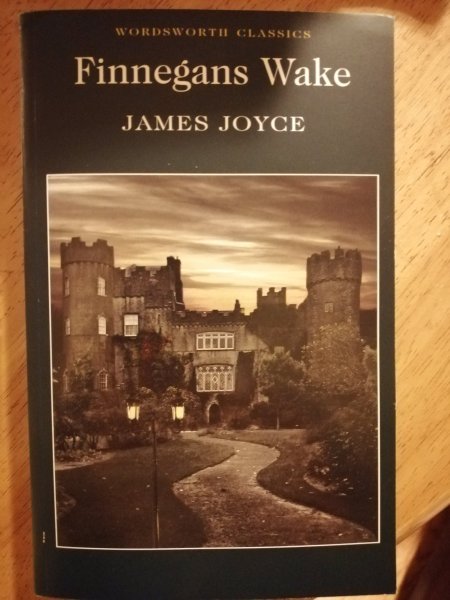
I picked up this bit of light reading:

I disagree with people who say that Ulysses is a difficult read, but Finnegans Wake is certainly a challenge. The lady in the bookshop said “Good luck with it!” as she handed it to me…

Alfred Hitchcock once claimed that “puns are the highest form of literature” and one of the features of Finnegans Wake is the constant stream of puns (in different languages). It seems that almost every sentence contains some form of double meaning too. Finnegans Wake may be hard going but it’s very playful, not only with linguistic meaning but with the sounds that words make, which can be delightful in itself independently of what they’re supposed to mean.

I’ve always thought of Finnegans Wake not so much as a novel but as as a very long poem to be read out loud. Indeed here is a strange but fascinating clip of Joyce himself reading an excerpt. Note the attention he pays to the rhythm:

I’ve set myself the target of reading 10 pages a day, which means it will take me a couple of months to finish it. I’ll try reading some bits out to myself, though I can’t do the accent…

On Grinds

Posted in Literature, mathematics with tags , , , , on July 24, 2020 by telescoper

When I moved to Ireland a couple of years ago, one of the words I discovered had a usage with which I was unfamiliar was grind. My first encounter with this word was after a lecture on vector calculus when a student asked if I knew of anyone who could offer him grinds. I didn’t know what he meant but was sure it wasn’t the meaning that sprang first into my mind so I just said no, I had just arrived in Ireland so didn’t know of anyone. I resisted the temptation to suggest he try finding an appropriate person via Grindr.

I only found out later that grinds are a form of private tuition and they are quite a big industry in Ireland, particularly at secondary school level. School students whose parents can afford it often take grinds in particular subjects to improve their performance on the Leaving Certificate. It seems to be less common for third level students to pay for grinds, but it does happen. More frequently university students actually offer grinds to local schoolkids as a kind of part-time employment to help them through college.

The word grind can also refer to a private tutor, i.e. you can have a maths grind. It can also be used as a verb, in which sense it means `to instil or teach by persistent repetition’.

This sense of the word grind may be in use in the United Kingdom but I have never come across it before, and it seems to me to be specific to Ireland.

All of which brings me back to vector calculus, via Charles Dickens.

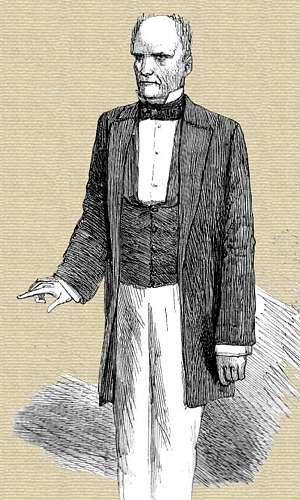
In Hard Times by Charles Dickens there is a character by the name of Mr Thomas Gradgrind, a grimly utilitarain school superintendent who insisted on teaching only facts.

Thomas Gradgrind (engraving by Sol Eytinge, 1867).

If there is a Mr Gradgrind, why is there neither a Mr Divgrind nor a Mr Curlgrind?

Poppies in July – Sylvia Plath

Posted in Poetry with tags , , , on July 10, 2020 by telescoper

Little poppies, little hell flames,
Do you do no harm?

You flicker. I cannot touch you.
I put my hands among the flames. Nothing burns

And it exhausts me to watch you
Flickering like that, wrinkly and clear red, like the skin of a mouth.

A mouth just bloodied.
Little bloody skirts!

There are fumes I cannot touch.
Where are your opiates, your nauseous capsules?

If I could bleed, or sleep! –
If my mouth could marry a hurt like that!

Or your liquors seep to me, in this glass capsule,
Dulling and stilling.

But colorless. Colorless.

by Sylvia Plath (1932-1963)


June Thunder, by Louis Macneice

Posted in Poetry with tags , , , on June 18, 2020 by telescoper

The Junes were free and full, driving through tiny
Roads, the mudguards brushing the cowparsley,
Through fields of mustard and under boldly embattled
Mays and chestnuts

Or between beeches verdurous and voluptuous
Or where broom and gorse beflagged the chalkland–
All the flare and gusto of the unenduring
Joys of a season

Now returned but I note as more appropriate
To the maturer mood impending thunder
With an indigo sky and the garden hushed except for
The treetops moving.

Then the curtains in my room blow suddenly inward,
The shrubbery rustles, birds fly heavily homeward,
The white flowers fade to nothing on the trees and rain comes
Down like a dropscene.

Now there comes catharsis, the cleansing downpour
Breaking the blossoms of our overdated fancies
Our old sentimentality and whimsicality
Loves of the morning.

Blackness at half-past eight, the night’s precursor,
Clouds like falling masonry and lightning’s lavish
Annunciation, the sword of the mad archangel
Flashed from the scabbard.

If only you would come and dare the crystal
Rampart of the rain and the bottomless moat of thunder,
If only now you would come I should be happy
Now if now only.

by Louis Macneice (1907-1963)


Bloomsday!

Posted in Literature with tags , , on June 16, 2020 by telescoper

So it’s 16th June, a very special day in Ireland – and especially Dublin – because 16th June 1904 is the date on which the story takes place of Ulysses by James Joyce. Bloomsday – named after the character Leopold Bloom – is an annual celebration not only of all things Joycean but also of Ireland’s wider cultural and literary heritage.

If you haven’t read Ulysses yet then you should. It’s one of the great works of modern literature. And don’t let people put you off by telling you that it’s a difficult read. It really isn’t. It’s a long read that’s for sure -it’s over 900 pages – but the writing is full of colour and energy. It’s a wonderful book.

(There’s also quite a lot of sex in it….)

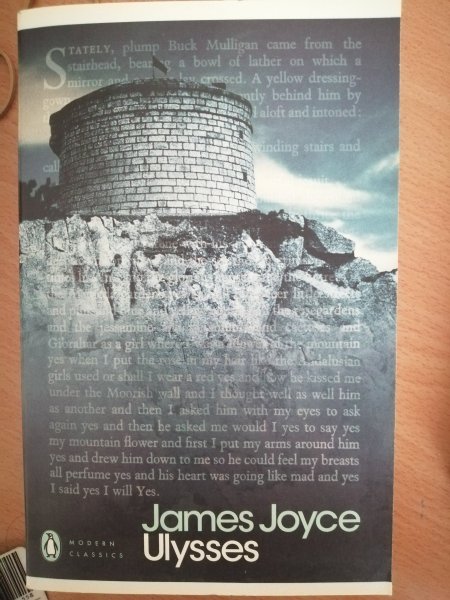
I’ve read it twice, once when I was a teenager and once when I was in my thirties. I then lent my copy to someone and never got it back. The copy shown above is a new one I bought last year with the intention of reading the novel again now that I live in Ireland but I sadly have not had the time yet. I will, though.

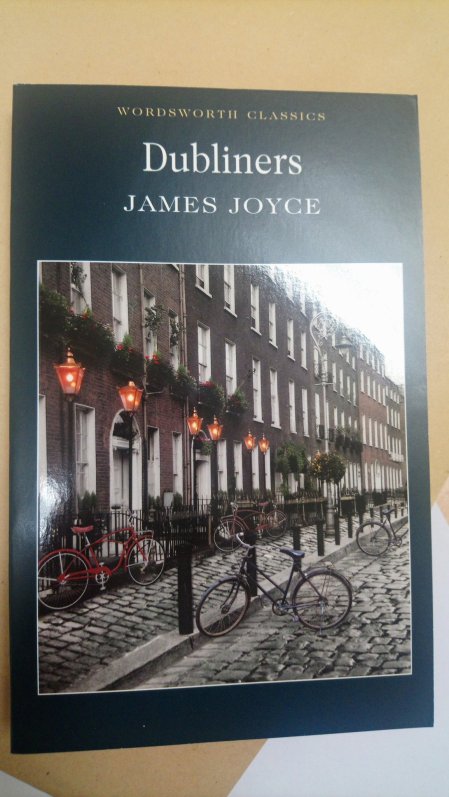
Incidentally if you would like to limber up before making an attempt on Ulysses I recommend this set of short stories.

But if you don’t fancy reading it you can listen to an epic 29 hour dramatisation of Ulysses on the radio via RTÉ; see here for details.

The Chameleon, by A.P. Herbert

Posted in Poetry with tags , , , on June 11, 2020 by telescoper

A Chameleon, in Dublin Zoo.

The chameleon changes his colour;
He can look like a tree or a wall;
He is timid and shy and he hates to be seen,
So he simply sits down on the grass and grows green,
And pretends he is nothing at all.

I wish I could change my complexion
To purple or orange or red:
I wish I could look like the arm of a chair
So nobody ever would know I was there
When they wanted to put me to bed.

I wish I could be a chameleon
And look like a lily or rose;
I’d lie on the apples and peaches and pears,
But not on Aunt Margaret’s yellowy chairs—
I should have to be careful of those.

The chameleon’s life is confusing;
He is used to adventure and pain;
But if he ever sat on Aunt Maggie’s cretonne
And found what a curious color he’d gone,
I don’t think he’d do it again.

by A.P. Herbert (1890-1971)


The Trees, by Philip Larkin

Posted in Poetry with tags , , on May 31, 2020 by telescoper

The trees are coming into leaf
Like something almost being said;
The recent buds relax and spread,
Their greenness is a kind of grief.

Is it that they are born again
And we grow old? No, they die too,
Their yearly trick of looking new
Is written down in rings of grain.

Yet still the unresting castles thresh
In fullgrown thickness every May.
Last year is dead, they seem to say,
Begin afresh, afresh, afresh.

by Philip Larkin (1922-1985)

#PoetryDayIRL: ‘When You Are Old’, by William Butler Yeats

Posted in Poetry with tags , , , on April 30, 2020 by telescoper

One more for Ireland’s National Poetry Day. I couldn’t resist posting one by William Butler Yeats (known to his friends as ‘WB’)

When you are old and grey and full of sleep,
And nodding by the fire, take down this book,
And slowly read, and dream of the soft look
Your eyes had once, and of their shadows deep;

How many loved your moments of glad grace,
And loved your beauty with love false or true,
But one man loved the pilgrim soul in you,
And loved the sorrows of your changing face;

And bending down beside the glowing bars,
Murmur, a little sadly, how Love fled
And paced upon the mountains overhead
And hid his face amid a crowd of stars.