Archive for the Poetry Category

My Last Will – by Sir Walter Raleigh (no, not that one…)

Posted in Biographical, Poetry with tags , , , on March 20, 2017 by telescoper

The vernal equinox in the Northern hemisphere passed this morning at 10.29 GMT, heralding the start of spring – a time when naturally our thoughts turn to death and decay. Which is no doubt why I remembered this poem  I came across some time ago but for some reason haven’t posted yet. It’s quite astonishing how many websites attribute this verse to the Elizabethan courtier and explorer Sir Walter Raleigh, who was indeed an accomplished poet, but the use of language is very clearly not of that period. In fact this was written by Professor Sir Walter Alexander Raleigh (1861-1922). What he says in this poem about his own untidiness is I’m afraid very true also of me, but the semi-joking tone with which he opens gives way to something far more profound, and I think the last two lines are particularly powerful.

When I am safely laid away,
Out of work and out of play,
Sheltered by the kindly ground
From the world of sight and sound,
One or two of those I leave
Will remember me and grieve,
Thinking how I made them gay
By the things I used to say;
— But the crown of their distress
Will be my untidiness.

What a nuisance then will be
All that shall remain of me!
Shelves of books I never read,
Piles of bills, undocketed,
Shaving-brushes, razors, strops,
Bottles that have lost their tops,
Boxes full of odds and ends,
Letters from departed friends,
Faded ties and broken braces
Tucked away in secret places,
Baggy trousers, ragged coats,
Stacks of ancient lecture-notes,
And that ghostliest of shows,
Boots and shoes in horrid rows.
Though they are of cheerful mind,
My lovers, whom I leave behind,
When they find these in my stead,
Will be sorry I am dead.

They will grieve; but you, my dear,
Who have never tasted fear,
Brave companion of my youth,
Free as air and true as truth,
Do not let these weary things
Rob you of your junketings.

Burn the papers; sell the books;
Clear out all the pestered nooks;
Make a mighty funeral pyre
For the corpse of old desire,
Till there shall remain of it
Naught but ashes in a pit:
And when you have done away
All that is of yesterday,
If you feel a thrill of pain,
Master it, and start again.

This, at least, you have never done
Since you first beheld the sun:
If you came upon your own
Blind to light and deaf to tone,
Basking in the great release
Of unconsciousness and peace,
You would never, while you live,
Shatter what you cannot give;
— Faithful to the watch you keep,
You would never break their sleep.

Clouds will sail and winds will blow
As they did an age ago
O’er us who lived in little towns
Underneath the Berkshire downs.
When at heart you shall be sad,
Pondering the joys we had,
Listen and keep very still.
If the lowing from the hill
Or the tolling of a bell
Do not serve to break the spell,
Listen; you may be allowed
To hear my laughter from a cloud.

Take the good that life can give
For the time you have to live.
Friends of yours and friends of mine
Surely will not let you pine.
Sons and daughters will not spare
More than friendly love and care.
If the Fates are kind to you,
Some will stay to see you through;
And the time will not be long
Till the silence ends the song.

Sleep is God’s own gift; and man,
Snatching all the joys he can,
Would not dare to give his voice
To reverse his Maker’s choice.
Brief delight, eternal quiet,
How change these for endless riot
Broken by a single rest?
Well you know that sleep is best.

We that have been heart to heart
Fall asleep, and drift apart.
Will that overwhelming tide
Reunite us, or divide?
Whence we come and whither go
None can tell us, but I know
Passion’s self is often marred
By a kind of self-regard,
And the torture of the cry
“You are you, and I am I.”
While we live, the waking sense
Feeds upon our difference,
In our passion and our pride
Not united, but allied.

We are severed by the sun,
And by darkness are made one.


R.I.P. Derek Walcott 

Posted in Poetry on March 17, 2017 by telescoper

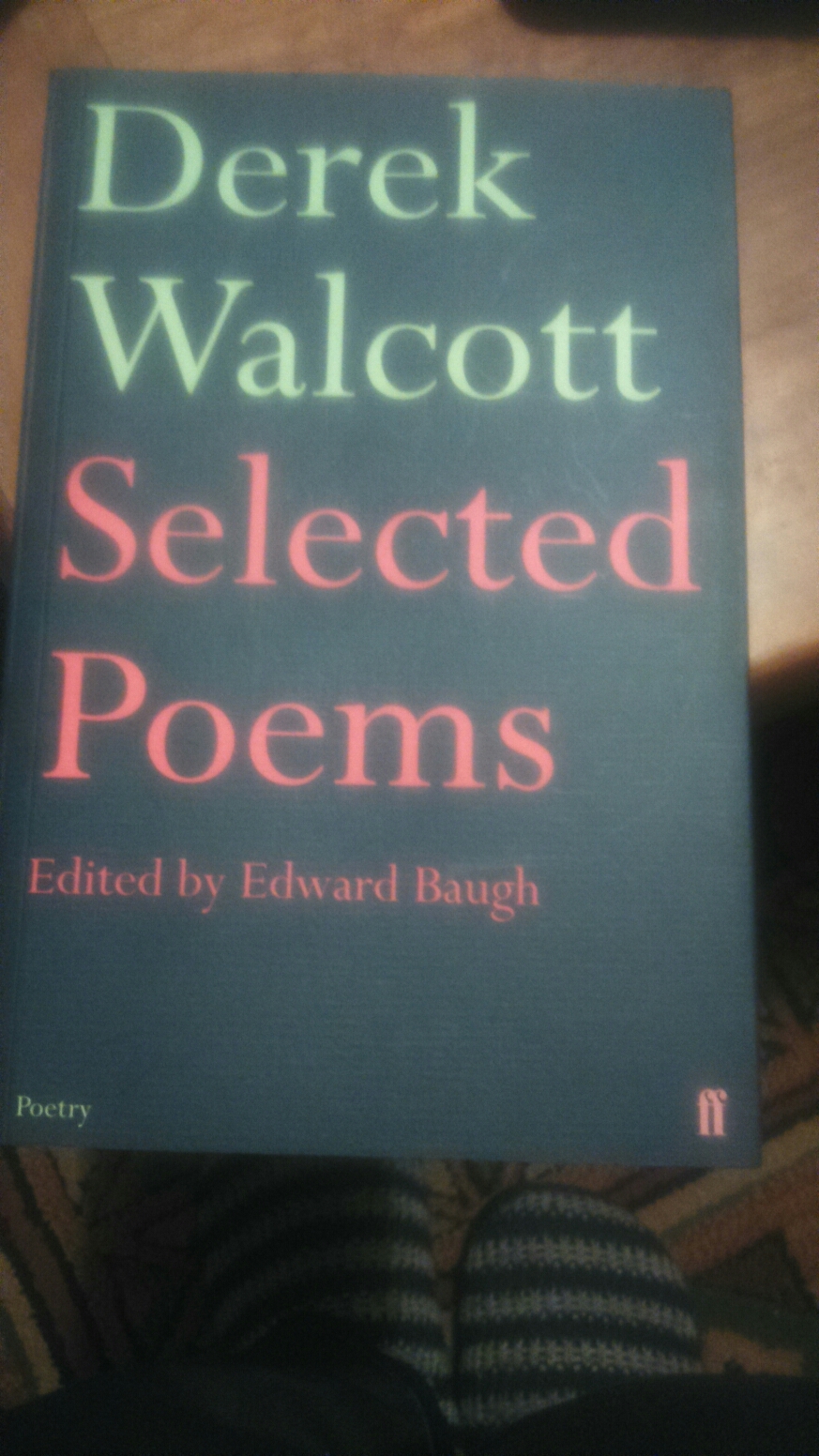
Out of the office all day, I heard quite late of the death at the age of 87 of the poet Derek Walcott.

Here’s one of his best-known poems, which will resonate with middle-aged men everywhere:

If you aren’t familiar with Derek Walcott, this collection is a good place to start:

March is the Month of Expectation

Posted in Poetry with tags , on March 13, 2017 by telescoper

March is the month of expectation.
The things we do not know –
The Persons of prognostication
Are coming now –
We try to show becoming firmness –
But pompous Joy
Betrays us, as his first Betrothal
Betrays a Boy.

by Emily Dickinson (1830-1886)


Barddoniaeth ar gyfer Dydd Gŵyl Dewi

Posted in History, Poetry with tags , , , , , , , on March 1, 2017 by telescoper

Well, today is St David’s Day so let me first offer a hearty “Dydd Gwŷl Dewi Sant hapus i chi gyd” (happy St David’s Day to you all).

Over the years, I seem to have established a tradition of posting a bit of poetry to mark this special day for Wales and the Welsh and I was looking for a piece of verse to put up this time round, when I came across a poem that seems very appropriate for a number of reasons. It was written in Welsh by Hedd Wyn (born Ellis Humphrey Evans) who lived from 1887 to 1917; Hedd Wyn was his bardic name and it translates (roughly) as “pure peace”.

Hedd Wyn was a non-conformist Christian and a pacifist who was conscripted into the British Army to serve in World War 1. He was posted to Flanders and was killed in action on the first day of the 3rd Battle of Ypres. He was hit in the stomach by a shell and died later of his wounds. The battle stumbled on for months of horrific slaughter as the planned Allied offensive foundered in the mud of Passchendaele and ended, as had the Battle of the Somme a year earlier, in a bloody stalemate.

A few weeks before his death, Hedd Wyn wrote a poem called Yr Arwr (‘The Hero’) which was submitted for the prestigious Bard’s Chair at that year’s National Eisteddfod. It was announced on 6th September 1917 that  he  had won the prize, posthumously. The bard not being able to sit in the the chair, it was draped in black cloth. The Prime Minister, David Lloyd George, was present at the ceremony.

The poem Yr Arwr is a very long work, running to 13 pages of manuscript, which is not practicable to post here, but here’s another poem by Hedd Wyn to mark the centenary of his death. This is called Rhyfel (‘War’). I only have a few words of Welsh, but because of the occasion,  it seems appropriate to post this in its original language. You can find English translations here and on the Wikipedia page here. Translating poetry is always very difficult, but the sense of the poem is of a world in chaos that has been abandoned by God.

Gwae fi fy myw mewn oes mor ddreng
A Duw ar drai ar orwel pell;
O’i ôl mae dyn, yn deyrn a gwreng,
Yn codi ei awdurdod hell.

Pan deimlodd fyned ymaith Dduw
Cyfododd gledd i ladd ei frawd;
Mae swn yr ymladd ar ein clyw,
A’i gysgod ar fythynnod tlawd.

Mae’r hen delynau genid gynt
Ynghrog ar gangau’r helyg draw,
A gwaedd y bechgyn lond y gwynt,
A’u gwaed yn gymysg efo’r glaw.

The Mower, by Philip Larkin

Posted in Poetry with tags , , , on February 20, 2017 by telescoper

The mower stalled, twice; kneeling, I found
A hedgehog jammed up against the blades,
Killed. It had been in the long grass.

I had seen it before, and even fed it, once.
Now I had mauled its unobtrusive world
Unmendably. Burial was no help:

Next morning I got up and it did not.
The first day after a death, the new absence
Is always the same; we should be careful

Of each other, we should be kind
While there is still time.

by Philip Larkin (1922-1985)


Mending Wall

Posted in Poetry with tags , , , on February 14, 2017 by telescoper

Something there is that doesn’t love a wall,
That sends the frozen-ground-swell under it,
And spills the upper boulders in the sun;
And makes gaps even two can pass abreast.
The work of hunters is another thing:
I have come after them and made repair
Where they have left not one stone on stone,
But they would have the rabbit out of hiding,
To please the yelping dogs. The gaps I mean,
No one has seen them made or heard them made,
But at spring mending-time we find them there.
I let my neighbor know beyond the hill;
And on a day we meet to walk the line
And set the wall between us once again.
We keep the wall between us as we go.
To each the boulders that have fallen to each.
And some are loaves and some so nearly balls
We have to use a spell to make them balance:
“Stay where you are until our backs are turned!”
We wear our fingers rough with handling them.
Oh, just another kind of outdoor game,
One on a side. It comes to little more:
He is all pine and I am apple-orchard.
My apple trees will never get across
And eat the cones under his pines, I tell him.
He only says, “Good fences make good neighbors.”
Spring is the mischief in me, and I wonder
If I could put a notion in his head:
“Why do they make good neighbors? Isn’t it
Where there are cows? But here there are no cows.
Before I built a wall I’d ask to know
What I was walling in or walling out,
And to whom I was like to give offence.
Something there is that doesn’t love a wall,
That wants it down!” I could say “Elves” to him,
But it’s not elves exactly, and I’d rather
He said it for himself. I see him there,
Bringing a stone grasped firmly by the top
In each hand, like an old-stone savage armed.
He moves in darkness as it seems to me,
Not of woods only and the shade of trees.
He will not go behind his father’s saying,
And he likes having thought of it so well
He says again, “Good fences make good neighbors.”

by Robert Frost (1874-1963)


Fire and Ice 

Posted in Poetry with tags , , , on February 5, 2017 by telescoper

Some say the world will end in fire,
Some say in ice.
From what I’ve tasted of desire
I hold with those who favor fire.
But if it had to perish twice,
I think I know enough of hate
To say that for destruction ice
Is also great
And would suffice.

by Robert Frost (1874-1963)


Refugee Blues

Posted in Poetry, Uncategorized with tags , , , on January 29, 2017 by telescoper

Say this city has ten million souls,
Some are living in mansions, some are living in holes:
Yet there’s no place for us, my dear, yet there’s no place for us.

Once we had a country and we thought it fair,
Look in the atlas and you’ll find it there:
We cannot go there now, my dear, we cannot go there now.

In the village churchyard there grows an old yew,
Every spring it blossoms anew:
Old passports can’t do that, my dear, old passports can’t do that.

The consul banged the table and said,
“If you’ve got no passport you’re officially dead”:
But we are still alive, my dear, but we are still alive.

Went to a committee; they offered me a chair;
Asked me politely to return next year:
But where shall we go to-day, my dear, but where shall we go to-day?

Came to a public meeting; the speaker got up and said;
“If we let them in, they will steal our daily bread”:
He was talking of you and me, my dear, he was talking of you and me.

Thought I heard the thunder rumbling in the sky;
It was Hitler over Europe, saying, “They must die”:
O we were in his mind, my dear, O we were in his mind.

Saw a poodle in a jacket fastened with a pin,
Saw a door opened and a cat let in:
But they weren’t German Jews, my dear, but they weren’t German Jews.

Went down the harbour and stood upon the quay,
Saw the fish swimming as if they were free:
Only ten feet away, my dear, only ten feet away.

Walked through a wood, saw the birds in the trees;
They had no politicians and sang at their ease:
They weren’t the human race, my dear, they weren’t the human race.

Dreamed I saw a building with a thousand floors,
A thousand windows and a thousand doors:
Not one of them was ours, my dear, not one of them was ours.

Stood on a great plain in the falling snow;
Ten thousand soldiers marched to and fro:
Looking for you and me, my dear, looking for you and me.

written in 1939 by W.H. Auden (1907-1973)

The Key-Note

Posted in Poetry with tags , on January 22, 2017 by telescoper

Where are the songs I used to know,
Where are the notes I used to sing?
I have forgotten everything
I used to know so long ago;
Summer has followed after Spring;
Now Autumn is so shrunk and sere,
I scarcely think a sadder thing
Can be the Winter of my year.

Yet Robin sings through Winter’s rest,
When bushes put their berries on;
While they their ruddy jewels don,
He sings out of a ruddy breast;
The hips and haws and ruddy breast
Make one spot warm where snowflakes lie
They break and cheer the unlovely rest
Of Winter’s pause – and why not I?

by Christina Rossetti (1830-1894)


To a Louse

Posted in Poetry, Politics with tags , on January 18, 2017 by telescoper

Ha! whaur ye gaun, ye crowlin ferlie?
Your impudence protects you sairly;
I canna say but ye strunt rarely,
Owre gauze and lace;
Tho’, faith! I fear ye dine but sparely
On sic a place.

Ye ugly, creepin, blastit wonner,
Detested, shunn’d by saunt an’ sinner,
How daur ye set your fit upon her-
Sae fine a lady?
Gae somewhere else and seek your dinner
On some poor body.

Swith! in some beggar’s haffet squattle;
There ye may creep, and sprawl, and sprattle,
Wi’ ither kindred, jumping cattle,
In shoals and nations;
Whaur horn nor bane ne’er daur unsettle
Your thick plantations.

Now haud you there, ye’re out o’ sight,
Below the fatt’rels, snug and tight;
Na, faith ye yet! ye’ll no be right,
Till ye’ve got on it-
The verra tapmost, tow’rin height
O’ Miss’ bonnet.

My sooth! right bauld ye set your nose out,
As plump an’ grey as ony groset:
O for some rank, mercurial rozet,
Or fell, red smeddum,
I’d gie you sic a hearty dose o’t,
Wad dress your droddum.

I wad na been surpris’d to spy
You on an auld wife’s flainen toy;
Or aiblins some bit dubbie boy,
On’s wyliecoat;
But Miss’ fine Lunardi! fye!
How daur ye do’t?

O Jeany, dinna toss your head,
An’ set your beauties a’ abread!
Ye little ken what cursed speed
The blastie’s makin:
Thae winks an’ finger-ends, I dread,
Are notice takin.

O wad some Power the giftie gie us
To see oursels as ithers see us!
It wad frae mony a blunder free us,
An’ foolish notion:
What airs in dress an’ gait wad lea’e us,
An’ ev’n devotion!

by Robert Burns (1759-1796)

P.S. This poem was written “On Seeing One On A Lady’s Bonnet, At Church 1786” but it – and the last verse is especially – is currently applicable to the pathetic jingoistic posturing of the UK government.