Archive for the Opera Category

La Bohème

Posted in Opera with tags , , , , , , , on September 9, 2012 by telescoper

Time rolls on and the end of the summer brings the beginning of the new Opera season in Cardiff, with  La Bohème  by Giacomo Puccini at Welsh National Opera. It seems like a thousand years since I last went to the Wales Millennium Centre but it was only May. Still, a lot has happened between then and now. It felt good to see the Wales Millennium Centre again, looking resplendent in the sunshine of a September evening. Life’s getting back to normal.
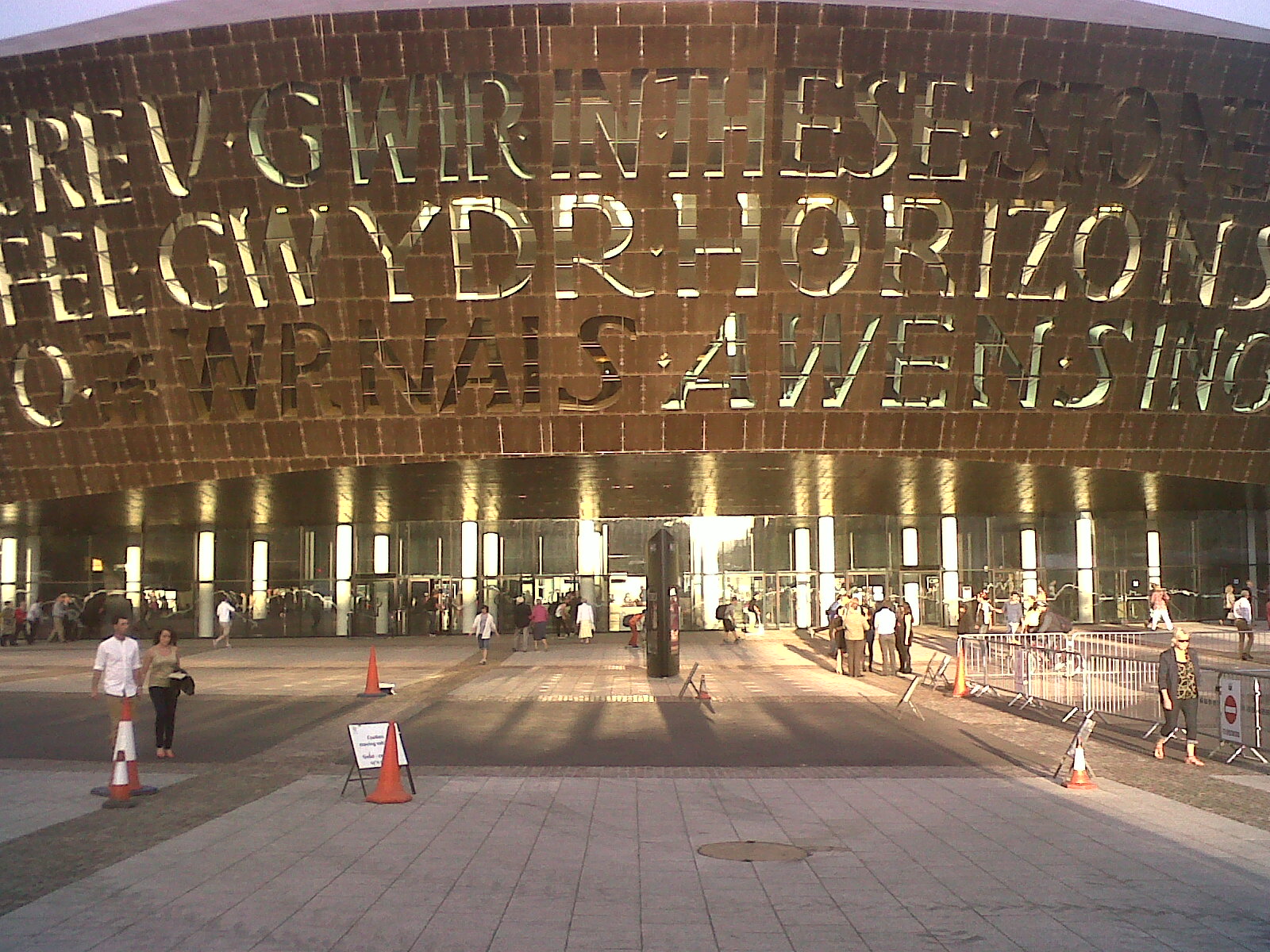
I confess that I still get butterflies in my stomach as I take my seat before a night at the Opera. I guess if that thrill ever disappears I’ll just stop going, but last night reminded me why I love the Opera so much. The performance was absolutely wonderful, perhaps the best I’ve seen at Cardiff since I moved here five years ago.


I suppose the story of La Bohème will be familiar to anyone with even a passing interest in Opera, but I’ll give a quick synopsis anyway.  It’s a boy-meets-girl love story, of course. The boy in this case is the poet Rodolfo (Alex Vicens) and the girl, actually named Lucia but known  as Mimi (Giselle Allen).  The setting is Paris around 1830, and the poet and his painter friend Marcello (David Kempster) are starving and freezing, as it is winter and they have no money.  Act I is set on Christmas Eve, but the two friends have nothing to eat and nowhere to go. Fortunately, their musician friend Schaunard (Daniel Grice) turns up with money and provisions. After various comings and goings everyone but Rodolfo leaves to spend Christmas Eve out on the town; Rodolfo has to finish a piece for a journal, and promises to join them when he is done. However, he is interrupted by the arrival of Mimi, who lives nearby and whose candle has gone out. It’s love at first sight…

The later stages of Act I are built around Rodolfo’s aria Che Gelida Manina (“your tiny hand is frozen”) and Mimi’s Mi Chiamano Mimi. These beautiful songs follow one another in quick succession, and are then rounded off with a wonderful duet O Soave Fanciulla  in a manner guaranteed to melt the stoniest of hearts. And, before you ask, yes I did cry. Just a little bit. I don’t think anyone noticed.

But it’s not just the ravishing music that makes this passage so special, it’s also Puccini’s gift as a story-teller: after the two arias by Rodolfo and Mimi, the audience knows everything they need to know about these characters. It’s a great example of why I think Puccini is a far greater writer of Opera than, say, Wagner. Puccini understood much better than Wagner how to vary  pace and colour  without allowing the story to bogged down, and he knew exactly how to use his big tunes to maximum dramatic effect (i.e. without excessive repetition). In fact, La Bohème is in four acts, but its running time is just about 2 hours and 15 minutes, packed full of gorgeous music and compelling drama. It’s a supreme example of Puccini’s artistry as a composer of Opera.

Anyway, back to the plot. Act II finds Rodolfo and Mimi joining in the party started by Marcello and his buddies. There’s a huge contrast here between the dingy garret in which Act I is set, as this is set in the Latin Quarter of gay Paris (with a few drag queens in this production thrown in to make the point). Marcello gets off with the object of his desire, the coquettish Musetta (Kate Valentine), and all seems well with the world as we go into the interval.

In Act III we find things have changed. Rodolfo’s love for Mimi has soured and, overcome by jealousy and suspicion, he has left her. Clearly unwell, Mimi wanders around looking for Rodolfo and he hears her coughing. They clearly still love each other, but find it difficult to live with each other. If Opera were Facebook they would both have “It’s complicated” on their status.

The last act finds us back in the garret, Rodolfo and Mimi having separated. But Mimi has been wandering the streets in the freezing cold and turns up, clearly gravely ill. Rodolfo’s friends quickly pawn some meagre possessions and Marcello and Musetta rush out to buy medicine and summon a doctor. They return with the medicine but, before the doctor arrives, Mimi dies.

Well, what did you expect in an Opera, a happy ending?

People say that this is a romantic opera but it’s a pretty bleak story when you think about it. The lovers’ happiness is brief and it all ends in despair and death in surroundings of poverty and squalor. That’s what Opera Verismo is all about.

I don’t give star ratings when I review Opera performances, but if I did this would get the highest grade. All the principals were marvellous. It was refreshing to see Rodolfo played by a tenor who not only looked the part (i.e. youthful and dashing rather than middle-aged and portly) but could also cope with the demands of the role. I thought Alex Vicens’ voice sounded a little thin at the start and was worried that he might have to force it during the big arias, but he warmed up magnificently. Kate Valentine was a very sexy Musetta. The other person who deserves a particular mention is Welsh baritone  David Kempster, who was absolutely superb as Marcello. His compelling stage presence matched by an exceptionally  fine voice. World class, I’d say…

And a word for the production. Annabel Arden’s design managed to bring fresh elements to what is basically a straightforward interpretation of the Opera. The visual effects, such as the animated snow,  were clever but not intrusive. There was no attempt to translate the action into a different period or location nor was there an attempt to preach about disease as a metaphor for moral failings. In this respect it’s very faithful to what I think Puccini’s intentions were, i.e. to let the audience make their own mind up about what message they want to take away. The only slight departure I spotted was that in Act I Mimi actually blows her own candle out deliberately in order to get Rodolfo to light it again. Methinks she’s a bit more forward than usual in this production.

This was the first performance of this run of La Bohème. If you love Opera and can get to Cardiff, then do go and see it. It’s very special.

By way of a postscript I couldn’t resist posting this, which I found on Youtube this morning. It’s a vintage recording of O Soave Fanciulla dating back to 1956 and featuring the great Jussi Björling as Rodolfo. He may be a bit old for the part, but listen to that voice! The greatest tenor of his generation, without question. And Renata Tebaldi as Mimi too…

Dovrei essere così fortunato

Posted in Opera with tags , , on September 8, 2012 by telescoper

Well, summer must be nearly over. Tonight is the Last Night of the Pimms Proms. More importantly, it’s the first night of the new season at Welsh National Opera, which I’ll be attending.  Of which more anon. However, I thought I’d warm up by posting this marvellous clip which looks behind the scenes at a famous recording of the rarely performed English version of the classic aria Dovrei essere così fortunato from the Opera Una Ragazza Australiana con le Natiche Belle conducted by Carl Davis. Enjoy.

The Sound of Hammer Horror

Posted in Film, Music, Opera with tags , , , , , on August 25, 2012 by telescoper

I’ve been meaning for a while to post a little tribute to British composer James Bernard, and this Bank Holiday Weekend has left me with a bit of time to do so now. Most of you are probably wondering who James Bernard is (or was; he died in 2001), but many of you will have heard his music many times without realising it, for he was the composer who wrote most of the music for the classic British horror movies made by Hammer Film Productions from the late 1950s through to the 1970s.

I’m by no means an aficionado of horror films – or films of any sort for that matter, as I rarely go to the cinema these days – but I do enjoy the opera, which is probably why I find these films so interesting. I don’t think they would have established themselves as the classics there without the unique atmosphere conjured up by James Bernard’s scores. Nor without such fine actors as Christopher Lee and Peter Cushing, of course. The reason for this is that’s not much in these films in terms of purely visual horror – they work so well by creating an undertone of dread and impending terror so that the viewers’ own imaginations frighten them more than what’s shown on the screen. Viewed without the music, most of these films look pretty tame although I have to say I think The Devil Rides Out would have had me hiding behind the sofa even without the music!

Here is a little taste of what is probably his most famous score, for The Horror of Dracula (1958) which starred the inimitable Christopher Lee in the title role.

I think there are two things worth mentioning about this particular piece. The first is that the main theme is built around a three-note motif inspired by the three syllables of the name “Dra-cu-la”. Even more interestingly, Bernard doubles that line in the orchestra a whole tone higher, the resulting clash of harmonies producing that jarring sound that ratchets up the psychological tension. It’s a simple device, but remarkably effective, especially when combined with the unusual percussion.

The second thing that struck me listening to this just now is how reminiscent the entry of the high strings (about 0:49) is of the orchestration of the sea interludes from Benjamin Britten’s opera Peter Grimes. That’s not a surprise at all, because James Bernard was a childhood friend of Britten, and they worked together at various times in later life. Bernard’s music is often atonal and sometimes puts me in mind of Britten’s gripping opera A Turn of the Screw, based on the famous ghost story by Henry James, which also uses atonal techniques to produce an unsettling musical undercurrent. Alban Berg’s opera Lulu (a performance of which I reviewed here) also springs to mind as one in which the lack of a tonal centre in the music produces an atmosphere of disorientation and inner dread.

Pleurez mes yeux

Posted in Opera with tags , , , on July 14, 2012 by telescoper

Dr Dee

Posted in History, Music, Opera, The Universe and Stuff with tags , , , , , on July 10, 2012 by telescoper

Last Friday evening, after my afternoon shift at the Royal Society Summer Exhibition, I took the chance to go and see something a bit different, in the shape of English National Opera’s production of  Dr Dee at the Coliseum. I hadn’t really known what to expect of this beforehand, actually, but needed to find a bit of distraction in London and was fortunately able to persuade my lovely friends Joao and Kim to come with me to try it out.

Dr Dee is based on the life of John Dee, the famous Elizabethan mathematician, astrologer, courtier, and spymaster. Written by Mr Damon Albarn, former lead singer of the popular beat combo Blur, it’s not exactly an opera but more of a renaissance-style pageant depicting the life of this mysterious character in a series of dramatic tableaux. Not being at all naturalistic in style it would have been quite difficult to follow what was going on without the programme notes, but each episode was brilliantly realised with dramatic staging, dancing and stunning visual effects. Rufus Norris was responsible for the overall direction of the piece. Hat’s off to him. I wasn’t really expecting the music to be so interesting, either; mixing pop vocals with orchestral music from the period could have been awful, but actually I warmed to it very quickly.

An influential polymath, Dee was, for a time, a trusted confidante of Elizabeth I and he was recruited by Sir Francis Walsingham to set up a network of informants and decipher Catholic codes in the build-up to the attempted invasion of England by the Spanish Armada. Dee is also purported to be the inspiration behind Prospero in Shakespeare’s The Tempest. What’s particularly interesting about him from an historical perspective is that lies at the crossroads between magic and science. A gifted mathematician, Dee developed an obsession for the occult after meeting a very dodgy character called Edward Kelly, who persuaded Dee that he could talk to angels in their own language with the help of a crystal ball, a technique known as scrying. Dee eventually went mad and was alienated not only from Elizabethan society but also from his own family. Had he lived at a slightly different time, he could well have ended up burned as a heretic. His story reminds us that the distinction between rationality and irrationality has not always been so clear. Alchemy and the occult could co-exist in many great minds alongside mathematics and empirical study so it should not surprise us that science and pseudoscience both seem able to thrive in modern culture.

The run of Dr Dee at ENO has now ended, but I’m definitely glad I plucked up the courage to go and see it. It’s a truly imaginative work and produced a memorable theatrical experience.

Tristan und Isolde

Posted in Opera with tags , , , , , on May 20, 2012 by telescoper

Regular readers of this blog will know that, although I’m a regular opera-goer, I’m by no means as much of a devout fan of Richard Wagner as many of that ilk, including some of my colleagues. Nevertheless, I have decided to persevere in much the same way as I have done with Brahms. Last night I had an opportunity to do just that by going to the first night of the new run of Tristan und Isolde by Welsh National Opera. I was particularly delighted to see this opera on the WNO schedule for this year, because it is an opera with which I am a little bit familiar, and thus provided me with an excuse to persevere a little bit more, for reasons I shall explain…

Years ago, when I lived in Nottingham, on a warm summer evening I decided to listen to some of the live broadcast on BBC Radio 3 of Tristan und Isolde from Glyndebourne. I made myself a cocktail and took the radio out into the garden with the intention of listening to a bit of it before going out for the evening. This was back in the days when I actually used to go out on the town on Saturday nights; now I’m too old for that sort of thing. Anyway, I was hooked right from the Prelude. Act I came and went and I decided to make some dinner in the interval, opened a bottle of wine, and returned to listen to the rest of it. The glorious music washed over me in the sultry twilight. Darkness fell, a second bottle of wine was opened, and still I listened – no doubt to the consternation of my neighbours. The final Liebestod was so beautiful I almost cried. Eventually I retreated to the house having experienced my first all-out Wagner trip.

My enjoyment of that occasion was of course helped by the fact I could get up and walk around occasionally, as well as by the liberal intake of fine wine. Nevertheless, I took enough out of it to want to see a full performance. Last night was my chance.

I think the first thing to say about Tristan und Isolde is that the music is completely wonderful. Not only ravishingly beautiful, but also haunting and complex. The opening bars establish a vividly chromatic orchestral palette which is used to brilliant effect to create the atmosphere of tragedy that pervades this work. The opening chord, the Tristan chord, is dissonant and its effect is strengthened by its resolution into another dissonant chord.

It’s often been said – probably with justification – that the freedom with which Wagner composed this opera opened up a whole new set of possibilities for Western classical music. It’s also wonderful to listen to.

So as a music drama it scores nearly 100% for the music. As a drama, though, it leaves a lot to be desired. The plot in Act I is absurd even by operatic standards. Isolde plans to poison Tristan and then take poison herself, but her servant Brangäne does a nifty switch of the vials and the two drink a love potion instead. This ignites a mutual desire that had previously been dormant and leads them into a tragic confrontation between love and responsibility. Isolde, you see, is betrothed to King Mark of Cornwall, and Tristan is his most loyal and virtuous knight. You know this isn’t going to end well, but the bit with the potions reminded me of that old Danny Kaye sketch about the “Vessel with the Pestle”.

Act 2 finds Tristan and Isolde in a dark wood, having embarked on an illicit love affair. It’s basically just the two of them on stage expressing their love to each other in wonderful music. Dramatically, however, nothing at all happens for the best part of an hour until right at the end when the King and his men find the couple in flagrant deliciousness. Now I understood why this opera works so well on the radio..

Tristan is stabbed by one of the King’s cronies at the end of Act 2, but the start of Act 3 finds him back in his ancestral home in Brittany, mortally wounded, lying under a very large plank of wood. In despair he hopes that Isolde will find him and mend his wounds with one of her potions (hopefully the right one this time). She arrives, but he snuffs it before she can help. Then another ship arrives, carrying King Mark and his boys, who have obviously been in hot pursuit across the English Channel. Isolde sings of being reunited in love with the dead Tristan and as she sings the stage and other actors fade from view. She dies.

Full marks to Isolde, Ann Petersen, a wonderful dramatic soprano with an electrifying voice; she’s from Denmark, incidentally. Canadian-born Ben Heppner as Tristan, was also in good voice, although he sometimes struggled to project and his rotund appearance called for a bit of audience imagination for him to be seen as a dashing knight. Mezzo  Susan Bickley was a splendid Brangäne too.

The Orchestra of Welsh National Opera under the direction of Lothar Koenigs were excellent too, after a rather nervous opening during which they seemed almost to be in awe of the music they were playing. And a special word for the staging, which was rather stark but also very clever, especially during Act I when a translucent screen divided the front and back of the stage and allowed some intriguing lighting effects.

I’d prepared myself psychologically for the 5 hours plus of this performance – not too bad actually, when you realise that includes two intervals, of 25 minutes and 50 minutes respectively – so I coped well enough. The piece definitely has its   longueurs, but you can always shut your eyes and imagine you’re in the garden at home..

Di Provenza

Posted in Opera with tags , , on February 1, 2012 by telescoper

It’s a cold and gloomy morning as befitting the first of February, so I thought you might appreciate a touch of the warmth of the South of France. This is Germont’s Aria Di Provenza il mar, il suol from La Traviata by Giuseppi Verdi. The recording – made, incredibly, in 1907 – provides a rare chance to hear the magnificent baritone of the legendary Titta Ruffo whose nickname, appropriately enough, was Voce del Lione “Voice of the Lion”. Despite the limitations of the recording, which required the aria to be cut down to fit within 3 minutes, this is still a stunning performance which makes most modern-day baritones sound like a wet weekend. If you listen carefully right at the end you’ll hear someone say “bravo”…

Don Giovanni

Posted in Art, Opera with tags , , , , , , on September 24, 2011 by telescoper

Another sign that autumn is nigh is that the opera season has started again, which at least gives me the opportunity to resume my series of occasional opera reviews.

I was planning to go to see the new  Welsh National Opera production of Don Giovanni by Wolfgang Amadeus Mozart   last week but was stymied it clashed with the cricket, which turned out to be a day-night game finishing too late to allow me to go to both. Anyway, I was able to get tickets for last night’s performance as well as dispose of last week’s so it all worked out for me in the end.

First night reviews of this production weren’t particularly good – the reviews in the Telegraph and the Guardian are fairly typical – which probably accounted for the fact that the Wales Millennium Centre wasn’t particularly  full even for such an extremely popular opera. I don’t usually pay much attention to reviews myself and I thought the critics were excessively harsh, although some of the points they make are valid.

I won’t repeat the synopsis in detail here because it’s probably familiar to most people likely to read this, even those who aren’t opera buffs. In fact it’s all explained by the subtitle il dissolute punito. We meet the villainous “nobleman” Don Giovanni attempting to molest  Donna Anna after sneaking into the house of the Commendatore, Donna Anna’s father. Don Giovanni is rumbled and confronted by the Commendatore; a duel  ensues which appears to be ending without bloodshed until the Don draws a dagger and murders the Commendatore.

There then follows a series of escapades: attempted seductions, disguises, mistaken identities, narrow escapes, and so on. Typical comic opera stuff in fact, except that it’s not really typical comic opera  because it’s comic opera with music by Mozart and libretto by da Ponte. In other words, it’s genius.

Finally,  Don Giovanni’s past catches up to him. He taunts a statue of the dead Commendatore while seeking refuge in a graveyard. Later, back at Don Giovanni’s  house the statue arrives  and sends Don Giovanni to Hell.

The first impression you get of this production on entering the theatre is the monumental set, which is based (not inappropriately) on the  Gates of Hell by Auguste Rodin (shown left), a huge bronze sculpture that depicts a scene from Dante’s Inferno. What you see on stage, however, is not a simple replica of the Rodin piece, but a series of variations on and extensions of the original artwork. Extra pieces are added to form a walled courtyard, it opens out to form a series of rooms and chambers, and in the end the gates themselves open to take the eponymous villain down to Hell (along with a smoke and fire effect which unfortunately didn’t work very well last night; there wasn’t enough smoke to engulf him as was clearly intended).

The idea of basing the set around this work of art was potentially brilliant but I didn’t think it really worked as well as it might. The reason is that the magic of Mozart’s operas emanates, at least in part, from the huge dramatic contrasts. Don Giovanni certainly has a very dark edge, but it also has a great many lighter comic episodes, some of them bordering on the slapstick. Having this heavy sombre backdrop to everything tended to dampen the swings between light and shade. It’s as if the  production was so obsessed with this one idea, that everything else became subservient to it. What could have been brilliant was just too clumsy. You don’t have to force things so much, especially not with Mozart, especially not with Don Giovanni.

Another criticism I would make concerns David Kempster as Don Giovanni. He certainly sang extremely well, his smoky baritone voice sounding very rakish. However I thought he acted the part too broadly, at times like a pantomime villain, to the extent that he seemed delighted by the theatrical boos he got on his curtain call. He was at times very funny indeed, but again I thought he was a bit forced.

However, if it sounds like I’m being very negative about the performance then I don’t mean to be. Apart from the unnecessarily imposing set, the look of the production is wonderful: the costumes and lighting were beautifully done, and the crypto-Gothic look was appropriately spooky when “spooky” was called for.

David Soar was a really oustanding Leporello; I think the audience agreed with me as he got a huge cheer at the end. Camilla Roberts was excellent as Donna Anna as was Nuccia Focile as Donna Elvira. On the other hand I found Carlo Malinverno a disappointment as the Commendatore. He looked scary enough but his undistinguished and occasionally  wobbly bass voice didn’t have the necessary menace for climactic scene with Don Giovanni near the end. For me it has to be a voice that really reverberates with doom. Few can really pull it off, and Carlo Malinverno isn’t one of them.

A special mention, however, must be made of Samantha Hay, who stepped in at short notice to sing the part of Zerlina owing to the indisposition of Claire Ormshaw. She was absolutely wonderful, with a beautifully crystal-clear voice and engaging stage presence. Well done to her for a performance that was very warmly received by the audience.

Watching the opera last night it struck me again, as it always does listening to Don Giovanni,  just how many great pieces of music there are in it. Whereas most operas can offer at most a few set-pieces, in Don Giovanni they keep coming one after the other for well over three hours. This is Mozart at the very peak of his powers, and  a few blemishes don’t even come close to taking the magic away.

Hab Mir’s Gelobt

Posted in Opera with tags , , , on September 6, 2011 by telescoper

Too busy for anything else today so I’ll make do with a piece of music. No apologies, however, for “making do” with one of the most beautiful things I’ve ever heard. I don’t admitting that this reduces me to jelly every time I hear it. Richard Strauss possessed an amazing gift for writing for the female voice, but in this trio from Act III of Der Rosenkavalier, the whole exceeds even the sum of the exquisite parts. The title, roughly speaking, means “I made a vow” but with music like this the  words are almost irrelevant…

Il Convitato di Pietra

Posted in Literature, Opera with tags , , , , on August 7, 2011 by telescoper

As regular readers of this blog will know, I have a – sometimes excessive –  interest in the origin and meaning of words. It’s not something that many people share, but I think language is a fascinating thing, in the way that it evolves so that words and phrases take on different nuances.

It’s not just in English that this happens, of course. The other day I received in a brochure about Welsh National Opera’s forthcoming production of  Don Giovanni (for which I’ve already got first-night tickets). I’ll no doubt post a review in due course, but probably the most famous scene of what is arguably Mozart’s greatest opera is near the end of Act II when the statue of the murdered Comendatore arrives to claim Don Giovanni’s soul, with the words

Don Giovanni a cenar teco
m’invitasti e son venuto!

(Don Giovanni, you invited me to dine with you and I have come!) It’s a stunning scene from the point of view of both music and drama, and can also be genuinely frightening when done well.

Here’s an example from Youtube, with the doom-laden basso profundo of Kurt Moll as the Comendatore

Some years ago in Nottingham I went to see Don Giovanni performed by the Lithuanian National Opera. It was a nice but unremarkable production until it reached the Comendatore scene. The arrival of the ghostly figure is preceded by an ominous knocking sound which, in this production, emanated from offstage, to the right, as the audience watched. The cast all looked in this direction, as did all the audience. But it was a classic piece of stage misdirection. Suddenly, the music announced the arrival of the statue, a spotlight flashed on and there was the Comendatore already in centre stage. It took me completely by surprise and I gasped audibly, to the obvious disapproval of the team of old ladies sitting in the row in front of me, who shook their heads and tutted. I had  seen Don Giovanni before, and knew exactly what was coming, but was still scared..

Anyway, that’s not really the point of this post. At a conference some years ago I was talking to an Italian colleague of mine and he told me something I found fascinating, which is that the Comendatore scene had led to an idiomatic expression in Italian Il Convitato di Pietra (“The Stone Guest”) which is in quite common usage.

In fact there  are other works that allude to this phrase including an earlier opera called Don Giovanni o Il Convitato di Pietra and a later play by Pushkin called The Stone Guest.

So what does it mean? It’s not quite the same as the Comendatore scene would suggest. In Italian it is given as

(una) presenza incombente ma invisibile, muta, e perciò inquietante e imprevedibile, che tutti conoscono ma che nessuno nomina

which I’ll translate with my feeble Italian as

an impending but invisible  presence, dumb and therefore disturbing and unexpected, which everyone knows but no-one names

In other (English) words, “The Stone Guest” is someone who’s not actually present – at least not physically – but who nevertheless manages to cast some sort of a shadow over the proceedings. I’m sure we can all think of occasions when this would have been a very apt phrase but there seems to be no English equivalent. It’s not quite the same as the Elephant in the Room, but has some similarity.

Now that I’ve had a chance to think, though, perhaps there is an English equivalent. A person who is perpetually absent but despite that exerts baleful influence on those present? A name connected with stone?

It’s got to be Keith Mason….