Archive for the Politics Category

A Marxist University Strategic Plan

Posted in Education, Politics with tags , on August 2, 2023 by telescoper

I asked an AI text generator to write a University strategic plan using language inspired by revolutionary Marxist ideology. 

–0–

Title: A Revolutionary Blueprint for the Liberation of Academia

Introduction:

In a world plagued by capitalist exploitation and class struggle, our University stands as a potential beacon of hope, empowering the masses through education and disseminating revolutionary knowledge. This strategic plan aims to dismantle oppressive structures, challenge the prevailing bourgeois ideology, and create a training ground for future Marxist revolutionaries.

1. Mission Statement:

Our mission is to cultivate a class-conscious academic community that aims to dismantle the prevailing capitalist neoliberal order, liberate the proletariat, and build a socialist society based on equality, justice, and collective ownership of the means of production.

2. Curriculum Reform:

a) The fundamental aim of our curriculum will be to decolonize knowledge, expose the hidden power dynamics embedded within it, and weave an emancipatory narrative from a Marxist perspective.

b) Introduce mandatory courses on critical theory, historical materialism, and class struggle that challenge dominant paradigms.

c) Ensure that the curriculum reflects the experiences and ideas of historically marginalized groups, giving voice to their struggles and promoting solidarity among all oppressed peoples.

3. Faculty and Staff:

a) Establish strict selection criteria to ensure that faculty and staff align with our revolutionary vision and principles, actively engage in anti-capitalist research and activism, and prioritize pedagogical engagement.

b) Encourage the formation of faculty and staff unions to safeguard against exploitation, regularly review salaries to ensure equitable compensation, and provide opportunities for professional development.

c) Encourage the recruitment of scholars from historically oppressed communities, diversifying perspectives and challenging dominant knowledge production.

4. Campus Community:

a) Create safe spaces for open discussions and political organizing, fostering an environment that encourages class-consciousness, solidarity, and resistance.

b) Establish student support systems that address financial burdens, mental health struggles, and any form of discrimination or oppression.

c) Promote democratic decision-making processes in all aspects of university governance, where students, faculty, and staff have equal voices in shaping the university’s direction.

5. Research and Activism:

a) Encourage and support research that critically examines capitalist exploitation, exposes the contradictions of the system, and offers alternatives for a just socialist society.

b) Forge alliances and partnerships with grassroots organizations, labour movements, and other revolutionary groups to nurture a culture of activism and revolutionary praxis.

c) Prioritize research that positively impacts working-class communities, seeking solutions to their pressing problems and involving them in the research process.

6. Community Engagement:

a) Forge strong ties with working-class communities, initiating outreach programs that offer educational resources and promote social mobility.

b) Establish partnerships with trade unions and labor organizations to provide students with opportunities for practical learning and connection to real-world struggles.

c) Collaborate with progressive organizations to advocate for policy changes that address socio-economic inequalities and pave the way for a socialist transformation.

Conclusion:

This strategic plan strives to create an academically rigorous, politically conscious, and inclusive environment that nurtures critical thinking, challenges capitalist hegemony, and empowers students, faculty, and staff towards the emancipation of the working class. By implementing these measures, our University will become a bulwark of Marxist education, fostering the next generation of revolutionaries who will shape a society based on justice, equality, and liberation.

Astronomical Observatories on Indigenous Land

Posted in Euclid, Politics, The Universe and Stuff with tags , , , , , , , , on July 15, 2023 by telescoper

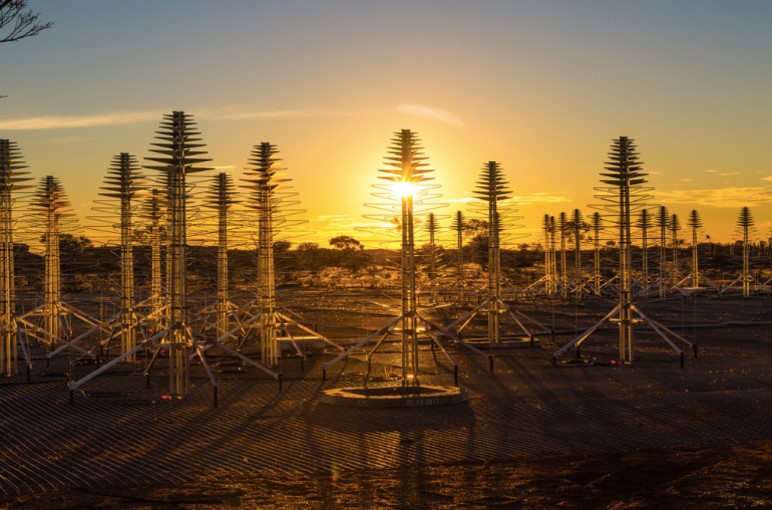
I’ve been meaning to post about for some time about the use of telescopes all around the world that reside in observatories on lands previously and/or presently occupied by indigenous peoples. The creation of these astronomical facilities has been accompanied by neglect (and sometimes violent displacement) of tribal communities native to the land on which they now stand. Though we exploit native lands for science, the astronomical community makes little reference to the people who are directly impacted by the advancement of astronomy through colonialism of this sort.

I know I’m not alone in thinking that, at the very least as a community we should do much more to acknowledge our use of astronomical facilities built on land that in many cases was basically “stolen” by colonial settlers. There was a talk about this issue at the recent Euclid Consortium Meeting in Copenhagen, and it came up at the National Astronomy Meeting in Cardiff in the context of the broad issue of the decolonization of astronomy.

Anyway, just for a start I have included here a small gallery of images of modern astronomical observatories of various kinds, with captions giving the names not of the observatory, but of the indigenous peoples upon whose land it is built:

There are many more than these, but hopefully you get the point. The question is: what to do about it?

Opening the National Astronomy Meeting

Posted in Cardiff, Politics, The Universe and Stuff with tags , , , on July 3, 2023 by telescoper

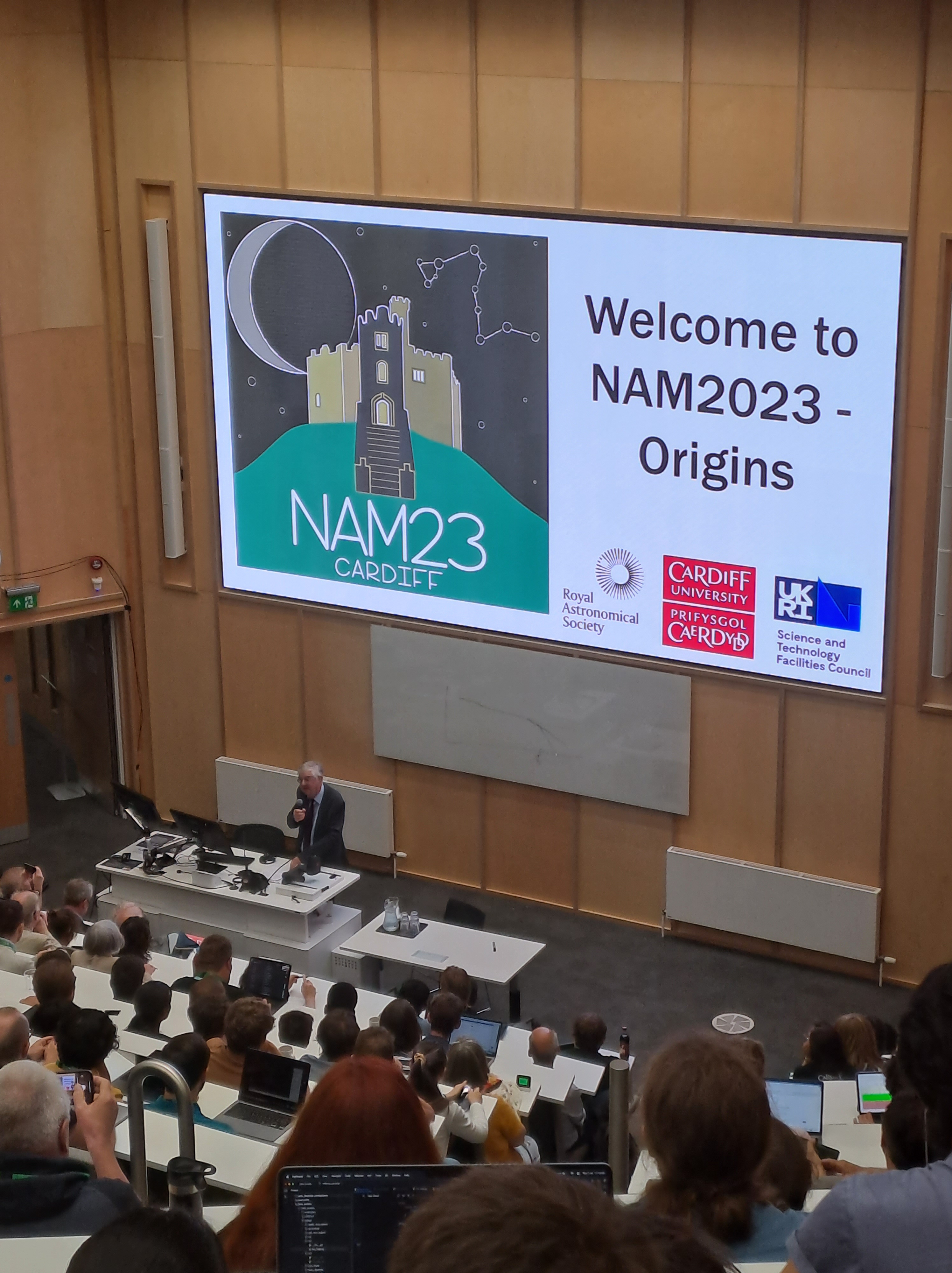
My first impressions of Cardiff after arriving yesterday is that a lot of things have changed. That sadly includes the fact that a number of my favourite places in the city centre have closed. On the other hand, some thing have improved. The Centre for Student Life, for example, is completely new since my days here and is a definite improvement on the previous dingy premises. It also just happens to be where the plenary sessions of the 2023 National Astronomy Meeting are being held:

The first plenary session of the week was opened by the First Minister of Wales, Mark Drakeford, who gave very a nice speech, in which he spoke very knowledgeably of the inspirational nature of astronomy as well as the history of the subject in Wales. It was a very impressive start to the week!

The Vice-chancellor of Cardiff University, Colin Riordan, was also there.

Machiavelli on Mercenaries

Posted in History, Literature, Politics with tags , , on June 24, 2023 by telescoper

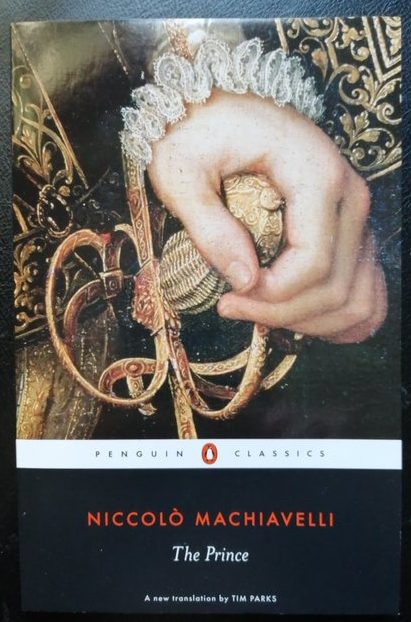
I thought I’d post this, from Il Principe (The Prince) by Niccolò Machiavelli for reasons of topicality. It’s from Chapter XII, entitled How Many Kinds of Soldiery There are, and Concerning Mercenaries:

Mercenaries and auxiliaries are useless and dangerous; and if one holds his state based on these arms, he will stand neither firm nor safe; for they are disunited, ambitious, and without discipline, unfaithful, valiant before friends, cowardly before enemies; they have neither the fear of God nor fidelity to men, and destruction is deferred only so long as the attack is; for in peace one is robbed by them, and in war by the enemy. The fact is, they have no other attraction or reason for keeping the field than a trifle of stipend, which is not sufficient to make them willing to die for you…

I wish to demonstrate further the infelicity of these arms. The mercenary captains are either capable men or they are not; if they are, you cannot trust them, because they always aspire to their own greatness, either by oppressing you, who are their master, or others contrary to your intentions; but if the captain is not skilful, you are ruined in the usual way.

Niccolò di Bernardo dei Machiavelli, The Prince (1513), Chapter XII

R.I.P. Glenda Jackson (1936-2023)

Posted in Film, Poetry, Politics, R.I.P. with tags , , , , on June 16, 2023 by telescoper

I’ve been writing far too many R.I.P. posts recently, but I had to say something to mark the passing of Glenda Jackson who has died at the age of 87. Glenda Jackson had an illustrious acting career during which she won many awards (including two Oscars) and then turned her hand to politics; she was a Labour Member of Parliament from 1992 to 2015.

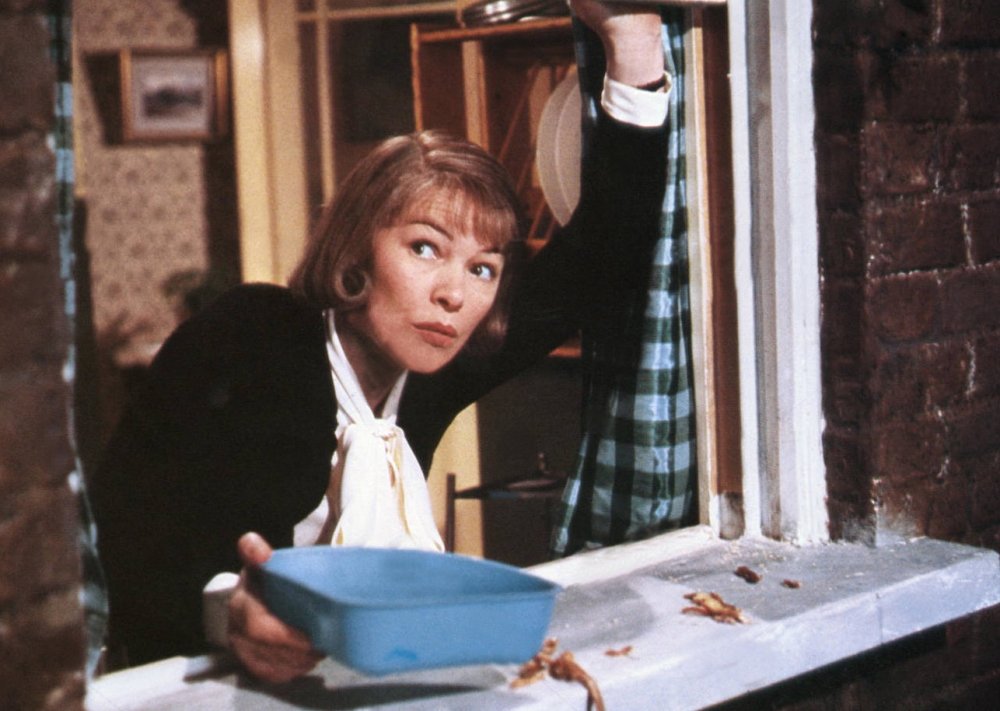
Glenda Jackson in Stevie (1978)

The role in which I remember Glenda Jackson best was in the film Stevie (1978) in which she played the poet Stevie Smith, whose poetry I have admired greatly for its dark yet whimsical tone since I was introduced to it while at school. The originality of her voice is the reason I’ve posted some of her poems on this blog from time to time.

Stevie Smith, who died in 1971, made a number of radio broadcasts and, without really trying to impersonate her, I think Glenda Jackson captured perfectly her quirky mixture of wit and melancholia. It was a marvelous performance in what I think is a neglected film masterpiece.

Rest in peace, Glenda Jackson (1936-2023)

A Day of Celebration (?)

Posted in Biographical, Politics with tags , on May 6, 2023 by telescoper

The latest version of Private Eye (the cover of which is shown above) arrived in the post yesterday. I thought I’d leave it until today to read it. Apparently there’s some sort of event happening in London which appears to be causing some disruption to traffic. I’m not watching RTÉ One, the main TV channel here in Ireland, but it seems to be showing a special four hour long episode of Coronation Street. I’m surprised there’s so much interest over here in what’s going on in Poundland.

I’m told that today’s events are a celebration of “British values”, which means locking up peaceful protestors who disagree with the Establishment. On the bright side, taunting the population with a conspicuous display of wealth in the middle of a cost-of-living crisis while the rivers fill with shit and the country crumbles all around will do wonders for those campaigning for a Republic.

I already live in a Republic, of course, and today I’ll be celebrating not the Coronation but the end of teaching term. I’ll be doing a bit of gardening, watching the URC quarter finals, cooking myself a self-indulgent dinner and of course doing the Private Eye crossword. Oh, and toasting the Tories’ resounding defeat in Thursday’s local elections

Tá mé sa bhaile – Biden’s Irish

Posted in Irish Language, Politics with tags , , , , , , on April 14, 2023 by telescoper

TRIGGER WARNING: CONTAINS PRONOUNS!

Yesterday, President of the United States of America, Joe Biden, addressed a joint sitting of the houses of Oireachtas in Dublin. Predictably he included an attempt at Irish in his speech to the obvious appreciation of those attending. I was a bit confused by the way what he said was reported in the Irish media, however, e.g.

My confusion was that I didn’t think he said tá mé seo abhaile as widely reported. For one thing, even I as a beginner could see that phrase means “I am this home”, which doesn’t make any sense (not to me, anyway). There are various possibilities for what Joe Biden did say. For what it’s worth I thought it was tá mé sa bhaile which, loosely, means “I am at home”. I note that the news media have generally changed their accounts (e.g. here) to reflect this, although other forms of words are possible. I’m not surprised that Biden struggled with the pronunciation – most of us beginners do, but I think the writers and editors of the newspapers above might at least have corrected his grammar.

The phrase illustrates a couple of interesting curiosities about the Irish language. Expressing the verb “to be” in Irish isn’t as straightforward as it is English. There are two grammatically distinct ways of doing this. The two Irish forms are , which is like the English verb “to be” and the so-called copula, is, which is sometimes called a defective verb. It’s admittedly a bit confusing that the copula looks like the third-person singular of the verb “to be” in English, but there you go.

Going back to, it is frequently referred to as tá (its present tense form as in the phrase above). It can be fully conjugated in all tenses and persons but it is highly irregular. Grammatically, is also just like any other verb, coming first in the sentence, followed by a subject (either a separate noun or pronoun or a suffix, depending on the tense and person, as shown in the conjugations), and then its predicate and any remaining adverbial information. Thus tá mé is “I am” with the pronoun . The accents (síneadh fada)  mean that this is pronounced taw-may.

The copula, however, is not fully conjugated for different subjects, which are always expressed by separate nouns or pronouns, and it only has two forms for different tenses: is can be used for present or future meaning, and ba (with lenition) is used for past or conditional meanings.

Among the specific situations in which the copular is must be used instead of but the main one is to be followed by a noun. You can’t say “I am a Professor” using – it has to be Is Ollamh – but to say “I am old” it is Tá mé sean.

One final remark. If you’re scared of pronouns please look away now. There are over 120 different pronouns in the Irish language. There’s a special version of the pronoun written mise which has two uses that I am aware of. One is when the copular is used for identification – so “I am Peter” is Is mise Peadar – and the other is for emphasis, when it is roughly equivalent to “myself” in English.

P.S. The Irish word for “pedantry” is pedantraí

In Praise of Drag Queens

Posted in Biographical, History, LGBTQ+, Politics with tags , , , on March 29, 2023 by telescoper
The late Paul O’Grady in Lily Savage persona

I was very sad to hear this morning of the death at the age of 67 of Paul O’Grady, who was best known (to me) in the form of Lily Savage, the best of the drag acts to be found in London when I lived there years ago. I remember seeing Lily Savage many times, including one memorable night at the old Drill Hall near Tottenham Court Road, which was a hilarious occasion enjoyed by everyone there (including a smattering of celebrities in the audience). The best bit of the best drag shows is always how the performer deals with hecklers. Paul O’Grady had a ready wit and a very acerbic tongue which made Lily Savage a must-see act. I wasn’t the only one to be surprised when Lily Savage got her own mainstream television show in the 90s, as much of her material was very “blue”, and I wondered how she would fare with the inevitable toning down of the material. The transition to Telly, however, turned out to be a great success.

Paul O’Grady “retired” Lily Savage some years ago, but still appeared on TV as himself to great popular acclaim. I never knew him personally but some old friends of mine from London got to know him very well, including going on holiday with Paul and his partner Andre (whom he married in 2017). They all said Paul was a lovely and friendly person and just as funny in private as he was on stage or on television. I send my condolences to his friends and family.

Drag has of course been around for centuries. Cross-dressing in the theatre, in film, and in opera, where it plays a central role in many plots especially in comedies. Who can forget the wonderful Alastair Sim in the St Trinian’s movies? More recently, Danny La Rue (who, incidentally, was born in Cork) was a regular performer on television in my youth and was for a time Britain’s highest paid entertainer.

But Paul O’Grady was a bit different. He successfully navigated a tricky journey to bring Lily Savage from the underground world of gay bars and clubs into the realm of popular culture at a time overshadowed by Section 28 and the AIDS crisis. Paul O’Grady was a powerful advocate for LGBTQ+ rights. His visibility and humour made the world a better place for many of us. His was a life well lived.

It is especially sad that Paul O’Grady’s death coincides with widespread and growing hostility to drag queens from far right bigots, who are intent on attacking anyone associated in any way with the LGBTQ+ community. The banning of drag shows – which has already happened in some States of the USA- is just part of this agenda; transphobia is another, as is the anti-migrant movement. It’s all about manufacturing hostility to distract attention away from the real problems of society. The list of targets is growing. Before long, any lifestyle perceived to be unconventional in any way will come under attack. The wave of bigotry sweeping across the world is intended to sweep diversity aside and leave in its wake a bleak landscape of dreary uniformity.

The career of Ireland’s own Rory O’Neill (aka Panti Bliss), who was a popular contestant on Dancing with the Stars, mirrors that of Paul O’Grady. I recently went to an event featuring Rory O’Neill. He had left Panti at home for the occasion but it was extremely interesting and enjoyable – and a bit sweary! – to hear him talk about his life and experiences, especially why he became an activist and how he started out as a drag performer. I have the same sort of admiration for Rory as I had for Paul. We need more like them.

I also have personal reasons for being grateful for drag queens. When I was a youngster (still at School) I occasionally visited a gay bar in Newcastle called the Courtyard. I was under age for drinking alcohol let alone anything else – the age of consent was 21 in those days – but I got a kick out of the attention I received and flirted outrageously with the much older clientele. I never took things further but never had to buy my own drinks, let’s put it that way.

Anyway, one evening I left the pub to get the bus home – the bus station was adjacent to the pub – but was immediately confronted by a young bloke who grabbed hold of me and asked if I was a “poof”. Before I could answer, a figure loomed up behind him and shouted “Leave him alone!”. My assailant let go of me and turned round to face my guardian angel, or rather guardian drag queen. No ordinary drag queen either. This one, at least in my memory, was enormous: about six foot six and built like a docker, but looking even taller because of the big hair and high heels. The yob laughed sneeringly, whereupon he received the immediate and very muscular response of a powerful right jab to the point of the chin, like something out of a boxing manual. His head snapped back and hit the glass wall of a bus shelter. Blood spurted from his mouth as he slumped to the ground.

I honestly thought he was dead, and so apparently did my rescuer who told me in no uncertain terms to get the hell away. Apart from everything else, the pub would have got into trouble if they’d known I had even been in there. Instead of waiting around in Marlborough Crescent, I ran to the next stop where I got a bus after a short wait.

When I got home I was frightened there would be something on the news about a violent death in the town centre, but that never happened. It turns out the “gentleman” concerned had bitten his tongue when the back of his head hit the bus shelter. It must have been painful, but not life-threatening. My sympathy remains limited. I stayed away from the pub after that.

I think there’s a moral to this story, but I’ll leave it up to you to decide what it is.

Academic Publishing as Exploitation

Posted in Open Access, Politics with tags , , , , on March 3, 2023 by telescoper

In yesterday’s post I asked the question whether anyone actually believes that it costs it costs £2310 to publish a scientific article online? I also posted the question on the Open Journal of Astrophysics Twitter account:

https://twitter.com/OJ_Astro/status/1631022314169987077?s=20

Only a few people responded to that question with a “yes”. Coincidentally all of them appear to be employed by the academic publishing industry. These people insist that the big publishers bring value to scientific papers. They don’t. Authors and referees do all the things that add value. What publishers do is take that value and turn it into its own profits. The fact that enormous profits are made out of this process in itself demonstrates that what the scientific community is being charged is nothing whatever to do with cost.

This reminds me of many discussions I had in my commie student days about surplus value, a concept explored in great detail by Karl Marx, in Das Kapital. According to the wikipedia page, the term “refers roughly to the new value created by workers that is in excess of their own labour-cost and which is therefore available to be appropriated by the capitalist, according to Marx; it allows then for profit and in so doing is the basis of capital accumulation.”

Engels is quoted there as follows:

Whence comes this surplus-value? It cannot come either from the buyer buying the commodities under their value, or from the seller selling them above their value. For in both cases the gains and the losses of each individual cancel each other, as each individual is in turn buyer and seller. Nor can it come from cheating, for though cheating can enrich one person at the expense of another, it cannot increase the total sum possessed by both, and therefore cannot augment the sum of the values in circulation. (…) This problem must be solved, and it must be solved in a purely economic way, excluding all cheating and the intervention of any force — the problem being: how is it possible constantly to sell dearer than one has bought, even on the hypothesis that equal values are always exchanged for equal values?

Marx’s solution of this economical conundrum was central to his theory of exploitation:

…living labour at an adequate level of productivity is able to create and conserve more value than it costs the employer to buy; which is exactly the economic reason why the employer buys it, i.e. to preserve and augment the value of the capital at his command. Thus, the surplus-labour is unpaid labour appropriated by employers in the form of work-time and outputs.

In the context of academic publishing, the workers are scientific researchers and the employers are the publishers. The workers not only produce the science in the first place, but also carry out virtually all of the actions that the employers claim add value. The latter are simply appropriating the labour of the former, which is exploitation. It needs to stop.


The Great British Tomato Mystery

Posted in Maynooth, Politics with tags , , , , on February 26, 2023 by telescoper

Q: What’s red and not there?

A: No tomatoes.

This week my social media timelines have been filled with pictures like this of British supermarket shelves bereft of salad vegetables, especially tomatoes. The UK Government has stated, through its mouthpiece the BBC, that this is due to unseasonably bad weather in Spain and Morocco, although I very much doubt this is the whole story.

There have been reports of similar shortages in Ireland but all I can do is report on my own experience. Because I live on my own in a small town with plenty of shops nearby I don’t do a big weekly trip to the supermarket but prefer to buy fresh things as and when I need them, usually on the way home from work. I therefore generally pop into Dunnes and/or Supervalu every day. On no occasion this week have I noticed any shortage of tomatoes or other salad ingredients in Maynooth, despite always going in the evening when you might expect the shelves to be depleted. I found plenty of nice tomatoes from both Spain and Morocco, though the ones I actually bought – of the cherry vine variety – are from Italy. People living elsewhere in Ireland may of course have experienced shortages, but I certainly haven’t.