Archive for the R.I.P. Category

R.I.P. Sverre Aarseth (1934-2024)

Posted in R.I.P., The Universe and Stuff with tags , , , on January 21, 2025 by telescoper
Picture Credit: Institute of Astronomy, Cambridge

I am very late passing this sad news on, but I only just heard of the death (on 28th December 2024, at the age of 90) of Sverre Aarseth, who spent almost all of his research career at the Institute of Astronomy in Cambridge. Sverre was a pioneer in the use of N-body numerical techniques for solving gravitational problems and whose work had enormous impact across many aspects of astrophysics and cosmology, not least because he made his codes available as “open source”. I suspect many of us have used an “Aarseth code” at some point in our careers! I only met him a few times, but he struck me as a friendly and self-effacing man. He was certainly never someone who tried to hog the limelight but he was held in a very high regard across the research community.

You can find fuller tributes here and here.

Rest in peace, Sverre Aarseth (20 July 1934 – 28 December 2024)

Jimmy Carter in Newcastle (1977)

Posted in Biographical, History, R.I.P., Television with tags , , , on December 30, 2024 by telescoper

The news of the death at the age of 100 of former US President Jimmy Carter reminded me of a day way back when I was still at school. It was Friday, May 6th, 1977 and I was at the Royal Grammar School, Newcastle upon Tyne. I remember that morning it was announced at Assembly that Carter would be visiting the city and giving a speech outside the Civic Centre, which was less than 10 minutes’ walk from the School. I think some senior boys were allowed to go an see him, but as a mere third-former I went to a class and the occasion largely passed me by.

One thing I do remember is a classmate after Assembly saying “Thank God he didn’t visit Sunderland instead…” – Carter visited Newcastle on his way to Washington (the ancestral home of George Washington), which is nearer to Sunderland than Newcastle. I suppose the reason was that Newcastle has an airport, whereas Sunderland hasn’t.

The other thing I remember was the TV coverage on Look North when I got home, which showed the start of President Carter’s speech with his famous “Howay the Lads!”

R.I.P. Jimmy Carter (1924-2024)

R.I.P. Roy Haynes (1925-2024)

Posted in Jazz, R.I.P. with tags , , , , , , , , , on November 13, 2024 by telescoper

I was very sad to hear of the death yesterday (12th November) at the age of 99 of legendary jazz drummer Roy Haynes, one of the last survivors of the bebop era of the 1940s. Roy Haynes had a career that was not only exceptionally long but also exceptionally prolific: just look at the discography on his Wikipedia page! If I can add a personal note, he features on the first ever Charlie Parker LP I bought when I was about 15 and which I still have. I bought it on impulse, not really knowing who Charlie Parker was, was this record that turned me onto his music and I’ve never turned off.

No information is provided on Youtube, but the sleeve note reveals that the track was recorded from a radio broadcast live from Birdland in New York City on March 31st 1951 using a primitive disc recording machine by an amateur recording buff called Boris Rose. The sound quality isn’t great, but he deserves much greater recognition for capturing this and so many other classic performances and preserving them for posterity.

The personnel consists of Charlie Parker (alto saxophone), Dizzy Gillespie (trumpet), Bud Powell (piano), Tommy Potter (bass) and Roy Haynes (drums).

Here’s what the sleevenote (written by Gary Giddens) says about this track:

“Anthropology is an “I Got Rhythm” variation which originally appeared, in a slightly different form, as “Thriving on a Riff” on Parker’s first session as leader. The tempo is insanely fast; the performance is stunning. Bird has plenty of ideas in his first chorus, but he builds the second and third around a succession of quotations: “Tenderly”, “High Society”, “Temptation.” Gillespie’s second chorus is especially fine – only Fats Navarro had comparable control among the trumpeters who worked with Bird. His blazing high notes tend to set his lyrical phrases in bold relief. Bud, the ultimate bop pianist (and much more), jumps in for two note-gobbling choruses: no quotes, though, it’s all Powell. The four bar exchanges that follow demonstrate Haynes’s precision.

It’s a very exciting track not least because of the contributions of Roy Haynes, not only in the chase sequence mentioned in that quote but throughout the track where he demonstrates tremendous energy and imagination as well as control at such a high tempo.

Rest in peace, Roy Haynes (1925-2024), one of the greatest of all jazz drummers.

R.I.P. Maggie Smith (1934-2024)

Posted in Film, R.I.P., Television with tags , , , , , , , , , on September 28, 2024 by telescoper

I heard yesterday of the death at the age of 89 of the great Maggie Smith. Tributes have been appearing around the world at the loss of such a great talent and wonderful personality. I can’t add anything to these except to say that I adored her.

I guess many people will be most familiar her through the work she did in later life, such as the Harry Potter franchise and Downtown Abbey but as an oldie I will always think of her as the eponymous Edinburgh schoolteacher in the 1969 film The Prime of Miss Jean Brodie, based on the Muriel Spark novel of the same name, for which she deservedly won an Oscar as Best Actress for her portrayal of Jean Brodie, an over-zealous teacher with a soft spot for Mussolini’s Fascisti. Here’s the original trailer.

I do hope this film gets shown again soon as a tribute, as it is really superb.

Maggie Smith as Lady Constance Trentham in Gosford Park (2001)

Other roles I particularly remember Maggie Smith for are in are California Suite (for which she also won an Oscar, as Best Supporting Actress). She was absolutely hilarious in Murder by Death, her perfect sense of comic timing generating numerous laugh-out-loud moments in that film.

Maggie Smith with David Niven in Murder by Death (1976)

Maggie Smith was also memorable as the splendidly rude Lady Constance in Gosford Park, a role you might think of as a sort of prelude to her part in Downton Abbey. There are countless other performances I could mention too, on TV, on Film and in the Theatre. She was tremendously versatile and talented, as well as extremely funny. She admitted having learnt a great deal about comedy from Kenneth Williams, with whom she was great friends for a long time.

Rest in peace, Maggie Smith. You’ll be missed so much.

R.I.P. Tsung-Dao Lee (1926-2024)

Posted in R.I.P., The Universe and Stuff with tags , , , on August 5, 2024 by telescoper

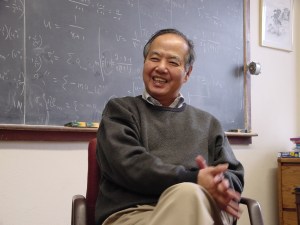
T.D.1.jpg_copyI’ve just heard the sad news of the death at the age of 97 of TD Lee (shown left) who, together with CN Yang, won the Nobel Prize for Physics in 1957 for his work on parity violation in particle physics. I always find it difficult on occasions like this to find ways of describing the work of people of such eminence in fields other than my own, but in this case it turns out I have a personal connection of a sort. Way back in 2006 when I was at Nottingham, the University decided to award Prof. Lee an honorary degree and I was chosen to deliver the oration at the graduation ceremony before spending some time chatting to him with some students. I remember that it was a very hot day and I was wilting under the graduation robes, but he took it all in his stride despite being 80 years old. Anyway, here is the text that I prepared for that occasion, which I hope will serve as a fitting obituary.


PROFESSOR TSUNG-DAO LEE

ORATION DELIVERED BY PROFESSOR PETER COLES

ON MONDAY 17 JULY 2006

Chancellor, Vice-Chancellor, Ladies and Gentlemen, it is both a pleasure and a privilege to present Professor Tsung-Dao Lee for the award of an honorary degree.  Professor Lee is a distinguished theoretical physicist whose work over many years has been characterized, in the words of Dr J Robert Oppenheimer, by “a remarkable freshness, versatility and style.”

Tsung-Dao Lee was born in Shanghai and educated at Suzhou University Middle School in Shanghai.  Fleeing the Japanese invasion, he left Shanghai in 1941.  His education was interrupted by war.  In 1945 he entered the National Southwest University in Kunming as a sophomore.  He was soon recognized as an outstanding young scientist and in 1946 was awarded a Chinese Government Scholarship enabling him to start a PhD in Physics under Professor Enrico Fermi at the University of Chicago.  He gained his doctorate in physics in 1950 with a thesis on the Hydrogen Content of White Dwarf Stars, and subsequently served as a research associate at the Yerkes Astronomical Observatory of the University of Chicago in Williams Bay, Wisconsin.

Astronomy is a science that concerns the very large, but it was in the physics of the very small that Professor Lee was to do his most famous work.  After one year as a research associate and lecturer at the University of California in Berkeley, he became a fellow of the Institute of Advanced Study in Princeton and, in 1953, he accepted an assistant professorship position at Columbia University in New York.  Two and a half years later, he became the youngest full professor in the history of Columbia University.  During this time he often collaborated with Chen Ning Yang whom he had known as a fellow student in Chicago.  In 1956 they co-authored a paper whose impact was both immediate and profound.  Only a year later, Lee and Yang were jointly awarded the Nobel Prize in Physics.  Professor Lee was thirty-one at the time and was the second youngest scientist ever to receive this distinction.  (The youngest was Sir Lawrence Bragg who shared the Physics Prize with his father in 1915, at the age of twenty-five; Werner Heisenberg was 31 when his Nobel Prize was announced, in 1932, but he did not receive the prize until the following year.)

It is usually difficult to explain the ideas of theoretical physics to non-experts.  The mathematical language is inaccessible to those without specialist training.  But some of the greatest achievements in this field are so bold and so original that they appear, at least with hindsight, to be astonishingly simple.  The work of Lee and Yang on parity violation in elementary particle interactions is an outstanding example.

Subatomic particles interact with each other in very complicated ways.  In high energy collisions, particles can be scattered, destroyed or transformed into other particles.  But governing these changes are universal rules involving things that never change.  The existence of these conservation laws is a manifestation of the symmetries possessed by the mathematical theory of particle interactions.

Lee and Yang focussed on a particular attribute called parity, which relates to the “handedness” of a particle and symmetry with respect to mirror reflections.  Physicists had previously assumed that the laws of nature do not distinguish between left- and right-handed states: a left-handed object when seen in a mirror should be indistinguishable from a right-handed one.  This symmetry suggests that parity should be conserved in particle interactions, as it is in many other physical processes.  Unfortunately this chain of thought led to a puzzling deadlock in our understanding of the so-called weak nuclear interaction.  Lee and Yang made the revolutionary suggestion that parity is not conserved in weak interactions and consequently that the laws of nature must have a built-in handedness.  A year later their theory was tested experimentally and found to be correct.  Their penetrating insight led to a radical overhaul of the theory of weak interactions and to many further discoveries.  Physicists around the world said “Of course!  Why didn’t I think of that?”

This classic “Eureka moment” happened half a century ago, but Professor Lee has since made a host of equally distinguished contributions to fields as diverse as astrophysics, statistical mechanics, field theory and turbulence.  He was made Enrico Fermi Professor at Columbia in 1964 and University Professor there in 1984.  With typical energy and enthusiasm he took up the post of director of the RIKEN Research Center at Brookhaven National Laboratories in 1998.  He has played a prominent role in the advancement of science in China, including roles as director of physics institutes in Beijing and Zhejiang.

Professor Lee has received numerous awards and honours from around the world, including the Albert Einstein Award in Science, the Bude Medal, the Galileo Galilei Medal, the Order of Merit, Grande Ufficiale of Italy, the Science for Peace Prize, the China National-International Cooperation Award, the New York City Science Award, the Pope Joannes Paulis Medal, Il Ministero dell’Interno Medal of the Government of Italy and the New York Academy of Sciences Award.  His recognition even extends beyond this world, for in 1997 Small Planet 3443 was named in his honour.

Chancellor, Vice-Chancellor, to you and to the whole congregation I present Professor Tsung-Dao Lee as eminently worthy to receive the degree of Doctor of Science, honoris causa.

R.I.P. Peter Thomas (1961-2024)

Posted in R.I.P. with tags , , , , , on July 25, 2024 by telescoper

Once again I have to use this blog to pass on some very sad news. Professor Peter Thomas of Sussex University passed away last weekend at the age of 62.

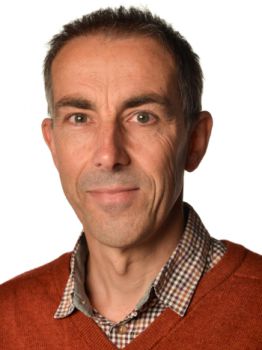
Peter Thomas (left) joined the University of Sussex as a lecturer in the Astronomy Centre in 1989 and remained there for his entire career. I know from my own time as Head of School that he was an excellent colleague. who made huge contributions to the University and indeed to his research discipline of cosmology.

Peter studied Mathematics at Cambridge University, graduating in 1983 and then did Part III (also known as the Certificate of Advanced Study) which he obtained in 1984. He stayed in Cambridge to do a PhD in the Institute of Astronomy under the supervision of Andy Fabian on Cooling Flows and Galaxy Formation, which he completed in 1987. He then spent a couple of years in Toronto as a Postdoctoral Fellow at the Canadian Institute for Theoretical Astrophysics (CITA) before taking up his lectureship at Sussex in 1989. His main research interests were in in the areas of galaxy formation, including numerical and semi-analytic models, and computer simulations of the formation of clusters of galaxies.  He was a widely known and very highly respected researcher in the field of theoretical cosmology and extragalactic astrophysics.

I was a PDRA in the Astronomy Centre at Sussex when Peter joined in 1989; he was Professor in the Department of Physics & Astronomy when I returned there as Head of School of Mathematical and Physical Sciences in 2013, a position he himself subsequently held. He was a much-valued member of staff who made huge contributions to the Astronomy Centre, the Department of Physics & Astronomy, the School of Mathematical and Physical Sciences, and the University of Sussex as a whole. I also remember him as a colleague on various panels for PPARC and then STFC on which he served diligently.

Having known Peter for 35 years, and being of similar age, it was a shock to hear that he passed away. I understand that he had been suffering from cancer for over a year. I send my deepest condolences to his family, friends and colleagues. I understand that his funeral will be a private family affair, but there will be a more public occasion to celebrate his life at a later date.

R.I.P. Dr Ruth Westheimer (1928-2024)

Posted in Biographical, LGBTQ+, R.I.P. with tags , , , , , on July 14, 2024 by telescoper

I was very sad to learn yesterday of the death at the age of 96 of celebrity sex therapist Dr Ruth Westheimer, known universally as “Dr Ruth”. I remember her well from TV appearances back in the 1980s during the AIDS crisis when she was a staunch ally of the gay community. Her frank and non-judgmental approach to sex education – especially with regard to safer sex practices – probably saved many lives during that crisis. The fact that she looked like an archetypal little old lady made her use of explicit language rather shocking in a way but also extremely effective. I thought she was wonderful.

I actually had the privilege of meeting Dr Ruth. In fact, I had breakfast with her in a hotel in Reykjavik. We were both participants in a show called the Experiment Marathon which happened in 2008, before I started blogging. I still have the book of the event. Here is the list of participants, along with a picture of Dr Ruth during her contribution:

Anyway, all the participants were staying in the same hotel for this event and on the morning of my talk I came down for breakfast to find the dining room rather crowded. There was a space, however, at Dr Ruth’s table. I recognized her immediately and was a bit nervous but eventually asked if I could join her. She was absolutely charming, very friendly, extremely talkative and delightfully funny. When I was able to get a word in, I told her how much admired her work during the AIDS crisis. She was also extremely tiny, well under five foot tall.

Dr Ruth was born to an Orthodox Jewish family in Germany in 1928. When the Nazis came to power she was moved to Switzerland while her parents remained in Germany. Her father was murdered in Auschwitz; her mother also died during the Holocaust though nobody knows the details. She often said that her attitude during the AIDS crisis was informed by her knowledge that the Nazis murdered gay people too so she felt it was important to her show solidarity.

R.I.P. Ruth Westheimer (1928-2024)

R.I.P. Jasper Wall

Posted in R.I.P., The Universe and Stuff with tags , , , , on June 1, 2024 by telescoper

I have been asked to use the medium of this blog to pass on the sad news of the passing of Jasper Wall (left) who died on 28th March at White Rock, British Columbia, Canada.

Jasper Wall (who was Canadian by birth) began his career in Radio Astronomy in Toronto with Alan Yen. This included building a 320-MHz receiver, and carrying out absolute background measurements using a pyramidal horn. He subsequently chose Australia to continue his research, working on a receiver for Parkes Radio Telescope at CSIRO where he and John Bolton began a sky survey at hitherto unprecedented high frequency of 2.7 GHz. Wall’s survey discovered the extensive ‘flat-spectrum’ quasar population, the key to the relativistic beaming model of radio sources. His research at Parkes lasted over eight years and the statistical results of this work strongly favoured a “Big Bang” universe rather than the “Steady State” preferred by John Bolton, Fred Hoyle and Tommy Gold.

Wall was also part of the team which in 1969 brought the Apollo 11 moon landing via the Parkes Radio Telescope to an estimated 650 million TV viewers world wide. In 1974-1978 he was a member of Martin Ryle’s group at the MRAO Cambridge UK, continuing his research in active galaxy systems at both radio and optical wavelengths, plus submm and X-ray observations. He taught statistics to astronomy students at Cambridge, leading to his 2003 book with co-author Charles Jenkins, Practical Statistics for Astronomers.

Later on in his career, he became more involved in science administration. Joining the Royal Greenwich Observatory in 1979 as Head of Astrophysics and Astrometry Division, he continued research in optical and radio astronomy. In 1986 he became Director of the Isaac Newton Group of Telescopes on La Palma for four years, and then Director of the Royal Greenwich Observatory from 1995 until its closure in 1998. He was a Professor at Oxford University from 1998 to 2002, after which he retired, returned to Canada and took up an emeritus position at the University of British Columbia, where he continued to teach and supervise students.

R.I.P. Jim Simons (1938-2024)

Posted in R.I.P., The Universe and Stuff with tags , , , , , on May 13, 2024 by telescoper

I heard yesterday of the death, at the age of 86, of Jim Simons. Jim Simons started out as an academic in the fields of mathematics and mathematical physics. Together with Shiing-Shen Chern he developed the Chern–Simons form, which has been of interest recently in the context of cosmology because of the potential for parity violation, and also contributed to the development of a theoretical framework to combine geometry and topology with quantum field theory. He then moved to into the world of hedge funds, and became a highly successful investor on Wall Street, amassing a huge personal fortune. In later life he turned back to his first loves, however, and set up the Simons Foundation which supports, among many other things, the Simons Observatory and the Flatiron Institute both of which have had, and will no doubt continue to have, an enormous impact in the fields of cosmology and astrophysics. The Simons Foundation has also made large donations to the arXiv.

R.I.P. Jim Simons (1938-2024)

R.I.P. Derek Underwood (1945-2024)

Posted in Cricket, R.I.P. with tags , , , , on April 16, 2024 by telescoper

Another sporting hero of my youth has passed away. Derek Underwood – “Deadly” was his nickname – was a bowler like no other. Officially a left-arm orthodox spinner, with a rather flat-footed run-up, and a characteristic twist of his body as he delivered the ball at a brisk medium pace with infallible accuracy, he was not only a prolific taker of wickets but also an extremely difficult bowler to score off. He played for Kent for 24 seasons, his entire First Class career, during which he took 2,465 wickets at a remarkable average of 20.28. Underwood was a regular in the England Test side from 1966 onwards, barring an interruption when he joined Kerry Packer’s cricket circus in the 70s, and played his last Test match in 1982.

Tributes to Derek Underwood have understandably focused on his bowling, but it should be mentioned that, although of limited ability with the bat, he was a capable and stubborn night-watchman who didn’t give his wicket away easily. I remember seeing him bat in that role with great courage (and without a helmet) against Lillee and Thomson, getting struck on the body several times in the process.

When I was a kid I used to get completely absorbed watching him bowl, even on good wickets, and he never seemed to bowl badly and you could see batters getting visibly impatient at his refusal to bowl them a ball they could hit. Here is a little tribute video produced by Kent Cricket Club, with action mostly from the 1960s: you can see what a handful he was when he could use his pace to extract extra bounce from the pitch.

Rest in Peace Derek Underwood (1945-2024)