Archive for the Television Category

Midnight Mass

Posted in Maynooth, Television with tags , , , on December 24, 2024 by telescoper

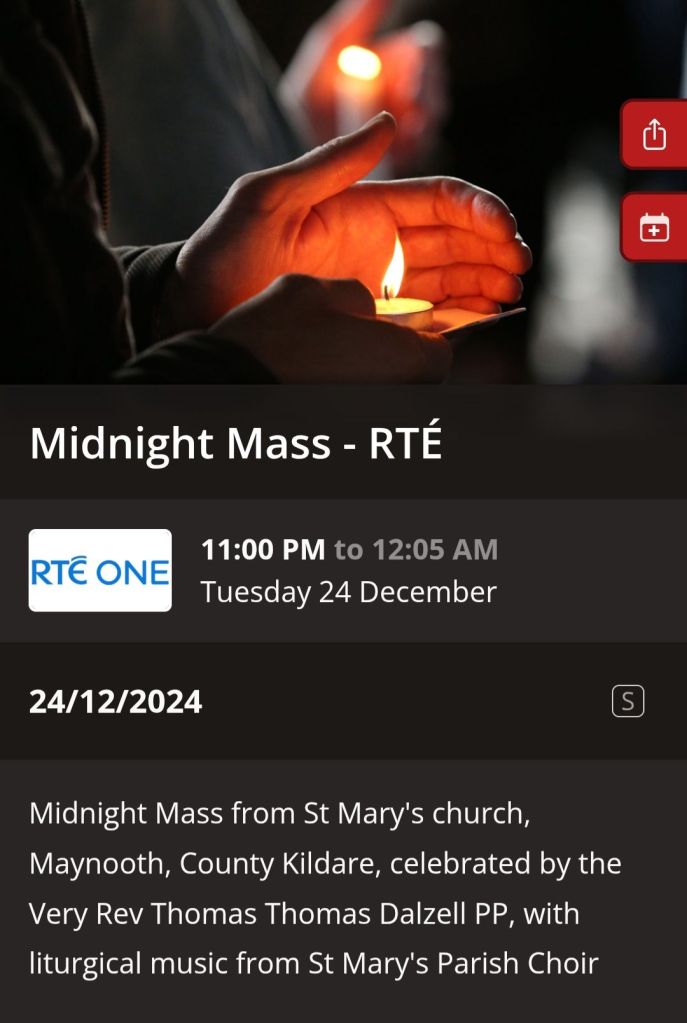
I noticed on tonight’s TV schedule that there’s a live broadcast on RTÉ One of Midnight Mass from St Mary’s Church, Maynooth.

Unfortunately, it clashes with another Christmas tradition, Die Hard, on TG4.

That TV Sexual Misconduct Scandal…

Posted in Television with tags , , on December 4, 2024 by telescoper
He’s a bit “handsy”…

I don’t watch TV that much, but I have heard about the shocking allegations of inappropriate sexual behaviour by Bunsen Honeydew, Z-list celebrity and presenter of Muppet Master Chef. Now that his career is rightfully over, he’ll no doubt end up like similarly disgraced muppets – as a presenter on GB News.

Gregg Wallace is 60.

Penny Dreadful

Posted in Literature, Television with tags , , , , , , , , on October 1, 2024 by telescoper

The other day I was in the local library and walked past the DVD collection on the way to checking out a couple of books. I noticed the boxed set of the first series of Penny Dreadful which was first broadcast in 2014. Ten years is quite a short time for me to catch up with things so I decided to borrow it. I’m glad I did because I thought it was excellent.

It’s hard to describe what Penny Dreadful is about without making it seem absurd, but it’s a horror drama based in Victorian London that features many characters from fiction of that period, including Mary Shelley’s Frankenstein, Oscar Wilde’s Dorian Gray, and numerous others from Bram Stoker’s Dracula including Professor van Helsing and Mina Harker. There are some originals too: Ethan Chandler, a rodeo performer, and the enigmatic Vanessa Ives. These characters join forces with Malcolm Murray who is attempting to find his daughter Mina (the name of the principal female character in Dracula). Mina is the MacGuffin but the quest to find her is mostly sidelined by other plots.

The title of course refers to the “Penny Dreadful“, a form of cheap fiction that was very popular in Victorian London and which often included a supernatural element, as well as lots of gory violence, as does the TV series. Oscar Wilde’s A Picture of Dorian Gray wasn’t a penny dreadful (nor were Frankenstein and Dracula for that matter) but the mix of characters, both mundane and supernatural, is a very ingenious concoction. It was fun trying to spot the literary references and quotations.

It’s also a bit raunchy in places, although when Dorian Gray was about to get it on with hunky cowboy Ethan Chandler, it cut immediately to the closing credits so, disappointingly, we didn’t see any actual rumpy pumpy.

Anyway, it’s a superb cast including Timothy Dalton as Malcolm Murray, Rory Kinnear as The Creature (from the Frankenstein story), and Eva Green as Vanessa Ives. A young Olly Alexander plays the vampire’s familiar Fenton. It’s beautifully photographed, and the sets are a visual feast for lovers of Victoriana. There are one or two anachronisms in the language and setting, but you have to cut a story like this a bit of slack. For example, the Grand Guignol, which supplies a subplot, was really a Parisian phenomenon.

I’ve seen some criticisms of the plotting, as the episodes don’t really resolve: the next one often starts a new thread rather than tying up the existing loose ends. I didn’t actually mind that at all. It seemed to me that this gives it a dreamlike or rather nightmarish quality.

Anyway, I enjoyed this series a lot and I’ll definitely look out for the other two series, as they may well offer excellent binge viewing during the dark autumn months.
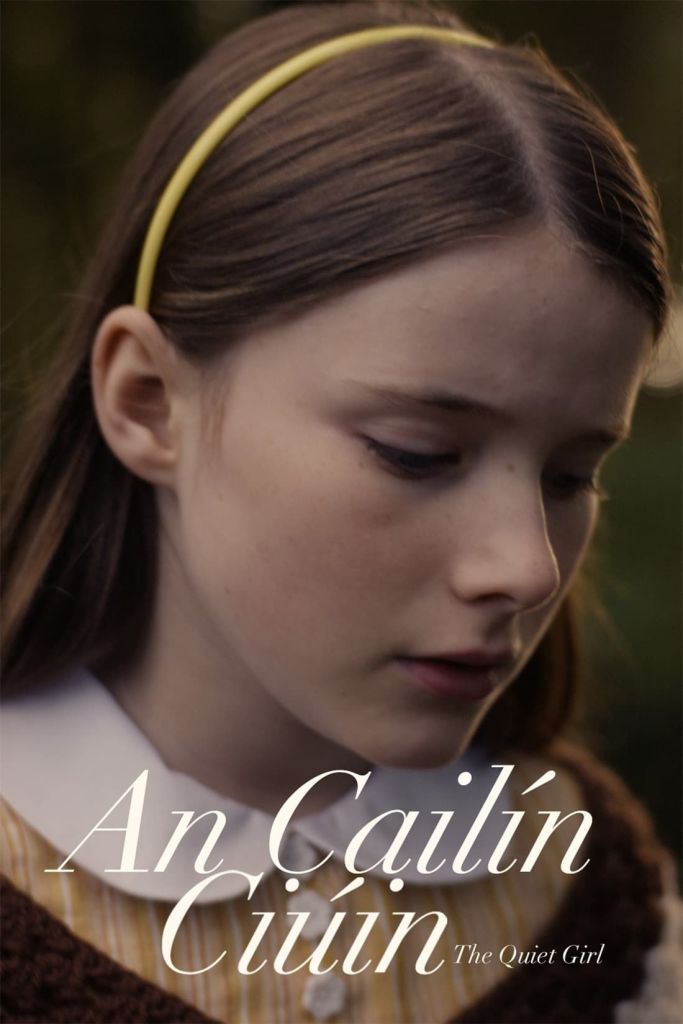
R.I.P. Maggie Smith (1934-2024)

Posted in Film, R.I.P., Television with tags , , , , , , , , , on September 28, 2024 by telescoper

I heard yesterday of the death at the age of 89 of the great Maggie Smith. Tributes have been appearing around the world at the loss of such a great talent and wonderful personality. I can’t add anything to these except to say that I adored her.

I guess many people will be most familiar her through the work she did in later life, such as the Harry Potter franchise and Downtown Abbey but as an oldie I will always think of her as the eponymous Edinburgh schoolteacher in the 1969 film The Prime of Miss Jean Brodie, based on the Muriel Spark novel of the same name, for which she deservedly won an Oscar as Best Actress for her portrayal of Jean Brodie, an over-zealous teacher with a soft spot for Mussolini’s Fascisti. Here’s the original trailer.

I do hope this film gets shown again soon as a tribute, as it is really superb.

Maggie Smith as Lady Constance Trentham in Gosford Park (2001)

Other roles I particularly remember Maggie Smith for are in are California Suite (for which she also won an Oscar, as Best Supporting Actress). She was absolutely hilarious in Murder by Death, her perfect sense of comic timing generating numerous laugh-out-loud moments in that film.

Maggie Smith with David Niven in Murder by Death (1976)

Maggie Smith was also memorable as the splendidly rude Lady Constance in Gosford Park, a role you might think of as a sort of prelude to her part in Downton Abbey. There are countless other performances I could mention too, on TV, on Film and in the Theatre. She was tremendously versatile and talented, as well as extremely funny. She admitted having learnt a great deal about comedy from Kenneth Williams, with whom she was great friends for a long time.

Rest in peace, Maggie Smith. You’ll be missed so much.

Barabbas was a Publisher

Posted in Literature, Television with tags , , , on August 17, 2024 by telescoper

I couldn’t resist sharing the following, which I found here.

One day Lord Byron gave his publisher, John Murray, a handsomely bound Bible, its cover graced with a flattering inscription. Murray proudly displayed the book on a table where it would be seen by his many guests.

One day a visitor, admiring the book, noticed that at John 18:40, in the line ‘Now Barabbas was a robber,’ Byron had crossed out the word ‘robber’ and substituted… ‘publisher’.

You can probably figure out why I found it amusing!

The post from which I got the quote cites anecdotage.com as the source, but other websites dispute the attribution to Bryon. The Oxford Book of Essential Quotations, for example, gives:

Now Barabbas was a publisher.

also attributed, wrongly, to Byron

Thomas Campbell 1777–1844 Scottish poet: attributed, in Samuel Smiles A Publisher and his Friends: Memoir and Correspondence of the late John Murray (1891) vol. 1, ch. 14; see Bible

This goes to show two things: one is that not everything you find on the internet is true; the other is that very often the things that aren’t true really should be.

P.S. Fans of the classic TV series Tinker Tailor Soldier Spy will no doubt remember in Episode 1 that George Smiley uses the variation “Barabbas was a bookseller” when he is making a purchase in an antiquarian bookshop before he notices that he is being followed by Peter Guillam…

Murder before Evensong by The Reverend Richard Coles

Posted in Literature, Television with tags , , , , , , , , on July 19, 2024 by telescoper

The Reverend Richard Coles (no relation), former Communard, ordained priest, broadcaster and TV celebrity recently turned his hand to writing murder mysteries. I bought his first crime novel, Murder Before Evensong, featuring Canon Daniel Clement, a couple of years ago but only got around to reading it recently. It caught my eye for two reasons, one that I am quite partial to whodunnits, and the other that I read and enjoyed the first volume of the author’s autobiography, Fathomless Riches, which showed him to be a very good writer.

As you might have guessed, Murder Before Evensong, is a kind of homage to the old-school Agatha Christie village murder typical of the Miss Marple stories. Murder at the Vicarage came immediately to mind when I first saw the book, but the story is not set so far in the past – more eighties than thirties. Richard Coles is also far wittier than Agatha Christie, with a definite touch of PG Wodehouse in his style. When I got into the book it reminded me very much of the original Midsomer Murders novels written by Caroline Graham, which I think are excellent; with somewhat whimsical plots, and populated with somewhat eccentric characters; the long-running TV series has long since run out of ideas, and is now tired and formulaic, but the books on which it is based are very good indeed. Like the original Inspector Barnaby stories, Murder Before Evensong is very funny in places, but less of a parody and more of an affectionate tribute to the genre. Coles also writes movingly about grief, and its effect on a close-knit rural community, no doubt informed by his own personal life and experiences as a parish priest. Canon Clement obviously has a lot of Richard Coles in him, including a love of dachsunds.

It’s difficult to review a murder mystery without giving a way the plot, so I’ll just say that it is well constructed. I narrowed the list of possibilities down to two very early on, and was proven right, but I didn’t really get the motive right.

Anyway, it’s an enjoyable read and recommended for enthusiasts. I gather that more Canon Clement stories are on the way. That reminds me of a line in an episode of Midsomer Murders, when Barnaby is joined by a new Detective Sergeant, just up from London, who is immediately plunged into the investigation of a killing spree. He turns to his Chief Inspector and says words to the effect of ‘For a small village there are a lot of murders around here’ to which Barnaby raises an eyebrow and says ‘Yes, that has been remarked upon…’

Gold or Green?

Posted in Open Access, Television with tags , , , on November 2, 2023 by telescoper

During my talk yesterday I mentioned the difference between “Green” and “Gold” forms of Open Access, which always makes me think of a scene from Blackadder II. I mentioned this in the talk and it seems not everyone in the audience was aware of the cultural reference, so here is the clip in question. It doesn’t have anything to do with Open Access, of course, but I think it is very funny.

R.I.P. Michael Parkinson (1935-2023)

Posted in Jazz, R.I.P., Television with tags , , , on August 17, 2023 by telescoper

More sad news today. Chat show host and journalist Michael Parkinson has passed away at the age of 88. I watched his show very frequently on Saturday nights during its first run (from 1971 and 1982) and remember many great interviews he did, especially with wonderful raconteurs such as Peter Ustinov and Kenneth Williams.

I can’t add much to the extensive obituaries you can find in the regular media except to say that Parky was a big fan of jazz, as am I, and he often got jazz musicians on his show. One example I remember vividly watching 50 years ago (!) in 1973 was Duke Ellington. I remember the interview very well, but what I remember even better was the impromptu postscript. As they were wrapping up the recording, Ellington said he wanted to play a number with the resident band (led by Harry Stoneham on the organ), who I’m sure were absolutely thrilled at the prospect. What followed was this version of Ellington’s own tune Satin Doll. Parky’s show had its own signature tune, but I don’t think he’d mind being played out with this…

R.I.P. Michael Parkinson (1935-2023)

Eurovision Scores and Ranks

Posted in Bad Statistics, Television with tags on May 14, 2023 by telescoper

After last night’s Eurovision 2023 extravaganza I thought I’d work off my hangover by summarizing the voting. The vote is split into 50% jury votes and 50% televotes from audiences sitting at home, drunk. It’s perhaps worth mentioning that the juries do their scores based on the dress rehearsals on Friday so they are not based on the performances the viewers see.

Each country/jury has 58 points to award, shared among 10 countries: 1-8, 10 and 12 for the top score. Countries that didn’t make it to the final (e.g. Ireland) also get to vote. For the televotes only there is also a “rest-of-the-world” vote for non-Eurovision countries.

This system can deliver very harsh results because only 10 songs can get points from a given source. It’s possible to be judged the 11th best across the board and score nil!

Here are the final scores in a table:

RankCountryOverallTelevotesJuryDiffRank Diff
1Sweden 583243340+97+1
2Finland526376150-226-1
3Israel362185177-8+3
4Italy350174176+2+3
5Norway26821652-168-14
6 Ukraine24318954-145-11
7Belgium18255127+72+5
8. Estonia16822146+124+14
9.Australia15121130+109+14
10. Czechia1293594+59+7
11.Lithuania1274681+35+4
12.Cyprus1265868+10-2
13.Croatia12311211-101-18
14. Armenia1225369+16+1
15.Austria12016104+88+13
16.France1045054+4-2
17. Spain100595+90+17
18.Moldova967620-56-11
19. Poland938112-69-16
20.Switzerland923161+30+4
21.Slovenia784533-12-3
22.Albania765917-42-11
23.Portugal591643+27+4
24.Serbia301614+20
25.United Kingdom24922+130
26. Germany18153-12-2
Final Scores by country in Eurovision 2023 showing the breakdown into televotes and jury votes, together with the difference in numerical scores awarded and difference in ranking based on jury votes rather than televotes, e.g. Albania scored 42 fewer points on the jury votes and would have been 11 places higher based just on televotes than just on jury votes.

Going into the last allocation of televotes, Finland were in in the lead thanks to their own huge televote, but Sweden managed to win despite a lower televote allocation because of their huge score on the jury votes. Had the scores been based on the jury votes alone, Sweden would have won by a mile, and if only on the televotes Finland would have won. Anyway, rules is rules…

There are some interestingly odd features in the above dataset. For example, Switzerland ranked 20th overall, but were ranked 18th and 14th by televotes and jury votes respectively. There are also cases in which a higher score in one set of votes leads to a lower rank, and vice-versa. Croatia were hammered by the jury votes, ranking 25th out of 26 on that basis but would have been 7th based on televotes alone; hence their -18 in the last column. A similar fate befell Norway. By contrast, Spain were last (26th) on the televotes but placed 9th in the pecking order by the juries; they ended up in 17th place.

Anyway, you can see that there are considerable differences between the scores and ranks based on the public vote and the jury votes. I have therefore deployed my vast knowledge of statistics to calculate the Spearman Rank Correlation Coefficient between the ranks based on televotes only and based on jury votes only. The result is 0.26. Using my trusty statistical tables, noting that n=26, and wearing a frequentist hat for simplicity, I find that there is no significant evidence for correlation between the two sets of ranks. I can’t say I’m surprised.

The apparent randomness of the scoring process introduces a considerable amount of churn into the system, as demonstrated by Mel Giedroyc in this, the iconic image of last night’s events.

At least I think that’s what she’s doing…

Anyway, for the record, I should say that my favourite three songs were Albania (22nd), Portugal (23rd) and Austria (15th). Maybe one day I’ll pick a song that makes it onto the left-hand half of the screen!

P.S. Eurovision 2024 will be in Sweden, which is nice because it will be the 50th anniversary of ABBA winning with Waterloo. I’ll never tire of boring people with the fact that a mere 15 years after ABBA won, I walked across the very same stage at the Brighton Centre to collect my doctorate from Sussex University…

The Last Endeavour

Posted in Crosswords, Television with tags , , , , , , , on April 3, 2023 by telescoper
Shaun Evans (Morse) and Roger Allam (Thursday) in Endeavour

Although it was broadcast on ITV in the UK on March 12th this year, the very last episode (Exeunt) of the detective series Endeavour wasn’t broadcast on Irish TV until last night, Sunday 2nd April. This series was the prequel to the series Inspector Morse the last episode of which aired in 2000; the first of that series was broadcast in 1987. Endeavour, in case you don’t know is Inspector Morse’s first name, something he usually kept quiet about. The sequel series, Lewis ended in 2015 (after 9 series), so on Sunday the entire Morse franchise, originally based on the novels by Colin Dexter, drew to a close. I imagined it would be like saying goodbye to an old friend.

When Endeavour first started (in 2012) I was very skeptical that it would work. It was asking a lot of Shaun Evans to play the younger Inspector Morse (who was marvelously played in the original series by John Thaw). In any case I thought it might turn out to be a cheap attempt to cash in on the Morse theme. I was however pleasantly surprised at how good the early episodes were, and became a regular viewer.

I won’t go through the entire back story created for Morse in Endeavour but the Pilot was set in 1965 and introduced the character of Detective Inspector Fred Thursday who was the young Endeavour’s mentor when he joined the Oxfordshire Police as a Detective Constable. One of the mysteries created by this new character is why Morse never mentioned him in any of the 33 episodes of Inspector Morse. This conundrum was resolved, partly at least, in the final episode.

So what did I make of the final episode? I’m sorry to say that it was a bit of a mess and I was disappointed. The script seemed to be trying to resolve as many loose ends left by the previous programmes as possible, and the way this was done was at times highly implausible. For example, Morse is rescued from being double-crossed by a corrupt policeman Arthur Lott at Blenheim Vale by a gang of bikers intent on revenge for a drugs-related killing who beat Lott to death. But would they really have left another policeman and potential witness (Morse) go free, especially as Morse also happened to have on him a big bagful of cash?

There were some nice touches though, especially in the tie-ups with later Morse. At one point reference is made to Morse’s possible transfer to Cowley under DCI Macnutt (the real name of the great crossword setter Ximenes, precursor to Azed; Colin Dexter was a huge crossword fan). We know that’s what Morse must have done because Macnutt appears in an episode of Inspector Morse called Masonic Mysteries. Macnutt has retired from the police force and joined the clergy, but Morse consults him about old cases as he has worked with him in the past.

There’s also a brief mention of a character we don’t meet called Robert Lewis…

But the scene in Exeunt that has caused most comment is very near the end. Inspector Thursday (who has to leave Oxford in a hurry) has given his old army service revolver to Morse. We see Morse sitting in a churchyard, alone. He takes a single round and places it in the cylinder of the revolver, spins it like he is about to play Russian Roulette, and snaps the gun shut. The camera cuts to a long short of the church. We hear a gunshot, and birds flutter into the air. It seems Morse has pulled the trigger. But we know he can’t die because there are 33 episodes to come! Sure enough we see him a few minutes later, alive and well, going to choir practice. So what’s going on?

For what it’s worth, I think the interpretation of this can be found in another scene that happens a bit earlier. Morse, fresh from the escapade at Blenheim Vale arrives late at the marriage of Joan Thursday (the Inspector’s daughter) to Detective Sergeant Jim Strange. We know Morse has had the hots for Joan for all nine series, but has never done anything about it. When he arrives at the wedding reception he tells Joan that he loves her, that he’s loved her for years, but now it’s too late as she is married. She replies that it’s not too late and they kiss passionately in front of all the wedding guests…

…but no. The scene rewinds and this time Morse greets Joan by calling her Mrs Thursday. There’s no kissing, just a hug. Morse remains a bachelor until his dying day.

What the script has done at this point at the wedding is to give us a glimpse of an alternative history that reveals what’s going on in Morse’s mind. I think it prepares us for what comes later with the churchyard and the revolver. That is the same idea. Morse is depressed that he’ll never have Joan, and that all his colleagues are moving away or retiring. He thinks of suicide and the gunshot represents that thought. It’s another alternative history. The whole story could have ended there. But in reality, he doesn’t kill himself. Perhaps he pulls the trigger, but the chamber is empty. Or perhaps he just changes his mind.

I wish the final episode had been better, and it has to be said that some others of the 33 episodes weren’t great either, but there were some cracking episodes too and Endeavour has overall been very good indeed, especially the acting of Shaun Evans and Roger Allam (Thursday) and Anton Lesser (DCS Bright), whose voice is heard at the end reading from The Tempest:

Our revels now are ended. These our actors,
As I foretold you, were all spirits and
Are melted into air, into thin air:
And, like the baseless fabric of this vision,
The cloud-capp'd towers, the gorgeous palaces,
The solemn temples, the great globe itself,
Yea, all which it inherit, shall dissolve
And, like this insubstantial pageant faded,
Leave not a rack behind. We are such stuff
As dreams are made on, and our little life
Is rounded with a sleep.

P.S. All 36 episodes of Endeavour were written by the same man, Russell Lewis.