Archive for the Uncategorized Category

Poisson (d’Avril) Point Processes

Posted in Uncategorized with tags , , , on April 2, 2019 by telescoper

I was very unimpressed by yesterday’s batch of April Fool jokes. Some of them were just too obvious:

I’m glad I didn’t try to do one.

Anyway, I noticed that an old post of mine was getting some traffic and when I investigated I found that some of the links to pictures were dead. So I’ve decided to refresh it and post again.

–0–

I’ve got a thing about randomness. For a start I don’t like the word, because it covers such a multitude of sins. People talk about there being randomness in nature when what they really mean is that they don’t know how to predict outcomes perfectly. That’s not quite the same thing as things being inherently unpredictable; statements about the nature of reality are ontological, whereas I think randomness is only a useful concept in an epistemological sense. It describes our lack of knowledge: just because we don’t know how to predict doesn’t mean that it can’t be predicted.

Nevertheless there are useful mathematical definitions of randomness and it is also (somtimes) useful to make mathematical models that display random behaviour in a well-defined sense, especially in situations where one has to take into account the effects of noise.

I thought it would be fun to illustrate one such model. In a point process, the random element is a “dot” that occurs at some location in time or space. Such processes occur in wide range of contexts: arrivals of buses at a bus stop, photons in a detector, darts on a dartboard, and so on.

Let us suppose that we think of such a process happening in time, although what follows can straightforwardly be generalised to things happening over an area (such a dartboard) or within some higher-dimensional region. It is also possible to invest the points with some other attributes; processes like this are sometimes called marked point processes, but I won’t discuss them here.

The “most” random way of constructing a simple point process is to assume that each event happens independently of every other event, and that there is a constant probability per unit time of an event happening. This type of process is called a Poisson process, after the French mathematician Siméon-Denis Poisson, who was born in 1781. He was one of the most creative and original physicists of all time: besides fundamental work on electrostatics and the theory of magnetism for which he is famous, he also built greatly upon Laplace’s work in probability theory. His principal result was to derive a formula giving the number of random events if the probability of each one is very low. The Poisson distribution, as it is now known and which I will come to shortly, is related to this original calculation; it was subsequently shown that this distribution amounts to a limiting of the binomial distribution. Just to add to the connections between probability theory and astronomy, it is worth mentioning that in 1833 Poisson wrote an important paper on the motion of the Moon.

In a finite interval of duration T the mean (or expected) number of events for a Poisson process will obviously just be proportional to the product of the rate per unit time and T itself; call this product λ.

The full distribution is then of the form:

This gives the probability that a finite interval contains exactly x events. It can be neatly derived from the binomial distribution by dividing the interval into a very large number of very tiny pieces, each one of which becomes a Bernoulli trial. The probability of success (i.e. of an event occurring) in each trial is extremely small, but the number of trials becomes extremely large in such a way that the mean number of successes is l. In this limit the binomial distribution takes the form of the above expression. The variance of this distribution is interesting: it is alsol.  This means that the typical fluctuations within the interval are of order the square root of l on a mean level of l, so the fractional variation is of the famous “one over root n” form that is a useful estimate of the expected variation in point processes.  Indeed, it’s a useful rule-of-thumb for estimating likely fluctuation levels in a host of statistical situations.

If football were a Poisson process with a mean number of goals per game of, say, 2 then would expect must games to have 2 plus or minus 1.4 (the square root of 2)  goals, i.e. between about 0.6 and 3.4. That is actually not far from what is observed and the distribution of goals per game in football matches is actually quite close to a Poisson distribution.

This idea can be straightforwardly extended to higher dimensional processes. If points are scattered over an area with a constant probability per unit area then the mean number in a finite area will also be some number l and the same formula applies.

As a matter of fact I first learned about the Poisson distribution when I was at school, doing A-level mathematics (which in those days actually included some mathematics). The example used by the teacher to illustrate this particular bit of probability theory was a two-dimensional one from biology. The skin of a fish was divided into little squares of equal area, and the number of parasites found in each square was counted. A histogram of these numbers accurately follows the Poisson form. For years I laboured under the delusion that it was given this name because it was something to do with fish, but then I never was very quick on the uptake.

This is all very well, but point processes are not always of this Poisson form. Points can be clustered, so that having one point at a given position increases the conditional probability of having others nearby. For example, galaxies like those shown in the nice picture are distributed throughout space in a clustered pattern that is very far from the Poisson form. But it’s very difficult to tell from just looking at the picture. What is needed is a rigorous statistical analysis.


The statistical description of clustered point patterns is a fascinating subject, because it makes contact with the way in which our eyes and brain perceive pattern. I’ve spent a large part of my research career trying to figure out efficient ways of quantifying pattern in an objective way and I can tell you it’s not easy, especially when the data are prone to systematic errors and glitches. I can only touch on the subject here, but to see what I am talking about look at the two patterns below:

pointbpointa

You will have to take my word for it that one of these is a realization of a two-dimensional Poisson point process and the other contains correlations between the points. One therefore has a real pattern to it, and one is a realization of a completely unstructured random process.

I show this example in popular talks and get the audience to vote on which one is the random one. The vast majority usually think that the top  is the one that is random and the bottom one is the one with structure to it. It is not hard to see why. The top pattern is very smooth (what one would naively expect for a constant probability of finding a point at any position in the two-dimensional space) , whereas the bottom one seems to offer a profusion of linear, filamentary features and densely concentrated clusters.

In fact, it’s the bottom  picture that was generated by a Poisson process using a  Monte Carlo random number generator. All the structure that is visually apparent is imposed by our own sensory apparatus, which has evolved to be so good at discerning patterns that it finds them when they’re not even there!

The top  process is also generated by a Monte Carlo technique, but the algorithm is more complicated. In this case the presence of a point at some location suppresses the probability of having other points in the vicinity. Each event has a zone of avoidance around it; the points are therefore anticorrelated. The result of this is that the pattern is much smoother than a truly random process should be. In fact, this simulation has nothing to do with galaxy clustering really. The algorithm used to generate it was meant to mimic the behaviour of glow-worms which tend to eat each other if they get  too close. That’s why they spread themselves out in space more uniformly than in the random pattern.

Incidentally, I got both pictures from Stephen Jay Gould’s collection of essays Bully for Brontosaurus and used them, with appropriate credit and copyright permission, in my own book From Cosmos to Chaos. I forgot to say this in earlier versions of this post.

The tendency to find things that are not there is quite well known to astronomers. The constellations which we all recognize so easily are not physical associations of stars, but are just chance alignments on the sky of things at vastly different distances in space. That is not to say that they are random, but the pattern they form is not caused by direct correlations between the stars. Galaxies form real three-dimensional physical associations through their direct gravitational effect on one another.

People are actually pretty hopeless at understanding what “really” random processes look like, probably because the word random is used so often in very imprecise ways and they don’t know what it means in a specific context like this.  The point about random processes, even simpler ones like repeated tossing of a coin, is that coincidences happen much more frequently than one might suppose.

I suppose there is an evolutionary reason why our brains like to impose order on things in a general way. More specifically scientists often use perceived patterns in order to construct hypotheses. However these hypotheses must be tested objectively and often the initial impressions turn out to be figments of the imagination, like the canals on Mars.

Now, I think I’ll complain to wordpress about the widget that links pages to a “random blog post”. I’m sure it’s not really random….


How big was the 23rd March Put It To The Vote march? A: too big to ignore

Posted in Uncategorized with tags , , , , on March 25, 2019 by telescoper

This post offers some interesting reflections on Saturday’s march. I recall the anti-War march in 2003 and would say that Saturday’s was similar in size, and both were substantially larger than the one last autumn.

I heard the organisers announce an official estimate of 1 million (without an error bar). Not being able to reach the end of the march – barely got halfway – I can’t make a quantitative estimate. I’ll just say that if someone told me it was two or three times as big as the one in 2018 then I wouldn’t be surprised.

I’ll just add that it was very enjoyable and the participants were very friendly and polite – so different from the abusive and threatening conduct of the other side. That is probably the Remainers’ biggest problem – we’re just too nice. The government is far more likely to be swayed by threats of `blood on the streets’ than civilized peaceful protest, which is why I fear so much for the direction in which the UK is heading.

kmflett's avatarKmflett's Blog

How big was the 23rd March Put It To The Vote march? A: too big to ignore

I was not able due to other commitments to pay more than passing direct attention to the People’s Vote in central London on 23rd March.

As might be expected I’m no fan of the named organisers but that is hardly the point. A very large demonstration brings all sorts of people and ideas onto the streets and opens up possibilities.

The organisers pre-claimed the march would be a million strong and repeated that afterwards as well. To be fair with such a large march over a relatively short distance ending up in a restricted space its very difficult to tell. My general views on the size of protests are here:

https://kmflett.wordpress.com/2019/03/21/once-gain-on-the-size-of-protests-the-peoples-vote-march-23rd-march/

There were some slightly odd claims. One twitter post showed the Mall full for a Royal event in a previous…

View original post 420 more words

A Trip on the Thames

Posted in Uncategorized with tags , on March 22, 2019 by telescoper

Last night as part of the social programme of this conference the participants went on a boat trip along the Thames from Westminster Pier to Canary Wharf and back. It was a very enjoyable trip during which I got to talk to a lot of old friends as well as mingling with the many early career researchers at this meeting. I can’t help thinking, though, that graduate students seem to be getting younger..

Meanwhile, back in Burlington House, astronomers have found observational evidence of modifications to Newton’s gravity..

Spring Equinox in the Ancient Irish Calendar | 20 March 2019

Posted in Uncategorized with tags , , , on March 20, 2019 by telescoper

I’m sharing this interesting post with a quick reminder that the Vernal Equinox in the Northern Hemisphere occurs today, 20th March 2019, at 21:58 GMT.

Interlude

Posted in Uncategorized on March 15, 2019 by telescoper

Well, it’s St Patrick’s Day on Sunday (17th March), the day before which is a certain rugby match between Wales and Ireland in Cardiff, and the day after which is a Bank Holiday in Ireland. I’m therefore taking a short break to enjoy the long weekend. Normal service will be resumed as soon as possible, but in the meantime there will be a short intermission.

Semper Cavete Quod Idibus Martiis

Posted in Uncategorized with tags , , on March 15, 2019 by telescoper

Today is the Ides of March so I thought I’d keep up the little tradition I’ve established of posting this  priceless bit of British cultural history relevant to such a fateful day.

This is from the First Folio Edition of Carry On Cleo, and stars the sublime Kenneth Williams as Julius Caesar delivering one of the funniest lines in the whole Carry On series. The joke may be nearly as old as me, but it’s still a cracker…

Theresa May: Friend of Hedge Funds

Posted in Uncategorized on March 12, 2019 by telescoper

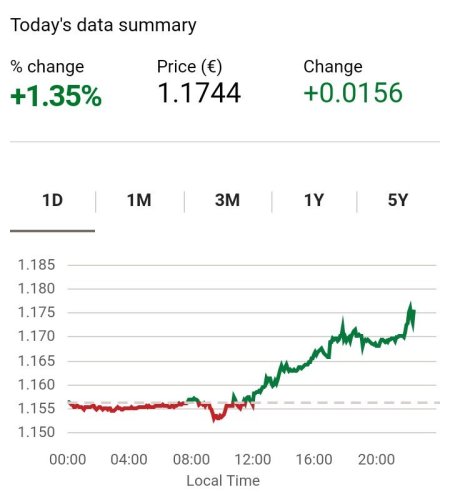
Compare and contrast the following behaviour of the Pound Sterling versus the Euro last night

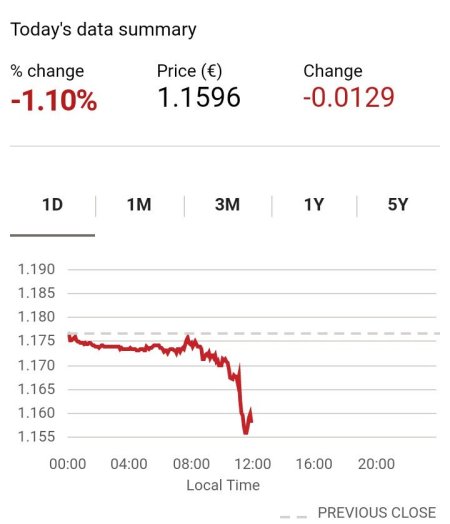
And this morning

Of course the Pound’s rise yesterday was based on speculation that the Prime Minister Theresa May’s trip to Strasbourg would lead to changes to the Withdrawal Agreement between the UK and EU that would make it acceptable to the House of Commons (by which I mean to the pro-Brexit faction of the Conservative Party). The subsequent fall this morning is explained by the fact that she achieved nothing of substance and the Withdrawal Agreement is unchanged.

It seems to me that there are two possible explanations for yesterday’s elaborately choreographed charade. Only a fool would think that Mrs May succeeded in negotiating a concession from the EU, but one thing she can be sure of is that the House of Commons (and particularly the Conservative Party) has plenty of fools in it. The PM might have thought this absurd piece of flummery was worth a shot and convincing Tory buffoons who haven’t read the Withdrawal Agreement anyway. It might even* work!

On the other hand, regardless of what happens in this evening’s `Meaningful Vote’, one thing is clear. Some currency traders will have made an awful lot of money by short-selling the pound. Theresa May’s Strasbourg pantomime will undoubtedly have made her very popular among the Hedge Fund Managers who in any case are the main financial beneficiaries of Brexit…

*It worked with some, but not enough to stop the deal being lost by 149 votes.

BBC Broadcaster John Humphrys: Ireland Should Join With The UK Outside The EU

Posted in Uncategorized on January 27, 2019 by telescoper

There’s been a lot of comment about this performance from John Humphrys. Let’s just say that I’ve got nothing against his family but I think he should retire and spend more time with them.

UPDATE: I think Mr Humphrys has got the message!

An Sionnach Fionn's avatarAN SIONNACH FIONN

The British journalist John Humphrys has a reputation for occasionally allowing his right-wing instincts to filter into his broadcasting but never has this been truer than in this fact-free interview with a remarkably patient Helen McEntee, our own Minister of State for European Affairs, when the BBC Today presenter puts forward the claim that there is an argument for Ireland to leave the European Union and “throw in their lot” with the United Kingdom.

View original post

Nollaig na mBan

Posted in Uncategorized on January 6, 2019 by telescoper

In the Liturgical Calendar today (6th January) is the date of Epiphany, when according to tradition Three Wise Men (Magi) arrived bearing gifts for the infant Jesus.

A bit under the weather today I’ve been taking it easy and listening to the radio, in the course of which I discovered that today is also Nollaig na mBan (Women’s Christmas).

Nollaig na mBan is a day in Ireland on which it is traditional for women to get together and enjoy their own Christmas, while the menfolk stay at home and handle the chores.

Although an old tradition, emanating from the West of Ireland, Nollaig na mBan tradition has apparently had a bit of a resurgence in recent years. In particular the radio station RTÉ Lyric FM has been marking the occasion with lots of very fine music written and/or performed by women.

It seems that hardly a day goes by without me learning something new about Ireland!

Nollaig na mBan Shona Daoibh!

All the Best for 2019!

Posted in Uncategorized on December 31, 2018 by telescoper

It’s not quite here yet where I am, but 2019 has already started happening elsewhere in the world, so let me just wish everyone* reading this a very happy new year!

*Apart from my annoyingly persistent homophobic troll David Hine, who can fuck off.