Archive for the Uncategorized Category

Transferable Skills Training

Posted in Uncategorized on March 14, 2017 by telescoper

There’s an ever-increasing need for students of physics and astronomy to broaden their knowledge base by acquiring skills that might be transferable into other fields. Thinking about this the other day it occurred to me that some physicists and astronomers may not yet be able to dance the Madison, so here is an instructional video presented by Professors Jennifer Comar and Paolo Pasta Lanna, with musical accompaniment by the Ray Bryant Combo.

Watch very carefully, as there will be a test next week.


Sexual Harassment at UK Universities

Posted in Uncategorized with tags on March 6, 2017 by telescoper

I only have time for a very short post today, but it seems important to point out an article about sexual harassment in UK universities which has just appeared that gives some measure of the scale of the problem. There’s also an accompanying piece that lists the number of cases in different institutions across the country over the past five years or so. If you work in UK university you might want to see how many sexual harassment cases have been reported there. In most institutions investigations into such matters are carried out confidentially, and the outcomes are generally not announced publicly. I think it is welcome that real information is starting to become available.

In most cases there are only a few reported instances per institution since 2011 – the most is 10 (at the University of Nottingham) – and very few seem to have led to persons leaving their job. These numbers represent a lower limit, of course, as not all cases are reported officially. I won’t comment on the general reliability of the figures, except to say that I doubt if all institutions have reported in the same way because their internal procedures may differ, which makes fair comparisons difficult.

Note that the report covers both harassment of students by staff and harassment of staff by other staff.

Anyway, in case you’re wondering what the legal definition of sexual harassment is, here is an excerpt from my current employer’s guidance:

Sexual Harassment has a specific definition under the Equality Act 2010. Sexual Harassment includes:

Conduct of a sexual nature that has the purpose or effect of (i) violating an individual’s dignity or (ii) creating an intimidating, hostile, degrading, humiliating or offensive environment; or

Unwanted conduct of a sexual nature or that is related to gender reassignment or sex that has the purpose or effect of (i) violating an individual’s dignity or (ii) creating an intimidating, hostile, degrading, humiliating or offensive environment and that the individual is treated less favourably because they have rejected or submitted to the conduct.


In deciding whether conduct has the effect referred to above each of the following must be taken into account:

the perception of the person claiming harassment and

the other circumstances of the case and

whether it is reasonable for the conduct to have that effect.[1]

Harassment which is related to a person’s sex, gender identity, race (including colour, nationality, ethnic or national origin), disability, sexual orientation, religion or belief, or age, can constitute unlawful discrimination for which staff and students can be held personally liable.

[1] In deciding if behaviour amounts to (unlawful) harassment, it is important to take into account all circumstances, including in particular the perception of the individual who feels that harassment has taken place and whether it can reasonably be considered that harassment has taken place. What the individual would determine to be offensive is a key issue in determining whether harassment has taken place, however there is also an element of whether a reasonable person would view the behaviour as offensive if they were in the same circumstances as the individual finding the behaviour offensive.


Time after the Storm

Posted in Uncategorized on February 24, 2017 by telescoper

Thankfully my journey back to Cardiff today was trouble-free. The trains from Lincoln to Nottingham and from Nottingham to Cardiff both ran to schedule and neither was at all overcrowded. In fact it was all rather pleasant.

I took this as we travelled along by the side of the River Severn 

The Severn Bridge was visible in the distance but I’m not sure you can see it in the picture.

I used to make this journey quite often. I worked in Nottingham until the end of June 2007, after which I joined the staff of Cardiff University. It took some time to sell my house in Nottingham, however, so I didn’t fully relocate until the following year. In the meantime I rented a flat in Cardiff and travelled quite frequently to and fro to attend to the house in Nottingham.
I haven’t done that journey for about nine years. The area around Nottingham station has changed a bit in the intervening years, but I didn’t have time to see much else as I only had a brief wait for the connection to Cardiff.

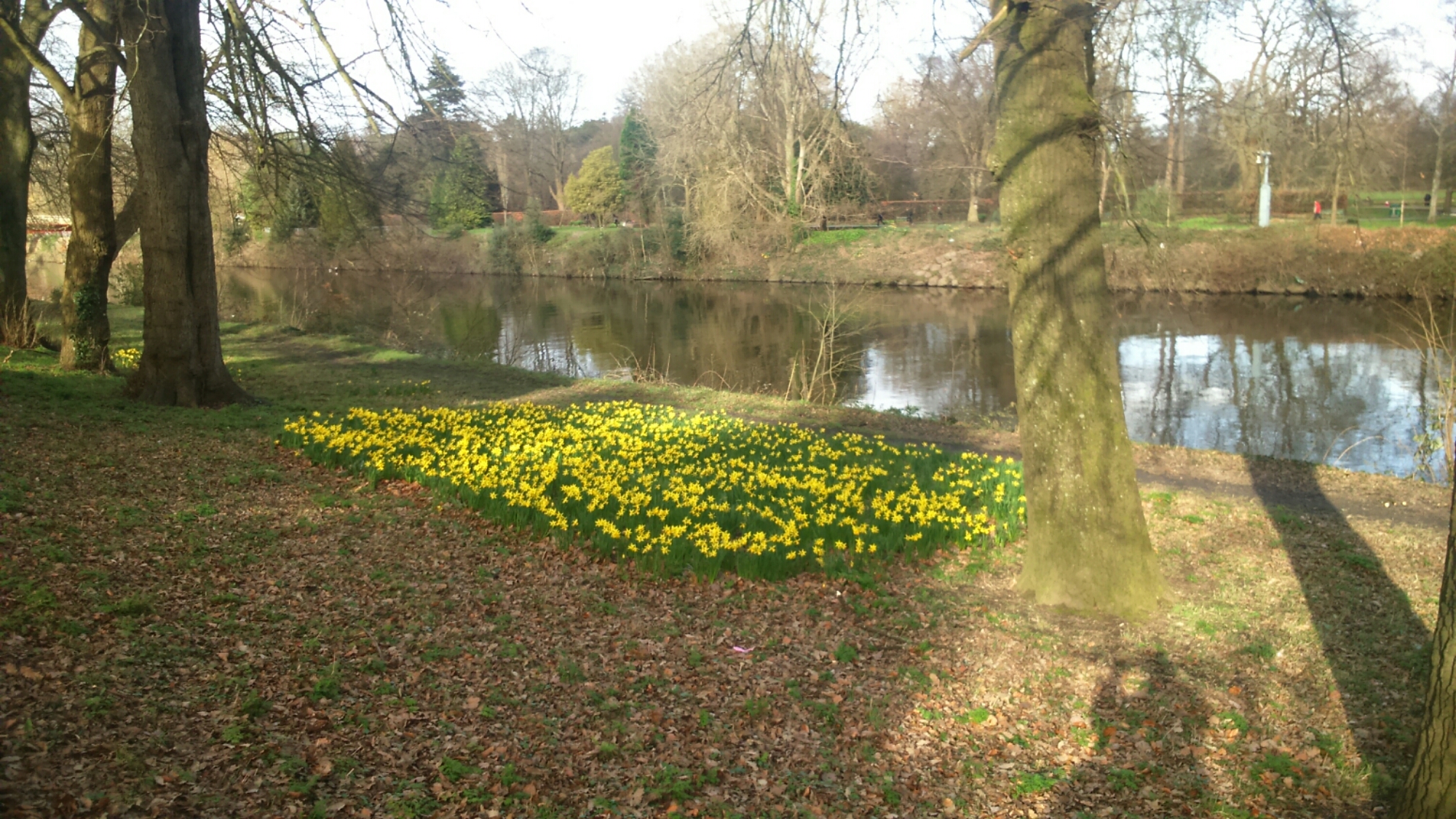
When I did get back to Cardiff, I noticed during my walk home from the station through Sophia Gardens that the daffodils have appeared:

I realise that there’s not much about Astrophysics in this post, so I’ll mention that it’s exactly 30 years since the Supernova 1987a was detected (on 24th February 1987). Have a look here to see what’s been going on in the remnant over the years. It’s fascinating!

I remember the news of SN1987a very well. I was at Sussex at the time as a research student, and there was huge excitement primarily because neutrinos had been detected from the explosion – only a handful, but it was an important breakthrough. 

Thirty years since the Supernova, almost ten years since I left Nottingham. Where does the time go?

The View from the Castle Keep

Posted in Uncategorized on February 12, 2017 by telescoper

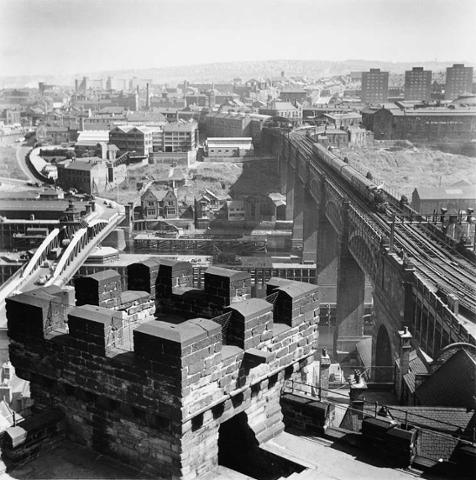
I couldn’t resist sharing this wonderful photograph, taken in 1957 by Jimmy Forsyth from the top of the Castle Keep in Newcastle upon Tyne, looking South across the Tyne towards the Midlands.

The two historic bridges in view are the Swing Bridge (left; completed in 1876) and the High Level Bridge (right; completed in 1849). The more famous Tyne Bridge is just out of shot to the left of the frame.

The picture was posted by the Twitter account of  Tyne & Wear Archives a few days ago.

Enough work…

Posted in Uncategorized on February 4, 2017 by telescoper

Refugee Blues

Posted in Poetry, Uncategorized with tags , , , on January 29, 2017 by telescoper

Say this city has ten million souls,
Some are living in mansions, some are living in holes:
Yet there’s no place for us, my dear, yet there’s no place for us.

Once we had a country and we thought it fair,
Look in the atlas and you’ll find it there:
We cannot go there now, my dear, we cannot go there now.

In the village churchyard there grows an old yew,
Every spring it blossoms anew:
Old passports can’t do that, my dear, old passports can’t do that.

The consul banged the table and said,
“If you’ve got no passport you’re officially dead”:
But we are still alive, my dear, but we are still alive.

Went to a committee; they offered me a chair;
Asked me politely to return next year:
But where shall we go to-day, my dear, but where shall we go to-day?

Came to a public meeting; the speaker got up and said;
“If we let them in, they will steal our daily bread”:
He was talking of you and me, my dear, he was talking of you and me.

Thought I heard the thunder rumbling in the sky;
It was Hitler over Europe, saying, “They must die”:
O we were in his mind, my dear, O we were in his mind.

Saw a poodle in a jacket fastened with a pin,
Saw a door opened and a cat let in:
But they weren’t German Jews, my dear, but they weren’t German Jews.

Went down the harbour and stood upon the quay,
Saw the fish swimming as if they were free:
Only ten feet away, my dear, only ten feet away.

Walked through a wood, saw the birds in the trees;
They had no politicians and sang at their ease:
They weren’t the human race, my dear, they weren’t the human race.

Dreamed I saw a building with a thousand floors,
A thousand windows and a thousand doors:
Not one of them was ours, my dear, not one of them was ours.

Stood on a great plain in the falling snow;
Ten thousand soldiers marched to and fro:
Looking for you and me, my dear, looking for you and me.

written in 1939 by W.H. Auden (1907-1973)

GRAVITY now DEBUNKED ????

Posted in Uncategorized on January 25, 2017 by telescoper

The writer of this post – known as “GavTheBrexit” on Twitter – invites readers to share it, so I’m doing so now.
Anyone with any knowledge of physics whatsoever (even pre-GCSE) is invited to comment on the “theory” presented in the post.

Is it now official UKIP policy to repeal the laws of gravity?

P.S. Note the widespread use of “FASHCAPS”…

THE GAVZETTE's avatarTHE GAVZETTE

WHAT IS GRAVITY ?????????

Well science tells us GRAVITY is a magnetic force keeping us and all on the PLANET EARTH.

So let’s go with SCIENCE even though i have little respect for it in many cases as much of it are THEORIES , just as it is with GRAVITY ??,

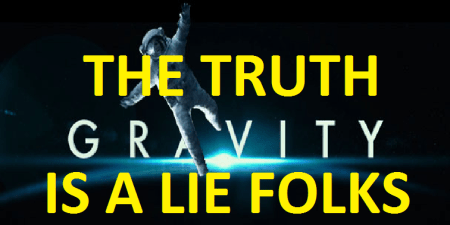
We are told a man called ISAAC NEWTON gravity-is-a-liediscovered gravity and what its effects are after seeing an APPLE fall from a tree.Well i am here to say this is UTTER RUBBISH.

So let’s go with Newton’s THEORY and that’s all it is a theory ?? no PROOF whatsoever exists to this day to conclusively PROVE GRAVITY.But for the sake of this article we will go along with Newton’s theory.

Now Newton’s THEORY is basically we are stuck to earth due to a MAGNETIC force or an ATTRACTION of sorts ?.

Now this would make sense if we didn’t have MASS…

View original post 706 more words

Sci-Comm: What is to be done?

Posted in Uncategorized on January 25, 2017 by telescoper

Very important post which articulates some serious issues around science communication, especially that “outreach” needs to be far more than a problem exercise or an element of a recruitment strategy, which is how it has come to be viewed in many universities.

Literacy of the Present's avatarLiteracy of the Present

Science communication has failed

Rearranging the furniture in the White House are a President who said climate change was a hoax, and a Vice-President who does not accept the theory of evolution. The rest of Trump’s cabinet is an equally deplorable bunch when it comes to science (or, indeed, anything else when it comes to being decent and humane).

I’m not blaming science communication for the election of Trump. But Trump’s Presidency is evidence that science communication has failed.

You might say that this has little to do with science communication, that Trump won the election on other issues but this only shows that science-based issues were not seen as important enough – also a failure.

And Brits should not be so smug either, with their vote for Brexit and their “had enough of experts”.

What we have clearly seen in recent months is that facts are not enough no…

View original post 1,043 more words

Bayesian weak lensing tomography: Reconstructing the 3D large-scale distribution of matter with a lognormal prior [CEA]

Posted in Uncategorized on January 11, 2017 by telescoper

Bayesian and Lognormal! How could I resist a reblog of this arXiver post?

arxiver's avatararXiver

http://arxiv.org/abs/1701.01886

We present a Bayesian reconstruction algorithm that infers the three-dimensional large-scale matter distribution from the weak gravitational lensing effects measured in the image shapes of galaxies. The algorithm assumes that the prior probability distribution of the matter density is lognormal, in contrast to many existing methods that assume normal (Gaussian) distributed density fields. We compare the reconstruction results for both priors in a suite of increasingly realistic tests on mock data. We find that in cases of high noise levels (i.e. for low source galaxy densities and/or high shape measurement uncertainties), both normal and lognormal priors lead to reconstructions of comparable quality. In the low-noise regime, however, the lognormal model produces significantly better reconstructions than the normal model: The lognormal model 1) enforces non-negative densities, while negative densities are present when a normal prior is employed, 2) better traces the extremal values and the skewness of the true underlying…

View original post 66 more words

R.I.P. Dick Fong 

Posted in Uncategorized on January 5, 2017 by telescoper

Just a quick post to pass on the very sad news that physicist and cosmologist Dr Richard Fong  – known to all his friends and colleagues as Dick Fong – died yesterday, on 4th January 2017.

Dick’s scientific background was in theoretical physics but he played a major part in the late 1970s and early 1980s in setting up and developing a group in cosmology and extragalactic astronomy in the Physics Department at Durham University. Dick was self-effacing about his own research but he was clearly an expert talent-spotter, bringing such luminaries as Tom Shanks, Richard Ellis and Carlos Frenk to work there. This initiative was extremely successful and Durham is now, and has been for many years, one of the world’s leading centres for cosmology research. Dick retired about fifteen years ago, but kept in touch with developments in the field. He leaves quite a legacy.

My own clearest memory of Dick was that he was on the panel that interviewed me for a research fellowship in 1992, just before the Science and Engineering Research Council (SERC) split up and spawned PPARC and STFC. Dick led the questions after my talk which I struggled mightily to answer, at least partly because I couldn’t really work out what he was asking! He was always a bit cryptic when talking about physics. Despite this I was awarded the Advanced Fellowship, which really established my own academic career and led to my first faculty position.

As well as that  very personal reason for remembering Dick, there is another which I’m sure will be shared by those who knew him and worked with him: he was a kindly and charming man who was always generous and helpful to others. He will be greatly missed by his friends and family, to whom I send heartfelt condolences.

R I.P. Richard Fong (1936-2017)