Archive for the Uncategorized Category

Top Tips

Posted in Uncategorized with tags , on July 18, 2011 by telescoper

Not a lot of people know that one of my first publications was a contribution to the Top Tips section of the esteemed Viz Comic, which originates from my home town of Newcastle upon Tyne. The aforementioned Top Tips offer absurd, impractical or ludicrous suggestions to parody those in “lifestytle”  magazines proposing handy hints to make domestic and everyday life easier.

I’ve been tweeting a few of my favourites over the last few days, including a couple of (very) vaguely astronomical ones, so I thought I’d collect some of them here. The first is relevant to this week’s festivities:

  • Avoid feeling uncomfortably hot during your graduation ceremony by wearing only underwear underneath your gown
  • A ‘guide bat’ tethered to your finger with a short piece of string is the perfect way to avoid trees and horses in the dark.
  • Prevent your shoes from giving you blisters by lining their insides with sticking plasters
  • Astronomers avoid total blindness when viewing the sun  by using a telescope rather than binoculars
  • Reduce the risk of night-time fires by soaking all your furniture with a hosepipe before going to bed
  • Make your own inexpensive mints by leaving blobs of toothpaste to dry on a window sill
  • A used condom filled with water and left on a radiator makes an attractive yet inexpensive lava lamp
  • Avoid the need for expensive binoculars by simply standing cl0ser to the object that you wish to view
  • Avoid hiring unlucky people by immediately tossing half the CVs into the bin
  • Sausage rolls sewn together side by side make an excellent emergency wig for judges
  • Dabs of silver model aircraft paint can transform  repulsive facial warts into fashionable piercings

Feel free to add your own contributions- preferably original and, even better, with a physics or astronomy theme – through the medium of the comments box…

Dissembling Nature

Posted in Uncategorized with tags , , , , , on July 16, 2011 by telescoper

Interesting that the Journal Nature is introducing a registration wall for its News pages. These pages have previously been free and, we’re told, will remain so. However, in order to access them one will now have to give a name and email address.

I heard about this On Wednesday (13th July) on  Twitter (via @NatureNews):

OK, we’ve got some news that may annoy: @NatureNews is going to start requiring registration to view some of our free news stories. (1/2)

Don’t panic! All the news is still free. We’re just going to ask for a name and an email. (2/2)

(For those of you not among the Twitterati I should point out that messages on Twitter have to be less than 140 characters long, hence the use of two tweets in this case).

My immediate reaction – and that of manyof my colleagues – is that this looks very much like the strategy pursued by the Times online edition. First introduce registration, then shortly afterwards turn it into a paywall. In the meantime can collect all the email addresses in order to send marketing spam to those who have registered.

I inquired as to what they were planning to do with the email addresses they would be harvesting in this way, but didn’t get a satisfactory reply. Then I received a message from another branch of the Nature twitter operation, @npgnews:

@telescoper Hi Peter. Thanks for your comments. We’re about to send a series of tweets in response to Nature News registration.

Being a reserved British type I was a bit annoyed by the  “Hi Peter”  from someone I don’t know and have never spoken to before, but didn’t respond. Instead I waited with baited breath for the in-depth explanation of what Nature is going to do. Eventually it came, in three tweets:

Thx for your comments about the Nature News registration system. We’re asking all readers to introduce themselves by registering once (1/3)

Registration enables free access to the Nature News content, which remains unchanged. (2/3)

We’re working hard to expand and introduce more tailored services for readers and registration is necessary for that (3/3)

To say I found this disappointing would be an understatement. What a load of flannel. Note the word “enables” in Tweet No. 2. Free access was previously enabled to everyone, but is apparently to be disabled in order to facilitate the collection of user data for some unspecified purpose. Tweet No. 3 is a masterpiece of non sequitur. Why does expansion of Nature News require a database of email addresses? And what can “more tailored services” mean other than restricting access? Needless to say, I won’t be registering. There are other plenty of other sources of science information

Nature is of course a business operation, and you have to see this move against the wider backdrop of traditional publishing companies trying to find the way forward in the digital age. As a commercial enterprise, they are entitled to charge customers, although I wish they would be a little more honest about their intention to do so. I would remind them however, that The Times‘ paywall has been an unmitigated disaster, in terms of the negative an effect it has had on the readership figures. Given the revelations of the past weeks about the behaviour of News International, I bet people who were foolish enough to register are now wondering who has their personal information now. Will Nature News go the same way?

More importantly, however, as a scientist, I think that Nature’s policy of copyrighting and restricting general access to scientific papers is fundamentally wrong and is actively damaging science. I believe that scientific results should be in the public domain, as should the data on which they are based. Open access is the way it should be. In the past, publishers greatly assisted in the dissemination of research both between academics and to the public. Now, I’m afraid, the academic publishing industry is simply parasitic, and it is a threat to the health of scientific research. Fortunately, I don’t think a drastic remedy is needed; it will wither away on it’s own. Let’s just let Nature take its course.


Buzzwords (via The Upturned Microscope)

Posted in Uncategorized with tags , , , , , , , , , on July 15, 2011 by telescoper

This wouldn’t be so funny if it weren’t so true…

Buzzwords (Click on image to enlarge) See more comics … Read More

via The Upturned Microscope

The Inflatable PostDoc! (via The Upturned Microscope)

Posted in Uncategorized with tags , , , , , , , , , on July 12, 2011 by telescoper

I hope they’ve patented this idea, because it could be worth a fortune, although I hasten to add it shouldn’t be used as a sex toy.

The Inflatable PostDoc! (Click on image to enlarge) From the people that brought you The PostDoc Trailer! See more comics … Read More

via The Upturned Microscope

Linking to Data – Effect on Citation Rates in Astronomy (via Meters, Metrics and More)

Posted in Uncategorized with tags , , , , on June 30, 2011 by telescoper

I’m not a big fan of bibliometricism …but this is definitely Quite Interesting. I wonder if my linking to it will increase its readership?

Linking to Data - Effect on Citation Rates in Astronomy In the paper Effect of E-printing on Citation Rates in Astronomy and Physics we asked ourselves the question whether the introduction of the arXiv e-print repository had any influence on citation behavior. We found significant increases in citation rates for papers that appear as e-prints prior to being published in scholarly journals. This is just one example of how publication practices influence article metrics (citation rates, usage, obsolesc … Read More

via Meters, Metrics and More

Austerity bites in Utrecht (via The e-Astronomer)

Posted in Uncategorized with tags , , , , , , , on June 27, 2011 by telescoper

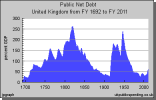
Andy Lawrence on cuts to Astronomy in Utrecht, the importance of rocking the boat, and a realistic perspective of the debt crisis; see also an old post of mine here that uses the same figure to make a similar point: the cuts are based on politics, not economics ….

Austerity bites in Utrecht As you may have heard, the University of Utrecht has taken the extraordinary decision to completely shut down its Astronomical Institute SIU  by 2014. You can read about in a blog post written last week by Sarah Kendrew, and there is also a press statement  issued by the SIU. This is the scariest astro-disaster since the INAF panic. Utrecht is a significant fraction of Dutch astronomy; it is one out of five universities in the NOVA alliance , alt … Read More

via The e-Astronomer

The PostDoc Apocalypse: Survival Tips #1 (via The Upturned Microscope)

Posted in Uncategorized with tags , on June 27, 2011 by telescoper

The saga of the PostDoc Apocalypse Continues….

The PostDoc Apocalypse: Survival Tips #1 (Click on image to enlarge) Click here for Part 1 Click here for Part 2 Click here for more Comics … Read More

via The Upturned Microscope

In Memoriam: Peter Falk (1927-2011)

Posted in Uncategorized with tags , , , on June 25, 2011 by telescoper

I came home last night to the sad news of the death, at the age of 83, of the actor Peter Falk, most famous for his role as the eponymous Lieutenant in the TV detective series Columbo. The newspapers are rightly filled with tributes today, but it can’t do any harm to add one more of my own. Falk was a fine actor, and I think the character of Lieutenant Columbo was a truly brilliant creation. I’m going to spend this evening watching a few old episodes on DVD.

Columbo was remarkable in many ways. For a start it eschewed the conventions of the usual detective story because the audience knows exactly what’s going to happen before it’s even started. Its lack of reliance on the traditional elements of a murder mystery means that you don’t watch Columbo to find out who did it, or whether or not the Lieutenant will ensnare them. We know who did it and that Columbo will catch them out. But how will he do it?

Every episode begins with the murderer – nearly always a highly intelligent, highly successful and extremely confident individual, often from the upper echelons of society – carefully planning and executing what looks like the perfect crime – establishing an alibi, removing forensic evidence, and so on. It always seems to work, at least until the shabby character of Columbo shuffles in to inspect the scene. The criminal always underestimates Columbo, at least at first, but in that grubby raincoat hides his nemesis. The lieutenant is a lot smarter than he looks. Sub pallio sordido sapientia.

The show’s creators, Richard Levinson and William Link, in fact based the character of Columbo on Petrovitch, the detective in Dostoevsky’s Crime and Punishment. Both men have keen intellects masked by shambolic exteriors, and way the detective drives to distraction, and inevitable capture, a criminal who makes no attempt to run also echoes the great Russian novel.  It was an ingenious idea, but it needed a great TV actor to make it work. In Falk’s hands what might have been a clumsy stereotype became a marvellously believable character, sometimes infuriating, sometimes comical, in his own way lovable, and always fascinating.

There’s also Columbo’s wrong-footing “false exit”, accompanied by the catchprase “There’s just one more thing…”.  Just when the perpetrator has begun to relax, the bloodhound returns. The more trivial the “thing” is, the more damning it proves. As an application of psychology, it’s a superb tactic and it slowly but surely grinds down the criminal’s resistance. Often the murderer’s exasperation at Columbo’s relentless badgering  leads to rash actions and errors; the second murder, if there is one, is never as carefully planned as the first. .

It’s hard to put your finger on exactly why this plot format works so well, but it certainly does. Episodes of Columbo are still shown on TV all around the world. As a matter of fact, I watched one on TV in my hotel room in Copenhagen on Thursday night (with Danish subtitles). Part of it is the delight in seeing the humble but decent detective bring down the rich yet evil murderer. But most, I think, is just the excellence of the central performance by Peter Falk. He didn’t do much else of any consequence – an exception is a very amusing self-parody in the spoof detective film Murder by Death – but who cares? As Columbo he was quite superb, and he’s left a woderful legacy.

Rest in peace, Peter Falk.

P.S. It’s no secret that I named my cat Columbo in honour of the detective, largely because of his habit of leaving through the catflap only to return suddenly a moment later. He doesn’t say “just one more thing…” but I’m sure he would if he could. I do hope the passing of Peter Falk isn’t an omen for my Columbo…

The PostDoc Apocalypse: How it spreads (via The Upturned Microscope)

Posted in Uncategorized with tags , , on June 20, 2011 by telescoper

Part One of this proved quite popular, so I thought I’d direct you to Part Two…

The PostDoc Apocalypse: How it spreads (Click on the image to enlarge) Click here for Part 1 … Read More

via The Upturned Microscope

The PostDoc Apocalypse: How it begins (via The Upturned Microscope)

Posted in Uncategorized with tags , , , , , on June 16, 2011 by telescoper

I think this might strike a chord with some of my readers, but any implication that postdocs are equivalent to zombies is completely uninentional.

The PostDoc Apocalypse: How it begins From the people who brought you The PostDoc Trailer! … Read More

via The Upturned Microscope