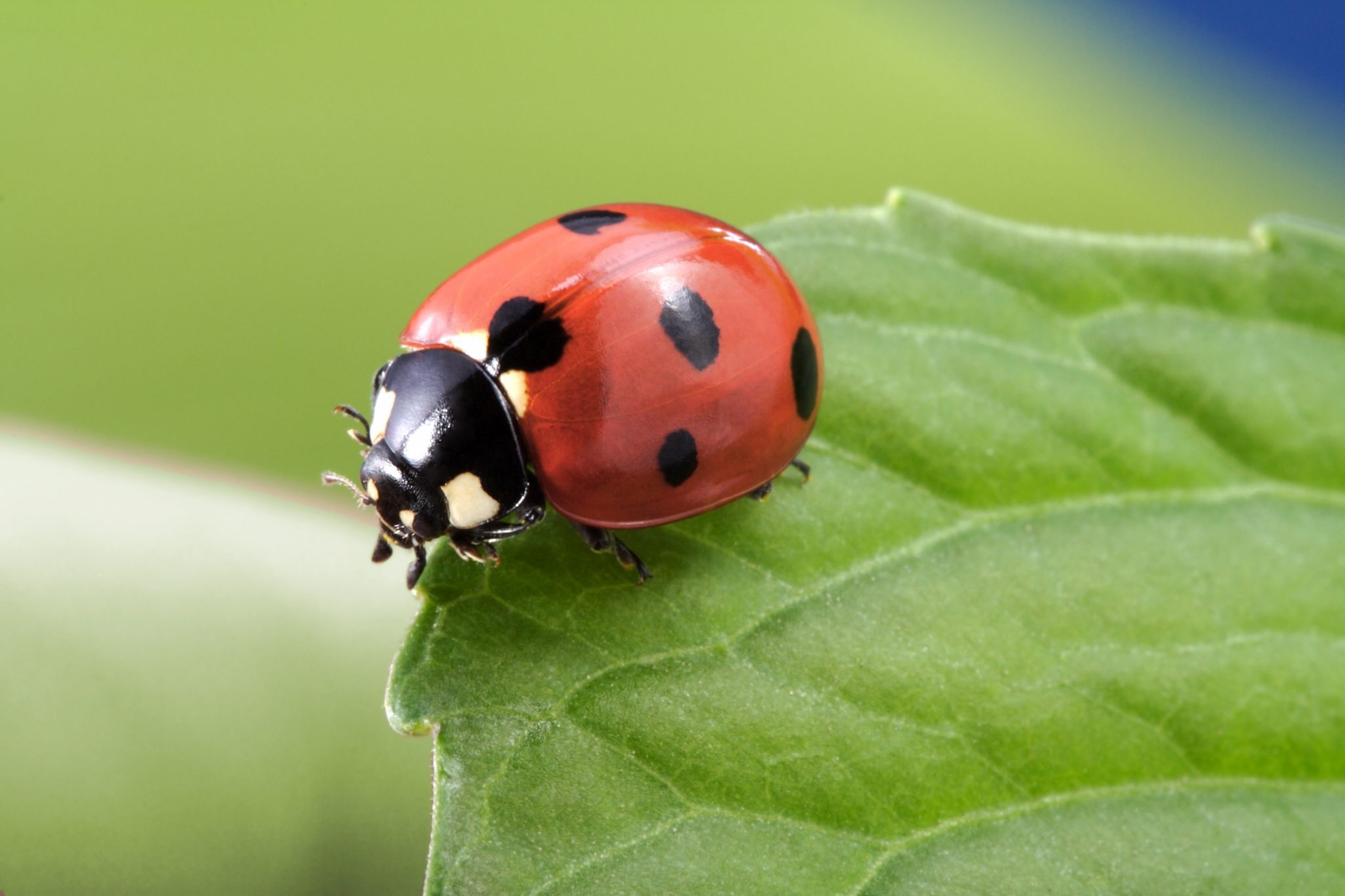
The other day I discovered that Ladybird in Irish is Bóín Dé which means, literally, “Little Cow of God”. I thought it a strange name for this critter, then a friend told me (via Facebook) that the Welsh is buwch goch gota which means “short red cow”. A little googling then told me that the Russian is Bozhya korovka which is in literal translation the same as the Irish, God’s Little Cow.
The more general connection with God seen in Irish and Russian is presumably to do with the Ladybird being either cute or beneficial (or both): if you’re a gardener you will certainly appreciate the help that Ladybirds offer in eliminating aphids and other garden pests. They may look cute but they are voracious predators.
I am told that the `cow’ part of the name probably comes from the spots on a Ladybird, which resemble the black patches on the hides of certain breeds of cow.
I have known for a while that the Lady in the English Ladybird refers not just to any lady but to the Virgin Mary, allegedly because the most common type of Ladybird has seven spots and the number 7 is associated with Mary, as is the colour red. The original English term was “Our Lady’s Bird” which turned into Ladybird (or Ladybug in the United States).
The connection with the Virgin Mary is more explicit in the Danish Mariehøne (Mary’s Hen). I assume the Hen is because the Ladybird would have to be a bird that can fly but not all that well. In German the word for Ladybird is Marienkäfer (Mary’s Beetle). In Spanish it is Mariquita, which I assume also has a connection with the Virgin Mary though there is another term: Vaca de San Antón , which brings us back to cows again (Vaca is Spanish for cow).
The Italian word for Ladybird is Coccinella (from the Latin Coccineus, scarlet) which is also the scientific name; the family is Coccinellidae. The standard French for a Ladybird is Coccinelle, but older terms found in dictionaries include vache à Dieu (Cow of God again) and bête à bon Dieu.
I know Ladybirds are very widespread and, to a lesser extent, so are my readers, so I’d be very interested to hear what a Ladybird is in other languages (alongside a literal translation).
Follow @telescoper









 In the Dark