

P.S. This is what’s called a “story” post and I’ve just discovered that I can now do such with videos. I’ll have to be careful what I upload…
The Land of Inadequate Research Stipends
Posted in Education with tags ANID—IUA scholarship, Chile, PhD, Stipends on October 13, 2023 by telescoperI noticed yesterday that the Irish Government has announced that the stipend for PhD research supported by Science Foundation Ireland (SFI) and the Irish Research Coucil (IRC) will increase by €3,000 a year. The increase will bring the rate of stipend to €22,000 a year for doctoral researchers from January 2024. While this is €3,000 less than the €25,000 recommended by a report published earlier this year, and the Government itself has already tacitly admitted that a level of €28,000 is needed to attract the best students, this is at least a step in the right direction.
Current levels of funding for research students are simply exploitative, forcing research students to take on extra work – often low-paid teaching duties – in order to make enough money to make ends meet. That is, unless they are students from affluent backgrounds. The discriminatory aspect of this policy is plain for all to see: should a career in research only be possible for the wealthy?
Of course this applies only to PhD students funded by SFI and IRC. It remains to be seen whether other funders – particularly Universities themselves – will match this increase. If they don’t, it will create an unhealthy division between students doing similar work but receiving vastly different levels of remuneration.
In related news I notice the Irish Universities Association has proudly announced a new agreement to fund Chilean students undertaking PhD and Research Masters courses in Ireland. Sounds great, I thought when I saw the announcement, astronomy being a likely area for research projects involving Chilean students.
Strangely (?) the website advertising this scheme doesn’t mention the level of stipend offered, but I found out independently that it is $15,000 per annum. That’s about €14,250, completely inadequate for a research student in Ireland, especially in the Dublin area, and especially for one who has travelled halfway round the world to get to Ireland. I certainly won’t be encouraging any students to apply for this scheme unless and until the miserly bursary is increased to the same level as SFI/IRC.
The IUA, of course, knows full well that this stipend is insupportable, so it is reprehensible for it to have agreed to these terms, the only possible outcome of them being to create an underclass within an underclass.
I had my university education for free, without tuition fees and with a full maintenance grant. The stipend I received for my PhD, although by no means luxurious, was adequate too. At times like this I wonder yet again why my generation spends so much time shitting on the young?
LiteBIRD Update
Posted in Cardiff, The Universe and Stuff with tags B-mode, Cardiff, ISAS, JAXA, Litebird, Primordial Gravitational Waves on October 12, 2023 by telescoper
It was more than four years ago that I passed on the news that the space mission LiteBIRD had been selected as the next major mission by the Japanese Space Agency JAXA and Institute for Space and Astronautical Science (ISAS).
LiteBIRD (which stands for `Lite (Light) satellite for the studies of B-mode polarization and Inflation from cosmic background Radiation Detection’) is a planned space observatory that aims to detect the footprint of the primordial gravitational waves on the cosmic microwave background (CMB) in a form of a B-mode polarization pattern. This is the signal that BICEP2 claimed to have detected nine years ago to muc excitement, but was later shown to be a caused by galactic dust.
At the time, I said that this was great news for a lot of CMB people all round the world that this mission had been selected – include some old friends from Cardiff University. Well, I’ve just seen a news item announcing a grant to Cardiff astrophysicists who will lead the UK involvement and develop the optical design.
The launch date has slipped into the 2030s (no doubt partly because of the pandemic) so I’ll be long retired before it happens, but the mission will last three years and will, like Euclid, be at Earth-Sun Lagrange point known as L2. It will be a very difficult task to extract the B-mode signal from foregrounds and instrumental artifacts but I wish LiteBIRD every success!
Día de la Hispanidad
Posted in Barcelona, Biographical with tags Día de la Hispanidad, National Holiday, Spain on October 12, 2023 by telescoperToday (12th October) is a national holiday in Spain, Hispanic Day (Día de la Hispanidad) or National Day (Fiesta Nacional de España). The date commemorates when Christopher Columbus first set foot in the Americas in 1492, and its colonial overtones make it a bit controversial. I only found out about this holiday yesterday so I had to do a quick dash to the shops last night because the vast majority are closed today (as they are every Sunday, incidentally).
The Department being closed today, I pottered around the apartment this morning. Late on in the morning I heard an unusual amount of beeping of car horns from the street and, when I looked out, there was quite a bit of traffic congestion going. The Gran Via de les Cortes Catalanes is a busy main road but usually the traffic keeps moving. Looking more closely I noticed that there was no traffic at all going along the Gran Via and all the congestion was in the orthogonal direction. I surmised that some diversion was in place.
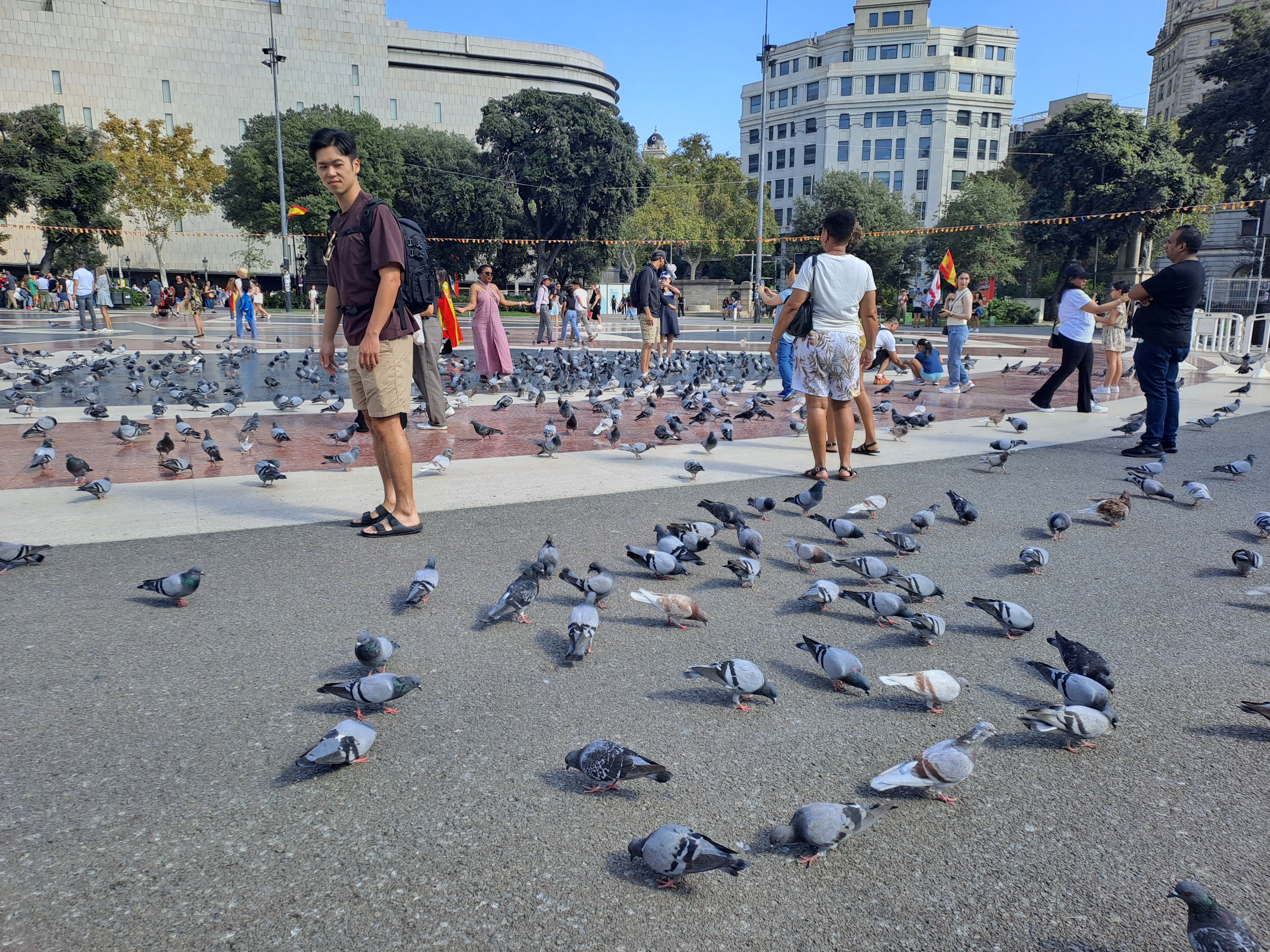
I went out for a walk and established that I was correct. A very large parade was heading towards Plaça de Catalunya a few blocks down and the Gran Via was closed there to allow it to pass. The congestion was caused by cars trying to find alternative routes.
Anyway, I walked down towards Plaça de Catalunya and found the parade. I only caught a small part of it, but it was fun. Lots of different groups from different Latin American countries dressed in colourful traditional costumes were dancing their way through the city. My favourites, from Bolivia, are featured in the last two pictures. They had brought their own brass band along, which made a change from the recorded music accompanying most of the other sections of the parade, and made it feel much more authentic.
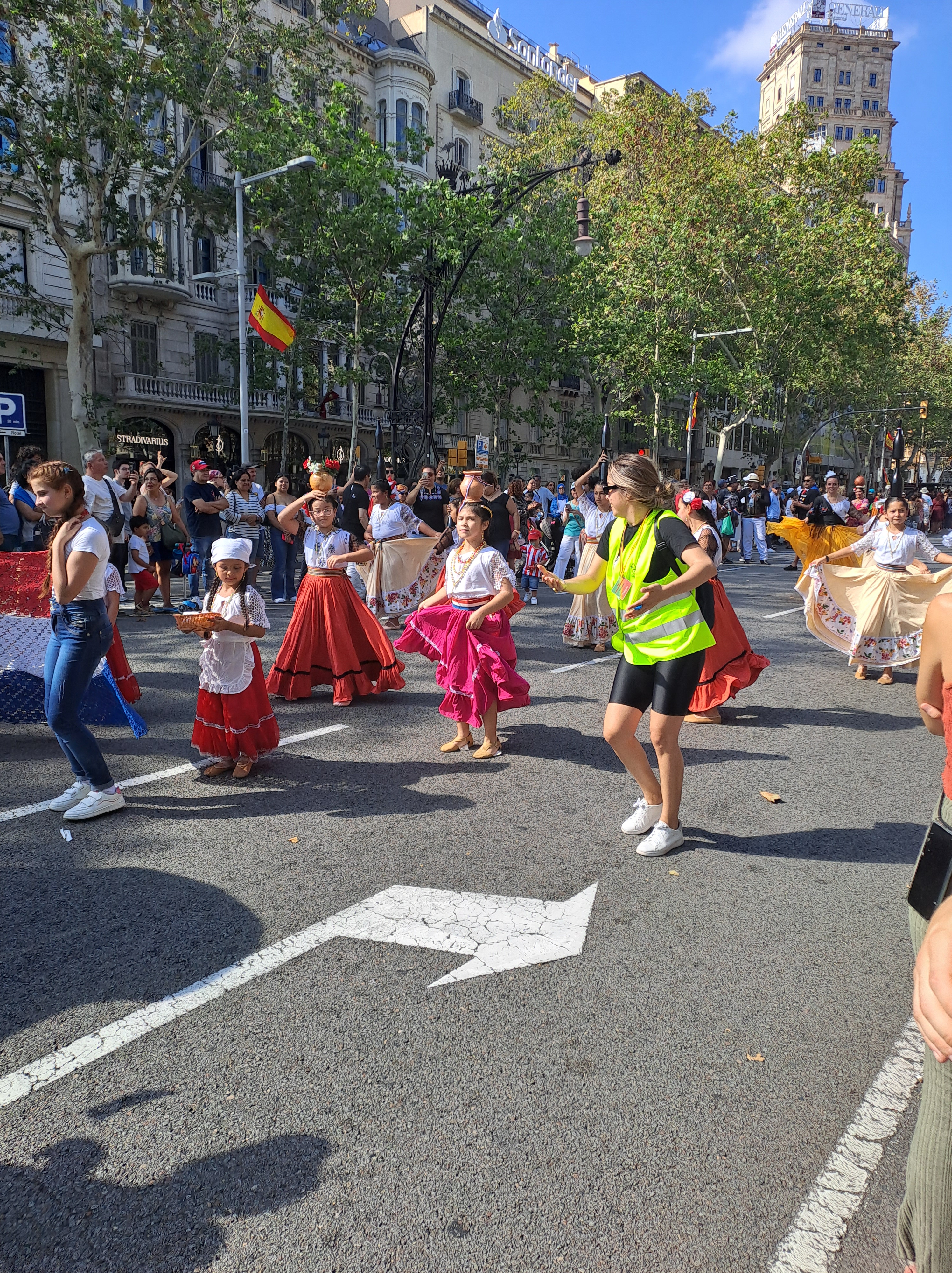
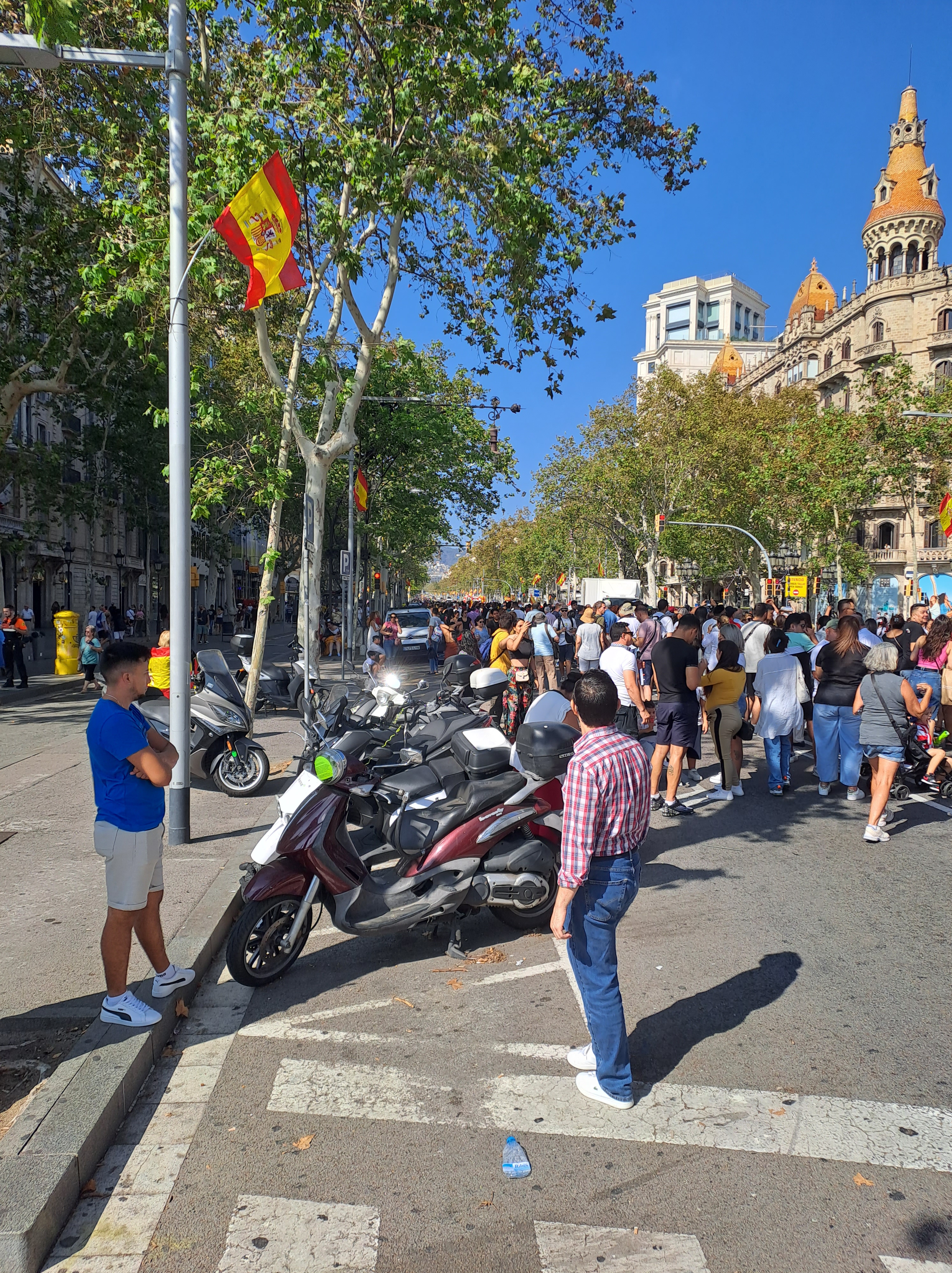
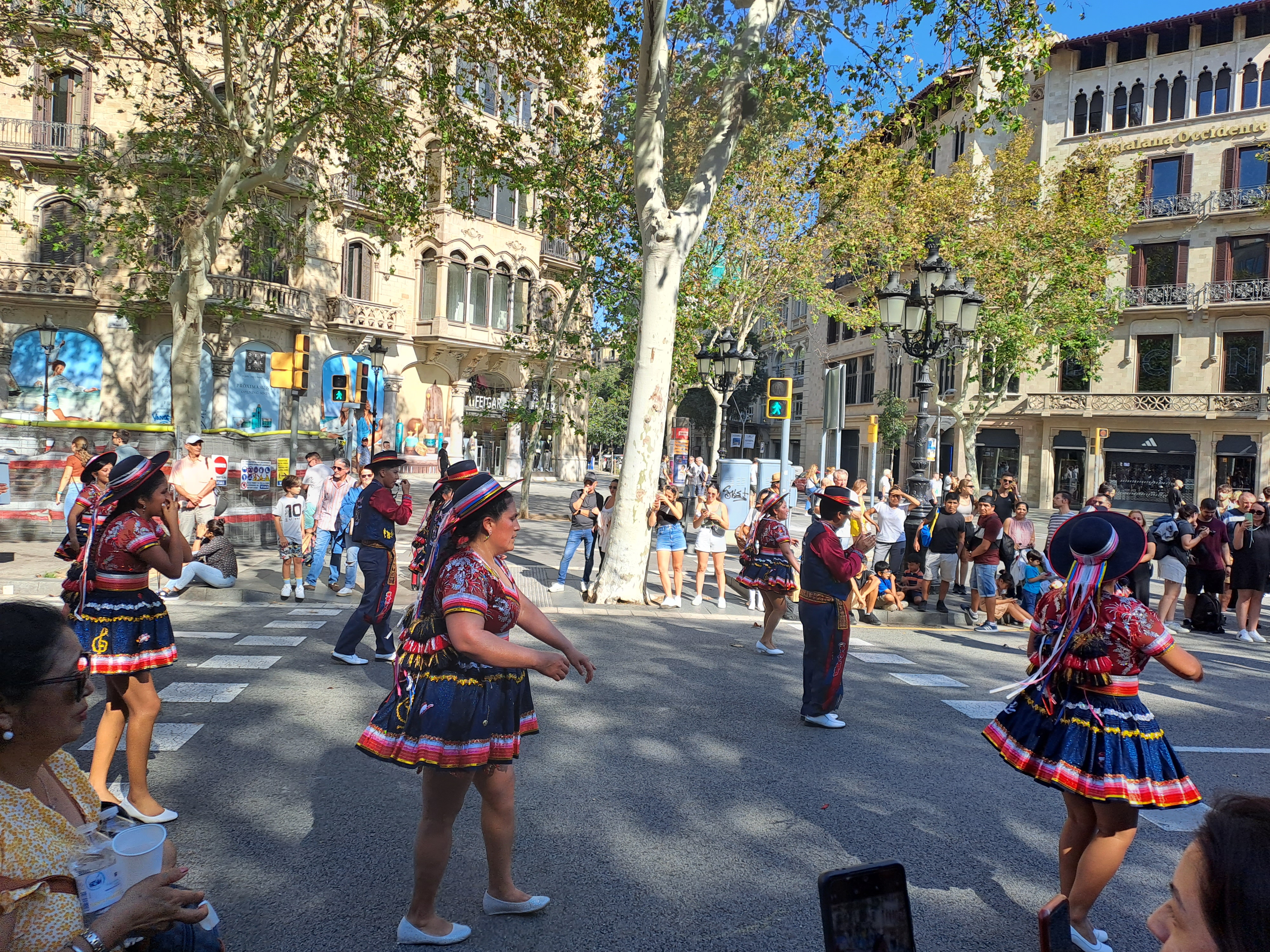
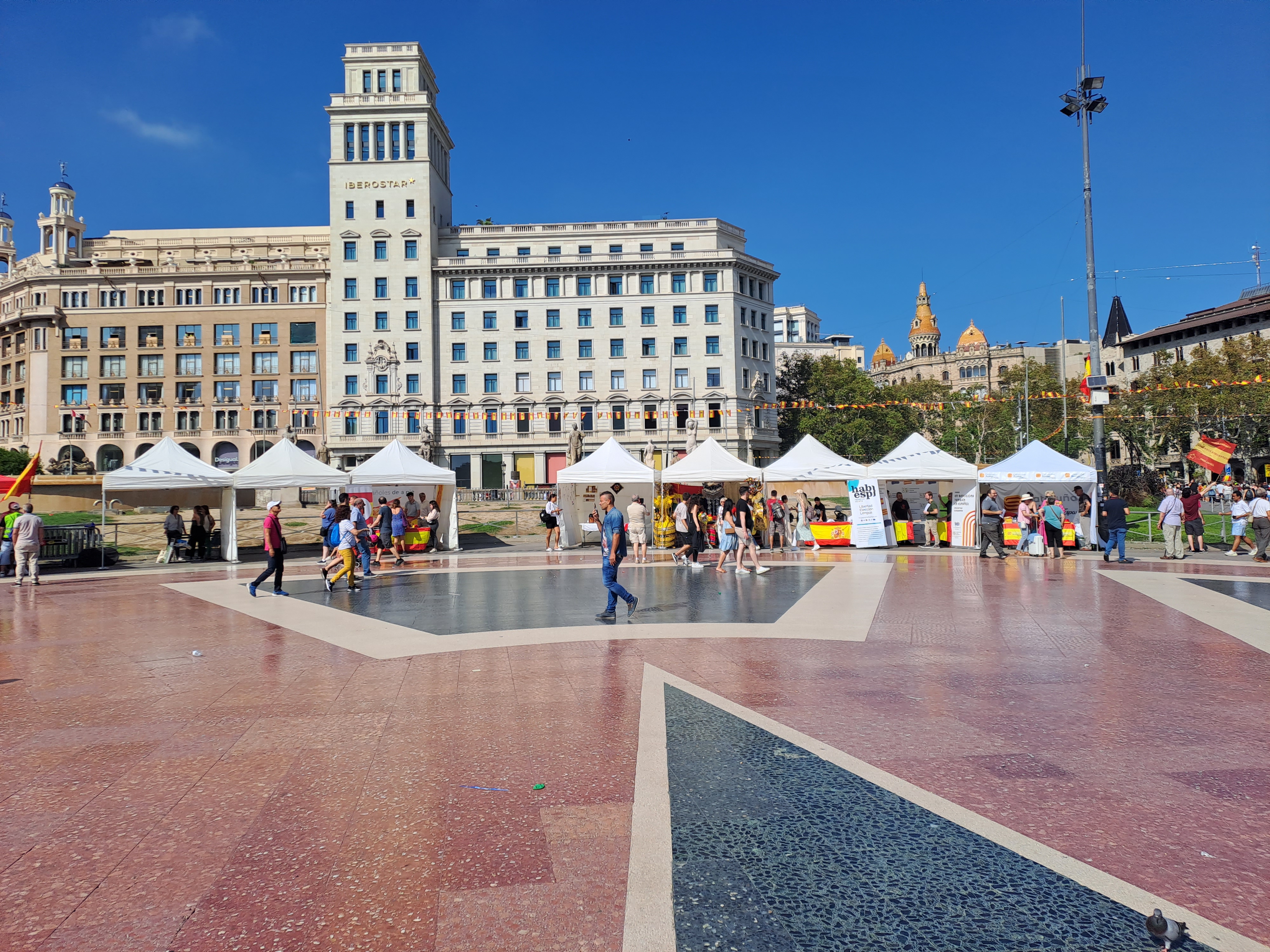
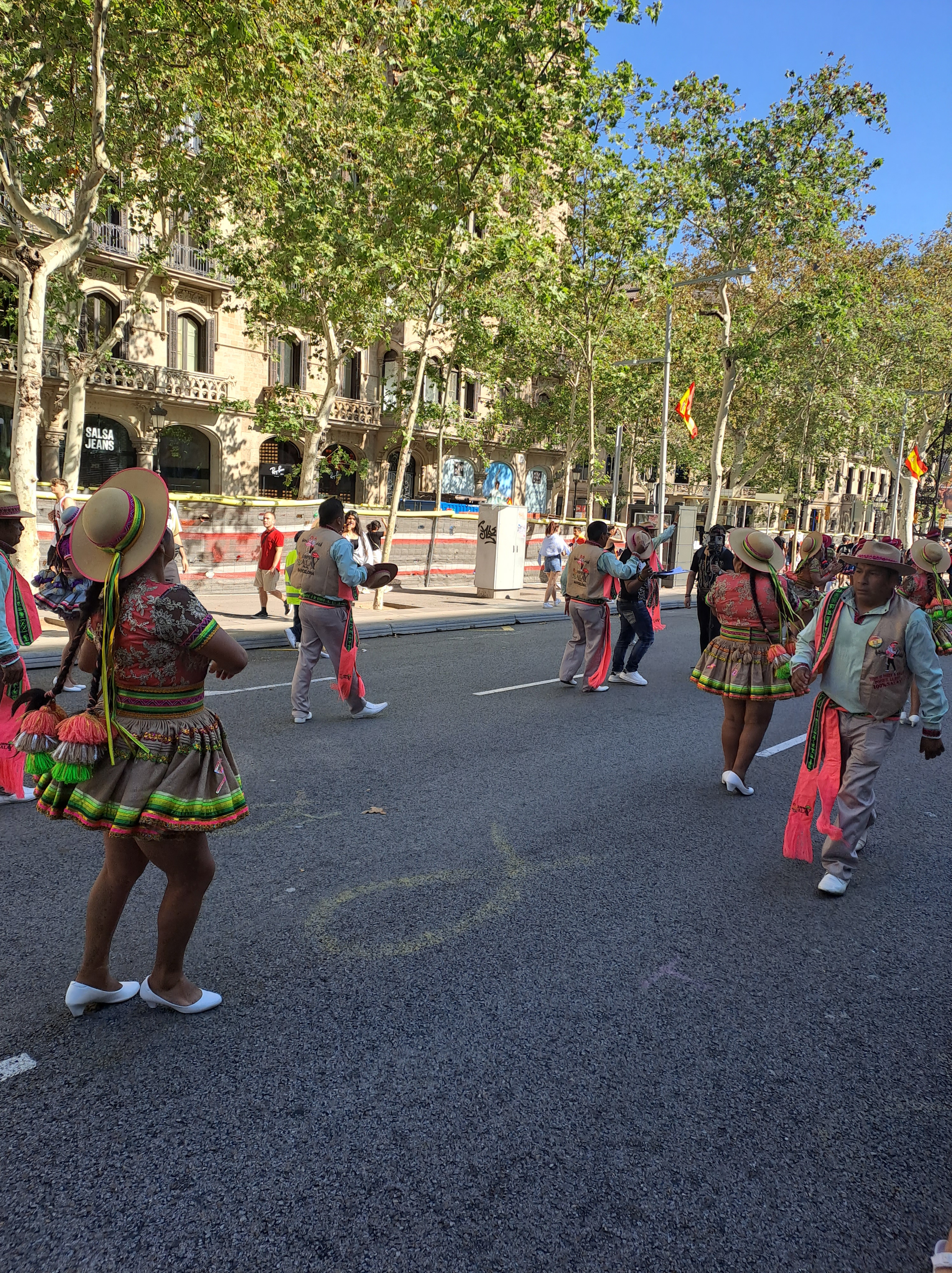
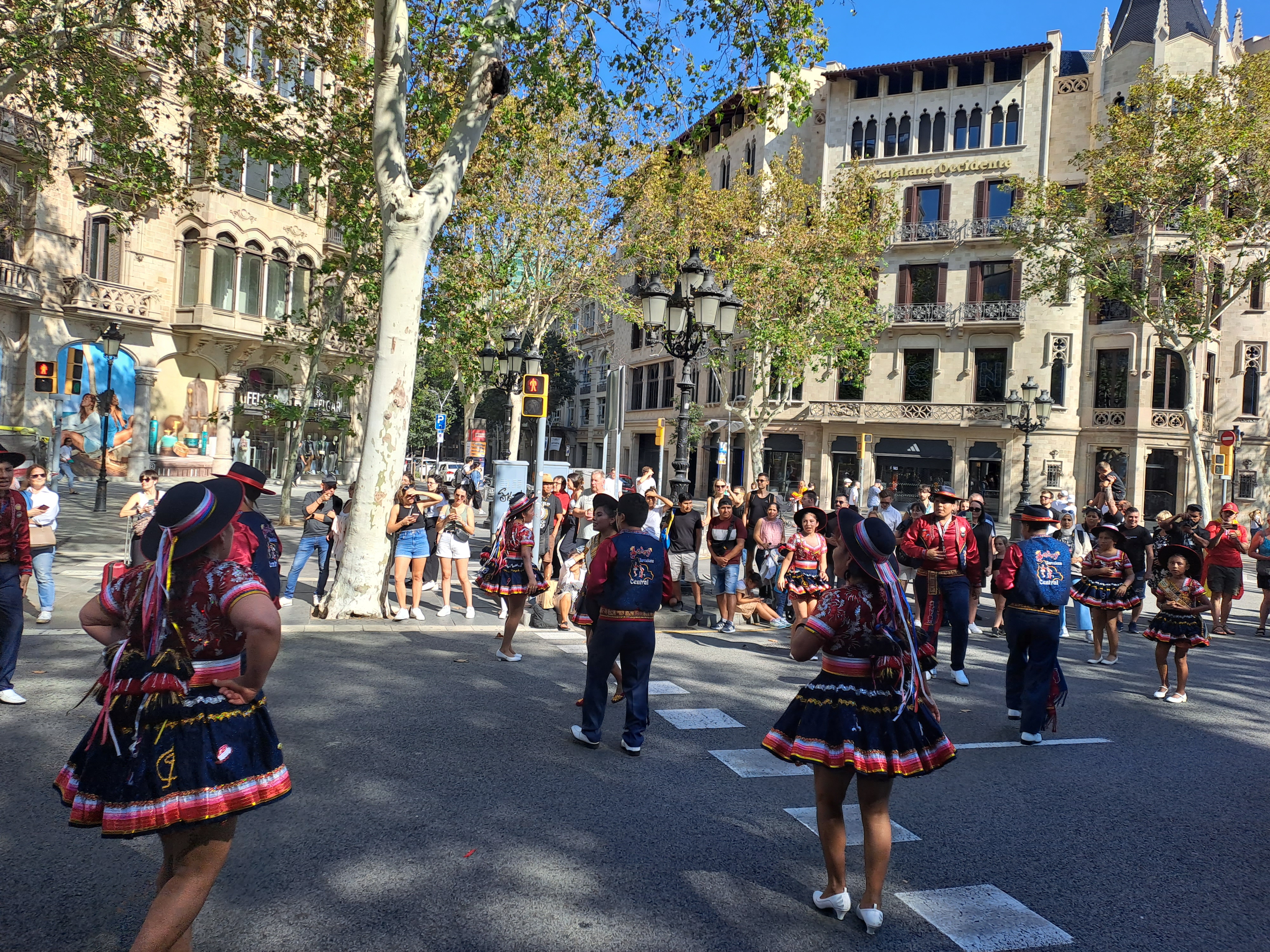
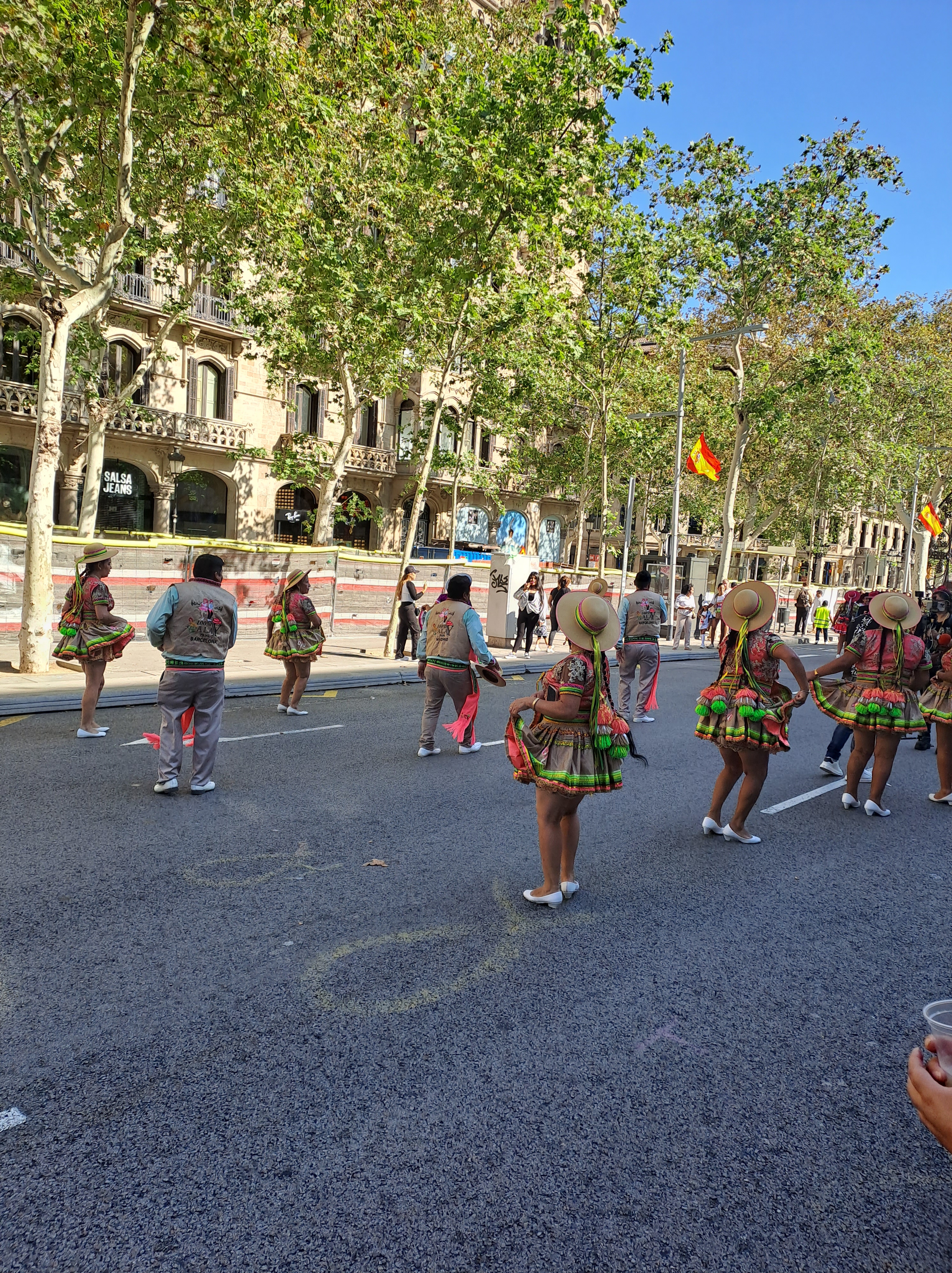
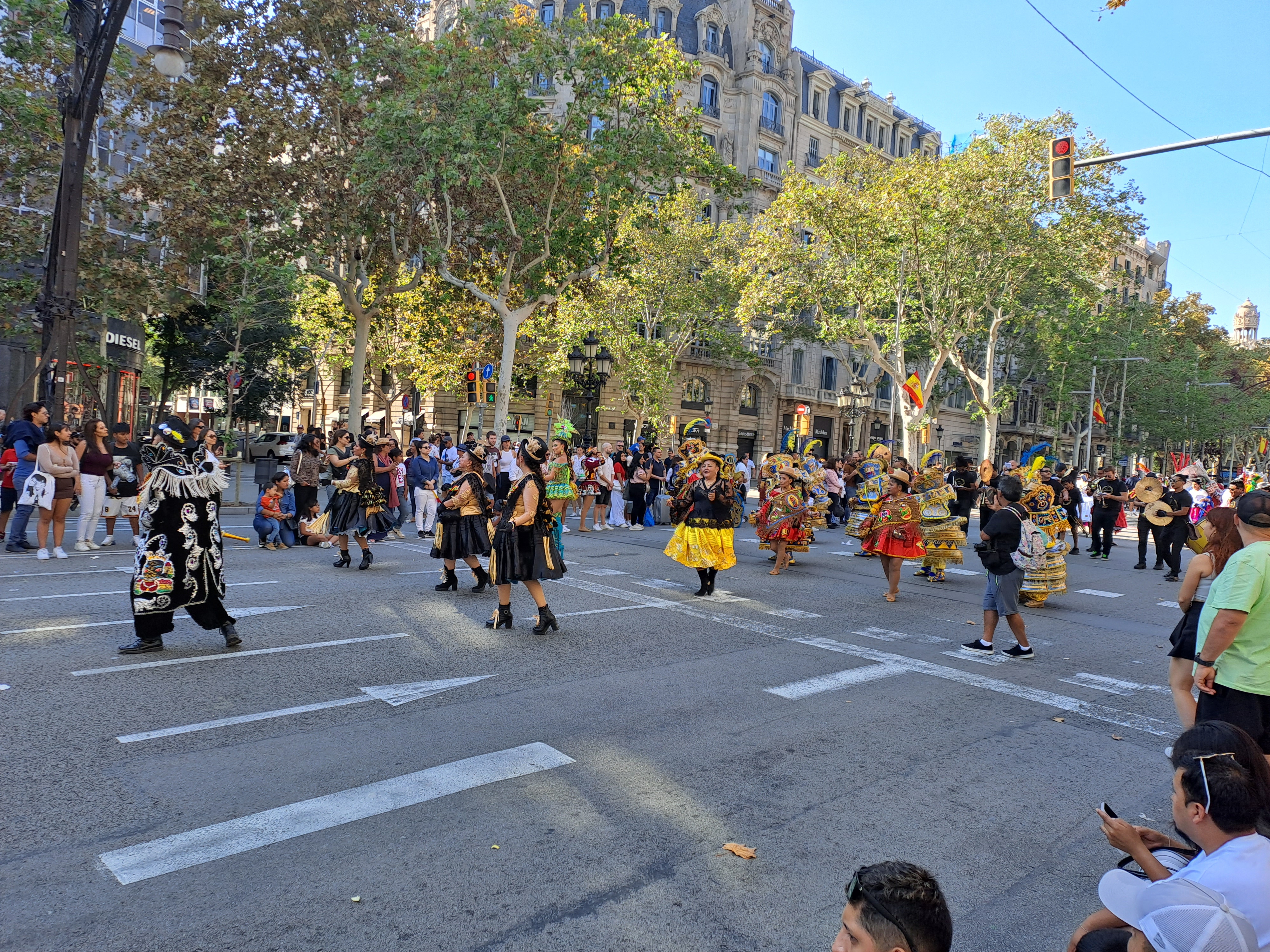
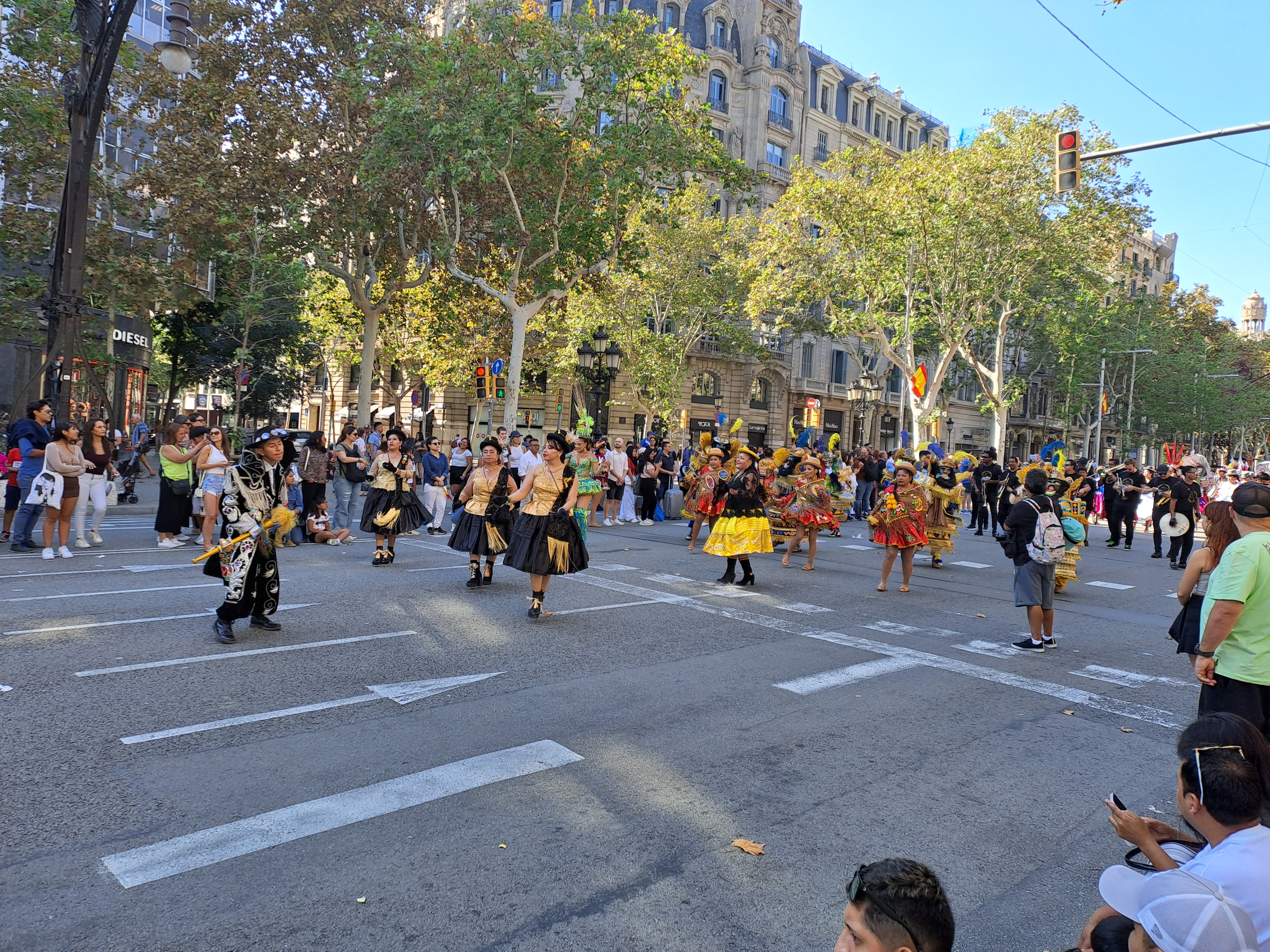
Anyway, it is another warm day (27° C) so after walking around for a couple of hours, I beat a retreat to my flat to cool off and have a short siesta. Bona tarda!
On Budgets
Posted in Education, Finance, Maynooth, Politics with tags IFUT on October 11, 2023 by telescoperYesterday was Budget Day in Ireland, when the Irish Government had to decide how to deal with an unprecedented fiscal surplus. Would it use the available funds to help the homeless and those in poverty? Would it provide much-needed investment in public services and infrastructure? Or would it use the funds to buy the next General Election? As far as I see it, the decision was mainly to go with the third option, paying only lip service to the other two. That’s not surprising, as it’s the sort of thing the sort of people in the current Government have tended to do over the years. Short-termism is the order of the day.
When it comes to third level education, there was some good news for students. Tuition fees currently €3K will be cut by €1K but, disappointingly, the reduction is for one year only. As far as I can understand the news, extra Government funding to universities will replace the loss of fee income, but not provide the general uplift that was hoped for.
A couple of weeks ago, the Leaderene President of Maynooth University sent around a letter written by the Irish Universities Association (IUA) to the Taoiseach. You can find the PDF here. The Government must have been unconvinced by the arguments presented therein, because despite having more than enough dosh to pay for the requested increase in funding, no such largesse was forthcoming.
Despite this setback, Maynooth University’s Management hiring frenzy continues unabated. The latest new position to be advertised is a Director of International Recruitment and Conversion. No, I have no idea what it means either. Perhaps someone in Government looked at how much money Maynooth has burned recently on so many new positions and decided that third level institutions must have plenty of cash already?
In reality of course, the horde of new managers have been funded by diverting funds away from teaching and research. Maynooth already has the highest student-staff ratio of the eight comparable universities, a situation which will only get worse. As funding for teaching gets squeezed to pay for ballooning bureaucracy, departments have no alternative but to employ casual staff instead of permanent academics. As a report produced by the union IFUT makes clear, precarity is endemic in the Irish third level system,as it overwork and job-related stress.
I hope this interpretation is wrong but, the way I see it, none of this is accidental. During the pandemic, University bosses saw teaching staff take on greatly increased workloads that enabled their institutions to generate large surpluses. Having established just how much they could exploit their workforce, the way ahead will be more of the same. The deliberate policy of understaffing, overwork, and casualization will only accelerate. The Irish University system is heading for a crisis on the same scale as that in the United Kingdom, and lack of public funding is only part of the reason…
Grubb in Spain
Posted in Barcelona, History, The Universe and Stuff with tags Howard Grubb on October 10, 2023 by telescoperJust after I arrived in Barcelona, I posted a piece about the telescope in the foyer of the Physics Department:
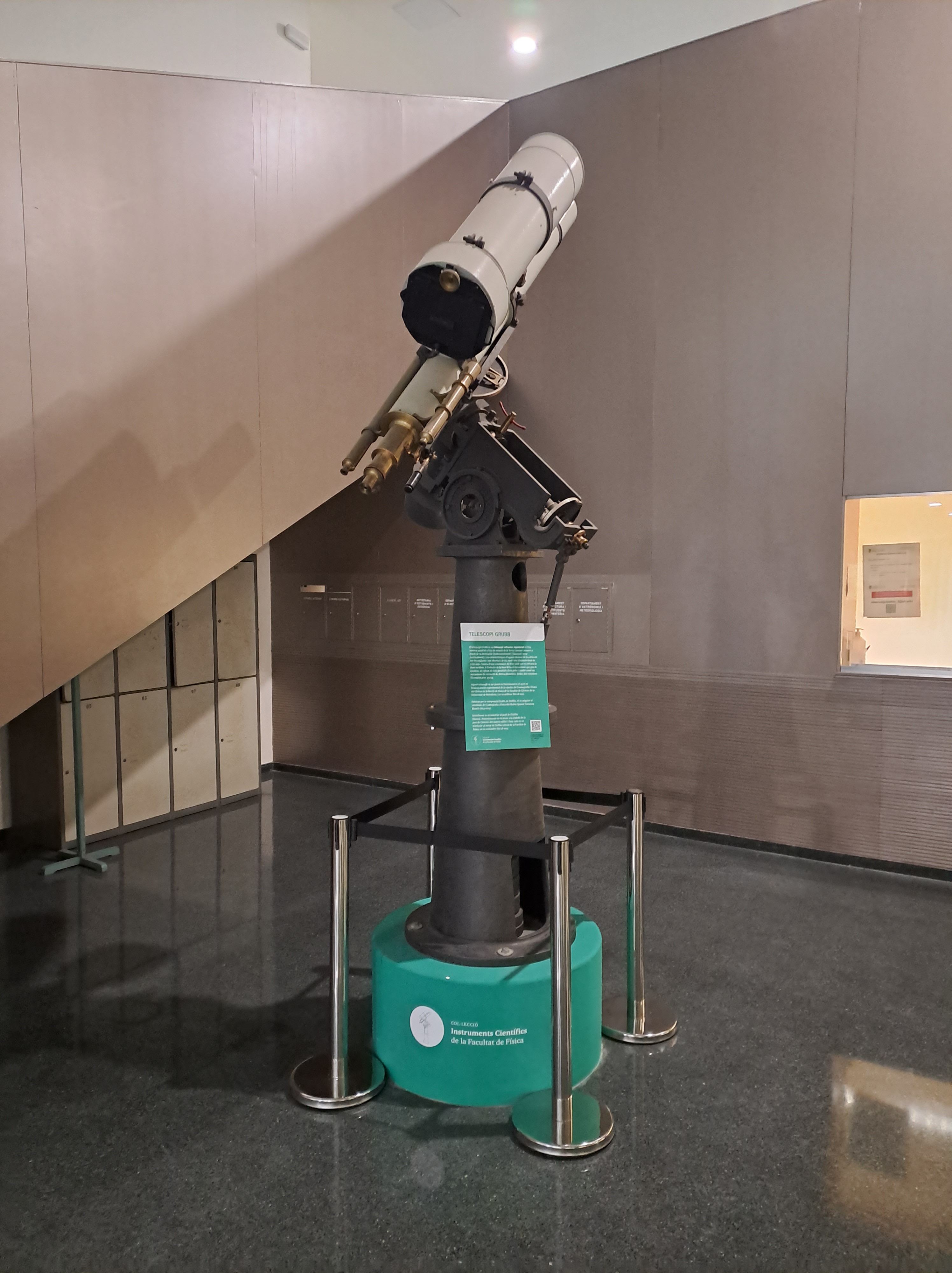

I’m indebted to Vicent Martínez for the following information and the picture:
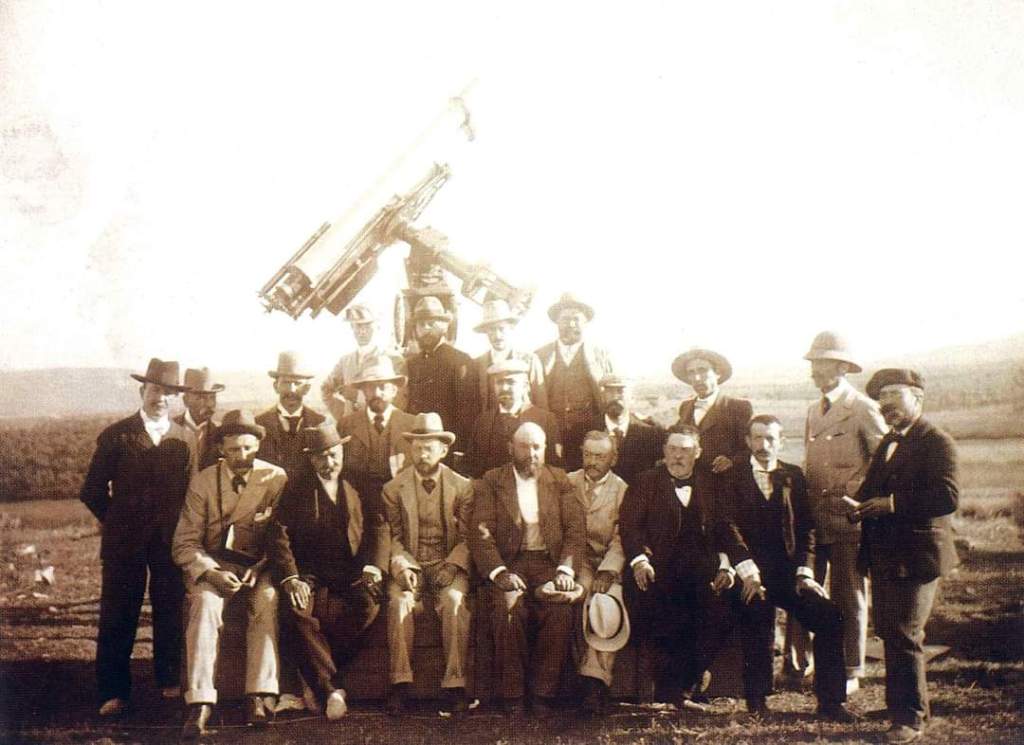
Ignacio Tarzaona bought the telescope in 1906 for the University of Barcelona from the Grubb factory in Dublin. Sir Howard Grubb (son of Thomas Grubb, founder of the Grubb Telescope Company) and Ignacio Tarazona actually knew each other well. In this photograph taken in Berrocalillo (Spain) on May 28, 1900, we can see both of them. The man farthest to the right of all, standing and wearing a “Catalan barretina” is Ignacio Tarazona and Sir Howard Grubb is sitting in the front row, fifth from left with his Panama hat on his knee.
Gaia Focused Product Release
Posted in The Universe and Stuff with tags European Space Agency, GAIA on October 10, 2023 by telescoperI almost forgot about this but some new data from the ESA Gaia mission will be announced this afternoon at 3pm CEST*, though it seems to be a bit late. This announcement concerns the latest batch of Gaia Focused Product (Gaia FPR) data. The release consists in the publication of 5 papers on specific aspects of the mission and the associated data. You can watch here. Due to technical problems it has been delayed by 30 minutes and there is a new link:
While waiting to view the announcement, you may wish to familiarize yourself with the mission by reading this list of Top Ten Gaia Facts.
*Coles Extended Sabbatical Time
New Publication at the Open Journal of Astrophysics
Posted in OJAp Papers, Open Access, The Universe and Stuff with tags arXiv:2307.04798v2, Cosmic Microwave Background, Cosmic strings, emulation, simulation on October 9, 2023 by telescoperTime to announce yet another new paper at the Open Journal of Astrophysics. This one was actually published on Friday (6th October 2023), but for one reason and another I’ve only just got around to announcing it here.
The latest paper is the 38th so far in Volume 6 (2023) and the 103rd in all. The authors are: Matthew Price, Matthijs Mars, Matthew Docherty, Alessio Spurio Mancini, Augustin Marignier and Jason McEwen – all affiliated with University College London, UK.
The primary classification for this paper is Cosmology and Nongalactic Astrophysics and its title is “Fast emulation of anisotropies induced in the cosmic microwave background by cosmic strings”. It describes a generative technique for producing generating cosmic microwave background temperature maps using wavelet phase harmonics. For an explanation of what a cosmic string is, see here. If you don’t know the difference between “emulation” and “simulation”, I refer you to the text!
Here is a screen grab of the overlay of the published version which includes the abstract:
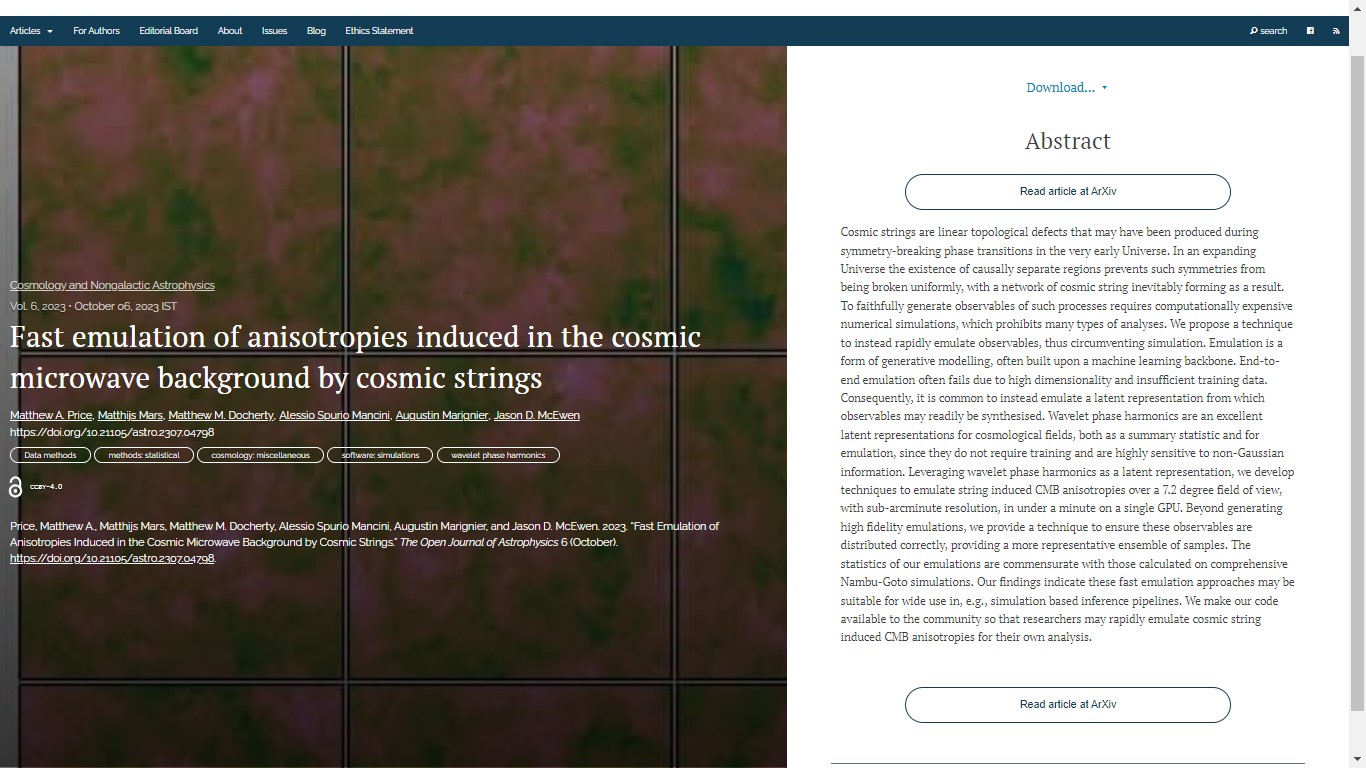
You can click on the image of the overlay to make it larger should you wish to do so. You can find the officially accepted version of the paper on the arXiv here.
The Dream of the Celt
Posted in History, LGBTQ+, Literature with tags 1916 Easter Rising, Mario Vargas Llosa, Roger Casement, The Dream of the Celt on October 8, 2023 by telescoper
Knowing that I would be spending even less time watching TV while in Barcelona than I would back in Maynooth, I packed a number of books from the substantial pile that I haven’t yet got around to. The first I’ve finished is The Dream of the Celt by Peruvian author Mario Vargos Llosa which tells the fascinating but ultimately tragic story of Roger Casement using a mixture of thoroughly researched journalistic reportage and fictionalized extrapolations that try to bring this enigmatic character to life.
Roger Casement was born in Sandycove, Dublin, but spent some of his childhood in England. He served with great distinction as a diplomat, and a fierce advocated of human rights, first in the Congo, where he compiled a devastating report of the brutal exploitation of indigenous people, and then in Peru where he exposed even worse cruelty being exacted on native men women and children who were used as forced labour in the rubber plantations. He was knighted in 1911 for his humanitarian efforts.
When he first started out in the diplomatic service, Casement apparently believed that colonization would be a civilizing influence, bringing free trade, the rule of law, and Christianity instead of repression and violence. His bitter experience changed his view entirely, and he became increasingly associated with the cause of England’s first colony, and became a fervent advocate of Irish nationalism. He found himself travelling to Germany during the First World War to procure arms for an Irish rebellion and to raise an Irish Regiment from Irish prisoners of war captured fighting for the British. In the latter he was not successful – he persuaded only about 50 POWs to join the cause. He did succeed in obtaining weapons but the ship smuggling them to Ireland was intercepted and scuttled to avoid the weapons falling into British hands.
Incidentally, Casement was against the Easter Rising of 1916. He thought it would be futile unless it could be combined with a German attack on England. Ireland was not sufficiently important geopolitically for the Kaiser to mount such an operation. The other leaders of the Rising wanted Casement to stay in Germany as it proceeded but he travelled to Ireland in a submarine, was captured, tried for high treason, found guilty, and hanged at Pentonville Prison on 3rd August 1916. He was 51. His executioner later remarked that he was ‘‘the bravest man it fell to my unhappy lot to execute.’
W.B. Yeats wrote a poem about Roger Casement, the last verse of which is:
Come speak your bit in public
That some amends be made
To this most gallant gentleman
That is in quicklime laid.
Leading up to Casement’s execution there was a concerted campaign for clemency, i.e. the commutation of his death sentence, as had happened with some involved directly in the rebellion. But then came the Black Diaries. Parts of these, describing in Casement’s own words his many sexual adventures with men and boys, were leaked to the press by British intelligence services. At a time when homosexuality was still a crime, that effectively ended any hope of avoiding the gallows. The Black Diaries are of questionable authenticity, and many who believe they were genuine think Casement was merely writing about fantasies rather than reality. Maybe writing about things he couldn’t do was a way for him to relieve sexual tension? We’ll never know for sure.
After his execution Casement’s body was subject to a rectal examination to ascertain whether he had had anal sex as described in the books. He was buried in an unmarked grave and it wasn’t until 1965 that his remains were returned to Ireland to be interred at Glasnevin cemetery.
The author tells this story by interspersing Casement’s last weeks and months in Pentonville with flashbacks to his time in the Congo, the Peru, Germany and Ireland. The protagonist did write extensive notes on his travels but they are somewhat disorganized, so he had to make reasonable guesses to fill in the gaps. The conversations with other characters are imagined to make it seem more like a novel than a straight historical biography. This approach makes for a fascinating read, although I did find it somewhat repetitive in places.
Sir Roger Casement, as reconstructed in this book, is a fascinating character, but how close the account is to how he really was as a person is something we’ll never know. In a strange way, that mystery is part of the appeal.
Cold Turkey Twitter
Posted in Biographical with tags BlueSky, Mastodon, social media, Twitter, X on October 8, 2023 by telescoper
I’ve seen quite a few articles (such as this one on LinkedIn) by academics lamenting the terminal decline of the website formerly known as Twitter, so I thought I’d add my thoughts. I come to bury Twitter, not to praise it.
I joined Twitter in 2009 or thereabouts. Over the years, I accumulated around 7300 followers. Not an enormous number by any standards, but a reasonable one. I used the platform only partly for academic matters. I found it in turns amusing and annoying. I dealt with the latter aspect largely through liberal use of the block facility. I admit I found the recreational aspect mildly addictive.
In recent times, however, Twitter (or X as we’re now supposed to call it) has turned to shit. Since Elon Musk took over, users are basically silenced unless they pay for a blue tick, the social media equivalent of buying a megaphone for use in a library. The API that allowed me to post there from WordPress was axed, which was an additional pain. Add the constant stream of promoted tweets and other ads to the deluge of unmoderated bigotry, and the result is unbearable.
I deleted my Twitter account completely at the end of August and haven’t looked back. Since I’d spent a lot of time there, a number of friends expressed scepticism that I’d manage to do it cold turkey like that, but it was no problem, and I have no withdrawal symptoms.
I now much prefer Mastodon, where I’ve had an account for about a year. I have just over a thousand followers there, just one seventh of the number I had on Twitter, but much higher levels of engagement. More importantly, it’s far more civilized. I’ve only had to block one person. WordPress has also introduced an autopost to Mastodon, so every blog post I write appears there automatically.
I have also joined BlueSky. This site is still in development and, for the time being, is by invitation only, so is rather quiet. In recent weeks, however, I’ve noticed quite a large number of astronomers arriving there, so it is an interesting place to be. I have some spare invites, actually…
Just say no to Twitter. It’s not worth it.

 In the Dark
